
The role of veganism in fashion: 2026 guide
TL;DR:
- Vegan fashion consists of clothing and accessories made entirely without animal-derived materials, aiming for sustainability and ethics. However, the market’s complexity requires scrutiny of materials, durability, and supply chains to ensure genuine animal and environmental friendliness. Increased regulation and innovation are improving transparency, but consumers must remain vigilant against misleading veganwashing claims.
Vegan fashion is defined as clothing and accessories made entirely without animal-derived materials, a movement that has grown from niche activism into a multi-billion pound market projected to reach $540.2 billion in 2026. The industry term for this practice is “animal-free fashion,” though vegan fashion remains the widely recognised consumer label. According to Good On You, no single legal definition exists, but the consensus is clear: no leather, fur, wool, silk, feathers, or animal-derived dyes and glues anywhere in the garment. That last point matters more than most shoppers realise. A jacket can be made from synthetic fabric yet still contain animal-based adhesive in its lining. Understanding the role of veganism in fashion means looking at every component, not just the outer shell.
What materials and technologies define vegan fashion?
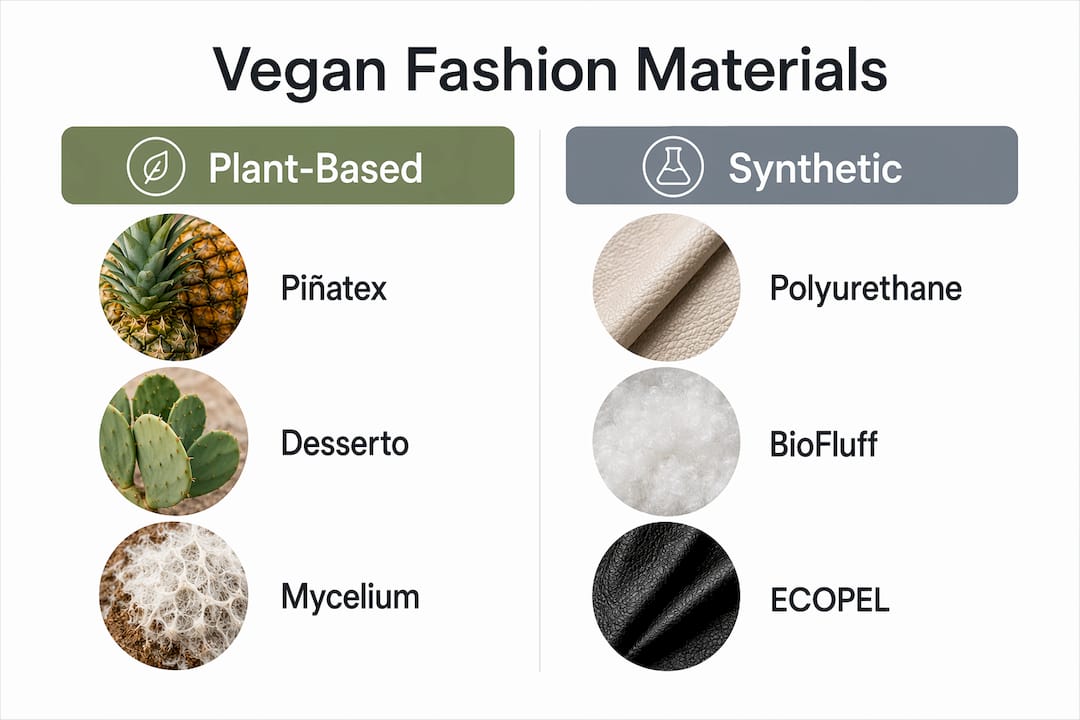
Vegan leather alternatives sit at the centre of the material debate, and they are far from uniform. The category splits broadly into three types: plastic-based synthetics (polyurethane and PVC), plant-based bio-materials, and recycled composites. Each carries a different environmental profile, and choosing between them requires more than a quick label check.
Plant-based options have attracted the most attention in recent years. Piñatex, derived from pineapple leaf fibre, Desserto cactus leather, and mycelium-based materials from companies like Bolt Threads represent genuine advances in bio-based leather development. Apple pomace, a byproduct of juice production, has also been processed into leather-like sheets by brands working to reduce agricultural waste. These materials appeal because they use renewable inputs and, in some cases, generate lower carbon footprints than conventional cattle leather during production.
Fur and wool alternatives have seen parallel innovation. BioFluff, a plant-based faux fur, and ECOPEL, which produces bio-based fur fabrics, are among the animal-free bio-materials now entering mainstream collections. The CFDA has highlighted these developments as part of a broader industry shift away from animal inputs, driven partly by consumer demand and partly by tightening regulation.
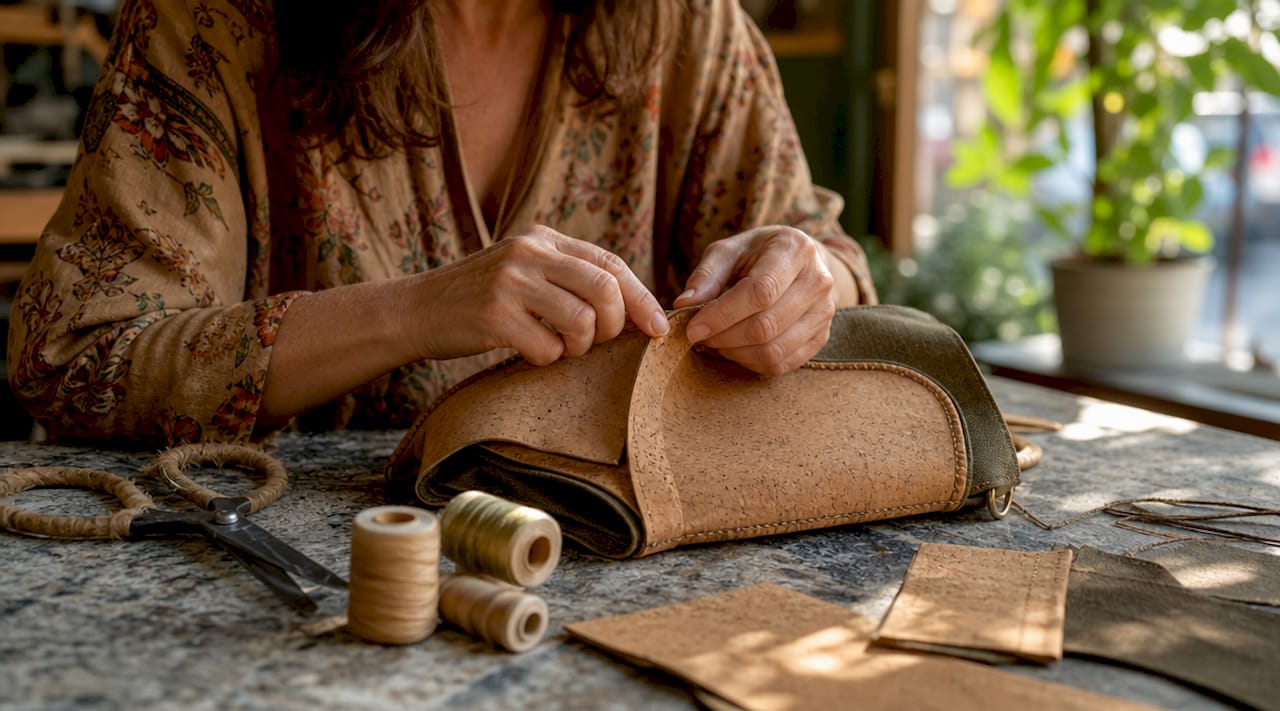
The trade-offs, however, are real. Many plant-based leathers still require polyurethane coatings to achieve the durability and water resistance consumers expect. Those coatings introduce the same microplastic concerns associated with fully synthetic options. Cork, by contrast, requires no synthetic coating and is naturally water-resistant, making it one of the few eco-friendly clothing options that is genuinely animal-free and biodegradable.
| Material | Origin | Key advantage | Key limitation |
|---|---|---|---|
| Polyurethane (PU) leather | Petroleum-based | Affordable, widely available | Microplastic shedding, low recyclability |
| Piñatex | Pineapple leaf fibre | Uses agricultural waste | Requires PU coating for durability |
| Mycelium leather | Mushroom roots | Biodegradable, low water use | Limited commercial scale |
| Cork | Cork oak bark | No coatings needed, renewable | Primarily suited to accessories |
| Recycled PET | Plastic bottles | Diverts waste from landfill | Still petroleum-derived at source |
Pro Tip: When evaluating any vegan material, ask whether the product requires a synthetic coating to function. If it does, the environmental benefit of the base material is significantly reduced over the product’s lifespan.
How does veganism in fashion address ethical and environmental concerns?
The ethical case for animal-free fashion rests on documented harm reduction. Fur farming has declined sharply, with global production dropping 85% over the past decade, saving approximately 120 million fur-bearing animals annually. Nearly 20 US states have banned fur sales, and multiple EU nations are phasing out fur farming entirely. These policy shifts have created genuine commercial pressure on brands to find credible alternatives.
The environmental picture is more complicated. Conventional leather production involves chromium tanning, a process that generates toxic wastewater and is linked to serious health risks in tanning communities across South Asia and East Africa. Cattle farming also contributes significantly to methane emissions and land use. On those metrics, many vegan alternatives perform better. But the comparison is not straightforward.
“Vegan and sustainable are not interchangeable terms. Sustainability depends on product lifecycle, durability, and end-of-life impact, not just the absence of animal ingredients.” — The Conversation
The core tension in explaining vegan fashion ethics is this: a product can be entirely animal-free and still cause significant environmental harm if it is made from virgin plastics, coated in polyurethane, and discarded after two years because the surface has cracked. Vegan leather durability is a critical sustainability metric precisely because shorter product lifespans mean more frequent replacement and more waste.
The ethical considerations extend beyond materials to labour. A garment can be vegan and still be produced under exploitative conditions. Genuine ethical fashion choices require scrutiny of the entire supply chain, not just the ingredient list.
- Animal welfare: vegan fashion eliminates direct use of fur, leather, wool, and silk, reducing demand for industries with documented welfare concerns.
- Environmental impact: plant-based and recycled materials generally produce lower emissions during production than cattle leather, but lifecycle analysis must account for coatings and disposal.
- Labour rights: vegan status does not guarantee fair wages or safe working conditions; supply chain transparency is a separate and equally important standard.
- Consumer behaviour: the vegan fashion paradox describes the cognitive dissonance many shoppers experience when their aesthetic preferences conflict with their ethical values.
What is veganwashing, and how do you spot it?
Veganwashing is the practice of marketing a product as vegan when the claim is incomplete, unverified, or applied selectively to only part of a range. It mirrors greenwashing in structure: a brand uses ethical language to attract conscious consumers without making substantive changes to its products or supply chain. The Vegan Fashion Repository has documented cases where vegan certifications apply to a handful of SKUs while the majority of a brand’s catalogue contains animal-derived materials.
Regulatory pressure is increasing. The Australian Competition and Consumer Commission (ACCC) has identified greenwashing as an enforcement priority, targeting vague or unsubstantiated eco-claims in marketing. Similar scrutiny is emerging in the UK and EU, where the Green Claims Code and proposed EU Green Claims Directive require that environmental and ethical claims be specific, accurate, and verifiable.
The practical challenge for consumers is that material blends are common and labelling is inconsistent. A bag described as “vegan leather” may have a synthetic exterior bonded to a fabric lining that contains wool fibres or animal-based glue. Without SKU-level verification, the claim is meaningless.
Pro Tip: Before purchasing, check whether a brand’s vegan claim is backed by a recognised third-party certification such as PETA-Approved Vegan or the Vegan Society trademark. If the certification applies only to selected products, treat the rest of the range as unverified.
To navigate this effectively, apply these checks:
- Verify whether the vegan claim covers the entire product, including lining, adhesives, and dyes, not just the outer material.
- Look for third-party certifications rather than self-declared labels.
- Check brand transparency reports or supply chain disclosures for corroborating evidence.
- Use directories like the Vegan Fashion Repository to cross-reference brand claims against independently verified listings.
How to make informed ethical fashion choices in 2026
Making genuinely ethical fashion choices within the vegan fashion movement requires a structured approach. The market is large enough now that options exist at every price point, but quality and transparency vary enormously. Use this framework when evaluating any purchase:
- Check the full material list. Look beyond the primary fabric to linings, thread, buttons, zips, and adhesives. Good On You’s brand ratings include animal-derived inputs at component level, which is a useful starting point.
- Assess durability honestly. A vegan product that lasts ten years has a lower environmental footprint than one that lasts two, regardless of what it is made from. Ask about coating wear, seam quality, and manufacturer guarantees before buying.
- Prioritise plant-based and natural materials over virgin synthetics. Cork, organic cotton, linen, and Tencel are animal-free textiles with lower environmental profiles than PU-coated synthetics. Where plant-based options exist, they are generally the stronger ethical choice.
- Research the brand’s supply chain. Certifications like Fair Trade, B Corp, and the Global Organic Textile Standard (GOTS) indicate broader ethical commitments beyond material sourcing.
- Buy less, buy better. Fast fashion produces vegan garments at volume and low cost, but the environmental cost of overproduction undermines the ethical intent. Choosing fewer, higher-quality pieces from transparent brands is the most effective way to reduce your overall impact.
The vegan fashion starter guide from Thecorkstore offers a practical overview of how to build a wardrobe around these principles without sacrificing style or spending beyond your means.
Key takeaways
Vegan fashion requires scrutiny of every component, not just the outer material, and durability is as important as ingredient sourcing when evaluating genuine sustainability.
| Point | Details |
|---|---|
| Vegan fashion definition | Excludes all animal-derived materials including dyes, glues, and linings, not just obvious fabrics. |
| Material trade-offs | Plant-based leathers often require synthetic coatings that reduce their environmental advantage over time. |
| Fur and animal welfare | Global fur production has dropped 85% in a decade, driven by bans and consumer pressure. |
| Veganwashing risk | Vegan claims must be verified at product level; certifications often apply only to selected SKUs. |
| Durability matters | A longer-lasting vegan product has a lower environmental footprint than a short-lived one, regardless of material origin. |
Why the vegan fashion conversation is only getting harder
I have followed the vegan fashion movement closely for years, and the honest truth is that it has become more complex, not simpler, as it has grown. When the movement was small, the message was clean: avoid animal products, choose synthetics. That was a workable heuristic in 2010. In 2026, it is not enough.
The materials science has advanced faster than the labelling standards. You can now buy a bag made from mycelium leather that is genuinely biodegradable and produced with minimal chemical inputs. You can also buy a bag labelled “vegan leather” that is essentially plastic-coated cardboard, destined for landfill within three years. Both carry the same marketing language. That gap between the best and worst of vegan fashion is the real story, and most coverage glosses over it.
What I find genuinely encouraging is the policy momentum. Fur bans create real market pressure. The EU Green Claims Directive, when enforced, will force brands to substantiate every ethical claim they make. That kind of structural change does more than consumer education alone ever could. The brands that have invested in genuine material innovation, transparent supply chains, and durable design will benefit. The ones riding the vegan label as a marketing shortcut will face increasing scrutiny.
My advice: treat vegan fashion as a starting point, not a destination. It is a meaningful filter, but it needs to be combined with questions about durability, labour, and lifecycle impact before a purchase genuinely reflects your values.
— Aaron
Stylish vegan accessories made from cork
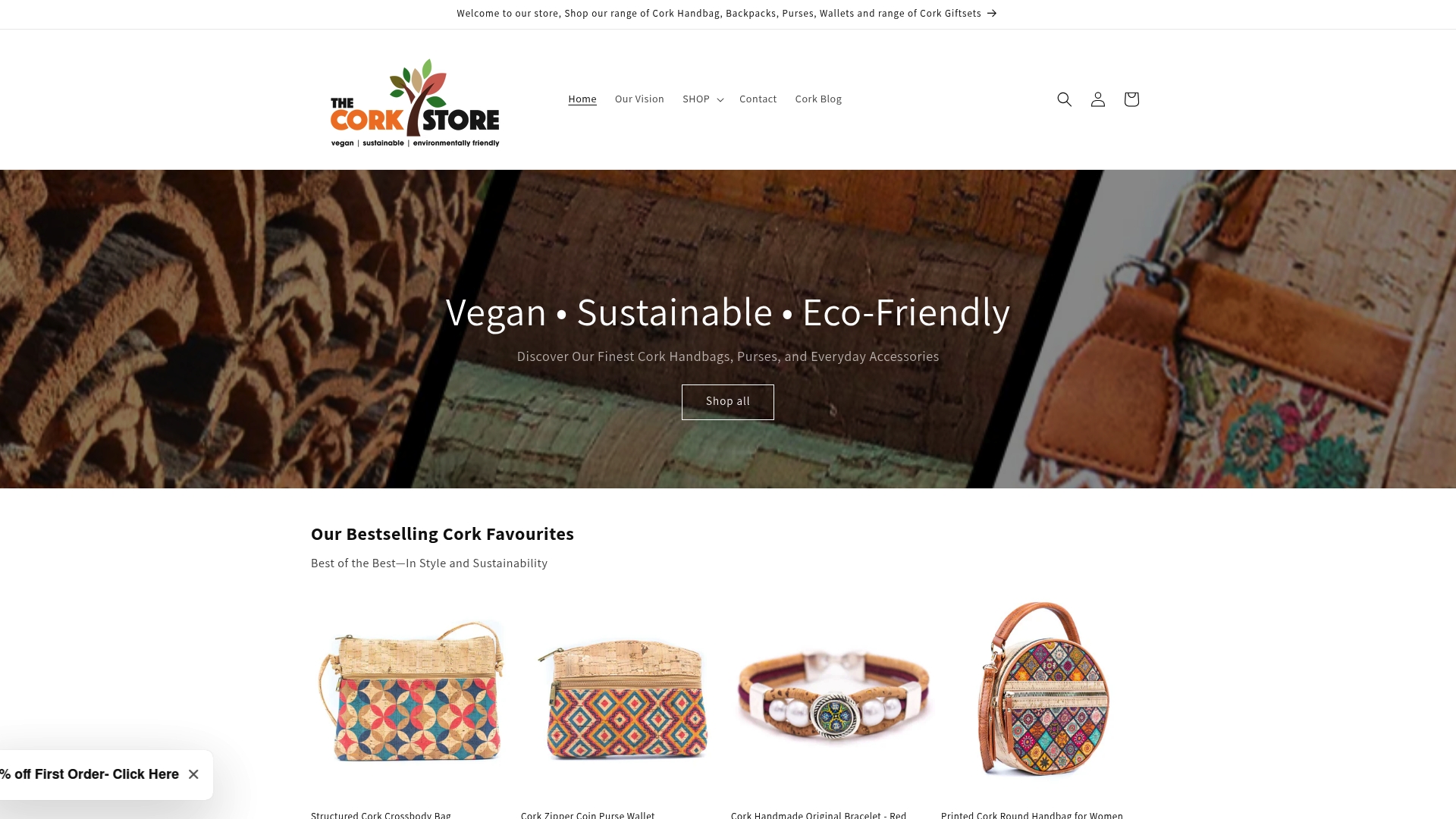
Cork is one of the few materials that is naturally vegan, renewable, and requires no synthetic coating to perform. Harvested from the bark of cork oak trees without felling them, it regenerates every nine years and absorbs carbon throughout its life. Thecorkstore specialises in accessories made entirely from cork, including wallets, handbags, backpacks, and purses that offer a genuine alternative to both animal leather and plastic-coated synthetics.
If you are looking for a gift that aligns with vegan values without compromising on style, the cork wallet gift set is a strong choice. For a broader selection of cruelty-free, eco-conscious accessories, browse the full vegan cork gift collection at Thecorkstore.
FAQ
What does vegan fashion actually mean?
Vegan fashion refers to garments and accessories made without any animal-derived materials, including leather, wool, silk, fur, feathers, and animal-based dyes or adhesives. Good On You confirms there is no single legal definition, but the standard applied across the industry covers all animal inputs across the entire product.
Is vegan leather always more sustainable than animal leather?
Not automatically. Many vegan leathers use polyurethane coatings that shed microplastics and degrade faster than animal leather, meaning they are replaced more frequently. Durability and lifecycle impact are as important as material origin when assessing genuine sustainability.
What is veganwashing in fashion?
Veganwashing occurs when brands apply vegan labelling to selected products or use the term loosely without substantiated evidence across their full range. The Vegan Fashion Repository documents cases where certifications cover only a fraction of a brand’s catalogue.
What plant-based materials are used in vegan fashion?
Current plant-based vegan leather alternatives include Piñatex from pineapple fibre, Desserto from cactus, mycelium leather from mushroom roots, and apple pomace leather. Cork is also widely used in accessories and requires no synthetic coating, making it one of the most straightforward sustainable vegan materials available.
How can I verify a brand’s vegan claims?
Look for third-party certifications such as the Vegan Society trademark or PETA-Approved Vegan, and check whether those certifications apply to the specific product you are buying rather than the brand as a whole. Supply chain transparency reports and independent directories provide additional verification beyond self-declared marketing claims.