
Vegan fashion starter guide: Build an ethical wardrobe
TL;DR:
- Vegan labels in fashion do not guarantee environmental sustainability, as greenwashing is widespread.
- Critical label scrutiny, certifications, and material transparency are essential for genuine ethical choices.
- Opt for durable, plant-based options like cork to reduce microfibre shedding and ensure true eco-friendliness.
Picking up a bag labelled “100% vegan” feels like a win, but that label alone tells you very little about whether the product is genuinely good for the planet. Vegan and eco-friendly are not the same thing, yet greenwashing in fashion is so widespread that the two terms are routinely used as if they were interchangeable. This guide cuts through the noise, giving you practical checks, real material comparisons, and the certification knowledge you need to build a wardrobe that is both cruelty-free and genuinely sustainable.
Table of Contents
- Decoding vegan and eco-friendly labels in fashion
- Essential textile standards and certifications for vegan wardrobes
- Comparing vegan materials: Plant-based, polymer-based and recycled options
- How to shop: Brand ratings and practical checks for vegan accessories
- Our take: Why ethics in vegan fashion goes beyond cruelty-free
- Next steps: Find truly ethical vegan accessories
- Frequently asked questions
Key Takeaways
| Point | Details |
|---|---|
| Go beyond labels | Check material details and certifications, not just marketing phrases, when shopping vegan fashion. |
| Certifications matter | Look for third-party textile standards like GOTS to confirm ethical and sustainable credentials. |
| Vegan is not always eco | Many vegan items contain synthetics or plastics; eco-impact depends on materials and durability. |
| Practical checks help avoid greenwashing | Platform ratings, tag scrutiny, and composition transparency are key to smart vegan shopping. |
| Durability and transparency are ethical | A truly ethical wardrobe values material resilience and full transparency, not just animal-free claims. |
Decoding vegan and eco-friendly labels in fashion
Having highlighted the confusion around labels, let’s break down what those claims really mean and how to scrutinise them properly.
The word “vegan” in fashion simply means no animal-derived materials were used. Leather, wool, silk, down, and cashmere are all excluded. That is a meaningful ethical statement, but it says nothing about carbon footprint, chemical use, water consumption, or what happens to the product at the end of its life. A bag made entirely from virgin polyurethane is technically vegan. It is also a petroleum-derived product that could take centuries to break down.
Greenwashing exploits exactly this gap. Brands apply words like “natural,” “plant-based,” “biodegradable,” and “eco-friendly” without any obligation to prove the claims. A fabric marketed as “biodegradable vegan leather” may be primarily polymer-based with a thin plant-derived coating. It will not decompose in any meaningful timeframe under normal conditions. To avoid being misled, read beyond labels for exact material composition and look for durability and end-of-life details.
PETA’s vegan shopping guide offers a practical “spot the cruel materials” method: check every component listed on a product’s care label, including linings, trims, buttons, and thread. Animal-derived materials can appear in unexpected places, such as wool blended into a “synthetic” coat lining. The same tag-checking discipline helps you spot when a “vegan leather” item is actually 60% polyurethane and 40% polyester.
Common label pitfalls to watch for:
- “Eco leather” often means PU-coated polyester with no verified environmental credentials
- “Plant-based” may describe only the surface layer, while the backing is plastic-heavy
- “Biodegradable” without a standard or timeframe is a meaningless claim
- “Recycled” without a percentage or certification could mean a token recycled content below 5%
You can find a fuller breakdown of what to look for in our eco-friendly wardrobe guide, or explore what cruelty-free fashion genuinely means before you shop.
Essential textile standards and certifications for vegan wardrobes
Once you’ve learnt to read labels critically, understanding textile standards will empower your choices even further.
Third-party certifications exist precisely because marketing language cannot be trusted at face value. Credible bodies audit the entire supply chain rather than taking a brand’s word for it. Rather than relying on vague marketing phrases, prioritise recognised standards that require verified, independently audited claims across material origin, manufacturing, and social responsibility.
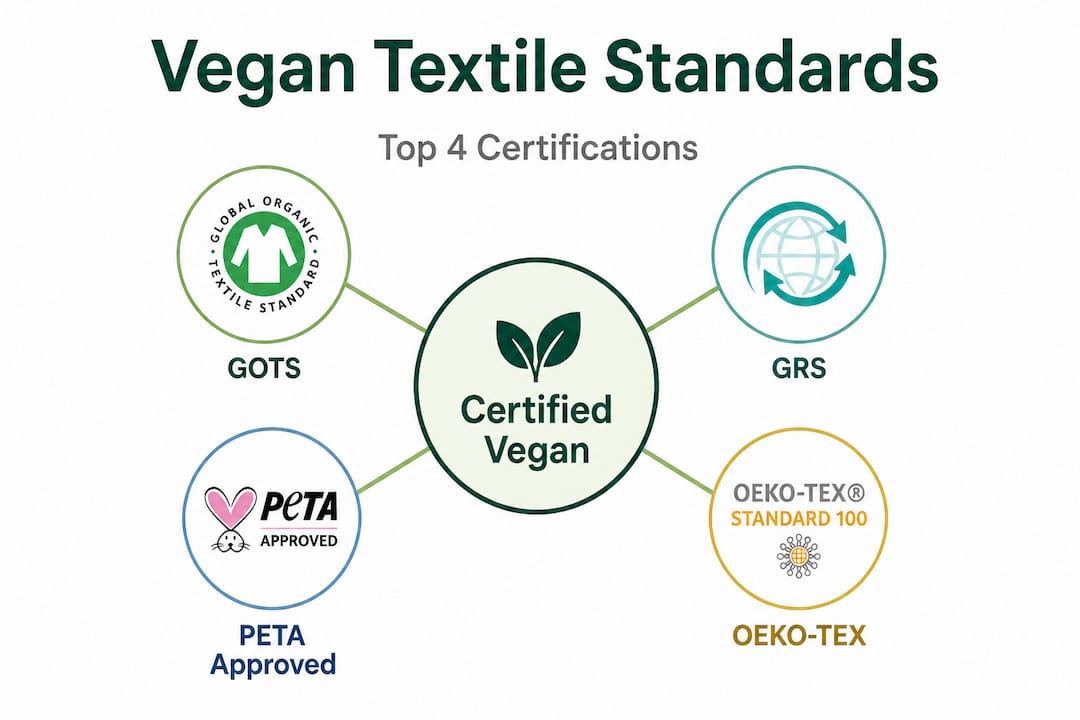
The most important certifications to know:
| Certification | What it covers | Who issues it |
|---|---|---|
| GOTS (Global Organic Textile Standard) | Organic fibre from harvest through manufacturing and labelling | Global Standard gGmbH |
| GRS (Global Recycled Standard) | Verified recycled content in textiles and products | Textile Exchange |
| OEKO-TEX STANDARD 100 | Harmful substance testing in finished textiles | OEKO-TEX Association |
| B Corp | Broader company ethics, environment, and social impact | B Lab |
| Leaping Bunny | Cruelty-free status across the supply chain | Cruelty Free International |
GOTS covers organic textiles from the harvesting of raw materials through to environmentally and socially responsible manufacturing and labelling. This means a GOTS-certified cotton fabric has been tracked from the field through dyeing, cutting, and finishing. It is one of the most stringent standards available and a reliable indicator of genuine organic credentials.
The GRS certification, governed by Textile Exchange, verifies that recycled content claims are accurate and that recycled materials are tracked throughout production. For vegan shoppers interested in recycled accessories, this is the standard to look for on product pages.
Pro Tip: When shopping online, search for the certification name alongside the product name or look in the brand’s “About” or “Sustainability” page. Genuine certifications always include a licence number or public database link you can verify.
Be cautious about certifications that only appear in general brand marketing rather than on specific products. A brand might hold a B Corp certification at company level while selling individual items that contain unverified materials. Always match the certification to the specific product you are buying. For more guidance on building an ethical wardrobe, start with certifications before moving to individual material checks.
Comparing vegan materials: Plant-based, polymer-based and recycled options
After understanding certifications, it’s practical to know which materials are actually in use and how they’re presented in vegan products.
Vegan materials fall into three broad categories, and each comes with its own ethical and environmental considerations. Understanding the differences helps you make genuinely informed choices rather than simply trusting a “vegan” sticker.
| Material type | Examples | Key concern | Environmental note |
|---|---|---|---|
| Plant-based | Cork, apple leather, Piñatex, cactus leather | Polymer coatings in blends | Cork is harvested without harming the tree |
| Polymer-based | Polyurethane (PU), PVC | Petroleum origin, microfibre shedding | Long degradation time, often non-recyclable |
| Recycled content | rPET, recycled nylon | Recycled plastic still sheds microfibres | Lower virgin resource use, but not zero impact |
Vegan leather is an umbrella term that can include non-animal microfibres, recycled nylon, polyurethane, and plant-derived inputs. Reading the actual tag is the only reliable way to know what you are buying. A product described as “apple leather” may consist of only 30% apple waste fibre bonded to a 70% polyurethane backing. The marketing focuses on the plant element; the label reveals the reality.
“100% vegan” and “plant-based” messaging may still hide polymer coatings, recycled-plastic content, or materials that shed microfibres into waterways when washed. Microfibre shedding is a significant but underreported issue. Synthetic textiles release plastic particles during washing that pass through most filtration systems and enter rivers, oceans, and eventually the food chain. For accessories made from recycled plastics, the shedding risk depends on the construction and how the item is cared for.
Cork stands apart here because it is genuinely plant-based with no polymer backing required. Harvested from the bark of cork oak trees every nine years without felling the tree, it is naturally water-resistant, lightweight, and durable. It does not shed microfibres and is compostable at the end of its life. If you want to see what transparent, plant-based accessories actually look like in practice, our sustainable vegan accessories blog covers real-world examples with full material breakdowns.
Key questions to ask before buying any vegan accessory:
- What is the full material composition, including backing and lining?
- Is there a third-party certification for any sustainability claims?
- How long is the product expected to last, and what happens to it at end of life?
- Does the brand publish a supply chain transparency report?
Pro Tip: For bags and wallets, check the care label and product page for the full percentage breakdown. Genuine plant-based products list every component. If the listing only says “vegan leather” without percentages, ask the brand directly before purchasing.
How to shop: Brand ratings and practical checks for vegan accessories
Having compared materials, let’s move to actionable steps for choosing brands and accessories with both style and ethics.
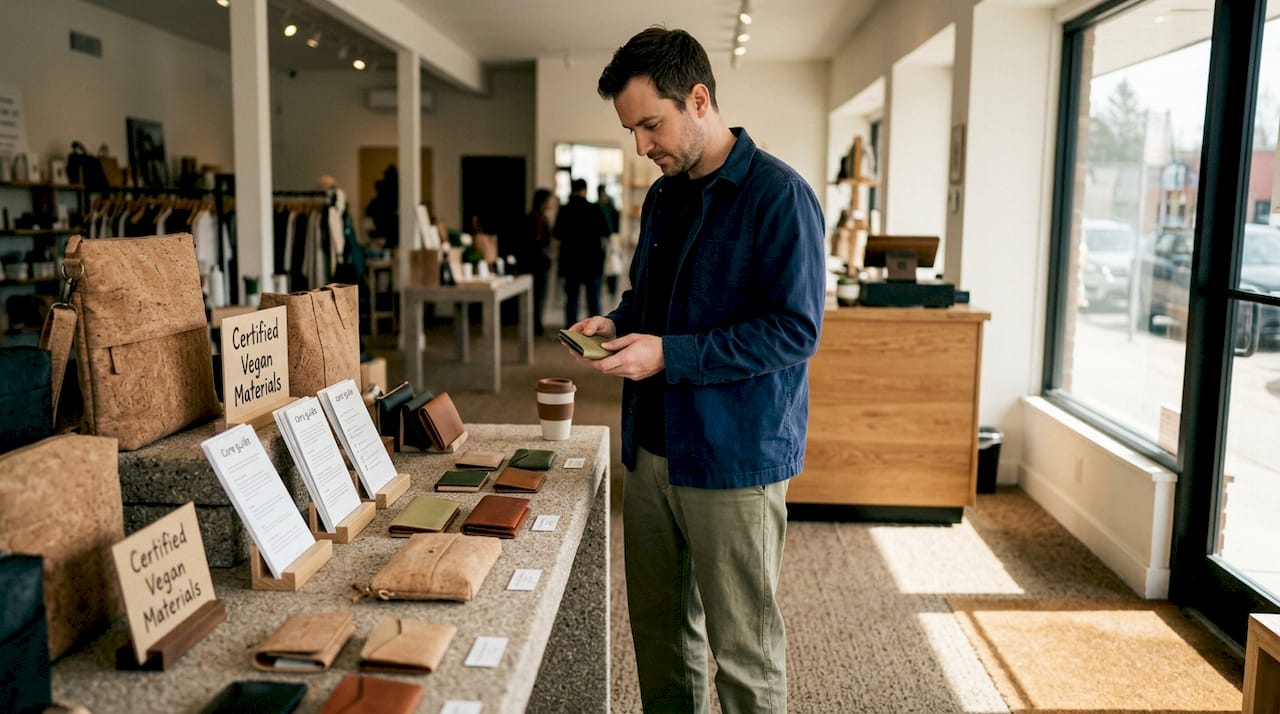
Consumer-facing rating platforms have transformed the ability to shop with confidence. Good On You rates brands on animal welfare, environmental impact, and labour rights using a scored methodology. Crucially, only brands that are 100% vegan receive the highest “Great” score for animals, meaning a single non-vegan product line can lower an otherwise strong brand’s rating. This scoring approach helps you see past brand-level marketing to product-level reality.
Here is a practical step-by-step process for shopping vegan accessories with genuine ethical confidence:
- Start with the label. Read every listed material, including linings, fastenings, and decorative elements. If composition percentages are missing, contact the brand.
- Search the brand on Good On You. Check their scores for animals, environment, and labour before adding anything to your basket.
- Look for certifications on the specific product. GRS for recycled content, GOTS for organic fibres, or equivalent standards should be linked to individual items, not just the brand homepage.
- Assess durability. A cheap PU bag that needs replacing every twelve months creates more waste than a pricier, long-lasting item. Factor longevity into your ethical calculation.
- Check end-of-life information. Does the brand offer a repair service, take-back scheme, or composting guidance? Brands that think about what happens after sale tend to care more about what goes into the product.
- Verify “biodegradable” claims. Ask under what conditions and in what timeframe. Home compostable is very different from industrial compost facility only, which is different again from “biodegrades eventually in landfill.”
The most ethical purchase is one you make once, keep for years, and can dispose of responsibly. Fast fashion’s vegan options are still fast fashion.
Separating vegan status from true eco-impact is the single most important mental shift for conscious shoppers. A brand can be 100% vegan and still produce items with heavy chemical processing, exploitative labour practices, and no end-of-life solution. Conversely, a brand selling one non-vegan product in an otherwise sustainable, durable, transparent range might have a lower environmental footprint overall. Both signals matter. Neither alone is sufficient. Building eco-friendly outfits requires looking at the whole picture, and our 2026 UK vegan accessories guide pulls together the best options currently available.
Our take: Why ethics in vegan fashion goes beyond cruelty-free
Most vegan fashion guides stop at animal-free. They hand you a list of materials to avoid and materials to seek out, then call it done. We think that approach sells you short.
The fashion industry has understood for a while that “vegan” is a powerful selling word. The result is a flood of PU products with minimal plant content, aggressive biodegradable claims backed by nothing, and recycled-plastic items presented as eco heroes without addressing microfibre shedding. Cruelty-free status is a necessary condition for ethical fashion. It is not a sufficient one.
Polymer-based vegan materials directly undermine eco credentials if they are not matched by durability, transparency, and realistic end-of-life options. Buying a vegan handbag made predominantly from virgin polyurethane every two years produces more environmental harm than buying a single high-quality, long-lasting item, even if that item contains some conventional elements. The ethics of longevity are real and underacknowledged.
We believe composition transparency is itself an ethical issue. If a brand cannot or will not tell you exactly what its products are made from, that opacity is a red flag regardless of the vegan claims on the label. The brands worth trusting are those who publish full material breakdowns, supply chain information, and honest answers about what happens to their products when you’re done with them.
Microfibre shedding deserves more attention in vegan fashion conversations. Choosing cruelty-free should not come at the cost of ocean health. Materials like cork, which shed nothing and biodegrade naturally, offer a genuinely different standard. Before you transition to sustainable fashion, push past the vegan label and demand the full picture from every brand you consider.
Next steps: Find truly ethical vegan accessories
If you’re ready to apply these principles, explore curated vegan accessories that genuinely embody ethical choices rather than just marketing claims.
At The Cork Store, every accessory is made from natural cork, a fully traceable plant-based material with no polymer backing, no microfibre shedding, and a composting end-of-life. Each product page lists full material composition so you can check before you buy. No vague claims. No hidden synthetics.
Whether you’re looking for a starting point or a considered gift, our women’s vegan gift sets bring together cruelty-free accessories with genuine sustainability credentials. The all-natural cork wallet gift set is a favourite for those who want a stylish, durable, and fully transparent vegan choice that stands up to every check in this guide.
Frequently asked questions
What does ‘vegan leather’ actually contain?
Vegan leather can include plant-based materials, microfibres, recycled polyester, polyurethane, and polymer coatings, so always check tags for precise composition rather than relying on the name alone.
Does ‘vegan’ always mean eco-friendly?
No, vegan simply means animal-free, but items may contain synthetics that shed microfibres or have poor end-of-life options, so eco credentials require separate verification through certifications and material transparency.
Which certification should I look for in organic vegan textiles?
Look for the GOTS label, which covers organic fibres from harvest through to manufacturing and assures socially and environmentally responsible production throughout the entire supply chain.
How can I spot greenwashing in vegan fashion?
Check for precise material percentage breakdowns and third-party certifications, and be wary of vague phrases such as “biodegradable” without evidence of which standard applies or under what conditions.
Are brand-rating platforms reliable for vegan ethics?
Platforms like Good On You use a scored methodology covering animal welfare, environmental impact, and labour rights, awarding only 100% vegan brands their highest animal score, making them a trustworthy starting point for research.
Recommended
- Eco-Friendly Wardrobe Guide for a Stylish Vegan Look – The Cork Store
- Step-by-step sustainable fashion: build an ethical wardrobe – The Cork Store
- How to Build Eco-Friendly Outfits With Sustainable Style – The Cork Store
- How to Transition to Sustainable Fashion Easily – The Cork Store
- Τι είναι ethical fashion: Η αξία για σένα - Judah Club