
Cruelty-free fashion: What it means and how to choose right
TL;DR:
- Cruelty-free fashion means avoiding animal-derived materials and animal harm at all stages.
- Verification involves checking recognized certifications, audit transparency, and clear supply chain information.
- Vegan labels do not always equal sustainability; material choices impact environmental footprint.
Most shoppers assume “cruelty-free” on a fashion label simply means no animal testing. That assumption, while understandable, misses a much bigger picture. The term covers everything from the materials stitched into your bag to the supply chain that produced it, and without a legal definition to anchor it, brands can use the phrase in wildly different ways. This article unpacks what cruelty-free fashion genuinely means, how to verify claims you encounter at retail, how vegan and sustainable labels overlap and diverge, and how to build a wardrobe of accessories you can feel genuinely proud of.
Table of Contents
- Defining cruelty-free fashion: Beyond the basics
- How to verify cruelty-free claims in fashion
- Vegan and cruelty-free: Material choices and sustainability
- Choosing ethical, stylish accessories: A practical guide
- Why cruelty-free claims matter more than ever
- Explore cruelty-free, vegan accessories with confidence
- Frequently asked questions
Key Takeaways
| Point | Details |
|---|---|
| Cruelty-free fashion basics | Cruelty-free means avoiding animal harm, both in materials and testing, but definitions vary. |
| Verification matters | Check certifications, standards, and audit policies to ensure true cruelty-free status. |
| Vegan eco claims | Vegan materials are not always sustainable; plastics can create new environmental impact. |
| Practical shopping | Choose accessories with clear cruelty-free certifications and transparent material sources. |
Defining cruelty-free fashion: Beyond the basics
The word “cruelty-free” sounds straightforward. In practice, it carries a great deal of weight that most product labels fail to explain. Many shoppers first encounter the term in beauty aisles, where it typically signals that a product was not tested on animals. Fashion, however, is a different conversation entirely.
In the context of clothing and accessories, “cruelty-free fashion” generally means fashion that avoids animal harm by excluding animal-derived materials such as leather, wool, silk, fur, and down from garments and accessories. That is a much broader standard than simply skipping a lab test. It means the item in your hands should contain no part of an animal at any stage of its creation.
This distinction matters enormously. A handbag made from genuine leather can, in theory, come from a brand that never tests on animals. That brand might still call itself cruelty-free in the animal-testing sense. For a shopper who wants no animal products at all, that label is misleading, even if it is technically accurate within a narrow definition.
The confusion deepens because there is no single universal legal definition of “cruelty-free,” and different organisations use different criteria. Some certifications focus exclusively on testing methods. Others extend to material sourcing. A few cover the entire supply chain, including dyes and adhesives. Without reading the fine print, it is almost impossible to know which standard a particular brand is following.
Here is what the term can cover, depending on who is using it:
- No animal testing at any stage of product development
- No animal-derived materials, including leather, suede, silk, wool, cashmere, fur, and down
- No animal-derived components in adhesives, dyes, or finishing treatments
- Ethical supply chain standards that extend to workers and farming practices
- Third-party certification from an independent body that audits claims
Our cruelty-free accessories guide goes deeper into how these definitions play out in the accessories market specifically. For now, the key takeaway is this: when you see “cruelty-free” on a product, your first question should always be, “Cruelty-free according to whom, and what exactly does that cover?”
“The label alone tells you very little. The certification behind it tells you everything.”
Understanding this gap between marketing language and verified standards is the foundation of smarter, more ethical shopping. Once you know the definitions can vary so widely, you are far better placed to ask the right questions before you buy.
How to verify cruelty-free claims in fashion
Recognising that cruelty-free definitions vary is one thing. Knowing how to check whether a specific product actually meets those standards is quite another. Fortunately, there are clear steps you can follow to cut through the noise.
The mechanics of verification matter enormously. When you see cruelty-free claims in fashion markets, the key things to verify are what the standard covers, whether it includes a fixed cut-off date for compliance, and how ongoing compliance is audited. A brand that simply declares itself cruelty-free without any third-party oversight is asking you to take its word for it. That is not good enough for a conscious shopper.
Follow these steps when evaluating a cruelty-free claim:
- Identify the certifying body. Look for logos from recognised organisations such as PETA, Leaping Bunny, or the Vegan Society. Each has a publicly searchable database of approved brands.
- Read what the certification actually covers. Does it address animal testing only, or does it extend to animal-derived materials? The two are very different standards.
- Check for a cut-off date. Reputable programmes require brands to confirm that no animal testing has been commissioned after a specific date, closing loopholes that allow old test data to be used.
- Look for audit evidence. Does the brand undergo independent inspections, or is compliance self-reported? Self-reporting without oversight is a significant red flag.
- Search the brand’s supply chain transparency. Ethical brands typically publish supplier lists or sustainability reports. Vague statements like “we care about animals” without supporting evidence should make you cautious.
- Check for a vegan purse guide or similar resource from trusted retailers. Our vegan purse guide explains exactly what to look for when shopping for animal-free accessories.
| Certification | Covers animal testing | Covers animal-derived materials | Requires auditing |
|---|---|---|---|
| Leaping Bunny | Yes | No | Yes |
| PETA Beauty Without Bunnies | Yes | No | Self-reported |
| The Vegan Society Trademark | Yes | Yes | Yes |
| PETA-Approved Vegan | No | Yes | Self-reported |
This table illustrates why reading the label is only the starting point. Two products can both carry a PETA logo and yet offer very different levels of assurance depending on which programme applies.
Pro Tip: Always search for a brand directly on the certifying body’s official website rather than trusting the logo alone. Logos can be misused, and a quick database search takes less than a minute.
Understanding programme differences protects you from misleading labels. A brand certified only for animal-testing avoidance can still sell leather bags. A brand with the Vegan Society Trademark, by contrast, must meet standards covering both testing and materials, backed by independent auditing. That difference is significant.
Vegan and cruelty-free: Material choices and sustainability
After learning how to verify cruelty-free claims, shoppers often encounter vegan labels. These two terms overlap but are not identical, and the sustainability picture adds yet another layer of complexity.
A product labelled vegan confirms it contains no animal-derived materials. That is a meaningful commitment. However, it says nothing about the environmental footprint of the materials used instead. This is where many well-intentioned shoppers get caught out.

“Material-only” vegan claims do not automatically guarantee sustainability; environmental impacts can shift rather than disappear. Some vegan leathers, for example, are made from polyurethane or PVC, both of which are plastic-based materials derived from fossil fuels. They do not biodegrade easily, and their production involves chemical processes that carry their own environmental costs. Choosing a plastic-based vegan bag over a leather one removes animal harm from the equation but may introduce a different set of problems.
Here is a quick comparison of common cruelty-free materials and their trade-offs:
| Material | Animal-free | Biodegradable | Durability | Environmental concern |
|---|---|---|---|---|
| Cork | Yes | Yes | High | Very low |
| Piñatex (pineapple fibre) | Yes | Partial | Medium | Low to medium |
| Mushroom leather (Mylo) | Yes | Yes | Medium | Low |
| Recycled PET | Yes | No | High | Plastic waste |
| PU vegan leather | Yes | No | Medium | Fossil fuels |
| Organic cotton canvas | Yes | Yes | Medium | Water use |
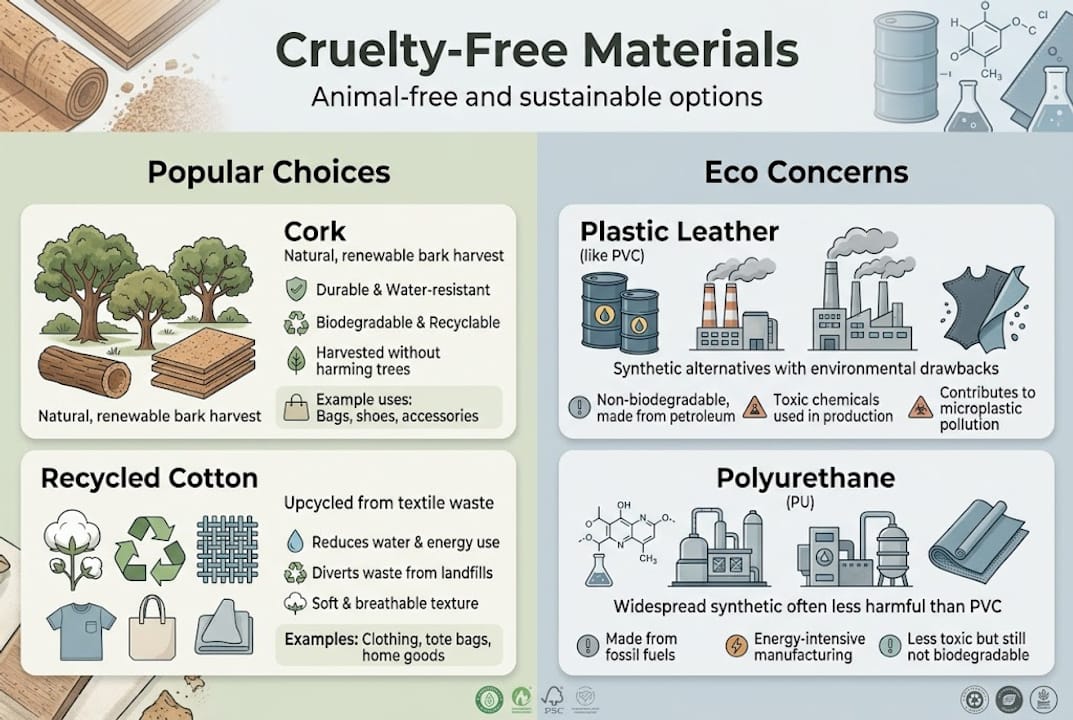
Cork stands out in this comparison. It is harvested from the bark of cork oak trees without cutting them down, meaning the tree continues to absorb carbon dioxide throughout its life. It is naturally water-resistant, durable, and fully biodegradable. For a deeper look at how different materials stack up, our guide to vegan leather alternatives covers the full landscape.
Consider also the reasons why many conscious shoppers are avoiding animal leather in the first place. The leather environmental impact includes significant land use, water consumption, and chemical-heavy tanning processes. Replacing leather with a plastic-based alternative does not fully resolve those concerns. It simply trades one set of issues for another.
- Cork: Renewable, biodegradable, naturally water-resistant, carbon-absorbing during harvest
- Piñatex: Made from pineapple leaf fibre, a by-product of the food industry, though often requires a plastic coating
- Mushroom leather: Innovative and biodegradable, but still emerging in terms of commercial scale and durability
- Recycled PET: Diverts plastic from landfill but is still plastic-based and non-biodegradable
- PU leather: Widely available and affordable, but fossil-fuel-derived and difficult to recycle
“Vegan is a great start. Sustainable is the full destination.”
The eco-friendly fashion guide we have put together explores why material choice is only one part of the sustainability equation. Production methods, transport, packaging, and end-of-life disposal all contribute to a product’s true environmental footprint.
Choosing ethical, stylish accessories: A practical guide
Informed shoppers are ready to take action. The good news is that finding accessories that are both genuinely cruelty-free and genuinely stylish has never been easier, provided you know where to look and what questions to ask.
If you want both cruelty-free and vegan animal-avoidance in fashion and accessories, look for certifications and programmes that explicitly address animal-derived materials, not just animal testing, and that explain their assurance methods through auditing, monitoring, and cut-off policies. That is the gold standard, and it is achievable.
Here is a practical checklist for selecting ethical accessories:
- Prioritise certifications that cover materials, not just testing. The Vegan Society Trademark is one of the most rigorous options available.
- Ask brands directly about their supply chain. Ethical companies welcome these questions. Evasive answers are a warning sign.
- Look for natural, plant-based, or recycled materials with a transparent sourcing story. Cork, organic cotton, and Piñatex all have clear, verifiable origins.
- Avoid vague claims such as “eco-friendly” or “sustainable” without supporting detail. These terms have no legal definition either.
- Choose brands that publish sustainability reports or third-party audits. Transparency is the clearest signal of genuine commitment.
- Consider durability as an ethical choice. A well-made, long-lasting accessory reduces consumption over time, which is itself a cruelty-free and sustainable act.
Understanding the role of sustainable materials in fashion helps you evaluate not just what a product is made from, but how that material was produced and what happens to it at the end of its life. The eco-friendly fashion trends for 2026 show a clear shift towards plant-based and upcycled materials, with cork, mushroom leather, and recycled ocean plastics all gaining serious traction among ethical fashion brands.
For shoppers based in the UK, the UK vegan accessory guide provides a curated overview of the best options available right now, from handbags to wallets to gift sets. It is a practical starting point if you want to refresh your accessories without compromising your values.
Pro Tip: When a brand is genuinely committed to cruelty-free and vegan standards, it will make that information easy to find. If you have to dig through three pages of marketing copy to find a straight answer about materials, that tells you something important. Our eco-friendly materials guide can help you identify the right questions to ask before you buy.
Style and ethics are not in conflict. Some of the most beautifully designed accessories on the market today are made from cork, organic cotton, and innovative plant-based materials. The key is knowing where to look and what to look for.
Why cruelty-free claims matter more than ever
We have spent years watching the language around ethical fashion evolve, and one thing is clear: the gap between marketing and reality has never been wider. Brands have become extraordinarily skilled at using words like “cruelty-free,” “sustainable,” and “conscious” in ways that feel meaningful but carry very little substance.
This is not cynicism. It is a pattern that shows up repeatedly, and it matters because shoppers who genuinely care about animal welfare and environmental impact deserve better than vague reassurances. Greenwashing, the practice of making products appear more ethical than they are, is widespread and often subtle. A brand can tick one box, such as avoiding animal testing, and use that single commitment to imply a much broader ethical stance.
Our view is that genuine cruelty-free fashion requires transparency at every level: materials, production, certification, and supply chain. If a brand cannot or will not provide that transparency, the claim is incomplete. The cruelty-free accessories guide we have developed reflects this standard, because we believe shoppers deserve clear, honest information rather than feel-good language.
The most empowering thing you can do as a conscious consumer is to ask more questions, not fewer. Demand specifics. Reward transparency. The brands that are genuinely committed to cruelty-free and sustainable practices will always be able to show their workings.
Explore cruelty-free, vegan accessories with confidence
With a clearer understanding of what cruelty-free fashion genuinely means, you are well-placed to make choices that reflect your values without compromising on style.
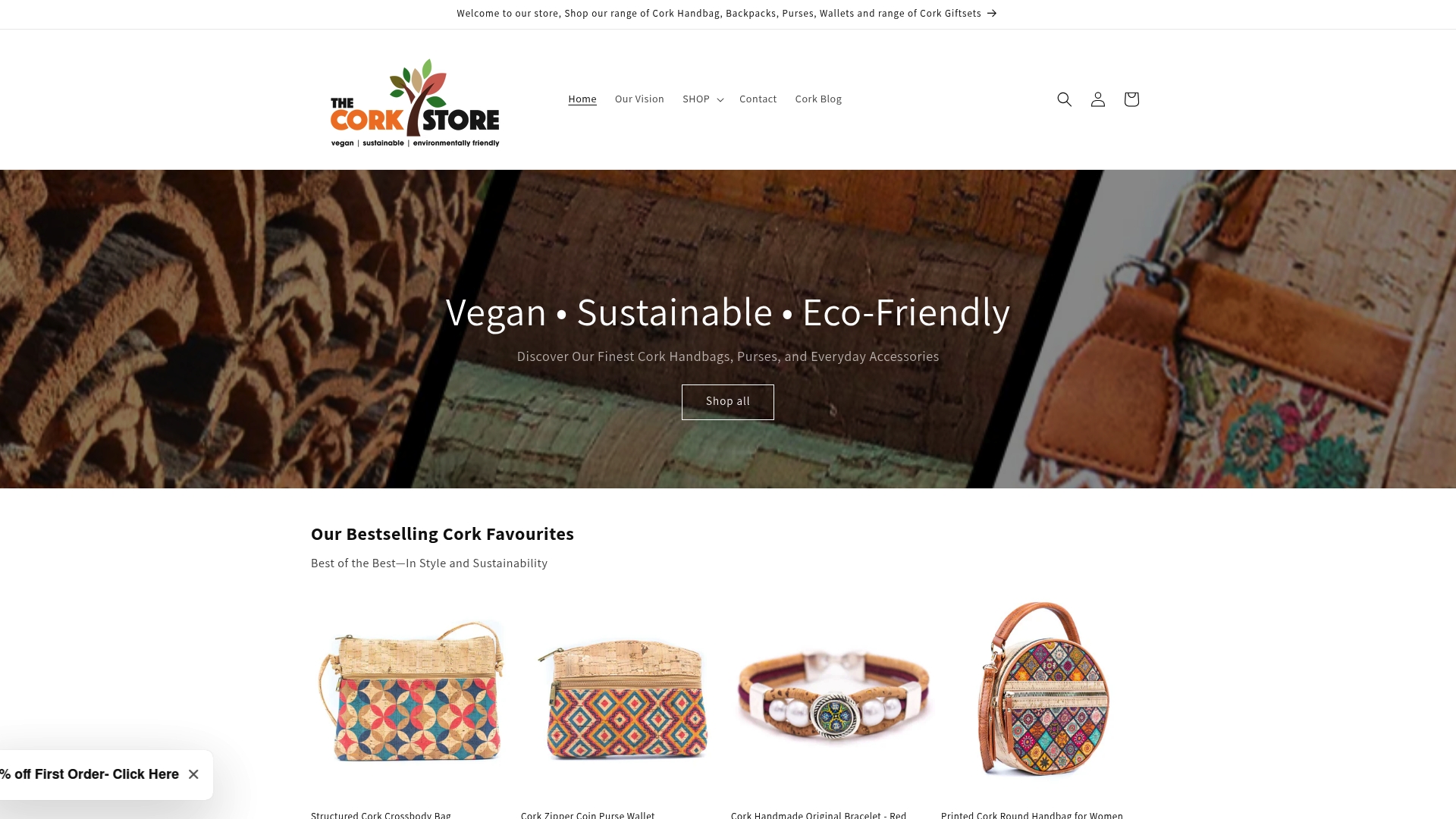
At The Cork Store, every product is crafted from natural cork, a material that is inherently vegan, biodegradable, and harvested without harming the tree. From handbags and backpacks to wallets and purses, the entire range is designed for shoppers who want accessories they can feel genuinely good about. If you are looking for a thoughtful gift or a treat for yourself, our vegan cork gift ideas collection brings together our most popular cruelty-free pieces in one place. Browse the range and discover what ethical style looks like in practice.
Frequently asked questions
Can a fashion product be labelled cruelty-free without being vegan?
Yes, cruelty-free often refers only to animal testing and may still include animal-derived materials like leather or wool. Since there is no single universal legal definition of “cruelty-free,” the label alone does not guarantee a product is fully animal-free.
Are all vegan fashion items sustainable?
No, vegan does not automatically mean sustainable. Some vegan leathers are plastic-based and may carry significant environmental concerns related to fossil fuel use and non-biodegradability.
How can I check if a cruelty-free accessory is genuinely animal-free?
Look for certifications that explicitly exclude animal-derived materials and describe ongoing compliance through audits and fixed cut-off dates. Self-reported claims without independent verification offer much weaker assurance.
Is cruelty-free fashion strictly regulated in the UK?
No, it is not. Since different organisations use different criteria and there is no overarching legal framework, shoppers must rely on third-party certifications and their own research to verify claims.