

Why Eco-Friendly Fashion Matters for Conscious Shoppers
Every shopping trip can feel like a dilemma when you care about the planet and want fashion that aligns with your values. With the fashion industry responsible for major water use, carbon emissions, and pollution, choosing what to wear holds real weight. This guide clears up what truly defines eco-friendly fashion, exposes the common misconceptions that confuse even the most conscious shoppers, and shows how cork accessories deliver on both style and sustainability.
Table of Contents
- Defining Eco-Friendly Fashion And Its Misconceptions
- Environmental Impact Of Conventional Fashion Industry
- Ethical Advantages Of Vegan And Cruelty-Free Fashion
- How Cork Accessories Support Sustainable Choices
- Common Pitfalls And What To Avoid In Eco Fashion
Key Takeaways
| Point | Details |
|---|---|
| Understanding Eco-Friendly Fashion | Eco-friendly fashion involves sustainable design, ethical production, and responsible consumption without sacrificing style. |
| Recognising Misconceptions | Awareness of common misconceptions like the belief that eco-friendly fashion is always costly can help you make informed purchases. |
| Environmental Impact Awareness | The conventional fashion industry has a significant negative impact on water, carbon emissions, and waste; choosing sustainable options reduces this footprint. |
| Avoiding Greenwashing | To ensure genuine sustainability, research brands for transparency in their supply chains and verify claims through recognised certifications. |
Defining Eco-Friendly Fashion and Its Misconceptions
Eco-friendly fashion isn’t just a trendy label slapped on overpriced basics. It’s a fundamentally different approach to how clothes are designed, produced, and worn throughout their entire lifecycle.
At its core, eco-friendly fashion means creating garments that minimise environmental damage. This covers everything from the materials sourced (whether they’re renewable or regenerative), to production processes that reduce water waste and chemical pollution, to supply chains that treat workers fairly.
But here’s where misconceptions start creeping in. Many people think eco-friendly fashion means sacrificing style for ethics. Wrong. Sustainable doesn’t mean boring, drab, or exclusively expensive.
What Eco-Friendly Fashion Actually Includes
True eco-friendly fashion encompasses several interconnected elements:
- Material sourcing – Using natural, organic, or innovative materials like cork that regenerate without depleting resources
- Manufacturing practices – Reducing water consumption, chemical usage, and carbon emissions during production
- Fair labour standards – Ensuring workers receive fair wages and safe working conditions
- Durability and longevity – Creating pieces designed to last years, not seasons
- End-of-life responsibility – Making products recyclable, compostable, or biodegradable
When you choose accessories crafted from cork, you’re ticking multiple boxes simultaneously. Cork harvesting doesn’t kill trees; it actually incentivises forest preservation across Portugal and Spain.
Common Misconceptions That Hold People Back
One massive misconception? That social media alone provides sufficient knowledge to make truly sustainable purchases. Influencers can raise awareness, but they often lack expertise in supply chains, material science, or environmental impact measurement.
Another myth: eco-friendly fashion costs significantly more than conventional options. Whilst some sustainable pieces carry premium pricing due to transparent sourcing, others deliver comparable value to fast fashion whilst lasting three times longer.
Shifting fashion from extraction towards regeneration requires changing how we value our clothing, not just what we buy.
People also wrongly assume that purchasing eco-friendly items absolves them from broader consumption habits. One sustainable handbag doesn’t offset buying 50 cheap throwaway items annually. It’s about building a intentional wardrobe, not shopping more mindfully whilst maintaining the same volume.
Why This Matters for Your Purchasing Decisions
Understanding these definitions and misconceptions directly affects how you spend your money. Raising environmental awareness requires separate investments from product development—meaning genuine eco-friendly brands invest heavily in both education and quality.
When you recognise misconceptions, you stop being swayed by greenwashing. You question claims. You check certifications. You choose brands that prove their commitment through transparency, not just marketing language.
The real power of eco-friendly fashion lies in intentionality. It’s about understanding exactly what you’re buying, why it matters, and how your choices ripple outward.
Pro tip: Start by identifying which misconceptions influenced your past purchases, then use that awareness to evaluate new pieces before buying—ask yourself whether the brand actually proves its environmental claims or simply claims to be sustainable.
Environmental Impact of Conventional Fashion Industry
The fashion industry is quietly one of the planet’s biggest environmental culprits. It consumes vast resources, generates toxic waste, and contributes significantly to climate change—yet most people don’t realise the scale of the problem.
Conventional fashion operates on a linear model: extract raw materials, manufacture quickly, sell cheaply, discard rapidly. This throwaway mentality drives environmental destruction at every stage.
The Water Crisis
Water consumption in fashion is staggering. The conventional fashion industry ranks among the world’s largest water consumers, second only to agriculture. A single cotton t-shirt requires approximately 2,700 litres of water to produce—enough drinking water for one person for 2.5 years.
But it’s not just about volume. The water used in dyeing and textile processing becomes contaminated with toxic chemicals, polluting rivers and groundwater in producing countries. Communities downstream often have no clean water access because fashion brands have claimed it all.
Carbon Emissions and Climate Impact
Fashion contributes between 2-8% of global carbon emissions. That’s more than international flights and maritime shipping combined. Most emissions come from manufacturing, transportation, and the energy required to keep factories running around the clock.
The acceleration of fast fashion has worsened this dramatically. Brands now release collections weekly instead of seasonally, pushing factories to operate at unsustainable speeds with maximum energy consumption.
Waste and Microplastics Pollution
Here’s a sobering fact: synthetic fibres generate microplastic pollution with every wash. These tiny plastic particles end up in oceans, soil, and eventually our food chain. A single polyester jacket sheds millions of microplastics during its lifetime.
Textile recycling rates remain dismally low—roughly 15% globally. The rest accumulates in landfills or gets incinerated, releasing carbon and toxic fumes.
Why This Matters to Your Wardrobe Choices
Understanding this impact transforms how you shop. You stop viewing clothes as disposable. You start asking whether a £15 jumper is worth the environmental cost of producing it.
Here are the key environmental problems to recognise:
- Water depletion – Aquifers drained faster than they regenerate
- Chemical pollution – Toxic dyes contaminating ecosystems permanently
- Carbon emissions – Accelerating climate change through manufacturing and transport
- Microplastic accumulation – Synthetic fibres degrading into ocean pollution
- Textile waste – Mountains of unworn clothing in landfills
The fashion industry’s linear model—make, wear, discard—cannot coexist with a stable climate or clean water systems.
When you choose sustainable alternatives like cork accessories, you’re actively reducing demand for these destructive processes. You’re saying no to water waste, toxic chemicals, and fast fashion’s throwaway culture.
Here’s a concise summary of how conventional, eco-friendly, and cork-based fashion differ in key areas:
| Aspect | Conventional Fashion | Eco-Friendly Fashion | Cork-Based Fashion |
|---|---|---|---|
| Environmental Impact | High water, carbon, and waste | Reduced emissions and waste | Minimal footprint, forests preserved |
| Ethical Practices | Often low, worker issues | Fair labour, ethical sourcing | Supports rural communities |
| Material Lifecycle | Linear, rarely recycled | Circular, durable, recyclable | Renewable and biodegradable |
| Animal Welfare | Animal use and harm | Avoids animal products | No animal exploitation |
Pro tip: Before purchasing any fashion item, ask yourself: “Where does this material come from and what happens to it after I’m done?” This single question shifts your entire purchasing philosophy towards lasting, responsible choices.
Ethical Advantages of Vegan and Cruelty-Free Fashion
Vegan and cruelty-free fashion represents a fundamental shift in how we think about clothing ethics. It’s not just about avoiding animal products—it’s about building a fashion system that respects both animals and people.
At its heart, cruelty-free fashion means zero harm. No animal-derived materials. No testing on animals. No exploitation hiding anywhere in the supply chain.
What Makes Fashion Truly Cruelty-Free
Cruelty-free fashion eliminates all animal-derived materials like leather, wool, silk, and fur. But it goes deeper than material swaps. It means ensuring no animals suffered during production, transportation, or testing phases.
This includes rejecting conventional leather from cattle farming, which drives deforestation and generates massive greenhouse gas emissions. It means refusing wool that comes from farms with poor animal welfare standards. It means avoiding materials derived from animals killed specifically for fashion.
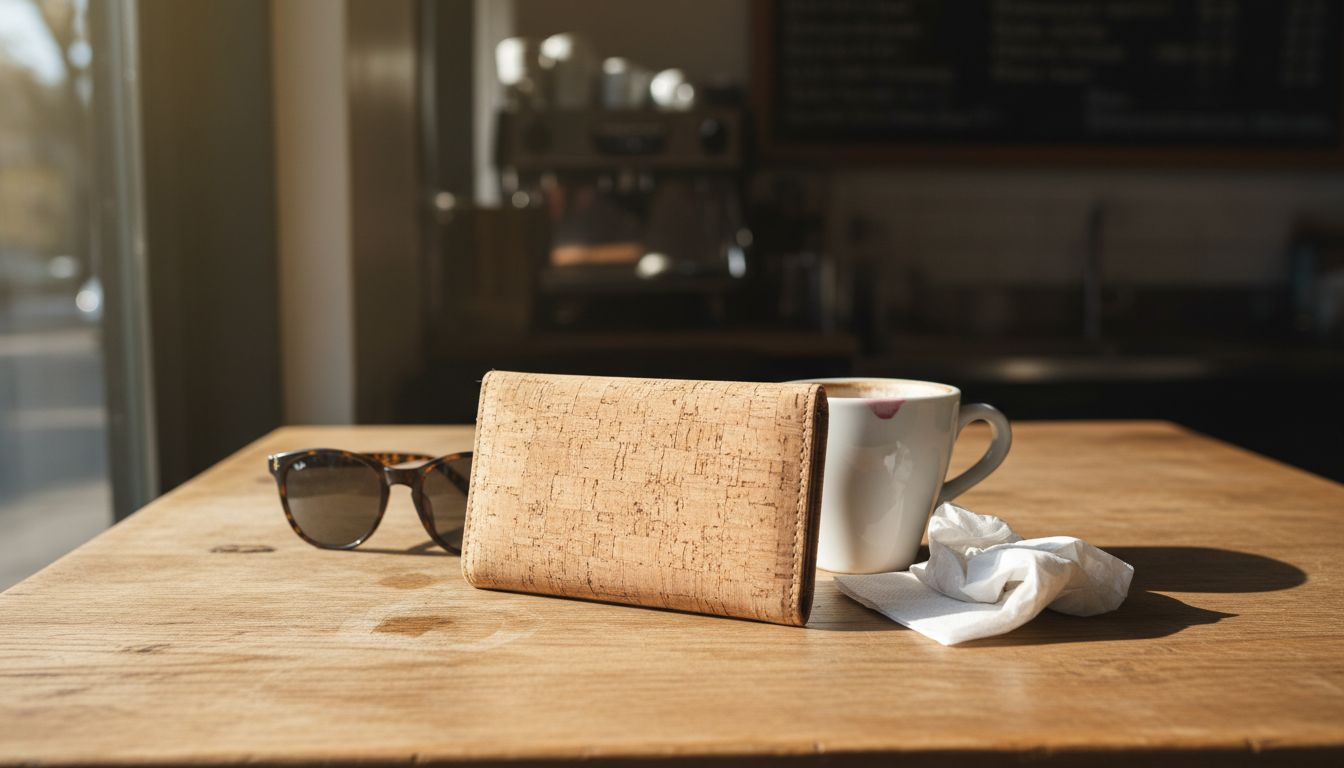
Cork accessories exemplify this approach perfectly. Cork harvesting doesn’t harm trees or animals—it preserves forests whilst creating beautiful, durable products.
The Animal Welfare Impact
Conventional leather production kills billions of animals annually. Wool farming often involves practices like mulesing, which causes severe animal suffering. Fur farming is universally recognised as inhumane, yet persists in many countries.
Vegan and cruelty-free fashion eliminates this exploitation entirely. When you choose plant-based alternatives and innovative materials, you’re directly reducing demand for animal suffering.
Beyond direct animal welfare, animal farming for fashion drives environmental destruction. Cattle ranching causes deforestation across the Amazon. Wool production consumes enormous water quantities and generates pollution. Choosing vegan alternatives removes this indirect harm too.
The Broader Ethical Picture
Plant-based textiles and vegan materials support fair labour practices alongside animal welfare. Ethical fashion brands often invest in worker safety, fair wages, and community development—things leather and fur industries frequently neglect.
Vegan fashion also encourages innovation. Companies developing cork handbags, mushroom leather alternatives, and plant-based fabrics are creating jobs in sustainable sectors rather than exploitative animal agriculture.
Here’s what ethical vegan fashion delivers:
- No animal death or suffering – Zero harm to any living creatures
- Reduced environmental damage – Avoiding resource-intensive animal farming
- Better labour conditions – Brands often prioritise worker welfare alongside ethics
- Innovation incentives – Companies develop cutting-edge sustainable materials
- Alignment with values – Your purchases reflect your beliefs about animal rights
Choosing vegan fashion means refusing to participate in any industry that profits from animal suffering or exploitation.
When you purchase cork accessories instead of leather, you’re making a statement. You’re saying that style doesn’t require cruelty. You’re supporting businesses that prove ethical and beautiful can coexist.
Pro tip: When shopping, look for certifications like PETA-approved vegan or Leaping Bunny cruelty-free symbols—these third-party verifications guarantee brands genuinely match their ethical claims rather than relying on marketing language alone.
How Cork Accessories Support Sustainable Choices
Cork represents one of the most perfectly sustainable materials available. It’s not a compromise or a lesser alternative—it’s genuinely superior to conventional options across environmental, ethical, and durability metrics.
When you choose cork accessories, you’re actively supporting a system that regenerates rather than depletes. You’re backing forest conservation, fair trade communities, and circular economy principles all at once.
Why Cork Is Genuinely Sustainable
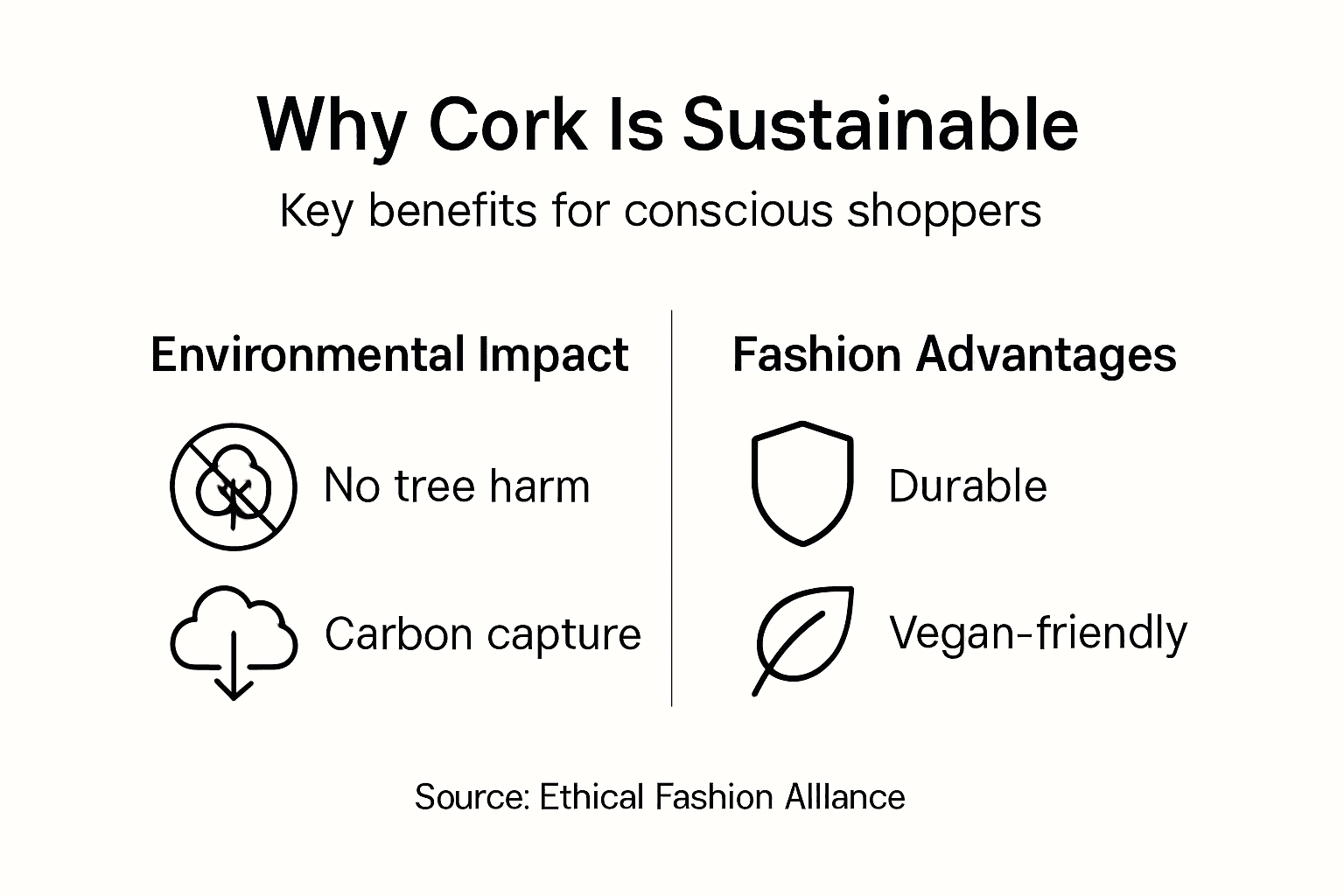
Cork harvesting never kills trees. The bark is stripped from cork oak trees, and the tree simply regrows it. This happens repeatedly throughout the tree’s 200-year lifespan, making cork an infinitely renewable resource.
Better still, cork oak forests capture carbon and prevent desertification whilst supporting biodiversity. These forests are ecosystems, not monocultures. They host endangered species, maintain soil health, and provide livelihoods for thousands of workers across Portugal and Spain.
Compare this to leather, which requires cattle farming that causes deforestation, or synthetic materials, which involve petroleum extraction and plastic pollution. Cork simply wins on environmental impact.
The Full Sustainability Picture
Cork’s benefits extend throughout its lifecycle:
- Renewable harvesting – Bark regrows; trees never die from cork production
- Carbon sequestration – Forests capture atmospheric carbon as bark regenerates
- Biodiversity protection – Cork forests host endangered wildlife and diverse ecosystems
- Durability – Cork accessories last years, reducing replacement waste
- Biodegradable – Unlike synthetics, cork decomposes naturally at end-of-life
- Local economies – Harvesting supports rural communities dependent on cork production
When you purchase a cork handbag or wallet, you’re directly funding forest preservation. You’re creating economic incentive to keep cork forests intact rather than converting them to other land use.
Supporting Communities and Ecosystems
Cork harvesting maintains healthy ecosystems whilst supporting local economies in ways that benefit both people and nature. Workers in cork regions have sustainable livelihoods built on practices that improve environmental health.
This contrasts sharply with conventional leather and synthetic industries, which often exploit workers whilst degrading environments. Cork represents ethical fashion that genuinely walks the talk.
Your cork accessories support:
- Cork forest workers – Fair employment in sustainable harvesting
- Rural communities – Economic stability dependent on forest preservation
- Biodiversity – Protected habitats for endangered species
- Climate action – Carbon capture through forest regeneration
Choosing cork means your purchase directly preserves forests and supports communities rather than funding extractive industries.
Each cork wallet, backpack, or bag you buy sends a market signal: sustainable materials are desirable, profitable, and worth investing in. You’re not just making a personal choice—you’re shaping industry direction.
Pro tip: When selecting cork accessories, look for products made from Portuguese or Spanish cork specifically—these regions have the strictest sustainability regulations and the longest history of responsible forest management practices.
Common Pitfalls and What to Avoid in Eco Fashion
Wanting to shop sustainably is admirable. But the eco-fashion landscape is littered with traps designed to separate conscious consumers from their money without delivering real environmental benefit. Knowing what to avoid is just as important as knowing what to buy.
The biggest threat isn’t brands making mistakes—it’s brands making misleading claims intentionally. Greenwashing is rampant in fashion, and it’s designed to exploit your good intentions.
The Greenwashing Problem
Greenwashing happens when brands market themselves as eco-friendly whilst their practices remain fundamentally unchanged. They’ll highlight one sustainable initiative whilst ignoring massive environmental damage elsewhere in their supply chain.
Common greenwashing tactics include:
- Using green packaging and nature imagery without changing actual production methods
- Claiming “eco-friendly” without certifications or verifiable proof
- Highlighting one small sustainable collection whilst mass-producing fast fashion
- Making vague claims like “natural” or “conscious” without defining what that means
- Featuring aspirational sustainability goals without current accountability
Greenwashing masks unethical practices through misleading marketing tactics designed to appear sustainable whilst maintaining exploitative systems. The brand looks good; the actual impact remains unchanged.
The Fast Fashion Trap
Don’t confuse “eco-friendly fast fashion” with genuinely sustainable fashion. Some brands have launched sustainable collections whilst maintaining rapid, wasteful production cycles overall.
This is still fast fashion. It still encourages overconsumption. One sustainable piece doesn’t offset buying dozens of cheap items annually.
True sustainability means buying less, choosing pieces that last, and valuing quality over quantity. It’s a fundamentally different mindset from fast fashion, regardless of what marketing claims are made.
Supply Chain Opacity
If a brand can’t clearly explain where materials come from and how workers are treated, that’s a red flag. Lack of transparency in supply chains enables unethical labour practices and environmental degradation to continue hidden from consumer view.
Ask questions. Demand answers. Brands operating genuinely sustainably are transparent about their processes, materials, sourcing locations, and worker conditions. They’re proud to share this information.
Avoid these common pitfalls:
- No certification – Unverified claims mean nothing; look for third-party certifications
- Hidden supply chains – Brands should clearly identify production locations
- Vague sustainability language – Specific, measurable claims beat flowery promises
- No worker information – Fair trade means transparency about who makes your clothes
- Constantly launching new collections – This suggests overproduction and waste
Genuine eco-friendly fashion requires transparency, durability, and commitment to reducing overall consumption—not just marketing better.
When you choose cork accessories from brands committed to transparency and longevity, you avoid these pitfalls entirely. You’re buying from businesses built on sustainable principles, not brands attempting to greenwash their way to profits.
To help identify authentic sustainable brands, here’s how transparency and certifications matter:
| Criteria | Genuine Sustainable Brand | Greenwashed Brand |
|---|---|---|
| Supply Chain Transparency | Detailed sourcing info publicly available | Vague or withheld sourcing details |
| Environmental Certification | Recognised third-party certificates | No official verification |
| Labour Conditions Disclosure | Provides fair wage and workplace data | No information on workers |
| Production Approach | Focused on longevity and low output | Frequent collections, high volume |
Pro tip: Before purchasing anything labelled “eco-friendly,” spend five minutes researching the brand’s certifications and supply chain transparency—if they won’t publicly share this information, they’re likely greenwashing rather than genuinely sustainable.
Embrace True Eco-Friendly Fashion Today
The article highlights the challenges of greenwashing, fast fashion traps, and misconceptions about sustainable clothing. If you are seeking to align your wardrobe with authentic eco-conscious values and avoid superficial green claims, it is essential to choose accessories that embody transparency, durability, and ethical sourcing. Choosing products that regenerate rather than deplete the environment is a powerful way to make your fashion choices truly matter.
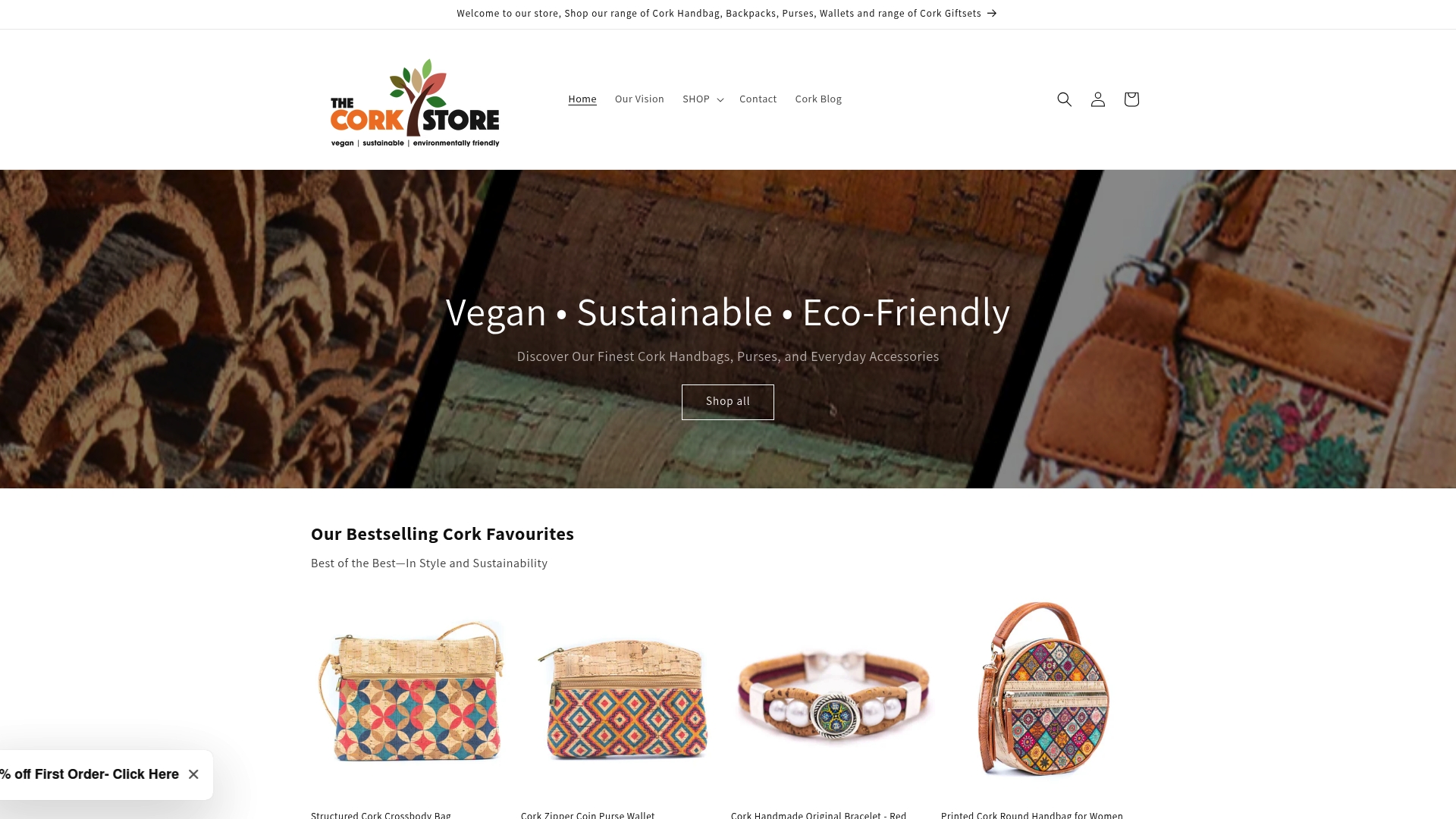
Discover a curated collection of stylish, cruelty-free, and vegan cork accessories that support forest preservation and fair labour practices at The Cork Store. Each handbag, wallet, or backpack you select helps combat water waste, chemical pollution, and animal exploitation associated with conventional fashion. Start building an intentional wardrobe now with pieces designed to last and prove their sustainable credentials. Shop confidently by visiting our homepage and explore how cork-based fashion can transform your relationship with style and ethics.
Frequently Asked Questions
What are the key elements of eco-friendly fashion?
Eco-friendly fashion incorporates sustainable material sourcing, ethical manufacturing practices, fair labour standards, durability of products, and end-of-life responsibility, such as recyclability or biodegradability.
How does conventional fashion contribute to environmental issues?
The conventional fashion industry consumes vast resources, generates toxic waste, produces significant carbon emissions, and contributes to water pollution and microplastic accumulation, leading to environmental degradation.
What is greenwashing, and how can I avoid it?
Greenwashing is when brands falsely market themselves as eco-friendly while maintaining harmful practices. To avoid it, look for third-party certifications, demand transparency regarding supply chains, and be cautious of vague sustainability claims.
Why should I consider cork accessories as part of my eco-friendly wardrobe?
Cork accessories are sustainable because cork harvesting doesn’t kill trees, it supports biodiversity, captures carbon, and is biodegradable. Choosing cork helps preserve forests and supports fair trade practices in local economies.