
Top ethical fashion trends 2025: a guide for eco shoppers
TL;DR:
- The top ethical fashion trends for 2025 emphasize circular systems, digital traceability, and slow fashion principles. These practices promote sustainable, long-lasting products built with verified ethical materials, reducing waste and environmental impact. Consumers are encouraged to prioritize transparency, certifications, and timeless design when making ethical fashion choices.
The top ethical fashion trends 2025 are reshaping the way people dress, spend, and define personal style. Sustainable fashion is no longer a compromise between conscience and aesthetics — it is the dominant direction of the industry. Consumers now expect their clothes and accessories to carry verified ethical credentials, not just a vague “eco-friendly” label. This guide breaks down exactly what is driving that shift: from circular systems and digital traceability to slow fashion philosophy and cruelty-free materials that genuinely look good.
Table of Contents
- Circular fashion as the new mainstream
- Technology powering transparency and traceability
- Understanding certification: the role of GOTS and ethical labels
- Slow fashion mindset and its impact on sustainable wardrobe building
- Ethical and cruelty-free accessories: trends and materials
- Why sustainability demands both transparency and timeless style
- Discover stylish, eco-friendly vegan accessories at The Cork Store
- Frequently asked questions
Key Takeaways
| Point | Details |
|---|---|
| Circular fashion mainstream | Circular methods like take-back and resale keep clothes in use longer, reducing waste. |
| Tech-driven transparency | Digital IDs and QR codes help verify product origins and ethical credentials. |
| Certification matters | GOTS and other labels ensure authentic organic and ethical fashion standards. |
| Embrace slow fashion | Buying timeless, durable pieces supports long-term sustainability. |
| Cruelty-free accessories | Vegan and bio-based materials offer stylish ethical alternatives for accessories. |
Circular fashion as the new mainstream
Building on a growing desire for sustainability, circular fashion has become a defining feature of 2025 ethical apparel. Circular fashion (a system designed to keep materials in use as long as possible) is no longer a niche concept practised by a small group of activists. Circular fashion is now mainstream in 2025, with brands organising take-back programmes, resale platforms, and in-store repair services as standard offerings.
In practical terms, this means a jacket you buy today might come with a repair guarantee, a resale tag embedded in its lining, and a recycling pathway mapped out before the item even reaches the shop floor. Brands such as those operating within the circular economy model are moving away from the “buy, wear, discard” cycle entirely. The environmental logic is clear. Extending a garment’s active life by just nine months reduces its carbon, water, and waste footprint by around 20 to 30 per cent.
Technology is accelerating this shift. Digital product passports, which store information about a garment’s materials, origins, and end-of-life options, are making it easier for consumers to return items to the right recycling stream. If you are exploring how these principles apply to accessories, sustainable vegan accessories built on similar circularity principles offer a strong starting point.
Key circular fashion practices to look for when shopping:
- Take-back schemes: Brands accept worn items for resale, repair, or recycling
- Rental and subscription models: Access to quality garments without permanent ownership
- Upcycled collections: New pieces made from post-consumer or deadstock fabric
- Repair services: On-site or postal mending to extend product life
- Resale integration: QR codes or tags enabling easy second-hand listing
Pro Tip: Before buying, check whether a brand publishes its circular policies on its website. A credible programme will include specific collection points and a clear explanation of what happens to returned items.
Technology powering transparency and traceability
Technology not only supports circular fashion but also makes it accessible and trustworthy through transparency. One of the clearest trends in sustainable fashion styles 2025 is the shift from brand self-reporting to verifiable digital proof. Brands increasingly use digital traceability tools such as QR codes and digital IDs to verify a product’s origin and support resale and recycling at the point of consumer decision-making.
This matters because greenwashing (when brands use environmental language without substance to back it up) remains widespread. A QR code that reveals the farm where cotton was grown, the factory where a bag was assembled, and the certifications held at each stage is categorically different from a marketing tagline that says “sustainably sourced.” The technology shifts accountability from brand communication teams to independently verifiable records.
For consumers, the practical upside is significant. When you scan a digital ID at purchase, you can assess a product’s full lifecycle, understand its resale value, and know exactly how to dispose of it responsibly at the end of its use. Learning how to spot sustainable fashion through these tools is one of the most useful skills for 2025 ethical fashion shopping.
Useful ways to use digital traceability when shopping:
- Scan QR codes on labels before purchasing, not just after
- Look for brands publishing supply chain maps on their websites
- Use digital IDs to cross-reference certifications with accreditation bodies
- Check whether the traceability covers raw materials, not just the finished product
Pro Tip: If a brand’s QR code only leads to a marketing page rather than specific supply chain data, treat that as a red flag. Genuine traceability tools link to named suppliers and third-party audits.
Understanding certification: the role of GOTS and ethical labels
Beyond transparency, trusted certifications offer clear assurance of a product’s ethical credentials. For anyone following the 2025 ethical fashion guide, understanding what GOTS (Global Organic Textile Standard) actually certifies is more useful than recognising its logo alone. GOTS requires certification across the entire supply chain for organic textiles, covering both environmental and social criteria with strict fibre thresholds.
| Certification level | Organic fibre threshold | Key guarantee |
|---|---|---|
| GOTS Grade 1 (“organic”) | Minimum 95% certified organic | Full chemical and social compliance |
| GOTS Grade 2 (“made with organic”) | Minimum 70% certified organic | Partial organic with the same processing standards |
| OEKO-TEX Standard 100 | No fibre threshold | Harmful substance testing only |
| Fair Trade Certified | No fibre threshold | Focus on fair wages and labour conditions |
The distinction matters. A GOTS Grade 1 garment guarantees that at least 95 per cent of its fibres are certified organic and that every stage of processing, from spinning to dyeing to sewing, meets rigorous environmental and social standards. That includes prohibition of toxic chemicals, safe wastewater treatment, and fair pay for workers throughout the supply chain.
OEKO-TEX and Fair Trade certifications are valuable but cover different ground. Knowing which label addresses which concern lets you build a more informed wardrobe rather than trusting that any badge equals full ethical compliance.
Key things GOTS certification covers:
- Fibre origin: Confirms organic farming without synthetic pesticides or GMOs
- Processing standards: Restricts harmful dyes and chemical finishing agents
- Social criteria: Mandates safe working conditions and prohibits child labour
- Traceability: Requires documentation at every supply chain stage
Exploring top eco-friendly fashion trends alongside certification knowledge gives you a much sharper filter when deciding where to spend.
Pro Tip: You can verify any GOTS certificate directly on the GOTS public database using the certificate number shown on a product’s label or the brand’s website.
Slow fashion mindset and its impact on sustainable wardrobe building
Moving from certification to behaviour, embracing slow fashion shapes how consumers shop sustainably. Slow fashion is the philosophy of buying fewer, better things and expecting them to last years rather than seasons. As Harper’s Bazaar notes, the right approach is to treat sustainable brands as slow fashion offerings of timeless, high-quality pieces intended to last longer, prioritising certified options over trend-driven purchases.
The environmental case is direct. Fast fashion generates approximately 92 million tonnes of textile waste globally each year. Slow fashion is not simply about buying less. It is about buying deliberately, with attention to materials, construction quality, and the conditions under which something was made. A well-made cork handbag or a certified organic linen shirt carries a different value proposition from a trend piece designed for a single season.
“The most sustainable garment is the one you already own, followed closely by the one made to outlast everything else in your wardrobe.” This framing from sustainable fashion advocates captures the core of what slow fashion demands: longevity as the primary measure of quality.
Steps to build a slow fashion wardrobe:
- Audit what you have before buying anything new, identifying genuine gaps rather than wants
- Set a cost-per-wear standard to evaluate whether a purchase represents lasting value
- Prioritise natural and certified materials that age well and can be repaired or composted
- Choose versatile, timeless pieces that work across multiple contexts without going out of style
- Research brand ethics using the certification and traceability tools described above
Benefits of slow fashion worth noting:
- Lower long-term spending despite higher upfront costs per item
- Reduced contribution to landfill and textile pollution
- Stronger connection to the objects you own and wear
- Support for skilled craftspeople and ethical manufacturers
The eco-conscious shopping guide offers a practical framework for applying these principles across different product categories.
Ethical and cruelty-free accessories: trends and materials
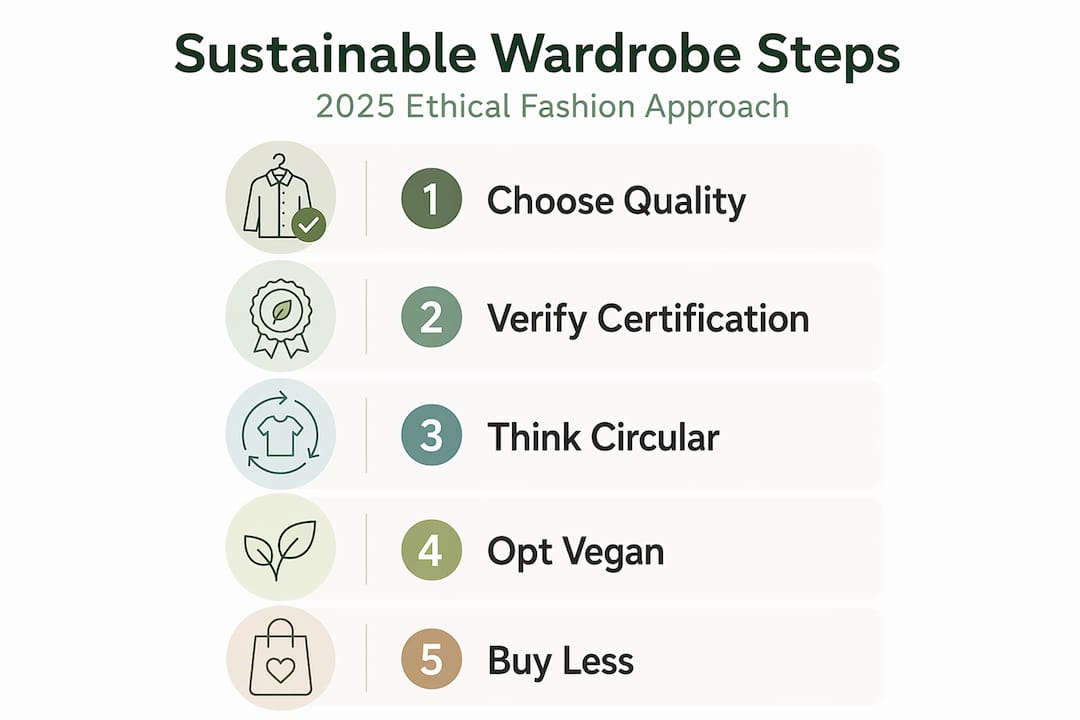
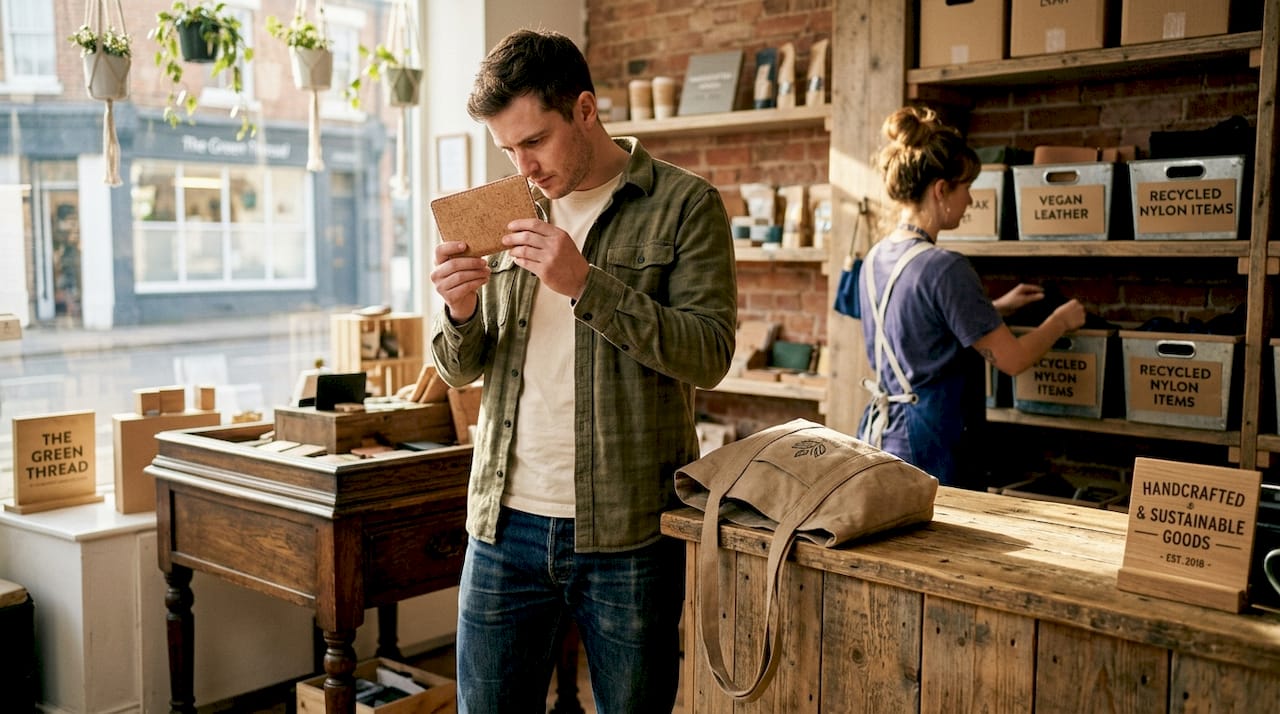
Accessories complete the sustainable wardrobe and exemplify the combination of style, ethics, and circular design. Among the top eco-fashion trends 2025, the accessory space is seeing some of the most exciting material innovation. Sustainable accessories now include cruelty-free, vegan, bio-based alternatives to conventional leather, with circular systems and skilled craftsmanship supporting traceability from material source to finished product.
| Material | Animal-derived? | Key sustainability feature | Durability rating |
|---|---|---|---|
| Traditional leather | Yes | Long-lasting but high environmental cost | High |
| Cork | No | Harvested without felling trees; biodegradable | High |
| Mango leather | No | Made from mango stone waste; reduces food industry byproduct | Medium-high |
| Upcycled fabric | No | Diverts textile waste; low energy production | Medium |
| Pineapple leaf fibre | No | Agricultural waste; biodegradable | Medium |
Cork deserves particular attention. The material is harvested by stripping bark from cork oak trees, a process that does not harm the tree and actually encourages it to absorb more CO2 during regrowth. It is naturally water-resistant, lightweight, and durable enough to outlast many conventional leather alternatives with proper care.
When evaluating cruelty-free accessories, look for:
- Named material sourcing: Where and how the material was produced
- Craft transparency: Information about who made the product and their working conditions
- Circular design features: Repair services, take-back options, or recyclability at end of life
- Third-party certification: PETA-approved vegan, Fair Trade, or equivalent labels
- Digital traceability: QR codes or product passports confirming material origin
You can explore stylish vegan accessories and sustainable accessory trends to see how these principles translate into real products worth owning.
Pro Tip: “Vegan leather” is not automatically sustainable. Always check the base material. PVC-based vegan leather carries significant environmental costs, while plant-based alternatives like cork or mango leather offer genuinely lower impact across their full lifecycle.
Why sustainability demands both transparency and timeless style
There is a version of sustainable fashion that is really just marketing dressed in better language. Brands slap a leaf symbol on their packaging, use the word “conscious” somewhere in their copy, and call it an ethical offering. Cynicism about vague “eco” claims is entirely justified, and the best development in 2025 has been the gradual shift from marketing accountability to verifiable accountability through traceability tools.
But here is the less comfortable truth: transparency alone is not enough. A brand can publish its entire supply chain in a publicly accessible database and still produce disposable, trend-driven items designed to be replaced next season. Knowing exactly where something was made does not automatically make it worth owning for a decade. Transparency is a necessary condition, not a sufficient one.
The sustainable fashion guide 2025 that actually serves you is the one that pairs traceability knowledge with a slow fashion mindset. You need both. Verifiable supply chain data tells you whether a brand’s claims are real. A commitment to timeless design and material quality tells you whether the product deserves your money and your space. Together, those two filters eliminate the vast majority of greenwashed products on the market.
We have seen this play out clearly in the accessories space. A cork handbag with a documented material origin, built to last years and designed without seasonal styling that dates it immediately, represents something fundamentally different from a disposable tote in recycled polyester with a minimalist brand logo. The role of eco-fashion in 2025 is to make that difference obvious and easy to act on.
Explore ethical fashion explained for a deeper grounding in the principles behind these choices, and see how sustainable fashion trends 2025 continue to evolve around both accountability and longevity.
Discover stylish, eco-friendly vegan accessories at The Cork Store
If this guide has sharpened your thinking about what ethical fashion actually looks like in practice, the next step is finding products that genuinely live up to those standards. At The Cork Store, every accessory is crafted from natural cork, a material that is harvested sustainably, entirely animal-free, and built to last far longer than its weight might suggest.
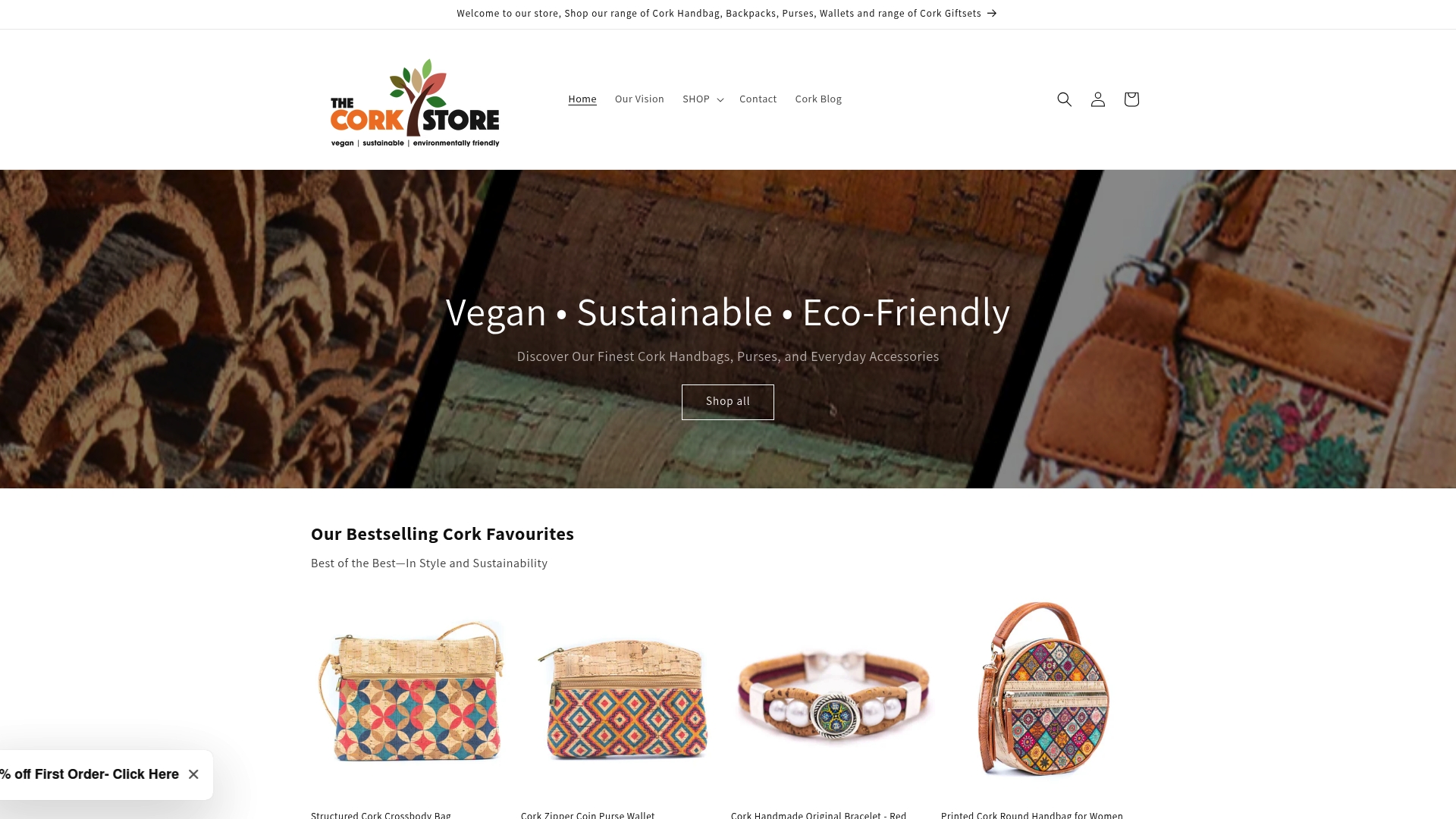
Our eco-friendly vegan cork products align directly with the 2025 trends covered in this guide: cruelty-free materials, traceable origins, and timeless designs that work across seasons. Whether you are looking to replace a leather wallet or find a considered gift, the natural cork wallet gift set is a strong example of slow fashion principles applied to everyday accessories. Browse the full collection and see what ethical style looks like without the greenwash.
Frequently asked questions
What is circular fashion and why is it important?
Circular fashion focuses on extending the life cycle of clothing through repair, resale, and recycling to reduce waste, and is now mainstream in 2025 rather than a niche practice. It is important because it directly addresses the fashion industry’s enormous contribution to global textile waste and carbon emissions.
How do digital IDs and QR codes help consumers?
They provide independently verified information about a product’s material journey and origin, and support resale and recycling by giving consumers a clear pathway at end of use. This shifts sustainability from a brand claim into a verifiable, consumer-accessible fact.
What does GOTS certification guarantee?
GOTS certifies organic textiles against strict environmental and social standards across the entire supply chain, including chemical safety in processing and fair labour rights at every production stage. It is one of the most rigorous and independently verified textile certifications available.
Why is slow fashion important for sustainability?
Slow fashion encourages buying timeless, high-quality pieces designed to last years rather than seasons, which directly reduces consumption, waste, and the environmental cost of constant replacement. It also supports ethical manufacturers whose business model depends on quality rather than volume.
How can I find ethical, cruelty-free accessories?
Look for vegan, bio-based materials such as cork or mango leather with circular systems and traceability documentation, and cross-reference any certification claims against independent accreditation databases before purchasing.