
Ethical fashion explained: a guide for conscious shoppers
TL;DR:
- Most people want to improve their ethical fashion choices, but industry labels often lack clarity. Ethical fashion emphasizes fair labor, sustainable materials, and environmental responsibility, while sustainability focuses on ecological impact; both are crucial. Certified brands like GOTS and Fair Trade offer reliable indicators of genuine ethical and sustainable practices.
Most people genuinely want to make better choices with their money, yet the fashion industry makes that surprisingly hard. Terms like “ethical,” “sustainable,” and “eco-friendly” are used so loosely on labels and websites that they lose all meaning. What you actually need is clarity, not more buzzwords. The fashion industry accounts for 8–10% of global greenhouse gas emissions, making it one of the most polluting sectors on the planet. This guide breaks down exactly what ethical fashion means, how to identify it, and how materials like cork offer a genuinely better path forward.
Table of Contents
- Defining ethical fashion
- Ethical versus sustainable fashion: why the difference matters
- Key practices and certifications for ethical fashion
- The real impact of ethical fashion choices
- How to shop ethically: practical tips for conscious consumers
- Why going truly ethical means more than just ‘buying better’
- Find your next ethical accessory with confidence
- Frequently asked questions
Key Takeaways
| Point | Details |
|---|---|
| Clear definition | Ethical fashion considers both social and environmental impacts throughout the supply chain. |
| Certification is crucial | Trustworthy certifications—like GOTS—prove real ethical commitments and supply chain transparency. |
| Long-term savings | Investing in ethical fashion can actually lower your wardrobe costs over time. |
| Beware moral licensing | Even ethical or secondhand shopping can lead to overconsumption without conscious habits. |
| Practical action steps | Adopt a checklist and seek out materials like cork for sustainable, stylish, and vegan-friendly accessories. |
Defining ethical fashion
The word “ethical” gets applied to everything from organic cotton tees to luxury handbags, which makes it almost meaningless without context. At its core, ethical fashion is clothing and accessories produced with respect for people and the planet, emphasising fair labour, sustainable materials, and minimal environmental harm across the supply chain. That covers a wide range of practices, from how workers are paid and protected to how raw materials are harvested and processed.
It helps to separate two pillars. The social pillar asks whether the people making your clothes are paid fairly, working in safe conditions, and free from exploitation. The environmental pillar asks whether the production process damages ecosystems, wastes water, or releases toxic chemicals. Key methodologies include fair labour practices, sustainable materials, minimising harmful processes, and supply chain transparency. A brand that ticks both boxes is operating at a genuinely high standard.
One thing worth noting is that “ethical” and “sustainable” are related but not the same. Sustainable fashion prioritises long-term environmental health, while ethical fashion includes the human dimension too. Understanding this distinction is foundational to everything that follows in this guide. You can also explore the broader benefits of ethical fashion to see why these choices make a measurable difference.
“Ethical fashion is not a niche trend. It is a fundamental rethinking of how the industry treats both people and the natural world.”
Key characteristics of ethical fashion include:
- Fair wages and safe working conditions for everyone in the supply chain
- Transparent sourcing so consumers know where and how products are made
- Animal welfare commitments, including cruelty-free and vegan alternatives
- Responsible use of materials, choosing those with low environmental impact
- Accountability, meaning brands publish their practices and invite scrutiny
These principles are the baseline for ethical textile sourcing. Without them, a brand’s green credentials are largely cosmetic.
Ethical versus sustainable fashion: why the difference matters
Many shoppers use “ethical” and “sustainable” as if they mean the same thing. They overlap, but they are not identical. Ethical fashion focuses on social and labour issues, while sustainable fashion focuses on environmental outcomes. A product can be one without being the other.
Here is a practical comparison to make it clearer:
| Feature | Ethical fashion | Sustainable fashion |
|---|---|---|
| Primary focus | People, labour rights, animal welfare | Environment, ecosystems, resources |
| Key concerns | Wages, working conditions, exploitation | Carbon emissions, water use, waste |
| Materials angle | Cruelty-free, fair-trade sourced | Organic, recycled, biodegradable |
| Transparency | Supply chain accountability | Environmental reporting |
| Example | A fairly-paid seamstress using synthetic fabric | Organic cotton made in a poorly paid factory |
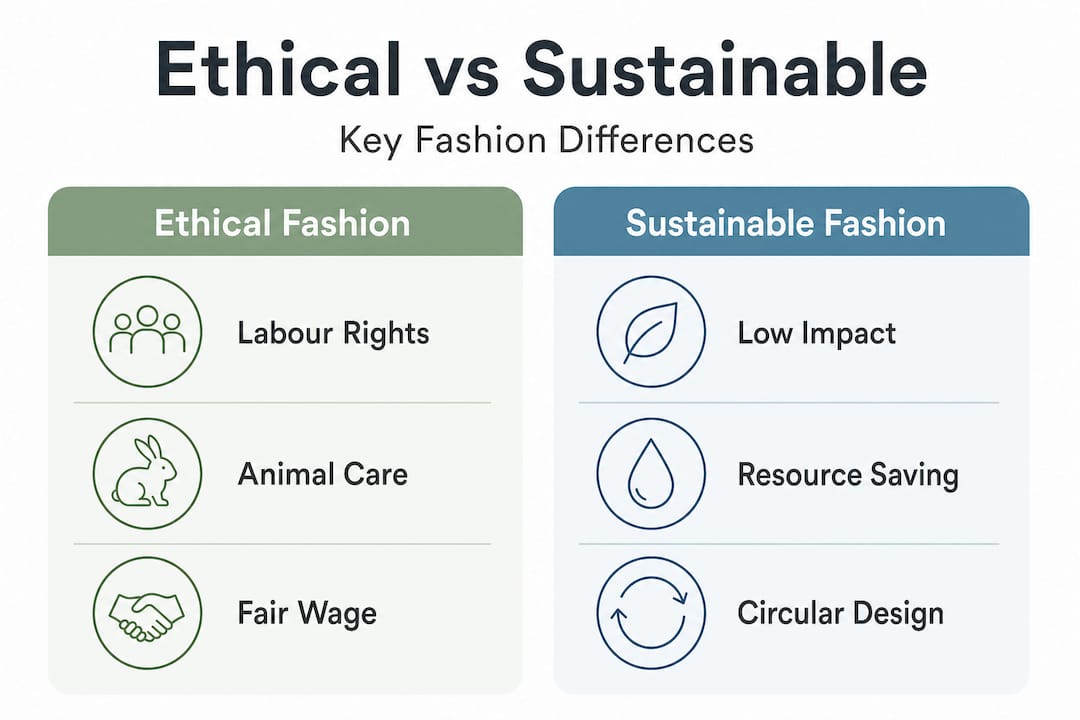
The overlap is important. A cork bag, for instance, can be both ethical (plant-based, cruelty-free, no animal harm) and sustainable (harvested without cutting the tree, naturally regenerating, biodegradable). But a garment made from recycled plastic might be environmentally preferable yet produced in a factory with poor labour standards. And a piece of fair-trade clothing might still use water-intensive conventional cotton.
Real-world shoppers are not always given both sides of this picture. When you build an ethical wardrobe, it is worth checking both dimensions rather than assuming a single certification tells the whole story. Consulting a sustainable fabrics guide can also help you evaluate materials more critically.
Pro Tip: When you are assessing a potential purchase, ask two separate questions. First: were the people making this treated fairly? Second: was the environment protected in doing so? If you cannot answer both confidently, dig deeper before buying.
Key practices and certifications for ethical fashion
Knowing the theory is useful. Knowing what to look for on a label is transformative. The fashion industry has developed a range of certifications that give shoppers a reliable shorthand for quality, ethics, and sustainability.
The most credible certifications to look for include:
- GOTS (Global Organic Textile Standard) – Covers organic fibres, ecological processing, and social criteria aligned with ILO standards, with full chain-of-custody traceability
- Fair Trade Certified – Focuses on fair wages, community benefits, and safe conditions for farmers and workers
- B Corp Certification – Assesses a company’s overall social and environmental performance, accountability, and transparency
- OEKO-TEX Standard 100 – Tests finished textiles for harmful substances, ensuring they are safe for human use
- Leaping Bunny – Cruelty-free certification confirming no animal testing at any stage of production
- Vegan Society Trademark – Confirms no animal-derived ingredients or testing anywhere in the supply chain
Certifications like GOTS ensure organic fibres, ecological processing, social criteria aligned with ILO standards, and full chain-of-custody traceability. This is why a single trusted certification can carry significant weight when you are shopping under time pressure.
Here is a quick reference table showing what each major certification actually guarantees:
| Certification | Labour rights | Environmental standards | Animal welfare | Transparency |
|---|---|---|---|---|
| GOTS | Yes | Yes | Partial | Yes |
| Fair Trade | Yes | Partial | No | Yes |
| B Corp | Yes | Yes | Partial | Yes |
| OEKO-TEX | No | Yes | No | Partial |
| Leaping Bunny | No | No | Yes | Yes |
| Vegan Society | No | No | Yes | Yes |
No single certification covers everything, which is why certification matters as a starting point rather than a final answer. You also need to understand that no single material is universally “most sustainable.” Context and lifecycle analysis matter enormously. Organic cotton is better than conventional cotton for chemical use, but still requires significant water. Cork, in contrast, has an exceptionally low environmental footprint throughout its lifecycle.
Learn how to spot sustainable fashion in the wild, and train yourself to spot sustainable materials before you buy.
The real impact of ethical fashion choices
Numbers matter when it comes to making the case for change. The fashion industry’s footprint is staggering. Extending garment life by just nine months saves billions in carbon, water, and waste resources. And sustainable wardrobes can yield 19.5% lower net costs over five years compared to fast fashion habits. Ethical fashion is not just morally better. Over time, it is financially smarter too.
The consumer and planetary benefits of switching to ethical fashion choices are substantial:
- Lower carbon footprint through reduced reliance on synthetic, fossil-fuel-based materials
- Less textile waste, as higher-quality ethical pieces last longer and rarely end up in landfill within a year
- Healthier ecosystems, because organic and sustainable farming avoids pesticides and chemical runoff
- Better human lives, as fair wages lift families out of poverty in garment-producing countries
- Cost savings over time, because buying fewer, better items beats constantly replacing cheap ones
- Stronger consumer trust, because transparent brands build loyalty that benefits you and the planet
Follow an eco-conscious shopping guide to apply these principles practically in 2026. You can also find specific strategies to reduce fashion waste without overhauling your wardrobe overnight.
One underreported risk is moral licensing: the psychological tendency to reward yourself for a “good” decision by making more purchases. Research shows this is a real pattern in conscious shoppers. Buying one ethical item does not justify buying three more items you do not need. Quality and intentionality are the actual goals.
How to shop ethically: practical tips for conscious consumers
Turning principles into purchasing decisions takes practice. Here is a simple framework to build on:
- Research the brand’s supply chain. Look for published information about where and how products are made. Vague claims like “sustainably sourced” without evidence are a warning sign.
- Check for recognised certifications. GOTS, Fair Trade, and Leaping Bunny are reliable starting points. Cross-check at least two certifications for stronger confidence.
- Examine the material. Choose natural, renewable, or recycled materials over virgin synthetics. Cork is an outstanding option: harvested without cutting the tree, naturally water-resistant, lightweight, and fully vegan.
- Consider longevity. Will this item last five or more years? Ethical fashion should be built to endure, not designed for one season.
- Ask about animal welfare. If an accessory is marketed as leather-free, confirm it is genuinely plant-based or synthetic. Cork naturally meets this standard without compromise.
- Verify transparency. Reputable brands publish their environmental and labour practices. If a brand does not share this information, that silence speaks for itself.
- Buy less, intentionally. The most ethical purchase is often no purchase at all. Before buying anything new, ask whether you genuinely need it.
Cork deserves a dedicated mention here. It is harvested by hand from the bark of cork oak trees, which regenerate fully and live for over 200 years. No trees are cut down. The material is naturally anti-microbial, water-resistant, and surprisingly soft to the touch. It holds vibrant colours and textures well, making it a genuinely stylish choice for bags, wallets, and accessories. It is 100% vegan, cruelty-free, and biodegradable.
Explore practical eco-friendly fashion tips to develop daily habits that stick. You can also learn how to build eco-friendly outfits around key pieces, follow a vegan wardrobe guide tailored to cruelty-free living, and find a clear path to transition to sustainable fashion without overwhelm. For deeper material knowledge, a guide on how to select sustainable fabrics will sharpen your judgement considerably.
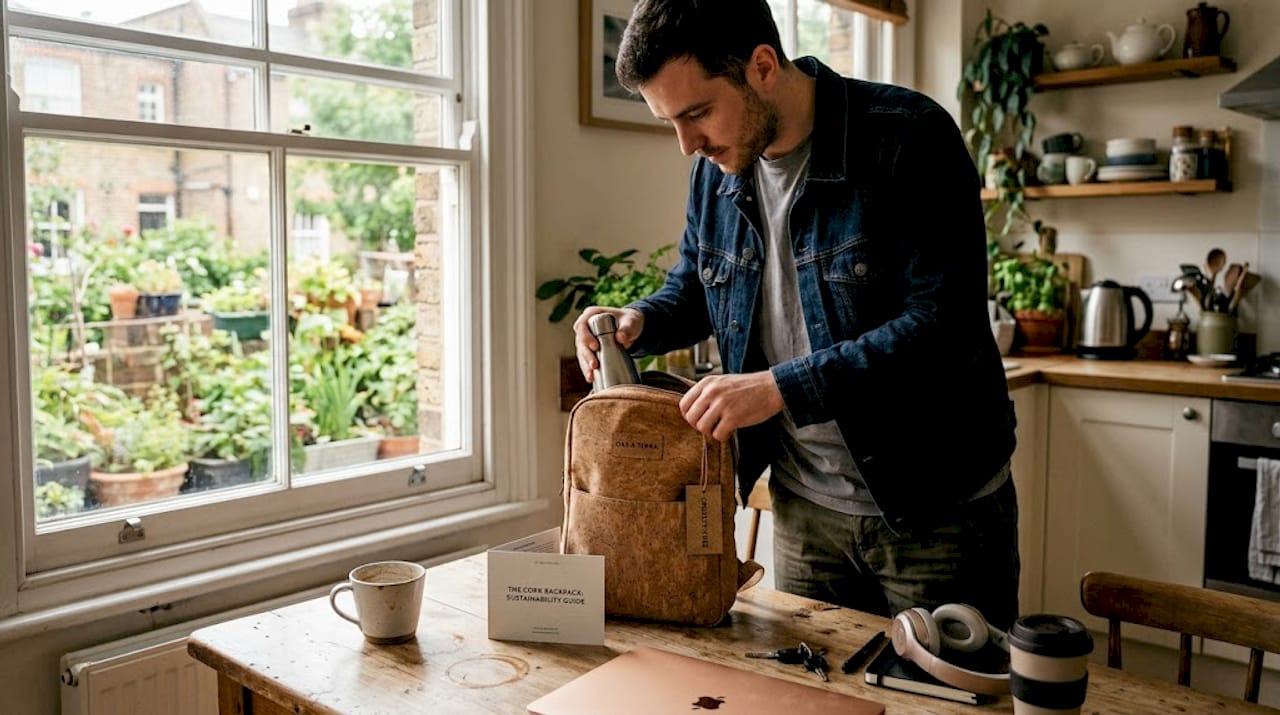
Pro Tip: Build your wardrobe around a smaller number of versatile, high-quality pieces rather than a large number of “ethical” items you barely wear. This approach avoids moral licensing and creates genuine long-term impact.
Why going truly ethical means more than just ‘buying better’
Here is something most ethical fashion content will not tell you plainly: buying ethical products is not enough on its own. The real challenge is not finding the right brand. It is breaking the habit of accumulation itself.
Research published in Nature found that secondhand shopping correlates with higher new purchases, showing that even “conscious” choices can fuel overconsumption. Shoppers who feel virtuous about buying a vintage jacket or a cork wallet are statistically more likely to buy more items overall. The ethical choice becomes a licence for more spending, not less.
We see this pattern frequently. Someone discovers a sustainable brand, feels inspired, and then buys six items in a week because they all seem “guilt-free.” The individual products may well be ethical. The behaviour is not.
True ethical fashion requires a slower mindset. It means sitting with the discomfort of wanting something and not buying it. It means wearing what you already own for longer and learning to step-by-step ethical fashion principles into regular decisions, not just special purchases. It means accepting that your wardrobe does not need to reflect every new trend, even sustainable ones.
A beginner’s guide to ethical fashion will often focus on what to buy. The harder, more important question is how often, and why. Every cork bag we sell is made to last for years. But the most ethical bag you own is the one you already have and care for well. We believe in products built for longevity, and in shoppers who buy with purpose rather than impulse. That combination is where genuine change actually happens.
Find your next ethical accessory with confidence
You now have the knowledge to shop with clarity and intention. Ethical fashion is not about perfection. It is about making better choices, consistently, with your eyes open.
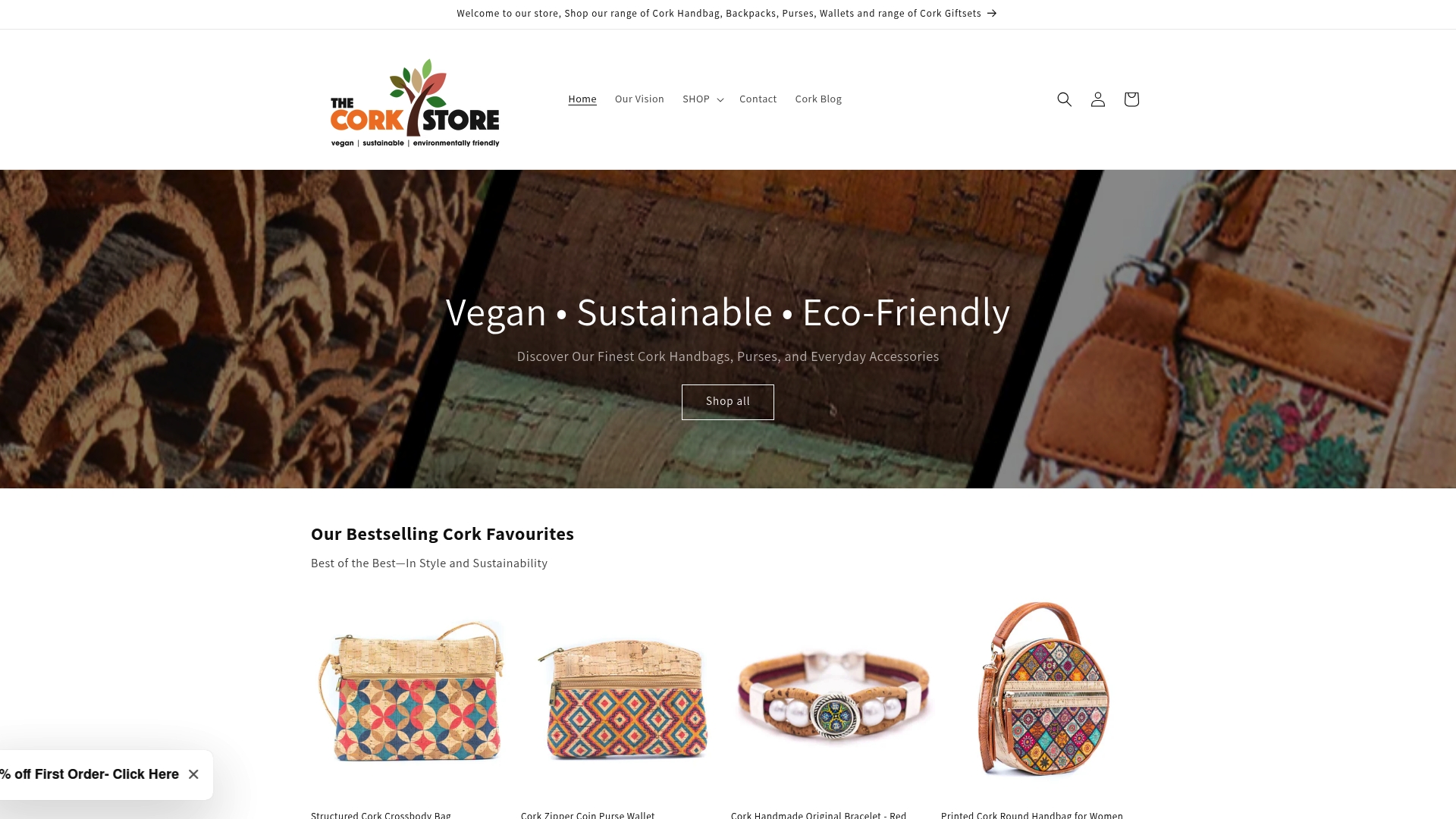
At The Cork Store, every accessory is designed to be stylish, durable, cruelty-free, and kind to the planet. Our cork handbags, wallets, backpacks, and women’s gift sets are made from one of nature’s most renewable materials, harvested without cutting a single tree. Whether you are new to ethical fashion or deepening an existing commitment, our collection gives you beautiful, practical options that align with your values. Browse our range today and put your new knowledge to work.
Frequently asked questions
Is cork really a sustainable material for fashion?
Yes, cork is harvested without harming trees, is fully renewable, and biodegrades naturally, making it one of the most sustainable vegan materials available for accessories.
How do I know if a brand is truly ethical?
Look for recognised certifications such as GOTS, Fair Trade, or Leaping Bunny, and check whether the brand publishes credible information about its labour and environmental practices. GOTS certifications ensure organic fibres, ecological processing, ILO social standards, and full supply chain traceability.
Are ethical fashion products always more expensive?
Not in the long run. Sustainable wardrobes typically yield 19.5% lower net costs over five years compared to buying cheap fast fashion repeatedly.
Can secondhand or vintage clothes really be considered ethical?
Often yes, but research shows that secondhand shopping correlates with higher overall new purchases, meaning conscious choices can still fuel overconsumption if you are not mindful about your buying habits.
What makes cork accessories a good choice for vegans?
Cork is entirely plant-based and cruelty-free, containing no animal by-products and requiring no animal harm at any point in its production or harvest.