

Discover top sustainable accessory trends for eco-conscious style
TL;DR:
- Many so-called eco-friendly accessories are misleading marketing and lack genuine sustainability. Prioritize durability, craftsmanship, material transparency, and repairability over superficial labels like “vegan.” Plant-based vegan leathers are promising but vary greatly in sustainability, so look for independent testing and responsible sourcing.
Shelves and websites are bursting with products labelled “eco-friendly,” “vegan,” and “sustainable,” yet very few of them hold up under scrutiny. If you’ve ever stood at a checkout wondering whether that cork wallet is genuinely better for the planet than a cactus leather tote, you’re not alone. The accessory market has never offered more choice, but it has also never demanded more critical thinking from buyers. This guide cuts through the noise by giving you a clear, criteria-based framework for evaluating sustainable accessories, breaking down the most exciting material innovations, and helping you distinguish real progress from clever marketing.
Table of Contents
- How to evaluate sustainable accessories: Key selection criteria
- Top plant-based material innovations: Vegan leather breakthroughs
- Material manufacturing advances and craftsmanship: Longevity matters
- Controversies: Vegan leather versus real leather and systemic challenges
- Our take: Longevity and transparency matter most in sustainable accessories
- Explore sustainable accessories with us
- Frequently asked questions
Key Takeaways
| Point | Details |
|---|---|
| Prioritise longevity | Accessories that last longer reduce waste and offer better sustainability credentials. |
| Scrutinise material sources | Responsible, traceable ingredients matter more than surface-level eco labels. |
| Demand transparency | Brands should provide clear details about manufacturing, certification, and repairability. |
| Balance style and ethics | Modern plant-based leathers and skilled craftsmanship combine fashionable design with environmental responsibility. |
How to evaluate sustainable accessories: Key selection criteria
Not all eco-friendly accessories are created equal, and the gap between a well-made product designed to last decades and a trendy item that falls apart in two years is enormous. Understanding what separates genuine sustainability from a polished marketing claim is the most valuable skill you can develop as a conscious shopper.
The 2026 accessory trends signal a meaningful industry shift, with sustainability becoming non-negotiable rather than a bonus feature. Consumers are now prioritising longevity, craftsmanship, and responsibly sourced materials over chasing fast trends. This shift reflects exactly the kind of thinking that leads to better purchasing decisions.
When you’re assessing a sustainable accessory, focus on these core criteria:
- Longevity and durability. A product that lasts fifteen years and is used every day will always outperform a “vegan” product discarded after eighteen months. Ask yourself whether the material and construction are built to last, not just to look appealing on a product page.
- Material provenance. Where does the raw material come from? Is it traceable? Responsibly managed cork forests, for instance, are harvested without felling trees, creating a genuinely regenerative supply chain. Look for brands that disclose their suppliers.
- Craftsmanship and workmanship. Skilled construction means fewer seams that split, fewer zips that fail, and fewer reasons to replace an item before its time. Ethical production and quality craft go hand in hand.
- Third-party certifications. Labels such as Leather Working Group certification, Global Recycled Standard, and Forest Stewardship Council accreditation provide external validation that a brand’s claims hold up. Seek out these markers when you’re identifying eco-friendly accessories.
- Repairability. Can the product be fixed if the lining tears or the strap breaks? Brands that offer repair services or sell replacement parts are signalling that they intend their products to last.
Understanding what makes accessories eco-friendly goes beyond surface-level material claims and requires looking at the full picture: from how raw materials are grown or harvested, through to how the finished product can be disposed of responsibly at the end of its life.
Pro Tip: Before you buy, search the brand’s website for its repair policy. A company that offers repairs or at least sells spare parts is far more committed to longevity than one that simply uses the word “sustainable” in its product description.
Top plant-based material innovations: Vegan leather breakthroughs
With a solid set of criteria in hand, you can now look at the materials themselves with a much sharper eye. The plant-based vegan leather space is genuinely exciting right now, and it is growing at a pace that signals serious consumer and investor confidence.
The plant-based vegan leather market is projected to grow from USD 5.43 billion in 2025 to USD 10.98 billion by 2035, at a compound annual growth rate of 7.3%. That’s not a niche trend; that’s a structural shift in how accessories are made and sold. A broader vegan leather market is also expanding from USD 184.47 million in 2025 to an expected USD 276.64 million by 2030, growing at 8.36% CAGR.
The materials driving this growth include some genuinely remarkable innovations:
- Mycelium leather (grown from mushroom root networks) is compostable, customisable in texture, and produced using agricultural byproducts rather than virgin resources.
- Cactus leather (pioneered by the Adriano Di Marti brand under the name Desserto) uses the Nopal cactus, which requires no irrigation and is harvested without killing the plant.
- Pineapple leaf fibre (known commercially as Piñatex) repurposes agricultural waste from the pineapple harvest, creating a strong, flexible material used across bags, footwear, and fashion items.
- Apple leather and grape leather use fruit industry waste, converting pomace (the leftover pulp and skins) into a leather-like surface layer.
Here’s a snapshot of how plant-based vegan leather is performing across key accessory categories:
| Application category | Share of plant-based vegan leather market | Primary driver |
|---|---|---|
| Bags and cases | 18% | Eco-conscious luxury consumers |
| Footwear | 24% | Performance and ethics blend |
| Fashion items | 21% | Brand differentiation |
| Automotive interiors | 17% | Corporate sustainability targets |
| Other accessories | 20% | Growing consumer experimentation |
The accessories applications segment, particularly bags and cases, is fuelled by eco-conscious consumers seeking cruelty-free alternatives to luxury leather without sacrificing aesthetics. This is exactly the space where thoughtful brands are winning customers who previously felt they had to choose between style and ethics.

The advantages of vegan leather are well documented, but it’s worth noting that not all vegan leathers carry the same credentials. Plant-based options with robust durability testing and transparent supply chains consistently outperform their plastic-based counterparts on genuine sustainability measures.
Understanding vegan leather alternatives in depth means recognising that the category spans a vast range of materials, from highly processed petrochemical films to genuinely regenerative plant-based innovations. Knowing the difference is essential.
Pro Tip: When a brand describes its material as “plant-based leather,” look for independent durability testing data or a specific material name. Generic claims without supporting evidence are a warning sign worth heeding.
Material manufacturing advances and craftsmanship: Longevity matters
Material innovation is vital, but how accessories are made and maintained determines their environmental impact just as much as what they are made from. A brilliant material poorly constructed will fail early and land in landfill. A modest material expertly crafted and carefully maintained can outlast a decade of daily use.
Cutting-edge manufacturing in the vegan leather space is genuinely impressive. Research into fungal biomass leather reveals methodologies that include tanning with vegetable tannins such as Tara and Myrobalan, alkali treatment for cell wall isolation, and wet-laid multilayer composites with glycerol and bio-binder post-treatment. These processes can achieve tensile strength of up to 20.5 MPa, placing some mycelium leathers within the performance range of animal-derived leather. That is a remarkable engineering achievement, and it demonstrates that plant-based materials are no longer simply “good enough for the planet.” They are becoming genuinely competitive on durability too.
Craftsmanship-focused brands are making a strong counterargument against mass production:
| Brand approach | Production model | Sustainability indicators |
|---|---|---|
| Craftsmanship-focused | Small-batch, skilled artisans | Traceable materials, repair policies |
| Mass-produced | High-volume, automated | Often limited material disclosure |
| Certified sustainable | Third-party verified | LWG, GRS, FSC certifications |
“Longevity is the single most important sustainability indicator for a luxury accessory. A bag that lasts twenty years and is repaired twice is exponentially better for the planet than five ‘eco-branded’ bags discarded over the same period.”
The sustainable design impact of choosing craftsmanship over volume is measurable. Brands like DeMellier demonstrate this through their use of Leather Working Group certified tanneries, plastic-free raffia, and traceable cotton, all while focusing explicitly on craftsmanship as a longevity strategy. Their approach proves that ethical sourcing and quality construction are not in conflict. In fact, they reinforce each other.
Understanding what vegan leather is at a material science level helps you appreciate why manufacturing method matters so much. The finish, the backing fabric, the binding agent, and the stitching all contribute to how long a product performs.
It’s also worth acknowledging that thoughtful choices extend across many areas of conscious living. Whether you’re selecting accessories or eco-friendly candle accessories, the same principles apply: look for durable materials, transparent sourcing, and brands that design for longevity rather than replacement.
Pro Tip: Invest in accessory brands that can name their material suppliers and offer repair or reconditioning services. These two features alone are more reliable sustainability signals than most certification labels.
Controversies: Vegan leather versus real leather and systemic challenges
Understanding reality versus claims helps avoid common sustainability pitfalls, and this is where the conversation gets genuinely complicated. Not all vegan leather is better for the planet than responsibly sourced traditional leather. That might feel counterintuitive, but the evidence is hard to ignore.
Many of the “vegan leather” products currently on the market are made from polyurethane (PU) or polyvinyl chloride (PVC). These are plastic-based materials derived from fossil fuels. The environmental reality is sobering: PU and PVC vegan leathers typically have a lifespan of just two to five years, are non-recyclable, and shed microplastics during use and washing. When you account for their short lifespan and fossil fuel origins, they are not inherently more sustainable than responsibly sourced real leather.
Key challenges facing the vegan leather space include:
- Greenwashing. Brands use the word “vegan” as a proxy for “sustainable” when the two concepts are not synonymous. A product can be entirely animal-free and still be harmful to the environment.
- Microplastic pollution. PU and PVC-based materials shed tiny plastic particles throughout their lifespan, contributing to soil and water contamination.
- Non-recyclability. Most plastic-based vegan leathers cannot be recycled, meaning they accumulate in landfill sites at the end of their (short) useful lives.
- Lifecycle assessment gaps. Very few brands publish full lifecycle assessments (LCAs) for their products, making it nearly impossible for consumers to compare like for like.
- Scope 3 emissions. The carbon cost embedded in supply chains, transport, and consumer use phases is rarely disclosed, even by brands with strong sustainability messaging.
The focus on circularity is growing as a result. Repairable designs, upcycling programmes, and take-back schemes are beginning to emerge as meaningful sustainability indicators that go beyond raw material claims. Plant-based alternatives are not automatically superior without durability enhancements and end-of-life planning.
This is precisely why plant-based options like cork stand out. Cork is harvested from living trees, is naturally biodegradable, and has a demonstrable track record of durability in accessories used daily. Exploring the advantages of vegan leather alongside the controversies gives you a far more balanced view than any single brand’s marketing ever will.
Understanding why sustainable accessories matter goes beyond personal ethics. It connects to biodiversity, carbon sequestration, water use, and the livelihoods of communities dependent on responsibly managed natural resources. Every accessory purchase is a small but real vote for a particular kind of production system.
Our take: Longevity and transparency matter most in sustainable accessories
Conventional wisdom in the eco-fashion world has long treated the “vegan” label as the gold standard. We think that framing is overdue for a serious rethink. The presence of the word “vegan” on a product tells you nothing about how long it will last, where its materials came from, or what happens to it when you no longer want it.
We believe the real sustainability indicators are durability, repairability, and full material transparency. A brand that can name every supplier in its chain, explain how its product was made, and offer a credible repair or reconditioning service is demonstrating a genuine commitment to sustainability. A brand that simply states “vegan” and offers nothing further is not.
Circular design is the future of ethical accessories. This means products built to be repaired, refurbished, or returned. It means materials that biodegrade or can be genuinely recycled. It means brands accepting responsibility for what happens to a product well beyond the point of sale. Our 2026 eco fashion guide explores this in greater depth, but the core message is consistent: demand evidence, not assurances.
Prioritise brands and materials that can prove their credentials through third-party certification, longevity data, and transparent sourcing. The most sustainable accessory you can own is almost always the one you already have and look after well.
Explore sustainable accessories with us
If this guide has sharpened your eye for what genuinely sustainable accessories look like, you’re in exactly the right place to take the next step.
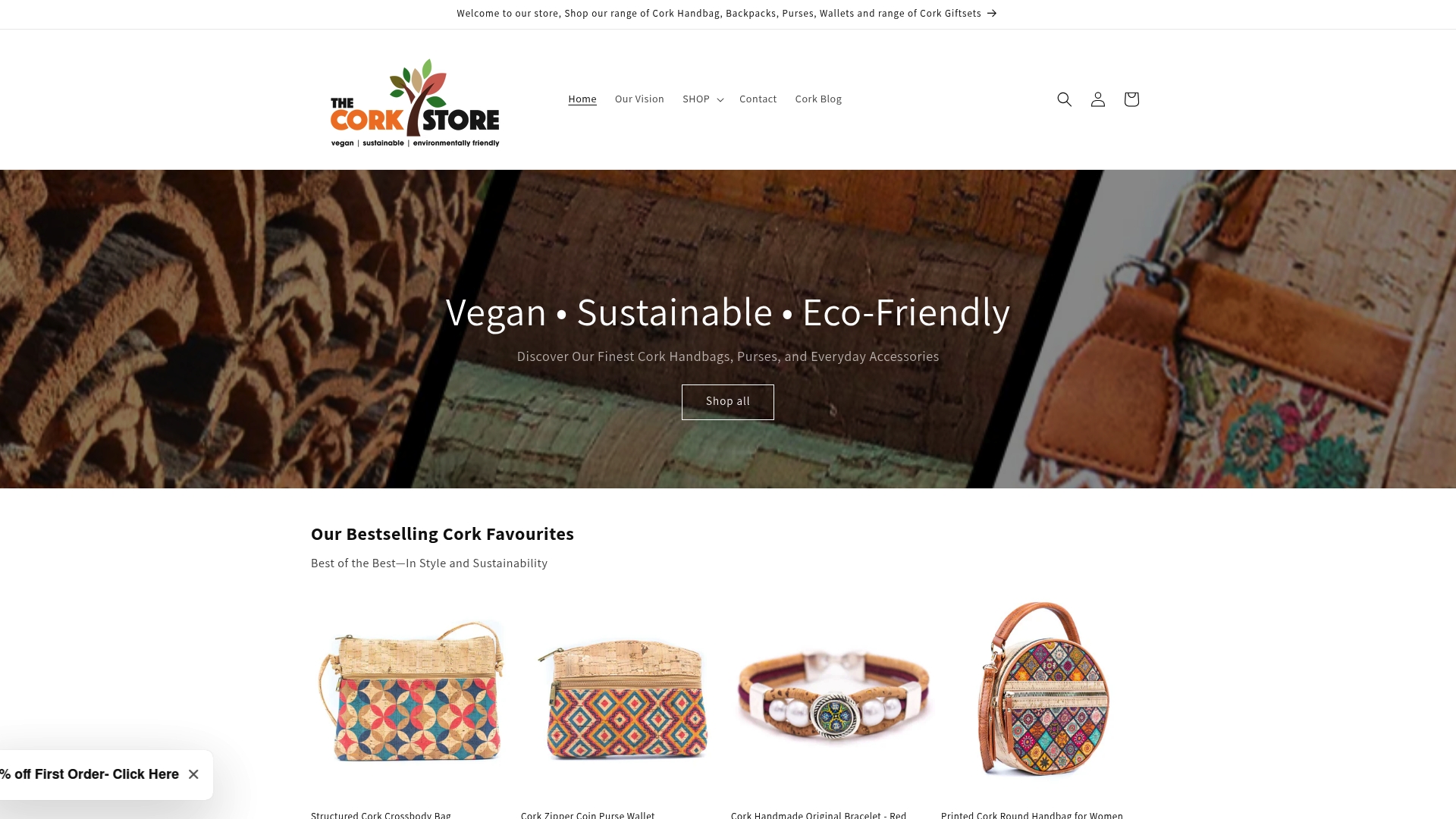
At The Cork Store, every product in our collection is designed with longevity, transparency, and cruelty-free sourcing at its core. Cork is one of the most naturally sustainable materials available, harvested from living trees, naturally biodegradable, and beautifully durable for daily use. Whether you’re looking for a handbag that will outlast trends, a wallet that ages gracefully, or a gift set that means something real, our range has been curated to give you style without compromise. Browse our full collection and discover accessories that genuinely live up to the values you hold.
Frequently asked questions
Are plant-based vegan leathers truly sustainable?
Plant-based vegan leathers offer improved eco credentials when enhanced for durability and sourced responsibly, but they are not inherently superior unless they outlast plastic-based and traditional alternatives. Longevity genuinely trumps the “vegan” label as a measure of true sustainability.
What’s the biggest challenge when choosing sustainable accessories?
The toughest hurdle is verifying material origins, durability, and production integrity. Plastic-based vegan leathers, with lifespans of just two to five years and no recyclability, are a prime example of greenwashing that misleads well-intentioned shoppers.
Which certifications should I look for in sustainable accessories?
Certifications such as Leather Working Group, Global Recycled Standard, and Forest Stewardship Council are strong sustainability indicators. Brands like DeMellier that use LWG-certified tanneries and traceable materials set a high bar for the rest of the industry.
How can I avoid accessories that are greenwashed?
Review specific claims about materials, manufacturing processes, and expected lifespan before purchasing. Market growth in bio-materials has attracted both genuine innovators and opportunistic marketers, making it more important than ever to seek full transparency backed by lifecycle assessment data.