

Why Sustainable Accessories Matter for Eco-Fashion
Choosing accessories is no longer just about style—it’s about the stand you take for the planet, animals, and ethical production. Many millennials and Gen Z consumers want accessories that reflect their values, not just the latest trends. By embracing circular economy principles and eco-friendly materials such as organic cotton and recycled fibres, sustainable accessories invite you to express your individuality while leaving a lighter footprint. This guide helps you understand what truly sets sustainable accessories apart and what to look for before you invest.
Table of Contents
- Defining Sustainable Accessories And Core Principles
- Types Of Eco-Friendly Accessory Materials
- Environmental Benefits Over Traditional Options
- Animal Welfare And Ethical Fashion Impact
- Comparing Costs, Durability, And Style
Key Takeaways
| Point | Details |
|---|---|
| Sustainable Accessories Promote Circular Economy | Unlike conventional accessories, sustainable options focus on reducing waste and emphasising longevity through responsible sourcing and production methods. |
| Material Choices Matter | Utilising eco-friendly materials such as plant-based leathers and recycled fibres significantly lowers the environmental impact compared to traditional synthetic options. |
| Ethical Production Standards | Sustainable brands prioritise fair wages and safe working conditions, ensuring that your purchases support positive social impacts. |
| Long-Term Cost Efficiency | Although the initial investment may be higher, sustainable accessories often result in lower costs over time due to their durability and timeless designs. |
Defining Sustainable Accessories And Core Principles
Sustainable accessories are decorative items like bags, wallets, jewellery, and belts that go beyond simply looking good. They represent a conscious choice to reduce environmental harm whilst maintaining your personal style. Unlike conventional accessories made from virgin materials through linear production methods, sustainable accessories prioritise the planet. Think of them as the accessories equivalent of choosing plant-based options at a restaurant instead of supporting factory farming. They’re decorative items designed with intention, considering every stage from raw material sourcing through to the end of the product’s life.
The core principles behind sustainable accessories revolve around breaking away from the “take-make-dispose” cycle that has defined fashion for decades. Instead, these accessories embrace a circular economy model where materials are sourced responsibly, products are built to last, and waste is minimised throughout production. Eco-friendly materials such as organic cotton and recycled fibres form the foundation of many sustainable accessories, replacing conventional options that rely on harmful chemicals and resource-intensive processes. Beyond materials, the principles encompass ethical production standards ensuring fair wages and safe working conditions for those crafting your accessories, transparency so you know exactly where your purchase comes from, and design for durability that creates timeless pieces you’ll keep for years rather than discarding after a season. This approach acknowledges that true sustainability requires responsibility across every dimension: environmental, social, and economic.
What separates sustainable accessories from greenwashing is the commitment to long-term thinking. When you purchase a sustainable accessory, you’re supporting designs created to withstand years of daily use, materials chosen for their minimal environmental footprint, and production practices that respect both people and planet. Plant-based alternatives, recycled materials, and natural dyes replace synthetic options that poison waterways and harm ecosystems. Many brands now operate with supply chain transparency, allowing you to trace exactly where your bag or wallet originated and how it was made. The movement recognises that accessories like these deserve the same ethical consideration as the clothes you wear. Your wallet, backpack, or jewellery collection can tell a story of positive impact rather than environmental destruction.
Pro tip: When evaluating a sustainable accessory, look beyond marketing claims by checking whether the brand openly discusses their materials, manufacturing locations, and labour practices—transparency is the strongest indicator of genuine commitment to sustainability.
Types Of Eco-Friendly Accessory Materials
When you’re shopping for sustainable accessories, the material makes all the difference between genuine environmental benefit and clever marketing. The shift away from synthetic plastics and virgin leather has opened up a world of innovative alternatives that actually perform as well as traditional options. Vegan leathers made from fruit wastes have become surprisingly durable and beautiful, offering the aesthetic of leather without animal suffering or chemical-intensive tanning processes. Cork, derived from tree bark that regenerates without harming the tree, provides a naturally waterproof and lightweight material perfect for bags and wallets. Pineapple leaf fibres create a leather-like texture that’s surprisingly sturdy, whilst mushroom-based alternatives offer something completely novel—a material grown rather than manufactured. These aren’t experimental materials anymore; they’re genuinely available and consistently chosen by eco-conscious consumers who refuse to compromise on style.
Beyond leather alternatives, the material palette for sustainable accessories has expanded significantly. Organic natural fibres like hemp and flax reduce dependency on resource-intensive cotton production that consumes enormous quantities of water and pesticides. Recycled metals replace newly mined metals that damage ecosystems and contribute to carbon emissions, making jewellery and metal hardware far less environmentally damaging. Recycled textiles transform discarded fabrics into new accessories, giving your old clothing a second life rather than ending up in landfills. The common thread connecting all these materials is their commitment to reducing waste and carbon footprint. You’ll find biodegradable polymers and recyclable innovations now incorporated into bag handles, zips, and decorative elements, allowing these accessories to break down naturally at the end of their life rather than persisting for centuries. When you understand these material options, you can make informed decisions that align with your values rather than defaulting to what’s cheapest or most marketed.
What makes this material revolution truly exciting is that it doesn’t ask you to sacrifice aesthetics or longevity. A cork backpack feels substantial and looks sophisticated. A mushroom leather wallet develops character and patina over time. Hemp accessories age beautifully. These aren’t compromise materials used because “it’s better for the planet”—they’re genuinely excellent choices that happen to be better for the planet. The circular production models built around these materials mean your accessory can actually be composted, recycled, or biodegrade when you’re finished with it, completing the loop rather than creating permanent waste. Industry innovations now combine multiple sustainable materials within single pieces, maximising both environmental benefit and design flexibility. You’re no longer choosing between style and sustainability; you’re choosing style that reflects your actual values.
Pro tip: Check product descriptions and brand websites for material composition percentages; genuine sustainable accessories typically highlight specific material sourcing and end-of-life recyclability rather than vague claims about being “eco-friendly.”
Here is a comparison of key sustainable accessory materials and their unique properties:
| Material Type | Key Characteristics | Environmental Benefit |
|---|---|---|
| Cork | Lightweight, water-resistant | Harvested without tree harm |
| Pineapple Leaf Fibre | Strong, flexible, leather-like | Upcycles agricultural waste |
| Mushroom-Based Leather | Develops patina, soft texture | Grown, minimal processing |
| Hemp | Durable, ages beautifully | Low water use, pesticide free |
| Recycled Metals | Robust, reworkable | Reduces mining and waste |
| Recycled Textiles | Vary by source, diverse textures | Reduces landfill clothing waste |
| Biodegradable Polymers | Can break down naturally | Reduces long-term plastic pollution |
Environmental Benefits Over Traditional Options
The environmental case for sustainable accessories becomes clear when you understand what happens behind the scenes with conventional production. Traditional accessories made from synthetic fibres and virgin leather demand enormous quantities of resources. Conventional leather tanning alone uses toxic chemicals that contaminate waterways, whilst synthetic materials rely on petroleum extraction and generate microplastics that persist in ecosystems for centuries. Fast fashion accessories are designed for disposal rather than longevity, meaning millions of bags, belts, and wallets end up in landfills annually, occupying space and leaching chemicals into soil. When you compare this to sustainable alternatives, the difference is substantial. Sustainable accessories reduce carbon emissions and water use significantly across their entire lifecycle, from raw material sourcing through manufacturing to the moment you stop wearing them. This isn’t about marginal improvements; lifecycle assessments demonstrate genuine environmental transformation when materials are chosen responsibly.
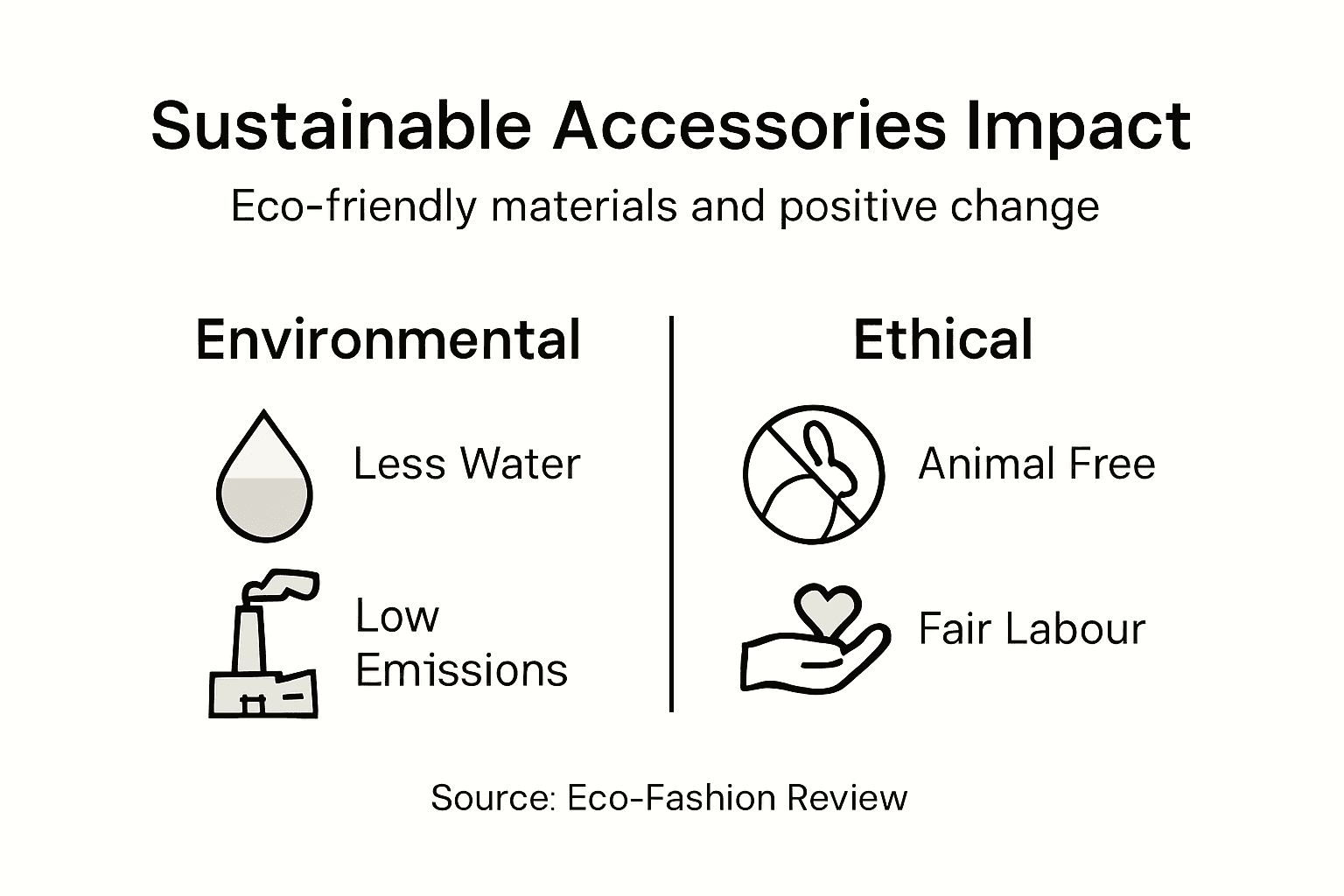
The specific environmental advantages compound across every production phase. Water consumption drops dramatically when using cork, plant-based leathers, and recycled materials instead of virgin leather, which requires extensive tanning and processing using water as a primary input. A single leather bag might consume thousands of litres of water in production, whilst a cork alternative uses a fraction of that. Carbon emissions fall when materials are sourced from renewable sources or recovered from waste streams rather than extracted and processed from new resources. Recycled metals eliminate the devastating environmental cost of mining, which destroys habitats and generates significant greenhouse gas emissions. Industrial pollution decreases substantially because sustainable manufacturing respects ecological limits, avoiding the toxic runoff that conventional factories discharge into local water systems. Manufacturing practices focused on responsible sourcing reduce biodiversity damage and support regenerative practices instead of extractive ones. Your choice to purchase a sustainable accessory directly reduces demand for harmful production methods.
What makes sustainable accessories particularly powerful is that their environmental benefit doesn’t end when you purchase them. Traditional accessories contribute to fashion waste because they’re designed to deteriorate quickly or fall out of favour, creating constant replacement cycles. Sustainable accessories, by contrast, are built for longevity. A well-made cork bag or plant-based leather wallet can serve you for years, dramatically reducing the total environmental impact across your lifetime of accessory use. When the item eventually reaches the end of its life, sustainable materials often biodegrade naturally or can be recycled, closing the loop rather than creating permanent waste. This circular economy model represents a fundamental shift from the linear “take-make-dispose” pattern that has dominated fashion. You’re not just purchasing a product; you’re breaking participation in a system designed around resource depletion. Each sustainable accessory purchase signals market demand for production methods that prioritise planetary health. When enough consumers make this choice, manufacturers shift their practices, scaling sustainable production methods and making them increasingly affordable and accessible. Your individual decision becomes part of a collective transformation in how fashion accessories are made.
Pro tip: Look for accessories that display lifecycle assessment information or material origin transparency; brands confident in their environmental benefits openly share specifics about water saved, carbon reduced, and waste diverted compared to conventional alternatives.
Animal Welfare And Ethical Fashion Impact
When you choose sustainable accessories, you’re making a statement about animals. Traditional leather production relies on industrial animal farming where cattle endure crowded conditions, long transport journeys, and slaughter processes designed for speed rather than welfare. Exotic leathers sourced from crocodiles, snakes, and other wildlife involve capturing wild animals or operating farms where conditions prioritise profit over ethical treatment. Fur accessories, still common in certain luxury markets, come from animals bred in cages for their pelts, experiencing stress and suffering throughout their lives. These practices aren’t peripheral to fashion; they’re central to how conventional accessories reach shops. When you purchase a sustainable accessory made from vegan leather alternatives, cork, or recycled materials, you actively refuse participation in these systems. You’re not simply choosing a different product; you’re rejecting the exploitation that conventional fashion normalises.
The ethical impact extends far beyond animal welfare, though that’s profound enough. Fair labour practices separate sustainable fashion from the exploitative production models that dominate mainstream accessory manufacturing. Workers in conventional factories often endure unsafe conditions, earn wages insufficient for basic living, and have little recourse when injured or exploited. Sustainable brands adopting ethical practices ensure fair wages, safe workplaces, and respect for human rights in production chains. This means actual accountability, not just corporate statements. When you buy from brands prioritising transparency and ethics, you’re funding operations where workers aren’t disposable, where child labour doesn’t exist, and where people aren’t trapped in poverty because they make your accessories. The ripple effect matters. As consumer demand for ethical products grows, manufacturers face pressure to improve practices. Your purchasing power directly influences whether future workers will face exploitation or dignified employment.
What makes ethical fashion particularly powerful is its holistic approach to responsibility. Ethical impacts extend across social domains by fostering fair wages, eliminating child labour, and empowering marginalised communities, reflecting a comprehensive commitment rather than selective concerns. This isn’t compartmentalised thinking; it recognises that environmental destruction and human exploitation are interconnected systems. A sustainable accessory brand rejecting exotic animal leathers simultaneously refuses to exploit vulnerable communities for profit. The materials chosen, the workers employed, the supply chains maintained, and the accountability demanded all reflect a unified ethical vision. You’re choosing not to support an industry built on cruelty at every level. Your cork bag or vegan leather wallet represents refusal of that model. Every sustainable accessory purchased sends market signals that consumers care about ethics, that we’re willing to pay fair prices for fairly made products, that animal suffering and worker exploitation are dealbreakers. This collective shift reshapes what’s considered acceptable in fashion, slowly transforming an industry historically built on cruelty into one increasingly defined by compassion and accountability.
Pro tip: Before purchasing, check brand websites for worker welfare certifications, labour practice transparency, and specific commitments to ethical sourcing; genuine ethical brands openly document their supply chain rather than hiding it behind marketing language.
Comparing Costs, Durability, And Style
Let’s address the elephant in the room: sustainable accessories often cost more upfront than fast fashion alternatives. A cork backpack might cost significantly more than a synthetic polyester version from a high street chain. That price difference frustrates people accustomed to throwaway fashion prices. But here’s what matters: that cork backpack will still look and function beautifully after five years whilst the synthetic one disintegrated within months. The real cost comparison isn’t about the initial price tag. Sustainable accessories offer greater durability, reducing replacement frequency compared to fast fashion pieces designed for disposal. Calculate the actual cost over time. If you buy five cheap synthetic bags over five years instead of one quality cork bag, you’ve spent far more money. You’ve also created five times the waste and consumed five times the resources. When consumers start thinking about lifetime cost rather than checkout cost, sustainable accessories suddenly appear remarkably affordable. A £120 cork bag worn daily for seven years costs roughly £17 annually. A £30 synthetic bag replaced yearly costs £30 annually. The mathematics shift everything.
The durability advantage reflects genuine craftsmanship rather than marketing spin. Sustainable accessories use natural, robust materials designed to withstand years of daily use. Cork develops character and patina rather than falling apart. Plant-based leathers strengthen slightly as they age. Quality hardware on sustainable pieces won’t corrode or snap after months of wear. These aren’t delicate museum pieces requiring careful handling; they’re accessories built for actual use. Fast fashion bags, by contrast, prioritise appearance over performance. Zips fail within months. Stitching unravels. Synthetic materials crack and fade. This isn’t accidental; it’s calculated. Companies profit from constant replacement cycles. Sustainable brands take the opposite approach. They want you keeping your accessory for years because superior craftsmanship and durable materials provide longer lifecycle performance, creating brand loyalty through satisfaction rather than forced obsolescence. Your cork wallet won’t flake or peel after a year. It’ll look better. You’ll actually want to keep using it instead of discarding it for something new.
The style conversation challenges assumptions about what fashion means. Sustainable accessories emphasise timeless, minimalist designs rather than trend-driven styles that feel dated within months. This sounds restrictive until you actually shop. Neutral tones, clean lines, and classic silhouettes work across years and outfit combinations. A well-designed cork bag coordinates with everything in your wardrobe because it’s not screaming this season’s trend. When you compare cork bag styling to a printed fast fashion piece that’s already feeling dated, the sustainable choice wins on both practical and aesthetic grounds. You can compare the lasting appeal of sustainable materials and discover how thoughtful design creates accessories you’ll love wearing years later. The fact that sustainable accessories exist in relatively neutral palettes isn’t a limitation; it’s genius. You’re building a cohesive wardrobe rather than accumulating disparate pieces. Your five-year-old cork bag doesn’t clash with current outfits because it never screamed “2024 fast fashion.” It simply looked good then and looks good now. This is how actual style works. Trend followers endlessly rebuy. Style enthusiasts invest in pieces that evolve with their lives.
Pro tip: Calculate your true cost per wear by dividing the purchase price by how many times you’ll realistically use the accessory; sustainable accessories typically deliver significantly lower costs per wear despite higher initial prices, making them the financially sensible choice.
The table below summarises the main differences between sustainable and conventional accessories:
| Aspect | Sustainable Accessories | Conventional Accessories |
|---|---|---|
| Production Model | Circular economy, low waste | Linear “take-make-dispose” approach |
| Water Usage | Minimal, optimised processes | Very high, especially with leather |
| Carbon Emissions | Reduced through recycling/renewables | Significant, due to resource extraction |
| Animal Welfare | Uses plant-based/recycled materials | Depends heavily on animal by-products |
| Worker Ethics | Emphasises fair wages, safety | Often linked to exploited labour |
| Durability | Built to last years | Designed for short-term use |
| Cost Over Time | Lower cost per year | Higher long-term spend |
Embrace Sustainable Accessories For Lasting Impact
If you are seeking stylish, durable alternatives that truly align with your values, sustainable accessories crafted from cork offer a powerful solution. This article highlights the environmental and ethical challenges posed by conventional fashion accessories and the importance of choosing items designed with longevity, animal welfare, and circular economy principles in mind. At The Cork Store, you can explore a curated collection of vegan cork handbags, wallets, and backpacks that reflect these core sustainable values.
Make a tangible difference today by choosing accessories that combine eco-conscious materials with timeless style. Visit The Cork Store to browse eco-friendly, cruelty-free options that reduce waste, support fair labour, and minimise environmental harm. Take the step towards a wardrobe that tells a story of positive impact rather than destruction. Discover why sustainable fashion accessories matter and why cork is the future of ethical style.
Frequently Asked Questions
What are sustainable accessories?
Sustainable accessories are decorative items like bags, wallets, and jewellery that are made with a focus on reducing environmental harm. They prioritise eco-friendly materials, ethical production methods, and durability, aiming to break the cycle of ‘take-make-dispose’ prevalent in traditional fashion.
How do sustainable accessories benefit the environment?
Sustainable accessories significantly reduce carbon emissions and water usage throughout their lifecycle. They often use recycled or renewable materials, which minimise resource extraction and pollution compared to conventional accessories made from synthetic fibres and virgin leather.
What materials are commonly used in sustainable accessories?
Common materials include vegan leathers made from fruit wastes, cork, pineapple leaf fibres, hemp, and recycled metals. These materials are chosen for their durability and minimal environmental impact, unlike traditional options that rely on harmful chemicals and resource-intensive processes.
Why should I invest in sustainable accessories instead of fast fashion alternatives?
While sustainable accessories may cost more upfront, they are designed for longevity and tend to offer better durability. Investing in such pieces reduces the frequency of replacements, ultimately making them more cost-effective in the long run and decreasing overall waste.