
Vegan leather bags: a clear guide for UK shoppers
Vegan leather bags are bags made from animal-free materials designed to look and feel like leather. The main material families fall into three groups: synthetic plastics (polyurethane/PU and polyvinyl chloride/PVC), plant-based and natural materials (cork, pineapple-leaf fibre, apple waste, mushroom/mycelium), and recycled or plastic-derived alternatives. According to WebMD’s overview of vegan leather, the term is an umbrella covering all of these, and material type strongly affects both environmental performance and how the bag holds up over time.
The single most useful thing to understand before buying:
- Synthetic vegan leathers (PU, PVC): petroleum-derived, widely available, often affordable, but plastic-based and prone to microplastic shedding as they age
- Plant-based and natural leathers (cork, Piñatex, apple leather, mycelium): lower-impact sourcing in many cases, though most still rely on a plastic backing for structural strength
- Recycled-plastic leathers: made from post-consumer plastic waste; reduce virgin plastic use but remain non-compostable
- The key takeaway: “vegan” describes composition (no animal products), not environmental performance. A cheap PU bag replaced frequently can carry a heavier footprint than a well-made cork or plant-based bag that lasts much longer.
Key takeaways
Vegan leather bags are animal-free by definition, but material choice and construction quality determine whether they are a genuinely sustainable option or simply a plastic alternative to animal hide.
| Point | Details |
|---|---|
| Vegan ≠ sustainable | “Vegan” means animal-free; it says nothing about carbon, plastic content, or longevity. |
| Most mainstream options are plastic | PU and PVC dominate the market; both are petroleum-derived and shed microplastics as they age. |
| Lifespan varies widely | Low-quality PU bags can fail in under two years; well-made cork or plant-based bags can last five to ten years or more. |
| Cork is the strongest natural option | Cork is renewable, naturally water-resistant, and avoids the plastic-surface trade-offs of PU and PVC. |
| Thecorkstore for UK shoppers | Thecorkstore sells cork handbags, wallets, and accessories made from natural cork with full material transparency, available in the UK. |
Table of Contents
- What does “vegan leather” actually mean?
- What are the main vegan leather materials used in bags?
- How do vegan leather bags compare with real leather?
- Is vegan leather actually sustainable?
- Pros and cons of vegan leather bags
- How long do vegan leather bags last?
- How to clean and care for vegan leather bags
- How to tell vegan leather from real leather when shopping
- A UK buyer’s checklist for vegan leather bags
- Why cork deserves a closer look as a vegan leather option
- What the vegan leather debate gets wrong
- Thecorkstore: cork bags made for UK shoppers who want the real thing
- Sources
What does “vegan leather” actually mean?
The phrase “vegan leather” simply means the material contains no animal-derived components. No cowhide, no pigskin, no exotic skins. Beyond that single shared characteristic, the materials grouped under this label are remarkably different from one another.
You will encounter several names for the same or similar products. Faux leather, pleather, and leatherette are older terms that generally refer to plastic-coated fabrics. PU leather and PVC leather name the specific plastic used. Vegan leather is the newer marketing term that encompasses all of these, plus the plant-based and biofabricated newcomers. As Wikipedia’s entry on artificial leather notes, biofabricated materials grown from fungi or bacteria are also entering this space, though they are currently produced at limited scale and often still require a synthetic backing for structural strength.
Knowing the terminology matters because “vegan” and “sustainable” are different claims. Vegan describes what a material is not (animal-derived). Sustainable is a life-cycle performance claim about carbon, water, waste, and longevity. A PVC bag is vegan. It is not, by most measures, sustainable.
Three broad production routes create leather-like surfaces:
- Coated fabric: a plastic layer (PU or PVC) is bonded to a textile backing, giving the characteristic smooth or embossed surface of most faux leather bags.
- Bonded plant fibres: natural fibres from cork, pineapple leaves, apple pomace, or other plant sources are processed into sheets, often with a thin plastic or bio-based binder.
- Biofabricated materials: mycelium (mushroom root networks) or bacterial cellulose are grown into leather-like sheets. These are the most experimental category and rarely appear in mainstream UK retail yet.
What are the main vegan leather materials used in bags?
Understanding what your bag is actually made from is the fastest way to cut through marketing claims. Here is a material-by-material breakdown.
Polyurethane (PU)
PU is the most common material in vegan leather bags sold in the UK. A polyurethane coating is applied to a woven or non-woven fabric backing, then embossed to mimic leather grain. SENREVE’s explainer on PU and PVC describes PU as versatile and easy to emboss into different textures, which is why it dominates the mid-market.
Pros: soft hand-feel, wide range of colours and finishes, generally lower price than genuine leather, water-resistant surface. Cons: petroleum-derived, can peel or crack after a few years, sheds microplastics as it degrades, not compostable or easily recyclable.
Polyvinyl chloride (PVC)
PVC tends to look glossier and feel stiffer than PU. It has a longer history in fashion (think 1960s patent-look bags) but carries more significant environmental concerns. Wikipedia’s artificial leather article notes that PVC historically required plasticisers such as phthalates to remain flexible, and can release dioxins if incinerated. Most quality-conscious brands have moved away from PVC in favour of PU or plant-based options.
Pros: very durable surface finish, inexpensive, water-resistant. Cons: stiff, can contain phthalates, significant end-of-life concerns, not breathable.
Recycled plastics
Some brands use post-consumer PET (recycled plastic bottles) or other reclaimed plastics as the base material. This reduces virgin plastic demand and diverts waste from landfill, which is a genuine benefit. The material still cannot be composted and the recycling pathway at end-of-life is limited.
Pros: reduces virgin plastic use, often carries credible recycled-content certification. Cons: still plastic, microplastic shedding risk remains, limited recyclability at end-of-life.
Cork
Cork is harvested from the bark of cork oak trees (Quercus suber), primarily in Portugal and Spain. The bark regenerates after harvest, so the tree is never felled. Cork sheets are typically laminated to a cotton or natural-fibre backing to create a flexible, workable material for bags. PETA’s guide to vegan leather highlights cork as one of the more credible low-impact options, although it notes that plastic backings on some cork products can limit compostability.
Pros: renewable, naturally water-resistant, lightweight, distinctive texture, good durability when well-made. Cons: less widely available than PU, can feel stiffer than soft PU, quality varies considerably between producers.
Piñatex (pineapple-leaf fibre)
Piñatex is a trademarked material developed by Ananas Anam, made from the long fibres of pineapple leaves, a by-product of pineapple farming. The fibres are processed into a non-woven mesh and finished with a resin coating. It has a slightly textured, natural appearance.
Pros: uses agricultural waste, lower land-use impact than dedicated crops, distinctive natural look. Cons: the resin finish is typically petroleum-derived, limiting compostability; supply is more limited than PU.
Apple leather
Apple leather uses the pomace (skin and core waste) from apple juice and cider production, mixed with a polyurethane binder and applied to a backing. Several Italian and German producers supply this material to fashion brands.
Pros: uses food-industry waste, softer feel than some plant-based options. Cons: the PU binder content means it is not fully compostable; durability data over long periods is still limited compared with more established materials.
Mycelium (mushroom) leather
Mycelium leather, developed by companies such as Bolt Threads under the brand name Mylo, grows fungal root networks on agricultural waste and processes them into a leather-like sheet. As Wikipedia’s artificial leather entry notes, these biofabricated materials are promising but currently produced at limited scale and often still combined with synthetic backings.
Pros: genuinely bio-based, potentially compostable depending on finishing, strong ethical story. Cons: expensive, rare in mainstream UK retail, long-term durability data is limited.
Quick material comparison
| Material | Main composition | Typical durability | Compostable? | UK availability |
|---|---|---|---|---|
| PU leather | Polyurethane on fabric | 2–5 years (varies by quality) | No | Widely available |
| PVC leather | PVC on fabric | 3–6 years | No | Common, declining in quality brands |
| Recycled plastic | Reclaimed PET/plastic | 3–5 years | No | Growing availability |
| Cork | Cork bark on natural backing | 5–10+ years (well-made) | Partial | Specialist retailers |
| Piñatex | Pineapple fibre + resin | 3–5 years | Partial | Specialist/online |
| Apple leather | Apple pomace + PU binder | 2–4 years (limited data) | Partial | Niche/online |
| Mycelium | Fungal biomass | Limited long-term data | Potentially | Very limited |
How do vegan leather bags compare with real leather?
The honest answer is: it depends on the material and the price point. A well-made cork or high-grade PU bag can hold its own against entry-level genuine leather. A cheap PU bag will not.
Appearance and patina. Genuine leather develops a patina over time, deepening in colour and character with use. Most vegan leathers do not age this way. PU and PVC surfaces tend to look the same for a year or two, then begin to peel or crack rather than mellow. Cork develops a slight softening and warmth with use, which is the closest natural equivalent to leather’s ageing character.
Breathability. Real leather breathes because it is a natural fibrous structure. PU and PVC do not breathe at all, which can make bags feel clammy in warm weather and affects how contents fare over time. Cork has some natural porosity, though the laminate backing reduces this.
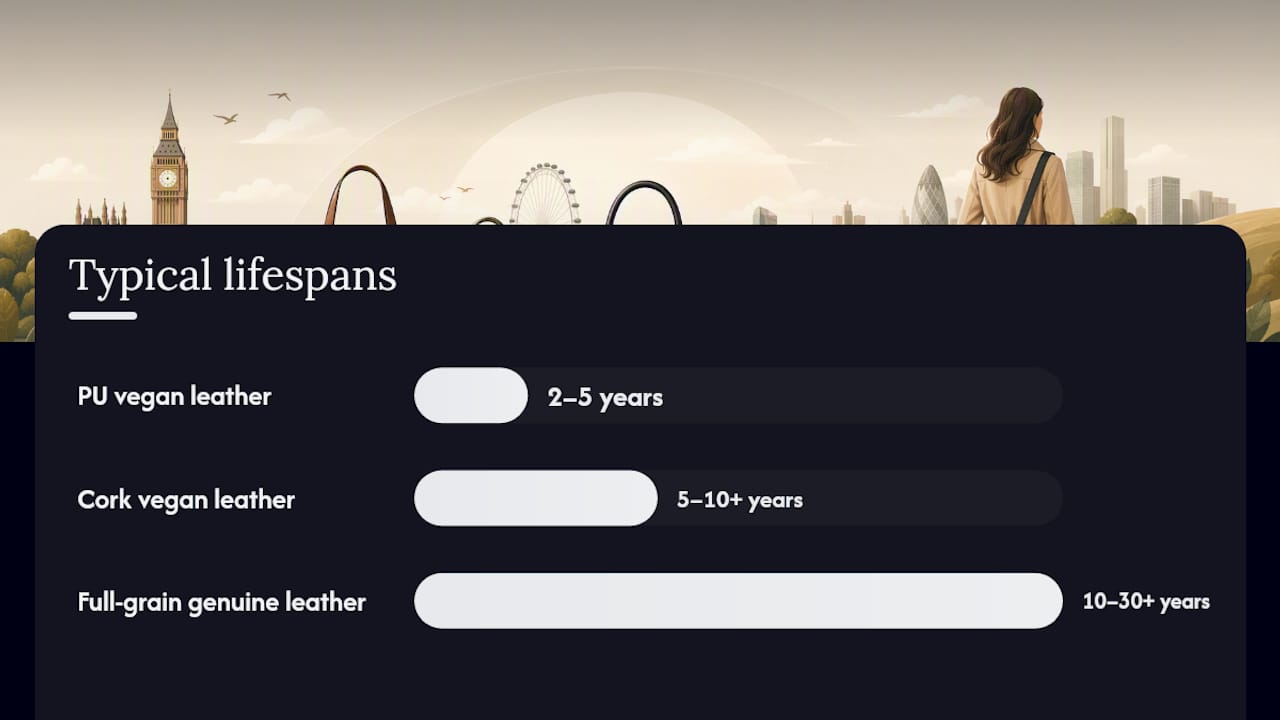
Durability. Full-grain genuine leather, properly maintained, can last decades. Research on vegan leather lifespans suggests low-quality vegan leather products can have lifespans as short as two years, while better materials and construction extend useful life substantially. A well-constructed cork or high-grade PU bag sits in the 5–8 year range for most users.
Repairability. Genuine leather can be re-stitched, conditioned, resoled (on leather goods with structural components), and patched. PU and PVC are harder to repair once the surface layer starts to delaminate. Cork bags can often be re-stitched and the surface cleaned, but a cracked cork laminate is difficult to restore.
Water resistance. PU and PVC surfaces are naturally water-resistant. Genuine leather requires conditioning and waterproofing treatment to resist moisture. Cork is naturally water-resistant without treatment.
Microplastic shedding. This is where the comparison shifts in genuine leather’s favour on one environmental metric. As The Conversation’s analysis of vegan leather sustainability explains, PU and PVC coatings can shed microplastics as they degrade, contributing to plastic pollution in ways that animal leather does not.
Vegan vs genuine leather: key attributes at a glance
| Attribute | PU vegan leather | Cork vegan leather | Full-grain genuine leather |
|---|---|---|---|
| Patina/ageing | Peels/cracks over time | Softens naturally | Develops character |
| Breathability | None | Low-moderate | Good |
| Typical lifespan | 2–5 years | 5–10+ years | 10–30+ years |
| Water resistance | Good (no treatment needed) | Good (natural) | Needs conditioning |
| Repairability | Limited | Moderate | Good |
| Microplastic risk | Yes (as it degrades) | Low | None |
| Animal-free | Yes | Yes | No |
A note on UK product labelling. Under the UK Textile Products (Labelling and Fibre Composition) Regulations 2012, sellers must accurately describe fibre content. If a bag is labelled “leather look” or “faux leather” without specifying the material, ask the retailer directly. Genuine leather must be labelled as such; a bag described only as “vegan” with no further material detail is a red flag.
Is vegan leather actually sustainable?
Not automatically. This is the most important nuance in the entire topic, and it is one the fashion industry has been slow to communicate clearly.
The Conversation’s investigation into vegan leather claims makes the point plainly: many vegan leathers replace animal-farming impacts with plastic-production impacts and microplastic risks. A PVC bag avoids the methane emissions and land use of cattle farming, but it introduces petroleum extraction, chemical processing, and an end-of-life material that cannot be composted or easily recycled.
The core issue: “vegan” is a composition claim, not a sustainability certification. A bag can be 100% animal-free and still be made from virgin petroleum plastic with a two-year lifespan.
Life-cycle thinking changes the picture. The relevant questions are: how long will this bag last? Can it be repaired? What happens to it at end-of-life? A cork bag that lasts ten years and uses a natural-fibre backing has a meaningfully different environmental profile from a PU bag replaced every two years, even if both carry the “vegan” label.
Wikipedia’s summary of artificial leather research notes that some industry life-cycle studies suggest certain vegan leathers can have a lower environmental impact than real leather on some metrics, but results depend heavily on the study’s assumptions and the specific materials compared. There is no universal answer.
For UK shoppers, a few certifications and standards offer some signal. The Global Recycled Standard (GRS) verifies recycled content claims. OEKO-TEX STANDARD 100 tests for harmful substances in textiles. The Leather Working Group covers genuine leather, not vegan alternatives, so its certification does not apply here. For plant-based materials, look for transparent supply-chain disclosure from the brand rather than relying on a single label.
The most credible sustainability signal for any vegan bag is not the material alone. It is the combination of material quality, construction durability, repairability, and the brand’s transparency about what the bag is made from. Choosing natural materials over plastic-backed alternatives is one practical way to improve that profile.
Pros and cons of vegan leather bags
Pros
- Entirely animal-free: no hides, no by-products of the meat or dairy industry
- Often lower price than comparable genuine leather, particularly for PU options
- Wide variety of colours, textures, and finishes, including options not achievable with natural leather
- Some plant-based options (cork, Piñatex) offer genuinely lower-impact sourcing
- Generally easier to wipe clean than untreated genuine leather
- Consistent appearance (no natural variation or blemishes)
Cons
- Most mainstream options are plastic-based and petroleum-derived
- Variable durability: low-cost PU bags can peel and crack within a few years
- Many are non-compostable and difficult to recycle at end-of-life
- PU and PVC shed microplastics as they degrade
- Lack of breathability compared with genuine leather
- “Vegan” labelling without material detail makes it hard to assess true environmental impact
- Repair options are more limited than for genuine leather
The balance shifts considerably depending on which material you choose. A well-made cork bag sidesteps most of the cons above. A cheap PU bag hits most of them.
How long do vegan leather bags last?
Lifespan varies more with vegan leather than with almost any other bag material, because the range from budget PU to well-made cork or Piñatex is enormous. Research on vegan leather durability indicates that low-quality products can fail in as little as two years, while better materials and construction extend useful life substantially.
As a rough guide by material:
- Budget PU (thin coating, non-woven backing): 1–3 years before peeling or cracking
- Mid-to-high-grade PU (thicker coating, woven backing): 3–6 years with reasonable care
- PVC: 3–6 years, though surface can become brittle in cold conditions
- Cork (well-made, natural-fibre backing): 5–10 years or more
- Piñatex and apple leather: 3–5 years based on current data, though long-term evidence is still accumulating
- Mycelium leathers: insufficient long-term data for a reliable range
What shortens life most quickly: thin plastic coatings on cheap non-woven backings, poor-quality stitching that allows the structure to flex and crack, metal hardware that corrodes and puts stress on attachment points, and exposure to direct sunlight or heat (which accelerates PU degradation).
Signs a bag is nearing end-of-life: surface peeling or flaking (delamination), cracking along fold lines, the backing fabric showing through, and stitching pulling away from the material. At that point, the options are: repair (re-stitch, patch, or reline if the structure is sound), upcycle (repurpose the bag or its hardware), or dispose of it responsibly via a textile recycling point.
Pro Tip: Buy the best construction you can afford rather than the most fashionable finish. A bag with a woven fabric backing, reinforced stitching, and solid metal hardware will outlast a cheaper equivalent by years, regardless of the surface material.
How to clean and care for vegan leather bags
Most vegan leather bags are easier to clean than genuine leather, but they are also more vulnerable to the wrong cleaning products. A few simple habits extend life considerably.
General cleaning routine (suitable for most PU and PVC bags)
- Empty the bag fully and shake out any loose debris.
- Wipe the surface with a soft, dry cloth to remove dust and surface dirt.
- Dampen a clean cloth with lukewarm water and a small amount of mild, pH-neutral soap (washing-up liquid works well).
- Wipe the surface gently in circular motions; do not scrub.
- Wipe away soap residue with a clean damp cloth.
- Leave to air dry at room temperature, away from direct heat or sunlight.
- Once dry, apply a thin layer of a non-oil-based conditioner designed for synthetic materials if the surface looks dry (optional but useful for PU bags used daily).
Material-specific cautions
Cork bags: avoid soaking or prolonged contact with water. Wipe spills immediately. Do not use alcohol-based cleaners, which can dry out the cork surface. A very light application of beeswax or a cork-specific conditioner once or twice a year helps maintain flexibility.
Fruit leathers (apple, Piñatex): treat similarly to PU. Avoid acetone, alcohol, or abrasive cloths, which can strip the resin finish. These materials can be slightly more sensitive to heat than PU, so keep them away from radiators.
High-gloss PU and PVC: avoid silicone-based products, which can cause the surface to become tacky over time. A damp cloth is usually sufficient for most marks.
Pro Tip: Store vegan leather bags stuffed with tissue paper (not newspaper, which can transfer ink) and in a dust bag or pillowcase. Hanging a bag by its handles for extended periods stretches the stitching at attachment points. Flat or upright storage on a shelf is better for long-term shape retention.
How to tell vegan leather from real leather when shopping
You do not need to damage a product to identify what it is. Destructive tests such as burning or scratching are unnecessary and inappropriate in a retail setting.
In-store checks
- Smell: genuine leather has a distinctive organic, slightly earthy smell that is very difficult to replicate. PU and PVC smell faintly of plastic, particularly when new. Cork has a mild, woody, natural scent.
- Edge finish: genuine leather edges are usually raw, burnished, or painted in a way that shows the fibrous cross-section of the hide. Vegan leather edges typically show a fabric backing or a clean, uniform cut with no fibrous texture.
- Backing fabric: turn the bag inside out or look at the interior of a flap. Genuine leather has a suede-like or fibrous underside. PU and PVC show a woven or non-woven textile backing.
- Price: a bag described as leather at a very low price (under £30–40 for a full-sized bag) is almost certainly vegan leather. Genuine leather at that price is not commercially viable.
- Label: check the care label or product tag. UK retailers are required to accurately describe materials. Look for explicit terms: “polyurethane,” “PU,” “cork,” “genuine leather,” or “synthetic.”
Online signals
Look for explicit material disclosure in the product description, not just the word “vegan.” High-resolution photos of the bag’s edges and interior backing are a good sign. A brand that lists the specific material (e.g. “PU on cotton backing” or “cork laminate on linen”) is being transparent. Check whether the retailer offers repairs or a warranty, which signals confidence in the product’s longevity. Consumer guidance on vegan leather shopping recommends checking whether a bag is plant-based or synthetic and looking for transparency about material composition, recycled content, and repair options.
A UK buyer’s checklist for vegan leather bags
Turning knowledge into a purchase decision is straightforward once you know what to look for. Use this checklist at the point of sale, whether in a shop or on a product page.
What to look for
- [ ] Material named explicitly: “PU,” “cork,” “Piñatex,” “recycled PET” — not just “vegan” or “faux leather”
- [ ] Construction quality: woven (not non-woven) backing, reinforced stitching at stress points, solid metal hardware
- [ ] Recycled or certified content: GRS certification for recycled materials, OEKO-TEX STANDARD 100 for harmful-substance testing
- [ ] Repair and returns policy: a brand that offers repairs or a reasonable returns window stands behind the product
- [ ] End-of-life information: does the brand offer a take-back scheme or recycling guidance?
- [ ] Transparent supply chain: where is the material sourced and processed?
Red flags
- “Vegan leather” with no further material detail
- Unusually low price for a claimed durable or plant-based material
- No care instructions provided
- No returns or repair information
- Marketing language focused entirely on “vegan” or “cruelty-free” with no mention of materials or longevity
For UK shoppers interested in the broader ethical fashion picture, this roundup of cruelty-free brands in the UK offers useful context on what transparent sourcing looks like in practice.
Prioritise longevity and material transparency over the “vegan” label alone. A bag that lasts ten years with a clear material story is a better ethical and environmental choice than a cheap plastic alternative replaced every two years.
For a more detailed UK-focused buying guide, Thecorkstore’s eco guide to choosing vegan handbags covers construction details and ethical shopping signals worth bookmarking.
Why cork deserves a closer look as a vegan leather option
Cork stands apart from most vegan leather materials because its sourcing is genuinely renewable without the plastic-production trade-offs that affect PU and PVC. Cork oak bark is harvested by hand every nine years; the tree continues to grow, and harvested trees actually absorb more CO₂ during the bark-regeneration period than unharvested ones. No trees are felled in the process.
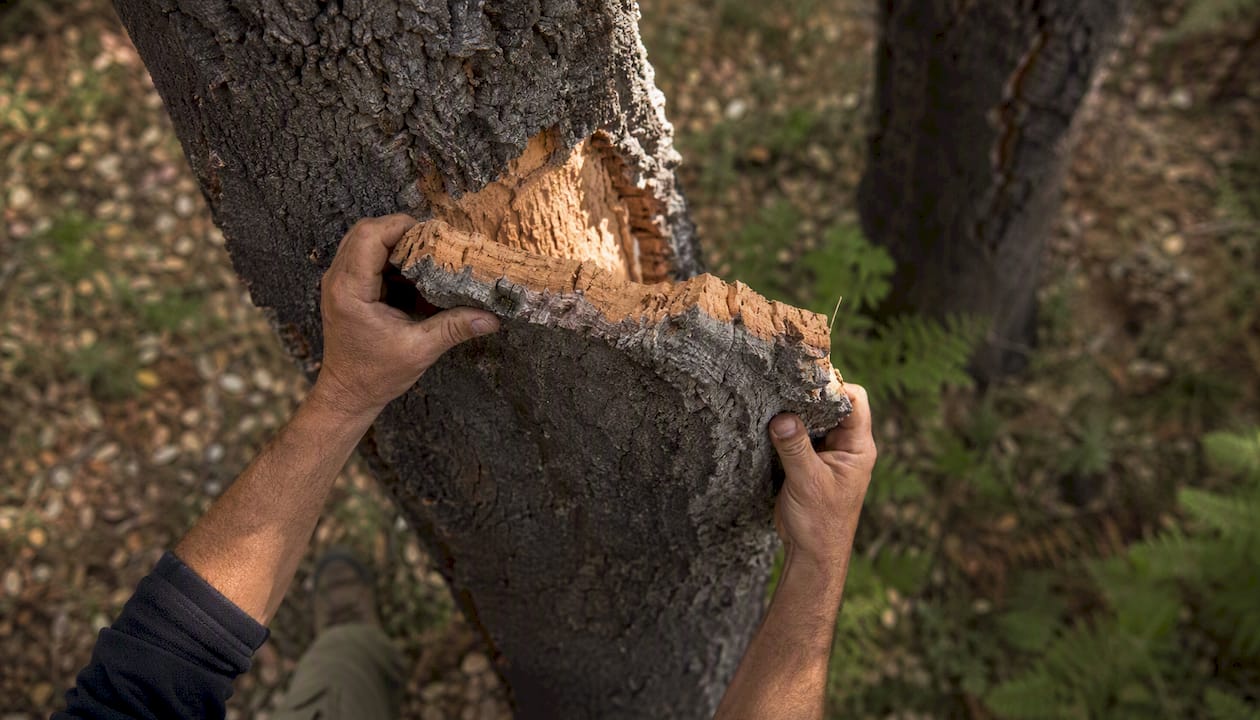
The resulting material is lightweight, naturally water-resistant, and has a distinctive warm texture that improves with handling. Cork bags typically use a thin cork veneer laminated to a cotton or linen backing, which gives the material enough flexibility and strength for everyday use. The backing fabric is usually natural fibre rather than plastic, which makes well-made cork products significantly more compostable than PU or PVC alternatives, though the adhesives used in lamination can affect this.
In terms of durability, cork holds up well for everyday bags. The surface resists scratches better than PU (it does not peel or crack in the same way), and the natural texture hides minor scuffs. A well-constructed cork handbag or backpack used regularly can reasonably be expected to last five to ten years or more, placing it closer to genuine leather in lifespan than to budget PU.
For UK shoppers, cork products are most reliably found through specialist sustainable accessory retailers. Look for bags where the cork sourcing is described (Portuguese or Spanish cork oak forests are the primary source), the backing material is named, and the construction includes reinforced stitching. Thecorkstore’s overview of cork as a vegan leather alternative explains the harvesting process and durability characteristics in more detail, and their guide to why cork handbags represent a strong sustainable fashion choice covers practical buyer cues.
For a direct comparison between cork and animal leather on sustainability metrics, this industry analysis of handmade leather bag alternatives provides useful context on where cork sits relative to other options.
What the vegan leather debate gets wrong
The conventional framing of vegan leather as the ethical default frustrates me, because it flattens a genuinely complex material question into a single label. Choosing a vegan bag is a meaningful ethical choice if you care about animal welfare. It is not automatically a meaningful environmental choice, and conflating the two does shoppers a disservice.
The fashion industry has been particularly guilty of this. That is not dishonest in a legal sense, but it exploits the gap between what “vegan” means and what most shoppers assume it means.
What the research actually supports is a more nuanced position: the best vegan leather bags are the ones made from materials with genuinely lower-impact sourcing (cork, responsibly sourced plant fibres), built to last, and sold by brands transparent enough to tell you exactly what they are made from. The worst are cheap PU bags marketed on their animal-free credentials while lasting two years before ending up in landfill.
The practical implication for shoppers is simple. Ask for the material name, not just the label. Check the construction. Buy once and buy well. A cork bag from a transparent maker is a better choice on almost every metric than a fast-fashion PU alternative, and the difference in price is usually smaller than people expect.
Thecorkstore: cork bags made for UK shoppers who want the real thing
If you have read this far, you already know that the “vegan” label alone tells you very little. What actually matters is the material, the construction, and the brand’s willingness to be specific about both.
Thecorkstore is a UK-based retailer specialising entirely in cork accessories: handbags, backpacks, wallets, purses, and gift sets, all made from natural cork with no PU or PVC in the surface material. Every product page names the materials used, and the cork is sourced from Portuguese cork oak forests using the traditional bark-harvest method that leaves trees standing and regenerating.
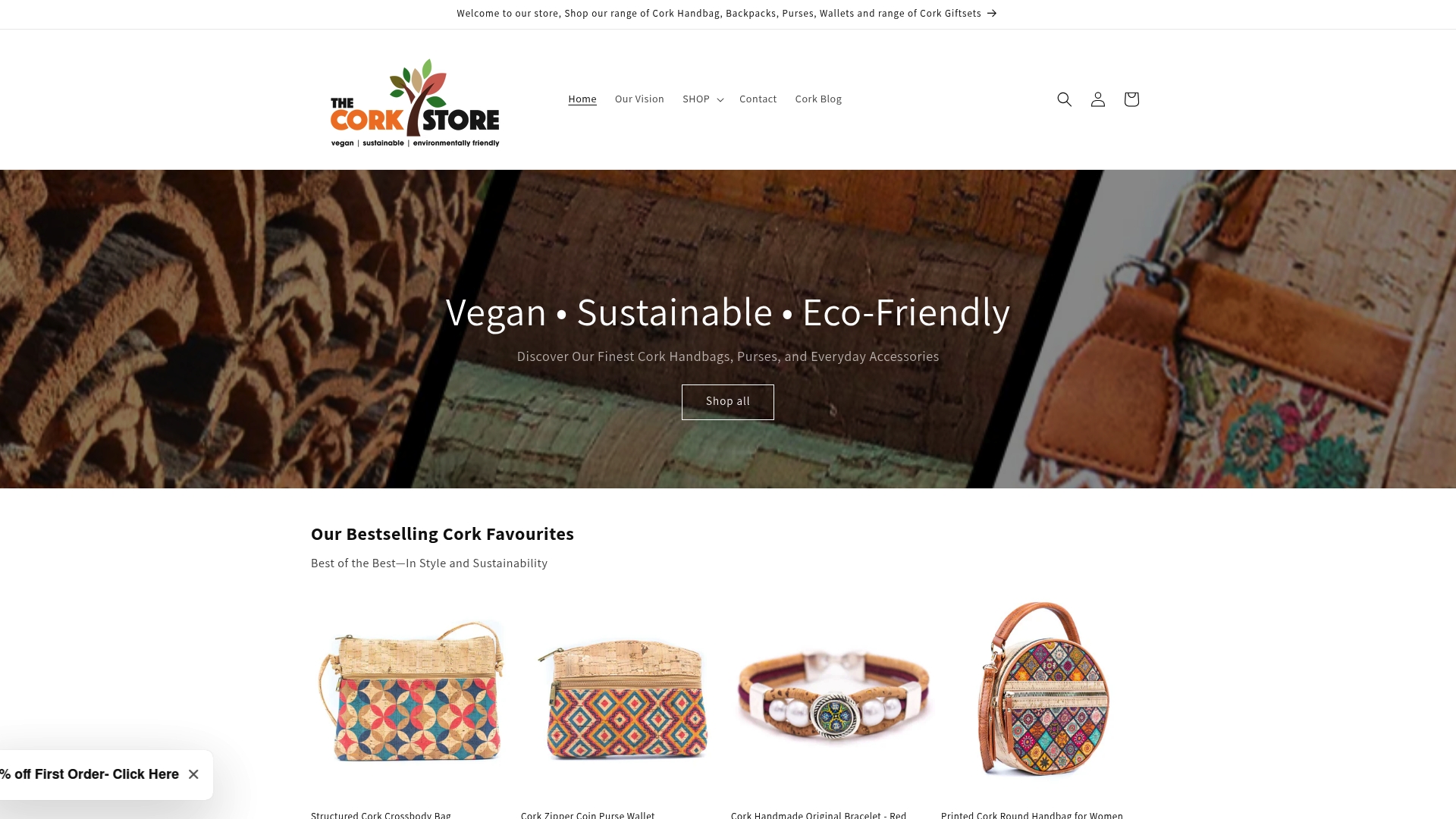
For shoppers who want a vegan bag that sidesteps the plastic-production concerns covered in this article, cork is the most practical option currently available in the UK at accessible price points. The All-Natural Cork Wallet Gift Set is a good starting point if you want to see the material quality before committing to a larger piece, and the full cork gift and accessories collection covers everything from everyday totes to structured backpacks. Browse the range at Thecorkstore and check the product descriptions for the material and construction details this guide has shown you to look for.
Sources
The claims in this article draw on the following sources. When evaluating sustainability claims from any brand, prioritise sources that discuss life-cycle evidence and material composition rather than single-label certifications.
- What Is Vegan Leather? What It Is Made of and Where to Buy It
- Vegan Leather: What It Is and Why It Belongs in Your Closet | PETA
- Artificial leather