
Why are vegan products rising in popularity?
TL;DR:
- Vegan products are growing mainly because health benefits, price, and retail availability appeal to consumers. Customers prioritize personal advantages and routine integration over ethical concerns, driving mainstream market expansion. Quality improvements and easy accessibility are key to sustaining this growth.
Vegan products are defined as goods made without animal-derived ingredients or materials, and their market is growing at a rate that signals a permanent shift in consumer behaviour. The global vegan products market is projected to reach $52.6 billion by 2033, growing at a compound annual rate of 11.5%. That figure reflects more than a passing trend. The reasons why vegan products are rising span health priorities, ethical concerns, retail expansion, and product quality improvements that have collectively moved plant-based choices from niche shelves to mainstream baskets. Understanding each driver gives a clearer picture of where this market is heading and why it matters to you.
Why are vegan products rising: the consumer motivations behind the growth
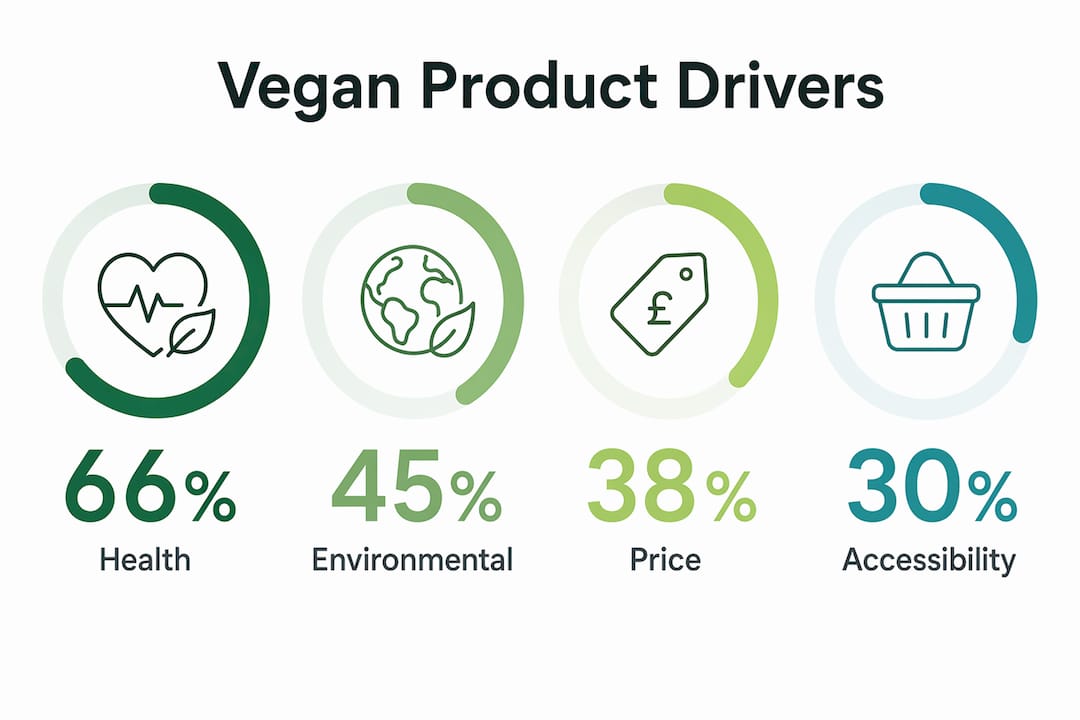
Health is the single biggest reason consumers choose vegan products. An EcoVox survey of 6,000 adults across Europe and the United States found that health motivates 66% of regular buyers of plant-based meat and dairy alternatives, outranking environmental concerns by a considerable margin. That finding overturns the assumption that ethical or environmental values lead purchase decisions.

Analysts describe this pattern as the “Meconomy,” a term for consumer behaviour centred on personal benefit rather than collective good. Shoppers are not abandoning ethics, but they are prioritising what directly benefits them first. Cost savings rank alongside health as a key motivator, particularly as the price gap between plant-based and conventional products narrows.
The primary motivators driving vegan product popularity include:
- Health outcomes. Consumers associate plant-based diets with lower cholesterol, reduced saturated fat intake, and better weight management.
- Cost savings. Versatile proteins like tofu and tempeh offer better value for money compared to premium meat substitutes.
- Ethical concerns. Animal welfare and environmental impact remain significant, particularly among younger consumers.
- Convenience. Products that slot into existing habits, such as oat milk in a morning coffee, face far less resistance than those requiring a complete meal overhaul.
Pro Tip: If you are new to plant-based eating, start with products that replace something you already consume daily. Swapping dairy milk for a plant-based alternative in coffee or cereal is the lowest-friction entry point.
Environmental concerns do matter, but they tend to reinforce a decision already made for personal reasons. Consumers who care about sustainability use it as a tiebreaker, not the primary trigger. That distinction is critical for understanding the sustained growth of vegan products beyond activist communities.
How do product innovation and quality affect vegan product popularity?
The vegan market has moved decisively from hype to performance. Early plant-based products rode a wave of novelty, but consumer scepticism about ultra-processed foods has forced manufacturers to raise their standards significantly. Products that cannot deliver on taste and texture are losing shelf space regardless of their ethical credentials.
Technological advances are closing the quality gap. Developments in protein extrusion, fermentation, and biomimicry have raised product quality to near parity with conventional foods in several categories. Fermentation, in particular, produces proteins with cleaner flavour profiles and shorter ingredient lists, addressing two of the biggest consumer objections simultaneously.
The four quality factors that now determine success in the vegan market are:
- Taste and texture. Consumers will not repurchase a product that fails on sensory grounds, regardless of how well it scores on sustainability.
- Clean-label ingredients. Shorter, recognisable ingredient lists build trust. Products with fewer additives consistently outperform those with complex formulations in repeat purchase surveys.
- Nutritional transparency. Protein content, fibre levels, and micronutrient profiles are now scrutinised as closely as calorie counts.
- Processing level. The backlash against ultra-processed foods has pushed manufacturers towards less processed formats, with whole-food ingredients gaining favour.
Pro Tip: When evaluating a vegan product, check the ingredient list before the marketing claims on the front of the pack. A short list of recognisable ingredients is a stronger indicator of quality than any certification badge.
The shift from clean-label transparency to renewed consumer interest is already visible in sales data. Brands that reformulated to reduce additives and improve ingredient legibility saw stronger retention rates than those that maintained complex formulations. Quality is no longer a differentiator. It is the baseline.
Why does plant-based dairy outperform plant-based meat alternatives?
Plant-based dairy and plant-based meat occupy the same broad category but perform very differently in the market. Plant-based dairy holds a 21% market share in Europe, while plant-based meat sits at just 4%. That gap is not accidental.
| Factor | Plant-based dairy | Plant-based meat |
|---|---|---|
| Market share in Europe | 21% | 4% |
| Routine integration | High (coffee, cereal, cooking) | Low (requires meal planning) |
| Ingredient simplicity | Generally shorter lists | Often complex formulations |
| Sensory expectation | Complementary, not imitation | Direct comparison to meat |
| Consumer trust level | Higher | Lower due to processing concerns |
The core reason for dairy’s advantage is routine. Plant-based milks used in coffee require no behavioural shift. You pour oat milk instead of cow’s milk into the same cup, in the same moment, with minimal disruption. Plant-based meat, by contrast, asks consumers to rethink an entire meal, accept a different texture, and trust that the product is genuinely nutritious.
European sales volumes of plant-based drinks grew 150% between 2015 and 2024. That growth reflects habit formation at scale, not just curiosity. Dairy alternatives also benefit from a less adversarial comparison. Nobody expects oat milk to taste identical to cow’s milk, whereas a plant-based burger is judged directly against its beef equivalent. That lower expectation bar makes satisfaction easier to achieve. For a broader view of how plant-based trends are shaping gastronomy, the foodservice sector offers useful context on where these products are heading next.
What role does retail expansion play in vegan product growth?
Accessibility is the quiet engine behind the growth of vegan products. Retail shelf space for vegan products grew by 35–45% across major chains in the United States and United Kingdom between 2020 and 2025. When a product is easy to find, it is easy to buy. That sounds obvious, but the practical effect on sales is substantial.
The retail factors accelerating vegan product adoption include:
- Mainstream shelf placement. Vegan products now sit alongside conventional equivalents rather than in dedicated “free-from” aisles, reducing the stigma of a separate purchase decision.
- Quick-service restaurant menus. Plant-based options at fast food chains have normalised vegan eating for consumers who would never visit a specialist health food shop.
- Price competitiveness. The narrowing price gap between plant-based and animal-based foods in six European countries drove measurable sales volume growth in 2025.
- Local sourcing signals. Between 30% and 42% of consumers across surveyed countries cite local production and environmental ratings on packaging as key purchase factors.
- Transparent labelling. Environmental scores and clear origin information help consumers make quick decisions at the shelf without extensive research.
The price point shift deserves particular attention. For years, the premium attached to plant-based products acted as a barrier for cost-conscious shoppers. As manufacturing scales up and supply chains mature, that premium is shrinking. Taste and quality still drive repeat purchases, but price accessibility brings new customers into the category for the first time. You can read more about how vegan accessory trends are following a similar retail trajectory in fashion and lifestyle products.
Key takeaways
Vegan products are rising because health, price accessibility, and retail availability have converged to make plant-based choices the practical option for mainstream consumers, not just the ethical one.
| Point | Details |
|---|---|
| Health leads purchase decisions | 66% of regular buyers cite health as their primary motivation, ahead of environmental concerns. |
| Dairy outpaces meat alternatives | Plant-based dairy holds 21% European market share versus 4% for plant-based meat. |
| Quality is now the baseline | Clean-label, less processed products drive repeat purchases; novelty alone no longer sustains sales. |
| Retail access drives adoption | Shelf space for vegan products grew 35–45% in major UK and US chains between 2020 and 2025. |
| Price gaps are closing | Narrowing price differences in Europe drove measurable sales volume growth in 2025. |
The vegan market has grown up, and that changes everything
I have watched the plant-based market cycle through two distinct phases, and the difference between them is stark. The first phase was driven by excitement. Products sold because they were novel, because consumers were curious, and because the idea of a plant-based burger felt like the future. Brands did not need to be good. They needed to be first.
The second phase is harder and more interesting. Consumers have now tried these products, formed opinions, and made repeat purchase decisions based on actual experience. The brands that survived the correction are the ones that invested in taste, shortened their ingredient lists, and priced competitively. The ones that relied on ethical positioning alone have largely disappeared from shelves.
What strikes me most is how the “Meconomy” framing reframes the entire conversation. Sustainability advocates have spent years arguing that consumers should choose plant-based for the planet. The data suggests consumers are choosing plant-based for themselves, and the planet benefits as a side effect. That is not a cynical observation. It is actually a more durable foundation for long-term market growth. Personal benefit sustains behaviour change far more reliably than moral obligation.
The challenge ahead is maintaining quality as the market scales. Larger production volumes create pressure to cut costs in ways that compromise ingredient quality. Brands that resist that pressure and continue to invest in ethical product standards will be the ones consumers trust five years from now.
— Aaron
Vegan cork products from Thecorkstore: style meets sustainability
The same forces driving vegan food choices are reshaping fashion and accessories. Consumers who choose plant-based at the supermarket are applying the same logic to their wallets, bags, and gifts.
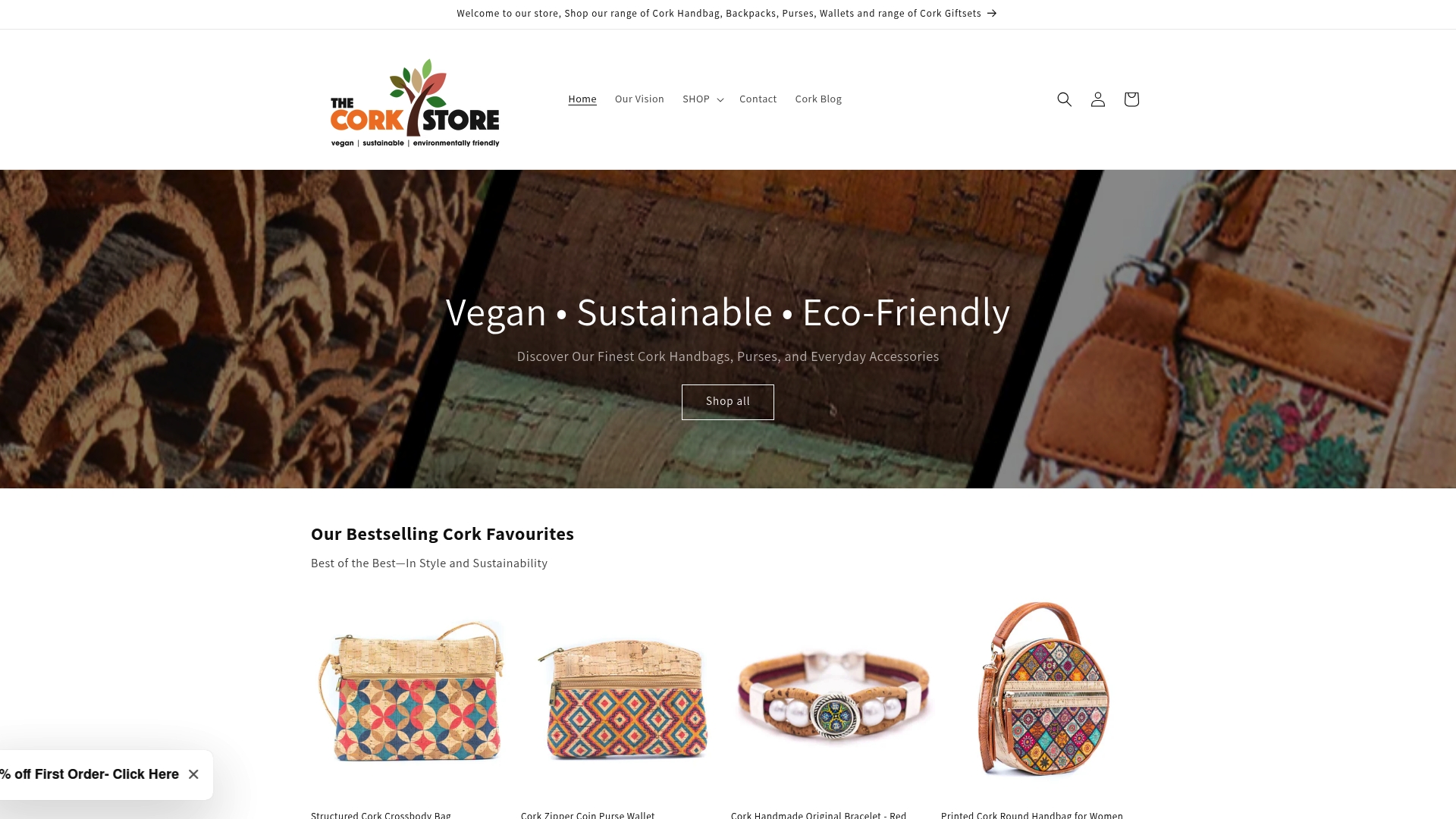
Thecorkstore offers a curated range of vegan cork accessories including handbags, backpacks, wallets, and purses, all made without animal-derived materials. Cork is naturally harvested without harming the tree, making it one of the most genuinely sustainable materials available. The All-Natural Cork Wallet Gift Set is a particularly strong choice for anyone looking to give a gift that reflects both style and ethical values. Every product combines durability with a clean, modern aesthetic that does not ask you to compromise on either.
FAQ
What is the main reason vegan products are growing in popularity?
Health is the primary driver. An EcoVox survey found that 66% of regular buyers of plant-based alternatives cite health as their main motivation, ahead of environmental or ethical concerns.
Are vegan products becoming more affordable?
The price gap between plant-based and conventional foods narrowed measurably across six European countries in 2025, making vegan products accessible to a broader range of shoppers.
Why do plant-based dairy products sell better than plant-based meat?
Plant-based dairy integrates easily into daily routines, such as oat milk in coffee, and carries lower sensory expectations than meat substitutes, which are judged directly against their animal-based equivalents.
What does “clean-label” mean for vegan products?
A clean-label product uses a short list of recognisable, minimally processed ingredients. Consumers increasingly favour these over complex formulations, particularly as distrust of ultra-processed foods grows.
Does buying vegan products make an environmental difference?
Environmental impact is a secondary motivator for most consumers, but it remains significant. Between 30% and 42% of shoppers cite local production and environmental ratings on packaging as important purchase factors.