
7 Checks to Verify a Cork Company Before You Buy Online
A cork company sells vegan, sustainably sourced cork accessories, and cork itself is a durable, eco-friendly alternative to leather. If you want handbags, wallets or backpacks made without animal products, The Cork Store is a direct place to shop, though it pays to check a few sourcing and construction details first. The buying checklist below covers exactly what to look for.
TL;DR:
- Genuine cork is harvested from living trees without felling, and its ability to regenerate every 9 to 12 years reduces environmental impact.
- Choosing products with FSC or PEFC certification ensures cork is sourced from sustainably managed forests and maintains biodiversity.
- Cork’s natural properties make it water-resistant, elastic, and resistant to cracking, which supports its durability for daily accessories.
- Verify product details such as material type, lining, hardware quality, and clear images to avoid imitators and ensure genuine craftsmanship.
- Proper care involves wiping spills with a damp cloth, storing bags lightly stuffed, and avoiding heat and direct sunlight to preserve cork’s integrity.
Table of Contents
- Why cork is sustainable and performs well for handbags, wallets and accessories
- How to choose a reputable cork company and what to check on product pages
- Product types, cork construction variants and straightforward care instructions
- Certifications and labels that actually verify vegan and sustainable cork
- How cork accessories compare with leather and synthetic alternatives
- Understanding returns, exchanges and warranties when buying cork online
- Why we sell cork, and what to expect as a first-time buyer
- Where to buy cork handbags, wallets and gift sets today
- Sources
- FAQ
Why cork is sustainable and performs well for handbags, wallets and accessories
Cork oak trees are stripped of their bark, not felled, and the tree regrows its bark for the next harvest every 9 to 12 years, a cycle that has made cork one of the most regenerative materials in fashion according to research on cork as a renewable raw material. The bulk of harvested cork still goes into wine stoppers, but industrial by-products from that process feed directly into textiles, insulation and fashion accessories.
Cork stoppers produce significantly less CO2 per 1,000 pieces than plastic or aluminium alternatives, according to life cycle research on cork’s structure and chemistry. That gap matters beyond wine bottles: it signals how much lower cork’s manufacturing footprint tends to run compared with synthetic alternatives used in small accessories.
The material itself explains why cork holds up on a daily-use bag or wallet. Cork’s cell walls are made largely of suberin and lignin, roughly 53% suberin and 26% lignin, and that composition gives cork its elasticity, low permeability to liquids and resistance to compression, the same structural chemistry review explains. In practical terms, that is why a cork wallet resists cracking and shrugs off a splash of water rather than staining.

There is a conservation case for buying cork too. Research on Mediterranean cork oak savannas found that market demand for cork products helps keep these landscapes managed, which in turn sustains their biodiversity. Without buyers, cork oak land risks abandonment and resulting habitat loss. Our guide to where cork comes from covers the harvesting story in more detail.
When you are comparing listings, a few things separate genuine cork craftsmanship from a weaker imitation:
- Bark, not tree loss: genuine cork is harvested without felling the tree, so the material renews itself over the decade-long harvest cycle.
- Natural water resistance: cork’s suberin content repels liquids without needing a plastic coating.
- Flexes without cracking: the same cellular structure that resists compression also lets cork bend and return to shape.
- Lower manufacturing footprint: cork processing tends to produce markedly less CO2 than plastic or synthetic leather equivalents.
How to choose a reputable cork company and what to check on product pages
Not every online listing calling itself “cork” is built the same way, so a short checklist before you buy saves disappointment later.
- Material type: check whether the product is pure cork sheet, a cork veneer bonded to fabric, or a cork-cotton blend, since each behaves differently in weight and flexibility.
- Origin and chain of custody: look for a mention of where the cork was harvested and whether it carries FSC or PEFC certification.
- Vegan claim: confirm the listing states no animal-derived materials in the lining, trims or adhesives, not just the outer cork.
- Lining material: cotton and polyester linings are common; check this is named rather than left vague.
- Hardware quality: metal zips and clasps should be described, since cheap hardware is often the first thing to fail.
- Dimensions: cork bags photograph larger than they are, so check exact measurements against what you actually need.
- Return policy and warranty: confirm the window for returns and whether any workmanship warranty applies before you commit.
Photos tell you more than the description if you know what to look for. Close-up shots of stitching, edge finishing and the backing fabric reveal whether a piece is handmade with care or mass produced with shortcuts, and a practitioner review of cork variability notes that thicker cork backed with cotton or polyester reduces the risk of splitting at the seams.
Price bands follow the same logic as leather goods. A small coin purse sits at the lower end because it uses less material and simpler construction, while a full-size handbag costs more where the price reflects thicker cork layers, solid hardware and handmade stitching rather than machine-glued panels. Higher prices are justified when the listing shows genuine craftsmanship detail, not just a brand name.
Pro Tip: Send the seller’s customer service one or two specific questions, such as the lining material or the exact cork thickness, before you buy: how quickly and precisely they answer tells you how they will handle a problem after the sale.
Product types, cork construction variants and straightforward care instructions
Cork accessories come in the same shapes you would expect from leather goods, but each type rewards different priorities. A crossbody bag lives or dies on strap length and adjustability, since cork is lighter than leather but still needs a strap that sits comfortably across the body. A wallet is mostly about compartments: card slots, a zipped coin pocket and whether it folds flat in a pocket. Backpacks need to be judged on back panel padding and zip placement, while gift sets are worth comparing on what is actually included rather than the box they arrive in, as our comparison of cork gift sets sets out.
Construction variants matter as much as the product shape. Pure cork sheet gives the most natural, textured look but is heavier and less flexible. Cork veneer, a thin cork layer bonded to a fabric backing, is lighter and bends more easily, which suits smaller items like wallets. Cork-cotton blends, including 90:10 cotton-cork fabrics shown in recent textile research to hold up through laundering and dyeing, widen what cork can be used for without losing its distinctive surface.
Caring for cork is simple. Wipe marks away with a soft cloth and a little mild soap and water, then let the piece air dry away from direct heat or sunlight, since cork can dry out and become brittle with prolonged exposure, a point echoed in research on cork as a renewable material. Store bags stuffed lightly with tissue paper to hold their shape rather than flattened in a drawer. Our cork wallet guide covers day-to-day durability in more depth.
- Do clean spills promptly with a damp cloth rather than letting them sit.
- Do store bags upright or lightly stuffed to prevent creasing.
- Don’t leave cork accessories on a radiator, in direct sun or in a hot car.
- Don’t scrub stains with anything abrasive, which can tear the surface layer.
Pro Tip: When travelling, wrap corners and hardware in a soft cloth inside your suitcase, since impact damage from being crushed against other luggage is the most common cause of cork creasing.
Certifications and labels that actually verify vegan and sustainable cork
A “vegan” or “eco-friendly” label on a product page is a claim, not proof. The most meaningful check is forest certification such as FSC or PEFC, which trace cork back through a documented chain of custody to a managed forest, a system the Food and Agriculture Organization’s overview of the cork oak system describes as a genuine trust signal for cork sourcing in some regions.
Beyond forestry certification, look for clarity on the lining and adhesives used, since a product can be cork on the outside and still rely on animal-derived glue or a leather-trimmed lining. A genuinely vegan listing will name every material component, not just the headline fabric.
Design and life cycle research also offers a useful filter: eco-cost analysis of cork products found that pure cork tends to score better on life cycle impact than cork blended heavily with synthetic coatings or binders, so a product that minimises added plastic generally keeps more of cork’s environmental advantage intact. When a brand publishes where its cork is sourced and how it is processed, that transparency is itself a signal worth more than a badge with no explanation behind it.
How cork accessories compare with leather and synthetic alternatives
Leather remains the default material buyers compare cork against, and the difference starts with the animal itself: cork involves no slaughter and no tanning chemicals, since it is bark harvested from a living tree. Cork’s suberin-rich structure also gives it a natural water resistance that leather lacks without treatment, and cork resists cracking in ways that some synthetic leathers do not, according to practitioner-level research on cork variability.
Synthetic leather, often a polyurethane or PVC coating over a fabric base, avoids animal products too, but it is typically petroleum-derived and does not biodegrade the way cork does. Cork sits in a different category again from canvas or recycled plastic accessories, which are vegan but usually offer less structure and a shorter working life than a well-made cork piece.
Where cork does ask for a trade-off is weight and rigidity in very large items: a big tote in pure cork sheet can feel stiffer than an equivalent leather tote until it is broken in. For wallets, purses and mid-size bags, that difference barely registers, and cork’s combination of water resistance, low weight and cruelty-free sourcing gives it a genuine edge over both leather and most plastic-based synthetics.
Understanding returns, exchanges and warranties when buying cork online

Online cork retailers vary in how generous their return windows are, so check this before checkout rather than after a purchase disappoints. Look specifically for the return period in days, whether the item must be unused and in original packaging, and who covers the cost of sending it back.
Exchanges are usually simpler than refunds if the issue is sizing or colour rather than a fault, so check whether the seller offers a straightforward swap instead of a full refund and rebuy. A warranty, where one is offered, typically covers manufacturing faults such as failed stitching or hardware, not everyday wear, so read the wording rather than assuming full coverage.
If you are buying a gift set close to an occasion, confirm the estimated delivery window against the date you need it by, since cork accessories are often made in smaller batches than mass-market synthetic bags. A seller that states its policies clearly on the product page, rather than burying them in a separate terms document, is usually the more reliable one to buy from.
Why we sell cork, and what to expect as a first-time buyer
The Cork Store specialises in vegan cork accessories and publishes ongoing blog content on where cork comes from and how it is produced, because we think buyers deserve to see the material’s story before they commit to a bag or wallet. Our priority when sourcing is traceable, ethically produced cork wherever it can be secured, and we back that up with straightforward aftercare guidance rather than leaving customers to guess how to look after a new purchase.
If this is your first cork purchase, expect a returns process and customer support that treats a genuine question about materials or fit as normal, not an inconvenience. Buying something you have not touched in person is a leap, and our aim is to make that leap smaller with clear product information from the start.
— Aaron
Where to buy cork handbags, wallets and gift sets today
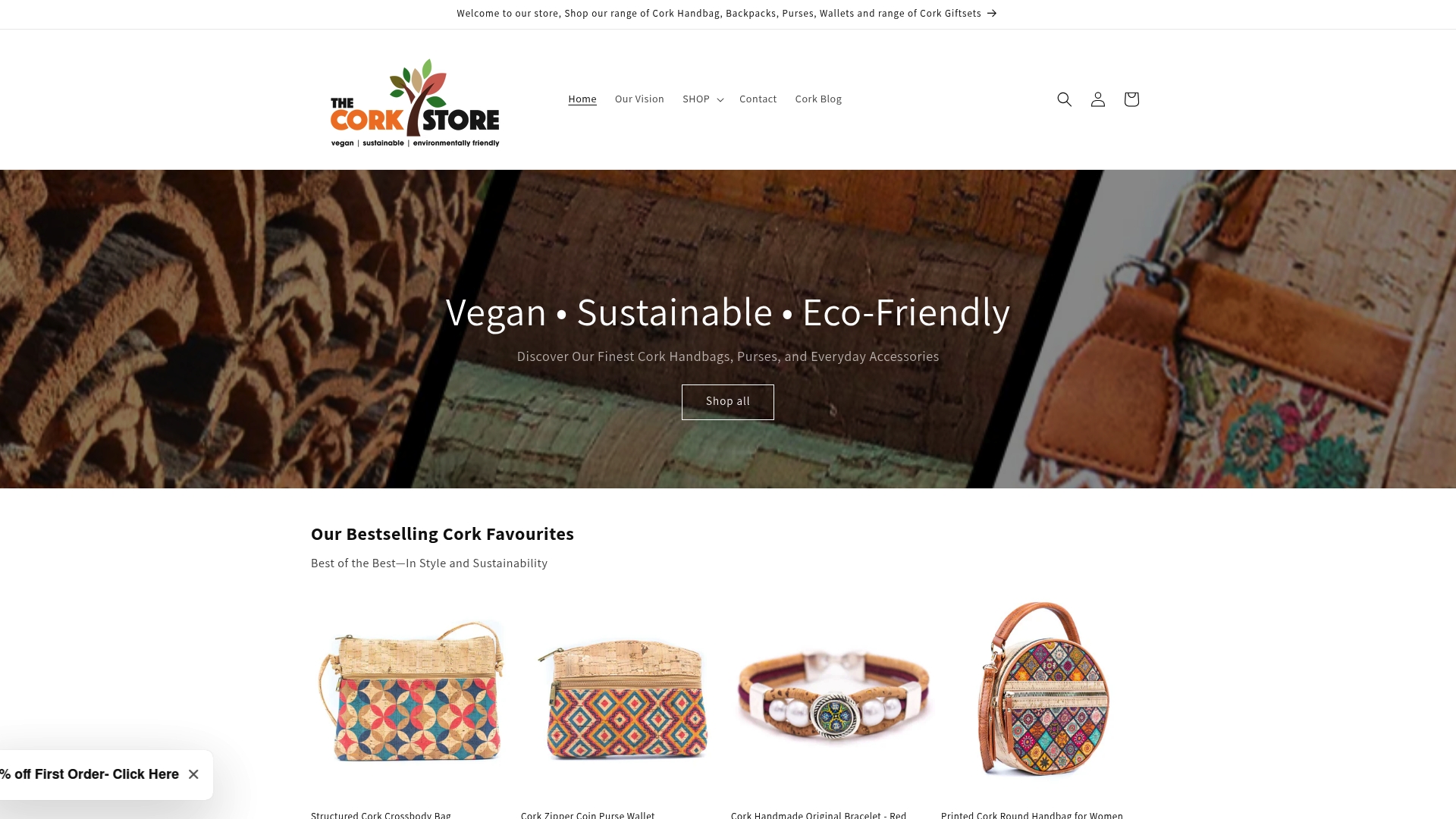
The Cork Store sells vegan cork handbags, wallets, crossbody bags, backpacks and gift sets directly, so you can go from reading about cork to owning a piece without a middleman. If you want a low-commitment entry point, a small wallet is an easy way to try the material before buying a full-size bag, and every listing states its construction and lining so you know exactly what you are getting.
| Where to start | What you will find |
|---|---|
| Main product range | Handbags, wallets, crossbody bags, backpacks, totes, travel bags, bracelets and gift sets |
| Cork Zipper Coin Purse Wallet | A compact, affordable first purchase |
| Marine Cork Wallet | A mid-range wallet showing typical construction detail |
For a broader shopping overview before you decide, our guide to vegan fashion alternatives rounds up more product options, and readers weighing up sustainable gifting more generally may also find Wattz Good’s sustainable product collection a useful comparison point. Once your order arrives, the care steps above will keep it looking new for years.
Sources
- The rationale behind cork properties: a review of structure and chemistry
- Mediterranean cork oak savannas require human use to sustain biodiversity and ecosystem services
- Cork – a renewable raw material: forecast of industrial potential and development priorities
- Coating cotton with cork or cork–textile blends for sustainable textiles
FAQ
Is cork actually vegan and cruelty-free?
Yes, cork is harvested from the bark of a living cork oak tree without harming the tree or any animal, which makes it inherently vegan. Check the lining and adhesives too, since a fully vegan product needs every component, not just the outer cork, to be free of animal-derived materials.
How long does a cork handbag or wallet last?
A well-made cork accessory can last for years of regular use because cork’s suberin content gives it natural elasticity and resistance to cracking, as described in research on cork’s structure and chemistry. Longevity depends on construction quality, so thicker cork with solid stitching and hardware will outlast a thinner, mass-produced equivalent.
Is cork more sustainable than leather or synthetic leather?
Cork avoids the slaughter and tanning chemicals involved in leather production and typically carries a lower manufacturing footprint than plastic-based synthetics, based on life cycle comparisons of cork production. It also comes from a renewable source, since cork oak bark regrows and is harvested roughly every 9 to 12 years without felling the tree.
What should I check before buying cork accessories online?
Confirm the material type, whether the cork carries FSC or PEFC certification, the lining material and the return policy before you buy. Product photos showing stitching and edge finishing are a reliable way to judge construction quality from a listing alone.
Does The Cork Store offer returns on cork products?
Vegan cork handbags, wallets, backpacks and gift sets are offered for sale through their online site, with return details listed on the product and checkout pages. Check the specific return window and conditions on the page for the item you are buying before you complete your order.