

Cork hardwood flooring owners: 8 evidence backed checks for cork bags
Yes, cork is a genuinely sustainable, vegan alternative to leather for handbags, wallets and backpacks. It comes from renewable bark harvests, resists water thanks to its natural suberin content, and holds up well against daily wear. The main trade-off is choice: cork accessories offer fewer textures and finishes than leather. Keep reading to see how to pick the right piece, care for it, and where to browse the range.
TL;DR:
- Choose cork accessories with cotton backing and reinforced stitching to ensure better sustainability and longer lifespan.
- Inspect hardware such as zippers and clasps to confirm they are metal and built to withstand daily use.
- Store cork items in breathable dust bags and avoid heat or direct sunlight to prevent discolouration and loss of flexibility.
- Be cautious of the backing material, as cotton-backed cork is generally more biodegradable and softer than polyester-backed options.
- Proper maintenance involves gentle cleaning with a damp cloth and avoiding harsh solvents or excessive heat, which can damage the material.
Table of Contents
- What is cork fabric and how is it made into accessories?
- Is cork durable enough for everyday bags and wallets?
- How do you choose a cork accessory that will actually last?
- Cork accessory maintenance: how to keep it looking new
- What should you compare before buying a cork bag?
- Cork versus leather and synthetic vegan leather: the real differences
- How is a cork accessory actually put together?
- What if your cork accessory gets scuffed, stained or worn?
- What’s the environmental impact of cork beyond the harvesting story?
- Thecorkstore’s perspective: why we back cork and how we help you choose
- Ready to browse cork handbags, wallets and backpacks?
- Sources
What is cork fabric and how is it made into accessories?
Cork fabric starts with bark, not the tree itself. Workers strip the outer bark from cork oaks (Quercus suber) at sustainable intervals allowing natural tree regeneration, and the tree regenerates its bark naturally, which is why cork ranks among the most renewable materials used for handbags compared with plastics or upcycled leather.
Once harvested, the bark is boiled, dried and sliced into thin veneers, typically under a millimetre thick. That veneer is fragile alone, so manufacturers bond it to a backing fabric, usually cotton or polyester, to create something strong enough for stitching and structure.
- Cork veneer sheets: thin cork layers laminated onto fabric backing for bags and small goods
- Cotton-backed cork: cork bonded to woven cotton, generally the more sustainable option
- Polyester-backed cork: cheaper to produce but introduces synthetic content that limits biodegradability
- Cotton-cork blends: cork fibres woven directly into cotton yarn rather than laminated
A 2024 study on 90:10 cotton-cork blended fabric found this construction had higher insulating capacity and sufficient strength compared with 100% cotton, and could still be laundered and dyed using conventional methods. That matters for accessories: it shows cork-cotton textiles aren’t a fragile novelty but a workable, durable fabric. The backing and coating a brand chooses shapes everything from feel to how long the piece lasts, which is worth checking before you buy. Our guide to cork material properties covers the finer detail.
Is cork durable enough for everyday bags and wallets?
Cork earns its reputation on a handful of practical strengths. It’s lightweight, so a cork backpack won’t add bulk before you’ve packed anything into it. It’s naturally water-resistant, antimicrobial and hypoallergenic, properties that come straight from its cellular structure rather than a chemical treatment.
- Naturally repels water and light stains without a sprayed-on coating
- Resists odour and bacterial growth better than most vegan alternatives
- Biodegradable at end of life, unlike PVC or polyurethane “vegan leathers”
- Softens and develops character with use, similar to how leather ages
The trade-off: cork doesn’t stretch or flex quite like leather, so heavily structured bags need a supportive lining underneath. Against plastic-based vegan leathers, cork generally wins on abrasion resistance and long-term biodegradability, though it comes in a narrower range of colours and embossed finishes.
Pro Tip: Check whether a listing specifies cotton or polyester backing. Cotton-backed cork is more sustainable and usually softer to the touch, while polyester-backed versions can feel stiffer but occasionally offer better structure for larger bags.
The durability of a cork bag often comes down less to the cork itself and more to how well the backing, seams and hardware are put together, which is exactly what the next section covers.
How do you choose a cork accessory that will actually last?
Picking a good cork bag or wallet isn’t that different from vetting a leather one. You’re checking the same fundamentals: what’s underneath the surface, how it’s assembled, and whether the seller stands behind it.
- Check the backing material. Look for cotton backing over polyester where possible; it’s the more sustainable choice and usually ages better.
- Inspect the lining. A cotton or recycled polyester lining protects the cork from the inside and extends the bag’s life.
- Look at the stitching. Even, tight seams along stress points (handle joins, zip edges) signal better construction than visible loose threads.
- Examine edge finishing. Raw or fraying edges wear faster; folded or bound edges hold up longer.
- Assess the hardware. Solid metal clasps, zips and D-rings outlast plastic fittings, especially on bags you’ll use daily.
- Consider structure and weight. A stiffer cork bag holds its shape better for work use; a softer one suits casual, everyday carry.
- Confirm dimensions against your actual needs, not just the product photo, since cork bags photograph slightly larger than they are.
Before buying, it’s worth asking a seller (or checking the product page) three things: whether care instructions are provided, whether the cork is sourced from certified forests, and what the returns policy covers.
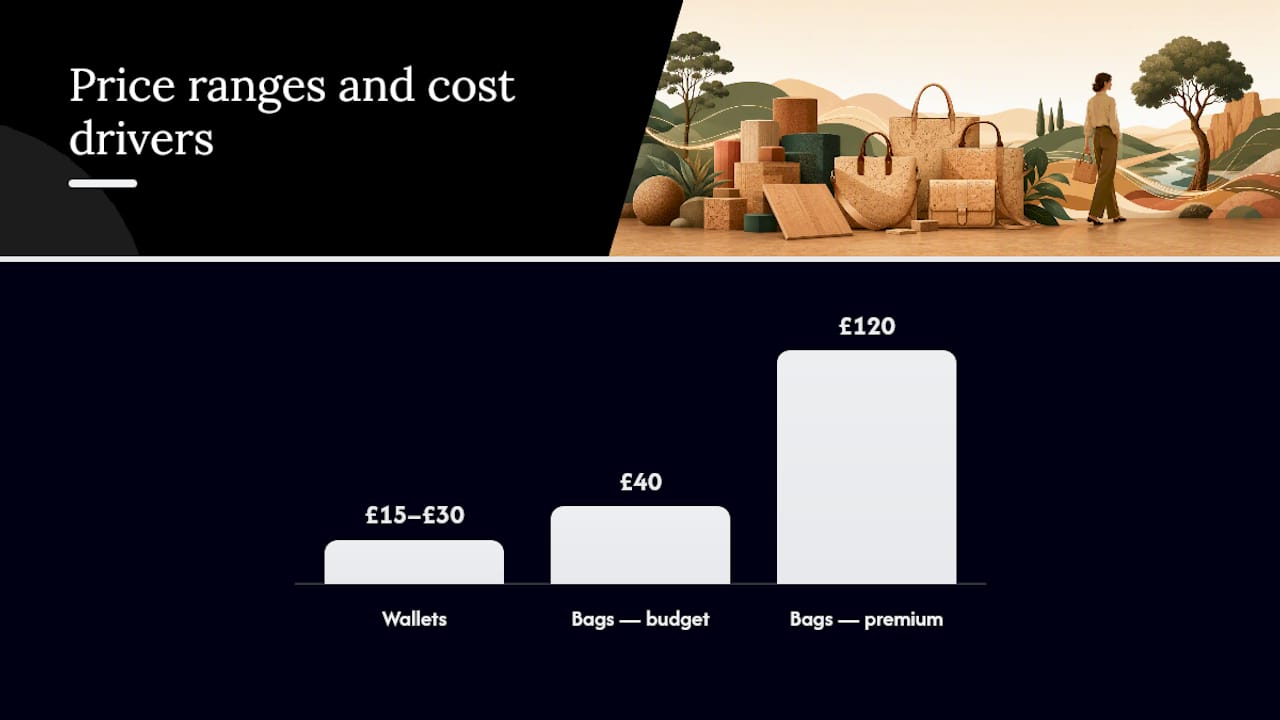
On price, budget cork wallets often sit in the £15 to £30 range, with handbags and backpacks typically running from £40 up to £120 depending on size, hardware and lining quality. Prices vary depending on backing fabric quality, seam reinforcement, and hardware rather than just brand markup. Lower-priced cork purses may use thinner cork veneer and simpler stitching than higher-priced options.
Cork accessory maintenance: how to keep it looking new
Cork asks for very little. A slightly damp cloth and a touch of mild soap is enough for routine cleaning, wiped in gentle circular motions rather than scrubbed.
Avoid harsh solvents, bleach and anything abrasive. Skip the tumble dryer and radiators too; direct heat and prolonged UV exposure both dry out and discolour cork over time.
- Wipe down after use with a barely damp cloth, then air dry away from direct sunlight
- Blot fresh stains immediately rather than letting them set
- If a bag gets properly soaked, stuff it gently with tissue to hold its shape and let it dry naturally, away from heaters
- Store in a breathable dust bag rather than sealed plastic, which traps moisture
- Avoid overloading pockets and compartments, which stresses seams over time
Cork won’t crack the way some bonded leathers do, but it can scuff if dragged across rough surfaces, so treat it with the same basic respect you’d give a good leather tote. For step-by-step routines, including how to handle deeper stains, our full cork accessory maintenance guide and care instructions for cork products go into more depth than a quick list ever could.
What should you compare before buying a cork bag?
Scanning a handful of product pages side by side is the fastest way to spot which cork accessory is actually built well.
- Material composition: pure cork veneer versus a cork-cotton blend, each with a slightly different feel and flexibility.
- Backing fabric: cotton generally beats polyester on sustainability and softness.
- Lining: organic or GOTS-certified cotton linings are the more eco-friendly choice over polyester.
- Hardware quality: metal fittings over plastic, especially for zips and clasps you’ll use daily.
- Dimensions and weight: match these against how you actually carry things, not just the listing photo.
- Care instructions: a seller who provides clear cleaning guidance usually stands behind the product’s longevity.
- Certifications: look for FSC-certified cork sourcing and PETA-Approved Vegan labelling as baseline trust signals.
- Returns and warranty terms: a fair returns window suggests confidence in construction quality.
When you see “cotton-backed” versus “polyester-backed” on a label, that’s telling you about both feel and footprint. Cotton backing costs a little more to produce but keeps the item closer to fully biodegradable. Where certification and sourcing transparency are listed, treat them as a genuine priority rather than a nice-to-have; they’re the clearest signal a brand has actually thought about where its cork comes from.
Cork versus leather and synthetic vegan leather: the real differences
Set cork next to full-grain leather and the comparison isn’t close on sustainability. Leather production carries a heavy water and chemical tanning footprint; cork harvesting strips bark without felling a single tree. Where leather wins is flexibility and the sheer range of textures and finishes available, something cork genuinely can’t match yet.
Against PVC or polyurethane “vegan leather”, cork holds the advantage on end-of-life impact. Plastic-based alternatives look and feel more like leather out of the box, but they’re petroleum-derived and don’t biodegrade. Cork does, at least when it’s paired with a cotton backing rather than a synthetic one.
Where cork loses ground is rigidity and colour range. It doesn’t take dye the way leather or PU does, so cork accessories tend to stay in natural bark tones with occasional printed patterns, rather than offering the deep colour palette leather goods can. It’s also less forgiving of extreme flexing; a cork wallet that gets folded aggressively every day will show wear faster than a similarly priced leather one.
None of this makes cork the wrong choice; it makes it a different one. If biodegradability and low-impact sourcing matter more to you than colour variety or a supple, buttery hand-feel, cork wins that trade comfortably. If you need bold colour or maximum flexibility, it’s worth knowing that going in.
How is a cork accessory actually put together?
Construction quality varies more between brands than the cork material itself does. A well-made cork bag starts with veneer sliced to a consistent thickness, usually somewhere between 0.3mm and 0.8mm, then bonded under heat and pressure to its backing fabric.
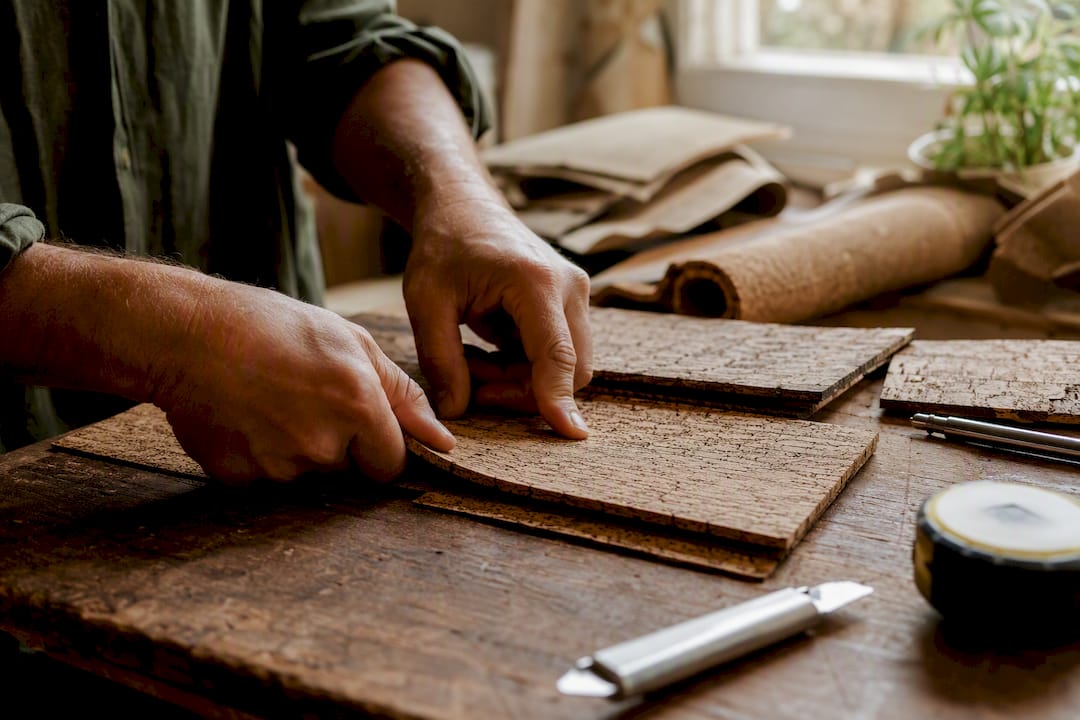
From there, panels are cut and sewn much like any fabric bag: reinforced stitching at stress points, a supportive lining fitted inside, and hardware riveted rather than glued wherever possible. Riveted hardware holds up far longer under repeated use than glued fittings, which can loosen within a year of regular carrying.
Seam allowances matter more with cork than with leather, since cork doesn’t stretch to accommodate a tight seam the way leather can. Brands that leave slightly wider seam allowances tend to produce bags that hold their shape better over years of use, rather than pulling at the stitching after a few months.
Zips and clasps sit at the weakest point on most bags regardless of material, so it’s worth checking these specifically rather than assuming quality construction throughout just because the cork panel itself looks good. A bag can use excellent cork and still let you down at the zip pull if the hardware was an afterthought.
What if your cork accessory gets scuffed, stained or worn?
Most issues with cork accessories are cosmetic and fixable rather than structural. Light surface scuffs often soften and blend in on their own with continued gentle use, since cork’s surface naturally smooths with handling.
For stains, blot immediately rather than rubbing, then follow the same damp cloth and mild soap routine used for general cleaning. Oil-based stains (makeup, food grease) are the trickiest; a small amount of diluted washing-up liquid on a cloth, dabbed rather than scrubbed, usually lifts them without damaging the cork surface.
If a bag gets fully soaked, resist the urge to dry it quickly with heat. Direct heat causes cork to shrink slightly and can separate it from its backing fabric over time. Air drying at room temperature, away from radiators or sunlight, protects the bond between cork and lining.
Peeling at the edges is the most common structural complaint, and it usually traces back to the adhesive bond between cork veneer and backing rather than the cork itself failing. Cheaper adhesives break down faster under repeated flexing, which is another reason construction quality matters more than people expect when they’re comparing similarly priced items. Once peeling starts, it’s difficult to repair invisibly at home; a specialist leather or fabric repairer is a better bet than attempting a DIY fix with generic glue.
What’s the environmental impact of cork beyond the harvesting story?
Renewable bark harvesting gets most of the attention, but cork’s environmental case runs deeper than that single fact. Cork oak forests, concentrated mainly in the Mediterranean, support notably high biodiversity, and because the tree is never felled during harvesting, these forests stay intact as carbon sinks across decades rather than being cleared and replanted.
The manufacturing side matters too. Producing cork veneer requires far less water and far fewer chemical processes than tanning leather, which is one of the most water and chemically intensive stages in fashion production generally. Cork’s processing footprint sits closer to a raw agricultural product than a heavily industrial one.
Where the story gets more nuanced is longevity. A cork bag’s actual environmental benefit depends heavily on how long it stays in use, not just what it’s made from. A well-made cork bag used for years outperforms a short-lived fast-fashion tote on lifetime impact, even if the tote’s raw material sounds greener on paper. That’s the case for spending a bit more on construction quality rather than chasing the cheapest cork item available.
End-of-life impact splits along backing material lines again. Cotton-backed cork biodegrades far more completely than polyester-backed cork, which leaves synthetic fibre behind even after the cork itself breaks down. That’s one more reason backing composition deserves more attention than most shoppers give it.
Thecorkstore’s perspective: why we back cork and how we help you choose
We built Thecorkstore around one belief: sustainable materials only matter if the finished product actually lasts. That’s why every listing shows real images, honest pricing and clear care instructions rather than vague sustainability claims with nothing behind them.
Cork won’t suit every taste, and we’d rather you know that upfront than oversell it. What it does offer, reliably, is a genuinely renewable, biodegradable material that holds up to daily use when it’s backed and stitched properly. Browse the range, read the care guides, and judge the construction for yourself before you decide.
— Aaron
Ready to browse cork handbags, wallets and backpacks?
Thecorkstore is the direct route to cork accessories built the way this guide describes: cotton-backed where possible, properly lined, and finished with hardware that won’t fail within a year. No guesswork over backing material or seam quality, because every product page states it plainly.
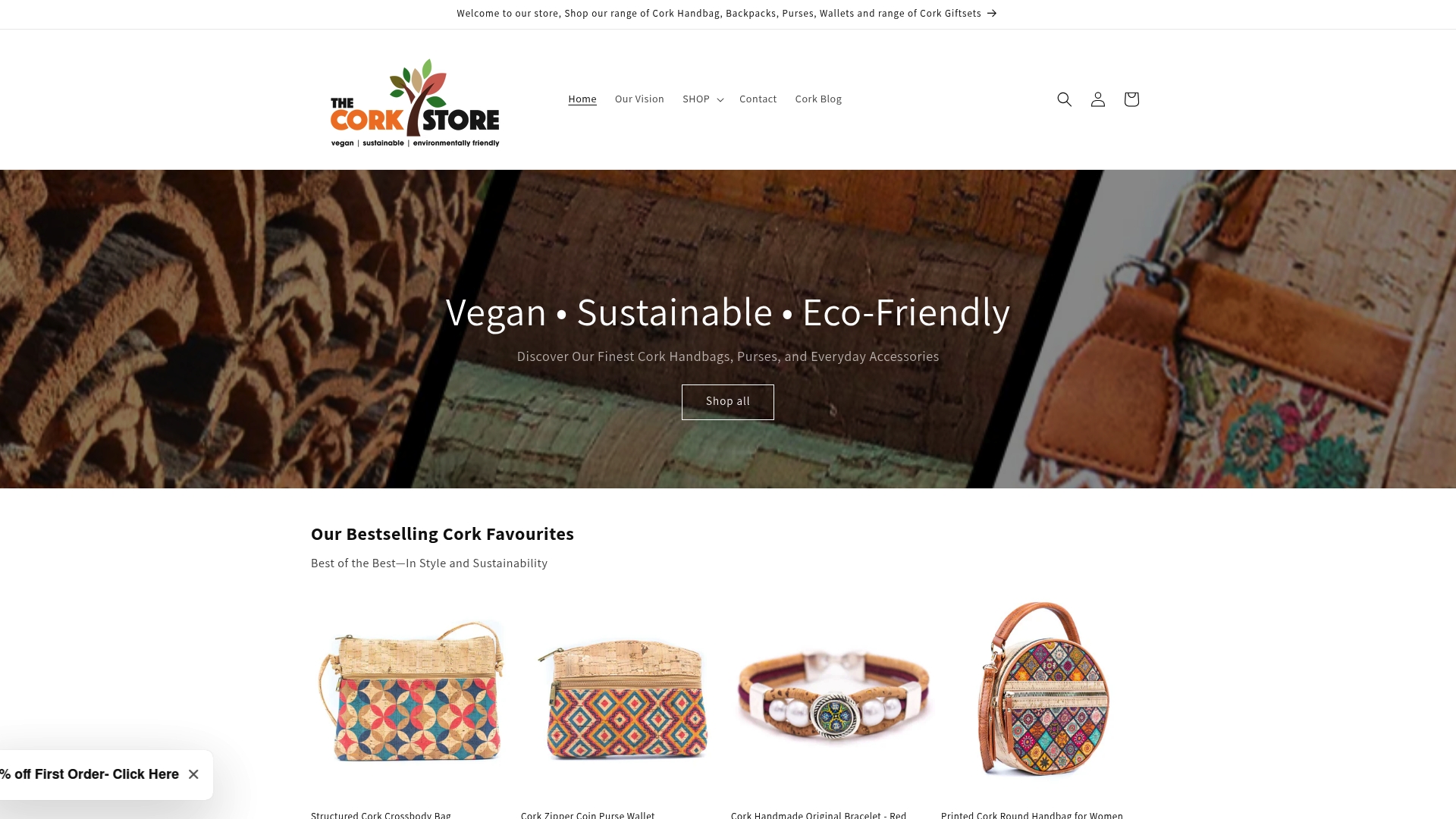
Each listing shows genuine photos, clear pricing and specific care instructions, so you can apply everything covered above (backing, lining, hardware, certifications) directly against the item you’re looking at. If you’re weighing up your first cork wallet or replacing a leather bag with something cruelty-free, start by browsing the current collection at Thecorkstore and comparing a few listings against the checklist in this guide before you decide.
Sources
- Physical and performance properties of 90:10 cotton–cork blended fabric (MDPI)
- What Is Cork Fabric? Is Cork Leather Sustainable? (Sustainable Jungle)
- Is cork an eco-friendly fabric choice? (Moral Fibres)
- Cork fabric care: cleaning, maintenance and restoration (MB Cork)