
Cork products for eco shoppers: what to buy
Cork products span everyday accessories and heavyweight building materials, and the fastest way to start shopping is by narrowing down which category you actually need: fashion, home, or technical. That includes wine stoppers, flooring, wall tiles, bags, wallets, backpacks, cork sheets, underlayment, and decorative objects, all made from the same renewable bark but engineered very differently depending on the job.
For fashion accessories, check specialist cork retailers and eco-fashion shops first. The Cork Store focuses on vegan bags, wallets, and gift sets, while for wine stoppers and technical applications, manufacturers like Amorim dominate the supply chain. If you’re holding onto old wine corks and wondering what to do with them, Recorkeduk runs collection schemes that keep cork out of landfill.
Before you start browsing, sort your shopping list into these groups:
- Homewares: coasters, placemats, trivets, decorative bowls, noticeboards
- Fashion accessories: handbags, wallets, backpacks, laptop sleeves, belts
- Flooring and building materials: tiles, underlayment, acoustic wall panels
- Technical and industrial uses: wine stoppers, gaskets, insulation board
Key takeaways
Quality cork products combine renewable sourcing, proven technical performance, and design flexibility, making origin checks and finish quality the two factors buyers should prioritise most.
| Point | Details |
|---|---|
| Match category to seller | Buy accessories from specialists, flooring from dedicated suppliers, and bulk orders direct from manufacturers. |
| Check origin and finish | Confirm country of origin and whether the item has a protective coating before buying anything for daily use. |
| Understand the trade-offs | Cork beats leather on animal welfare and synthetics on biodegradability, but can lag on rigidity and uniform thickness. |
| Care little and often | Wipe cork gently, avoid soaking and harsh solvents, and reseal flooring every two to three years. |
| Shop The Cork Store for accessories | The Cork Store offers curated vegan wallets, backpacks, and gift sets with clear provenance and sustainability messaging. |
Table of Contents
- What types of cork products can you buy?
- Why do buyers choose cork over other materials?
- Where is most commercial cork produced?
- How do you choose a quality cork product?
- How do you care for cork products?
- Where should you buy cork products?
- Why we recommend cork for eco-conscious buyers
- Why buy your cork accessories from The Cork Store?
- Frequently asked questions
- Sources
What types of cork products can you buy?
Cork’s cell structure, packed with air pockets and a natural waxy compound called suberin, makes it impermeable, buoyant, elastic, and fire retardant all at once. That combination is why the same raw material ends up in wine bottles, yoga mats, and office flooring with barely any overlap in how each product is engineered.
Wine stoppers remain cork’s best known use, but the technology behind them has moved on considerably. Amorim’s Qork® stoppers use supercritical fluid technology to strip out TCA, the compound responsible for “corked” wine, giving producers a natural stopper with consistency closer to synthetic alternatives.
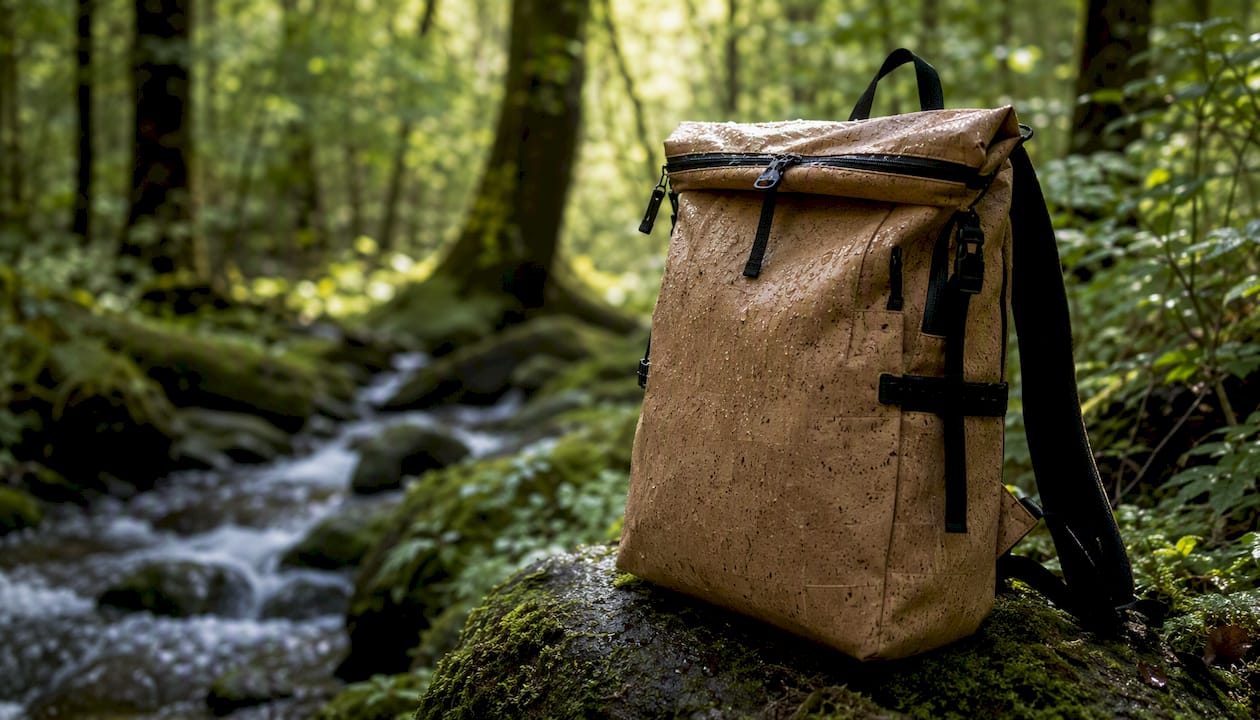
Cork fabric accessories are where most consumers first encounter cork outside the kitchen. Bags, wallets, and backpacks made from cork fabric use a thin, flexible layer of cork bonded to a cotton or polyester backing, giving a leather-like texture that’s fully vegan. Laptop sleeves and everyday totes made this way are naturally water resistant, which matters more than most buyers realise until they’re caught in the rain with a bag full of electronics.
Flooring and wall products cover tiles, rolls, and underlayment sold in a range of thicknesses for both DIY and professional installation, with suppliers typically providing fitting guidance for walls and floors alike, according to specialist cork sheet suppliers. Acoustic panels made from compressed cork granules are increasingly popping up in home studios and offices where sound dampening matters as much as looks.
| Category | Typical uses | Price range | Durability/lifespan |
|---|---|---|---|
| Wine stoppers | Wine bottling, industry supply | Budget to premium (bulk vs. artisanal) | Single use, but recyclable |
| Cork fabric bags/wallets | Everyday carry, gifting | Budget to mid | a few years with care |
| Flooring tiles | Residential and commercial floors | Mid to premium | 10 years |
| Wall tiles/acoustic panels | Interior design, sound dampening | Mid | many years |
| Cork sheets/underlayment | DIY projects, sound/thermal barrier | Budget to mid | 10 years |
| Coasters/placemats | Kitchen and dining | Budget | several years |
| Decorative objects | Home décor | Budget to mid | Varies by design |
| Gaskets/industrial cork | Sealing, insulation, engineering | Budget to premium (spec dependent) | Long life, application specific |
A few fit-for-purpose notes worth knowing before you buy:
- Cork yoga mats resist sweat far better than standard rubber ones, thanks to cork’s natural antimicrobial surface.
- Cork leather-look bags suit vegan buyers who want the texture of leather without the animal product.
- Cork wall tiles double as a pinboard alternative in home offices, since they take pins without crumbling.
- Bulky items like flooring and acoustic panels are usually sold direct from manufacturers or flooring specialists rather than boutique retailers, while accessories and homewares are more common at specialist and eco-fashion sellers.
Why do buyers choose cork over other materials?
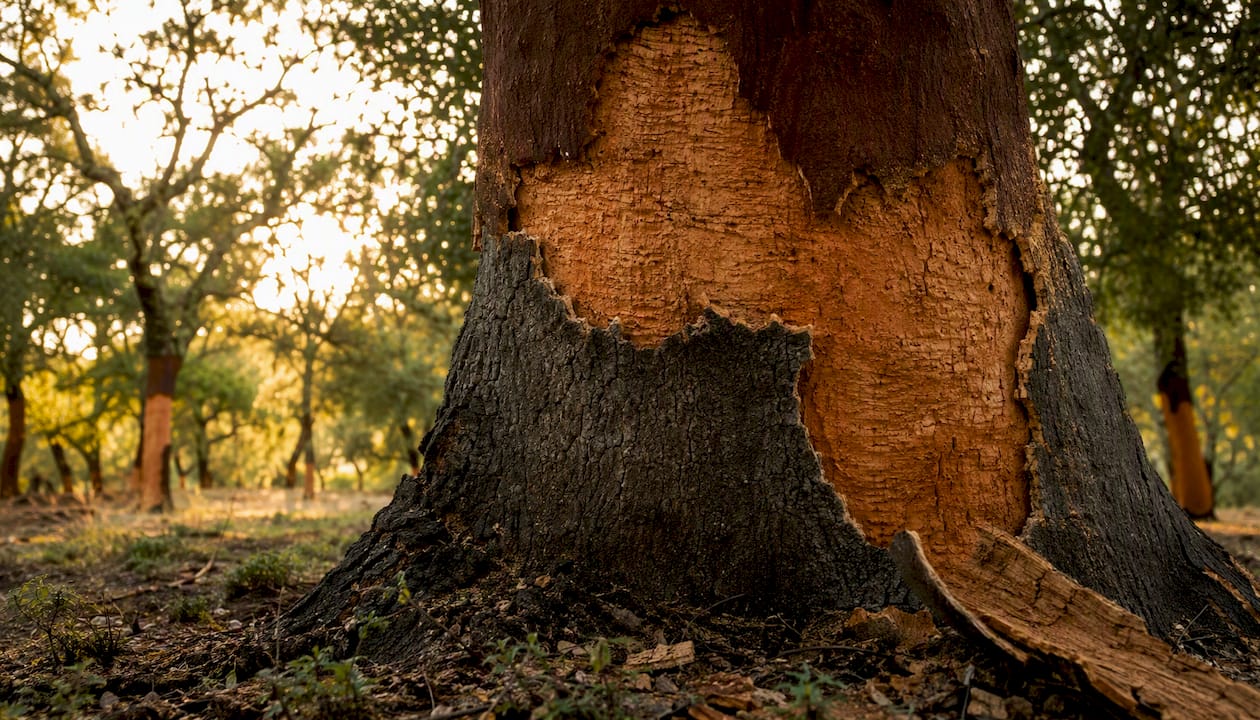
Cork’s main selling point is that it’s a genuinely renewable material harvested without felling a single tree, and its physical properties happen to line up neatly with what consumers actually want: light weight, insulation, and a natural antimicrobial surface. The bark regrows over roughly nine years, meaning the same cork oak) can be harvested repeatedly across a lifespan of 150 to 200 years.
Compared with leather, cork skips the tanning chemicals and animal welfare concerns entirely, though it’s generally less structurally rigid, so cork bags tend to favour softer, slouchier designs rather than stiff-sided cases. Compared with synthetic underlayment or foam insulation, cork offers better acoustic dampening and comes from a biodegradable source, though synthetic alternatives can be cheaper and more uniform in thickness for large-scale builds.
Design coverage has flagged cork as one of the more interesting sustainable materials moving into mainstream home decor, with Architectural Digest noting its expansion beyond small accessories into feature walls, lighting, and furniture, driven largely by its acoustic and thermal performance rather than sustainability credentials alone.
Pro Tip: Raw, unfinished cork looks lovely but marks more easily under heavy daily use. If you’re buying a cork bag or wallet you’ll carry every day, check whether it has a protective coating or wax finish. Decorative objects that stay on a shelf can get away with raw cork; anything that goes in your pocket or on your back generally shouldn’t.
Benefits map fairly directly onto specific product types:
- Insulation → flooring and underlayment, where cork’s trapped air pockets slow heat transfer.
- Acoustic dampening → wall panels and office flooring, prized in recording spaces and open-plan offices.
- Antimicrobial surface → yoga mats and kitchen items, where hygiene matters.
- Low density → bags and backpacks, since cork weighs a fraction of comparable leather.
- Buoyancy and fire resistance → industrial gaskets and marine applications, less visible to consumers but a reason cork persists in engineering uses.
Where is most commercial cork produced?
Cork is the bark of Quercus suber, the cork oak, stripped away by hand without felling or seriously injuring the tree, and Portugal produces the majority of the world’s commercial supply thanks to its climate, mature industry infrastructure, and decades of specialisation in cork processing. Spain, Italy, and parts of North Africa also grow cork oak, but Portugal’s combination of established mills, export logistics, and generations of harvesting expertise keeps it at the centre of the industry.
The production sequence runs roughly like this:
- Harvesting happens by hand, using a specific axe technique, and the same tree can only be stripped again after around nine years to let the bark regenerate fully.
- Boiling and stabilising the raw bark removes impurities and flattens it for processing.
- Grading sorts cork by thickness and quality, with the best material going to stoppers and premium goods.
- Punching or granulating turns sheets into stoppers, tiles, or composite granules for flooring and insulation.
- Finishing adds coatings, backings, or fabric bonding depending on the end product.
Portuguese cork forests, known as montados, are also credited with supporting biodiversity, since the trees are never clear felled and the woodland habitat around them stays largely intact across decades of harvesting cycles. On the manufacturing side, Amorim’s investment in supercritical fluid technology has meaningfully improved consistency in cork stoppers, removing sensory faults that once made synthetic alternatives look more appealing for wine producers.
If provenance matters to you as a buyer, a few checks are worth doing before you pay:
- Look for the country of origin stated clearly on the product label or listing.
- Check for forestry stewardship references or sustainability certifications where the brand publishes them.
- Read the manufacturer’s own claims about sourcing rather than relying solely on marketing copy.
- Favour brands that publish educational content about their supply chain, since that transparency usually signals a more serious sustainability commitment.
How do you choose a quality cork product?
Check the material origin, grade, and construction details before anything else, since these three factors determine whether a cork product will last or fall apart within a year. On a product page, look for whether it’s natural cork or cork fabric, what backing material is used, how it’s stitched or bonded, and whether there’s a warranty or return policy backing the claim.
Quality markers differ by category. For flooring, thickness matters more than most buyers expect: thin cork tiles wear through faster in high-traffic areas, so anything under 4mm is best reserved for low-footfall rooms. For cork sheets and rolls, check what backing or bonding material holds the sheet together, since a weak adhesive layer is usually the first thing to fail. For wine stoppers, look for TCA testing claims from the manufacturer, since that’s the difference between a stopper that might taint a bottle and one that’s been processed to avoid it. For bags and accessories, water resistance claims and finish coatings tell you whether the item can handle daily use or is better suited to occasional outings.
Pro Tip: If you can handle the product in person, run your thumb across the surface. Genuine cork fabric has a slightly springy, textured feel that synthetic “cork look” printed vinyl can’t quite replicate. For high-wear items like everyday bags or footwear, prioritise sealed or treated cork over raw finishes. It costs slightly more upfront but resists scuffing for years longer.
Budget expectations vary considerably by category:
- Budget tier: coasters, small accessories, entry-level wallets, typically the most accessible starting point.
- Mid tier: bags, backpacks, standard flooring tiles, and underlayment for average-sized rooms.
- Premium tier: bespoke flooring installations, designer accessories, and artisanal wine stoppers made for smaller producers.
How do you care for cork products?
Keep cork away from prolonged soaking and high heat, clean it gently with a damp cloth rather than harsh solvents, and reapply sealant on larger items like flooring every few years to keep water resistance intact. Cork tolerates daily wear well, but it’s not indestructible, and the biggest mistakes owners make come down to treating it like plastic when it behaves more like a natural, breathable material.
For fashion accessories such as bags and wallets, wipe with a slightly damp cloth and let them air dry away from direct sunlight, which can dry out and crack the surface over time. Avoid submerging cork bags in water even though the material itself is naturally water resistant, since backing materials and stitching are more vulnerable than the cork layer itself.
For flooring and wall products, sweep or vacuum regularly and avoid abrasive scrubbing pads, which strip the protective finish faster than normal foot traffic ever would. Reapply a recommended sealant roughly every two to three years in high-traffic rooms.
For kitchenware and homewares like coasters and trivets, a quick wipe after use is usually enough, though it’s worth checking occasionally for cracking if they’re placed near a hob or oven.
For yoga mats and footwear, rinse with mild soap and water after sweaty sessions, then air dry fully before rolling or storing, since trapped moisture is what eventually leads to mould.
Pro Tip: For light surface stains on small cork accessories, a mix of mild soap and a soft brush usually lifts marks without damaging the finish. Skip anything containing bleach or strong solvents, both of which can strip cork’s natural coating and leave it looking patchy. If you’re finished with an item entirely rather than repairing it, creative upcycling ideas can give it a second life instead of a trip to landfill.
Where should you buy cork products?
Start with specialist cork retailers if you want fashion accessories or homewares, flooring specialists for anything structural, and manufacturers directly if you’re buying in bulk or need bespoke sizing. Each channel has a different balance of selection, price, and authenticity guarantees, so matching the seller type to what you’re buying saves a lot of back and forth.
Specialist cork retailers, such as The Cork Store, tend to offer curated ranges of bags, wallets, and gift sets with strong provenance information and sustainability messaging, though selection is naturally narrower than a general marketplace.
Eco-fashion boutiques stock cork alongside other vegan materials, which is useful if you’re comparing textures and styles side by side, but stock rotates quickly and specific items can be harder to restock.
Flooring specialists and wholesalers carry a far wider range of thicknesses and finishes for tiles and underlayment, and they’re usually the right call for anything beyond a small DIY project, though pricing often depends on custom quotes rather than fixed listings.
Manufacturers and direct-from-source sellers offer the strongest traceability, since you’re buying closer to the source, but minimum order quantities can rule this route out for a single household purchase.
Marketplace sellers and craft suppliers are useful for small decorative items and craft-grade cork sheets, though authenticity and quality vary far more widely than with dedicated retailers.
Before you commit to any seller, a few checks help confirm they’re legitimate:
- Read the product page carefully for material composition, not just marketing language.
- Look for certification badges or sourcing claims and verify they’re specific rather than vague.
- Check for genuine customer reviews rather than relying purely on star ratings.
- Ask about manufacturer traceability if the listing doesn’t already state country of origin.
Bespoke items like custom flooring installations or made-to-order gift sets will generally carry a quote-based price rather than a fixed listing, while mass-produced accessories and homewares are priced upfront and ready to buy immediately.
Why we recommend cork for eco-conscious buyers
Cork earns its reputation the hard way: through decades of use in demanding technical roles, not just as a trendy sustainable label slapped on a product page. What stands out, working alongside brands that sell this material daily, is how rarely cork disappoints once you match the right grade to the right job. A treated cork wallet that’s carried every day for three years still looks presentable; a raw cork trivet still does its job a decade later.
The scepticism some buyers have towards “eco” materials is fair, because plenty of greenwashed products don’t hold up. Cork is different largely because its performance case predates the sustainability marketing entirely. It was used in aerospace insulation and wine stoppers long before “eco-friendly” became a selling point, and that track record is worth more than any label. The benefits of cork accessories hold up on functionality alone, sustainability is simply the bonus.
What buyers underestimate most is how much the finish matters versus the raw material. Two bags made from identical cork fabric can age completely differently depending on backing quality and stitching, which is exactly why the buying checklist earlier in this article matters more than brand names alone.
Why buy your cork accessories from The Cork Store?
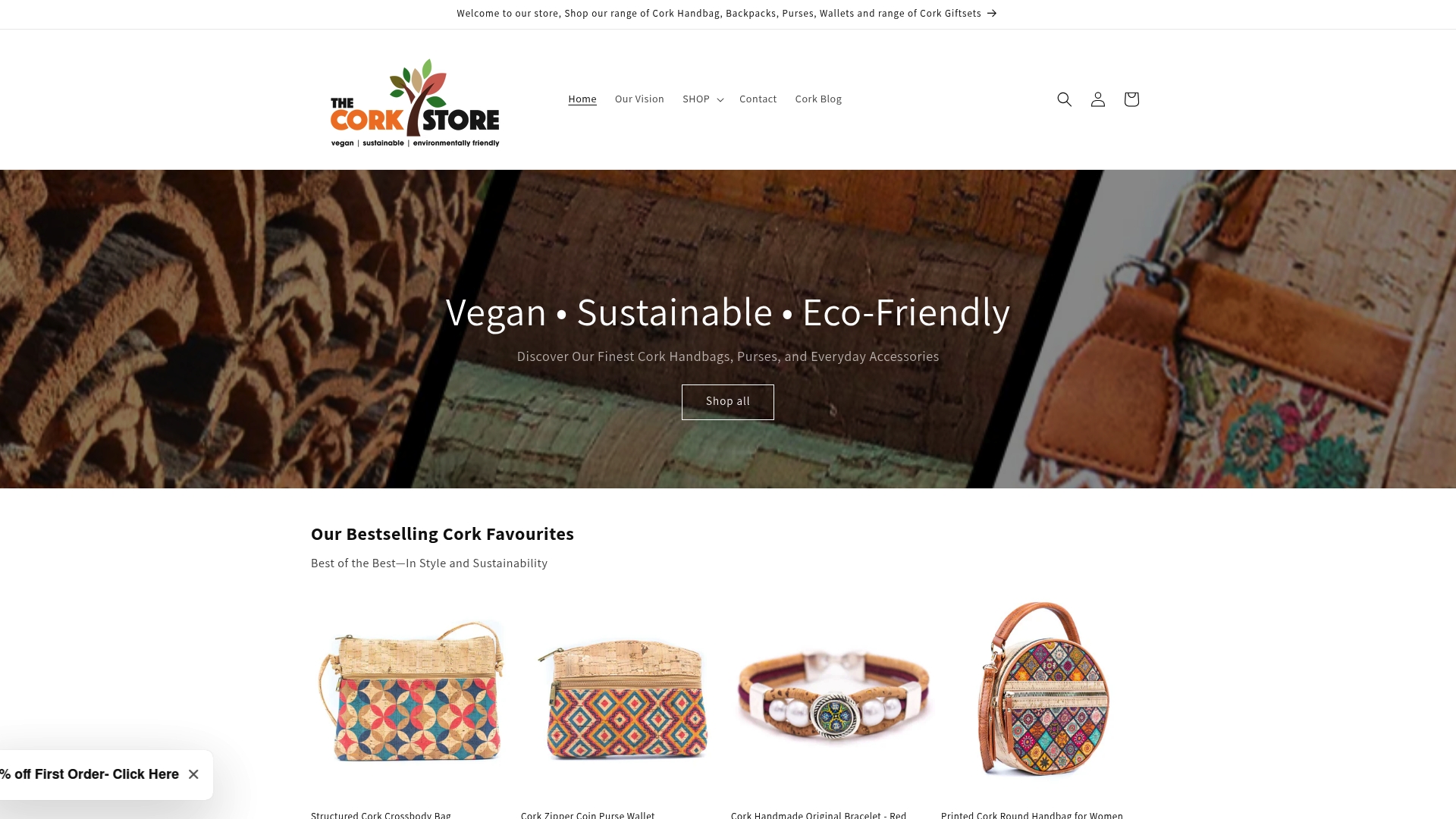
The Cork Store stocks a curated range of vegan cork accessories built specifically for eco-conscious shoppers who want something that looks good and holds up, not just a novelty item that sits in a drawer after a month. Every piece is designed as a genuine alternative to leather, not a compromise.
A few standout picks worth checking out directly:
- The All-Natural Cork Wallet Gift Set suits anyone buying a gift for someone starting their switch to vegan accessories.
- The eco-friendly gift collection works well for commuters and everyday carry buyers looking for backpacks or wallets that handle daily use.
- Anyone comparing cork against traditional leather will find the fashion-focused range answers most of the practical concerns raised earlier in this guide, from water resistance to finish quality.
Buying from a specialist retailer rather than a generic marketplace means clearer sizing information, straightforward returns, and a seller who actually understands the material well enough to answer questions about care and durability. That kind of provenance and support is harder to get from a random third-party listing with no traceability behind it.
If you’ve read this far and know roughly what you’re after, whether it’s a gift set or an everyday wallet, browse the current collection and see which piece fits your shopping list.
Frequently asked questions
What exactly counts as a cork product? Cork products range from everyday accessories like bags and wallets to building materials such as flooring, underlayment, and acoustic panels, plus technical items like wine stoppers and industrial gaskets.
Are cork products genuinely eco-friendly? Cork oak bark regrows after harvesting without felling the tree, and the material itself is biodegradable, which makes cork one of the more genuinely renewable materials used in consumer goods today.
How long do cork accessories typically last? A well-made cork bag or wallet with proper care and a protective finish typically lasts three to five years or longer, similar to mid-range leather goods.
Is cork waterproof or just water resistant? Cork’s cell structure makes it naturally water resistant rather than fully waterproof, which is why untreated cork items shouldn’t be soaked or submerged for extended periods.
Why does so much commercial cork come from Portugal? Portugal’s climate, established processing industry, and generations of harvesting expertise make it the dominant global producer of commercial cork, though Spain and parts of North Africa also grow cork oak.
Sources
- Cork Is The Next Sustainable Material Popping Off In Home Decor | Architectural Digest
- Qork® Cork Stoppers | Amorim Cork - Portfolio - Product - Amorim Cork
- Recorkeduk