
Eco packaging's role in sustainable cork accessories
TL;DR:
- Eco packaging for cork accessories should be biodegradable, recyclable, and certified by recognized standards.
- Choosing minimal, transparent, and certified packaging signals genuine sustainability and enhances brand trust.
- Consumer demand for eco packaging influences loyalty, recommendation, and willingness to pay a premium.
Even the most thoughtfully crafted cork handbag or wallet can carry a hidden environmental cost if its packaging is made from single-use plastic or non-recyclable materials. Packaging is often the last thing eco-conscious shoppers think about, yet it sits at the very heart of what makes a product truly sustainable. Eco packaging in sustainable fashion reduces environmental pollution from conventional packaging, which generates significant waste, carbon emissions, and resource use across the textile supply chain. This guide will help you understand why packaging matters, what genuinely eco-friendly packaging looks like, and how to make smarter choices when buying cork accessories.
Table of Contents
- Why packaging matters in sustainable fashion
- What defines eco packaging? Materials and innovations for cork accessories
- How eco packaging shapes consumer choices and purchasing behaviour
- Challenges and best practices for eco packaging in cork accessories
- The truth most guides miss about eco packaging for cork accessories
- Discover cork accessories with mindful eco packaging
- Frequently asked questions
Key Takeaways
| Point | Details |
|---|---|
| Packaging impacts sustainability | The environmental benefits of cork accessories depend on whether packaging is also eco-friendly. |
| Material choice matters | Recycled, compostable, and certified packaging options make a tangible difference for vegan and eco-conscious buyers. |
| Consumer expectations rising | Eco-conscious shoppers reward brands that invest in thoughtful, transparent packaging alongside their sustainable products. |
| Continuous improvement needed | Brands and consumers should look for ongoing innovation and transparency in eco packaging, not just box-ticking. |
Why packaging matters in sustainable fashion
Most people buying a cork bag focus on the product itself: the material, the craftsmanship, the cruelty-free credentials. Packaging barely gets a second glance. But the moment that bag arrives in a thick plastic mailer or wrapped in non-recyclable tissue, a portion of its sustainability story unravels.
Fashion packaging contributes to 36% of plastic waste, and sustainable alternatives actively reduce carbon emissions while supporting the circular economy. That figure alone should shift how we think about the box or bag our cork wallet arrives in. Conventional packaging in fashion relies heavily on virgin plastics, synthetic fillers, and chemically treated papers, all of which demand significant energy and raw materials to produce.
For eco shoppers who prefer cork, this is a particularly sharp contradiction. Cork products are chosen precisely because they are harvested without harming trees, they biodegrade naturally, and they carry no animal-derived materials. Receiving one inside a plastic bag wrapped in polystyrene chips undermines every one of those values in a single moment.
Here is a quick comparison of conventional versus eco packaging impacts:
| Packaging type | Carbon footprint | Biodegradable | Recyclable |
|---|---|---|---|
| Virgin plastic mailer | High | No | Rarely |
| Recycled paper mailer | Low | Yes | Yes |
| Compostable bioplastic | Very low | Yes | Specialist only |
| FSC-certified tissue | Low | Yes | Yes |
What makes packaging such a powerful trust signal is that it is the first physical thing a customer touches. For vegan and eco-conscious buyers, that first impression either reinforces or erodes confidence in a brand. The role of eco materials in building that trust extends beyond the product itself to every layer of the customer experience, including how it arrives at your door.
Key reasons why eco packaging matters to cork accessory buyers:
- It reflects the same values embedded in the product itself
- It reduces total lifecycle waste from purchase to disposal
- It signals brand integrity and genuine commitment to sustainability
- It avoids the contradiction of a vegan product arriving in animal-tested or plastic-heavy packaging
“Packaging is not an afterthought in sustainable fashion. It is a direct expression of a brand’s values, and customers notice.”
The good news is that biodegradable and compostable alternatives are increasingly accessible, affordable, and visually appealing. The question is knowing what to look for.
What defines eco packaging? Materials and innovations for cork accessories
Not all packaging labelled “eco” is created equal. Some brands use the word loosely, applying it to packaging that is only partially recycled or that requires specialist industrial composting facilities most people cannot access. Genuine eco packaging meets a clear set of criteria.
According to a critical review of eco packaging, key methodologies include bio-based materials such as biodegradable plastics, recycled paper, plant-based composites, compostable bioplastics, FSC-certified paper, and circular designs built for reuse or recycling. Each of these has a role to play, but they are not interchangeable.
Here is how the main material options compare for cork accessory packaging:
| Material | Compostable | Widely recyclable | Suitable for cork products |
|---|---|---|---|
| Recycled kraft paper | Yes | Yes | Excellent |
| Compostable bioplastic | Yes (industrial) | No | Good |
| Plant-based composite | Yes | Partial | Good |
| FSC-certified cardboard | Yes | Yes | Excellent |
| Standard recycled polyester | No | Yes | Limited |
For cork specifically, the best packaging pairings tend to be recycled kraft paper mailers, FSC-certified cardboard boxes, and plant-based tissue papers. These materials share cork’s natural, low-impact character and reinforce the product’s story rather than contradicting it. A helpful sustainable packaging textile guide outlines how brands across fashion are making these transitions in practical terms.
When checking whether packaging truly aligns with vegan and eco values, look for these five things:
- FSC or equivalent certification on paper and card components
- Compostable or biodegradable certification (not just “eco-friendly” labelling)
- Non-toxic, water-based inks and adhesives
- Minimal packaging overall, avoiding unnecessary layers or fillers
- Clear disposal instructions printed directly on the packaging
Labels matter enormously here. Certifications like the seedling compostable logo, FSC marks, and vegan society approval give shoppers a reliable shortcut to verifying claims. If you are building your eco-friendly wardrobe from the ground up, these markers help you avoid greenwashing without needing to research every brand from scratch.
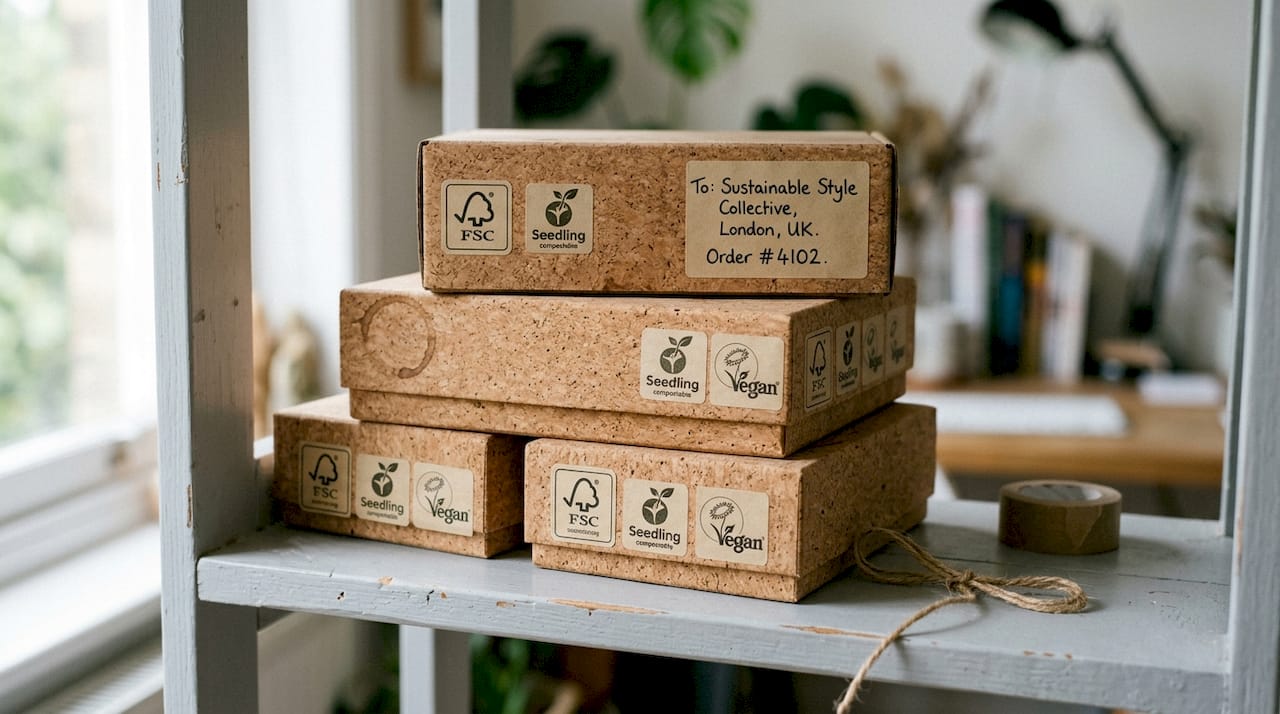
Pro Tip: When buying cork accessories online, check the brand’s packaging policy on their website before purchasing. Brands genuinely committed to sustainability will describe their packaging materials specifically, not just use vague language like “we care about the planet.”
Understanding vegan leather alternatives also helps here: the same scrutiny you apply to product materials should extend to packaging. Both should meet the same standard.
How eco packaging shapes consumer choices and purchasing behaviour
The evidence that eco packaging influences buying decisions is now well established. Shoppers are not just passively noticing packaging; they are actively factoring it into their choices, loyalty, and recommendations.
Research into consumer attitudes to sustainable packaging shows that positive attitudes toward eco packaging increase purchase behaviour, with a measured effect size of β=0.206. The same research found that eco labels such as Veganblume add an average of €0.68 to a consumer’s willingness to pay per item. That might seem modest, but across thousands of transactions it represents a meaningful commercial signal.
The unboxing moment carries particular weight for cork accessory buyers. When packaging is minimal, natural-looking, and clearly labelled with eco credentials, it reinforces everything the buyer already believes about the product. It becomes a form of storytelling. Conversely, excessive or plastic-heavy packaging creates cognitive dissonance, the uncomfortable feeling that something does not add up.
Key ways eco packaging shapes buyer behaviour:
- Increases likelihood of repeat purchase from the same brand
- Drives word-of-mouth: 70.59% of consumers are likely to recommend brands that use eco packaging
- Strengthens emotional connection to the brand’s values
- Reduces post-purchase regret, which is common when eco-conscious buyers notice unsustainable packaging after the fact
There is, however, a well-documented gap between intention and action. Many shoppers say they will pay more for sustainable packaging but do not always follow through when price differences are visible at checkout. This is not hypocrisy; it reflects real financial pressures and the complexity of decision-making. Brands that reduce this friction by keeping eco packaging affordable and clearly communicating its value tend to close that gap more effectively.
Pro Tip: If you want to support brands that genuinely invest in eco packaging, look at how they talk about it. Brands leading in innovation in sustainable cork tend to explain their packaging choices in detail, naming specific materials and certifications rather than using generic green language.
The role of cork in reducing waste is well understood at the product level. Extending that logic to packaging is the natural next step for brands and buyers alike.
Challenges and best practices for eco packaging in cork accessories
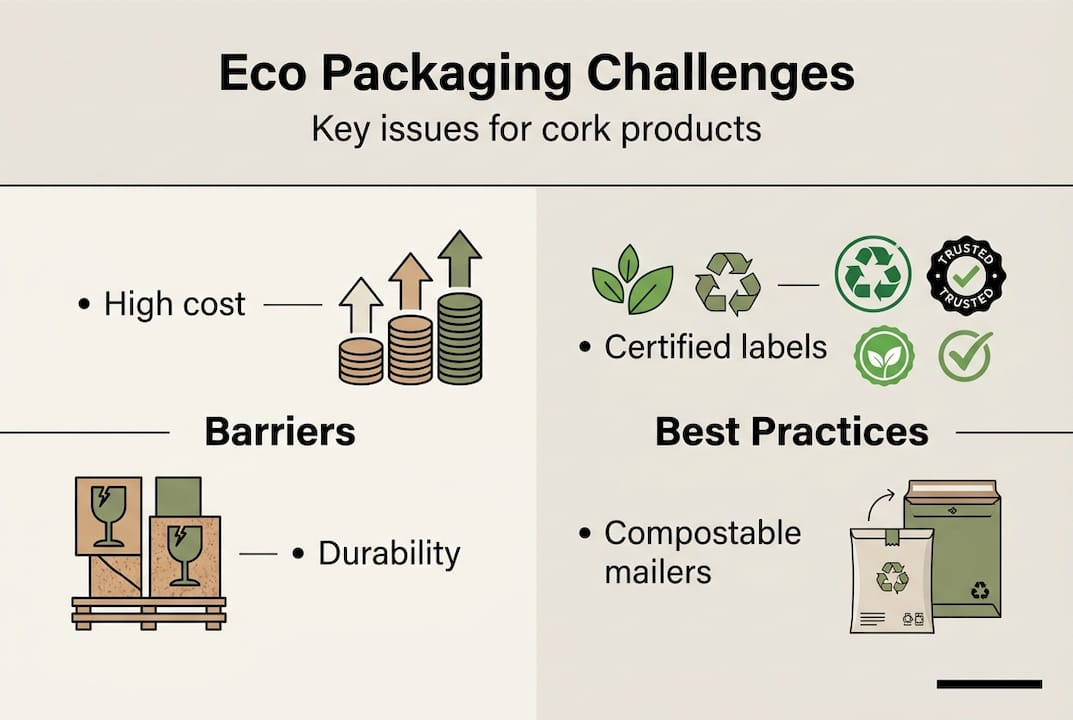
Eco packaging is not without its complications. For smaller cork accessory brands, the upfront costs of switching to certified compostable or FSC-approved materials can be significantly higher than conventional options. A small independent brand producing limited runs does not have the same purchasing power as a large retailer, making per-unit packaging costs a real barrier.
Challenges for eco packaging include higher costs for small businesses, durability issues, varying regulations across markets, and limited composting infrastructure in many regions. For cork products specifically, it is worth checking that any backing materials used in packaging are also natural, since synthetic backings can compromise the overall biodegradability of an otherwise eco-friendly package.
Regulatory variation is another complication. What qualifies as “compostable” or “biodegradable” differs between the UK, EU, and other markets, which means a claim valid in one country may be misleading in another. Buyers should look for internationally recognised certifications rather than relying solely on brand claims.
A useful framework for spotting greenwashing versus genuine eco packaging:
- Vague claims like “eco-friendly” or “green” without certification are a warning sign
- Packaging that cannot be disposed of through standard home composting or recycling streams is not truly accessible eco packaging
- Brands that cannot name the specific materials in their packaging are unlikely to have verified their credentials
- Minimal packaging is almost always more sustainable than elaborate packaging with eco labels
“The most sustainable package is often the simplest one: less material, less processing, less waste.”
For brands serious about getting this right, ecodesign methodologies such as multi-criteria decision making (MCDM) and lifecycle assessment (LCA) tools like the Higg MSI offer a rigorous way to select packaging that balances protection, aesthetics, and genuine sustainability. These are not just tools for large corporations; they are increasingly accessible to smaller brands too.
While consumer eco-consciousness in fashion shows that 66 to 72% of shoppers report willingness to pay a premium for sustainable products, the intention-behaviour gap remains real. Process-related eco claims, meaning claims about how something is made or packaged, tend to be more persuasive than product-only claims. This means packaging transparency is not just ethical; it is commercially smart.
Pro Tip: When evaluating a cork brand’s packaging, check whether they address packaging challenges in textiles openly. Honest brands acknowledge trade-offs rather than presenting packaging as perfectly solved.
Understanding the role of cork in fashion helps contextualise why these packaging decisions matter so much: cork already sets a high bar for sustainability, and packaging should meet that same standard.
The truth most guides miss about eco packaging for cork accessories
Most advice about eco packaging treats it as a box-ticking exercise: switch to recycled paper, add a compostable label, done. That framing misses something important. Genuine sustainability in packaging is not a one-time upgrade; it is an ongoing commitment to improvement as materials, certifications, and supply chains evolve.
The brands worth supporting are those that treat packaging as an integrated part of their sustainability story, not a separate marketing decision. That means the eco materials in cork accessories and the packaging around them should reflect the same values, the same rigour, and the same transparency.
As a buyer, the most powerful thing you can do is ask questions. Ask brands what their packaging is made from, how to dispose of it, and whether they have plans to improve. Brands that welcome those questions are the ones genuinely invested in getting it right. Those that respond with vague reassurances are telling you something important too.
Discover cork accessories with mindful eco packaging
Knowing what to look for in eco packaging puts you in a much stronger position as a shopper. The next step is finding cork accessories that live up to both the product and the packaging promise.
At The Cork Store, every product is chosen with cruelty-free, vegan, and eco-conscious values in mind. If you are looking for a thoughtful starting point, the all-natural cork wallet gift set is a popular choice that pairs beautiful cork craftsmanship with considered presentation. For a broader selection of sustainably packaged options, browse the full range of eco-friendly cork gifts, where you can find accessories that align with your values from product to packaging.
Frequently asked questions
What materials are best for eco packaging cork accessories?
Biodegradable plastics, recycled paper, plant-based composites, and FSC-certified paper are the strongest choices, as bio-based and recycled materials offer the most credible eco credentials for cork product packaging.
Does eco packaging actually make a difference to buyers?
Yes, research confirms that eco packaging increases purchase behaviour and willingness to pay, with over 70% of eco-conscious shoppers more likely to recommend brands that use it.
What are the main challenges with eco packaging for cork accessories?
Higher upfront costs, sourcing genuinely biodegradable materials, and navigating inconsistent regulations are the primary hurdles, as outlined in research on challenges for eco packaging in sustainable fashion.
How can I tell if packaging is truly eco-friendly?
Look for recognised certifications such as FSC or compostable logos, minimal design, and brands that name specific materials. Transparent eco claims backed by certification are far more reliable than generic green language.