
Role of Cork in Reducing Waste – Eco Impact Unpacked
Tired of choosing between style and sustainability in your daily accessories? The answer lies in nature’s own solution: cork. Sourced from the bark of the cork oak tree across Mediterranean landscapes such as Portugal, Spain, and North Africa, cork stands out not just for its renewable origins but also because its harvesting actually supports forest health and biodiversity. Cork is naturally lightweight, water resistant, and completely biodegradable, making it the genuinely responsible alternative to plastic and leather. Discover how this timeless material transforms eco-friendly values into everyday fashion favourites.
Table of Contents
- Cork Defined: Properties And Common Uses
- Harvesting Cork Sustainably Without Waste
- Recycled Cork: Processes And Innovations
- Cork In Fashion Accessories And Daily Life
- Comparing Cork To Plastic And Leather Alternatives
- Consumer Choices: Maximising Waste Reduction With Cork
Key Takeaways
| Point | Details |
|---|---|
| Sustainable Harvesting | Cork harvesting involves removing bark without damaging the tree, promoting forest conservation and supporting biodiversity. |
| Versatile Applications | Cork is used across various industries, including fashion, construction, and cosmetics, due to its lightweight, water-resistant, and insulating properties. |
| Biodegradability | Cork products biodegrade completely, differentiating them from synthetic materials that contribute to environmental pollution. |
| Consumer Impact | Choosing cork over leather or plastics strengthens demand for sustainable practices and supports the protection of cork oak forests. |
Cork Defined: Properties and Common Uses
Cork isn’t some newfangled sustainable material that marketers invented last decade. This natural substance has been in use since ancient times, sourced directly from the bark of the cork oak tree (Quercus suber L.), which grows predominantly in Mediterranean regions like Portugal, Spain, and North Africa. What makes cork genuinely remarkable isn’t just that it’s renewable—it’s that harvesting it actually supports environmental conservation. When cork farmers strip the bark from these trees, the trees aren’t killed or even significantly harmed. Instead, they regenerate their bark over approximately 9 years, ready for another harvest. This cyclical process means cork oak forests become more valuable standing than chopped down, creating a powerful economic incentive to protect Mediterranean woodlands from desertification. The trees themselves become carbon sinks, storing atmospheric carbon whilst providing habitat for countless species.
The physical properties of cork make it genuinely useful across multiple industries, which explains its widespread adoption beyond just fashion accessories. Cork possesses a cellular structure that delivers several key advantages. Its low density means it’s surprisingly lightweight compared to traditional leather or synthetic alternatives, making those handbags and backpacks actually comfortable to carry daily. The material’s inherent impermeability comes from its unique chemical composition—wax and suberin compounds naturally seal the cork’s pores, which is why cork bottle stoppers have worked for centuries without letting wine spill everywhere. Beyond waterproofing, cork demonstrates viscoelastic behaviour, meaning it absorbs impact and vibration whilst maintaining its shape over time. This resilience is why cork material properties matter so much for accessories that endure daily wear. Additionally, cork provides exceptional thermal insulation, which has made it valuable in building construction for decades. Architects and engineers have long recognised these qualities, incorporating cork facades and insulation into structures that need to maintain stable internal temperatures whilst reducing energy consumption.
You’ll find cork in far more places than just The Cork Store’s collection of wallets, backpacks, and handbags. The construction industry extensively uses cork for insulation, flooring, and wall treatments because of its thermal properties and environmental credentials. Wine producers rely on cork stoppers—roughly 13 billion cork stoppers are produced annually worldwide—though synthetic alternatives are increasingly common. Cosmetics manufacturers incorporate ground cork into skincare products for its mild exfoliating properties. Automotive companies use cork composite materials for gaskets and seals. Fashion designers beyond sustainable brands appreciate cork’s aesthetic possibilities: the warm, mottled appearance works equally well for luxury high street pieces and eco-conscious collections. What unites all these applications is that cork performs genuinely useful functions, not because someone decided cork was trendy, but because cork’s renewable and biodegradable qualities make it practically superior to many alternatives whilst reducing environmental impact.
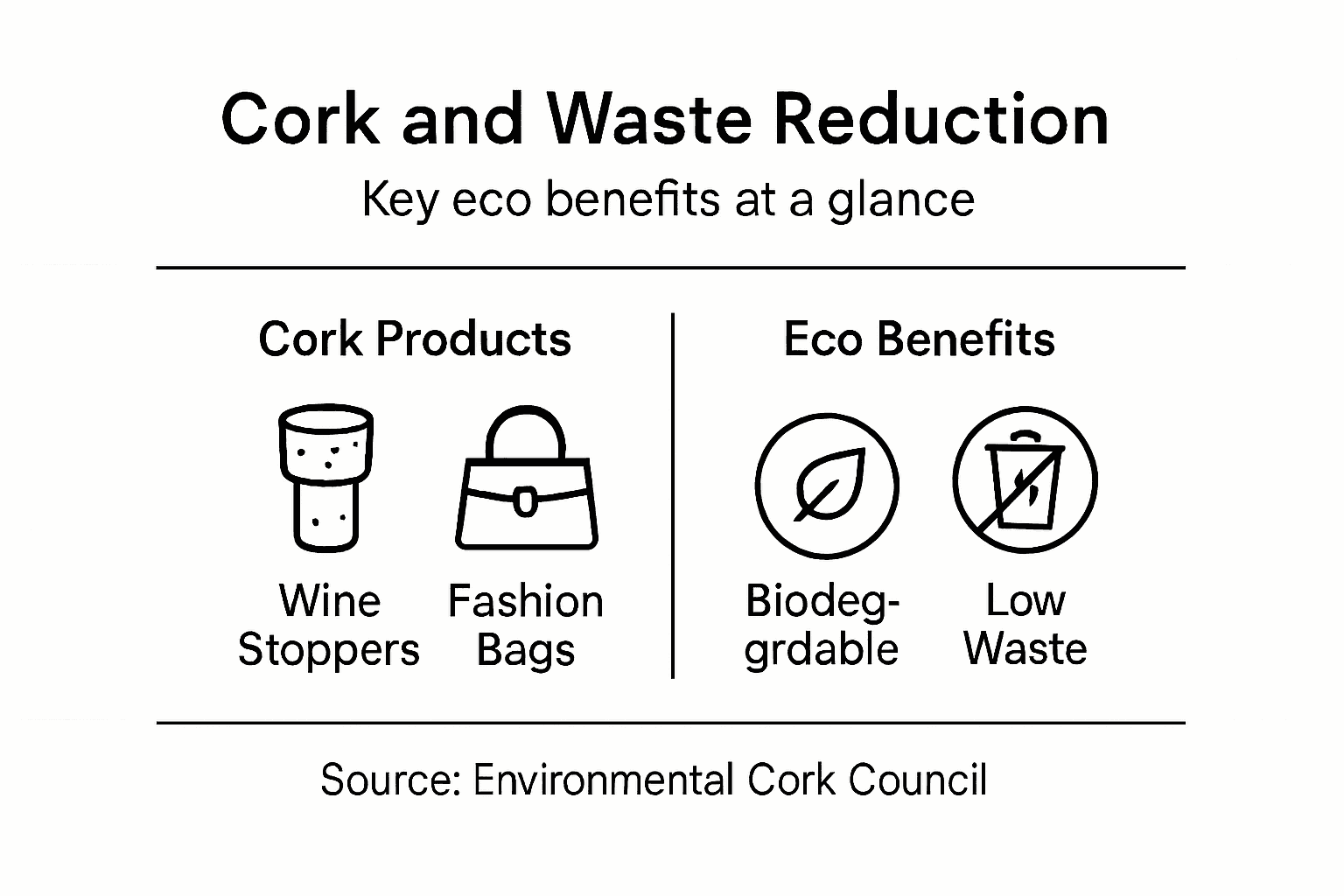
A summary of common cork product types and their practical benefits:
| Cork Product Type | Typical Use | Practical Benefit | Environmental Role |
|---|---|---|---|
| Wine Stoppers | Sealing bottles | Airtight, prevents spillage | Reduces landfill waste when recycled |
| Fashion Accessories | Bags, wallets, belts | Lightweight, water resistant | Promotes forest conservation |
| Building Materials | Insulation, flooring | Thermal and acoustic insulation | Low-energy, biodegradable construction |
| Cosmetic Ingredients | Exfoliants | Gentle skin resurfacing | Utilises cork by-products |
The key insight here involves understanding cork’s journey from tree to finished product. The bark harvesting happens without chemicals or machinery that damages the living tree. After removal, the bark undergoes heating and cutting to create those characteristic cork sheets or ground particles. No bleaching. No heavy processing. No animal suffering involved. This straightforward process means cork accessories like those sold through sustainable retailers maintain their eco-credentials from forest to your wardrobe. The material biodegrades completely if discarded, returning to the soil without leaving microplastics or synthetic residue. Compare this to typical leather alternatives (which require intensive chemical tanning) or synthetic vegan leather made from petroleum-based plastics, and cork’s position as a genuinely eco-friendly material becomes clear.
Pro tip: When selecting cork accessories, look for products made from virgin cork rather than recycled cork composite, as virgin cork preserves more of the material’s natural water resistance and durability, meaning your purchase will last longer and require less replacement over time.
Harvesting Cork Sustainably Without Waste
Cork harvesting looks nothing like clear-cutting a forest or strip-mining a landscape. Instead, trained workers use hand tools to carefully peel bark from cork oak trees in a process that’s been refined over centuries. The bark removal happens without chainsaws, without chemicals, and without damaging the tree’s living wood underneath. Think of it like peeling an orange: the fruit stays intact while only the outer layer comes away. This method works because cork oak trees have evolved thick, naturally regenerative bark designed to protect against the Mediterranean region’s intense heat and periodic wildfires. When harvesters remove this outer layer, the tree responds by growing new bark over the next 9 to 12 years, ready for another harvest. The first commercial harvest typically begins when a tree reaches approximately 25 years old, meaning cork oak forests are long-term investments that farmers protect for decades. This fundamental difference between cork harvesting and destructive logging practices explains why cork production actually incentivises forest preservation rather than deforestation.
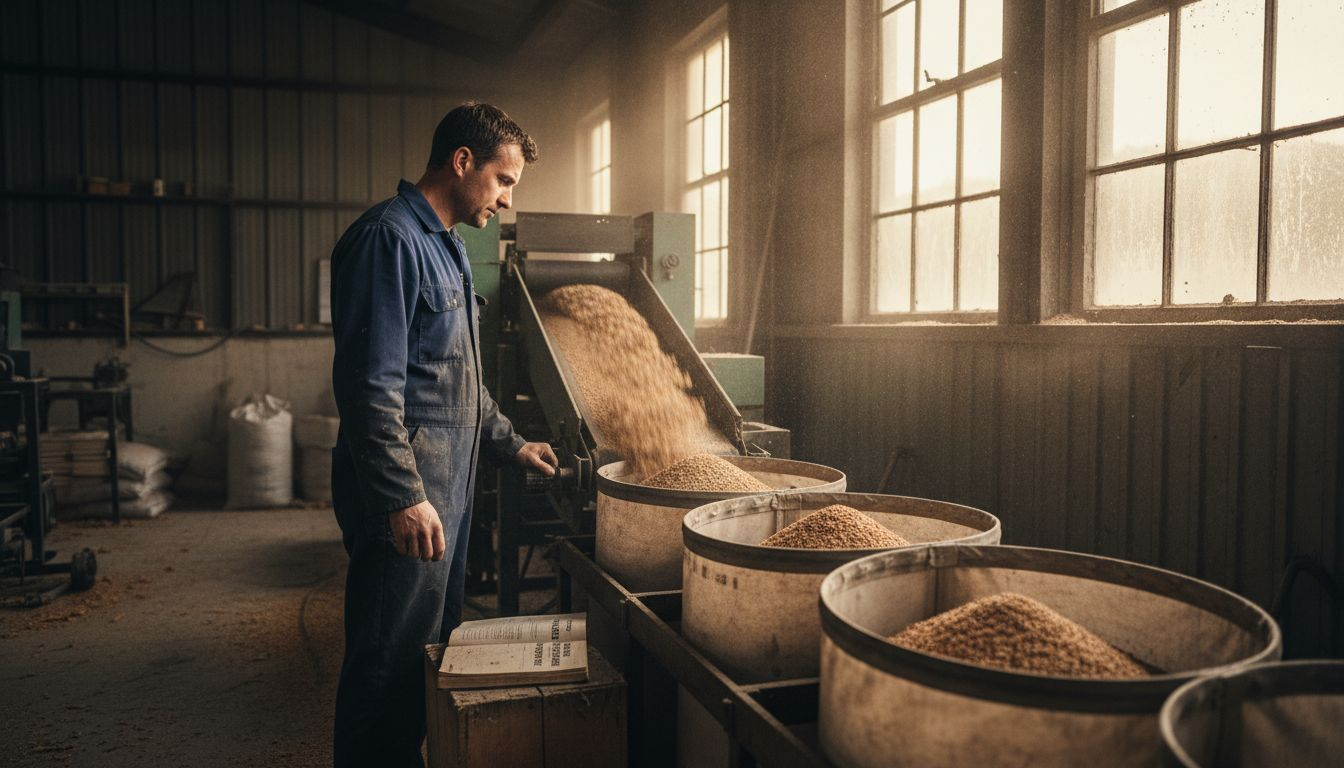
What makes cork harvesting genuinely waste-free isn’t just the lack of tree damage; it’s the complete utilisation of harvested bark. Every piece of the stripped bark gets processed into useful products. The larger, higher-quality bark sections become cork stoppers for wine bottles, flooring materials, or premium accessories. Medium-grade cork transforms into insulation boards for construction. Smaller fragments and dust get ground into granules for cosmetics, composite materials, and specialty applications. Offcuts become raw material for cork composites used in automotive manufacturing and industrial applications. Even the bark fragments too small for grinding find use as biofuel or mulch for gardens and agriculture. This cascading hierarchy of utilisation means cork production generates virtually no landfill waste. Compare this to leather production, which generates significant chemical waste and requires intensive water usage throughout tanning processes, or synthetic alternatives that depend on petroleum extraction and leave permanent microplastics in the environment. The cork oak forests themselves benefit from this harvesting cycle: bark removal stimulates carbon uptake as trees grow replacement bark, making harvested forests actually more effective carbon sinks than unharvested ones.
Beyond the immediate harvesting process, cork oak forests support extraordinary biodiversity that contributes to overall ecological health. These Mediterranean woodlands provide habitat for lynxes, eagles, boar, and countless smaller species that depend on the forest ecosystem. The soil beneath cork oaks remains undisturbed by heavy machinery, allowing microbial communities and water absorption to function naturally. Water retention improves in cork oak regions, reducing desertification whilst supporting underground aquifers. The economic value of cork production gives these forests tangible worth to local communities, creating powerful incentives to maintain them rather than convert them to agriculture or development. Portugal and Spain protect millions of hectares of cork oak forest specifically because cork harvesting generates sustainable income. Farmers who own cork oak land become, essentially, stewards of carbon-sequestering ecosystems that clean the air while producing renewable material. This economic model transforms environmental protection from a cost into a profitable enterprise, which explains why cork oak forests have remained relatively stable whilst other Mediterranean ecosystems face serious degradation.
The waste-free reality of cork production extends beyond forest management into the finished product lifecycle. When cork accessories eventually reach the end of their useful life, they biodegrade completely. Unlike plastic-based vegan leather that persists in landfills for centuries, or traditional leather that requires chemical tanning and leaves heavy metal residues in soil, cork simply returns to organic matter. This biodegradability means cork remains a circular resource at every stage: growth, harvest, production, use, and disposal. Your cork handbag or wallet carries zero guilt about its eventual fate because decomposition just completes the natural cycle that began in the forest. This complete circularity, combined with the forest benefits created by ongoing harvesting, makes cork production one of the genuinely few material sources where environmental impact actually improves over time rather than accumulating damage.
Pro tip: When purchasing cork accessories, prioritise items from retailers who source from certified cork forests, as certification systems ensure harvesters follow sustainable practices and that your purchase directly supports Mediterranean woodland protection.
Recycled Cork: Processes and Innovations
Wine drinkers generate roughly 13 billion cork stoppers annually, and historically, most of those retired corks ended up in landfills where they sat indefinitely, taking decades to decompose despite being a natural material. The cork recycling movement emerged from a simple observation: if cork is genuinely renewable and biodegradable, why shouldn’t used cork products get a second (or third) life before decomposition? The recycled cork industry now transforms those used wine corks, worn-out flooring, damaged accessories, and production offcuts into entirely new products through processes that rival the sustainability credentials of virgin cork. Recycling facilities collect corks from restaurants, wine bars, households, and community programmes, sorting them by quality and condition. The collection infrastructure has expanded significantly in recent years, though participation remains uneven globally. What’s crucial to understand is that increasing collection efficiency through community participation transforms what would be waste into raw material, keeping cork within the circular economy rather than allowing it to accumulate in landfills.
The mechanical processing of recycled cork follows straightforward steps. First, collected corks and cork waste get cleaned to remove any contaminants like wine residue, mould, or synthetic coatings. Next, the cork is ground or shredded into particles of varying sizes depending on the intended final product. Smaller granules become filler material for various composites, whilst larger chunks get pressed back into solid boards using heat and pressure, sometimes with binding agents added. These reconstituted cork boards work beautifully for insulation, flooring underlayment, acoustic panels, and even cork composite accessories. What makes this process genuinely circular is that recycled cork maintains most of the material properties of virgin cork: it’s still lightweight, naturally waterproof to a degree, thermally insulating, and completely biodegradable. The energy required for recycled cork processing is substantially lower than virgin cork production because the material already exists and needs only cleaning and reshaping rather than harvesting and initial processing. This efficiency means recycled cork products often carry a lower carbon footprint than virgin alternatives whilst delivering comparable performance.
Innovation in cork recycling has accelerated dramatically over the past five years. Scientists and manufacturers are now exploring nanotechnology and novel chemical processes to unlock entirely new applications for cork waste. Researchers are modifying cork’s natural cellular structure at the molecular level to create advanced polymers and composite materials with engineered properties. These innovations enable cork to compete in sectors previously dominated by synthetic plastics: flexible membranes for waterproofing, high-performance composites for aerospace applications, and specialised polymers for electronics. Imagine recycled wine corks becoming components in electric vehicle batteries or insulation for spacecraft. This isn’t science fiction; it’s actively happening in research facilities across Europe. Beyond nanotechnology, companies are experimenting with cork blends that combine recycled cork with other sustainable materials like mushroom mycelium or agricultural waste, creating hybrid composites that maximise both sustainability and performance. These innovations represent the future of cork recycling: not simply returning cork to its previous form, but transforming it into entirely new materials that solve problems virgin cork couldn’t address.
For consumers making purchasing decisions, understanding recycled cork versus virgin cork matters more than you might think. Both are genuinely sustainable, but recycled cork products support the circular economy directly by preventing waste streams and reducing extraction pressure on cork oak forests. Recycled cork accessories cost slightly less than virgin cork equivalents whilst offering equivalent durability and aesthetic appeal. The slightly visible grain variation in recycled cork actually makes each piece unique rather than a drawback. If you’re committed to waste reduction, prioritising recycled cork products maximises your positive environmental impact because you’re actively participating in material recovery systems. However, virgin cork from certified sustainable forests remains an excellent choice, especially for applications requiring maximum water resistance or where virgin cork’s texture is specifically desired. The genuinely important thing is choosing cork over synthetic or petroleum-based alternatives; whether that cork is virgin or recycled matters far less than avoiding single-use plastics and conventional leather entirely.
Pro tip: Look for cork products made from certified recycled cork that carry third-party sustainability verification, as certification ensures the cork actually came from established collection and recycling programmes rather than greenwashing claims without substantive backing.
Cork in Fashion Accessories and Daily Life
Cork fashion accessories represent something genuinely different from typical sustainable fashion narratives. Unlike ethical collections that simply swap out problematic materials for less harmful alternatives, cork accessories actively improve environmental outcomes through their existence. When you carry a cork handbag or store your essentials in a cork wallet, you’re not just choosing a vegan alternative to leather. You’re supporting Mediterranean forest protection, enabling cork oak farmers to maintain landscapes that sequester carbon and shelter endangered species. The material’s practicality means cork fashion isn’t some niche eco-signalling gesture that requires sacrifice. Cork is lighter than leather, naturally waterproof without chemical sealants, durable enough to withstand years of daily use, and honestly more comfortable to carry around all day because your bag doesn’t weigh as much. This convergence of genuine environmental benefit with actual functional superiority explains why cork accessories have transitioned from novelty items into mainstream fashion choices among eco-conscious consumers.
The specific properties that make cork valuable in construction and engineering translate beautifully into everyday fashion applications. Lightweight cork means handbags and backpacks become genuinely pleasant to carry, whether you’re commuting on public transport, walking through cities, or travelling for weeks. The material’s natural elasticity allows designs that bend and flex with your movement rather than remaining rigid. Water resistance without synthetic treatments makes cork wallets genuinely protective of contents in wet weather situations. Unlike synthetic vegan leather, which often relies on plastic polymers that create microplastics as they wear, cork simply develops a patina over time, becoming more characterful and beautiful rather than degraded. The thermal properties that make cork excellent insulation also mean cork bags maintain stable internal temperatures, protecting temperature-sensitive items. Beyond these practical advantages, cork’s aesthetic properties deliver visual distinctiveness. The mottled texture, warm colour variations, and natural grain patterns make each piece genuinely unique. Where traditional leather becomes standardised through heavy tanning and finishing, cork retains its individual character. This visual authenticity resonates strongly with younger consumers who’ve grown increasingly suspicious of homogenised, mass-produced fashion aesthetics. Cork’s cultural significance in sustainable design extends beyond practical benefits into how people signal their values through material choices.
Daily life with cork accessories involves none of the guilt or compromise that often accompanies eco-conscious consumption. You’re not buying something inferior because it’s sustainable. Cork backpacks genuinely outperform synthetic alternatives in durability, comfort, and aesthetic appeal. Cork wallets actually work better than plastic vegan leather options because they age gracefully rather than cracking and peeling. Clutch bags made from cork feel substantial and intentional in your hands, delivering the tactile satisfaction that fast-fashion handbags never quite achieve. The lightweight nature means you can carry what you actually need without the back strain that comes with traditional leather bags. Cork’s water resistance means you can confidently take your accessories through weather without panic. The material requires minimal maintenance compared to leather, which demands conditioning and protection treatments. Simply wipe cork clean if it gets dirty, and you’re finished. No special products. No complicated care instructions. This simplicity appeals particularly to people who’ve become exhausted by sustainability’s often complicated demands. Choosing cork isn’t another item on an endless sustainability checklist; it’s simply selecting the better material.
What makes cork particularly relevant to younger consumers is its alignment with anti-consumption values that increasingly define Gen Z and millennial ethics. Instead of buying disposable fashion and replacing it constantly, cork accessories encourage long-term ownership. People report using cork bags and wallets for five years, ten years, sometimes longer. The piece becomes part of your daily life rather than a seasonal item. This longevity transforms cork accessories from purchases into relationships. You know your cork wallet intimately: exactly where that small stain appeared, how the edges have softened with age, which pockets have become your favourites. This personal history contradicts the fashion industry’s constant pressure toward novelty and replacement. Additionally, cork’s complete biodegradability means even after years of use, the piece simply returns to the earth rather than sitting in landfill for centuries. You’re not just buying better; you’re buying something that completes a genuine life cycle without persistent environmental burden.
Pro tip: When purchasing cork accessories, invest in pieces designed for everyday use rather than occasion wear, since cork’s durability and ageing characteristics mean the piece will become more beautiful and valuable to you over years of regular use rather than sitting unworn in your wardrobe.
Comparing Cork to Plastic and Leather Alternatives
When evaluating material choices for accessories, most people frame the decision as a simple trade-off: sustainability versus performance, ethics versus durability, environmental responsibility versus style. Cork demolishes this false binary entirely. Unlike plastic-based synthetic leather or traditional animal leather, cork delivers genuine performance advantages whilst simultaneously reducing environmental impact. This isn’t compromise; it’s superiority across multiple dimensions. Plastic-based vegan leather sounds sustainable in theory but fails the sustainability test in practice. These materials depend on petroleum extraction, require energy-intensive manufacturing processes, shed microplastics as they wear, and persist in landfills for centuries. Your trendy faux leather backpack might feel virtuous initially, but it’s essentially liquid dinosaurs transformed into a product that will outlast your great-grandchildren in the environment. Traditional leather presents a different problem: the animals themselves, the chemical-intensive tanning processes, water pollution from processing, and the land use requirements for cattle ranching. Animal agriculture generates roughly 14.5 per cent of global greenhouse gas emissions, and leather production contributes meaningfully to that total through both livestock raising and industrial tanning. Cork sidesteps both these problematic pathways entirely.
The environmental metrics reveal stark differences across the entire product lifecycle. Research comparing materials shows that cork produces significantly lower environmental impact than plastic and rubber alternatives at every stage: extraction, manufacturing, transportation, use, and disposal. Cork requires no chemical solvents to extract, no petroleum-derived polymers to create, and no industrial processing that generates toxic byproducts. When manufacturing cork products, facilities use simple mechanical processes: heating, pressing, cutting. Compare this to synthetic leather production, which involves petrochemical refinement, polyurethane application, plasticiser addition, and chemical finishing. The manufacturing emissions alone make cork decisively preferable. During the use phase, cork doesn’t shed microplastics like synthetic alternatives, doesn’t require chemical conditioning like traditional leather, and doesn’t contribute to environmental damage through its mere existence. At end of life, cork biodegrades completely within years, returning to soil without residue. Synthetic leather breaks down into microplastics that contaminate soil and water indefinitely. Traditional leather’s tanning chemicals persist in ecosystems, poisoning waterways in leather-producing regions. Cork simply completes its natural cycle.
Performance characteristics reveal another dimension where cork excels. Durability concerns drive many consumers toward leather despite its environmental costs, operating from the assumption that leather simply lasts longer. This assumption doesn’t hold up under scrutiny. Cork accessories, properly cared for, last five, ten, sometimes fifteen years. They age beautifully, developing character and patina rather than degradation. The material’s natural elasticity prevents the cracking and peeling that plague synthetic leather after a few years of use. Traditional leather certainly lasts long, but it requires conditioning, protection treatments, and careful maintenance. You’re essentially babying an expensive material that demands constant attention. Cork requires only occasional wiping and doesn’t need special products or treatments. The practical reality means cork accessories become more beautiful and valuable to you over time, whilst synthetic alternatives deteriorate visibly and leather becomes a maintenance burden. Water resistance matters significantly for accessories you carry daily. Cork’s natural impermeability provides genuine protection without chemical sealants. Synthetic leather’s waterproofing comes from petroleum-based coatings that degrade over time. Traditional leather needs treatment to become water resistant. Cork simply performs the function inherently. Lightweight is another cork advantage: your handbag or backpack feels pleasant to carry rather than becoming an unwelcome burden. Aesthetic properties also matter, and here cork’s mottled texture and natural variations deliver genuine uniqueness. Every cork piece is literally one-of-a-kind because natural material variation means no two pieces look identical. Synthetic and traditional leather are mass-produced uniformity; cork is authentic individuality.
The honest comparison requires acknowledging what each material does well, rather than claiming one perfect alternative. Traditional leather remains culturally significant and possesses undeniable robustness if you accept the animal welfare and environmental costs. Some applications genuinely favour leather’s specific properties. However, for fashion accessories worn daily, cork outperforms leather in durability, environmental impact, maintenance requirements, and aesthetic authenticity. Plastic-based vegan leather sounds better in marketing copy than it performs in reality. The petroleum dependency, microplastic shedding, and persistent environmental presence make plastic alternatives arguably worse than traditional leather from a genuine sustainability perspective. Cork stands as the superior choice because it combines renewable material sourcing, complete biodegradability, and performance advantages that exceed both alternatives. You’re not choosing cork because it’s “eco-friendly enough” or because you’re willing to sacrifice performance for ethics. You’re choosing cork because it’s the objectively better material across almost every meaningful dimension.
Here’s how cork compares to plastic-based vegan leather and traditional animal leather across key factors:
| Material | Environmental Impact | Maintenance Required | Aesthetic Qualities |
|---|---|---|---|
| Cork | Biodegradable, renewably sourced | Minimal, simple cleaning | Unique natural grain, develops patina |
| Plastic-based Vegan Leather | Depends on petroleum, microplastic pollution | May crack, needs occasional care | Uniform appearance, artificial texture |
| Traditional Animal Leather | Chemical tanning, livestock emissions | Regular conditioning, water protection | Standardised finish, ages with use |
Pro tip: When shopping for alternatives to conventional leather, directly compare not just material marketing but actual lifecycle impacts and durability data, as greenwashing makes many plastic-based vegan leather products sound sustainable whilst their environmental burden often exceeds traditional leather.
Consumer Choices: Maximising Waste Reduction with Cork
Your purchasing decisions matter far more than you probably realise. Every cork accessory you choose instead of synthetic alternatives, every recycled cork product you prioritise over virgin materials, and every worn-out cork item you dispose of responsibly creates ripple effects through supply chains, manufacturing practices, and waste systems. The circular economy doesn’t function through top-down mandates alone; it requires consumers actively choosing products designed for reuse and biodegradation. When enough people demand cork accessories, retailers stock more cork products. When retailers stock more cork, manufacturers increase production. When manufacturers increase cork production, cork oak forests become more economically valuable, incentivising Mediterranean communities to protect rather than clear them. This isn’t hypothetical cause and effect; it’s measurable economic reality. The challenge is that individual consumer awareness remains fragmented, and many people honestly don’t understand how their material choices cascade through environmental systems. What matters most is understanding that consumer behaviour significantly influences circular economy success through awareness and perceived value of sustainable products, meaning your purchasing decisions directly shape what gets produced at scale.
Making choices that maximise waste reduction involves understanding several practical decision points. First, prioritise longevity over trendiness. Buy cork accessories designed for everyday use rather than seasonal fashion pieces. A cork handbag you carry for ten years reduces waste far more effectively than purchasing five different handbags over that same period. The maths is straightforward: one durable item beats five disposable items regardless of material. Second, when replacing worn items, actively seek recycled cork products rather than virgin cork when available. Recycled cork requires less energy to process, prevents waste from entering landfills, and supports collection infrastructure that makes secondary use economically viable. Third, educate yourself about what qualifies as genuinely sustainable. Greenwashing is rampant; companies slap “eco-friendly” labels on products with minimal environmental merit. Look for third-party certifications, transparent supply chain information, and material sourcing details. Cork products from certified sustainable forests carry significantly more weight than vague sustainability claims. Fourth, participate in cork collection and reuse systems where available. Many communities now operate cork collection programmes through restaurants, bars, and dedicated drop-off points. Participating in these programmes directly supports the infrastructure that makes circular cork economics functional.
The broader context involves recognising that individual choices gain power through aggregation. When millions of consumers consistently choose cork over plastic or leather, market signals reach manufacturers and retailers with unmistakable clarity. This demand shift is why cork accessories have transitioned from niche eco-products into mainstream fashion choices. However, maximising waste reduction requires active community participation and education beyond individual purchasing, including engagement with collection systems and proper disposal practices. Schools, workplaces, and community organisations can establish cork collection programmes that make participation easy rather than requiring individual effort. Fire brigades in some regions have pioneered cork collection initiatives. Wine bars and restaurants can partner with cork processors to create convenient collection points. When infrastructure makes participation effortless, participation rates increase dramatically. This infrastructure doesn’t materialise spontaneously; it requires demand signals from consumers showing retailers and manufacturers that cork products matter to enough people to justify the organisational effort. Your choice to purchase cork communicates demand. Your choice to participate in collection programmes demonstrates commitment. Your willingness to explain cork’s benefits to friends and family expands the circle of people making conscious choices.
The psychological reality matters here too. Many consumers experience decision fatigue around sustainability; the sheer number of choices and the complexity of assessing genuine environmental impact creates paralysis. Cork simplifies this calculation. The material’s benefits are straightforward: renewable, biodegradable, durable, and beautiful. Unlike complex comparisons between various synthetic alternatives or debates about leather’s environmental costs, cork’s sustainability story is direct and uncomplicated. This simplicity is powerful. You’re not choosing cork despite sacrificing something else; you’re choosing cork because it’s genuinely superior across multiple dimensions. This eliminates the guilty compromise feeling that often accompanies eco-conscious consumption. Additionally, cork’s aesthetic qualities mean you’re not downgrades your personal style for environmental responsibility. Your accessories look and feel better whilst delivering environmental benefits. This alignment between personal preferences and environmental values proves far more sustainable long-term than choices requiring constant guilt management. When your sustainable choice also happens to be the choice you’d make regardless of environmental concerns, that choice becomes a permanent part of your consumption pattern rather than a temporary gesture towards sustainability.
Pro tip: Before purchasing any cork product, verify the retailer’s supply chain transparency and material sourcing claims by checking for certifications or detailed sourcing information, as this ensures your purchase supports genuine sustainable forestry rather than products merely marketed as “eco-friendly” without substantive backing.
Discover How Cork Accessories Can Drastically Reduce Your Environmental Footprint
The article highlights a powerful challenge faced by eco-conscious consumers: finding truly sustainable, waste-reducing materials that do not compromise on style or durability. Cork emerges as a shining solution, with its renewable harvesting methods, complete biodegradability, and role in supporting Mediterranean forest conservation. If you are seeking accessories that actively reduce waste while providing unique functionality, you understand the importance of choosing materials that align with circular economy principles and long-term ecological benefits.
Explore an exclusive range of eco-friendly cork handbags, backpacks, wallets, and gift sets at The Cork Store. Each piece is thoughtfully crafted from sustainably sourced cork that promotes forest stewardship and waste elimination. Browse our collection today and join a movement where your fashion choices contribute to real environmental impact without compromise. Make a lasting difference and enjoy accessories that improve with every year of use by visiting The Cork Store’s landing page now.
For those ready to deepen their commitment to sustainability, consider products made from certified recycled cork available in our collection to support circular material flows. Learn more about the unique performance and environmental advantages of cork on our cork material properties page and see why switching from synthetic or traditional leather to cork truly benefits you and the planet.
Frequently Asked Questions
How does cork reduce waste in comparison to synthetic materials?
Cork is a renewable and biodegradable material that produces significantly lower environmental impact during its lifecycle compared to synthetic materials. Unlike plastic-based vegan leather, cork doesn’t contribute to microplastic pollution and biodegrades completely, returning to the earth without harmful residues.
What are the environmental benefits of cork harvesting?
Cork harvesting promotes forest conservation and biodiversity. The process does not damage the trees, enabling them to regrow their bark for future harvesting. This cyclical process also enhances carbon uptake in cork oak forests, making them more effective carbon sinks.
How does recycled cork contribute to waste reduction?
Recycled cork repurposes used cork products, such as wine stoppers and flooring, keeping them within a circular economy. The processing of recycled cork requires less energy and maintains most of the valuable properties of virgin cork, thereby minimising waste and resource extraction.
What are the advantages of using cork accessories over leather ones?
Cork accessories are lighter, waterproof without chemical treatments, and age beautifully, developing character over time. They require minimal maintenance compared to leather, which necessitates conditioning and special care. Additionally, cork’s complete biodegradability means it does not contribute to landfill waste at the end of its life.