
Creative ways to upcycle old cork products sustainably
TL;DR:
- Cork is a renewable, biodegradable, and water-resistant material ideal for sustainable DIY projects.
- Upcycling cork requires minimal tools and creates unique, durable home décor and accessories.
- Choosing natural cork and proper techniques helps maximize project longevity and environmental benefits.
Most wine corks end up in the bin within seconds of the bottle being opened. Cork boards get tossed when they look tatty, and cork flooring offcuts go straight to landfill. Yet cork is one of the most versatile, renewable materials on the planet, and those discarded scraps hold real creative potential. This guide walks you through everything from basic tools to finished projects, showing how upcycling cork can produce genuinely stylish results while keeping waste out of landfill. Whether you are a seasoned crafter or a complete beginner, there is a cork upcycling project here that fits your skill level and your home.
Table of Contents
- Why upcycle cork? Benefits for you and the planet
- What you need: Tools and materials for upcycling cork
- Step-by-step: Upcycling cork at home with creative projects
- Troubleshooting and advanced tips for successful cork upcycling
- What to expect: Results and long-term impact
- Why upcycling cork is more impactful than you think
- Where to find quality cork and eco inspiration
- Frequently asked questions
Key Takeaways
| Point | Details |
|---|---|
| Cork is versatile | Old cork can be upcycled into a wide array of stylish, practical items for your home or wardrobe. |
| Eco impact matters | Upcycling cork reduces landfill waste and supports renewable, biodegradable materials. |
| DIY and industrial options | Both simple crafts and advanced methods help maximise cork’s utility and reduce environmental harm. |
| Natural cork preferred | Always choose natural cork over synthetic for best results in upcycling projects. |
Why upcycle cork? Benefits for you and the planet
Cork comes from the bark of the cork oak tree, which regenerates after each harvest without the tree being felled. That alone makes it remarkable. But the environmental story goes further. Cork is naturally biodegradable, lightweight, and processed with minimal chemical intervention compared to synthetic alternatives. When you upcycle it rather than bin it, you are extending the life of a material that was already produced with a low environmental footprint.
The benefits are not purely ecological, either. Upcycled cork items carry a handmade, one-of-a-kind quality that mass-produced goods simply cannot replicate. You save money, reduce your consumption, and end up with something genuinely original. Every project you complete is a small act of participation in the circular economy, where materials stay in use rather than becoming waste.
Here is why cork is particularly well suited to upcycling:
- Naturally water-resistant, making it ideal for kitchen and bathroom projects
- Lightweight and easy to cut, so no specialist equipment is needed for most crafts
- Odour-neutral once cleaned, which matters for home décor and accessories
- Biodegradable at end of life, so even failed projects do not leave a lasting footprint
- Widely available from wine bottles, flooring offcuts, and cork boards
“The cork industry generates 25-30% by-products during production, much of which holds genuine potential for creative upcycling rather than disposal.”
Those figures represent an enormous opportunity. When you choose to repurpose cork at home, you are joining a growing movement that treats material waste as a design challenge rather than an inconvenience. The shift in mindset is small, but the cumulative effect across thousands of households is significant.
With the environmental appeal of cork established, let us look at what you will need to begin upcycling.
What you need: Tools and materials for upcycling cork
One of the best things about cork upcycling is how little you need to get started. Most tools are already in your home, and the raw materials cost nothing if you have been saving wine corks or have old cork boards lying around.
Here are the core tools you will want to gather before starting any project:
- Sharp craft knife or scalpel for clean, precise cuts
- Cutting mat or thick chopping board to protect your work surface
- Strong PVA or cork-specific adhesive for bonding pieces together
- Scissors for trimming cork sheets or cutting twine for decorative projects
- Sandpaper (fine grit) for smoothing cut edges
- Ruler and pencil for marking out shapes accurately
For more advanced projects, you might also collect cork dust (saved from cutting sessions), cork sheets purchased from craft suppliers, or even cork granules. These open up possibilities like resin casting and composite panels.
Simple gluing and slicing methods mean that most cork can be transformed into functional home items with no specialist training whatsoever. That accessibility is part of what makes cork such a rewarding material to work with.
Here is a quick reference table to match tools with suitable projects:
| Tool | Best suited for |
|---|---|
| Craft knife | Trivets, plant labels, geometric décor |
| PVA adhesive | Coasters, bath mats, garlands |
| Cork sheets | Wall art, bag inserts, desk pads |
| Cork dust | Resin mixing, filler for composite projects |
| Sandpaper | Finishing edges on any cut cork project |
For a broader introduction to working with cork sustainably, the sustainable cork DIY guide covers material sourcing and preparation in more detail.
Pro Tip: Always clean and fully dry your corks before starting any project. Residual moisture or wine sediment can weaken adhesive bonds and cause mould over time, particularly in kitchen or bathroom settings.
Now that you recognise the benefits, let us gather the materials you will need.
Step-by-step: Upcycling cork at home with creative projects
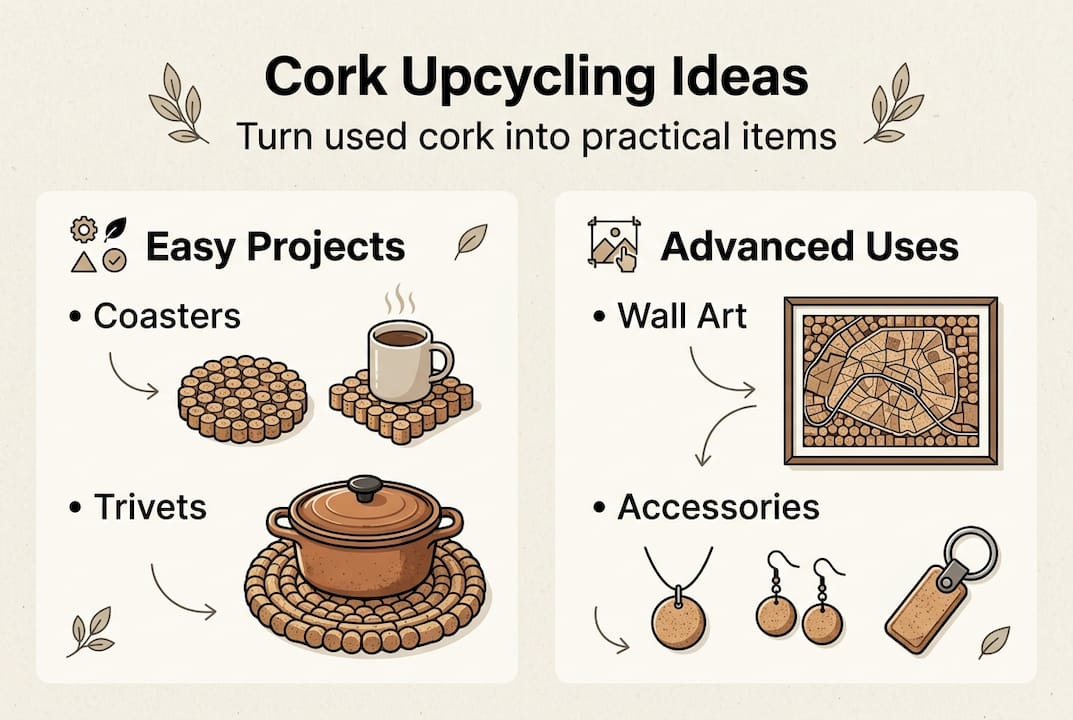
With your materials ready, it is time to get creative. These three projects cover a range of difficulty levels and produce genuinely useful results.
Project 1: Cork trivet
- Collect 16 to 20 wine corks of similar size.
- Arrange them in a square or circular pattern on your cutting mat.
- Apply cork-specific adhesive to the sides of each cork and press firmly together.
- Wrap a rubber band or tape around the outside while the glue sets (allow 24 hours).
- Sand any uneven edges lightly for a neat finish.
Project 2: Plant labels
- Slice a wine cork lengthways using your craft knife to create a flat-backed piece.
- Write the plant name on the flat face using a waterproof marker.
- Push a wooden skewer or bamboo stick into the base of the cork.
- Press into your plant pot. The cork’s natural water resistance keeps it legible outdoors.
Project 3: Decorative garland
- Use a skewer to pierce a hole through the centre of each cork lengthways.
- Thread twine through the corks, spacing them evenly.
- Knot the twine between each cork to hold them in place.
- Hang across a mantelpiece, window, or shelf for a natural, textural display.
Wine corks become trivets, plant labels, and décor through these exact simple methods, and the results look far more considered than their low cost suggests.
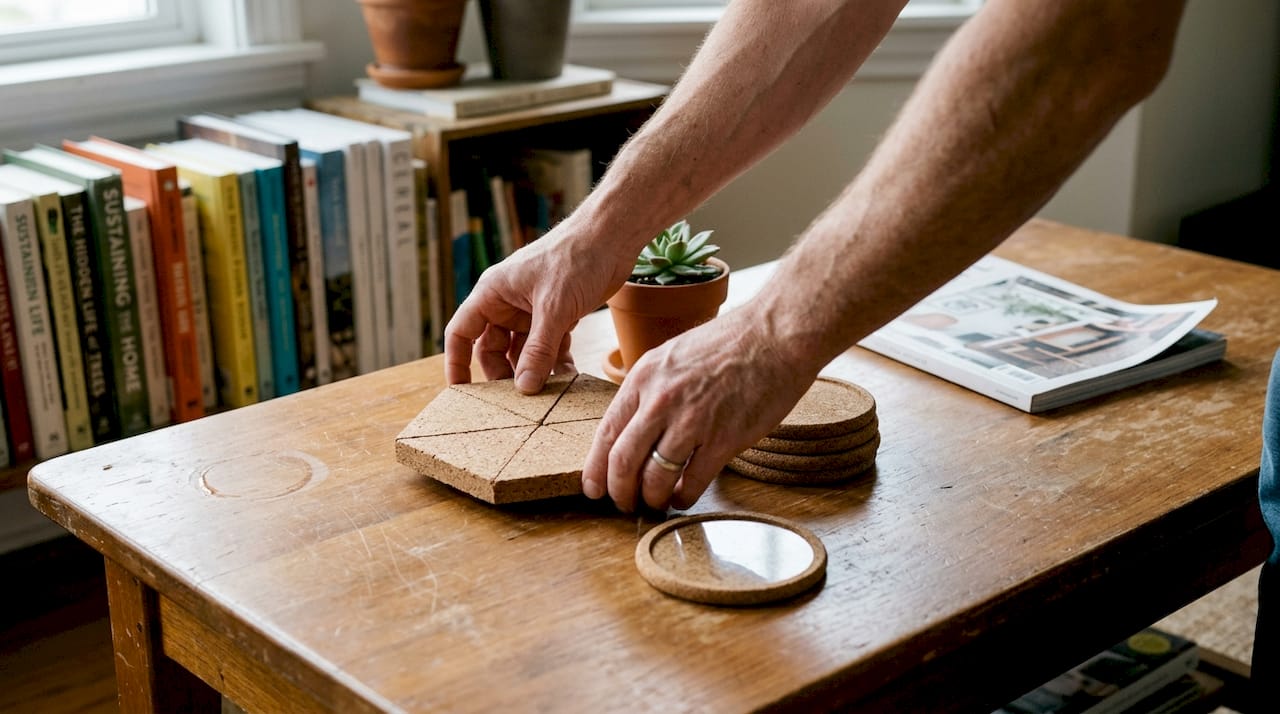
For those interested in how cork translates into fashion and accessories, exploring vegan cork accessories reveals how the same material principles scale up beautifully. And if you want to understand the broader environmental picture, the fashion sustainability cork guide puts the numbers in context.
Here is a comparison of DIY versus industrial upcycling approaches:
| Approach | Effort | Cost | End use |
|---|---|---|---|
| DIY home crafting | Low to medium | Minimal | Décor, gifts, accessories |
| Industrial upcycling | High (specialist) | Significant investment | Cork leather innovations, composites, flooring |
Pro Tip: Upcycled cork items make exceptional gifts. They are eco-friendly, completely original, and carry a story that mass-produced gifts simply cannot match. A hand-made trivet or garland says far more than something bought in a rush.
Troubleshooting and advanced tips for successful cork upcycling
As you complete your first projects, let us make sure you avoid common mistakes and discover ways to level up.
The first thing to check before starting any project is whether your cork is natural or synthetic. Natural cork feels slightly textured and compressible, with visible cell structure. Synthetic cork tends to be uniform in colour and texture, often with a plastic-like surface. Synthetic corks are not suitable for natural upcycling streams because they are not biodegradable and do not bond well with standard adhesives.
Common mistakes to avoid:
- Over-soaking corks in water to clean them, which causes them to swell and lose their shape
- Using the wrong adhesive, such as superglue, which can make cork brittle at the join
- Mixing natural and synthetic corks in the same project, which creates inconsistent results
- Cutting without a mat, which damages surfaces and makes clean cuts harder to achieve
- Rushing the drying time, which leads to weak bonds that fail under light use
“Industrial upcycling turns cork waste into high-performance materials that rival leather in durability and texture, demonstrating just how far this material can be taken beyond simple crafts.”
For those ready to go further, cork composite upcycling at an industrial level involves binding cork granules with resins or natural binders to create sheets used in flooring, insulation, and even fashion-grade textiles. You can explore what this means for the future of the material through our look at cork accessory innovation, and find practical guidance on recycling cork accessories once a product reaches the end of its life.
Pro Tip: Save cork dust from every cutting session in a small jar. Mixed with PVA adhesive, it creates a natural filler for gaps in cork projects, or it can be blended into clear resin to make beautiful, sustainable jewellery and decorative panels.
What to expect: Results and long-term impact
With projects complete, here is what you can expect in terms of quality and eco impact.
Upcycled cork projects are more durable than most people expect. Cork’s natural suberin content makes it resistant to water, mould, and everyday wear. A well-made trivet or set of coasters can last for years with minimal maintenance. Here is what to keep in mind for longevity:
- Wipe clean with a damp cloth rather than submerging in water
- Avoid prolonged direct sunlight, which can cause slight colour fading over time
- Re-seal with a thin coat of beeswax or natural oil annually for outdoor or kitchen items
- Share your projects on social media using sustainable craft hashtags to inspire others and build community around eco-conscious making
- Donate or pass on finished pieces rather than binning them when you are ready for something new
The environmental credentials of cork are well supported by research. Cork composites show low global warming potential due to the material’s renewability and the low processing temperatures required during manufacture. That means the items you create carry a genuinely light carbon footprint from start to finish.
For those who want to wear their values as well as display them at home, discovering a nature-respecting style through cork accessories is a natural next step. And for a deeper understanding of cork’s place in the fashion world, the piece on the role of cork in fashion is well worth reading.
Why upcycling cork is more impactful than you think
It is easy to frame cork upcycling as a pleasant weekend hobby, something you do with leftover wine corks to feel a little better about your consumption habits. But that framing undersells what is actually happening when you choose to repurpose rather than discard.
Every time you make a trivet instead of buying a plastic one, you are making a material choice that sends a signal. Multiply that across a community of makers and the signal becomes a market trend. Trends shift what manufacturers invest in. That is how DIY culture has historically driven industrial innovation, and cork is no exception.
Industrial upcycling unlocks the highest value in cork waste by reinventing it into sustainable materials that compete with leather and synthetic textiles. But that industrial momentum depends on a culture that already values cork as a serious material. Your home projects are part of that foundation.
We think the most overlooked aspect of cork upcycling is the conversation it starts. When a guest asks about your cork trivet or notices your cork garland, you have an opening to talk about renewable materials, circular design, and conscious consumption. That dialogue matters. Explore more about cork’s role in eco fashion to see how those conversations are already reshaping an entire industry.
Where to find quality cork and eco inspiration
Ready for more inspiration and the best in eco-friendly cork? Whether you are looking for raw materials, finished accessories, or simply a community that shares your values, The Cork Store is a great place to start.
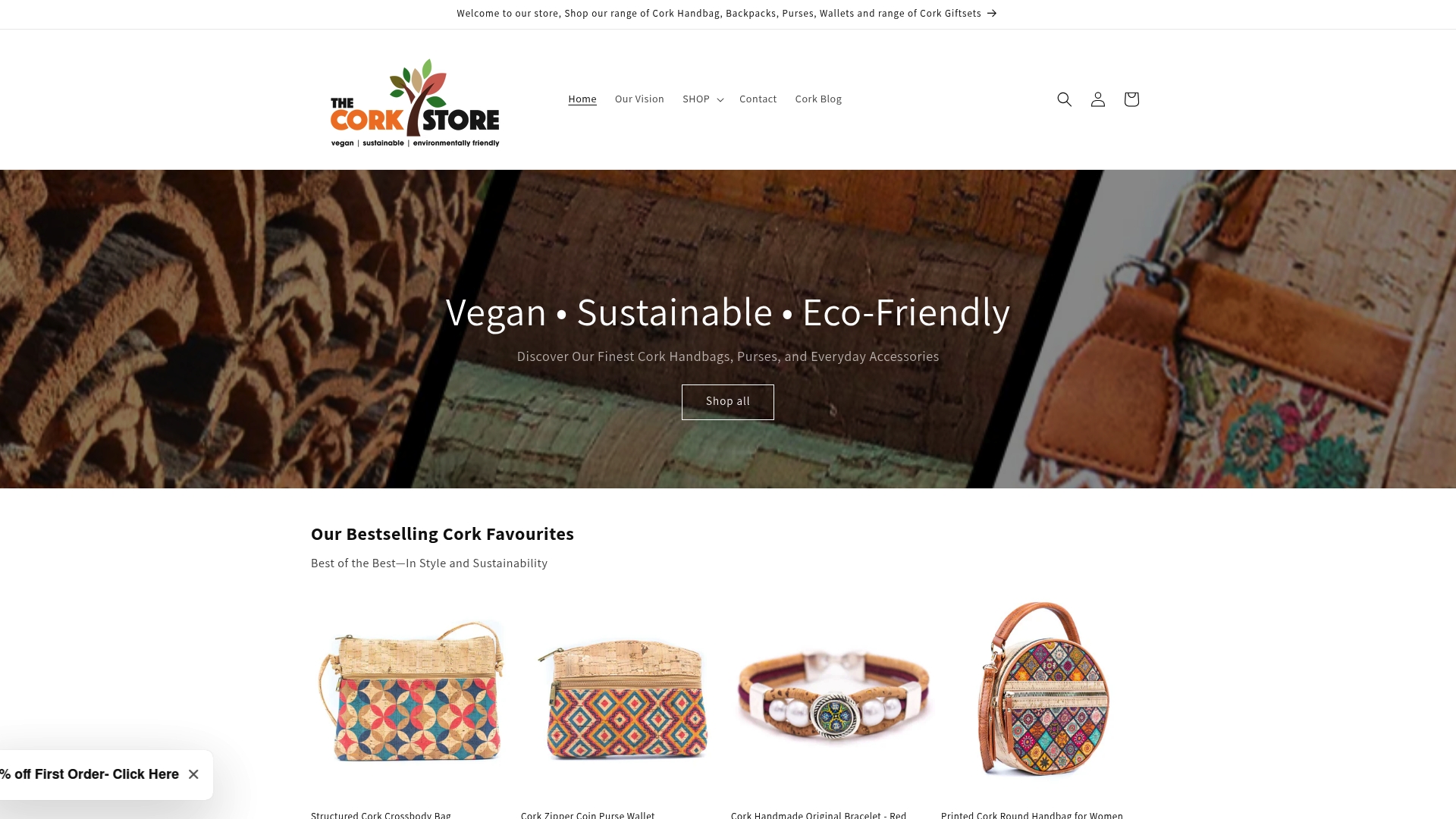
The site brings together a curated range of sustainable cork accessories, from handbags and wallets to gift sets, all crafted without harm to animals or ecosystems. You will also find a growing library of guides, style features, and eco-living resources to keep your sustainable journey moving forward. If you are curious about how cork translates into everyday fashion, the vegan cork fashion guide is an excellent place to explore next. The community there is genuinely passionate, and the products speak for themselves.
Frequently asked questions
What kinds of cork products can be upcycled at home?
You can upcycle wine corks into trivets, plant labels, and décor, as well as cork flooring scraps, old cork boards, and natural cork accessories using basic tools and adhesive.
Are synthetic corks suitable for upcycling?
Synthetic corks are less ideal because they are not biodegradable; natural cork is strongly recommended for most home upcycling projects to ensure proper bonding and environmental benefit.
What are some easy starter projects with cork?
Try making trivets, coasters, plant markers, or simple magnets from saved wine corks. These beginner cork crafts require only basic tools and produce genuinely useful results.
How long do upcycled cork products last?
Cork is highly durable and water-resistant thanks to its natural suberin content, so well-made DIY projects can last for years with light cleaning. Slow biodegradation ensures longevity without compromising end-of-life sustainability.
Does upcycling cork really make a difference for sustainability?
Yes. Upcycling diverts material from landfill and supports low-impact, renewable resource use. Cork composites have low global warming potential, meaning every project you complete carries a genuinely light environmental footprint.