

How to recycle cork accessories sustainably in 2026
Cork accessories have become a staple in eco-conscious wardrobes, but knowing how to dispose of them properly remains unclear for many. With natural cork accessories fully compostable when pure, yet synthetic-backed varieties requiring different handling, understanding your options matters. This guide walks you through assessment, preparation, creative upcycling, and industrial recycling solutions to ensure your cork accessories complete their lifecycle sustainably. You’ll discover practical methods to reduce waste, support circular economy principles, and make informed choices about the cork products you purchase.
Table of Contents
- Assess Your Cork Accessories Before Recycling
- Prepare And Recycle Cork Accessories Correctly
- Upcycle Cork Accessories To Extend Lifespan And Reduce Waste
- Industrial Recycling And Energy Recovery Of Cork Waste
- Discover Eco-Friendly Cork Products For Sustainable Living
- Frequently Asked Questions
Key takeaways
| Point | Details |
|---|---|
| Pure cork composts easily | Natural cork accessories biodegrade completely after removing synthetic elements like zips or metal clasps. |
| Synthetic backings block recycling | Cork fabric with polyurethane or polyester layers cannot enter curbside programmes or home compost bins. |
| Upcycling extends product life | Transforming old accessories into coasters, plant markers, or jewellery keeps materials in use longer. |
| Industrial recovery creates value | Cork waste becomes biomass pellets and polymer composites, supporting energy recovery and new materials. |
Assess your cork accessories before recycling
Before tossing cork accessories into compost or recycling bins, you need to understand what you’re working with. Cork products fall into two main categories: pure natural cork harvested directly from cork oak bark, and cork fabric that combines cork veneer with synthetic backing materials. The difference determines whether your accessory can biodegrade naturally or requires alternative disposal.
Start by examining the interior and edges of your cork wallet, bag, or purse. Cork fabric accessories often feature synthetic backings like polyurethane or polyester that prevent both composting and curbside recycling. These materials provide structure and durability but create disposal challenges. Pure cork items feel thicker, show natural grain variations, and lack the uniform appearance of fabric-backed versions.
Product labels offer crucial information about composition and sustainability credentials. Look for FSC certification stamps indicating responsible forestry practices, and check material lists for mentions of PU, polyester, or synthetic coatings. Many manufacturers now include material information to help consumers make informed recycling decisions. Understanding these details before purchase helps you choose accessories aligned with your sustainability goals.
Pro Tip: Place a small piece of cork under bright light and bend it gently. Pure cork shows consistent texture throughout, whilst fabric-backed varieties reveal a thin veneer layer separated from synthetic backing.
Avoid harsh chemical cleaners when preparing accessories for assessment or disposal. Detergents, solvents, and aggressive cleaning agents contaminate cork’s natural properties and prevent successful composting. Instead, use a slightly damp cloth to remove surface dirt and oils. This gentle approach preserves the material’s integrity whilst allowing you to inspect construction details more clearly.
Key identification steps include:
- Check interior lining for synthetic fabric layers or adhesive residue
- Feel thickness and flexibility compared to wine corks or trivets
- Examine seams and edges for laminated construction
- Review care labels for material composition details
- Test small hidden areas for synthetic coating presence
For those learning how to spot sustainable materials, this assessment process builds valuable skills. Recognising pure cork versus synthetic blends empowers you to make better purchasing decisions and handle end-of-life disposal appropriately. The time invested in proper assessment prevents contamination of compost bins and ensures materials reach appropriate recycling streams.
Prepare and recycle cork accessories correctly
Once you’ve identified pure cork accessories, preparation for composting becomes straightforward. Remove all non-cork elements including metal clasps, plastic zips, synthetic threads, and decorative hardware. These components prevent proper biodegradation and contaminate compost quality. Use scissors or small pliers to carefully extract fasteners without leaving residual pieces embedded in cork material.

Pure natural cork breaks down completely in home compost bins, typically within six to twelve months depending on piece size and environmental conditions. The material’s cellular structure allows microorganisms to penetrate and decompose it efficiently. Breaking larger accessories into smaller chunks accelerates decomposition by increasing surface area exposed to composting bacteria and fungi.
Follow these composting steps for best results:
- Dismantle accessories into individual cork components
- Remove all synthetic parts, adhesives, and metal fixtures completely
- Cut or break cork pieces into chunks no larger than wine cork size
- Add to compost bin mixed with green materials and food scraps
- Turn compost regularly to maintain oxygen flow and moisture balance
- Monitor decomposition progress over several months
Synthetic-backed cork fabric requires different handling entirely. These accessories cannot enter compost bins because synthetic coatings hinder natural decomposition processes. Polyurethane and polyester backings remain intact for decades, contaminating finished compost with microplastic particles. Similarly, curbside recycling programmes lack infrastructure to separate cork veneer from synthetic layers, making these items unsuitable for standard recycling streams.
Pro Tip: Create a small test compost pile with cork pieces to observe decomposition rates in your climate. This hands-on experiment reveals how quickly cork breaks down under your specific conditions.
For synthetic-backed accessories, responsible disposal means exploring upcycling opportunities first, then placing items in general waste as a last resort. Some specialised textile recycling programmes accept mixed-material accessories, though availability varies by region. Research local recycling centres to identify any programmes handling complex composite materials before defaulting to landfill disposal.
“Cork’s natural composition makes it one of few accessory materials that genuinely returns to earth without leaving harmful residues. Proper preparation ensures this ecological promise becomes reality.”
Cleaning cork before recycling or composting requires gentle methods only. Wipe surfaces with a damp cloth using plain water, avoiding soaps, detergents, or chemical cleaners that introduce contaminants. For stubborn stains, a soft brush with water provides adequate cleaning power. This minimal approach maintains cork’s natural state whilst preparing it for its next lifecycle phase.
Understanding how to store cork accessories properly extends their usable life, delaying the need for recycling altogether. Keeping items dry, avoiding extreme temperatures, and protecting from direct sunlight preserves material integrity. When accessories eventually reach end of life, proper preparation ensures they complete their journey sustainably.
Upcycle cork accessories to extend lifespan and reduce waste
Transforming worn cork accessories into new functional items keeps materials circulating whilst showcasing creativity. Upcycling offers practical benefits beyond waste reduction, creating personalised home goods and gifts from materials that might otherwise reach landfill. Even synthetic-backed cork fabric finds new purpose through clever repurposing projects that work with, rather than against, its composite construction.
Popular upcycled products include:
- Coasters and trivets protecting surfaces from heat and moisture
- Plant markers labelling herbs and vegetables in gardens
- Jewellery pieces including earrings, pendants, and bracelets
- Decorative wall art and bulletin boards for organisation
- Drawer organisers and small storage containers
- Pet toys and scratching surfaces for cats
Upcycling cork accessories into coasters represents the simplest entry point for beginners. Cut cork pieces into uniform shapes using sharp scissors or craft knives, then glue them onto backing boards for stability. The natural texture provides excellent grip and heat resistance whilst protecting furniture surfaces. Multiple coasters create thoughtful gift sets that demonstrate sustainable creativity.
Plant markers combine functionality with garden aesthetics. Write plant names directly onto cork surfaces using permanent markers or wood-burning tools. The material withstands outdoor conditions better than paper labels whilst biodegrading harmlessly if eventually composted with garden waste. This dual-purpose approach maximises cork’s lifecycle value.
Jewellery projects require more precision but yield stunning results. Thin cork veneer cuts cleanly into geometric shapes for modern earrings, whilst thicker pieces carve into organic pendant forms. Seal finished pieces with natural oils or beeswax to enhance durability and water resistance. The lightweight nature makes cork jewellery comfortable for all-day wear.
| Upcycling approach | Difficulty level | Tools required | Time investment | Best for |
|---|---|---|---|---|
| Coasters and trivets | Beginner | Scissors, glue | 30 minutes | Quick functional items |
| Plant markers | Beginner | Markers, stakes | 20 minutes | Garden organisation |
| Jewellery | Intermediate | Craft knife, findings | 1-2 hours | Personalised accessories |
| Wall art | Intermediate | Adhesive, frame | 2-3 hours | Decorative statements |
| Storage containers | Advanced | Cutting tools, fasteners | 3-4 hours | Custom organisation |
Pro Tip: Save small cork scraps in a jar for future mosaic projects. These fragments create textured surfaces for picture frames, mirror borders, or decorative boxes when glued in patterns.
Safe DIY handling prevents injuries and ensures quality results. Always cut away from your body using sharp blades that require less pressure and reduce slipping risks. Work on stable surfaces with proper lighting to see cutting lines clearly. Wear safety glasses when using rotary tools or sanders that generate cork dust particles.
Finishing techniques enhance both appearance and longevity. Light sanding smooths rough edges whilst maintaining cork’s natural texture. Natural oils like linseed or tung oil penetrate cork’s cellular structure, providing water resistance without creating plastic-like coatings. Beeswax offers another eco-friendly sealing option that buffs to a soft sheen.
For those seeking structured guidance, how to upcycle cork products provides detailed project instructions and material recommendations. These resources help beginners avoid common mistakes whilst inspiring experienced crafters to push creative boundaries. The skills developed through cork upcycling transfer to other sustainable DIY projects, building confidence in material reuse.
Industrial recycling and energy recovery of cork waste
Beyond home composting and personal upcycling, industrial processes transform cork manufacturing waste into valuable energy sources and new materials. These large-scale solutions address waste streams from cork production facilities, creating circular economy models that maximise resource efficiency. Understanding these systems reveals cork’s full sustainability potential and highlights innovation in material recovery.
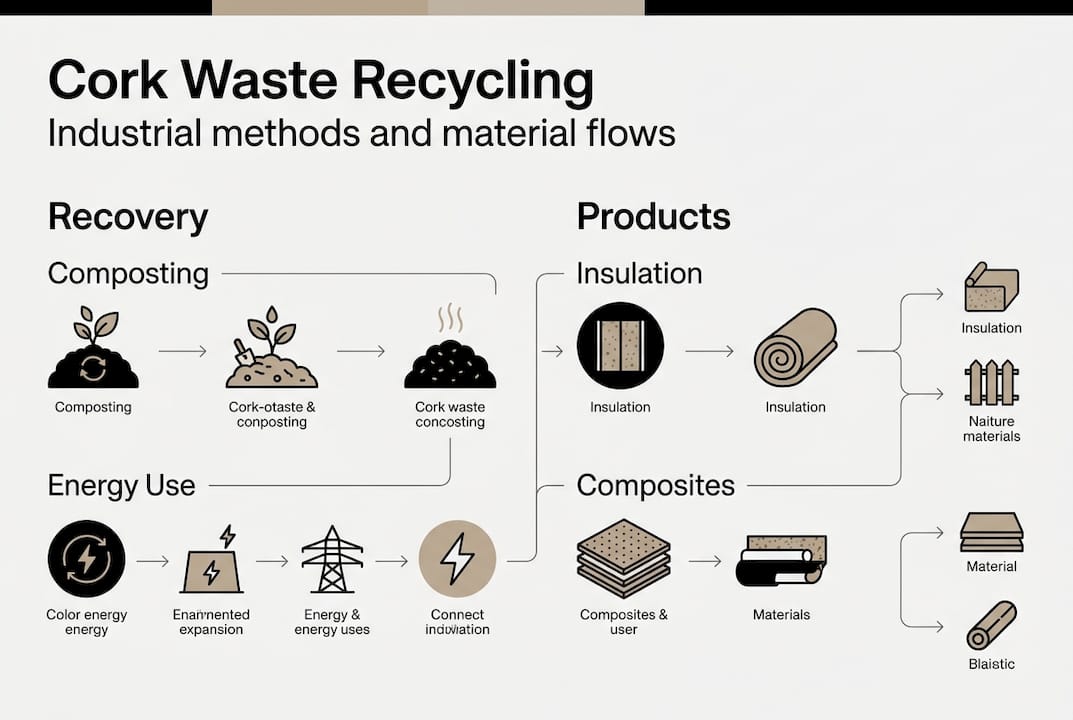
Cork processing generates substantial waste during manufacturing, including dust, granules, and off-cuts unsuitable for traditional products. Rather than sending these materials to landfill, forward-thinking facilities channel them into valorisation routes. Cork waste blended with sawdust up to 65% meets international biomass standards for energy pellets, providing renewable fuel for heating systems and power generation. This thermal recovery captures energy whilst reducing fossil fuel dependence.
Polymer composite development represents another promising avenue. Researchers combine cork particles with biopolymers to create materials suitable for additive manufacturing and specialised applications. Cork waste processed into polymer composites yields products like CORSKIN™, which finds use in automotive interiors, construction panels, and consumer goods. These innovations extend cork’s lifecycle whilst reducing demand for virgin materials.
| Recovery method | Input materials | Output products | Environmental benefit | Industry adoption |
|---|---|---|---|---|
| Biomass pellets | Cork dust, granules | Renewable fuel | Reduces fossil fuel use | Growing in Portugal, Spain |
| Polymer composites | Cork particles, biopolymers | CORSKIN™, panels | Replaces virgin plastics | Emerging technology |
| Insulation materials | Cork granules | Building insulation | Energy-efficient construction | Established market |
| Activated carbon | Cork char | Water filtration | Removes contaminants | Research phase |
Cork forestry sustainability underpins these recovery systems. Cork oak forests sequester carbon dioxide whilst providing renewable harvests every nine years without harming trees. This regenerative model ensures continuous material supply whilst supporting Mediterranean ecosystems. Waste recovery rates in leading facilities now exceed 90%, with remaining materials composted or used as soil amendments.
Key environmental benefits include:
- Carbon neutrality through biomass energy replacing fossil fuels
- Reduced landfill burden from manufacturing waste streams
- Creation of secondary materials reducing virgin resource extraction
- Support for cork forest conservation through economic viability
- Circular economy models keeping materials in productive use
Energy recovery from cork waste demonstrates impressive efficiency. The material’s high lignin content provides substantial calorific value, generating heat comparable to wood pellets whilst producing minimal ash residue. Industrial boilers and heating systems readily adapt to cork-based biomass fuels, making adoption straightforward for facilities transitioning from conventional energy sources.
Specialty materials development continues expanding cork’s applications beyond traditional uses. Researchers explore acoustic dampening panels, automotive components, and even aerospace applications where cork’s unique properties offer performance advantages. Each innovation creates demand for recovered cork waste, strengthening economic incentives for comprehensive collection and processing systems.
For consumers interested in supporting these advances, choosing products from manufacturers committed to waste recovery makes a difference. Brands highlighting innovation in sustainable cork accessories often partner with facilities implementing comprehensive recycling programmes. Your purchasing decisions signal market demand for responsible production practices, encouraging industry-wide adoption of circular economy principles.
Discover eco-friendly cork products for sustainable living
Choosing cork accessories made from pure natural materials without synthetic backings sets you up for successful end-of-life recycling from the start. The Cork Store offers a curated selection of vegan, sustainable cork products designed with full lifecycle thinking. From stylish wallets to functional bags, each piece combines fashion-forward design with genuine environmental responsibility.
Explore eco-friendly cork gift ideas that align with your values whilst supporting artisans committed to sustainable practices. The all-natural cork wallet gift set showcases how premium quality and environmental stewardship coexist beautifully. When you invest in thoughtfully crafted cork accessories, you’re choosing products that biodegrade naturally after years of reliable service. Visit The Cork Store to discover the full range of sustainable accessories that make recycling simple when their time comes.
Frequently asked questions
Can cork accessories with synthetic backings be composted?
No, synthetic-backed cork accessories cannot be composted because polyurethane and polyester layers prevent natural biodegradation. These materials remain intact for decades, contaminating compost with microplastic particles. You must remove synthetic backings completely before composting any cork portions, though separation often proves impractical with fabric-backed accessories.
What are some easy DIY projects for upcycling cork accessories?
Coasters, plant markers, and simple jewellery pieces offer accessible entry points for cork upcycling. These projects require minimal tools and complete in under an hour. Upcycling extends your accessory’s useful life by years whilst reducing landfill waste, and the skills transfer easily to other sustainable crafting projects.
How can I tell if my cork accessory is fully recyclable?
Check product labels for material composition, looking specifically for absence of synthetic backings or plastic coatings. FSC certification indicates responsible sourcing but doesn’t guarantee compostability, so verify materials separately. Pure cork feels uniformly thick without laminated layers, and bending reveals consistent texture rather than separate veneer and backing components.
How should I clean cork accessories before recycling?
Clean cork using only a damp cloth with plain water, avoiding all soaps, detergents, and chemical cleaners. These substances contaminate cork’s natural composition and prevent successful composting. For stubborn marks, use a soft brush with water or try gentle rubbing with reusable bamboo cotton rounds dampened slightly. This minimal approach preserves compostability whilst adequately preparing accessories for their next lifecycle phase.