
5 Checks to Spot Eco Friendly Materials in Cork Bags
Cork fabric, made from cork oak bark, is the leading example of an eco-friendly material used in vegan handbags, wallets and backpacks. Around it, shoppers should expect to see organic cotton linings, recycled metal hardware, vegetable dyes, hemp or linen trims, and sometimes recycled polyester as a practical compromise. The rule that matters most is to always check what the cork is backed and finished with before you buy.
TL;DR:
- The sustainability of cork products heavily depends on the backing material, with organic cotton or linen being the most eco-friendly options.
- Cork-backed products with solvent-based adhesives or synthetic linings undermine circularity and biodegradability, regardless of cork’s natural properties.
- Certifications like FSC for cork, GOTS for cotton linings, and OEKO-TEX for safety ensure environmentally responsible and safe choices.
- Recycled polyester backing is acceptable when alternatives are synthetic, but it still sheds microplastics and isn’t biodegradable.
- Proper care and choosing durable, well-made cork accessories can significantly reduce environmental impact over their lifetime.
Table of Contents
- Examples of eco-friendly materials used alongside cork
- How backing and finishes change a cork product’s sustainability
- How to choose sustainable cork accessories: a shopper’s checklist
- Why cork matters for cruelty-free accessories
- Shop cork accessories built to last
- Sources
- FAQ
Examples of eco-friendly materials used alongside cork
Cork rarely appears alone on a product page. It works as part of a small family of materials, and each one earns its place for a different reason.
Natural cork (bark-sourced) is harvested from the cork oak without felling the tree, and the bark regenerates within roughly nine years, which is why foresters can harvest the same tree repeatedly across its lifespan. It’s naturally water-resistant, lightweight, antimicrobial and hypoallergenic, properties that come from its cellular structure rather than a chemical coating. That’s part of why it holds up well on daily-use items like cork wallets and crossbody straps.
Cork–cotton blended textiles are turning up more often on straps, linings and reinforced panels. A 2024 peer-reviewed study found a 90:10 cotton–cork blend showed better wrinkle recovery and abrasion resistance than 100% cotton alone, so blending isn’t just a cost-saving trick. It genuinely improves how the fabric behaves over time.
Beyond cork itself, look for:
- Organic cotton linings, grown without synthetic pesticides and fully biodegradable at end of life, particularly when certified under GOTS.
- Hemp and linen trims or inner linings, both low-input crops that need far less water than conventional cotton and wear in rather than out.
- Recycled cotton and recycled polyester, which divert existing textile waste from landfill, though polyester still sheds microplastics in the wash.
- Vegetable or water-based dyes and natural sealants, used instead of solvent-heavy finishes that can leach into wastewater.
- Recycled or low-impact metal hardware, for zips, clasps and buckles, avoiding fresh mining for every buckle produced.
- Natural rubber or bio-based elastics, used in smaller components like adjustable straps or closures.
None of these materials does the whole job alone. A cork bag with a virgin-plastic lining and solvent-based glue is a different product, environmentally, from one built on organic cotton and water-based adhesives, even though both look identical on the shelf.
How backing and finishes change a cork product’s sustainability
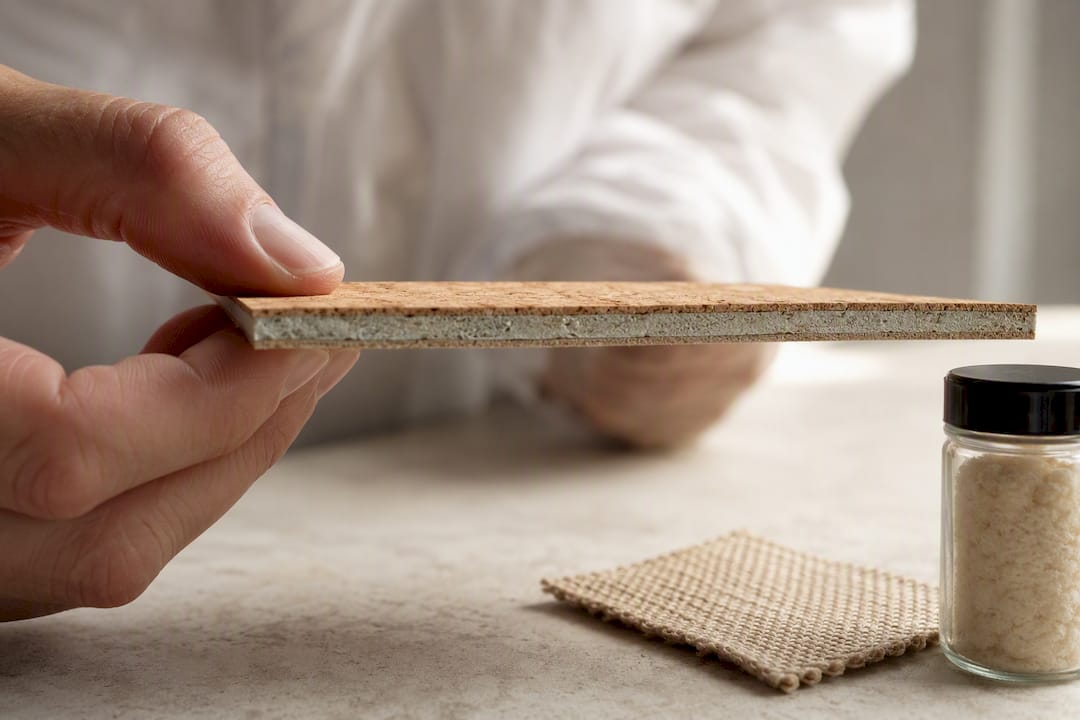
Here’s the part most shoppers miss: the cork itself is rarely the weak link. The backing is. Cork sheets need something to bond to, and that backing material is the single most important sustainability variable in the entire product.
Backing typically falls into a few categories:
- Organic cotton or linen backing, which keeps the finished product largely plant-based and biodegradable.
- Recycled polyester backing, a reasonable middle ground that reuses existing plastic but isn’t compostable.
- PU (polyurethane) backing, which behaves more like a synthetic and undermines end-of-life circularity.
There’s also a difference between full-bark cork sheets, cut directly from the tree’s bark, and agglomerated cork, made from bonded cork scraps left over from other production. Agglomerated cork is a sensible way to use offcuts, but its footprint depends heavily on the binder holding it together. Solvent-based adhesives and PU topcoats both reduce biodegradability and can introduce microplastics during wear and washing.
Pro Tip: Search the product description for the words “backing” or “lining material.” If a listing only mentions “cork” and gives no detail on what’s behind it, that’s usually a sign the backing isn’t something the brand wants to highlight.
Genuine biodegradability requires natural cork paired with a natural backing and water-based finishes, all three together, not just one.
How to choose sustainable cork accessories: a shopper’s checklist
Reading a product page for five minutes before you buy tells you almost everything you need to know. Work through this order:
- Check for FSC certification on the cork, which confirms the cork oak forest it came from is responsibly managed.
- Identify the backing material, favouring organic cotton or linen over PU where the listing specifies it.
- Ask about dyes and adhesives if the page doesn’t say, most brands will confirm whether water-based dyes and solvent-free glue were used.
- Look for GOTS on any cotton lining and OEKO-TEX Standard 100 on the finished product, which confirms it’s free from a defined list of harmful substances.
- Confirm PETA-Approved Vegan status if animal-free assurance matters to you specifically.
| Factor | Best sign | Watch-out |
|---|---|---|
| Cork sourcing | FSC-certified | No mention of forestry origin |
| Backing | Organic cotton, linen | Unspecified “synthetic backing” |
| Dyes/adhesives | Water-based, solvent-free | Vague “eco-friendly” with no detail |
| Cotton lining | GOTS certified | Generic “cotton lining” |
| Chemical safety | OEKO-TEX Standard 100 | No safety certification listed |
Recycled polyester backing is worth accepting when the alternative is a virgin plastic backing. It’s not the top-tier choice, but it’s a genuine improvement, and pretending every purchase has to be perfect just leads to decision fatigue. Cork accessories also last longer with basic care: wipe with a damp cloth rather than soaking, avoid direct sun for extended periods, and store flat or lightly stuffed to keep its shape. A bag that lasts eight years instead of three cuts its lifetime impact more than almost any material swap. For more on spotting these signals across fashion generally, The Cork Store’s guide to sustainable materials covers the same checks in more depth.
Why cork matters for cruelty-free accessories
I’ve spent enough time reading cork product listings to know most shoppers get one thing wrong: they assume “cork” on the label settles the sustainability question. It doesn’t. The bark is genuinely renewable and often near carbon-negative once you account for forest sequestration, but the backing decides what happens to the bag in ten years. Some brands specify backing and hardware rather than leaning on the word “cork” alone. Look at any cork handbag listing and you’ll see exactly what it’s made from, not just what it’s made of on the surface.
— Aaron
Shop cork accessories built to last
Vegan cork handbags, wallets and backpacks give you the durability of leather without the animal impact, and without the guessing game over what’s really inside the material. Their range is built on cork sourced with sustainability in mind, paired with linings and hardware chosen to hold up for years rather than seasons.
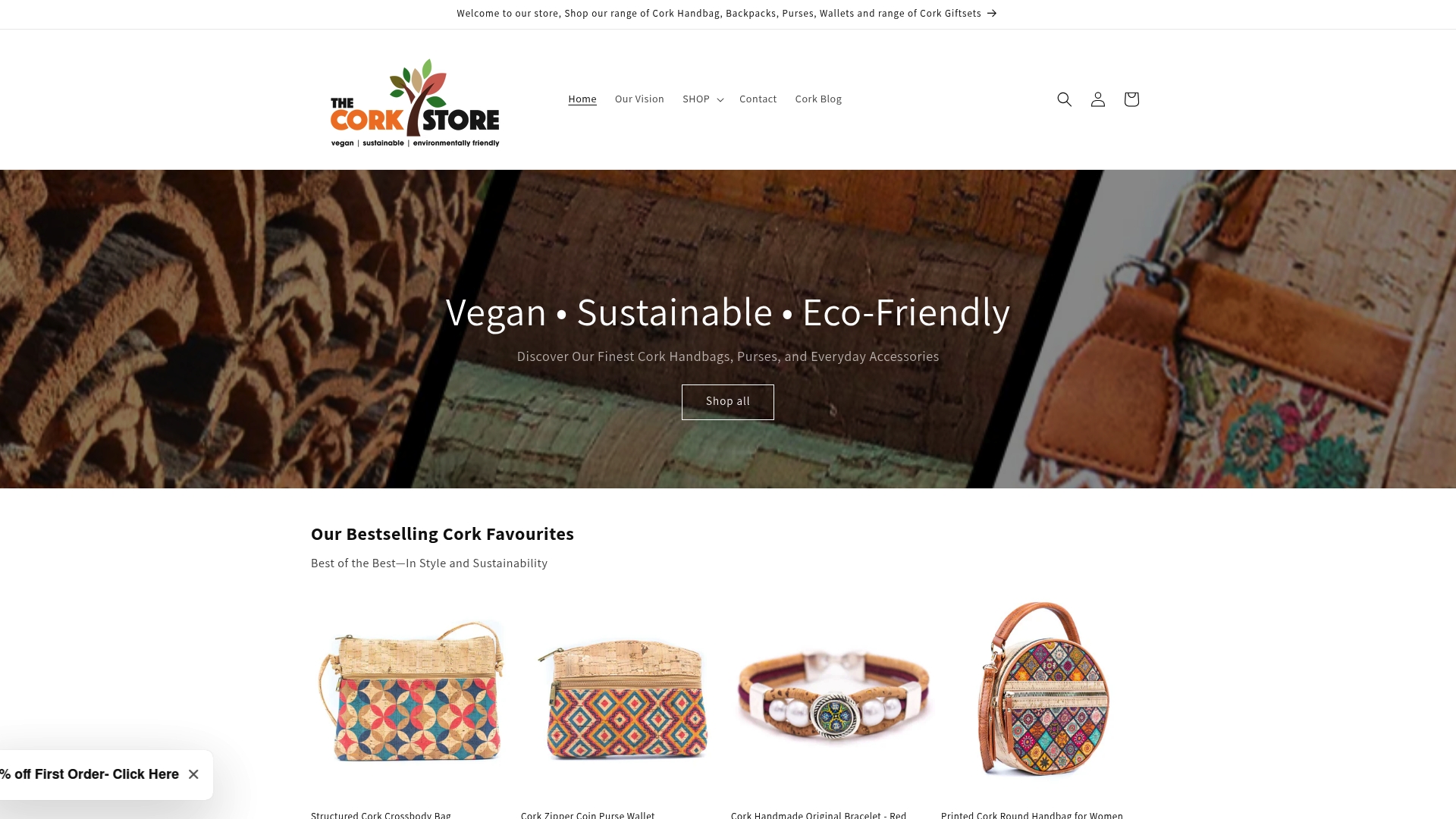
Browse the full range of cork bags, wallets and gift sets, check sizing and material notes on each product page, and checkout takes a few minutes with a straightforward returns process if anything isn’t quite right. If you’re buying for someone else, the curated gift sets are worth a look before you decide on a single item.
Sources
- What is cork fabric? Is cork leather sustainable? - Sustainable Jungle
- Cotton–cork blended textile study (Sustainability journal, 2024)
- Cork fabric or cork leather: is it sustainable? - TRVST
- Cork’s champagne moment in sustainable fashion - The Ethos
FAQ
Is cork fabric actually biodegradable?
Yes, when it’s paired with a natural backing like organic cotton or linen and finished with water-based dyes, but PU-backed cork behaves more like synthetic leather and breaks that down.
What’s the difference between cork leather and agglomerated cork?
Full-bark cork is cut directly from harvested bark sheets, while agglomerated cork is made from bonded cork scraps, and its sustainability depends on the binder used to hold those scraps together.
Does cork need chemical treatment to be waterproof?
No, cork is naturally water-resistant thanks to its cellular structure, so it doesn’t rely on heavy chemical coatings the way many synthetic leathers do.
What certifications should I look for on cork accessories?
Check for FSC on the cork sourcing, GOTS on any organic cotton lining, OEKO-TEX Standard 100 for chemical safety, and PETA-Approved Vegan for animal-free assurance.
Is recycled polyester backing acceptable in an eco-friendly cork bag?
It’s a reasonable middle ground since it reuses existing plastic rather than requiring virgin material, though it isn’t biodegradable the way an organic cotton backing is.