

Faux leather lasts 2–5 years: how PU, PVC and bio leathers differ
Faux leather is a man-made material designed to imitate animal leather, most commonly polyurethane (PU) or polyvinyl chloride (PVC) bonded to a fabric backing. It costs less than genuine hide, cleans up faster, and never involves an animal, but conventional versions are petroleum-based plastics with a real environmental cost and a shorter working life than good quality leather.
TL;DR:
- Faux leather is primarily made from polyurethane or PVC coated on a fabric backing, with newer bio-based options still blending plastic binders and often lacking full biodegradability.
- Quality varies; multi-layer constructions with textile bases last longer and resist cracking better than thin, single-coated sheets, which tend to peel within a year.
- Faux leather typically lasts two to five years under normal use, with durability heavily influenced by backing quality and maintenance, but genuine leather can outlast it by years or decades.
- It is less breathable and tends to feel cooler and more plastic-like than real leather, and PVC variants are more water-resistant, making them suitable for upholstery and fashion items.
- Environmentally, most faux leather is petroleum-based and not biodegradable, though recycled-content and plant-based variants are emerging but still often contain plastics and lack transparency.
Table of Contents
- What faux leather means and where you’ll find it
- PU, PVC and the bio-based newcomers: what’s actually in it
- How faux leather is actually made
- Faux leather vs real leather: how they actually compare
- How long does faux leather actually last, and how do you keep it that way?
- Is faux leather eco-friendly? The honest environmental picture
- How to tell faux leather from real leather in five checks
- Why cork deserves a place in this conversation
- Let use and values decide, not the label
- Where to find genuinely lower-impact alternatives
- Sources
- FAQ
What faux leather means and where you’ll find it
Walk into any shop and you’ll see the same material sold under half a dozen names. Faux leather, synthetic leather, leatherette, pleather and vegan leather all describe broadly the same thing: a fabric backing coated or laminated with a plastic layer to mimic the grain, feel and flexibility of animal hide. The naming is inconsistent partly because it’s marketing language rather than a regulated term, and partly because different manufacturers favour different words for the same construction, as Wikipedia’s overview of artificial leather explains.
You’ll run into it constantly without necessarily noticing:
- Furniture upholstery, especially sofas and dining chairs
- Fashion accessories: jackets, handbags, wallets, belts
- Car seats and interior trim
- Bags, purses and travel gear sold as cruelty-free alternatives
People choose it for three fairly simple reasons: it’s cheaper than hide, it doesn’t involve killing an animal, and it’s easier to wipe clean day to day. That last point matters more than shoppers often admit. A busy household with kids or pets will wear through the appeal of “authentic” leather fast once the maintenance routine kicks in.
PU, PVC and the bio-based newcomers: what’s actually in it
Two plastics dominate the faux leather market, and they behave quite differently. Polyurethane (PU) is the softer, more pliable option, bonded as a thinner coating onto a fabric or split-leather base. It drapes well, which is why it turns up in jackets, handbags and clothing where flexibility matters more than waterproofing. PVC (polyvinyl chloride), by contrast, is thicker and more rigid, and it resists water far more effectively, which is why it’s the go-to for upholstery and areas that need heavier-duty water resistance.
Beyond those two, you’ll increasingly see:
- Microfibre leather, a denser weave that mimics the fibre structure of real hide more closely than standard PU
- Bio-based leathers made from apple waste, cactus, mushroom mycelium or lab-grown proteins, which cut down on virgin plastic but remain pricier and harder to find at scale
Sourcing note: most bio-based leathers still blend plant material with a plastic binder to hold the sheet together, so they’re rarely 100% plastic-free even when marketed as such, a point Wirecutter’s breakdown of vegan leather materials makes clear.
The label trap to watch for: “vegan leather” tells you no animal was involved, nothing more. It says nothing about recycled content, biodegradability or how the plastic was sourced. Read the material composition line, not the marketing headline.
How faux leather is actually made
The process is more involved than most people picture, and understanding it helps you judge whether a product is genuinely well built or just dressed up to look that way.
- Backing selection. A woven or knitted fabric, usually polyester or cotton blend, forms the base layer. Cheaper products skip a proper textile backing altogether, which is one reason thin faux leather tears rather than stretches.
- Polymer application. The PU or PVC layer is applied through lamination, coating or calendaring, essentially pressing molten plastic onto the fabric under heat and pressure.
- Embossing and graining. A textured roller stamps a leather-like grain pattern into the still-workable polymer surface, which is why cheap faux leather often has an unnaturally uniform, repeating texture.
- Finishing. Colour, surface coatings and sometimes a protective top layer are added last, affecting both appearance and how the material handles scuffing.
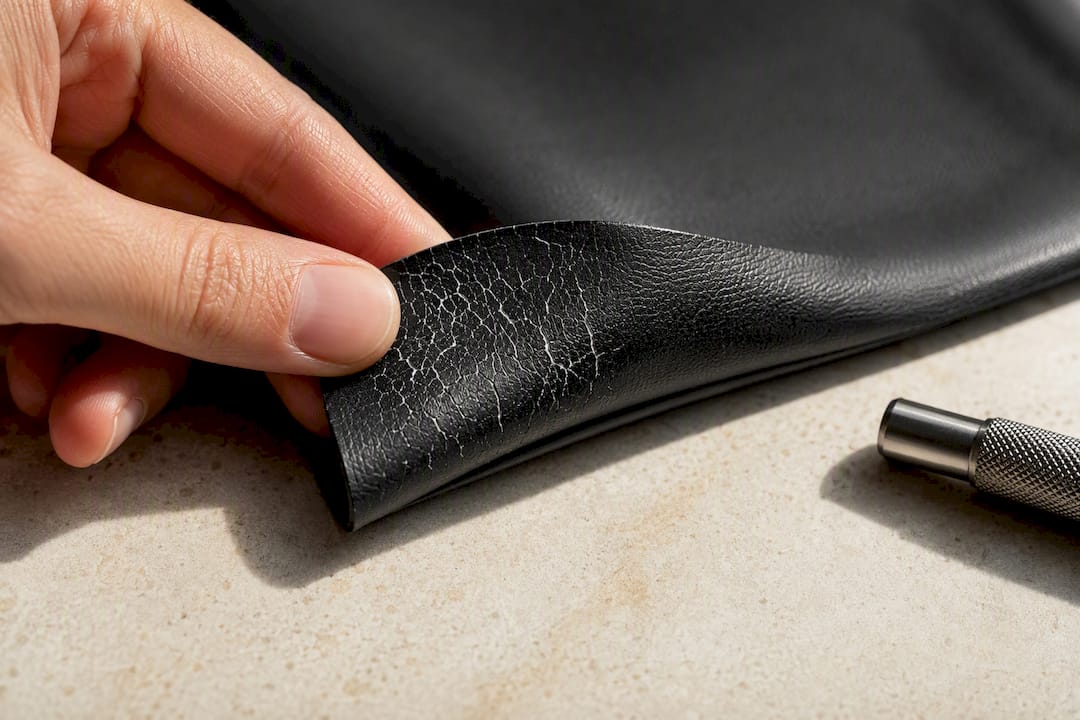
Manufacturing quality varies enormously between products claiming to be the same material. Multi-layer constructions with a proper textile backing and a thicker top coat resist peeling and cracking noticeably better than the thin, single-coated sheets common in budget goods.
Pro Tip: Flex a corner of the material before buying. If you see white cracking lines appear in the coating immediately, the top layer is too thin and will likely peel within a year of regular use.
Faux leather vs real leather: how they actually compare
Neither material wins outright. The right choice depends entirely on what you’re buying and how much upkeep you’re willing to do.
- Cost: Faux leather is consistently cheaper, often a fraction of the price of genuine hide for a comparable item.
- Durability/lifespan: Genuine leather generally outlasts faux leather by years, sometimes decades, when properly cared for; faux leather has a shorter, more variable lifespan depending on construction quality.
- Maintenance/cleanability: Faux leather wipes clean easily and needs no conditioning, though PVC variants can be harder to clean thoroughly than PU; real leather needs periodic conditioning to avoid drying out.
- Breathability/comfort: Real leather breathes and softens with wear; faux leather stays largely non-porous, which means it can feel warmer and clammier against skin.
- Water resistance: PVC-based faux leather is notably water resistant; PU is more moderate; untreated genuine leather absorbs moisture and stains more readily.
- Typical uses: Faux leather suits budget furniture, car interiors and fashion items replaced every few years; real leather suits investment pieces meant to last and age well.
For a quick gut check: a jacket you’ll wear hard for one season favours faux leather’s low cost. A sofa you want for fifteen years, or a car interior exposed to sun and spills daily, tips the argument toward genuine hide if your budget allows it. Faux leather becomes the realistic choice whenever ethics, price or low-maintenance living outweigh the appeal of a material that improves with age.
How long does faux leather actually last, and how do you keep it that way?
Expect a working lifespan of roughly two to five years for entry-level PU or PVC products under regular use, stretching to seven or eight years for well-constructed, multi-layer versions with a proper textile backing. The most common failure modes are peeling (the top coat separating from the backing), cracking (the plastic losing flexibility over time, often from heat or dryness), and abrasion wear on high-contact areas like armrests and seat edges.
Care is straightforward but specific:
- Wipe with a damp cloth and mild soap; avoid alcohol-based or ammonia cleaners, which degrade the polymer coating over time
- Keep it away from direct heat sources and prolonged sun exposure, both of which accelerate cracking
- Avoid sharp objects and rough abrasion on high-wear points
Pro Tip: A small cracked patch on furniture can sometimes be patched with a leather repair compound matched to colour, but once peeling spreads across a large area, patching rarely looks convincing and replacement is the more sensible option.
Is faux leather eco-friendly? The honest environmental picture
Most conventional faux leather is petroleum-based plastic, and it does not biodegrade in any meaningful timeframe. That’s the uncomfortable truth behind a lot of “vegan leather” marketing: avoiding animal products doesn’t automatically mean avoiding environmental harm, and buyers should treat those two claims as separate questions entirely.
There are genuine improvements emerging. Recycled-content PU and PVC reduce reliance on virgin plastic, and plant-based leathers from apple, cactus and mushroom sources cut down on fossil inputs, though they typically cost more and remain harder to source at volume than standard synthetic leather. Neither category is flawless: recycled content varies wildly between suppliers, and plant-based leathers still usually contain a plastic binder.
Before trusting a sustainability claim, check for:
- Specific recycled-content percentages, not just the word “recycled”
- Named plant or bio-based inputs, rather than vague “eco-friendly” language
- Supplier transparency about where and how the material is produced
If low environmental impact is genuinely the priority, the material category matters less than the manufacturer’s willingness to disclose exactly what’s in the product and where it came from.
How to tell faux leather from real leather in five checks
You don’t need lab equipment, just attention to a few reliable signs.
- Look at the grain. Real leather has irregular, natural pore patterns; faux leather often shows a suspicious uniform, repeating embossed texture.
- Touch it. Genuine leather feels slightly warm and textured; faux leather tends to feel cooler and more plastic-like, especially on PVC versions.
- Smell it. Real leather has an earthy, organic scent; faux leather often carries a faint chemical or plastic odour.
- Check the edges and backing. Real leather shows a fibrous, suede-like cross-section at cut edges; faux leather reveals a fabric backing or a uniform plastic edge.
- Read the label. Terms like “genuine leather,” “bonded leather,” and “PU leather” all mean different things, and only “full grain” or “top grain” guarantee real hide throughout.
Avoid destructive tests like burning a sample. If you’re buying online and can’t inspect the material directly, ask the seller for a swatch or a material certificate before committing.
Why cork deserves a place in this conversation
Cork offers a genuinely different profile: it’s harvested from the bark of cork oak trees without felling them, renewable on a cycle of years rather than decades, and naturally water-resistant without a plastic coating doing all the work. It suits accessories like wallets, bags and smaller goods well, though it’s less suited to items needing extreme flexibility or heavy structural upholstery. For readers weighing up what vegan leather is actually made of, cork is worth comparing directly against PU and PVC.
Let use and values decide, not the label
Match the material to how hard the item gets used and how much upkeep you’ll realistically do. Then check what the manufacturer actually discloses about recycled content or plant-based sourcing, not just the word “vegan” on the tag.
— Aaron
Where to find genuinely lower-impact alternatives
Cork sidesteps the petroleum question that shadows most faux leather entirely, and some companies build handbags, wallets, purses and gift sets from exactly that material. If the durability and sustainability trade-offs discussed above have you leaning away from PU or PVC, browsing Thecorkstore’s cork accessory collection is the practical next step, whether you’re after a everyday wallet or a considered gift that skips plastic coatings altogether. Every piece is vegan by design, cruelty-free, and made from a bark that regrows without felling the tree. Have a look through the current range and see which piece fits the use case you had in mind.
Sources
- Artificial leather — Wikipedia
- What is Faux Leather Fabric: Properties, How its Made and Where — Sewport
- What Is Vegan Leather Made Of? | Reviews by Wirecutter
- What Is Faux Leather? Materials, Durability & Care Guide — Living Spaces
FAQ
Is faux leather good quality?
Quality varies enormously by construction: multi-layer products with a proper textile backing and thicker top coat perform well, while thin, single-coated versions crack and peel far sooner.
What is faux leather made of?
It’s typically a fabric backing (often polyester) coated or laminated with polyurethane (PU) or polyvinyl chloride (PVC), with emerging bio-based versions using apple, cactus or mushroom-derived materials blended with a plastic binder.
How long does faux leather last?
Entry-level versions typically last a few years under regular use, while well-made, multi-layer PU or PVC constructions tend to last noticeably longer.
What are the disadvantages of faux leather?
It’s less breathable than real leather, prone to cracking and peeling over time, generally not biodegradable, and shorter-lived than good quality genuine hide, though cork-based alternatives address the biodegradability concern.