
Pick the Right Cork Hat, 2mm Cork and 10cm Brims for Eco Shoppers
Cork hats now come in every shape you’d expect from a straw or felt collection: fedoras, baseball caps, buckets, wide-brim sun hats. They’re waterproof enough to shrug off drizzle, lighter than felt, and entirely animal-free. Pick your style by what the hat needs to do rather than how it looks on a shelf; sun days call for a wide brim, travel calls for something packable, and everyday wear calls for a baseball cap or bucket. Check the comparison below before you commit.
TL;DR:
- Cork hats are highly durable for light rain and offer genuine sun protection, especially with wide, structured brims and UPF ratings.
- Proper fit relies on accurate head measurement and adjustable features, as cork does not stretch easily and sizing is crucial.
- The most versatile styles include fedoras for formal occasions and baseball caps for casual, packable wear, with shape and purpose guiding choice.
- Genuine cork shows subtle variation and texture, and should be sourced with transparent details about material type and processing.
- Maintaining cork involves gentle cleaning, careful storage, and avoiding machine washing to prevent cracking, fading, or seam failure.
Table of Contents
- Cork hats compared: styles, uses and price bands
- How do you choose the right cork hat?
- How do you look after a cork hat?
- How do you tell if cork is genuine?
- What is cork’s environmental footprint as a material?
- How does cork compare with straw, felt and synthetic hats?
- What goes wrong with cork hats, and how do you fix it?
- An editor’s take on building a cork wardrobe
- Looking for cork accessories beyond hats?
- Sources
- FAQ
Cork hats compared: styles, uses and price bands
Before you scroll listings on any retailer, it helps to know what each shape is actually good for. Cork behaves differently depending on how it’s cut and finished, so a fedora and a baseball cap aren’t interchangeable just because they share a material.
- Fedora / panama: The dressiest option in cork, suited to smart-casual outfits, weddings, or anywhere a straw panama would normally go. Expect mid to premium pricing, since these require more shaping and finishing than a flat cap. MB Cork’s collection runs fedora and panama silhouettes in both natural and coloured cork, which gives you room to match a hat to an existing outfit rather than the other way round.
- Baseball cap: The most casual and most packable shape on this list, and usually the cheapest. Brands like KORKIT Company build these around cork panels or cork patches rather than a full cork crown, which keeps the price down while still giving you the material’s stain resistance where it matters most, on the front panel and brim.
- Bucket hat: Casual, soft-structured, and easy to stuff into a beach bag or daypack. Good for festivals and travel because it doesn’t hold its shape the way a fedora does, so a knock or a squash in a rucksack won’t ruin it.
- Wide-brim sun hat: The pick if sun protection is the actual goal rather than a side benefit. Look for a structured brim rather than a floppy one; a stiffened edge holds its shade line even in wind, which matters more than people expect on a beach or a boat.
- Flat cap and beanie: Less common in cork but available as seasonal or stylistic alternatives. A flat cap in cork leatherette gives a smarter, more tailored look than a baseball cap, while a cork beanie is really a novelty piece since cork isn’t the warmest material and depends heavily on its lining for comfort in cold weather.
Retailers like Iberian Import Co list outback and panama shapes across several price points in one place, which is a useful way to see the full spread before deciding which formality level you actually need.
How do you choose the right cork hat?
Fit and construction matter more with cork than with soft felt, because cork doesn’t stretch the way wool does. Getting the sizing wrong is a common, avoidable mistake.
- Measure your head circumference first. Wrap a soft tape measure around the widest part of your head, just above your ears, and match that number against the retailer’s size chart rather than guessing from a “S/M/L” label. Look for hats with an internal adjuster or elastic band; these forgive a slightly imprecise measurement far better than a fixed cork crown does.
- Check the brim width against your actual use. A brim under 7cm gives you style more than shade. If sun protection is the point, look for something closer to 10cm and check whether the listing mentions a UPF rating, borrowed from the standards used across quality summer millinery.
- Inspect construction details in the listing photos. Stitching around the brim edge, a lined crown, and a sweatband inside the hat all separate a hat built to last from one built to look good in a product photo. KORKIT Company often specifies cork leatherette thickness on its caps, and 2mm is a common benchmark that balances flexibility with durability. That’s a good figure to look for even on other brands’ listings.
- Weigh up weather suitability honestly. Cork resists moisture well and shrugs off light rain and sweat, which is genuinely one of its strongest practical advantages over straw. It isn’t built for prolonged downpours, though, so a lined interior or a treated finish is worth seeking out if you’ll wear the hat in changeable weather often.
- Look for sustainability signals that go beyond the word “eco”. Clear sourcing information, an explicit vegan or cruelty-free claim, and some detail on how the cork is processed all suggest a retailer that’s confident in its own supply chain rather than just riding a trend.
Pro Tip: If a listing describes the material only as “cork fabric” with no mention of leatherette thickness, lining, or backing, treat that as a gap worth asking about before you buy, not a detail to assume in your favour.
Watch for red flags too: vague material descriptions, no returns policy, and an absence of care instructions all point to a seller who hasn’t thought past the sale.
How do you look after a cork hat?
Cork’s natural water resistance is one of the material’s genuine advantages, and it cuts down on sweat staining during warm or active wear far better than straw does. That doesn’t mean the hat needs no attention at all.
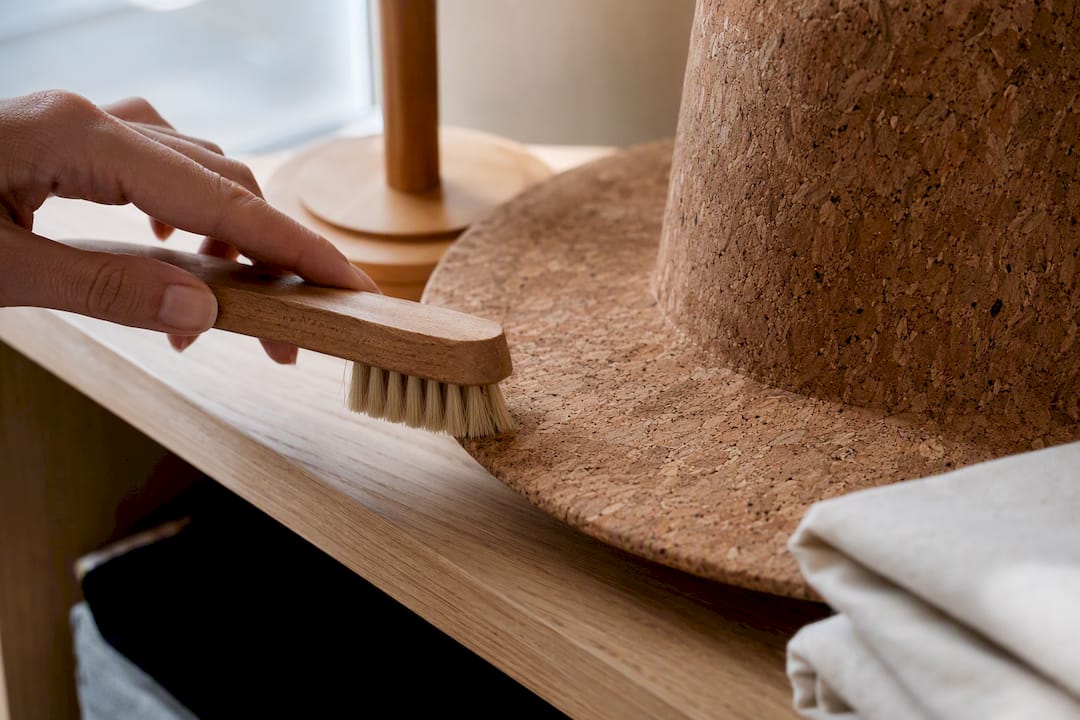
Wipe cork down with a slightly damp cloth rather than soaking it, and let it air dry away from direct heat; a radiator or a car dashboard will dry cork out and make it brittle over time. A soft brush lifts dust from textured cork surfaces without scratching the finish. Store the hat somewhere it can hold its shape: on a hat stand, inside its box, or crown-up on a shelf, never squashed flat under other items in a wardrobe.
If you’re travelling, pack a structured fedora or wide-brim by filling the crown with soft clothing and packing the brim flat against the sides of a hard suitcase. A hat clip works well for carry-on if you want to keep the hat with you rather than checking it. Bucket hats and baseball caps are far more forgiving here since they’re designed to be squashed and reshaped.
Avoid machine washing cork hats entirely; the backing material and any adhesive used for panels or patches won’t survive an agitated wash cycle, even on a gentle setting.
How do you tell if cork is genuine?
Genuine cork has a slightly grainy, cellular texture you can feel under your fingers, unlike the smoother, more uniform surface of a printed faux finish. Hold the hat up to a light source if you can; real cork often shows subtle variation in tone and pattern across the surface, because it’s cut from natural bark rather than stamped from a mould.
Ask (or check the listing) whether the material is solid cork, cork leatherette, or a cork veneer bonded to a fabric backing. All three are legitimate and each suits different hat shapes, but a retailer that’s upfront about which one you’re getting is a good sign in itself. Vague phrasing like “cork-inspired” or “cork look” usually means no cork at all.
Price is a rough but useful signal too. A wide-brim cork sun hat priced far below the going rate for the style is worth a second look at the material description, since cork sourcing and finishing carry a real cost that shows up in retail pricing. Reviews and photos from other buyers, where available, often reveal texture and colour more honestly than a retailer’s own studio shots.
What is cork’s environmental footprint as a material?
Cork is harvested from the bark of the cork oak tree, and the tree isn’t cut down or damaged in the process; the bark regrows over roughly nine years, which is why cork is widely described as a renewable material rather than just a recycled one. That regrowth cycle is the main reason cork has become a go-to leather alternative in vegan fashion.
The trade-off is that cork production is concentrated in specific regions, mainly the western Mediterranean, so transport distance to the buyer does factor into the overall footprint. A hat shipped from a small European maker to a customer overseas still carries a shipping cost, both financial and environmental, even if the raw material itself is sustainably sourced.
Buyers who care about this end of the story should look for retailers who talk specifically about sourcing and production rather than leaning on the word “sustainable” alone. The Cork Store’s own writing on what natural cork actually is is a useful primer if you want the fuller picture before choosing where to buy.
How does cork compare with straw, felt and synthetic hats?
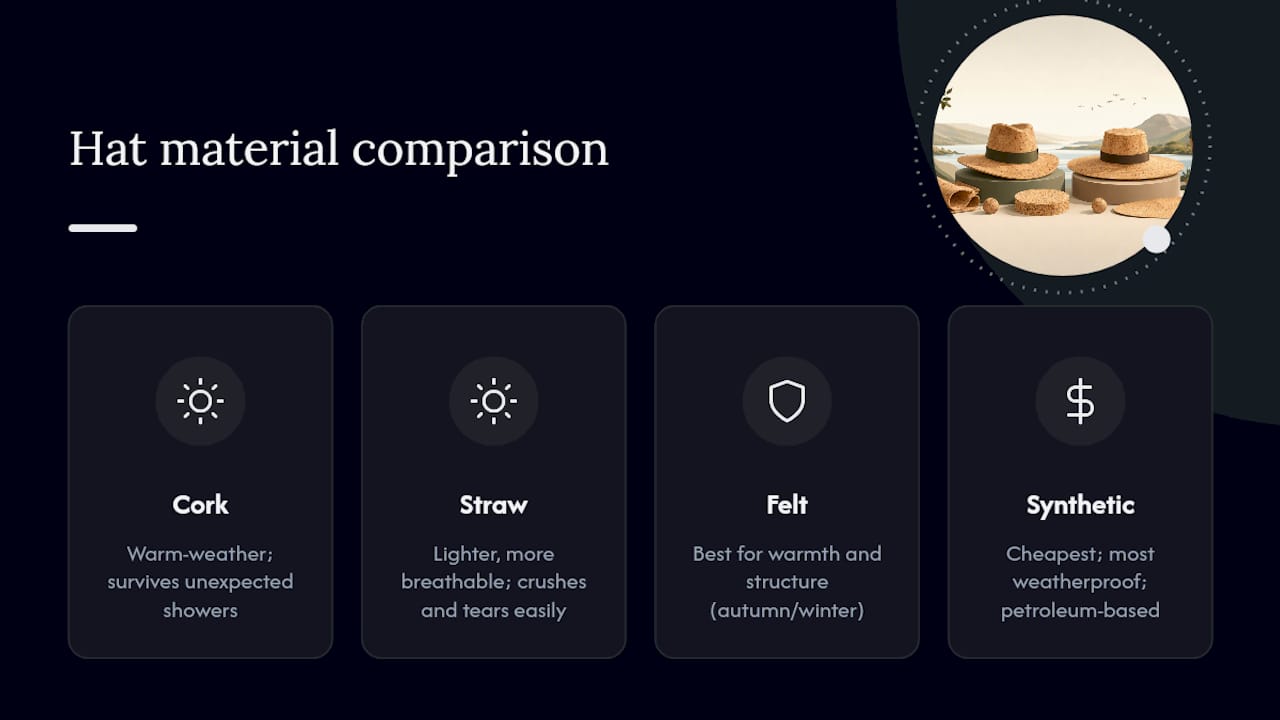
Straw remains lighter and slightly more breathable in genuinely hot climates, but it also crushes and tears far more easily than cork, and most straw isn’t waterproof at all. A cork hat caught in an unexpected shower survives it; a straw one often doesn’t.
Felt wins on warmth and structure for autumn and winter wear, which is exactly where cork struggles. Cork hats are fundamentally a warm-weather and travel-oriented category, not a cold-weather one, so comparing the two head-to-head misses the point of either material.
Synthetic hats, usually polyester or nylon blends, are the cheapest and most weatherproof option on paper, but they carry none of the vegan-leather styling that makes cork attractive, and they’re made from petroleum-based materials rather than a renewable crop. If your priority is looking like leather without using leather, cork is doing a specific job that synthetic fabric simply doesn’t attempt.
What goes wrong with cork hats, and how do you fix it?
The most common complaint is cracking at fold points, usually on brims that get rolled or crushed repeatedly in the same spot. Store the hat so the stress point changes, or use a stiffer-brimmed style if you know you’ll be packing it often.
Colour fading from prolonged sun exposure is a real issue, particularly with darker cork finishes; a light UV-protectant spray designed for leather can help, though it’s worth testing on an inconspicuous spot first. Sizing complaints are also common, mostly because cork doesn’t stretch to fit the way felt does, which is exactly why the sizing step in the buying checklist above matters more here than with most hat materials.
Finally, some cheaper cork-panel caps show glue lines or lifting at the seams after a few months. That’s a construction issue rather than a material one; it points back to checking stitching and panel attachment in the listing photos before you buy, not a reason to write off cork hats as a category.
An editor’s take on building a cork wardrobe
Most people buy one cork hat and stop, which misses the point. Cork works best as a small, coordinated set, hat, bag, maybe a wallet, because the material’s texture and tone read as a deliberate choice rather than a novelty when repeated. Match a fedora with a structured cork tote, not a beach bag.
Seasonally, lean casual (bucket, baseball cap) from spring through late summer, then bring out a fedora or panama for events where straw would look too beach-adjacent. Expect years of use from a well-stitched cork panel, not months, if you store it properly.
— Aaron
Looking for cork accessories beyond hats?
If you’ve settled on a cork hat from one of the specialists above but want the rest of your kit to match, that’s where Thecorkstore comes in. Cork hats aren’t currently part of the range; the focus here is on handbags, backpacks, wallets, purses and gift sets, all built from the same vegan cork material, so a cork hat from MB Cork or Iberian Import Co pairs naturally with a cork bag or wallet from this collection without mixing textures or ethics.
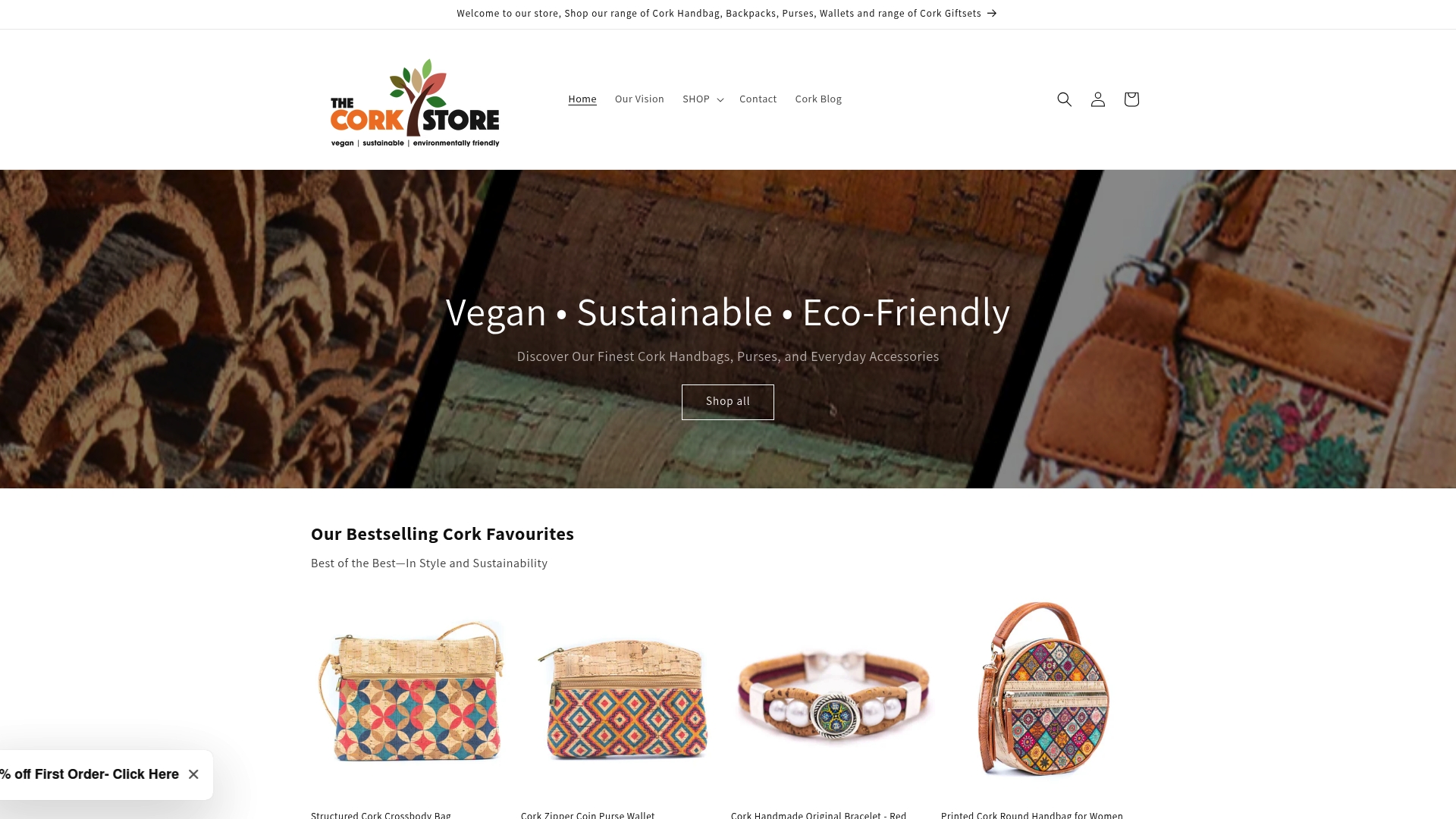
Coordinating a cork hat with a cork bag isn’t just an aesthetic choice; it means every accessory you’re carrying shares the same durability, the same water resistance, and the same cruelty-free sourcing story, rather than pairing vegan headwear with a leather bag by accident. Thecorkstore’s blog also covers styling pairings if you want ideas beyond the obvious.
Browse the current collection at Thecorkstore to see which bag or wallet would sit best alongside the hat you’ve chosen, and build a set rather than a single piece.
FAQ
Do cork hats actually work as sun and rain protection?
Yes. Cork is naturally water resistant, which helps with light rain and sweat, and a wide-brim cork hat with a structured edge gives genuine sun coverage, though it isn’t rated for prolonged heavy rain.
What is a cork hat called?
There’s no separate name for it; a cork hat is simply a fedora, panama, bucket hat, or baseball cap made from cork instead of straw, felt, or leather, and retailers list them under those same style names.
What is the most popular hat style in Ireland?
The flat cap has long been the most recognisable traditional hat style associated with Ireland, though it’s made far more often in wool or tweed than in cork.
Where can I buy or hire a cork hat?
Specialist makers like MB Cork and Iberian Import Co sell cork hats directly online, and general marketplaces list both ready-to-wear and custom cork millinery; dedicated hat hire for cork specifically isn’t common, so buying tends to be the more realistic route.
Can I pair a cork hat with other cork accessories?
Yes, and it’s a popular way to build a cohesive, sustainable look. A cork hat pairs naturally with a cork bag or wallet, such as those in Thecorkstore’s range, since the material and finish tend to complement each other.