
Nine Year Harvest Cycle: What Plant Cork Buyers Must Check
Plant cork, in fashion, is the cork fabric used for vegan accessories, a low-impact leather alternative prized for being lightweight, water-resistant and biodegradable. It comes from cork oak bark, pressed into a thin veneer and bonded to a backing to make handbags, wallets and backpacks. The rest of this guide covers how that material is made, what the sustainability evidence actually shows, how to check a seller’s sourcing claims, and how to keep a cork accessory looking good for years.
TL;DR:
- Most cork fabric is a composite of a thin cork veneer bonded to a textile backing, which impacts its durability, appearance, and environmental footprint.
- Cork’s physical properties, such as being lightweight, water-resistant, and abrasion-resistant, make it a practical choice for everyday accessories, with some environmental advantages over leather.
- Proper sourcing information, including regional origin and material breakdown, is essential, as products heavy on synthetic backing may not be as eco-friendly as those primarily made of cork.
- To maintain cork accessories, wipe with a damp cloth, avoid harsh chemicals, and store carefully, which helps prolong their appearance and structural integrity.
- The sustainable harvesting cycle of cork oak trees, roughly every nine years without felling, supports forest health and makes cork a low-impact, renewable material.
Table of Contents
- What plant cork is and how cork fabric is made
- Material benefits and performance that matter for bags, wallets and backpacks
- Sourcing, sustainability indicators and what to look for on labels
- How to choose a cork accessory: a practical buying checklist
- Care and maintenance: keep plant cork accessories looking their best
- Author perspective and E-E-A-T: The Cork Store’s approach to plant cork
- Shop plant cork: curated vegan cork accessories from The Cork Store
- Sources
- FAQ
What plant cork is and how cork fabric is made
Cork fabric, sometimes called cork leather, starts as a thin sheet peeled or sliced from cork oak bark. On its own, that sheet is too fragile to stitch into a bag, so manufacturers laminate it onto a backing material, usually polyester, cotton or a polyurethane-coated textile, which gives the finished fabric the flexibility and tear resistance that accessories need. Research on cork fabric construction confirms this layered approach: a thin cork veneer is bonded to a fabric backing, giving the composite leather-like durability while remaining dependent on that underlying textile layer.
Thickness varies by intended use. A wallet or small purse might use a finer cork veneer for a supple hand feel, while a structured tote or backpack typically calls for a slightly thicker layer to hold its shape under load.
Surface treatment also matters for how the finished product looks and behaves:
- A natural matt finish keeps cork’s grain visible and tends to show scuffs less.
- A lacquered or wax coating adds sheen and can make wiping down stains easier.
- Printed or dyed cork sheets add colour but may reduce the surface’s natural breathability.
None of this means a cork bag is “less” cork. It means the fabric is a composite, and understanding that composite is the first step to reading a product page properly rather than taking a marketing claim at face value.
Material benefits and performance that matter for bags, wallets and backpacks
Cork’s appeal in accessories comes down to a specific set of physical properties, backed by a growing body of materials research. Cork is naturally light, flexible enough to bend without cracking, resistant to abrasion, and inherently water resistant thanks to the waxy substance in its cell walls. Industry material overviews describe cork leather as waterproof and stain resistant as well as easy to sew, which is why it suits everyday bags rather than just decorative trim.
A comparative life cycle assessment of leather and leather-like materials found that bovine leather carries a higher environmental footprint, including carbon emissions, water use and toxicity potential, than many plant-based alternatives. That gives cork a genuine, evidenced edge over animal leather on several impact measures, not just a marketing one.
Key performance points shoppers should know:
- Cork is naturally lightweight, which keeps bags comfortable over a full day of wear.
- It resists water and stains better than untreated leather, thanks to its cellular structure.
- Recent textile research on cork blends found good strength, insulation and laundering behaviour when the composite is engineered correctly.
The caveat sits in the word “composite”. Manufacturing studies note that binders and resins used in agglomeration are often the main hotspot for cork’s environmental impact, so a product heavy on synthetic backing and adhesive will not carry the same low-impact profile as one that is mostly cork.
Sourcing, sustainability indicators and what to look for on labels
Most of the world’s cork comes from cork oak forests in the western Mediterranean, with Portugal’s Alentejo region among the most significant growing areas. Cork bark is stripped by hand roughly every nine years without felling the tree, and that harvest cycle is central to why cork earns its sustainability reputation. Research on cork’s design and lifecycle notes that this regenerative nine-year cycle allows the tree to keep growing and the bark to regenerate, supporting long-term forest health rather than depleting it.

Well-managed cork oak landscapes do more than supply bark. Sector modelling in a cork carbon footprint case study found that carbon retained by cork forests can exceed the emissions from manufacturing cork products, making the forests a net carbon sink when managed responsibly. For readers who want the harvesting process explained in more depth, The Cork Store’s guide to sustainable harvesting walks through how bark is stripped and regrown.
When comparing sellers, run through this checklist:
- Check whether the listing names the cork’s country or region of origin, rather than just saying “sustainably sourced”.
- Look for a stated material breakdown (percentage cork versus backing) instead of a blanket “100% cork” claim.
- Search for any published life cycle data or chain-of-custody statement linked to the supplier.
Pro Tip: If a product page cannot tell you what the backing material is made from, treat any “eco-friendly” claim on that page with caution.
How to choose a cork accessory: a practical buying checklist
Choosing between cork bags on different sites gets easier once you know what to check on the product page itself rather than trusting the headline description.
- Look for the full material breakdown, including the backing fabric and any coating, not just the word “cork”.
- Check stitching lines and hardware (zips, clasps, straps) in close-up photos: uneven stitching or flimsy fittings often fail before the cork does.
- Match the bag’s structure to how you will use it: a soft tote suits daily errands, while a structured travel bag or backpack needs reinforced seams and a sturdier base.
- Read the warranty and returns policy, since a seller confident in their construction usually offers a reasonable return window.
On cost, cork accessories tend to sit in a similar bracket to mid-range synthetic or entry-level leather goods, and the real value comes from longevity rather than the upfront price. A well-made cork bag that resists water, stains and everyday scuffing for several years, with only basic cleaning, works out cheaper over time than a lower-quality synthetic that needs replacing annually. For wallets specifically, The Cork Store’s guide to cork wallets covers sizing and styling details worth checking before you buy.
Care and maintenance: keep plant cork accessories looking their best
Cork accessories are low-maintenance compared with most leathers, but a few habits keep them looking new for years.
- Wipe the surface with a soft, slightly damp cloth after regular use, and avoid bleach or harsh solvents, which can strip the natural finish.
- For stains, use a mild soap solution and blot rather than rub, then let the bag air dry away from direct heat or sunlight.
- Store bags upright or stuffed lightly with tissue to hold their shape, away from damp or very warm spaces.
- If stitching loosens or a strap frays, get it repaired promptly rather than continuing to use it under load.
Pro Tip: A soft-bristled brush lifts dust from textured cork grain without scratching the surface, which a cloth alone can miss.
For a fuller walkthrough, The Cork Store’s maintenance guide and its natural cleaning steps cover specific stain scenarios and seasonal storage in more detail than fits here.
Author perspective and E-E-A-T: The Cork Store’s approach to plant cork
I write for The Cork Store because vegan cork deserves more scrutiny than the average “sustainable” label gets, and that means being specific about backings, binders and origin rather than repeating vague claims. Product pages may include sourcing and material breakdowns alongside care instructions, so shoppers can check a bag’s construction before buying rather than after. Readers who want more on sourcing can follow our piece on how cork is harvested, and those after a fuller production picture can read our cork production process guide.
— Aaron
Shop plant cork: curated vegan cork accessories from The Cork Store
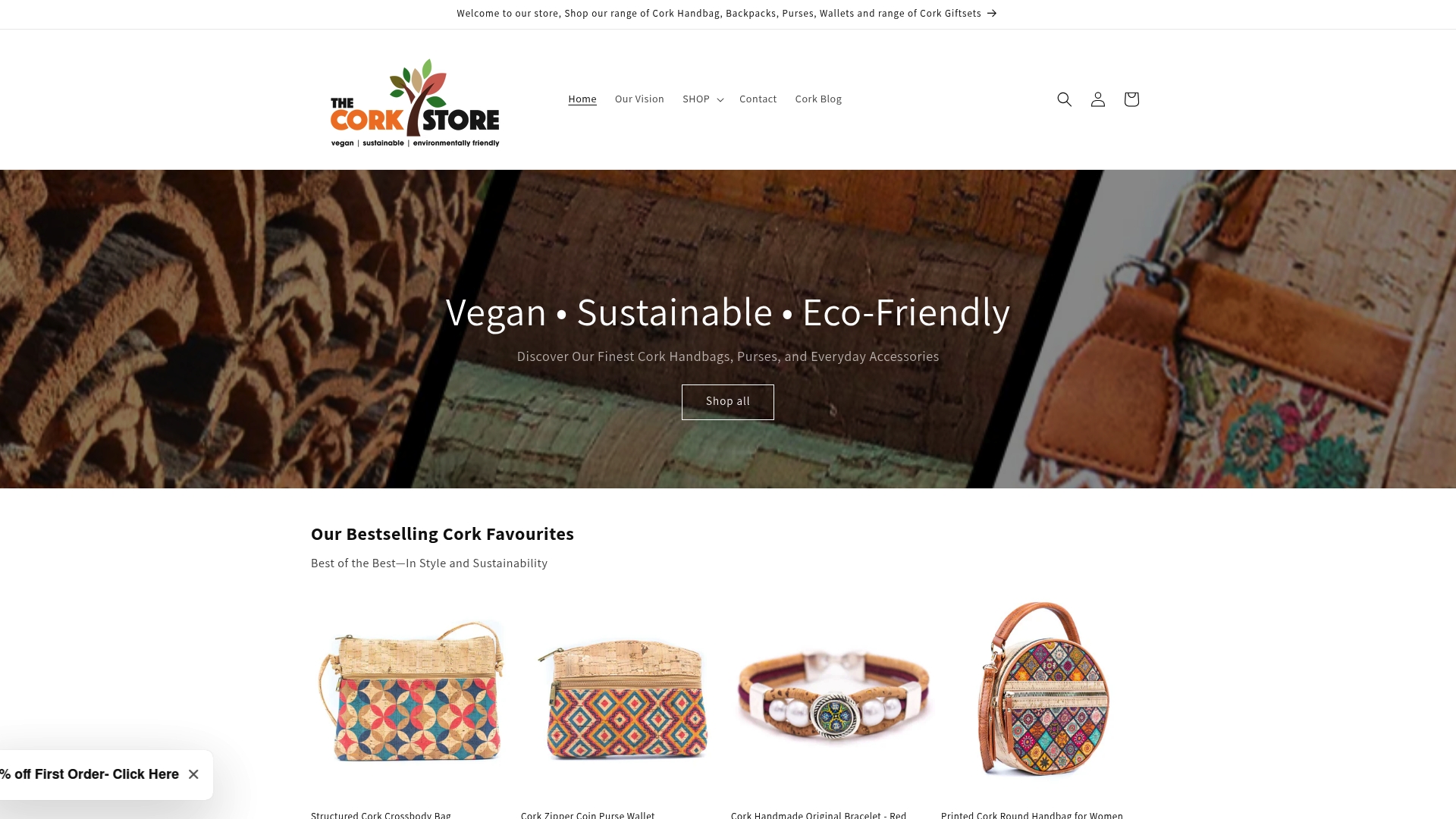
The Cork Store curates cork handbags, wallets, crossbody bags and backpacks with sourcing and material details set out on each product page, so you are not left guessing what the backing or finish is made from.
Browse the full collection or start with two specific pieces:
- The Marine Cork Wallet shows the material’s finish and provenance details clearly on its product page.
- The Cork Zipper Coin Purse Wallet is a smaller accessory worth a look if you want to try cork before committing to a full-size bag.
Visit Thecorkstore to see the full curated range and check sourcing details for yourself.
Sources
- Life cycle assessment of leather and leather-like materials (KTH thesis)
- Cork carbon footprint: From forest to products (Connecting Nature case study)
- Eco‑efficient value creation of cork products: an LCA‑based method for design intervention (ScienceDirect)
- 90:10 cotton–cork blended fabric physical and performance properties (MDPI, 2024)
- Cork: a versatile material employed in many sectors (Frontiers in Materials, 2015)
FAQ
Is cork fabric actually vegan and cruelty-free?
Yes. Cork is bark harvested from cork oak trees without harming or felling them, making it a plant-based material with no animal input at any stage.
How long do cork handbags typically last?
With basic care, a well-constructed cork bag can last several years, since cork resists water, stains and everyday abrasion better than many untreated materials. Longevity depends heavily on stitching and hardware quality, so check construction details on the product page before buying.
Is cork more sustainable than leather?
Comparative research found that bovine leather carries a higher environmental footprint across several categories, including carbon emissions and water use, than many plant-based alternatives, including cork. The advantage narrows if a cork product uses a large proportion of synthetic backing or resin.
Can I clean a cork bag at home?
Yes, most cork accessories only need a soft, damp cloth and mild soap for stains, avoiding bleach or harsh solvents that can damage the surface. Full step-by-step cleaning advice is covered in The Cork Store’s cleaning guide.
Where does cork used in fashion accessories come from?
Most cork comes from cork oak forests in the western Mediterranean, with Portugal’s Alentejo region a significant source, where bark is hand-stripped roughly every nine years without cutting down the tree. This regenerative cycle is a key reason cork retains its sustainability credentials.