

Buy Authentic Portugal Bags: Verified Cork Origins from The Cork Store
The quickest route to a genuine Portugal bag is straight to artisan makers and specialist retailers working in Portuguese cork and hand-finished leather, not general souvenir stalls or unverified marketplace listings. Sustainable cork remains the country’s signature material, with leather close behind as a traditional craft staple. From here, check for stated provenance or shop a verified collection, such as The Cork Store before you commit to a purchase.
TL;DR:
- Authentic Portuguese cork bags should display a clear “made in Portugal” label and specific provenance details, not vague European craftsmanship claims.
- Genuine cork has a matte, grainy surface with a mild woody scent, easily distinguishable from synthetic or coated imitations.
- Prices significantly lower than typical handmade ranges or repeated use of identical photos across listings are strong signs of mass-produced or fake products.
- Buying directly from artisan workshops, verified retailers, or checking provenance on well-vetted platforms ensures better authenticity and supports local craftsmanship.
- Cork’s natural water resistance and low-impact profile make it suitable for daily use, travel, and seasonal accessories, especially when sourced properly.
Table of Contents
- What to check before you buy a Portugal bag
- Materials and styles: what Portugal bags are made from
- Where can you buy an authentic Portugal bag?
- An expert note on spotting genuine Portuguese cork
- Why Portugal bags carry cultural weight
- How Portugal bags are made
- Why handmade Portugal bags are worth the extra thought
- Why buy your Portugal bag from The Cork Store
- Where to look next
- Sources
- FAQ
What to check before you buy a Portugal bag
Authenticity leaves clues, and most of them are visible before you ever pay for shipping. A genuine Portugal bag will usually carry an explicit “made in Portugal” statement, plus some detail about the artisan or workshop behind it. Vague listings that mention “European craftsmanship” without naming a country or maker are worth treating with suspicion.
Photos tell you almost as much as the product description does. Zoom into stitching lines, check the lining seams, and look closely at hardware fixings. Cork surfaces should show a natural, slightly irregular grain rather than a printed or plastic-looking pattern.
Price is another honest signal. Handmade leather and cork bags from Portuguese workshops reflect the labour involved, so a price far below the typical range for the material and construction usually means mass production somewhere else, rebranded with a Portuguese name for appeal.
Before checkout, run through this shortlist:
- Confirm an explicit country-of-origin statement, not just a vague “European made” claim.
- Study close-up images of stitching, lining, hardware and material texture.
- Compare the price against typical handmade ranges for that material.
- Check the seller offers clear returns, shipping timelines and provenance details.
- Contact the seller directly if lead times or artisan information are missing.
Pro Tip: If a seller can’t tell you which workshop or region made the bag, that’s usually a sign they don’t know either, and neither will you once it arrives.
Materials and styles: what Portugal bags are made from
Cork is the material Portugal is best known for internationally, and for good reason. It’s harvested from cork oak bark without felling the tree, giving it a genuinely low-impact profile compared with tanned leather. Finished cork has a soft, slightly textured surface with visible natural patterning, and it resists water far better than most people expect from something that looks so light. Regional workshop expertise, built up over generations of leather and cork processing in northern Portugal, is often what separates a well-finished bag from a merely adequate one, according to artisan makers such as ISAGA.
Leather remains the traditional counterpart, prized for a hand-finish that develops character with age rather than looking worn out. A well-made leather bag from a Portuguese workshop can last a decade or more with basic care, though it needs conditioning and protection from prolonged damp that cork simply shrugs off.
Raffia and woven textile styles round out the picture, particularly for spring and summer. These tend to sit in a mid-range price band and work best as seasonal pieces rather than everyday carry-alls. Some collections also lean into national identity directly, using motifs tied to Portuguese heritage in the design itself.
- Everyday use: cork holds up to daily wear and light rain without extra care.
- Travel: cork’s light weight and water resistance make it a practical choice.
- Seasonal wardrobes: raffia and woven textiles suit spring and summer outfits.
- Evening or occasion wear: fine leather with hand-finished detailing works best.
Around 50 to 60% of the world’s cork comes from Portugal, which is why so much of the country’s bag-making tradition centres on the material rather than treating it as a novelty add-on, as The Cork Store explains.
Where can you buy an authentic Portugal bag?
Four channels cover most of what’s realistically available to a shopper outside Portugal: artisan boutiques and workshop websites, curated retailers specialising in Portuguese materials, museum or cultural gift shops, and established online marketplaces.
Artisan boutiques and small workshop sites give you the most direct line to the maker, often with a named designer or family business behind the listing. Curated retailers, including specialist cork and leather goods stores, do the vetting for you and typically state provenance clearly on the product page. Marketplaces such as Etsy list thousands of Portugal-related tote and bag designs, but quality and origin claims vary enormously from seller to seller, so treat any individual listing with the same scrutiny you’d apply to a random stall.
If you want to verify a maker in person rather than trust a screenshot, Lisbon’s artisan scene offers several workshops where you can meet the person making your bag. Trade events such as FIA Lisboa also bring bag makers and suppliers together annually, giving buyers and retailers a chance to confirm provenance face to face.
A practical verification sequence, in order:
- Look for a clear provenance statement naming Portugal and, ideally, a specific region or workshop.
- Study close-up photography rather than relying on styled lifestyle shots alone.
- Read the artisan or brand biography, if one is provided.
- Check whether lead times and pricing feel honest for a handmade item.
- Confirm the returns policy before paying, especially for higher-value pieces.
Red flags to walk away from include no stated origin at all, stock photography reused across multiple listings, and pricing that undercuts every comparable handmade item you’ve seen. If you’re buying from outside the EU, factor in shipping time, possible customs duties, and whether the seller accepts international returns. These vary by destination country, so check the seller’s own shipping policy rather than assuming standard terms.
- No origin statement anywhere on the listing.
- Identical photos used across several different “artisan” shops.
- A price noticeably below every other handmade comparison you’ve found.
An expert note on spotting genuine Portuguese cork
Aaron at The Cork Store has spent years sourcing and describing Portuguese cork products, and one thing comes up repeatedly: most fakes fail on texture before anything else. Genuine cork has a slightly matte, faintly grainy surface, never a glossy plastic sheen. It also has a distinctive, mild woody smell, unlike the synthetic scent of coated or printed imitations. Turn the material over, and real cork backing usually shows a visible, natural fibre pattern rather than a uniform manufactured finish.
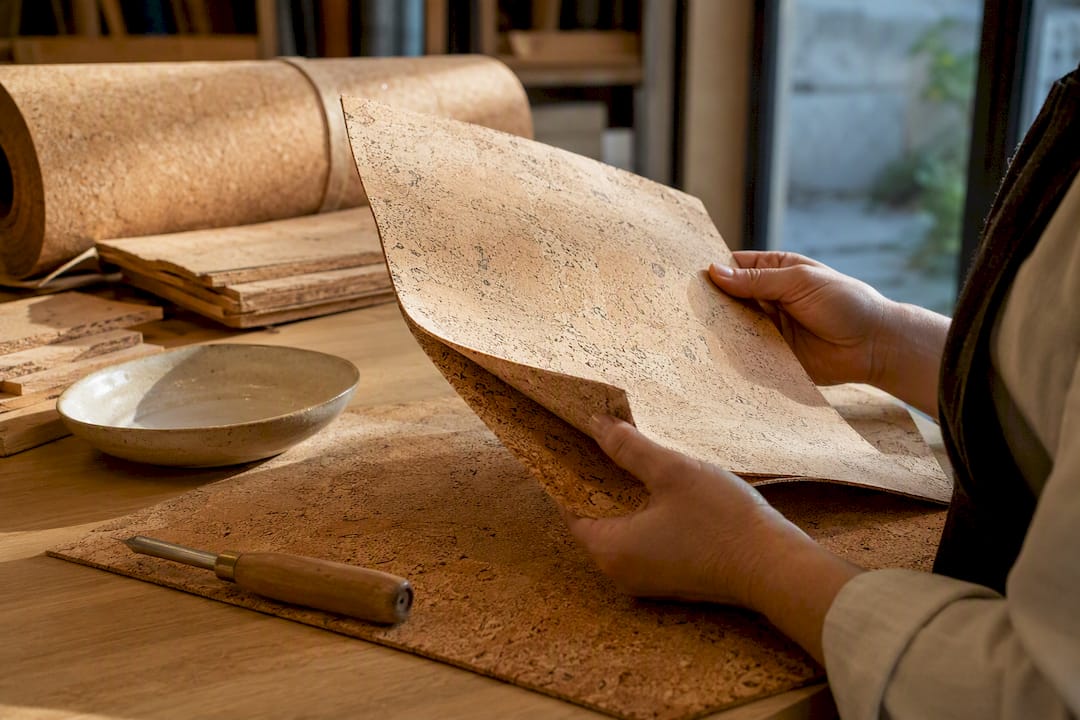
The Cork Store’s own guidance on cork fakes covers this in more depth, including how labelled origin claims should line up with the material’s appearance.
Caring for a cork bag is simple. Wipe it with a slightly damp cloth rather than soaking it, keep it away from direct heat sources that can dry and crack the surface, and store it upright rather than crushed flat.
Pro Tip: Store cork bags away from radiators and car dashboards in summer. Heat is the one thing that ages cork faster than regular use.
Buying verified cork does more than get you a nicer bag; it supports the small-scale Portuguese production that keeps the craft economically viable.
Why Portugal bags carry cultural weight
Cork harvesting in Portugal isn’t a recent fashion trend. Cork oak forests, known as montados, have shaped rural livelihoods in regions such as Alentejo for centuries, with harvesting cycles passed down through families rather than written into corporate manuals. Turning that material into bags is a newer development, but it draws directly on skills that Portuguese leatherworkers and weavers have refined over generations in the country’s north.
Traditional motifs, from azulejo tile patterns to maritime references tied to Portugal’s seafaring history, show up regularly in bag design, linking a modern accessory back to something older and more specific than a generic “Mediterranean” aesthetic. This is part of why a Portugal bag can feel different from a bag simply labelled European. It’s tied to a place, a material, and often a family workshop, rather than a factory line with no fixed address.
That cultural specificity also explains the price gap between authentic pieces and mass-produced lookalikes. You’re not just paying for stitching. You’re paying for a supply chain rooted in one country’s forests and workshops, with a story you can actually trace if you ask the right questions.
How Portugal bags are made
Cork bag production starts long before any stitching happens. Bark is harvested from cork oak trees roughly every nine years, without cutting the tree down, then dried and processed into thin, flexible sheets that get bonded to a fabric backing for strength. That backing is what allows cork to behave almost like a textile rather than a rigid material, letting it be cut and sewn much like leather.
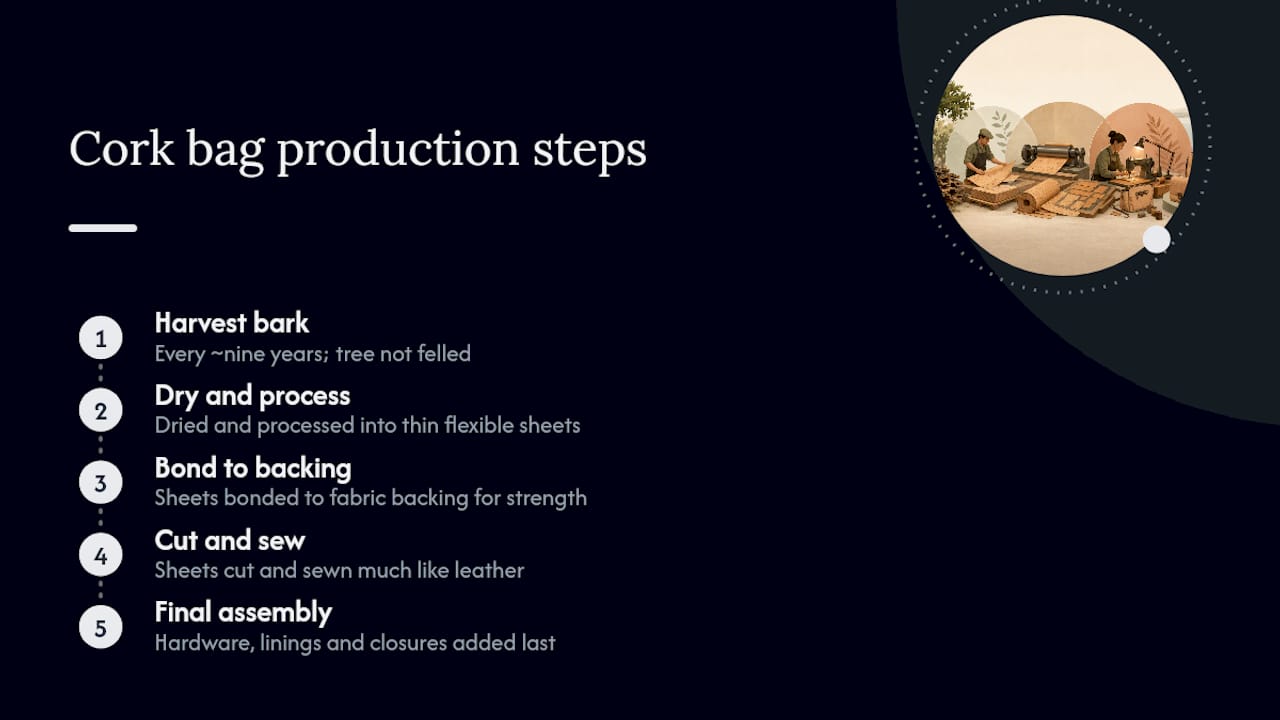
Leather bag production, by contrast, relies heavily on the tanning and finishing stage. Portuguese tanneries and workshops often use techniques passed between generations, with hand-cut panels and hand-stitched edges on higher-end pieces rather than machine-only assembly. A detailed breakdown of the cork bag manufacturing process covers how sheets are cut, reinforced and finished before final assembly.
Raffia and woven pieces follow a different logic again, built up strand by strand rather than cut from a sheet, which is part of why they suit lighter, more seasonal designs rather than structured everyday bags. Hardware, linings and closures are usually added last across all three material types, and this final stage is often where the gap between a well-made bag and a rushed one becomes most obvious.
Why handmade Portugal bags are worth the extra thought
Fast-fashion souvenirs solve one problem and create another. They’re cheap and available everywhere, but they rarely last a season and they carry none of the regional knowledge that makes Portuguese craft distinctive. Choosing a handmade cork or leather bag instead supports techniques that took generations to refine, from cork harvesting cycles to hand-stitched leather finishing passed through workshop families.
Cork also offers something increasingly hard to find: a genuinely low-impact, cruelty-free alternative to leather that doesn’t feel like a compromise on durability or appearance. Buying considered pieces, and caring for them properly, cuts down on the churn of cheap accessories that end up discarded within a year. It’s a slower way to shop, but it’s the one that actually keeps Portuguese craft traditions economically viable for the next generation of makers.
— Aaron
Why buy your Portugal bag from The Cork Store
The Cork Store exists because too many “Portugal bag” listings online skip the one detail that matters most: where the material actually came from. Every product page states its cork origin plainly, so you’re not left guessing whether you’re buying genuine Portuguese cork or an imitation with a nice photo.
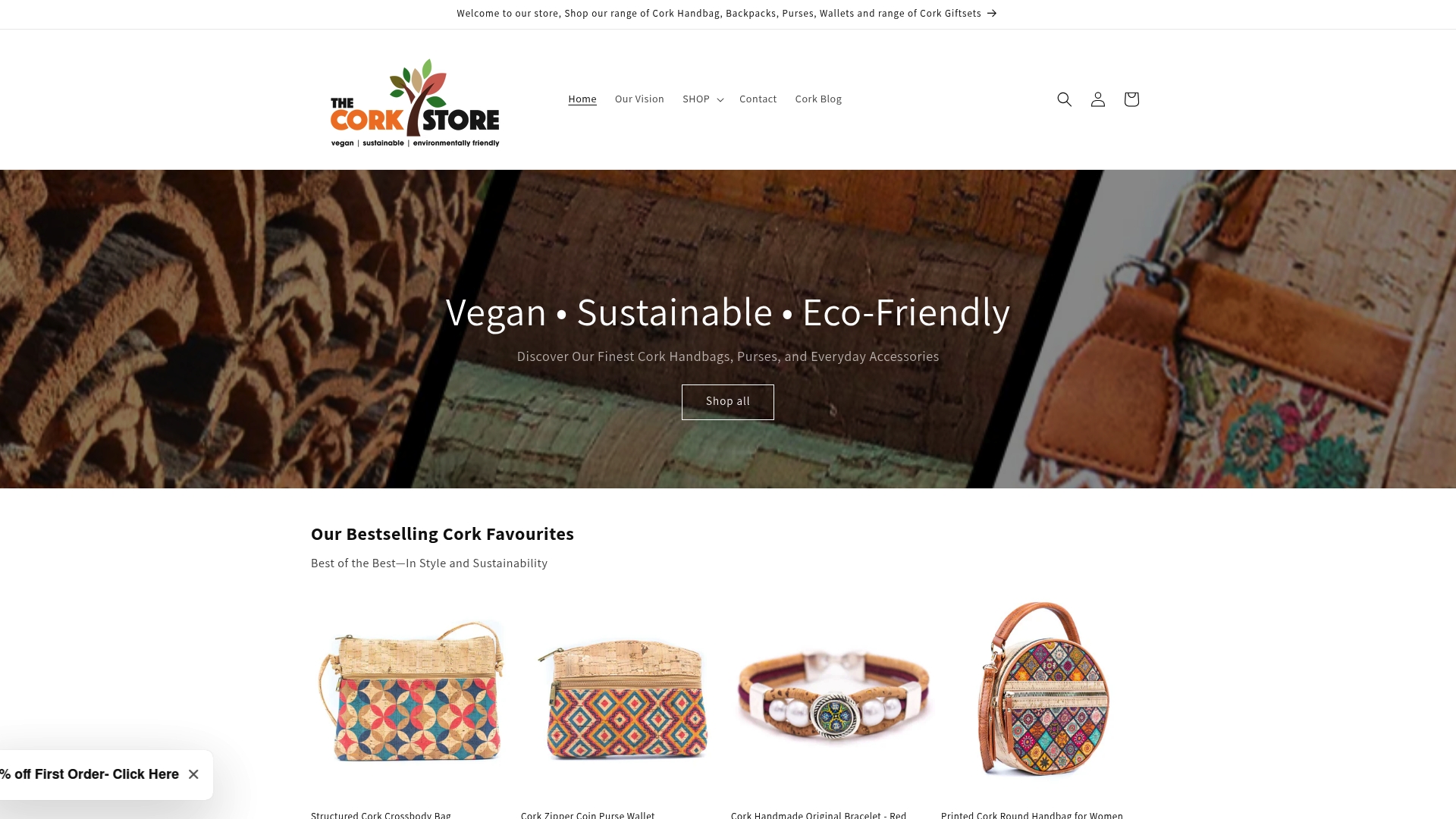
The collection includes a variety of handbags, backpacks, wallets, purses and gift sets designed with cork’s natural water resistance and cruelty-free profile in mind. If you’ve read this far and want to see what genuine, verified Portuguese cork actually looks like up close, browse the full range at The Cork Store and check the product descriptions for material origin and care details before you buy.
Where to look next
For deeper research beyond this guide, a few sources are worth bookmarking. Etsy’s Portugal tote bag listings show the breadth of the marketplace, though provenance varies by seller. Lisbon’s artisan handbag scene is a good starting point if you’d rather buy in person. For trade context, FIA Lisboa’s exhibitor listings give a sense of who’s actually manufacturing at scale.
- Etsy: Portugal tote bag listings
- Lisbon artisan handbag makers
- FIA Lisboa trade fair
- How to avoid cork fakes
Sources
FAQ
What are some popular bag brands in Portugal?
Portugal’s bag scene ranges from small artisan workshops in Lisbon and the north to specialist cork retailers such as The Cork Store, alongside independent leather and raffia makers who sell directly through their own sites rather than big-name labels.
Are designer bags cheap in Portugal?
International designer bags aren’t notably cheaper in Portugal itself; the real value lies in locally made cork, leather and woven bags, where you’re paying workshop prices rather than international retail markups.
What are the top bag brands to look for?
There’s no single fixed “top five” for Portuguese bags, since the market is dominated by independent workshops and specialist retailers rather than a handful of global names, so it’s worth judging listings on origin and craftsmanship rather than brand recognition alone.
Which bags are cheaper to buy directly in Portugal?
Locally made cork, leather and textile bags tend to cost less when bought directly from Portuguese workshops or specialist retailers than when resold abroad with import markups added on.
How do I know if a cork bag is genuine?
Check for a matte, slightly grainy texture, a mild woody smell, and a clearly stated Portuguese origin; glossy, plastic-feeling surfaces with no origin statement are the clearest signs of an imitation.