

Portuguese cork products for eco-conscious buyers
Choose Portuguese cork products when you want accessories that are genuinely durable, biodegradable at end of life, and made from bark that regrows on the tree it came from. That single fact separates cork from most “vegan leather” alternatives, which are usually plastic with a marketing spin. If you’re shopping now, focus your search on cork wallets, bags, coasters, placemats, bracelets and small homewares from Portuguese makers.
- Fashion: bags, wallets, belts, bracelets
- Home: coasters, placemats, trivets, bowls
- Gifting: curated sets that combine both
Fast fact: cork oak bark regenerates after harvesting without felling the tree, which is why Portuguese producers can keep supplying material from the same forests for generations. For a curated, origin-labelled selection, The Cork Store’s collection is a straightforward place to start.
Key Takeaways
Authentic Portuguese cork products combine verifiable origin, full cork fabric construction and genuine regenerative sourcing, which together separate them from thin cork veneer imitations.
| Point | Details |
|---|---|
| Check construction first | Confirm full cork fabric with cotton or polyester lining, not a thin veneer over plastic. |
| Verify origin labelling | Look for explicit “Made in Portugal” claims plus specific sourcing details, not vague “cork-inspired” wording. |
| Match product to use case | Pick reinforced daily bags for regular wear and lighter pieces for occasional accessories or gifts. |
| Care extends lifespan | Simple cleaning and occasional sealing keep cork items usable for years, reducing overall waste. |
| Shop curated retailers | The Cork Store lists origin, construction and warranty details on every product for straightforward, verified buying. |
Table of Contents
- Types of Portuguese cork products and how buyers use them
- Why is Portugal the centre of the global cork industry?
- How can you tell if cork is authentic Portuguese cork?
- What should you look for when buying cork accessories?
- How do you clean and care for cork products?
- Where can you buy genuine Portuguese cork products?
- What does the science say about why cork performs so well?
- Common counterfeit signs and how to avoid fakes
- How does Portuguese cork compare to cork from other regions?
- Publisher perspective: why we curate Portuguese cork products
- How The Cork Store makes buying authentic cork simple
- Frequently asked questions
- Sources
Types of Portuguese cork products and how buyers use them
Cork has moved well beyond wine stoppers and noticeboards. Portuguese workshops now turn the material into five broad categories, each suited to a different kind of buyer.
Fashion accessories cover bags, wallets and belts, the most common entry point for shoppers switching away from animal leather. Wearable items like bracelets and cork jewellery suit anyone who wants a lightweight, hypoallergenic alternative to metal or plastic costume pieces. Footwear components, including insoles and uppers, use cork for cushioning rather than looks. Home items such as coasters, placemats, trivets and bowls appeal to people who entertain often and want heat-resistant, water-resistant surfaces that don’t stain. Finally, gift sets bundle two or three of these into a single purchase, which suits anyone buying for someone else and unsure which single item to pick.
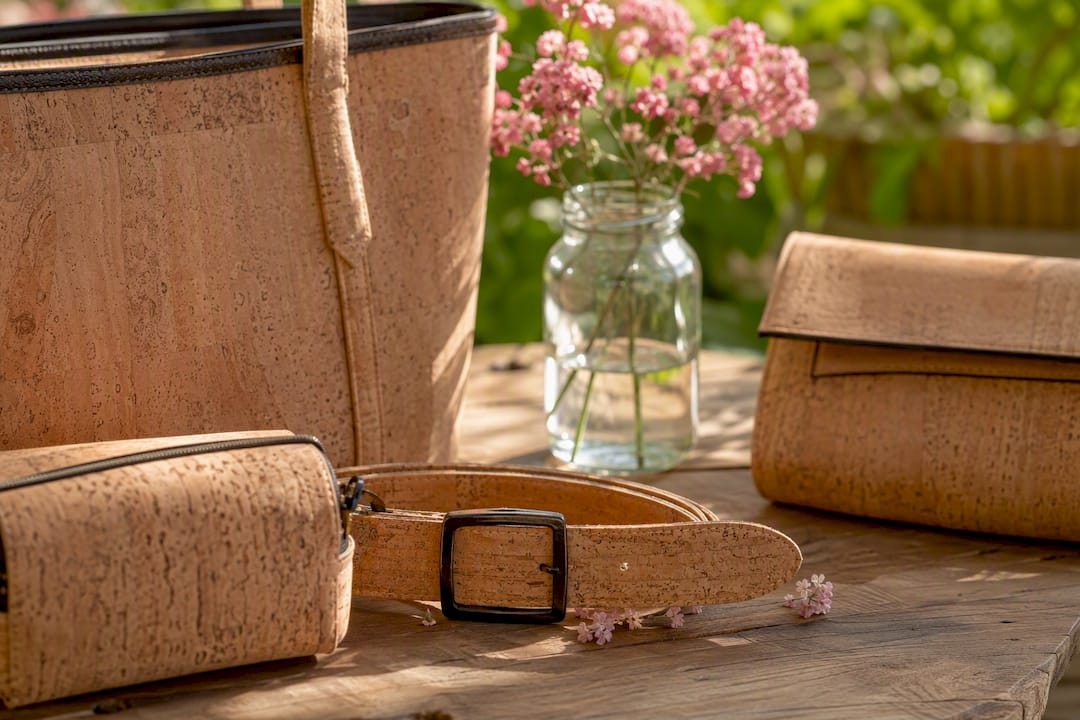
A traveller might want a compact cork wallet that shrugs off rain. A vegan shopper hunting for a daily bag will care more about stitching quality and lining than about texture variety. A host who likes dinner parties will get more use from a set of cork placemats than from any accessory.
What separates authentic Portuguese manufacture from mass-produced imitations is visible in the details: hand-finished edges, reinforced stitching at stress points, and a natural grain that varies slightly piece to piece rather than repeating in an obvious printed pattern. Suppliers working directly with Portuguese cork fabric offer hundreds of textures and finishes, so “cork” no longer means one rustic look. If you want a fuller sense of the design range now available, the resurgence of cork as a fashion material is worth a look.
Why is Portugal the centre of the global cork industry?
Portugal produces more cork than any other country, and the reason is geographic rather than industrial. The Mediterranean climate along its southern and central coastline suits Quercus suber, the cork oak, better than almost anywhere else on earth. Spain, Algeria and Morocco all grow cork oak too, but Portugal’s forests, known as montados, are older, denser and more carefully managed.
Harvesting itself doesn’t kill the tree. Workers strip the outer bark by hand roughly once every nine years, and the tree simply regrows it, which is why a single cork oak can be harvested repeatedly over a lifespan of well over a century. That regrowth cycle also makes cork forests a genuine carbon sink: a stripped tree absorbs more carbon dioxide as it regenerates bark, so the harvest itself supports sequestration rather than working against it.
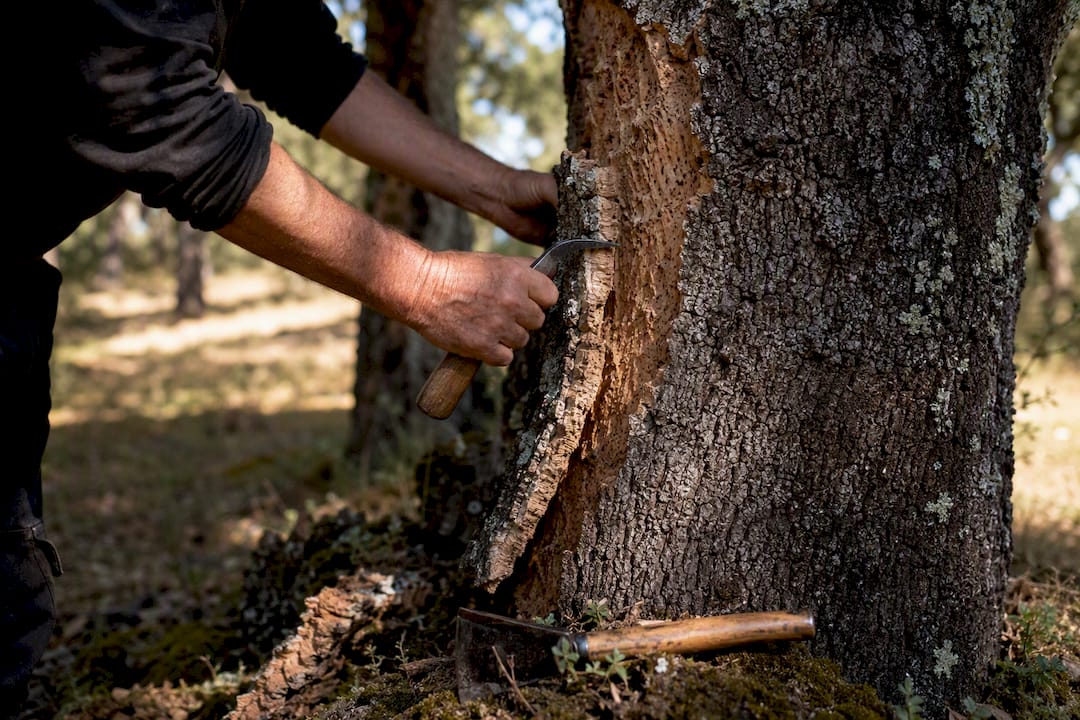
For buyers, this history translates into something you can actually verify. A product genuinely made in Portugal draws on centuries of processing knowledge, from bark selection to the boiling and pressing that turns raw cork into flexible cork fabric. That’s a large part of why “Made in Portugal” on a label carries real weight rather than being a vague gesture at quality, a point covered further in how Portuguese cork drives sustainable fashion.
How can you tell if cork is authentic Portuguese cork?
Fake or low-grade cork products are common enough online that it’s worth running a quick mental checklist before you buy.
- Check for a clear “Made in Portugal” origin label, ideally alongside a note on the cork fabric supplier.
- Look closely at the surface texture: genuine cork shows irregular grain and slight colour variation, not a repeating printed pattern.
- Press the material gently. Real cork fabric has give and springs back; thin veneer glued to plastic feels stiff or cracks under pressure.
- Inspect stitching and hardware. Reinforced seams and solid metal fittings usually signal proper construction rather than a rushed import.
- Be wary of prices that seem too low for a “genuine leather alternative” claim, since thin cork film bonded to plastic or cardboard is far cheaper to produce than full cork fabric.
There’s a meaningful difference between full cork fabric, where a fine layer of cork is laminated onto a flexible cotton or polyester backing to make it usable for bags and wallets, and cork veneer, where cork is bonded onto a rigid substrate purely for decoration. The first flexes and wears like fabric. The second cracks.
Pro Tip: Gently fold a corner of the material back on itself. Real cork fabric bends without creasing sharply or splitting; a thin decorative laminate usually shows a stress line almost immediately.
For a longer walkthrough with photos of what to look for, The Cork Store’s identification guide covers the same checks in more depth.
What should you look for when buying cork accessories?
Match the product’s construction to what you’ll actually use it for. A bag you’ll carry daily needs reinforced stitching and solid hardware far more than a coaster set does. A wallet benefits from double-layered cork at the fold points, where thinner material wears through fastest.
Price tends to track construction quality fairly closely:
- Entry-level pieces (small accessories, single coasters) often sit in a lower bracket where cork is used decoratively over a simpler backing.
- Mid-range wallets and bags typically use full cork fabric with cotton or polyester lining and basic metal hardware.
- Premium pieces add reinforced stitching, higher-grade hardware, and sometimes hand-finished edges or limited-run patterns.
Treat these as rough bands rather than fixed figures. Materials, craftsmanship, and where a brand sources its cork all move the price around.
Before buying, ask the seller a short set of questions: where exactly is the cork sourced and processed, what’s the backing material, is there a warranty, and what happens if stitching fails after a few months of use. A seller who can answer all four without hedging is usually working with a properly vetted supply chain. Industry voices in the cork sector consistently recommend prioritising products where cork’s elasticity is a functional feature, not just a decorative surface, which is exactly what these questions are designed to surface. For a wallet-specific breakdown of construction choices, see what makes a cork wallet worth buying.
How do you clean and care for cork products?
Cork fabric is more forgiving than most people expect, but it still rewards a bit of routine care.
- Wipe the surface with a soft, slightly damp cloth. Avoid soaking it.
- Use a mild soap for stubborn marks, then wipe away residue immediately.
- Air dry away from direct heat or sunlight, which can dry out and crack the material over time.
- Apply a cork-safe sealant occasionally on items exposed to frequent moisture, such as coasters.
- Store bags stuffed lightly with paper to hold their shape when not in use.
- A well-made daily bag with reinforced stitching can reasonably last for a number of years of regular use.
- Occasional-use accessories, like an evening clutch, often outlast daily items by a wide margin simply through lighter wear.
- Small repairs, a stitched patch or resealed edge, are usually possible and worth doing rather than replacing the item outright.
Looking after cork properly isn’t just about appearance. Every extra year you keep a bag or wallet in use is a year it isn’t replaced, which is where the sustainability argument for cork actually plays out in practice.
Where can you buy genuine Portuguese cork products?
Three channels reliably deliver authentic goods: buying direct from Portuguese producers, shopping through artisan marketplaces that name their suppliers, and using a curated specialist retailer that has already done the vetting for you. The Cork Store falls into that third category, listing origin details and construction specifics on every product page rather than leaving buyers to guess.
Whichever channel you choose, check for clear origin labelling, close-up product photography showing texture and stitching, an explicit materials description, and stated shipping and warranty terms. Listings missing all four are worth skipping.
If you’re travelling in Portugal itself, artisan fairs and museum shops in cork-producing regions like the Alentejo are worth seeking out, and it’s fair to ask vendors directly where their raw cork comes from. Back home, where to buy sustainable cork accessories in the UK covers the online alternatives in more detail.
What does the science say about why cork performs so well?
Cork’s cellular structure, thousands of tiny air-filled cells per cubic centimetre, is what gives it insulation, elasticity and shock absorption all at once. That same structure explains why cork works in industrial components, footwear and high-end accessories without changing its basic material.
Cork’s long-standing popularity comes down to a rare combination: it’s buoyant, compressible and impermeable, which is why it was used for bottle stoppers for centuries before designers started repurposing it into bags and homeware.
Amorim, one of the industry’s most established cork producers, documents this versatility across sectors from construction to fashion. For buyers, the practical upshot is straightforward: cork is naturally hypoallergenic, sheds water rather than absorbing it, and weighs a fraction of what comparable leather goods do.
Common counterfeit signs and how to avoid fakes
Counterfeit or misrepresented cork products tend to share a handful of tells. The most obvious is backing material: flip the item over or check the interior lining. Genuine cork fabric backing is usually cotton or polyester with visible weave, while fakes often use a stiff plastic sheet that feels nothing like fabric.
Smell is another underused test. Real cork has a faint, natural, slightly woody scent. A strong chemical or plastic smell straight out of the packaging usually means synthetic material dominates the product, whatever the listing claims.
Listings that use vague language like “cork-look” or “cork-inspired” rather than stating “genuine cork” or “cork fabric” outright are worth reading twice. Legitimate Portuguese sellers are generally specific about sourcing because it’s their strongest selling point, not something to obscure.
Watch for suspiciously uniform patterns too. Since real cork grain varies naturally from sheet to sheet, a product where every unit looks identical in a marketing photo is more likely printed vinyl than pressed cork fabric.
Finally, check reviews for repeated complaints about peeling, cracking within weeks, or a strong chemical smell that doesn’t fade. These recurring patterns across multiple buyers are a far stronger signal than any single review. Combined with the physical checks covered earlier, that gives you a reasonably reliable filter before you commit to a purchase.
How does Portuguese cork compare to cork from other regions?
Spain, Algeria, Morocco, Tunisia and Italy all produce cork commercially, and material quality between countries can be genuinely close, since it’s largely the same tree species grown in a similar Mediterranean climate. What differs more is processing infrastructure and craft tradition.
Portugal has built the deepest manufacturing ecosystem around cork of any producing country, spanning everything from raw bark processing to finished fashion goods and industrial components. That scale means Portuguese suppliers can offer far more texture and design variety than smaller regional producers, since manufacturers list hundreds of cork fabric options rather than a handful of standard finishes.
Spanish cork, largely from Extremadura and Andalusia, is genuinely high quality and often processed through the same supply chains as Portuguese cork, given how closely the two countries’ industries overlap. North African cork tends to be sold more as raw material or basic goods rather than finished, design-led accessories.
For a buyer, the practical difference usually comes down to finishing and construction rather than the raw cork itself. A Portuguese workshop with generations of experience turning cork into wearable fabric is more likely to get the lining, stitching and hardware right than a producer newer to accessory manufacturing. That’s less about national pride and more about where the accumulated craft skill happens to sit.
Publisher perspective: why we curate Portuguese cork products
The Cork Store exists because sourcing genuine cork accessories shouldn’t require a buyer to become a materials expert first. Every listing carries origin details, construction notes and clear warranty terms, because “Made in Portugal” only means something when it’s backed up by specifics, not just a label.
How The Cork Store makes buying authentic cork simple
Every product on The Cork Store goes through the same checks covered above before it’s listed: confirmed origin, verified construction, and photography that shows the actual texture and stitching rather than a stock image. A cork wallet on the site, for instance, lists its lining material and stitching detail alongside the price, and the coaster and gift sets are built from the same full cork fabric standard rather than a decorative veneer.
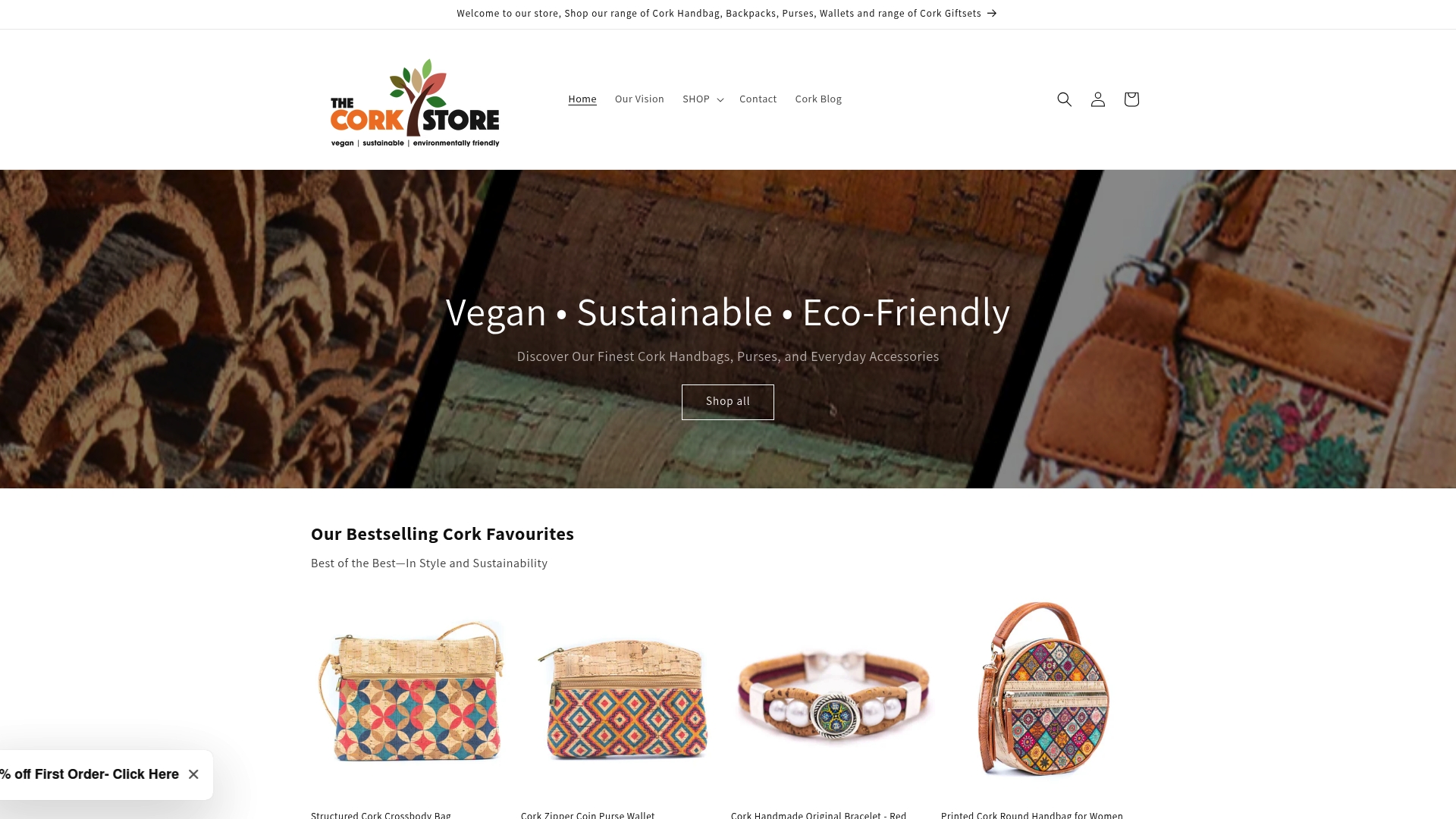
Shipping runs to the UK and worldwide, returns are straightforward if something doesn’t fit expectations, and gift sets arrive in packaging designed for giving rather than needing to be rewrapped. If you’re buying for yourself or as a gift, browse the current cork collection and check the product page details against the authenticity checklist above before you decide. It only takes a couple of minutes to confirm you’re getting the real thing.
Frequently asked questions
Are Portuguese cork products actually vegan? Yes. Cork fabric is bark, not animal hide, which makes it a genuine plant-based alternative to leather rather than a synthetic substitute.
Is cork durable enough for daily use? Full cork fabric with reinforced stitching and solid hardware holds up well to years of daily use, though occasional accessories will naturally outlast daily bags.
Does cork need waterproofing? Cork is naturally water-resistant, but occasional sealing on items exposed to frequent moisture, like coasters or placemats, helps maintain that resistance long term.
How do I know if a cork product is real Portuguese cork and not a cheap imitation? Check for clear origin labelling, natural grain variation, flexible stitching, and a faint natural scent. Uniform printed patterns and stiff plastic backing usually signal a fake.
What’s the difference between cork fabric and cork veneer? Cork fabric is a thin cork layer laminated onto a flexible fabric backing, used for bags and wallets. Cork veneer is bonded to a rigid surface for decoration and won’t flex the same way.
Sources
- CorksRibas - Leader in Innovative and Sustainable Cork Solutions Corksribas
- What it is | Amorim
- HowStuffWorks - Cork Q&A