
How to spot quality cork products for sustainable style
TL;DR:
- Genuine cork is sustainably harvested from FSC-certified Portuguese forests, supporting biodiversity.
- Check backing materials; natural options like cotton enhance sustainability and biodegradability.
- Authentic cork has a matte finish, natural grain variation, and feels warm and flexible, unlike fakes.
Choosing a cork accessory feels simple until you’re holding two items that look identical, one genuinely harvested from Portuguese cork oak forests and one a synthetic lookalike dressed up with vague ‘natural’ claims. The sustainable fashion market has grown rapidly, and with it, so has greenwashing. Shoppers who care about cruelty-free, planet-friendly choices deserve better than guesswork. This guide walks you through every step of evaluating cork accessories, from understanding what makes cork truly eco-friendly to spotting fakes and judging craftsmanship, so you can shop with confidence and a clear conscience.
Table of Contents
- Understand the basics: What makes cork eco-friendly?
- Check the materials: Backings, finishes, and composition
- Identify authenticity: Spotting genuine vs fake cork
- Assess quality for style and durability
- Why a truly sustainable cork product is more than just a label
- Discover sustainable cork accessories you’ll love
- Frequently asked questions
Key Takeaways
| Point | Details |
|---|---|
| Check sustainable origins | Always look for FSC certification and Portuguese sourcing for the most ecological cork products. |
| Inspect materials thoroughly | Ensure natural backings and compostable finishes are used for real sustainability. |
| Spot true authenticity | Genuine cork feels flexible, shows natural grain, and isn’t overly shiny or uniform. |
| Prioritise durability for value | Opt for a thickness near 1/4 inch and well-made seams to guarantee style and long life. |
Understand the basics: What makes cork eco-friendly?
Cork comes from the bark of the cork oak tree (Quercus suber), harvested by hand without felling the tree. Skilled workers strip the outer bark in carefully timed cycles, leaving the tree intact and able to regenerate. This process is one of the few examples in the fashion supply chain where the raw material is collected without killing or harming a living organism.
The ecological benefits are genuinely impressive. Cork harvested every 9-12 years from trees that can live for over 200 years actively supports biodiversity across Mediterranean forests. These forests shelter endangered species like the Iberian lynx and the Barbary deer, making cork harvesting a direct act of habitat conservation.
Portugal accounts for around half of the world’s cork production, and Portuguese origin paired with FSC certification is the strongest signal of ethical, sustainable harvesting. The Forest Stewardship Council (FSC) label confirms that the cork was sourced from responsibly managed forests meeting strict environmental and social standards. You can explore what these standards mean in practice via our cork sustainability guide.
Quick reference: eco-credentials to look for in cork products
| Feature | What to look for |
|---|---|
| Origin | Portugal or Spain, clearly stated |
| Certification | FSC or equivalent forest management label |
| Harvest method | Hand-stripped bark, tree left intact |
| Biodegradability | Natural cork with minimal synthetic additives |
| Carbon impact | Cork oak forests absorb CO2, a net positive |
Certifications worth recognising include:
- FSC (Forest Stewardship Council): Guarantees responsible forest management
- PEFC (Programme for the Endorsement of Forest Certification): An alternative to FSC with similar rigour
- GOTS (Global Organic Textile Standard): Relevant if fabric components are included
- OEKO-TEX Standard 100: Confirms the product is free from harmful substances
“Cork is one of the most climate-positive natural materials available. Each harvested tree absorbs up to five times more CO2 during its regeneration cycle than an unharvested one.”
Understanding the environmental impact of cork helps you separate genuinely green products from those riding the sustainability trend with nothing substantial behind them.
Check the materials: Backings, finishes, and composition
Once you’ve assessed the eco-credentials of the cork itself, it’s vital to investigate what’s beneath the surface. A wallet or handbag might feature beautiful cork on the outside while hiding a polyurethane (PU) or polyester backing that undermines every sustainability claim on the label.
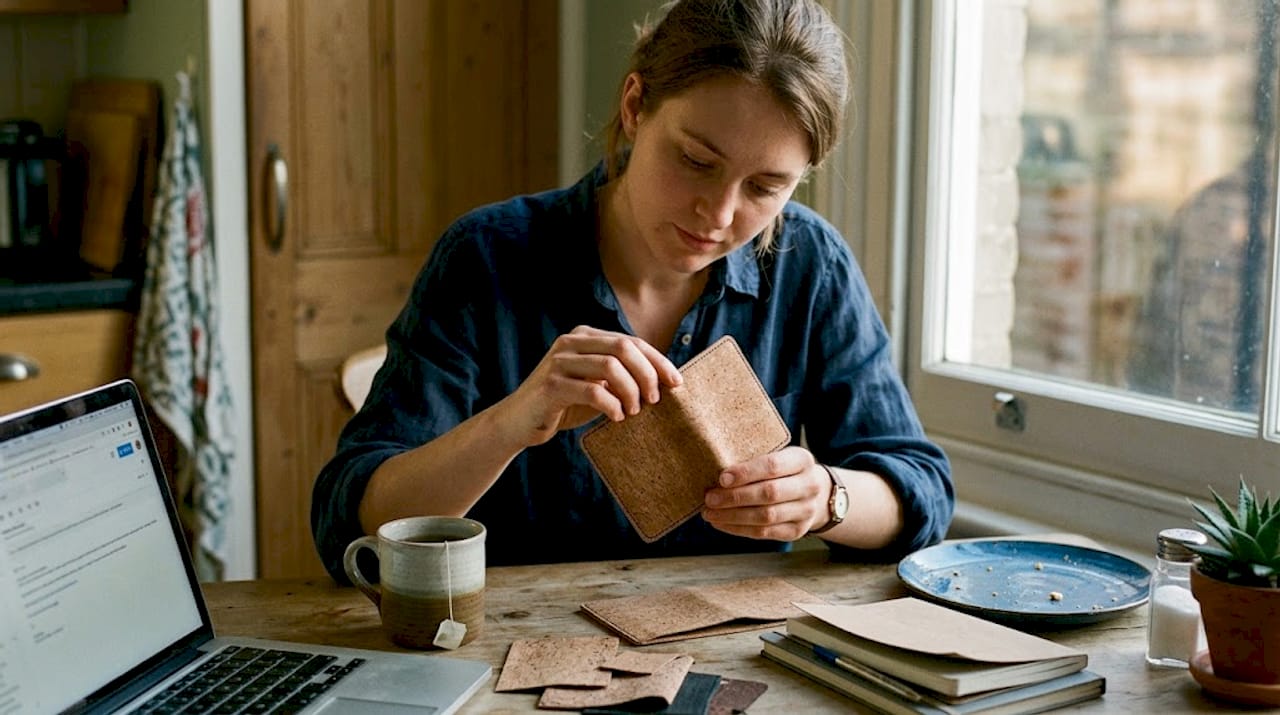
Natural backings like cotton are biodegradable, while synthetic options such as PU or polyester can significantly reduce a product’s overall sustainability. This matters because the backing material often makes up a considerable portion of the item’s total composition, especially in accessories with structured shapes.
Backing and finish comparison
| Backing type | Sustainability impact | Biodegradable? |
|---|---|---|
| Organic cotton | High | Yes |
| Natural linen | High | Yes |
| Recycled polyester | Moderate | No |
| Polyurethane (PU) | Low | No |
| Virgin polyester | Low | No |
When you’re assessing a potential purchase, look for brands that list every material used, not just the cork surface. Signs of a poorly constructed or greenwashed product include vague descriptions like ‘cork material’ without specifying the backing, a strong chemical odour suggesting heavy synthetic treatment, or finishes that appear plasticky and uniform.
Ingredients to favour:
- Organic or natural cotton linings
- Natural cork with minimal processing
- Water-based adhesives
- Vegetable-tanned or plant-based dyes
Ingredients to avoid:
- PU or polyester backings
- Formaldehyde-based resins
- Solvent-based glues
- Unspecified ‘synthetic fabric’ linings
Pro Tip: Before you buy, search the brand’s website for a materials page or product FAQ. Ethical brands are typically transparent about where each component comes from and how the product is made. If you can’t find that information easily, treat it as a red flag.
Exploring resources on spotting sustainable materials and understanding the eco materials in cork accessories is a good starting point for building your material literacy.
Identify authenticity: Spotting genuine vs fake cork
With materials checked, it’s time to ensure you’re not being fooled by clever imitations. The cork accessories market includes products that mimic the look of cork using printed vinyl, heavily sealed composites, or low-grade reconstituted cork with so many synthetic binders that the eco-benefit is negligible.
Real cork has a matte finish and visible granule variation, while fakes often display a shiny, sealed surface with a uniform, almost printed-looking pattern. Training your eye and hands to notice these differences takes a few minutes but saves you from a purchase you’ll regret.
Here’s a step-by-step check you can perform before buying:
- Examine the surface texture. Genuine cork shows natural variation in its grain, with subtle differences in cell pattern across the surface. A perfectly uniform repeat pattern usually signals a printed synthetic.
- Run your fingers across the edge. Real cork feels slightly textured and warm. Synthetic alternatives often feel slippery or cold at the cut edge.
- Smell the product. Natural cork has a faint earthy, woody scent. A sharp chemical or plasticky odour suggests heavy synthetic treatment or an imitation material.
- Test flexibility. Authentic cork is naturally flexible without cracking. If bending slightly causes creasing or cracking at room temperature, the product likely contains brittle synthetic binders.
- Look for grain depth. In genuine cork, the granular texture has visible depth. On fakes, the texture appears flat, as though it’s been printed onto a smooth base.
“The difference between real and fake cork often comes down to what you feel rather than what you see. Authentic cork is warm, lightweight, and subtly irregular. Imitations feel plasticky, overly smooth, or unnaturally stiff.”
Pro Tip: When shopping online, always request close-up photos of the surface, edges, and interior. Reputable retailers selling genuine cork accessories, including the benefits of cork wallets you’ll appreciate long term, will be happy to provide them.
Assess quality for style and durability
Even after confirming authenticity, there’s one final step: making sure your new accessory will stand up to everyday use and reflect your personal style. A beautiful cork bag that falls apart after six months isn’t sustainable in any meaningful sense.
Thickness of around 1/4 inch signals durability in cork accessories, and flexible material that doesn’t crack at folding points is essential for items like wallets and purses that experience daily stress.
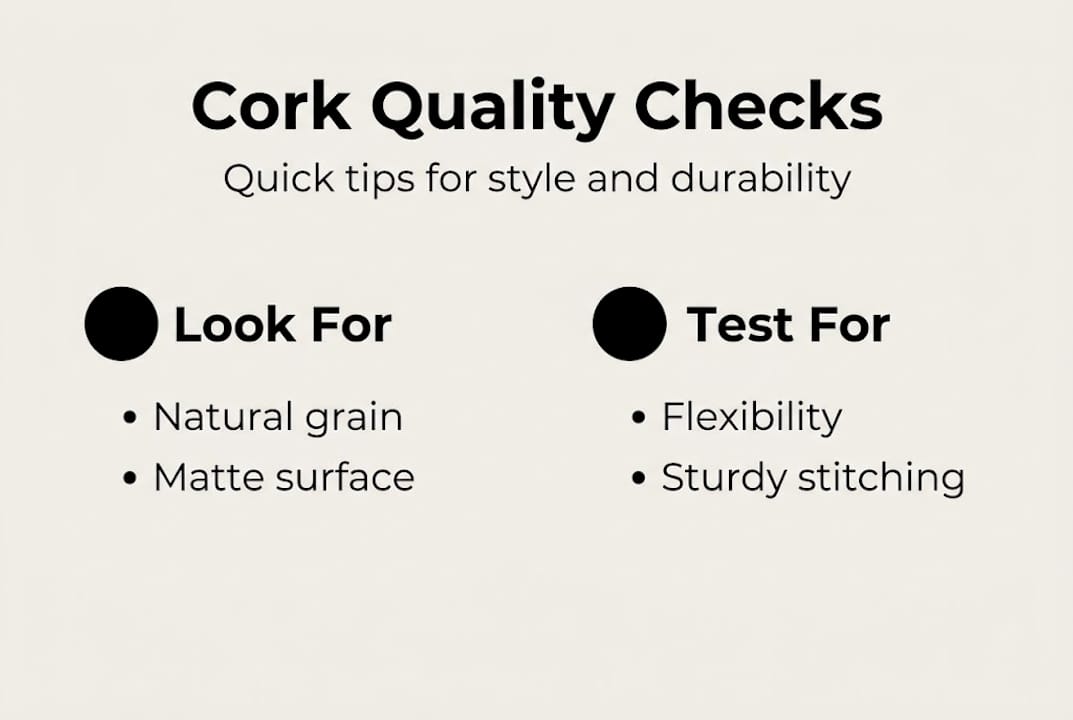
Style and durability checklist
| Quality marker | What to look for | Warning sign |
|---|---|---|
| Cork thickness | Around 6mm (1/4 inch) for bags | Thin, papery feel |
| Flexibility | Bends without cracking | Stiff or brittle |
| Seams | Even, tight stitching | Loose threads, gaps |
| Colour consistency | Uniform tones across surface | Patchy or faded areas |
| Hardware | Solid zips, clasps that close firmly | Flimsy, plastic hardware |
Warning signs of poor construction:
- Visible glue residue around seams or edges
- Zips that catch or feel loose
- Cork surface that peels or lifts at corners
- Lining fabric that feels thin or unfinished
- No care instructions included
For those who want to stay current, looking at latest cork accessory designs will show you what well-made, stylish cork looks like in practice. You can also explore a cork vs leather comparison to understand why cork often outperforms leather in terms of weight, water resistance, and ethical production.
Why a truly sustainable cork product is more than just a label
Here’s something the broader sustainable fashion conversation rarely admits: a label is the easiest part of a product to fake. Printing ‘eco-friendly’ or ‘vegan’ on a tag costs nothing and requires no verification. The brands that genuinely earn these descriptions tend to show their working, listing every material, every supplier, and every certification without being asked.
In our experience at The Cork Store, the most common disappointment shoppers face comes from trusting surface-level claims without checking what lies underneath, literally. Synthetic backings, chemical-heavy finishes, and unverified sourcing are widespread in the accessible accessories market. They are not isolated issues.
Our honest advice: trust your senses before you trust the marketing. Cork that smells chemical, feels plasticky, or looks too perfect is almost certainly not what it claims to be. And if a brand can’t tell you where their cork comes from and how it was processed, that silence speaks clearly. Conscious purchasing built on fashion sustainability insights is about asking better questions, not just buying differently.
Discover sustainable cork accessories you’ll love
With a trained eye and credible information, you’re ready to choose with confidence.
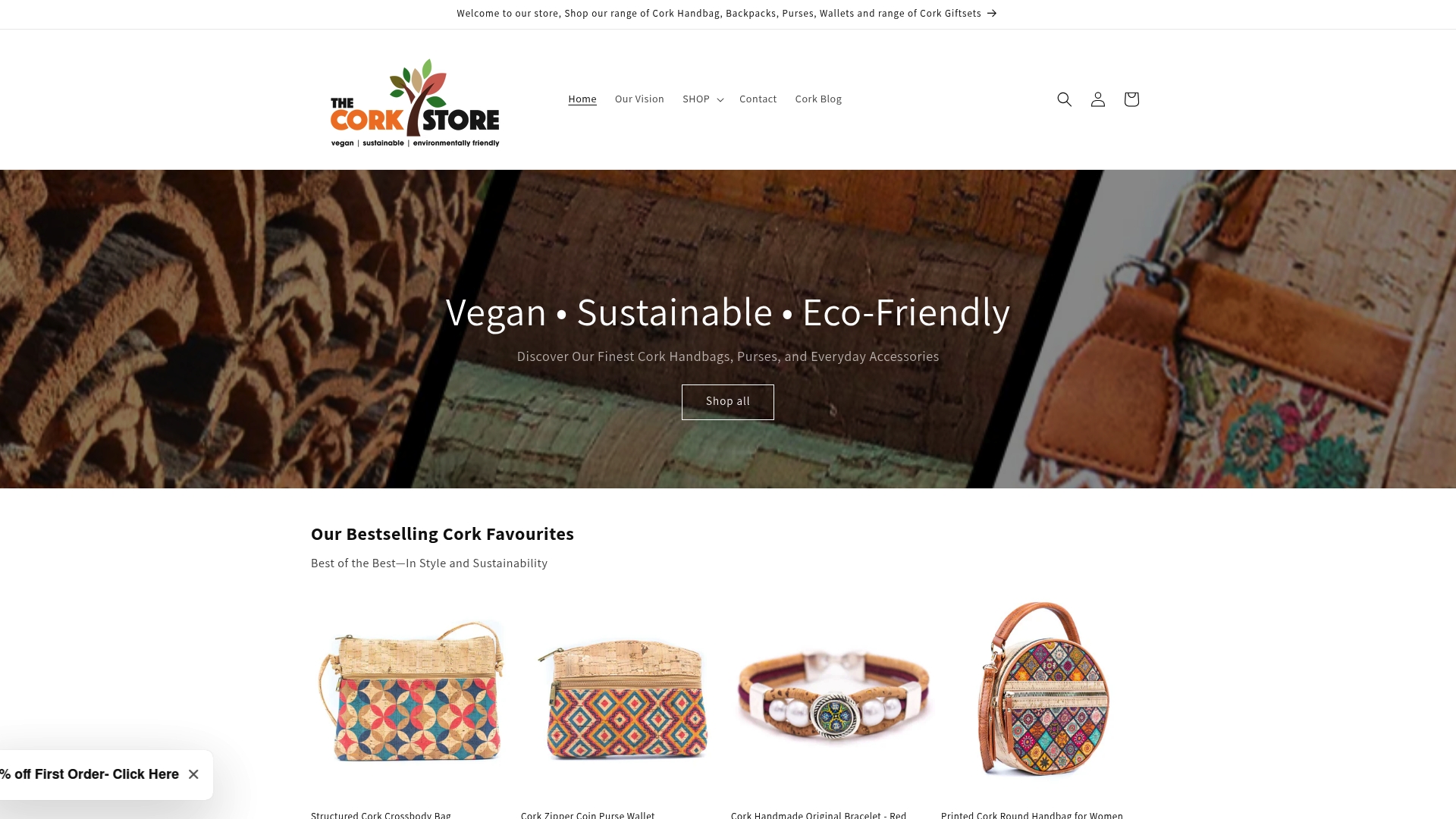
At The Cork Store, every product in our collection is made from genuine Portuguese cork with natural backings and full material transparency. We source ethically, craft thoughtfully, and design for people who refuse to compromise on style or their values. Whether you’re looking for a beautifully made all-natural cork wallet set for yourself or exploring our range of eco-friendly cork gifts for someone special, you’ll find accessories that hold up to scrutiny at every level. Browse our collection and see what genuinely sustainable cork looks like.
Frequently asked questions
How can I tell if a cork accessory is fake?
Look for a matte finish and natural grain variation across the surface. Fakes tend to be shiny and uniformly textured, lacking the subtle irregularity of real cork.
Why does the backing material matter for cork’s eco-friendliness?
Natural backings like cotton biodegrade at end of life, whereas synthetic options such as PU or polyester do not, undermining the overall sustainability of the product.
What certifications should I look for in quality cork products?
FSC certification is the most important, combined with confirmation of Portuguese origin for ethical harvesting. PEFC is also a credible alternative.
Is all cork equally durable for accessories?
No. A thickness of around 1/4 inch and good flexibility without cracking are the key markers of durable, accessory-grade cork.