

Step-by-step cork accessory care for lasting style
TL;DR:
- Proper care keeps cork accessories durable and sustainable over time through gentle cleaning and protection. Avoid harsh chemicals and excessive treatments, instead practicing regular light maintenance and eco-friendly habits. End-of-life options like donation, upcycling, and responsible recycling support the material’s environmental benefits.
You’ve invested in a cork bag, wallet, or backpack because you care about the planet. But then a coffee spill appears, the surface looks dull after a few months, or you notice the edges beginning to lift. Cork accessories outperform leather in bounce-back and long-term durability, but that impressive resilience only holds up when you give your pieces the right care. This guide walks you through everything, from the tools you need to daily habits and end-of-life choices, so your cork accessories stay beautiful and sustainable for years.
Table of Contents
- What you need before you start
- Step-by-step cleaning for cork accessories
- How to prevent wear and damage
- Sustainable care and end-of-life: Keeping your cork eco-friendly
- Why cork care is often misunderstood: The overlooked science behind longevity
- Explore more sustainable cork accessories and tips
- Frequently asked questions
Key Takeaways
| Point | Details |
|---|---|
| Prepare eco-friendly supplies | Using sustainable cleaning tools protects both your accessories and the environment. |
| Follow step-by-step cleaning | Gentle, regular care keeps cork accessories looking fresh and strong for years. |
| Prevent damage proactively | Quick action and smart storage avoid most common cork wear issues. |
| Choose sustainable end-of-life options | Responsible recycling and donation complete the eco cycle of your cork products. |
What you need before you start
Good cork care does not require a cupboard full of specialist products. In fact, simplicity is the point. Most of what you need is already in your home or is easy to source from an eco-friendly retailer. Before you reach for any product, though, it helps to understand which items are safe and which can quietly cause damage over time.
Essential eco-friendly supplies:
- Soft microfibre cloths (two or three, dedicated solely to cork care)
- Mild, pH-neutral soap or a plant-based washing-up liquid
- White vinegar diluted with water (one part vinegar to three parts water) for light disinfection
- Bicarbonate of soda (baking soda) for stubborn odours
- A soft-bristled brush such as a clean toothbrush for textured surfaces
- Food-grade beeswax or carnauba wax for conditioning and light protection
- A small spray bottle for applying cleaning solutions evenly
The items to avoid are just as important. Bleach, acetone, alcohol-based sprays, and silicone conditioners will strip the natural oils from cork, causing it to dry out, crack, and discolour. Harsh scrubbing pads are also off the list. They create micro-scratches that trap dirt over time, making the surface look older than it is. Our natural cork care essentials guide expands on safe product choices if you want to go deeper.
Quick reference table: supplies and their uses
| Item | Primary use | Frequency |
|---|---|---|
| Soft microfibre cloth | Daily dusting and light wiping | Daily or after each use |
| Mild soap and water | Surface cleaning | Weekly or after spills |
| Diluted white vinegar | Disinfecting and odour removal | Monthly or as needed |
| Soft-bristled brush | Textured surface cleaning | Weekly or as needed |
| Beeswax or carnauba wax | Conditioning and protection | Every 2 to 3 months |
| Bicarbonate of soda | Odour absorption inside bags | Monthly |
Pro Tip: Keep all of your cork care supplies in a small cotton pouch or recycled tin. Having everything in one place means you are far more likely to clean little and often, which is always better than leaving dirt to build up over weeks.
It is also worth noting the science behind why cork responds so well to gentle methods. Cork’s compression recovery is instant compared to leather, which can take hours to regain its original shape after stress. That physical property means you do not need to work hard to restore cork after everyday use, but you do need to avoid treatments that interfere with the cellular structure responsible for that recovery. Our essential cork care tips article covers this in more detail if you find the material science interesting.
Step-by-step cleaning for cork accessories
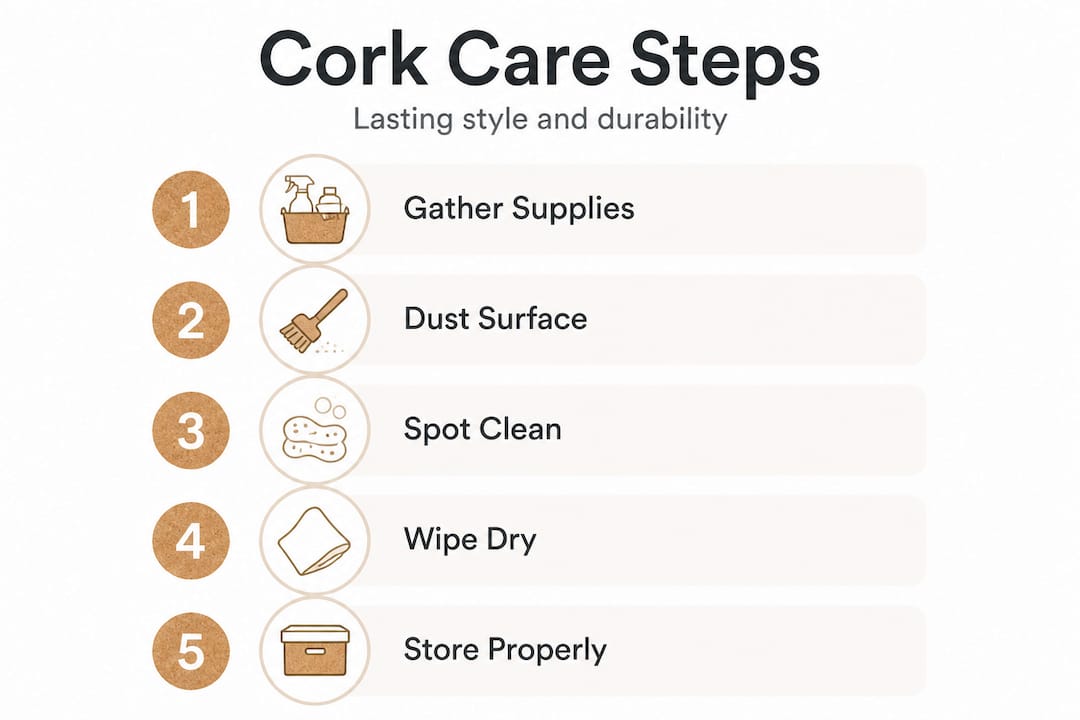
With your care kit assembled, you are ready to give your cork accessories the attention they deserve. The key principle here is gentle and consistent. Cork does not need vigorous scrubbing. What it needs is regular, light attention that keeps dirt from setting in.
Daily routine (1 to 2 minutes):
- Hold the accessory over a clean surface or sink.
- Use a dry microfibre cloth to lightly dust the exterior in smooth, circular motions.
- Check the edges and seams for any accumulated debris and gently brush them away.
- If the piece was exposed to rain or moisture, pat it dry immediately and allow it to air dry naturally away from direct heat.
Weekly routine (5 to 10 minutes):
- Dampen a microfibre cloth with a small amount of mild soap solution (one drop of soap in a cup of lukewarm water).
- Wring the cloth out thoroughly so it is barely damp, never wet.
- Wipe the entire exterior surface in gentle, overlapping strokes.
- Use a soft-bristled brush for any raised textures or stitched areas where dirt hides.
- Wipe over with a second clean, dry cloth to remove any soap residue.
- Allow to air dry fully before storing or using.
Deep cleaning routine (monthly or after heavy use):
- Empty the accessory completely and turn out any interior pockets.
- Brush out loose debris from the interior with a soft brush or lint roller.
- Mix a diluted white vinegar solution in a spray bottle and lightly mist the interior lining.
- Wipe down with a clean cloth and allow to air out with the bag open for at least two hours.
- Condition the exterior with a small amount of beeswax or carnauba wax applied with a soft cloth, buffed in circular motions until absorbed.
Empirical tests confirm cork’s resilience after repeated cleaning, with only 0.2 to 0.4mm of compression recorded after 500 uses. That means consistent cleaning does not weaken your accessory; it actually supports the material’s long-term performance.
Cleaning method comparison:
| Method | Suitable for cork? | Risk level | Notes |
|---|---|---|---|
| Hand cleaning with damp cloth | Yes | Low | Recommended for all cork |
| Machine washing | No | Very high | Can dissolve adhesives and damage structure |
| Dry cleaning | No | High | Chemical solvents cause cracking |
| Ultrasonic cleaning | No | High | Vibration damages cork cells |
| Spot cleaning with vinegar solution | Yes | Low | Ideal for light stains |
For detailed guidance on specific bag styles, our step-by-step cork cleaning resource and dedicated cleaning cork bags article are well worth bookmarking.
Pro Tip: For stubborn stains such as ink or grease, apply a tiny amount of bicarbonate of soda paste (mixed with a few drops of water) directly to the mark. Leave it for five minutes, then gently wipe away with a damp cloth. Avoid rubbing aggressively; patience works better than pressure on cork.
How to prevent wear and damage
Regular cleaning lays the foundation, but ongoing protection is just as important. Prevention is genuinely easier than repair when it comes to cork, and a few simple habits make an enormous difference over the lifetime of a piece.
Top causes of cork wear:
- Prolonged direct sunlight: UV rays dry out cork and cause fading. Store bags out of direct light when not in use.
- Excess moisture: While cork is naturally water-resistant, prolonged exposure to rain or humidity softens the material and can loosen adhesives at seams.
- Overloading: Stuffing a cork bag beyond its natural capacity strains the stitching and distorts the shape over time.
- Rough surfaces: Placing cork accessories on abrasive surfaces, such as rough stone or concrete, scratches the outer layer gradually.
- Harsh storage conditions: Storing cork in plastic bags traps moisture and leads to mould. Always use breathable cloth dust bags.
Expert-endorsed prevention habits:
- Rotate between two or more accessories to give each piece time to breathe and recover.
- Handle zips and clasps gently, as forcing them is the most common cause of mechanical damage.
- Keep cork accessories away from radiators, car dashboards in summer, and any heat sources.
- Use a small cloth bag or pillowcase for storage if you do not have a dedicated dust bag.
- Act immediately when spills happen. Blot (never rub) liquid with a dry cloth within seconds of contact to prevent absorption.
“Cork’s instant recovery from compression protects it against the lingering indentations that age other materials prematurely.”
This is the overlooked advantage of cork. A leather bag left overstuffed for a month may retain that distorted shape. A cork piece, treated properly and allowed to rest, springs back reliably. Our vegan cork maintenance guide offers seasonal checklists to help you stay on top of prevention, and our article on storage for cork longevity goes into detail on the best environments for keeping your pieces in top condition.
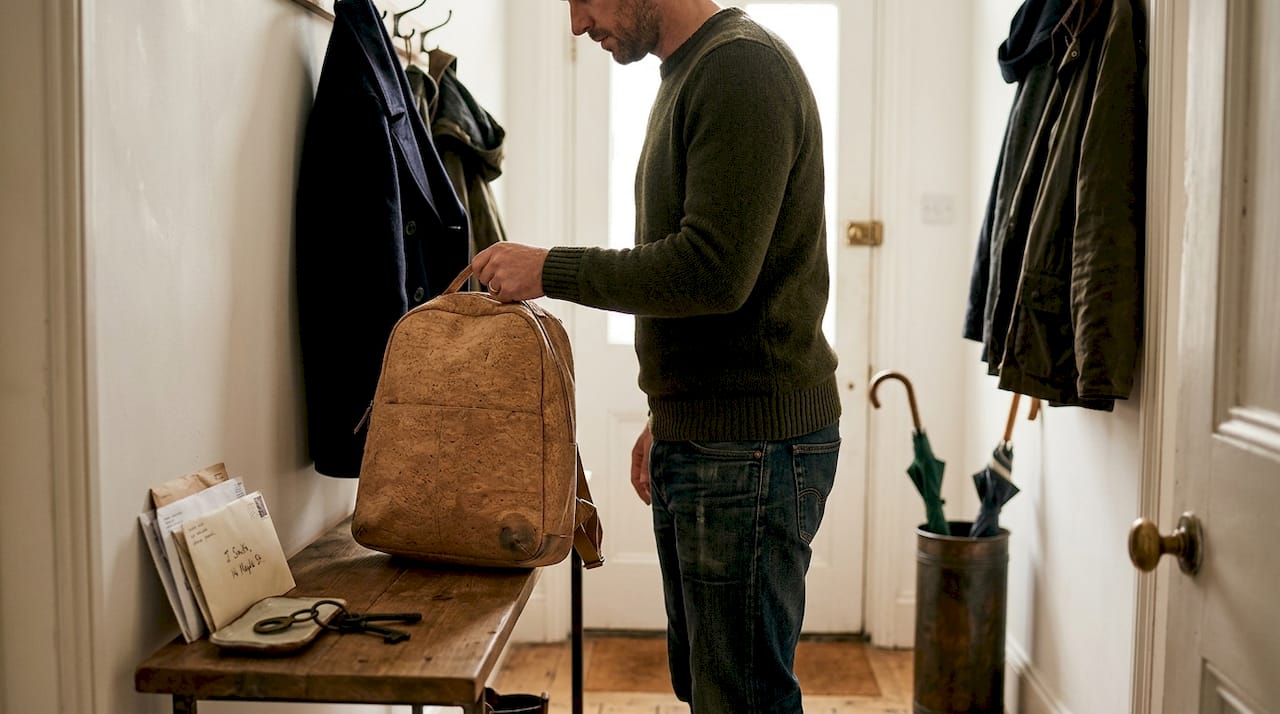
Sustainable care and end-of-life: Keeping your cork eco-friendly
Looking after your cork does not end with cleaning and prevention. Sustainability matters at every stage of an accessory’s life, including what happens when it eventually reaches the end of its useful journey with you.
Daily and weekly eco-habits that extend lifespan:
- Choose natural cleaning products always. Synthetic chemicals leave residues that build up over time and accelerate deterioration.
- Air your accessories after use, particularly on warm days, to prevent moisture build-up inside.
- Store pieces stuffed lightly with acid-free tissue paper to help them hold their shape without pressure.
- Check seams and hardware every month for early signs of wear. Catching small issues early prevents them becoming irreparable.
- Condition the cork surface every two to three months using natural wax. Think of it as moisturising: small, regular attention beats neglect followed by emergency intervention.
Sustainable care routines consistently ensure longevity while reinforcing the eco-goals that inspired the purchase in the first place.
At the end of an accessory’s life:
- Donate first. If the piece is still structurally sound but no longer suits your needs, donate it to a charity shop, clothing exchange, or a friend. Cork’s durability means it often has years of use left even when you are ready to move on.
- Upcycle creatively. Cork fabric can be cut and used in craft projects, as plant pot covers, pin boards, or drawer liners. The material does not lose its practical qualities just because the bag stitching has worn.
- Recycle responsibly. Natural cork is fully biodegradable and can be composted or taken to specialist recycling points. Our guide on recycling cork accessories maps out exactly how to do this responsibly in the UK.
- Avoid landfill. Cork breaks down naturally, but sending it to landfill wastes the material’s potential entirely. Even the smallest effort to recycle or donate makes a genuine difference.
Understanding the role of cork in fashion as a regenerative material helps put end-of-life decisions in context. Cork oak bark is harvested without felling the tree, and the tree continues absorbing CO2 for decades afterwards. Every year of extra use you get from a cork accessory multiplies that environmental benefit.
Why cork care is often misunderstood: The overlooked science behind longevity
Most people approach cork care the same way they would treat leather or canvas. That instinct is understandable but slightly off the mark. Cork has a fundamentally different cellular structure, and once you understand that, care decisions become far more intuitive.
Cork is composed of millions of tiny air-filled cells, each sealed by a waxy substance called suberin. That structure is what makes it waterproof, lightweight, and compressible. It also means cork does not absorb liquids in the way leather does, which changes how quickly you need to act on spills and how deeply you need to condition the surface.
The common misconception is that cork is fragile because it feels lighter and less dense than leather. In reality, compression recovery proves cork’s superiority in longevity and bounce-back. While a leather bag pressed under a stack of books overnight will show creasing, cork recovers almost instantly. That physical resilience means you can be reasonably relaxed about minor daily handling, because the material is doing much of the work itself.
Where people go wrong is in overcorrecting. They scrub too hard at faint marks, apply too much conditioning wax, or reach for stronger cleaning solutions than the material needs. All of these habits actually create problems rather than solving them. Overwaxing, for example, clogs the cork’s natural pores, reduces its breathability, and leaves a sticky residue that attracts more dirt.
The smarter approach is minimal intervention done consistently. A quick wipe after use, a monthly deeper clean, and a seasonal conditioning. That is genuinely all cork needs to look excellent for years. Minor surface marks, light scuffs, and faint discolouration are far less harmful to cork than they would be to leather or synthetic materials. Do not let small cosmetic imperfections push you into aggressive treatments. Trust the material.
Our cork care insights blog brings together the evidence-backed reasoning behind each recommendation, which is useful if you want to understand the why behind every step.
Pro Tip: When in doubt, do less. Cork responds better to gentle, regular care than to infrequent intensive cleaning sessions. If a mark is bothering you, try a barely damp cloth first and give the surface ten minutes to recover before deciding whether further treatment is needed.
Explore more sustainable cork accessories and tips
If these routines have inspired you to take better care of your collection, or to choose your first cork piece with confidence, The Cork Store has everything you need to take the next step.
At The Cork Store, you will find a curated range of vegan cork bags, wallets, backpacks, and gift sets crafted for style and sustainability. Every piece is designed to last, and our blog is packed with practical guides that support you throughout the ownership journey, from the day your accessory arrives to the moment you decide to pass it on. Browse the collection and discover accessories made with the planet in mind, without compromising on quality or design.
Frequently asked questions
How often should I clean my cork accessory?
Regular light cleaning once a week is best, with a deeper clean as needed after spills or heavy use. Consistency matters far more than intensity.
What should I avoid when caring for cork?
Avoid harsh chemicals, soaking in water, and exposing cork to extreme heat or direct sunlight, as extreme conditions cause wear even in otherwise durable materials.
Can I repair a damaged cork accessory?
Minor scratches or surface marks can often be reduced with a damp cloth and gentle circular rubbing, but deep tears through the cork fabric are difficult to reverse at home.
Is natural cork care better for the environment?
Absolutely. Using plant-based products and avoiding synthetic chemicals extends accessory life and reduces chemical waste, and sustainable care practices are consistently linked to longer lifespans and measurable eco benefits.
What should I do with my cork accessory at the end of its life?
Donate, upcycle, or recycle your cork accessory wherever possible. Natural cork is biodegradable, and keeping it out of landfill honours the sustainable ethos behind choosing cork in the first place.
Recommended
- Essential Cork Product Care Tips for Lasting Style – The Cork Store
- How to Care for Cork Accessories for Long-lasting Beauty – The Cork Store
- Cork Accessory Maintenance Guide for Durable Vegan Style – The Cork Store
- How to Care for Cork Products Naturally: Step-by-Step Guide – The Cork Store
- Avoid these common gold chain mistakes for lasting shine – Baker Gold Chains