

Sustainable accessory trends 2025: what to wear now
TL;DR:
- In 2025, sustainable accessories are driven by plant-based materials, traceability, and modular designs that extend lifespan. Consumers now require verified proof of origin, environmental impact, and repairability to avoid greenwashing. These shifts promote longer-lasting, ethically sourced, and environmentally friendly products that align with circular economy principles.
Sustainable accessory trends 2025 are defined by three forces reshaping the market: plant-based and biomaterial leathers, verifiable supply chain transparency, and modular design built for longevity. These are not marginal shifts. They represent a structural change in how eco-conscious consumers evaluate what they carry, wear, and gift. The days of taking a brand’s green claims at face value are over. Today’s fashion-forward buyer demands proof, performance, and purpose from every accessory they choose.
1. Plant-based and biomaterial leathers leading the 2025 accessory market
The most significant shift in eco-friendly fashion accessories is the move away from animal leather toward plant-derived and biomaterial alternatives. Plant-based leathers including pineapple leaf fibre (Piñatex), cork, mushroom-based mycelium, and pine-derived materials now offer genuine aesthetic and functional parity with conventional leather. This matters because it removes the old trade-off between style and ethics.
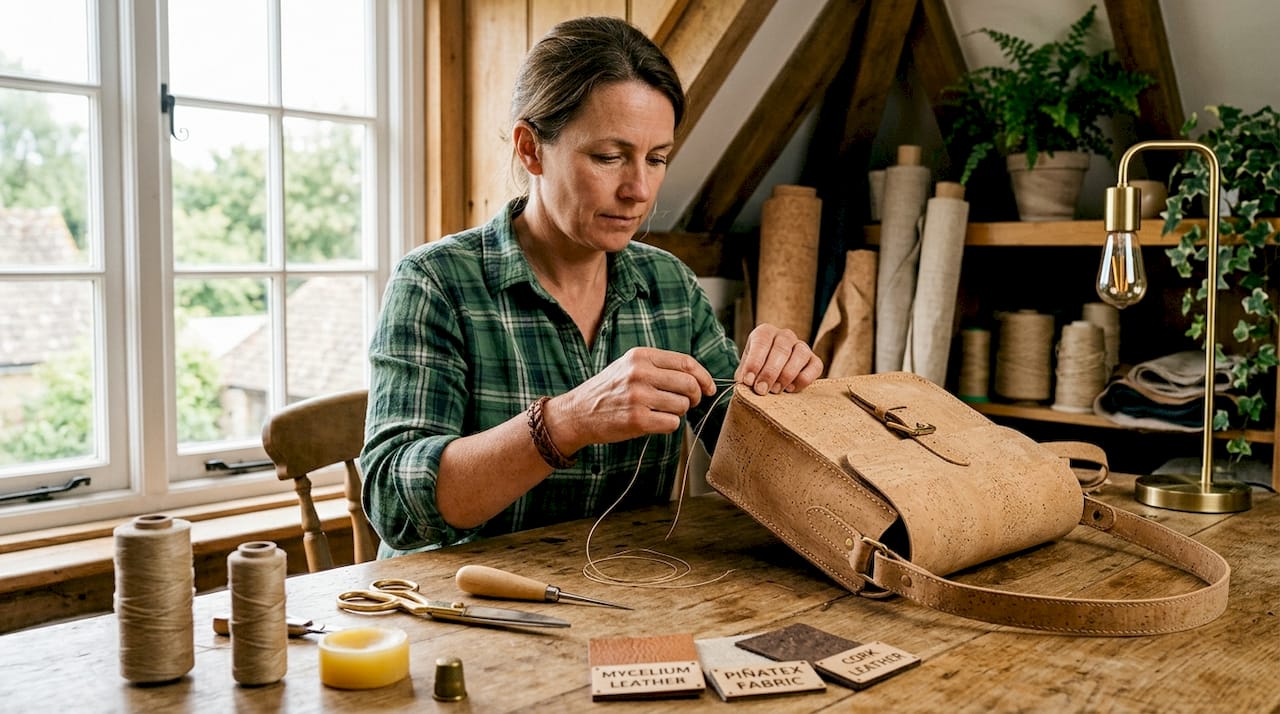
Cork deserves particular attention. Harvested from the bark of cork oak trees without felling them, it is naturally water-resistant, lightweight, and biodegradable. Thecorkstore has built its entire range around this material, and the reason is straightforward: cork outperforms many synthetics on durability while leaving a fraction of the environmental footprint. You can explore why cork leads sustainable fashion in more detail if you are weighing up material options.
Mycelium leather grows in days from fungal root networks, biodegrades naturally, and requires minimal land and water compared to cattle farming. Brands like Bolt Threads have pioneered commercial mycelium leather under the Mylo name, used in limited collections by Stella McCartney and Adidas.
Key advantages of plant-based leathers over animal leather:
- Biodegradability: most plant-based options break down without releasing toxic residues
- Cruelty-free production: no animal welfare concerns at any stage
- Lower resource consumption: significantly reduced water and land use versus cattle farming
- Carbon footprint: generally lower emissions across the production lifecycle
Pro Tip: When buying plant-based leather accessories, check whether the backing fabric is also sustainable. Many Piñatex products use a polyurethane coating that reduces overall biodegradability. Cork-based accessories typically avoid this issue entirely.
2. How traceability and QR codes are changing sustainable luxury accessories
Traceability features such as QR codes and serial number systems are now standard expectations among buyers of sustainable luxury accessories. Scan a QR code on a high-end bag and you can see the origin of the leather, the factory where it was assembled, the shipping route, and the artisan who made it. This level of openness was unthinkable five years ago.
The shift matters because it moves the conversation from marketing to accountability. Verified chain-of-custody documentation covers provenance of metals, gemstones, and worker conditions, giving buyers tangible proof rather than vague sustainability pledges. Brands that cannot provide this documentation are increasingly losing ground to those that can.
“Consumers increasingly expect verifiable proof of sustainability claims via traceability systems, reflecting a move beyond marketing to tangible openness.” — Form & Taste / Gigwise research synthesis
What traceability systems typically cover:
- Material sourcing: where raw materials were extracted or grown
- Manufacturing details: factory location, certifications, and labour standards
- Logistics transparency: shipping methods and carbon offset information
- Artisan profiles: the individual craftspeople involved in production
For consumers, this is the most practical tool available to avoid greenwashing. If a brand cannot show you a verifiable product journey, treat their sustainability claims with scepticism.
3. Why modular design is the circular economy answer for accessories
Modular accessory design enables component-level repair and disassembly, which fundamentally changes the relationship between a product and its owner. Instead of discarding a bag because the strap has worn through or a clasp has broken, you replace only the damaged component. This approach can extend product lifecycle by 40 to 60%, which is a meaningful reduction in waste across millions of units.
Traditional handbag construction relies on permanent adhesives and stitching that make disassembly destructive. Modular systems replace these with CNC-machined components and mechanical fasteners, allowing clean separation of panels, straps, and hardware. The manufacturing complexity is higher upfront, but the lifecycle economics are far superior.
| Feature | Traditional construction | Modular construction |
|---|---|---|
| Repairability | Full replacement usually required | Component-level swap possible |
| Lifecycle | 2 to 5 years typical | 8 to 15 years with maintenance |
| Waste at end of life | Entire product discarded | Only worn components replaced |
| Consumer cost over time | Higher (repeat purchases) | Lower (targeted repairs) |
| Environmental impact | High per unit | Significantly reduced |
The circular economy principles underpinning modular design align directly with emerging EU sustainability mandates that will require brands to offer repair services and spare parts. Buying modular now means your accessories are already compliant with the direction regulation is heading.
Pro Tip: Before purchasing any premium accessory in 2025, ask the brand directly whether spare parts are available and whether they offer a repair service. A brand that cannot answer this question clearly is not genuinely committed to circularity.
4. Recycled and upcycled materials trending beyond leather alternatives
Recycled metals, plastics, and textiles are the second tier of trending green accessories, sitting alongside plant-based leathers as credible sustainable options. Recycled gold and silver in jewellery hardware deliver identical quality to virgin metals while dramatically reducing the environmental damage associated with traditional mining. For sustainable jewellery ideas, recycled precious metals are the most straightforward upgrade available.
Recycled polyester (rPET) made from post-consumer plastic bottles is widely used in bags and accessories. It reduces the energy required for virgin polyester production, but the trade-off is significant. Up to 1,900 microplastic fibres can be released per wash cycle from rPET fabrics, contaminating waterways and drinking water. This is not a reason to avoid recycled synthetics entirely, but it is a reason to use a microplastic-catching laundry bag such as a Guppyfriend when washing them.
Upcycled accessory styles are gaining traction in independent fashion. Designers are integrating deadstock fabrics, reclaimed hardware, and salvaged materials into one-off and small-batch pieces. This approach produces genuinely zero-new-resource accessories, though scalability remains limited. Natural fibres including organic cotton and hemp are also appearing more frequently in accessory linings, straps, and pouches, offering biodegradable alternatives to synthetic interiors.
Lifecycle thinking is the critical discipline here. A recycled material that creates new pollution problems during use or at end of life is not automatically better than a virgin material with a well-managed disposal pathway. Evaluate the full journey, not just the recycled content percentage on the label.
5. How to choose sustainable accessories in 2025
Choosing genuinely sustainable accessories requires moving past recycled content percentages and green colour palettes on packaging. Here is a practical framework for evaluating any accessory purchase:
- Check for traceability features. A QR code or serial number linking to verified sourcing data is the strongest signal of genuine accountability. No traceability means no proof.
- Prioritise material biodegradability or recyclability. Cork, mycelium leather, and organic natural fibres score well. Blended synthetics with no end-of-life pathway score poorly.
- Ask about repairability. Can the brand supply spare parts? Is there a repair programme? Modular designs and brands with repair services are the most durable long-term choices.
- Look for credible certifications. Global Organic Textile Standard (GOTS), Fairtrade, and B Corp certification provide independent verification of environmental and social claims.
- Consider total cost of ownership. A £180 cork bag that lasts ten years with minimal maintenance costs less per year than a £60 synthetic bag replaced every two years. Sustainability and financial sense often align.
- Evaluate care requirements. Some plant-based leathers need specific conditioning products. Cork requires almost no maintenance. Factor this into your decision.
You can find a detailed eco-friendly handbag comparison that applies many of these criteria across popular sustainable options if you want a side-by-side reference before buying.
Pro Tip: Avoid accessories marketed as “eco-friendly” that use recycled polyester as the primary material without any mention of microplastic management. The label is technically accurate but environmentally incomplete.
Key takeaways
Sustainable accessory trends in 2025 are driven by plant-based materials, verifiable traceability, and modular design because these three factors address environmental impact, consumer trust, and product longevity simultaneously.
| Point | Details |
|---|---|
| Plant-based materials lead | Cork, mycelium, and Piñatex offer biodegradable, cruelty-free alternatives with genuine durability. |
| Traceability is non-negotiable | QR codes and serial numbers are the primary tool for distinguishing real sustainability from greenwashing. |
| Modular design extends lifecycle | Component-level repair can increase accessory lifespan by 40 to 60%, reducing waste significantly. |
| Recycled materials need scrutiny | rPET reduces energy use but releases up to 1,900 microplastic fibres per wash. Evaluate the full lifecycle. |
| Certifications add credibility | GOTS, Fairtrade, and B Corp provide independent verification that marketing language cannot replace. |
Cork, circularity, and what I actually think about 2025 accessory trends
I have spent years watching the sustainable fashion space make promises it struggles to keep. The 2025 accessory market feels genuinely different, and I want to explain why without overstating it.
The materials conversation has matured. When cork and mycelium leather first appeared in mainstream coverage, they were treated as novelties. Now they are production-ready, commercially available, and in some cases outperforming the synthetics they replace. That is a real shift, not a marketing cycle.
What concerns me more is the traceability gap. The technology exists. QR code supply chain systems are not expensive to implement. Yet the majority of brands selling “sustainable” accessories still cannot tell you where their hardware was sourced or under what labour conditions their products were assembled. Until traceability becomes a baseline expectation rather than a premium feature, greenwashing will continue to crowd out genuine progress.
Modularity is the trend I am most optimistic about long-term. The idea that you buy a bag once and maintain it for a decade rather than replacing it every few years is both environmentally sound and economically rational. The brands building repair programmes and spare parts catalogues now are positioning themselves well for incoming EU product durability regulations.
My honest recommendation: buy less, buy better, and demand proof. A cork wallet from a brand that can show you its supply chain is worth more than three synthetic wallets from a brand that cannot.
— Aaron
Explore vegan cork accessories from Thecorkstore
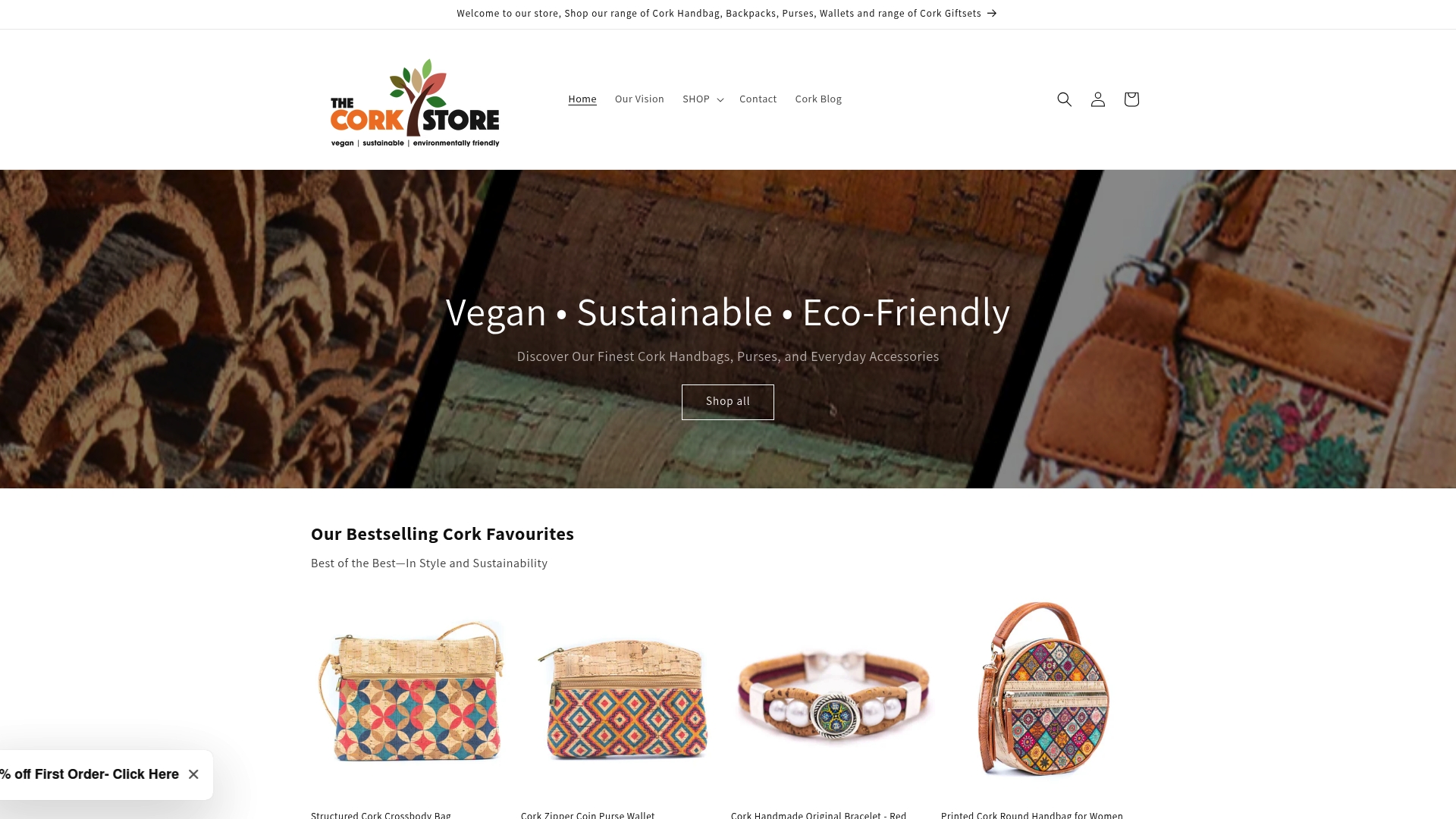
Cork is one of the few plant-based materials that ticks every box in the 2025 sustainable accessory checklist: biodegradable, cruelty-free, naturally water-resistant, and harvested without harming the tree. Thecorkstore’s full range of vegan cork gifts includes handbags, wallets, backpacks, and purses, all crafted from cork fabric and designed to last. Every product is an animal-free alternative to leather with genuine eco credentials, not just a green label. If you are looking for a sustainable gift or a considered upgrade to your own accessories, the collection is a strong starting point for eco-conscious shoppers who refuse to compromise on style.
FAQ
What are the top sustainable accessory materials for 2025?
Cork, mycelium leather, Piñatex (pineapple leaf fibre), and recycled precious metals are the leading sustainable materials in 2025 accessories. Each offers a lower environmental footprint than conventional animal leather or virgin metals, with cork and mycelium providing full biodegradability.
How do I verify that a sustainable accessory is genuinely eco-friendly?
Look for QR codes or serial numbers that link to verified sourcing data, and check for independent certifications such as GOTS, Fairtrade, or B Corp. Brands that cannot provide traceable supply chain information should not be taken at their word on sustainability claims.
Is recycled polyester a good choice for sustainable accessories?
Recycled polyester reduces the energy needed for virgin production, but releases up to 1,900 microplastic fibres per wash cycle. It is a partial improvement, not a complete solution. Use a microplastic-catching laundry bag when washing rPET accessories and consider biodegradable alternatives where possible.
What is modular design in accessories and why does it matter?
Modular design means an accessory is built from replaceable components rather than permanently bonded parts, allowing repair without full replacement. This approach can extend product lifecycle by 40 to 60%, making it one of the most effective tools for reducing accessory waste in 2025.
Are sustainable accessories more expensive than conventional ones?
Premium sustainable accessories often carry a higher upfront price, but the total cost over time is frequently lower. A well-made cork or modular leather bag that lasts a decade costs less per year than a cheaper synthetic alternative replaced every two to three years.