

3 Categories That Expose Real Sustainable Materials
Sustainable materials are those that minimise environmental and social harm across their full lifecycle, judged by renewable sourcing, low production energy, non-toxicity and end-of-life recyclability rather than any single trait. Bamboo, cork and recycled steel all qualify by this standard. On a label, look for a stated recycled content percentage, a named certification, or a specific end-of-life claim rather than the word “eco” on its own.
TL;DR:
- Recycled steel and glass offer high resource efficiency by reusing industrial by-products without significant loss of strength or quality.
- Bamboo and cork are renewable and fast-growing but may have higher environmental impacts if chemically processed or shipped long distances.
- Certifications like FSC and Cradle to Cradle improve sourcing transparency, but should be paired with end-of-life information to assess true sustainability.
- Biofabricated materials like bacterial cellulose and algae-based plastics are promising but still face scalability and durability challenges.
- Evaluating sustainability requires a full lifecycle assessment, considering embodied energy, chemical safety, recyclability, and social factors.
Table of Contents
- What are the main types of sustainable materials?
- How do you actually evaluate a sustainable material?
- Where are sustainable materials actually used?
- What does the research actually say about material choices?
- What’s new in sustainable materials right now?
- Which certifications actually mean something?
- Balancing sustainability with function
- Looking for a practical example to start with?
- Sources
What are the main types of sustainable materials?
Most sustainable materials fall into three working categories, based on a taxonomy proposed in recent materials-transition research. Knowing which bucket a material sits in tells you almost as much as any spec sheet.
Waste-based materials start life as scrap, off-cuts or industrial by-products that would otherwise go to landfill. They score well on resource efficiency because they avoid extracting anything new.
- Recycled steel — melted down from scrap and reused indefinitely without losing structural strength, common in framing and rebar.
- Recycled plastic — reprocessed into decking, insulation board and increasingly into fashion accessories and packaging.
- Recycled glass — crushed and reformed into glass wool insulation or aggregate for concrete.
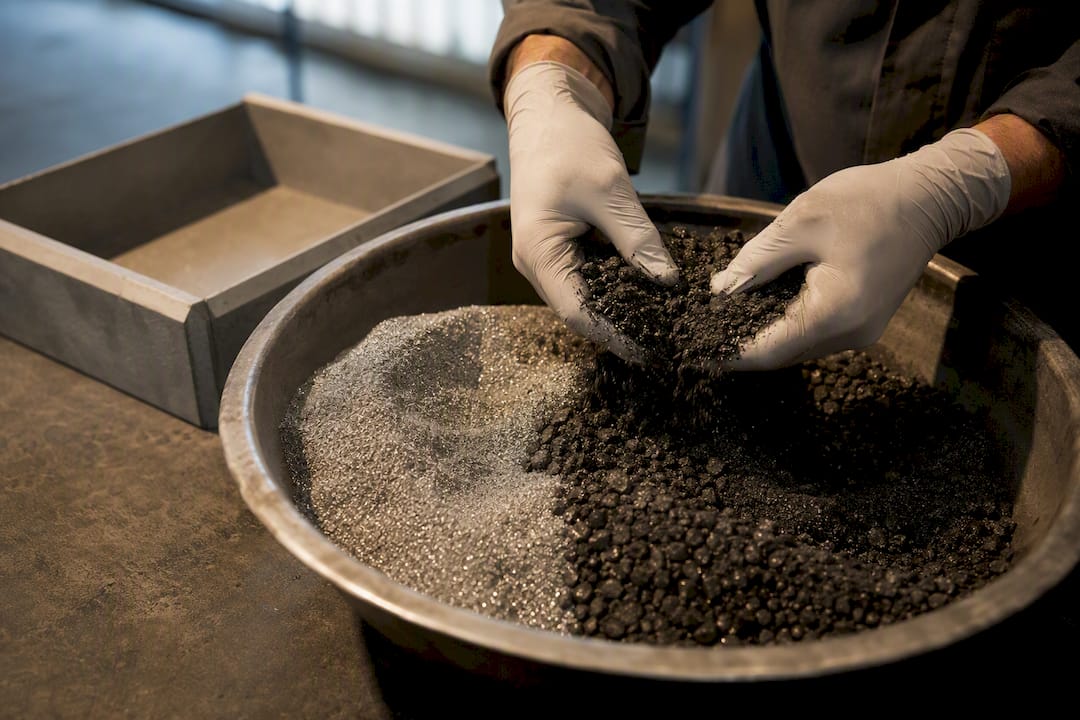
- Ferrock — made largely from waste steel dust, and one of the more surprising entries on this list because it actually absorbs carbon dioxide as it cures, a genuine CO2-negative production route rather than merely a low-emission one.
Renewable or biobased materials come from plants or animals that regrow relatively quickly, which makes supply less of a bottleneck than with mined or fossil-based inputs.
- Bamboo — one of the fastest-growing woody plants on Earth, used in flooring, scaffolding and structural panels.
- Cork — bark stripped from the cork oak without felling the tree, so the same tree keeps growing and storing carbon for decades.
- Hemp — a fibre crop that needs comparatively little irrigation or pesticide, used in textiles, rope and hempcrete.
- Sheep’s wool — a renewable insulation and textile fibre with natural moisture management.
- Rammed earth — compacted soil, sometimes stabilised with a small amount of cement, used for load-bearing walls.
Biofabricated or engineered materials are grown or synthesised using living organisms such as bacteria, fungi or algae, and they’re the newest and least commercially mature of the three groups. Bacterial cellulose leathers and some algae-based bioplastics sit here. The lines blur in places, since a biocomposite might combine a waste-based filler with a biobased resin, but the three-way split still gives you a useful mental shortcut when comparing sustainable building materials examples against fashion or product examples.
How do you actually evaluate a sustainable material?
A recycled content percentage or a “natural fibre” claim tells you almost nothing on its own. That’s the trap: a single flattering statistic can hide a much messier lifecycle behind it. Life Cycle Assessment (LCA) exists precisely to close that gap, tracking a material’s impact from raw extraction through processing, transport, use and disposal, rather than isolating one flattering number.
Bamboo is the textbook case for why this matters. As a fast-growing grass it looks unbeatable on renewability, but if it’s chemically pulped into viscose rayon and shipped across oceans, its footprint can rival less “natural” alternatives. The same crop, mechanically processed and sourced locally, tells a completely different story.
Run any material through this rough order of checks:
- Embodied energy and CO2 footprint — how much energy went into extraction and processing, and whether the material stores or releases carbon.
- Renewability of the source — whether the raw input regrows on a human timescale or is finite.
- Toxicity and chemical safety — whether processing introduces solvents, dyes or finishes that pose health or ecological risks.
- Recyclability or biodegradability — what happens to it at end of life, and whether that route is realistic in practice, not just on paper.
- Supply-chain and social factors — labour conditions and sourcing transparency behind the finished product.
Standards bodies such as ASTM and ISO publish testing and reporting frameworks that back up genuine LCA claims, and multi-criteria selection research backs this stacked approach over any single metric.
Pro Tip: Ask a seller for the recycled content percentage AND the certification name behind it. A number with no named standard attached is usually marketing, not measurement.
Where are sustainable materials actually used?
Application changes which trade-offs matter most, and the same material can be a star in one use case and a poor fit in another.
Construction leans on rammed earth, cob and recycled steel for walls and framing, plus ferrock for its unusual carbon-negative curing process. The catch is regulatory: many building codes still lag behind these sustainable building materials, and structural certification can be slower to secure than for conventional concrete or steel.
- Rammed earth: excellent thermal mass, but heavy and needs skilled labour to build correctly.
- Recycled steel: as strong as virgin steel, though transport and melting still carry real energy costs.
Fashion and accessories favour cork, hemp and recycled fibres, prized for low-impact harvesting and genuine durability rather than a one-season lifespan.
- Cork: water-resistant and scuff-resistant, but a smaller pool of specialist tanneries limits some production speed.
- Hemp: tough and breathable, though it needs blending with softer fibres for comfort in some garments.
Insulation and interiors rely on sheep’s wool, cork and recycled glass wool for thermal and moisture performance.
- Wool: naturally regulates humidity, but costs more upfront than synthetic batts.
- Recycled glass wool: strong thermal value, though installation can require protective handling.
What does the research actually say about material choices?
Grouping materials as waste-based, renewable or biofabricated isn’t just academic tidiness. The framework in the Science of the Total Environment taxonomy gives shoppers and designers a shared vocabulary for comparing claims that would otherwise sound equally “green” on a swing tag. The MRS Bulletin research pushes the same point further: sustainability decisions should weigh several factors at once rather than optimising for one flattering number.
Cork is a useful test case for that thinking. It’s harvested by stripping bark without felling the tree, so the same cork oak keeps storing carbon and regrowing bark for decades of repeat harvests, and it turns up in insulation, flooring, tiles and accessories alike. A detailed breakdown of sustainable material types goes deeper into where cork sits alongside bamboo and recycled fibres, and a helpful guide to spotting genuine sustainable claims is worth a read before your next purchase.
Three checks worth carrying into any shop, online or otherwise:
- Trust a named certification over a vague adjective like “natural” or “green.”
- Ask sellers directly how the raw material was harvested or sourced, not just what it’s made from.
- Avoid products with no end-of-life information at all. If nobody can tell you what happens to it after use, treat that as a warning sign.
What’s new in sustainable materials right now?
Biofabrication is the area moving fastest, with bacterial cellulose and mycelium-based leathers edging from lab curiosity toward small commercial runs. Both are grown rather than farmed or mined, which sidesteps land-use pressure entirely and can shrink production timelines from years to weeks.
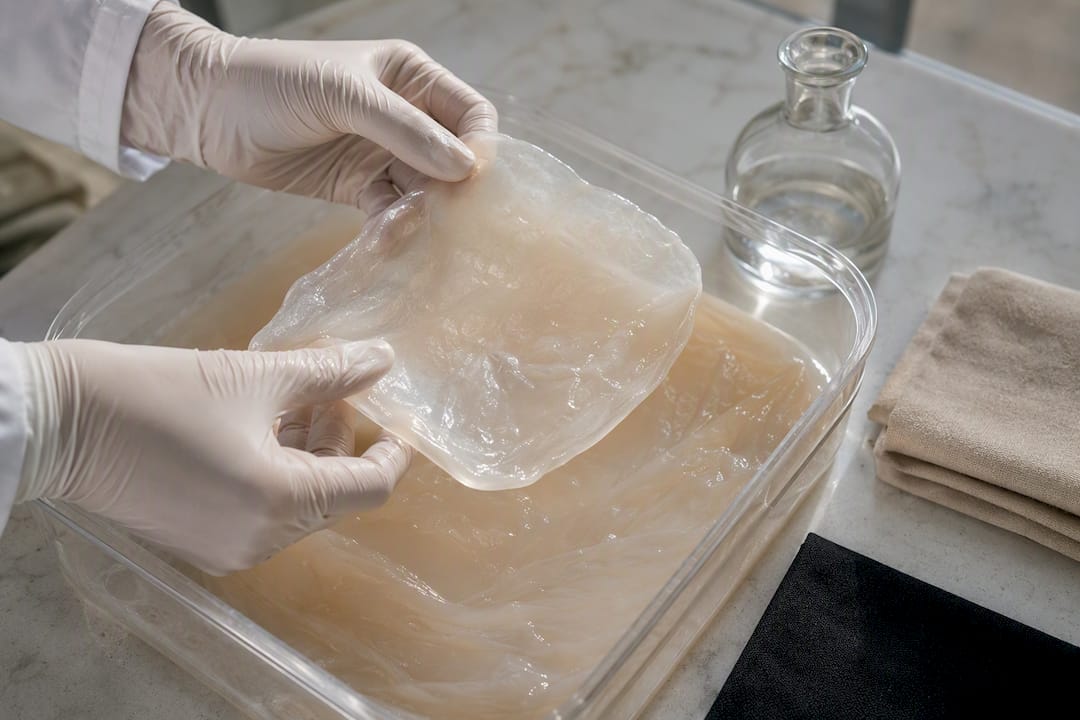
Waste-stream chemistry is the other genuinely interesting shift. Ferrock is the clearest example on this list, turning steel dust that industry used to discard into a building material that pulls carbon dioxide out of the air as it cures. That kind of result flips the usual assumption that “sustainable” automatically means “slower” or “weaker,” and it’s pushing more manufacturers to audit their own waste streams for hidden value rather than treating scrap as a disposal cost.
Recycled content is also climbing steadily across recycled plastic and recycled glass supply chains, partly because better sorting technology means contaminated batches are less of a bottleneck than they were a few years ago. None of this is settled science yet. Biofabricated materials in particular still face real questions around scaling production and matching the durability of established alternatives, so treat early marketing claims with the same scepticism you’d apply to any first-generation product.
Which certifications actually mean something?
FSC (Forest Stewardship Council) certification applies to wood and bamboo products, verifying the material came from a responsibly managed forest rather than unregulated logging. It’s one of the more widely recognised marks in the built-environment space, and worth checking on any timber or bamboo-based purchase.
Cradle to Cradle certification takes a broader lifecycle view, scoring products on material health, recyclability, renewable energy use in manufacturing, water stewardship and social fairness. A product can carry a Bronze through Platinum tier, so the level matters as much as the badge itself.
Beyond these two, ASTM and ISO standards underpin much of the testing behind LCA claims and recycled-content figures, even when they don’t appear as a consumer-facing logo. If a brand quotes a specific ISO standard number alongside its sustainability claim, that’s a stronger signal than a certification-free adjective. Global Recycled Standard (GRS) covers recycled-content textiles specifically, verifying the recycled percentage a brand states rather than simply taking its word for it.
None of these certifications are perfect proxies for sustainability on their own, and a product can be genuinely low-impact without holding any formal badge, particularly from smaller producers who can’t afford certification fees. Treat certifications as useful supporting evidence rather than the whole verdict, and pair them with the design-for-end-of-life thinking covered earlier: a certified material that can’t be separated at end of life is only half the story.
Balancing sustainability with function
The mistake I see most often is ranking materials by a single virtue, renewability usually, and stopping there. A genuinely sustainable choice holds up across the whole lifecycle: how it’s made, how long it lasts, and what happens when it’s finished.
Durability and repairability matter more than people assume. A product you keep for a decade beats a “greener” one you replace every year. If you want a practical starting point for judging accessories specifically, a guide to spotting eco-friendly accessories is a useful next read.
— Aaron
Looking for a practical example to start with?
If you’ve read this far wondering what a genuinely sustainable, non-leather accessory looks like in practice, cork answers that question better than most alternatives on this list. It’s harvested without felling trees, resists water and scuffing, and lasts years rather than seasons, which is exactly the durability argument made above. There are brands built entirely around that one material, offering vegan cork handbags, wallets, backpacks and gift sets as cruelty-free alternatives to leather rather than synthetic substitutes that trade one problem for another.
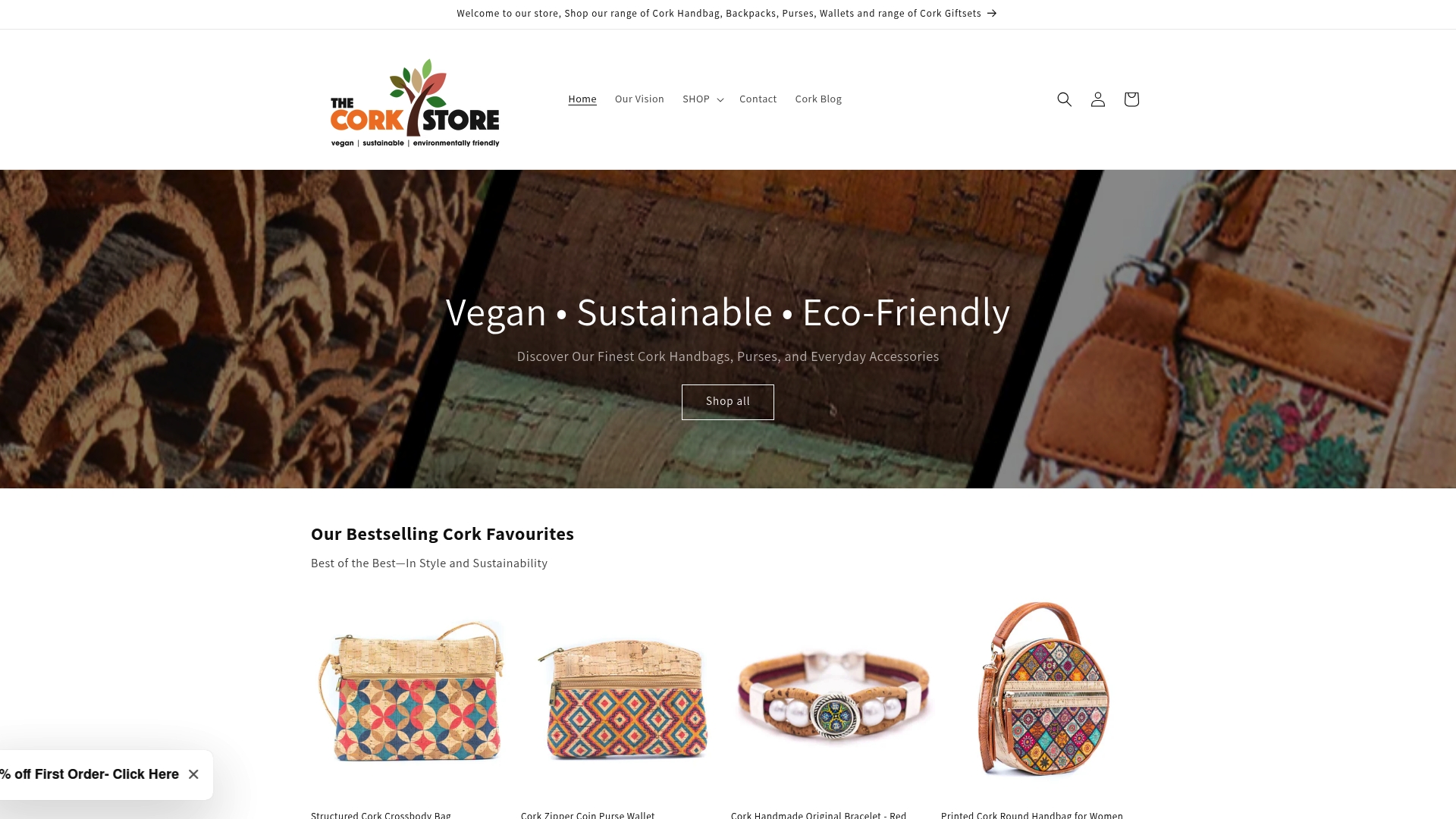
Browse the full range of cork accessories to see how the material performs across bags, purses and travel pieces, or read the breakdown of sustainable material types first if you want the fuller picture before you choose. Either way, the next practical step is the same: pick a piece, check the product description for the details this article just taught you to look for, and see whether cork earns its place in your wardrobe.
Sources
- Emerging materials for transition: a taxonomy proposal — Science of the Total Environment
- Sustainability-informed materials selection, design, discovery, and development — MRS Bulletin
- 16 sustainable and cost-effective building materials — University of the Built Environment