
Stop Guessing: 5 Sustainable Fabric Groups, What to Buy, Why Cork
Recognised sustainable fabrics fall into five groups: plant-based naturals (organic cotton, hemp, linen), regenerated cellulosics (TENCEL Lyocell, modal), recycled synthetics (rPET, ECONYL®), lower-impact animal fibres (recycled wool), and plant-based leather alternatives (cork, Piñatex, cactus leather). No single fibre wins outright. What follows breaks each group down by water use, durability and end-of-life, so you can match the right material to the right product.
TL;DR:
- Most certified sustainable fabrics only guarantee one link in the supply chain, so stacking multiple certifications provides a more comprehensive assurance.
- Recycled synthetics like ECONYL® and rPET are effective for activewear but still shed microplastics, so washing with care is essential to minimize environmental impact.
- Natural fibers such as organic cotton, hemp, and linen differ significantly in water use and durability, with hemp and linen offering the lowest environmental footprints.
- Sustainable credentials are compromised by dyeing and finishing processes that often involve harmful chemicals, making certification of processing stages equally crucial.
- Durability and end-of-life considerations often outweigh fiber choice since a long-lasting garment reduces environmental impact more effectively than fiber type alone.
Table of Contents
- What actually makes a fabric sustainable
- How to spot genuine sustainability claims while shopping
- Plant-based and natural fibres worth buying
- Regenerated and recycled fibres: the closed-loop options
- Lower-impact animal fibres and plant-based leather alternatives
- Matching fabric to product type
- Why cork earns its place in a sustainable accessories list
- How dyeing and finishing can undo a good fibre choice
- What this list gets right that most guides miss
- Sources
What actually makes a fabric sustainable
A fibre earns the label “sustainable” based on its full life cycle, not one flattering headline stat. That means water consumption during growing or processing, chemical inputs (pesticides, dyes, finishing agents), land use, greenhouse gas emissions, microplastic shedding, how long the garment lasts, and what happens when it’s finally binned or composted.
This is why “natural equals sustainable” is a trap. Conventional cotton is natural and still one of the thirstiest, most pesticide-heavy crops in textiles. Meanwhile, a recycled polyester jacket, though synthetic, can outperform a virgin-cotton equivalent on carbon and water. Good On You argues the smarter question isn’t “which fabric is the most sustainable” but “what does this specific garment’s whole life cycle look like.”
Certifications exist precisely because most shoppers can’t audit a supply chain themselves. Look for:
- GOTS (Global Organic Textile Standard) — organic fibre content plus restrictions on toxic dyes and chemicals
- GRS (Global Recycled Standard) — verified recycled content and chain-of-custody tracking
- OEKO-TEX — tests the finished fabric for harmful substances
- FSC — traceable, responsibly managed forestry for wood-pulp fibres like viscose or lyocell
- RWS (Responsible Wool Standard) — animal welfare and land management for wool
Pro Tip: A single certification tells you about one link in the chain, not the whole thing. GOTS covers farming and processing; OEKO-TEX only covers the final product’s chemical safety. Stack two or three where you can find them.
How to spot genuine sustainability claims while shopping
Certifications work as shorthand, but they only help if you know what to check for on the label. The five above cover most of what matters: GOTS and RWS for how a raw fibre was grown or reared, GRS for recycled content claims, OEKO-TEX for chemical safety in the finished product, and FSC for wood-pulp-based fibres such as viscose and TENCEL Lyocell.
Beyond the logos, run through a short checklist before you buy, and check out these creative recycling ideas for eco-conscious mums and kids to extend your textiles’ life:
- Check fibre composition on the label, not just the marketing copy on the hangtag
- Look for traceability claims that name a country or supplier, not vague “responsibly sourced” language
- Read care instructions. A fabric needing dry cleaning or 60°C washes carries a heavier lifetime footprint
- Check for end-of-life guidance. Can it be recycled, composted, or repaired?
Watch for greenwashing phrases that sound precise but say nothing: “eco-friendly,” “conscious collection,” or “made with care” without a percentage, certification, or supplier name attached. Ethical Consumer’s guide to choosing sustainable fabric is a useful reference if you want the detail behind any specific fibre before you commit to buying. Our own guide to spotting sustainable materials walks through this in more depth.
Plant-based and natural fibres worth buying
Organic cotton removes the synthetic pesticides and fertilisers used in conventional cotton farming and typically uses less water because GOTS-certified supply chains monitor irrigation more closely. It’s not zero-impact. It still needs a lot of land and water compared with hemp or linen, so treat it as the “better than conventional” choice rather than the best available.
- Best for: T-shirts, underwear, bedding, anything against skin
- Main caveat: still water-intensive relative to bast fibres
Hemp and linen come from crops that need minimal irrigation, virtually no pesticides, and improve soil health through crop rotation. Both fibres are genuinely durable, softening with wear rather than wearing out, which is why heritage workwear brands have used them for over a century.
- Best for: outerwear, workwear, home textiles, anything meant to last a decade
- Main caveat: can feel stiff before the first few washes; blends sometimes dilute the benefit
Bamboo is where labels get slippery. Mechanically processed bamboo linen keeps chemical input low, but most “bamboo” clothing on shelves is actually viscose or rayon, produced with a chemically intensive process that dissolves the plant into pulp. Ethical Consumer’s research makes the point directly: production method matters more than the “natural” label on the tag.
- Best for: mechanically processed bamboo linen for basics; avoid unbranded “bamboo viscose” unless FSC-certified
- Main caveat: check whether it’s mechanical or chemical processing before buying
Cork strips from the bark of the cork oak without felling the tree, and the bark regenerates over roughly nine years for the next harvest. It needs almost no water or chemical processing compared with leather tanning, and it’s naturally water-resistant and biodegradable at end of life.
- Best for: bags, wallets, purses, accessories where structure and durability matter more than drape
- Main caveat: not suited to soft draping garments, but excellent where leather would otherwise be used
Regenerated and recycled fibres: the closed-loop options
TENCEL Lyocell and modal are man-made cellulosic fibres spun from wood pulp using a closed-loop solvent process that recovers and reuses most of its chemicals. Good On You notes it was among the most widely used man-made cellulosics as of 2024, prized for lower water and energy use than comparable fibres. Look for FSC certification on the wood source, since the fibre’s sustainability depends heavily on where the pulp came from.
- Best for: soft basics, blouses, activewear linings, anywhere silk or viscose would normally go
ECONYL® regenerates nylon from fishing nets, carpet offcuts and industrial plastic waste, then reprocesses it into new yarn with performance identical to virgin nylon. That’s a genuine win for landfill diversion and ocean plastic. The catch is the same one that applies to every synthetic: it still sheds microplastics in the wash. The European Environment Agency flags textiles as a significant, still poorly managed source of microplastic pollution, recycled content or not.
- Best for: swimwear, activewear, hosiery where nylon’s stretch and durability are hard to replace
rPET (recycled polyester) and recycled cotton both reduce demand for new petroleum or fresh cotton crops. Textile Exchange’s 2025 recycled polyester challenge points to a real constraint here: textile-to-textile recycling still lags behind, so most rPET actually comes from recycled bottles rather than old clothing, and supply-chain gaps often mean it’s blended with virgin fibre to maintain quality. Recycled cotton faces a similar ceiling, since shredding old cotton shortens fibre length and weakens the yarn.
Choose recycled synthetics when performance demands (stretch, wicking, weather resistance) outweigh the washing-frequency downside. For anything washed weekly against skin, a natural or regenerated fibre usually wins on lifetime microplastic shedding.
Lower-impact animal fibres and plant-based leather alternatives
Recycled wool reprocesses post-consumer or pre-consumer wool waste into new yarn, cutting the water, land and methane footprint of raising new sheep. RWS-certified virgin wool doesn’t cut those inputs, but it does guarantee traceable, higher-welfare farming, which matters if you’re avoiding mulesing or overgrazed land.
High-impact fibres like cashmere and silk carry a much heavier footprint per garment, from land degradation linked to goat overgrazing to the energy needed for silk processing. If you’re buying either, longevity and repair matter more than usual. One well-made cashmere jumper worn for a decade beats three fast-fashion versions worn for a season each, since the total environmental impact of high-impact fibres is driven mostly by how long the garment survives rather than by the fibre itself.
- Best for recycled wool: knitwear, coats, blankets
- Best for RWS wool: anywhere traceability and animal welfare matter more than emissions
Piñatex (made from pineapple leaf fibre) and cactus leather (Desserto®) are the two most talked-about plant-based leather alternatives, both using agricultural waste as feedstock rather than new land. They’re genuinely promising on raw-material sourcing. The trade-off is maturity: Textile School’s review of sustainable fabrics notes several bio-based leather alternatives are still catching up to high-quality animal leather or cork on long-term durability, especially at fold points and edges.
- Practical rule: for anything you’ll use daily for years, ask directly about expected lifespan and warranty before assuming “plant-based” means “as durable as leather.”
Matching fabric to product type
- Activewear: recycled synthetics like rPET or ECONYL® handle sweat, stretch and washing far better than natural fibres. Cut microfibre loss with a wash bag such as a Guppyfriend, and wash on cold, full loads.
- Basics and underwear: organic cotton or TENCEL Lyocell against skin, since both breathe well and avoid the chemical residue risk of conventional processing.
- Outerwear: durability wins over everything else here. ECONYL® or heavy-duty recycled polyester shells hold up to years of weather and abrasion.
- Accessories: cork and the sturdier bio-leathers outlast fabric alternatives because bags and wallets take structural stress that soft textiles don’t.
Why cork earns its place in a sustainable accessories list
Cork oak bark regenerates without felling the tree, so harvesting is renewable by design rather than by offset. Processing needs minimal water and no toxic tanning chemicals, unlike leather production, and the material is naturally biodegradable at end of life. Cork combines low-impact harvesting with genuine durability, which is exactly why it earns its place on accessories rather than garments, where structural longevity matters more than drape.
- Wipe clean with a damp cloth. No conditioning or waterproofing sprays needed
- Resists scuffing and water better than most vegan leather alternatives
- Typically outlasts PU-based vegan leathers, which crack and peel within a few years
- Compares favourably to Piñatex or cactus leather on long-term wear at stress points like straps and corners
Our guide to cork as a vegan leather alternative covers the material science in more depth, and our cork handbag buying guide is worth a read before you choose your first piece.
How dyeing and finishing can undo a good fibre choice
The fibre is only half the sustainability story. Dyeing and finishing account for a significant share of the water pollution and chemical load in textile production, regardless of whether the base fibre was organic cotton or recycled polyester. Conventional dye baths use large volumes of water and, in regions with weak wastewater treatment, that water often returns to rivers carrying heavy metals, azo dyes and unreacted chemicals.
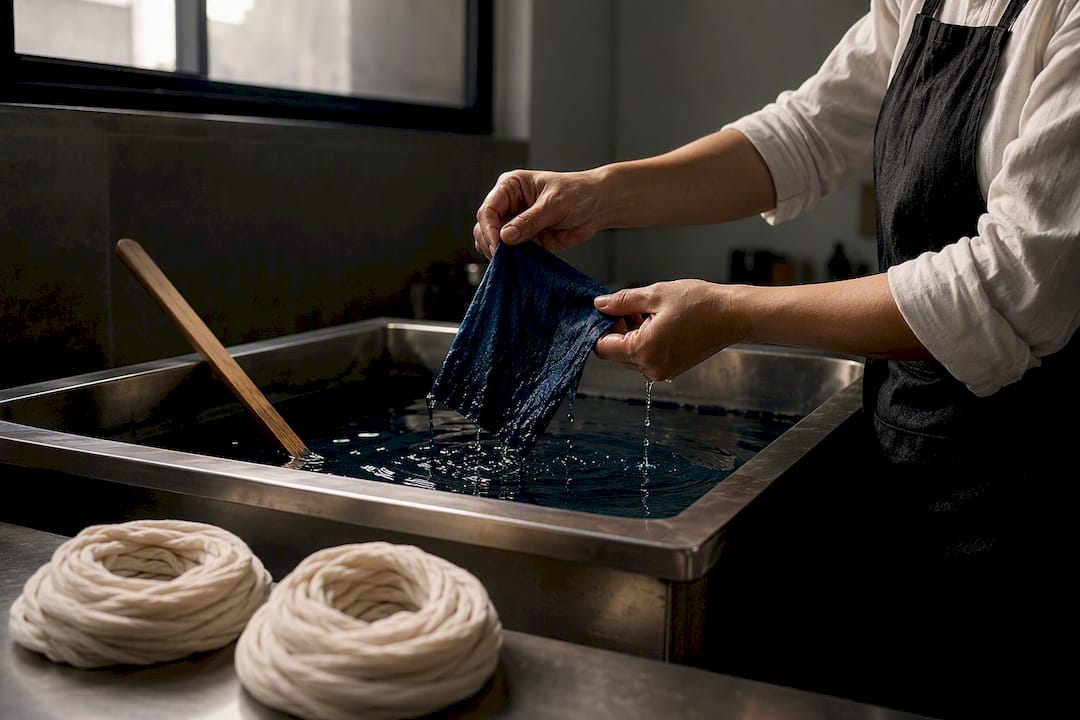
Finishing treatments compound this. Wrinkle-resistant coatings, waterproofing sprays and stain repellents frequently rely on formaldehyde or PFAS-family chemicals, both flagged by OEKO-TEX testing precisely because they persist in fabric and can leach out during washing or wear. A garment made from organic, GOTS-certified fibre can still fail on overall impact if it’s then dyed and finished using processes with no equivalent oversight.
This is why certification matters at the processing stage, not just the farming stage. GOTS specifically restricts dye and finishing chemicals as part of its standard, which is one reason it carries more weight than an “organic cotton” claim alone. Low-impact or natural dyes, closed-loop dyeing systems that recapture and reuse water, and untreated or minimally finished fabrics all reduce this second layer of impact. When you’re comparing two garments in the same fibre, the dyeing and finishing process is often what actually separates a genuinely lower-impact product from one riding on fibre marketing alone.
What this list gets right that most guides miss
Most “sustainable fabric” content ranks fibres like a league table, as if hemp beats cotton beats polyester in some fixed order. That’s the wrong mental model. The research consistently points somewhere else: how long a garment survives, and what happens to it at the end, often outweighs which fibre it started as.
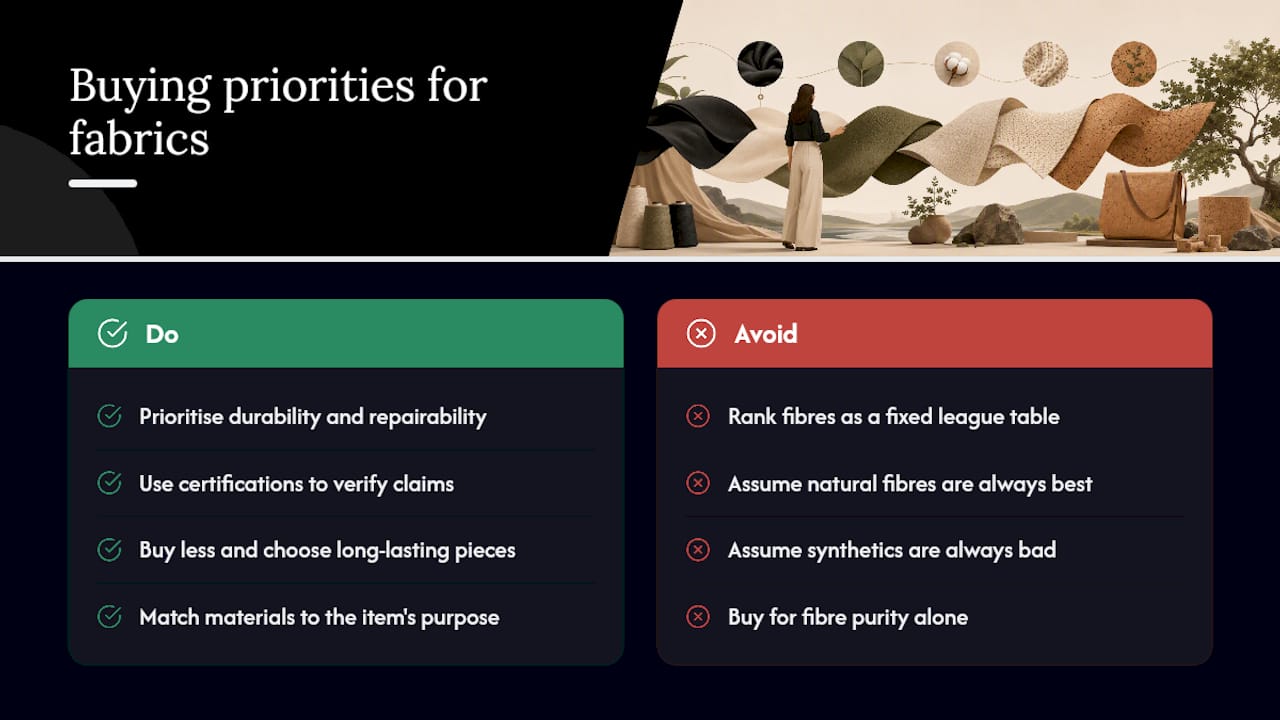
That’s an uncomfortable conclusion for an industry built on turnover. It means a recycled polyester jacket worn for eight years can beat an organic cotton one replaced every eighteen months, and it means the “best” fabric question depends entirely on what you’re buying it for. Where the conventional advice falls short is treating natural fibres as automatically virtuous and synthetics as automatically suspect, when the data on water, chemicals and microplastics cuts across that divide in both directions.
If you take one thing from this list, prioritise durability and repairability over fibre purity, then use certifications to verify the claims on whatever material you land on. Buy less, choose materials built to outlast trend cycles, and treat cork, recycled synthetics and organic naturals as tools suited to different jobs rather than competitors for a single crown.
— Aaron
Sources
For deeper metrics or country-specific detail, consult Textile Exchange’s Materials Benchmark for brand-level uptake data, Good On You’s fabric guide for life-cycle framing, Ethical Consumer’s fabric guidance for practical buying checks, and The Good Trade’s materials overview for a consensus fibre-by-fibre breakdown.
- Ethical Consumer — Choosing the most sustainable fabric
- Good On You — Most sustainable fabrics
- The Good Trade — The 15 best sustainable materials and natural fabrics