

Material sourcing explained: a guide for ethical shoppers
TL;DR:
- Material sourcing involves identifying and procuring raw materials while ensuring quality, ethics, and sustainability.
- Effective sourcing requires clear specifications, supplier qualification, and a focus on total cost beyond price alone.
Material sourcing is defined as the strategic process of identifying, evaluating, and procuring raw materials from suppliers while meeting quality, ethical, and sustainability standards throughout the supply chain. For anyone interested in sustainable fashion and consumer goods, understanding this process is the difference between buying into genuine ethics and falling for greenwashing. This material sourcing guide covers the full picture: from specification and supplier qualification to risk management and financial impact. Thecorkstore, for example, builds its entire product range around cork, a material chosen specifically because its sourcing meets rigorous environmental and cruelty-free criteria. The same disciplined thinking applies whether you are a brand, a buyer, or a conscious consumer.
What are the key phases of material sourcing?
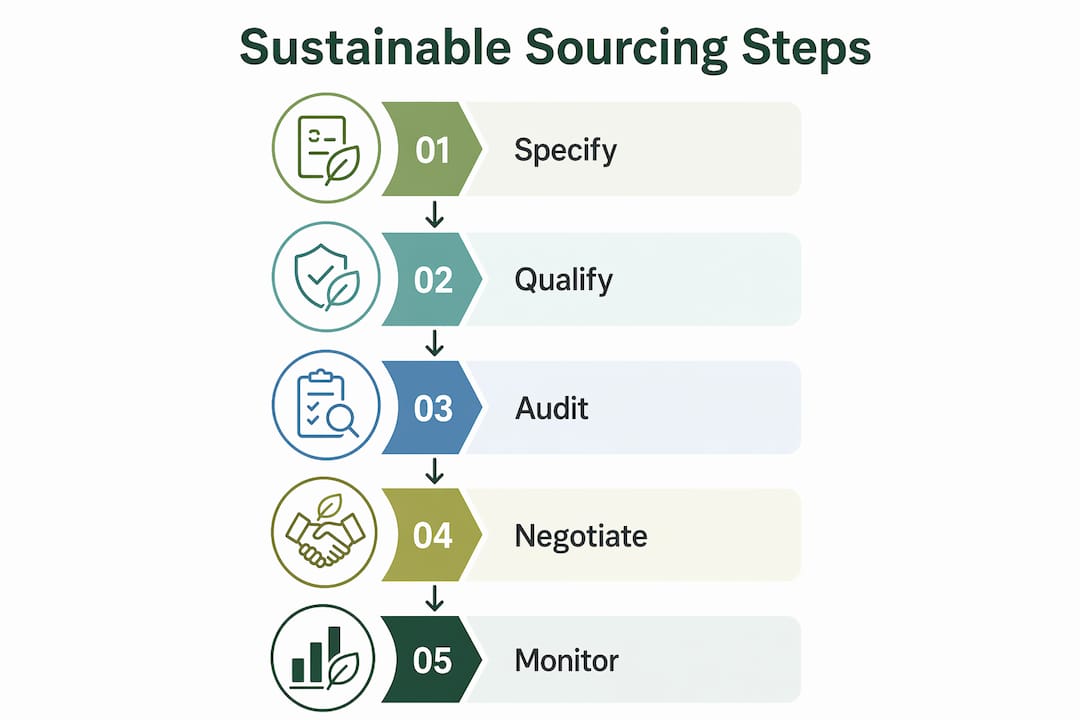
Professional material procurement follows six structured phases. Each phase builds on the last, and skipping any one of them creates problems downstream.
-
Specification. Every sourcing project starts with a detailed brief. This means technical drawings, CAD files, Pantone colour codes, and material tolerances. Lack of detailed specifications during the request-for-quotation stage leads directly to supplier guesswork, inconsistent samples, and production failures. The specification is the single document that aligns everyone.
-
Supplier search. Buyers identify potential suppliers through trade directories, industry events, and referrals. At this stage, geographic location matters. Vendors in stable trade-agreement countries such as the UK, Vietnam, and Japan are preferred because they reduce tariff and geopolitical risk exposure.
-
RFQ and commercial evaluation. A Request for Quotation goes to shortlisted suppliers. Buyers compare not just price, but lead times, minimum order quantities, and payment terms. Total Landed Cost is the correct metric here, not unit price alone.
-
Supplier qualification. This is where audits happen. On-site and third-party audits verify quality management systems, including ISO 9001 certification, factory conditions, and labour practices. For ethical sourcing, this phase is non-negotiable.
-
Sample production and inspection. The supplier produces a physical sample. The approved version becomes the “Golden Sample,” the physical benchmark against which every future production run is measured. Sole reliance on CAD files or photographs is insufficient because physical samples capture texture, weight, and finish in ways that digital files cannot.
-
Series delivery and ongoing management. Once production begins, regular status updates and quality checks continue. Insufficient communication during production is one of the leading causes of quality failures and delays.
Pro Tip: Involve your engineering or product development team at the specification stage, not after samples arrive. Early involvement prevents over-specification and costly redesigns.
How do sustainability and ethics shape sourcing decisions?
Sustainable sourcing is defined as the procurement of materials in a way that minimises environmental harm, supports fair labour, and maintains supply chain transparency. In fashion and consumer goods, this is no longer a niche concern. It is the standard that informed buyers expect.
The key criteria for ethical material sourcing include:
- Material origin and traceability. Buyers need to know where a raw material comes from and how it was harvested or produced. Cork, for instance, is harvested from the bark of cork oak trees without felling them, making it a genuinely renewable resource. Thecorkstore’s sourcing of cork from Portuguese forests is a clear example of traceability in practice.
- Environmental certifications. Recognised standards such as the Global Organic Textile Standard (GOTS), the Forest Stewardship Council (FSC) certification, and ISO 14001 environmental management systems provide third-party verification that a material meets defined environmental criteria.
- Labour and social compliance. Supplier audits must cover working conditions, wages, and freedom of association. The SA8000 standard is the most widely used framework for social accountability in supply chains.
- Carbon footprint and transport. Local sourcing reduces transport emissions and supports regional economies. Brands that source closer to their manufacturing base cut both their carbon footprint and their lead times.
- Supplier transparency. Brands that publish their supplier lists and audit results demonstrate a level of accountability that opaque supply chains cannot match.
Knowing how to spot sustainable materials is a practical skill for any buyer or consumer. Certifications, material datasheets, and supplier disclosures are the three documents that tell the real story.
Pro Tip: Ask suppliers for their most recent third-party audit report before placing any order. A supplier that cannot produce one within 48 hours is a supplier worth reconsidering.

What challenges do brands face when sourcing materials?
Material sourcing carries real financial and operational risk. Understanding those risks is the first step to managing them.
Raw material prices are projected to rise by 4.4% in 2026. That increase compounds across every item in a product range, squeezing margins unless buyers have locked in forward contracts or diversified their supplier base. Price volatility is the most visible risk, but it is not the only one.
Supply chain disruptions occur on average every 3.7 years and can erase 30–50% of annual EBITDA for typical manufacturers. That figure puts the cost of poor sourcing planning into sharp relief. A single disruption, whether from a natural disaster, a port closure, or a geopolitical event, can halt production for weeks.
“Manufacturers are transitioning from transactional procurement to collaborative innovation partnerships with suppliers for cost, quality, and sustainability improvements. The brands that treat suppliers as partners, not vendors, recover from disruptions faster and build more resilient supply chains.”
The main mitigation strategies are:
| Risk | Mitigation approach |
|---|---|
| Price volatility | Forward contracts, multi-supplier agreements |
| Long lead times | Safety stock, just-in-case inventory buffers |
| Quality failures | Golden Sample benchmarking, pre-shipment inspections |
| Geopolitical disruption | Geographic diversification of supplier base |
| Supplier insolvency | Financial health checks during qualification |
Digital twin simulations are an emerging tool in this space. Procurement teams use digital twins to model the impact of tariff shifts or supplier failures before they happen, enabling faster and better-informed decisions.
How does sourcing affect financial performance?
Material sourcing decisions have a direct and measurable impact on working capital, cash flow, and cost of goods sold (COGS). Buyers who treat sourcing as purely a procurement function miss the financial dimension entirely.
Total Landed Cost (TLC) is the correct basis for supplier comparison. TLC accounts for unit price, freight, import tariffs, insurance, and handling fees. A supplier with a lower unit price but higher freight costs and longer lead times can easily cost more in total than a slightly pricier local alternative.
Inventory strategy sits at the heart of the sourcing-finance relationship. Just-in-time inventory keeps working capital low but leaves brands exposed to supply shocks. Just-in-case inventory, which means holding safety stock, reduces that exposure but ties up cash and creates obsolescence risk if demand shifts. Holding safety stock requires sophisticated demand forecasting to avoid excessive capital tie-up.
Payment terms are a lever that buyers often underuse. Negotiating 60 or 90-day payment terms with suppliers, while offering early payment discounts to key partners, improves cash flow without changing the unit cost of materials. Strong supplier relationships make these negotiations possible. Transactional relationships do not.
Best practices for sourcing materials sustainably and efficiently
Sourcing materials effectively comes down to a handful of disciplines that experienced buyers apply consistently. These are not theoretical ideals. They are the practices that separate reliable supply chains from fragile ones.
- Write detailed specifications from day one. Include CAD files, material datasheets, colour standards such as Pantone references, and tolerance ranges. Vague briefs produce vague samples.
- Qualify suppliers before you need them. Build a shortlist of approved suppliers before a sourcing need becomes urgent. Urgency destroys negotiating power and skips critical quality checks.
- Maintain your Golden Sample. Store the approved physical sample in a controlled environment. Use it as the reference point for every inspection, not a photograph or a memory.
- Diversify your supplier base. Relying on a single supplier for a critical material is a single point of failure. Two or three qualified alternatives give you negotiating leverage and resilience.
- Prioritise supplier communication. Schedule regular production updates rather than waiting for problems to surface. Proactive communication catches issues when they are still fixable.
For a practical framework on applying these principles to fashion specifically, the sustainable accessory selection workflow from Thecorkstore sets out a clear process for buyers working in the eco-fashion space.
Pro Tip: Build a supplier scorecard that rates each partner on quality, lead time, communication, and sustainability compliance. Review it quarterly. Suppliers who know they are being measured consistently perform better.
Key takeaways
Effective material sourcing requires clear specifications, rigorous supplier qualification, and a financial view that goes beyond unit price to total landed cost.
| Point | Details |
|---|---|
| Start with specifications | Detailed CAD files and colour standards prevent supplier guesswork and sample failures. |
| Qualify before you order | On-site audits and ISO 9001 checks reduce quality and ethical risk before production begins. |
| Use Total Landed Cost | Unit price alone is misleading; freight, tariffs, and handling fees change the true cost. |
| Maintain a Golden Sample | The physical benchmark is the only reliable reference for production quality control. |
| Build supplier resilience | Geographic diversification and safety stock protect against disruptions that occur every 3.7 years on average. |
Why sourcing is the most underrated decision in sustainable fashion
Most conversations about sustainable fashion focus on the finished product. The bag, the wallet, the fabric. What rarely gets discussed is the sourcing decision that happened months or years before that product reached a shelf.
I have seen brands invest heavily in marketing their sustainability credentials while their supply chains remain entirely opaque. The disconnect is striking. A product can be made from a genuinely sustainable material and still carry an unethical sourcing story if the supplier was never audited, the workers were never protected, and the carbon cost of transport was never calculated.
What changed my thinking was working through the detail of what a Golden Sample actually represents. It is not just a quality control tool. It is a record of intent. When a brand keeps and references a Golden Sample, it is committing to a standard. That commitment runs through every production run that follows.
The cross-functional dimension of sourcing also gets underestimated. Procurement cannot do this alone. Design teams need to understand material constraints. Finance teams need to understand lead time risk. When those three functions work together from the specification stage, the sourcing process produces better outcomes at lower cost. When they work in silos, the problems compound.
For anyone buying sustainable goods, the most useful question to ask a brand is not “what is this made from?” It is “how did you choose your supplier?” The answer tells you everything.
— Aaron
Thecorkstore’s approach to sustainable materials
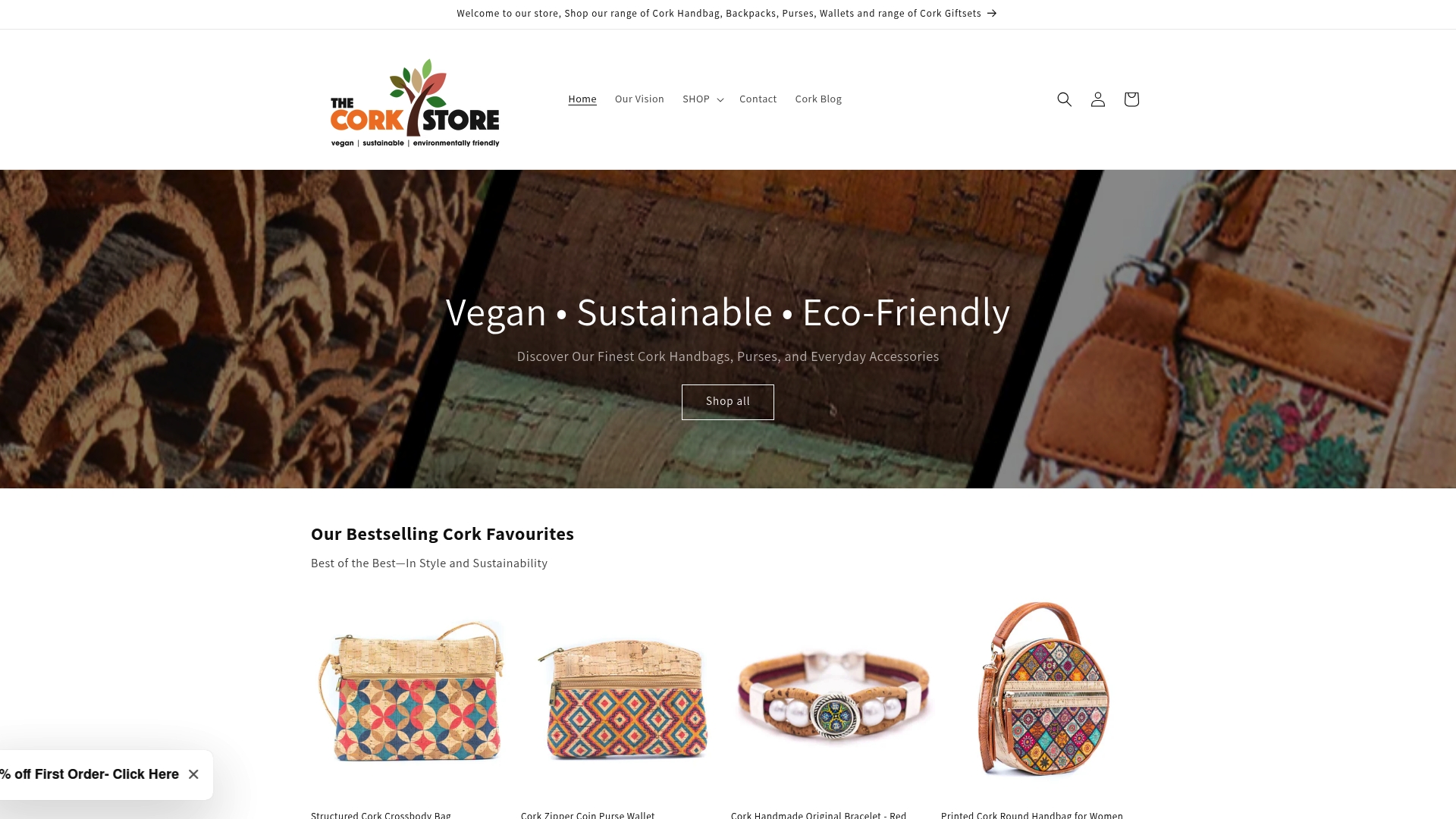
Thecorkstore has built its product range around cork precisely because the material’s sourcing story holds up to scrutiny. Cork is harvested from living trees in Portuguese and Spanish forests, with each tree harvested on a nine-year cycle that supports biodiversity and carbon sequestration. The result is a material that is renewable, vegan, and traceable from forest to finished product.
Thecorkstore’s collection of cork accessories includes handbags, backpacks, wallets, and purses, all crafted without animal products or harmful chemicals. For buyers who want to understand the full range of ethical fashion materials available, Thecorkstore’s blog provides detailed guidance on what to look for and why it matters.
FAQ
What is material sourcing in simple terms?
Material sourcing is the process of finding, evaluating, and buying raw materials from suppliers. It covers everything from writing specifications to auditing suppliers and managing ongoing quality.
Why does sustainable sourcing matter in fashion?
Sustainable sourcing reduces environmental harm, supports fair labour, and ensures materials are traceable. Without it, eco-friendly claims about finished products are difficult to verify.
What is a Golden Sample in material sourcing?
A Golden Sample is the approved physical prototype that sets the quality standard for a production run. Every subsequent batch is measured against it during inspection.
How does Total Landed Cost differ from unit price?
Total Landed Cost includes unit price plus freight, import tariffs, insurance, and handling fees. It gives a true picture of what a material actually costs to bring into production.
How often do supply chain disruptions happen?
Supply chain disruptions occur on average every 3.7 years and can erase 30–50% of annual EBITDA for manufacturers, making resilient sourcing a financial priority, not just an operational one.