

Sustainable accessory selection workflow: your 2026 guide
TL;DR:
- A sustainable accessory workflow is a repeatable decision process that helps you balance style, ethics, and environmental impact.
- It involves auditing what you own, evaluating materials honestly, verifying brand transparency, and prioritizing longevity over trends.
A sustainable accessory selection workflow is a repeatable decision-making process that helps you choose fashion accessories balancing style, ethics, and environmental impact without compromise. Most eco-conscious shoppers make purchasing decisions reactively, responding to trends or marketing rather than applying consistent criteria. A structured workflow changes that. It replaces guesswork with a clear sequence: audit what you own, evaluate materials honestly, verify brand transparency, and prioritise longevity over novelty. Thecorkstore, which specialises in cork-based vegan accessories, demonstrates how this approach works in practice. Cork is harvested without felling trees, making it one of the few materials that genuinely meets accessory sustainability criteria at source.
What prerequisites create a foundation for sustainable accessory selection?
The most effective eco-friendly accessory process starts before you open a single product page. You need three things in place: an honest picture of what you already own, a working knowledge of sustainability certifications, and the right digital tools to verify claims quickly.

Start with a wardrobe audit. Extending the life of existing accessories reduces their carbon footprint more effectively than buying new eco-certified items. That means the most sustainable accessory is often the one already sitting in your drawer. A wardrobe audit forces you to identify genuine gaps rather than perceived ones, which cuts impulse purchases at the root.
Know your certifications. The Forest Stewardship Council (FSC) and the Programme for the Endorsement of Forest Certification (PEFC) are the two most recognised bodies for verifying responsibly sourced natural materials. Seeing either logo on a product tells you the material supply chain has been independently audited. Without that verification, a “natural” label means very little.
Use digital tools to filter faster. Sustainability filters on e-commerce sites can increase conversion rates by 12–25% for eco-conscious shoppers. That figure reflects a real behavioural shift: when filters make ethical choices easier to find, shoppers follow through. Digital Product Passports (DPPs) go further, providing factory locations, material composition, and supply chain data at the product level.
- Conduct a wardrobe audit before browsing any new products
- Familiarise yourself with FSC and PEFC certification marks
- Use sustainability filters on e-commerce platforms to narrow choices quickly
- Look for Digital Product Passports or equivalent transparency data
- Check whether a brand publishes its supply chain information publicly
Pro Tip: Before any purchase, ask yourself whether you already own something that serves the same function. If the answer is yes, repair or restyle it first.
How do you evaluate truly sustainable materials for accessories?
Material evaluation is the most technically demanding part of responsible accessory decision making. The common mistake is treating “natural” as a synonym for “sustainable.” It is not.
Agricultural by-products versus virgin crops
The most credible sustainable materials come from agricultural waste rather than dedicated crops. Accessories made from agricultural waste like pineapple leaf fibres repurpose harvest by-products that would otherwise be burned or discarded. That distinction matters because it means no additional land, water, or fertiliser is required to produce the raw material. Cork follows the same logic: it is stripped from the bark of living cork oak trees, which then regenerate, sequestering carbon throughout their lifespan.
Virgin crop materials, such as conventional cotton, require significant water and pesticide inputs even when organically certified. Synthetics like virgin polyester derive from fossil fuels. Recycled polyester is a better option, but it still sheds microfibres during washing. No single material is superior across every sustainability dimension. Every choice involves trade-offs, and the supply chain context matters as much as the fabric type itself.
Reading certifications beyond the logo
FSC and PEFC certification confirms responsible forest management for wood-derived materials including cork. For plant-based alternatives, look for third-party testing data on biodegradability and chemical treatments. Natural antibacterial fibres like pineapple leaf spun yarn avoid chemical treatments entirely while maintaining durability, which is a meaningful advantage over conventionally processed synthetics.
| Material type | Key advantage | Key trade-off |
|---|---|---|
| Cork (bark harvest) | Renewable, carbon-sequestering, biodegradable | Limited colour range without dyes |
| Pineapple leaf fibre | Repurposes agricultural waste, naturally antibacterial | Durability varies by processing method |
| Recycled polyester | Diverts plastic waste from landfill | Sheds microfibres during washing |
| Organic cotton | Reduced pesticide use versus conventional | High water consumption, land-intensive |
| Virgin synthetic | Low upfront cost | Fossil fuel derived, non-biodegradable |
Pro Tip: When a brand claims a material is “eco-friendly,” search for the specific certification number, not just the logo. Genuine certifications are publicly searchable on the issuing body’s website.
What step-by-step workflow helps you balance style, ethics, and environmental impact?
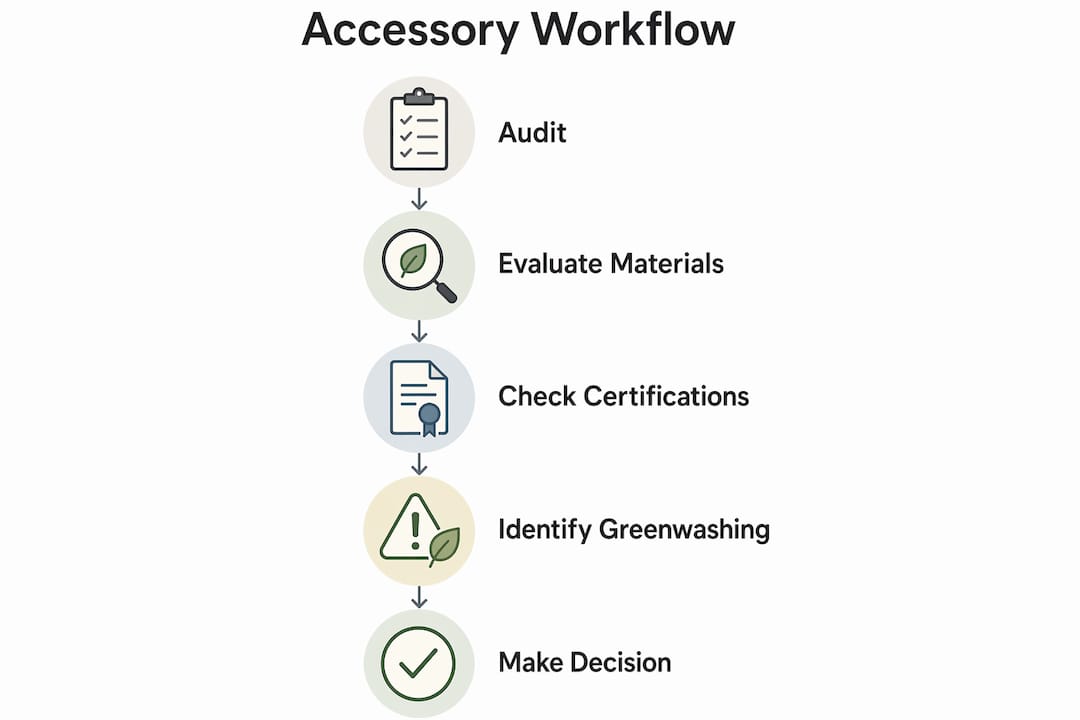
Green accessory sourcing becomes manageable when you follow a fixed sequence. The steps below build on each other, so skipping ahead typically leads to the impulse purchases the workflow is designed to prevent.
-
Audit your existing accessories. List every bag, wallet, belt, and jewellery item you own. Note condition, frequency of use, and whether anything needs repair. This step alone often eliminates the need for a new purchase.
-
Set personal style goals. Choosing versatile, timeless styles avoids the environmental costs of trend cycling. Write down three to five adjectives that describe your personal style. Use those as a filter when browsing, not the season’s trending colours or shapes. Thecorkstore’s sustainable accessory trends guide shows how timeless design and ethical sourcing can coexist without sacrificing style.
-
Research brand transparency. Check whether the brand publishes its factory locations, material sourcing, and environmental policies. Brands that do not share this information publicly are harder to verify. Use sustainability filters on retail platforms to shortlist candidates before reading deeper.
-
Evaluate product details with digital tools. Real-time sustainability scoring apps and Digital Product Passports reduce friction and increase transparency at the point of purchase. A DPP should tell you the material composition, country of manufacture, and any relevant certifications. If that data is absent, treat it as a warning sign rather than an oversight.
-
Assess durability, repairability, and end-of-life options. A well-made cork wallet will outlast a cheap synthetic one by years. Check whether the brand offers repair services, take-back schemes, or guidance on responsible disposal. Accessories designed for circularity cost more upfront but generate less waste over time.
-
Make the purchase decision with circularity as the final filter. Ask whether the item can be repaired, repurposed, or composted at end of life. If none of those options exist, reconsider. The eco-friendly accessory styling guide for 2026 from Thecorkstore offers practical examples of how circularity-first design looks in real products.
- Prioritise repair and restyle before any new purchase
- Use DPPs and sustainability scoring tools at the research stage
- Apply your personal style criteria before checking price
- Confirm end-of-life options before completing checkout
What common challenges arise, and how do you troubleshoot them?
Ethical accessory selection breaks down most often at three points: identifying greenwashing, managing cost pressure, and resisting attractive marketing for trend-driven items.
Greenwashing is the most persistent problem. Digital Product Passports providing granular transparency data are the most reliable defence against it. Vague claims like “conscious collection” or “eco-friendly materials” without supporting data are red flags. Genuine sustainability brands publish specific certifications, factory audits, and material breakdowns. When that level of detail is absent, the claim is unverified.
Cost pressure is real but often overstated. A higher upfront price for a durable, repairable accessory typically delivers better value over three to five years than a cheaper item replaced annually. The buy less, buy better principle is not just ethical advice. It is sound financial logic. Sustainable luxury packaging specialist Nicholas & Rose also notes that eco-aware product design extends this principle to every element of a product’s presentation, not just the material itself.
Impulse buying undermines even the best workflow. Marketing for trend-driven accessories is designed to create urgency. The most effective counter is a written list of your style goals and genuine wardrobe gaps, reviewed before any purchase. If an item is not on the list, a 48-hour waiting period before buying is a reliable filter.
- Demand specific certification data, not marketing language
- Compare cost per year of use, not upfront price alone
- Keep a written list of genuine wardrobe gaps and review it before purchasing
- Use a 48-hour waiting period for any unplanned accessory purchase
- Prioritise brands that publish supply chain data proactively
Pro Tip: Search the brand name alongside “greenwashing” or “transparency report” before buying. Genuine brands welcome scrutiny. Those that do not are telling you something.
Key takeaways
A sustainable accessory selection workflow works because it replaces reactive purchasing with a repeatable, criteria-driven process that prioritises longevity, material integrity, and brand transparency.
| Point | Details |
|---|---|
| Audit before you buy | Review existing accessories first; extending their life reduces carbon footprint more than buying new eco-certified items. |
| Evaluate materials critically | No material is universally superior; agricultural by-products like cork and pineapple leaf fibre offer the strongest sustainability credentials. |
| Verify with certifications | FSC, PEFC, and Digital Product Passports provide independently verified data beyond marketing claims. |
| Follow a fixed workflow | A six-step sequence from audit to circularity check prevents impulse purchases and keeps style goals intact. |
| Spot greenwashing early | Absent supply chain data is a warning sign; genuine brands publish factory locations and material composition proactively. |
Why the workflow matters more than any single purchase
I have spent years watching eco-conscious shoppers make the same mistake: they research one purchase meticulously, then revert to habit for the next ten. The workflow is not about perfection on a single item. It is about building a consistent decision-making habit that compounds over time.
The most useful shift I have seen is when shoppers stop asking “is this sustainable?” and start asking “is this the most sustainable option available to me right now, given what I already own?” That reframe changes everything. It removes the paralysis of seeking a perfect choice and replaces it with a practical comparison.
Technology genuinely helps here. Sustainability scoring tools and DPPs have made verification faster than it was even two years ago. But the technology only works if you use it before you are already emotionally committed to a purchase. The workflow forces that sequence.
Trend fatigue is also real, and it is a sustainability asset. Once you have defined your personal style in writing, trend-driven marketing loses most of its power. I have found that shoppers who commit to timeless, versatile pieces report both lower spending and higher satisfaction. The environmental and ethical case for sustainable accessories is well documented, but the personal case, less stress, fewer regrets, and a wardrobe that actually works, is equally compelling.
— Aaron
Thecorkstore: sustainable accessories built for the workflow
Applying a sustainable accessory selection workflow is straightforward when the products you are evaluating already meet the criteria. Thecorkstore’s range is built around cork, a material that is harvested without felling trees, FSC-certified, biodegradable, and vegan.
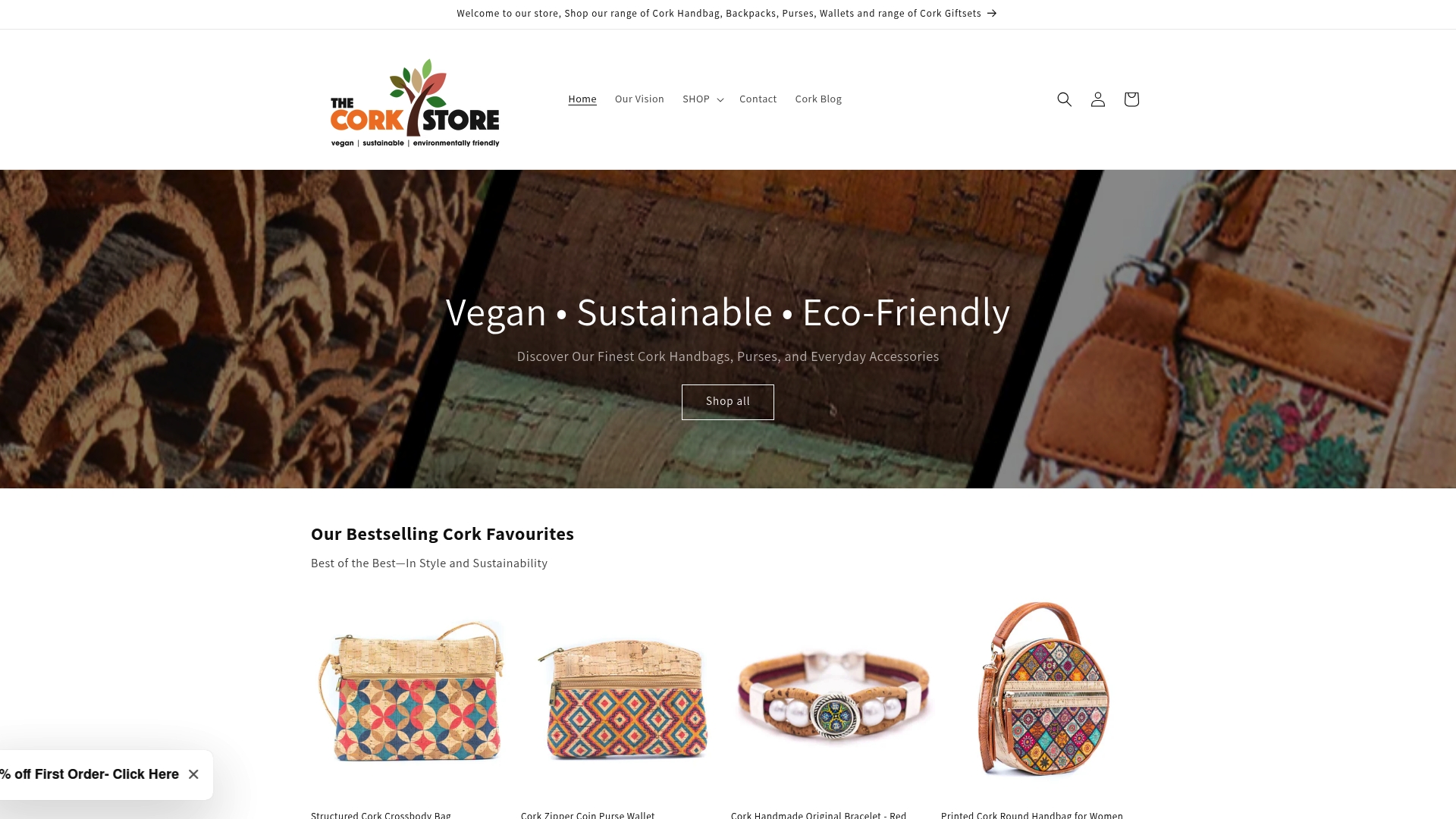
The All-Natural Cork Wallet Gift Set is a practical starting point. It combines durability, natural material integrity, and a design built for longevity rather than trend cycles. For broader gifting or personal use, the vegan cork gift collection offers bags, purses, and accessories that pass every step of the workflow outlined here. Each product comes with clear material information, making verification straightforward.
FAQ
What is a sustainable accessory selection workflow?
A sustainable accessory selection workflow is a repeatable process for choosing fashion accessories that balance style, ethics, and environmental impact. It typically includes a wardrobe audit, material evaluation, brand transparency checks, and a circularity assessment before purchase.
How do I identify greenwashing in accessory brands?
Look for specific certifications such as FSC or PEFC, and check whether the brand publishes factory locations and material composition data. Vague claims without supporting documentation are a reliable indicator of greenwashing rather than genuine sustainability.
Is cork a genuinely sustainable accessory material?
Cork is harvested from the bark of living cork oak trees, which regenerate after each harvest and continue to sequester carbon. It is biodegradable, vegan, and FSC-certifiable, making it one of the strongest material choices within a green accessory sourcing framework.
What are Digital Product Passports and why do they matter?
Digital Product Passports are product-level records containing material composition, factory locations, and certification data. They are becoming the standard for transparency verification and are the most reliable tool for confirming sustainability claims beyond marketing language.
How do I avoid impulse purchases when shopping for accessories?
Write down your personal style goals and genuine wardrobe gaps before browsing. Apply a 48-hour waiting period for any unplanned purchase. If the item does not address a gap on your list, it does not meet the workflow criteria regardless of how appealing the marketing is.