

The role of transparency in fashion explained
TL;DR:
- Transparency in fashion involves openly sharing detailed information about materials, labour conditions, and environmental impact across the supply chain. Verified, product-specific data through forensic testing and Digital Product Passports enables consumers to make ethical choices and encourages brand accountability. Emerging regulations and consumer tools are improving supply chain visibility, but genuine transparency depends on independent verification beyond self-reported documentation.
Transparency in fashion is defined as the open disclosure of accurate information about materials, production processes, labour conditions, and environmental impact across a brand’s entire supply chain. The role of transparency in fashion has never been more consequential: consumer trust in brand claims sits at just 3%, and 60% of shoppers actively avoid products from brands they consider unethical. Tools such as Digital Product Passports (DPP), Fashion Revolution’s annual indices, and Oritain’s forensic supply chain intelligence are reshaping what accountability looks like in practice. Understanding how these mechanisms work gives you the power to make genuinely informed choices rather than relying on marketing copy.
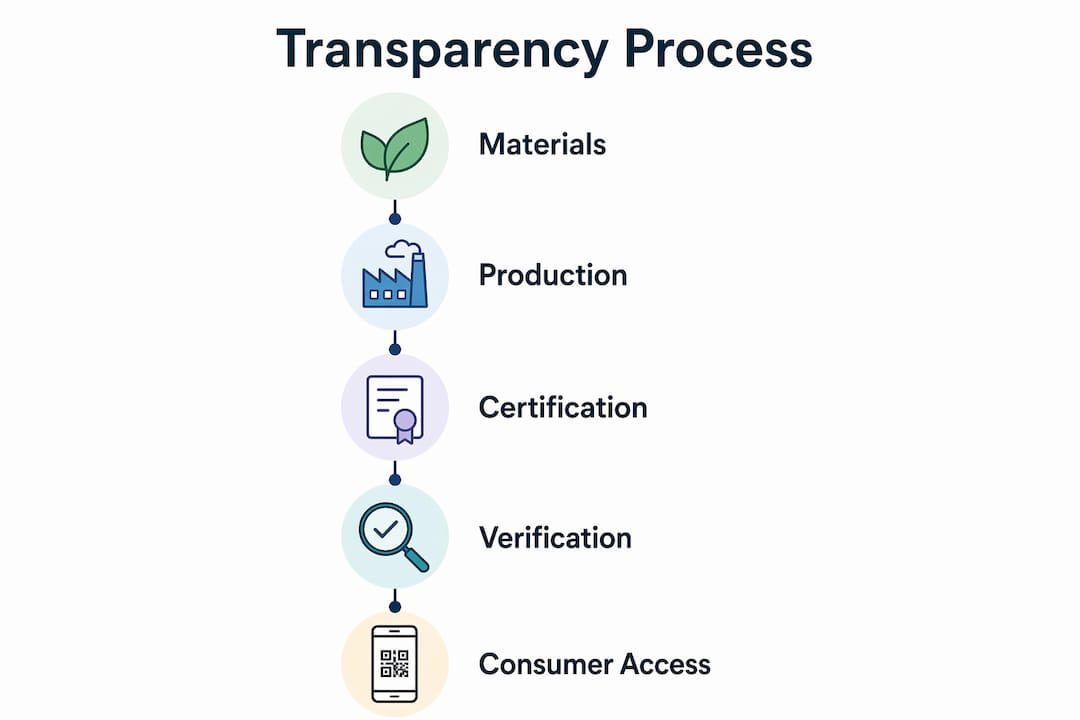
What does transparency mean in fashion supply chains?
Supply chain transparency and traceability are related but distinct concepts. Transparency refers to what information a brand discloses publicly. Traceability refers to a brand’s internal ability to track a product’s journey from raw material to finished garment. A brand can have strong traceability yet share almost none of it with consumers, which is why both matter.
When a brand is genuinely transparent, it shares specific details across several dimensions:
- Materials: The fibre content, origin country, and certification status of each input (for example, GOTS-certified organic cotton from India)
- Labour conditions: Factory names, locations, audit results, and worker welfare policies at each production tier
- Environmental impact: Water usage, carbon emissions, chemical management, and waste data tied to specific production stages
- Ownership and subcontracting: Whether production is outsourced beyond the first-tier supplier, which is where most ethical risks are hidden
The critical gap in most transparency efforts is that they rely on supplier-provided documentation. A factory can submit paperwork claiming compliant sourcing without that claim being independently verified. Transparency levels vary greatly between supply chain tiers, meaning brand-level disclosures rarely capture what happens at the cotton farm or spinning mill.
Pro Tip: When evaluating a brand’s transparency claims, look specifically for third-party or independent verification rather than self-reported supplier declarations. Certifications from bodies such as the Soil Association, Fairtrade Foundation, or B Corp carry more weight than a brand’s own sustainability page.

Why is transparency important for ethical and sustainable fashion?
The importance of transparency in fashion extends across three interconnected areas: consumer empowerment, brand accountability, and regulatory compliance. Each reinforces the others.
From a consumer perspective, you cannot make an ethical choice without reliable information. If a brand claims its jeans are sustainably produced but cannot tell you which factory made them or what chemicals were used in dyeing, that claim is meaningless. The Fashion Revolution What Fuels Fashion? 2025 Index found that average climate and energy disclosure scores among large brands sit at just 14%, with even the best performer reaching only 71%. That gap illustrates how far the industry still has to travel.
From a brand perspective, transparency reduces operational and reputational risk. Traceability and transparency help brands identify unauthorised subcontractors, catch sourcing violations before they become public scandals, and meet rising customer expectations. Brands that invest in verified supply chain data are better positioned to respond to audits, media scrutiny, and regulatory demands.
Regulators are now formalising these expectations. Key developments include:
- The EU Ecodesign for Sustainable Products Regulation (ESPR), which will require textile products sold in the EU to carry a Digital Product Passport by mid-2027, standardising what product information must be disclosed
- The EU Green Claims Directive, which prohibits vague environmental marketing without substantiated evidence
- National due diligence laws in France and Germany, which require brands to map and monitor their supply chains for human rights and environmental risks
“Transparency only delivers value when it enables new decisions, such as compliance audits or ethical purchase choices, rather than providing generic visibility for marketing purposes.” — Digital product passports and circular fashion
Transparency also underpins circularity. A garment with a verified material passport can be more easily repaired, resold, or recycled because the fibre content and chemical history are known. Without that data, circular fashion remains aspirational rather than operational. You can explore how ethical fashion practices connect to these broader sustainability goals in more depth.
How is transparency verified and why does verification matter?
Documentation and verification are not the same thing. Most fashion brands currently rely on a paper trail: supplier declarations, audit reports, and certification copies. The problem is that paperwork can be falsified, audits can be gamed, and certifications can be misapplied to non-compliant batches.
The scale of this problem is significant. Forensic testing by Oritain found that prohibited cotton exposure among tested brands rose from 64% in 2024 to 90% in 2025, despite those brands holding supplier declarations stating otherwise. That is not a minor discrepancy. It means the majority of brands relying solely on documentation are unknowingly sourcing from prohibited or unethical origins.
The table below compares the three main types of transparency evidence currently used in the fashion industry:
| Evidence type | How it works | Reliability |
|---|---|---|
| Self-reporting | Brand or supplier declares sourcing and practices | Low: no independent check |
| Third-party audit | External auditor inspects factory against a standard | Medium: audits can be scheduled and prepared for |
| Forensic verification | Scientific testing of physical material to confirm geographic origin | High: physical evidence cannot be falsified |
Forensic origin verification, as practised by companies such as Oritain, uses isotope and trace element analysis to match a physical fibre sample to its claimed geographic origin. Self-declared traceability often fails to reveal actual sourcing issues, which is why scientific proof is becoming a baseline expectation in premium and regulated markets.
Pro Tip: When a brand cites a certification, check whether it covers the specific product you are buying or only the brand’s operations in general. A brand can be B Corp certified while still sourcing uncertified materials for individual product lines.
How can consumers use transparency information to make better choices?
Knowing that transparency matters is one thing. Knowing how to act on it is another. Here is a practical framework for using transparency data when making fashion purchases.
-
Scan the Digital Product Passport. From mid-2027, EU-sold textiles must carry a scannable QR code linking to verified product data. A 2026 study of Italian consumers found strong willingness to pay for DPP-based transparency, particularly among younger women and Baby Boomers. If a product already carries a QR code, scan it and check what data is actually accessible rather than assuming it is comprehensive.
-
Check the Fashion Revolution Fashion Transparency Index. Fashion Revolution publishes annual scores for major brands based on their public disclosures across policy, supply chain, and social and environmental topics. A brand scoring below 30% is disclosing very little. Use this as a quick filter before purchasing from a large retailer.
-
Distinguish between brand-level and product-level claims. A brand saying “we are committed to sustainability” tells you nothing about the specific garment you are considering. Look for product-specific information: the factory name, the fibre origin, the dye certification. This is where sustainable fashion terminology becomes genuinely useful.
-
Look for independent verification, not just certifications. As discussed above, certifications vary in rigour. GOTS (Global Organic Textile Standard) and Fairtrade are among the most credible because they require physical chain-of-custody documentation. A brand displaying a logo without a certification number or licence holder name is a warning sign.
-
Use tools designed for consumer awareness. Good On You rates brands on people, planet, and animals using publicly available data. The Remake Fashion Accountability Report scores brands on living wages and supply chain disclosure. These tools translate complex supply chain data into accessible ratings you can use at the point of purchase.
What challenges and future trends shape fashion industry transparency?
Transparency in fashion is advancing, but unevenly. Several structural challenges slow progress even as regulation and consumer pressure increase.
- Tier visibility drops sharply beyond tier one. Most brands can name their direct manufacturing partners. Far fewer can trace back to the spinning mill, the cotton gin, or the farm. The highest-risk labour and environmental practices tend to occur at these deeper tiers, precisely where visibility is lowest.
- Regulation is not a universal driver. An analysis of 20 fashion companies found that companies in less-regulated markets sometimes outperform regulated ones on supply chain transparency. Data capture capability and corporate culture matter as much as legal obligation.
- Consumer trust remains low despite progress. With only 3% of consumers trusting brand marketing claims, even brands making genuine improvements struggle to communicate credibility. The trust deficit is a structural problem that documentation-heavy approaches cannot solve on their own.
- The DPP implementation deadline of mid-2027 will force a significant shift in how brands collect and share product-level data. Brands that have not yet built the data infrastructure to support DPP compliance face considerable operational pressure in the next 18 months.
The direction of travel is clear: transparency is moving from brand-level narrative to product-level verified data linked to individual garments via QR codes. Scientific verification methods will become standard rather than exceptional. For consumers, this means the quality of transparency information available at the point of purchase will improve substantially over the next few years.
Key takeaways
Transparency in fashion only delivers real value when it is verified, product-specific, and accessible at the point of purchase rather than buried in a brand’s annual report.
| Point | Details |
|---|---|
| Verification beats documentation | Self-reported supplier data is unreliable; forensic and third-party verification provides credible evidence. |
| DPP changes everything | EU Digital Product Passports, mandatory by mid-2027, will link individual garments to verified material and production data. |
| Trust gap is structural | Only 3% of consumers trust brand claims, making independent verification a commercial as well as ethical necessity. |
| Tier depth matters | Brand-level transparency does not guarantee visibility at the farm or spinning mill, where most ethical risks occur. |
| Consumer tools exist now | Fashion Revolution indices, Good On You, and Remake reports give you usable transparency scores before you buy. |
Why verified transparency is the only kind worth having
I have spent years reading sustainability reports, and the pattern is consistent: the brands with the most polished transparency communications are not always the ones with the cleanest supply chains. The gap between what a brand says and what forensic testing reveals is not a minor rounding error. It is, in many cases, the entire story.
What I find genuinely encouraging is the shift towards product-level data. A brand-level sustainability pledge is easy to write and impossible to hold anyone accountable for. A QR code on a specific jacket that links to the factory name, the cotton origin, and an independent audit result is a different proposition entirely. That is transparency that enables a decision rather than one that performs virtue.
My honest view is that consumers are the most underutilised force in this space. Brands respond to purchasing behaviour faster than they respond to regulation. When you consistently choose products with verified, product-specific transparency data and avoid those with vague claims, you are applying pressure that no regulator can replicate. The benefits of ethical fashion are real, but they only materialise when the transparency underpinning them is genuine. Demand the evidence. Ask where the QR code is. Check the certification number. That is not cynicism. It is exactly how this improves.
— Aaron
Explore transparent, ethical accessories at Thecorkstore
If you are ready to put these principles into practice, Thecorkstore makes the sourcing story straightforward. Every cork accessory is crafted from natural cork bark harvested from Portuguese cork oak forests, a process that requires no tree felling and actively supports biodiversity. The materials, origins, and production ethics are not hidden behind a sustainability page. They are the product.
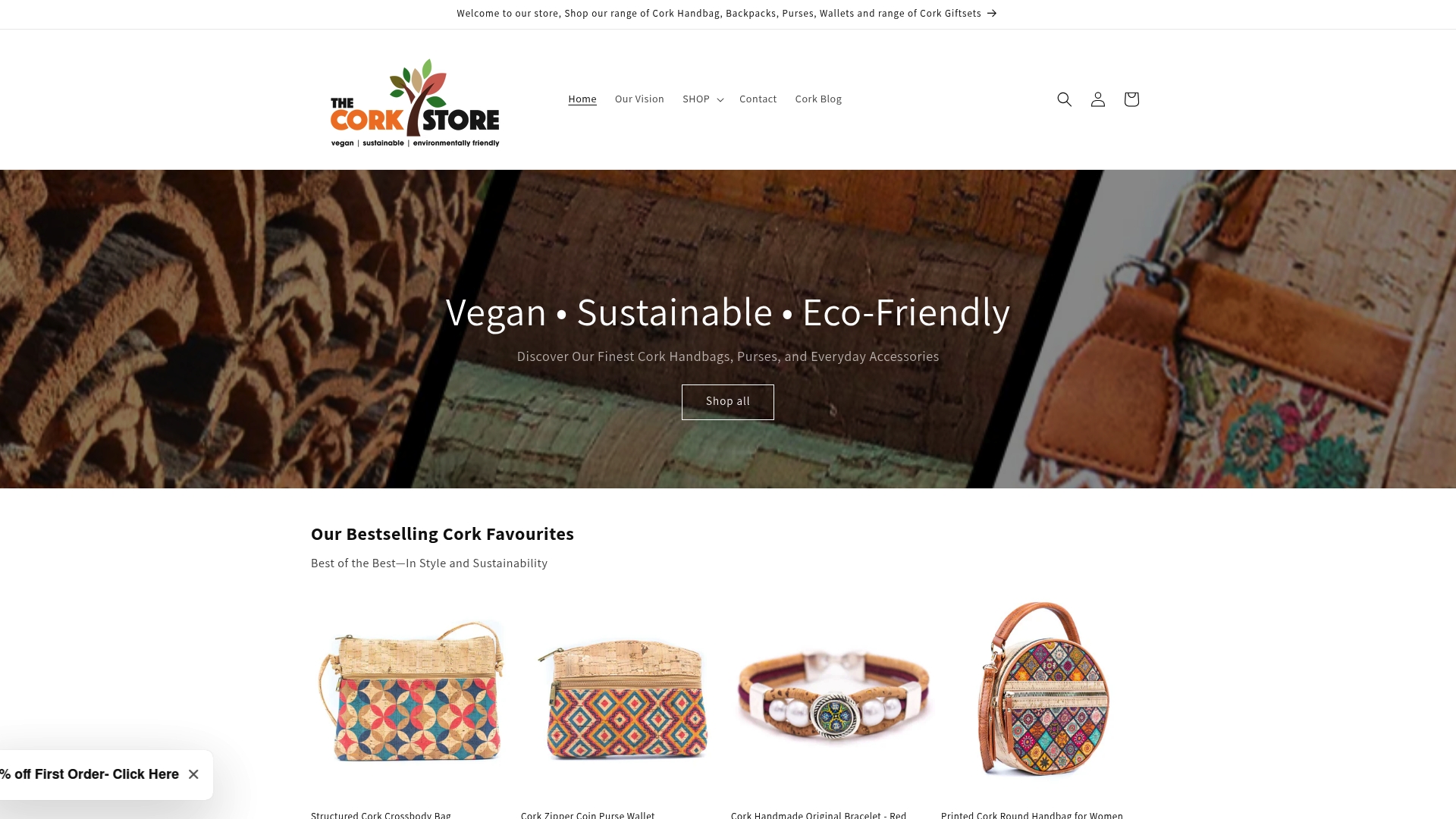
The cork wallet gift set is a strong starting point: vegan, durable, and produced without the environmental cost of leather. For a broader selection of verified ethical accessories, the vegan cork gift collection covers everything from bags to purses with the same commitment to transparent, cruelty-free sourcing. Choosing products with a clear, honest origin story is one of the most direct ways to support the shift towards genuine fashion industry transparency.
FAQ
What is the role of transparency in fashion?
Transparency in fashion means openly disclosing accurate information about materials, production processes, labour conditions, and environmental impact so that consumers and regulators can make informed decisions. It functions as the foundation of ethical fashion practices by making brands accountable for their supply chain choices.
What is a Digital Product Passport and how does it help consumers?
A Digital Product Passport is a standardised data record linked to an individual product via a QR code, providing verified material, production, and environmental information. The EU will require textile DPPs by mid-2027, giving consumers direct access to product-level transparency rather than brand-level claims.
Why can’t consumers trust fashion brand sustainability claims?
Consumer trust in fashion brand marketing claims stands at just 3%, largely because most brands rely on self-reported supplier data that is not independently verified. Forensic testing has shown that prohibited cotton exposure among tested brands rose from 64% in 2024 to 90% in 2025, despite brands holding compliant documentation.
How does supply chain transparency differ from traceability?
Traceability is a brand’s internal ability to track a product’s journey from raw material to finished garment. Transparency is what the brand chooses to disclose publicly from that data. A brand can have strong traceability and still share very little with consumers.
Which tools can consumers use to check a brand’s transparency?
Fashion Revolution’s annual Fashion Transparency Index, Good On You’s brand ratings, and the Remake Fashion Accountability Report all translate complex supply chain data into accessible scores. For product-level data, scanning a brand’s QR code where available and checking for named certification numbers provides the most reliable information.