
Things Made of Cork: Everyday Finds and 6 Wine Cork Reuse Projects
Things made of cork include household homeware, fashion accessories, flooring and wall panels, high-performance industrial parts, and wine-cork crafts. Cork is harvested from living oak bark, so it renews itself, and offcuts and old stoppers can be ground up and reused. That makes it a material people can buy, reuse and recycle.
TL;DR:
- Around 70% of cork becomes bottle stoppers, while 22% goes to building uses; flooring, panels, and insulation benefit from its thermal and acoustic properties.
- Cork oak bark grows back after harvesting, with harvests repeated roughly every nine to fourteen years, so choose it when you want a renewable material.
- Amorim Cork reported collecting 123.8 million stoppers in 2025, producing 557 tonnes of recycled cork for flooring, insulation, and consumer goods.
- Choose cork accessories when you want a light, flexible, vegan material; clean bags and wallets with a damp cloth, and never soak them.
Table of Contents
- 1. Everyday cork products you can buy today
- 2. How cork is used around the home
- 3. How to reuse wine corks in simple DIY projects
- 4. Why cork works so well: properties, industry and sustainability
- 5. How to keep cork items looking good
- 6. Cork in fashion: why designers keep coming back to it
- 7. How does cork compare with other eco-friendly materials?
- Why cork deserves a place in your everyday life
- Where to find curated cork accessories we stand behind
- FAQ
- Sources
1. Everyday cork products you can buy today
Most people meet cork first as a bottle stopper. According to a scientific review, around 70% of all cork goes into stoppers, but the rest becomes a surprising range of goods. Here is what you will find in shops:
- Household items: coasters, placemats, trivets and tableware mats that shrug off heat and spills.
- Fashion pieces: handbags, backpacks, wallets, coin purses and bracelets, often sold as vegan alternatives to leather.
- Small accessories: phone cases, pen bodies, USB shells and jewellery.
- Gifts and décor: ornaments, memo boards and kitchen organisers.
If you want to explore cork accessories, our guide to cork accessories walks through some of the options. Wallets are a good starting point, and we explain why in our piece on the benefits of cork wallets.
What makes these items appealing is the feel. Cork is light, slightly soft to the touch and has a natural, speckled grain, so no two pieces look identical.
2. How cork is used around the home
Cork earns its place indoors because it does real work. The same Frontiers review reports that roughly 22% of cork goes into building-industry uses, thanks to its low density and its thermal and acoustic insulation.
- Flooring and wall panels: cork is warm underfoot, springy and quiet, so it softens footsteps and room echo.
- Insulation and underlay: boards and rolls sit beneath other floors to reduce noise and heat loss.
- Practical items: bath mats that dry quickly, desk mats and organisers, and classic notice boards that take pins repeatedly.
Upkeep is simple. Sweep or vacuum floors and panels regularly, wipe up spills promptly, and avoid flooding the surface with water. Cork floors usually need a sealed finish, so check the manufacturer’s advice before choosing a cleaner. Notice boards need nothing more than an occasional dusting.
3. How to reuse wine corks in simple DIY projects
Old wine corks are free material, and a handful of them goes a long way. These are our favourite ideas, roughly from easiest to most involved.
- Coaster tiles: slice corks into rounds, glue them flat onto a square of card or felt, and trim the edges.
- Trivets: glue corks upright side by side inside a wooden frame or a tight ring of strong tape.
- Place-card holders: cut a thin slit across the top of a cork and slide a folded name card into it.
- Plant labels: push a skewer into a cork, write the plant name on the cork with a waterproof pen, and stand it in the soil.
- Keyrings: screw a small eye hook into one end and thread on a ring.
- Decorative pieces: wreaths, picture frames, ornaments and planters all come from gluing whole or halved corks onto a backing.
Pro Tip: Soak natural corks in warm water for a few minutes before slicing, and use a sharp, thin blade with a gentle sawing action so the cut stays clean.
For glue, a hot-glue gun is quick, while a strong craft or wood glue holds better on pieces that will get handled. Finish with a coat of clear varnish if the project will meet moisture. Cork is buoyant, so it can make small floating toys, but keep these away from young children because small pieces are a choking hazard.

If you would rather not craft, collection programmes take old stoppers off your hands, which we cover below. For more inspiration, see our guides to upcycling cork products and creative ways to upcycle old cork.
4. Why cork works so well: properties, industry and sustainability
Cork is the bark of the cork oak, and its structure explains every use above. Its closed cells make it light, impermeable, flexible and compressible, which is why it seals bottles and insulates buildings. Those same cells absorb vibration and sound.

That performance reaches well beyond the home. Cork has been mixed into heat-shield composites on rockets and used in vibration-damping parts for transport, and cork granules now stand in for rubber in artificial turf infill.
Harvesting does not kill the tree. The bark is stripped by hand and grows back, and harvests repeat at intervals of roughly nine to fourteen years across the tree’s long life. If you want the full story of how cork gets from forest to factory, we cover it in our cork production guide. Producers are also looking at how to cut emissions, and a winery such as Res Fortes explains why it uses sustainable corks to reduce its carbon footprint.
Recycling closes the loop. Industry programmes collect used stoppers and grind them into granules for flooring, insulation and consumer goods.
Industry recycling reported by Amorim Cork: 123.8 million stoppers collected in 2025, yielding 557 tonnes of recycled cork. Whatever you cannot craft with, someone can probably reprocess.
Cork production also creates by-products. Research notes that around 50,000 tonnes of cork powder are produced worldwide each year as a by-product, and that powder is now being studied as a source of useful compounds rather than waste.
5. How to keep cork items looking good
A little care makes cork last for years.
- Clean gently: wipe bags, wallets and coasters with a damp cloth and a drop of mild soap. Never soak them.
- Mind the heat: keep cork away from radiators, hot cars and prolonged direct sun, which can dry and fade it.
- Avoid abrasion: do not scrub with rough pads, and store flat items such as mats and panels flat.
- Resealing: a used wine cork can reseal a bottle for a day or two, but it is not suited to long-term ageing.
6. Cork in fashion: why designers keep coming back to it
Cork has moved from the kitchen drawer to the catwalk. Its appeal is easy to see: it looks distinctive, it weighs very little, and it offers a vegan route to a leather-like finish. A cork handbag carries a natural grain that reads as understated rather than flashy, which suits the current taste for muted, honest materials.
The trend runs across the range. Slim wallets and coin purses suit people who carry little. Crossbody bags and backpacks bring cork into daily commuting, since the fabric made from thin cork sheets is flexible enough to stitch and fold. Bracelets and small jewellery add a touch of cork to an outfit without a full commitment.
Colour is where the style has changed most. Cork can be left natural for a warm, sandy look, or printed and dyed in deeper shades, so one material can suit minimalist and bold wardrobes alike. Because the base sheet is light, even large totes and travel bags stay comfortable to carry.
Buyers also like the story behind the look. Choosing cork means choosing a material taken from living trees, which fits the broader move towards ethical fashion. Our guide to how cork bags support eco-friendly living explains that thinking in more depth, and it is a useful read if you are building a more sustainable wardrobe one piece at a time.
7. How does cork compare with other eco-friendly materials?
Accessory makers have several greener options, and each suits a different job. Here is how cork stacks up in plain terms.
Cork versus leather. Leather comes from animal hides, while cork is a plant-based alternative made from bark. The two materials have different appearances and properties.
Cork versus recycled plastics and polyester. Recycled fabrics can make use of waste, while cork is a natural material. The materials have different properties and uses.
Cork versus cotton and canvas. Canvas and cork have different care requirements and properties. Check the product instructions to choose the material that best suits your needs.
Cork versus bamboo and wood. Bamboo, wood and cork can suit different products. Cork is flexible, while bamboo and wood are often used for harder goods.
No single material wins everywhere. If you want something light, flexible, vegan and easy to wipe clean, cork is a strong pick. Recycled cork products are a sensible extra, since reprocessed material such as ReCORK is ground and re-agglomerated to replace petroleum-based foams and plastics.
Why cork deserves a place in your everyday life
Cork is one of the few materials that looks good, works hard and gives something back. I would encourage you to look for cork from well-managed sources and to look after what you buy, because a well-chosen piece lasts years. Reusing wine corks before they reach the bin is the easiest start.
— Aaron
Where to find curated cork accessories we stand behind
At The Cork Store, we curate vegan, ethically sourced cork accessories so you can skip the hours of searching. Our range covers women’s handbags, crossbody bags, backpacks, tote bags, travel bags, bracelets and gift sets. If you are after something small and practical, take a look at our Cork Zipper Coin Purse Wallet or the Marine Cork Wallet.
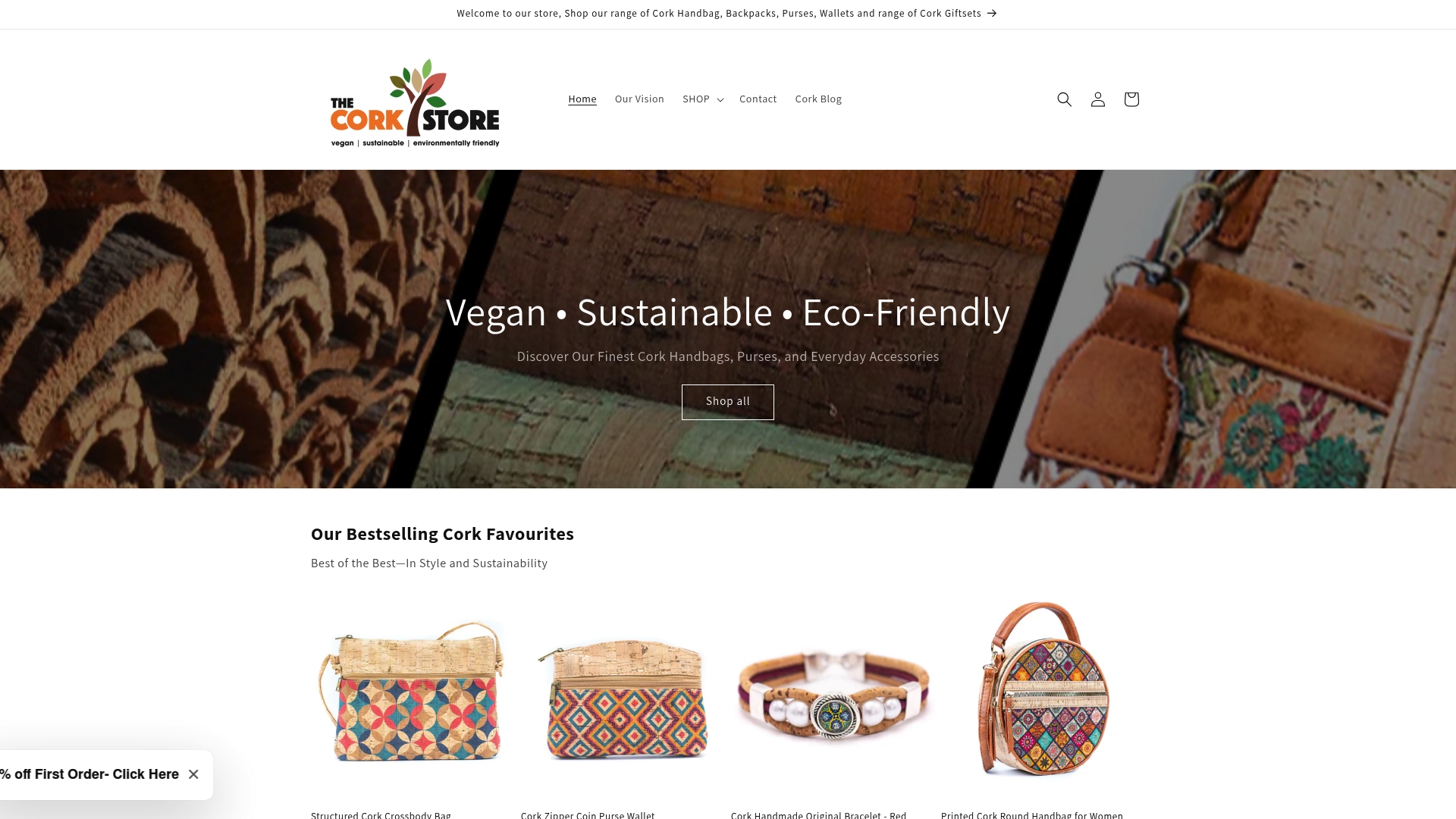
Browse the full collection at Thecorkstore and find a cork piece that suits your style.
FAQ
What makes up a cork?
A cork is the bark of the cork oak, Quercus suber. Its structure is made of tiny closed cells, which is what gives cork its lightness, flexibility and resistance to liquids, as described in the Frontiers review.
What should I do with my old corks?
You can reuse them for crafts such as coasters, trivets, plant labels and keyrings, or drop them at a cork collection point. Recycled stoppers are ground into granules and reused in flooring, insulation and consumer goods.
What is cork famous for?
Cork is best known as the stopper in wine bottles. It is also valued for insulating buildings and, as CBS News reports, for use in heat shields and vibration-damping parts.
What is cork fabric made of?
Cork fabric is made from thin sheets sliced from cork bark and bonded to a fabric backing, which makes it flexible enough for bags and wallets. The result looks like leather but is vegan and light.
Sources
- Cork: Current Technological Developments and Future Perspectives for this Natural, Renewable, and Sustainable Material | ACS Sustainable Chemistry & Engineering
- Frontiers | Cork – A Renewable Raw Material: Forecast of Industrial Potential and Development Priorities
- Quercus suber Bark as a Sustainable Source of Value-Added Compounds: Experimental Studies with Cork By-Products
- The secrets of cork: So much more than a bottle stopper - CBS News
- Cork Recycling | Amorim Cork