

What is low-impact fashion? A 2026 guide
TL;DR:
- Low-impact fashion is a holistic approach that considers every stage of a garment’s lifecycle, from production to disposal, to minimize environmental harm.
- Policy initiatives like EU ecodesign regulation and extended producer responsibility are incentivizing brands to prioritize durability, repairability, and recyclability in their designs.
Most people assume sustainable fashion is simply a matter of choosing organic cotton over polyester. That assumption misses the bigger picture by a considerable distance. What is low-impact fashion, really? It is a whole-system approach that considers every stage of a garment’s life, from the field where fibres grow to the landfill where unwanted clothes end up. The fashion industry accounts for significant textile waste and greenhouse gas emissions globally, and addressing those problems requires far more than swapping one fabric for another. This guide breaks down the definition, the policy driving change, and the practical steps you can take right now.
Table of Contents
- Key takeaways
- What is low-impact fashion, defined properly
- Policy and industry frameworks shaping the shift
- Materials, washing, and the use phase
- Practical steps to embrace low-impact fashion
- Greenwashing and misleading claims
- My honest take on low-impact fashion in 2026
- Sustainable accessories worth knowing about
- FAQ
Key takeaways
| Point | Details |
|---|---|
| Lifecycle thinking is central | Low-impact fashion addresses design, production, use, and end-of-life, not just the material used. |
| Policy is reshaping the industry | EU ecodesign regulations and extended producer responsibility schemes are pushing brands toward circularity. |
| Your washing habits matter | How you launder and care for clothes affects energy use, microfibre pollution, and garment lifespan. |
| The clothes you own are already sustainable | Extending the life of existing garments reduces the need for new production more than any single purchase. |
| Greenwashing is a real risk | Single-attribute claims like “biodegradable” or “natural fibre” rarely tell the full environmental story. |
What is low-impact fashion, defined properly
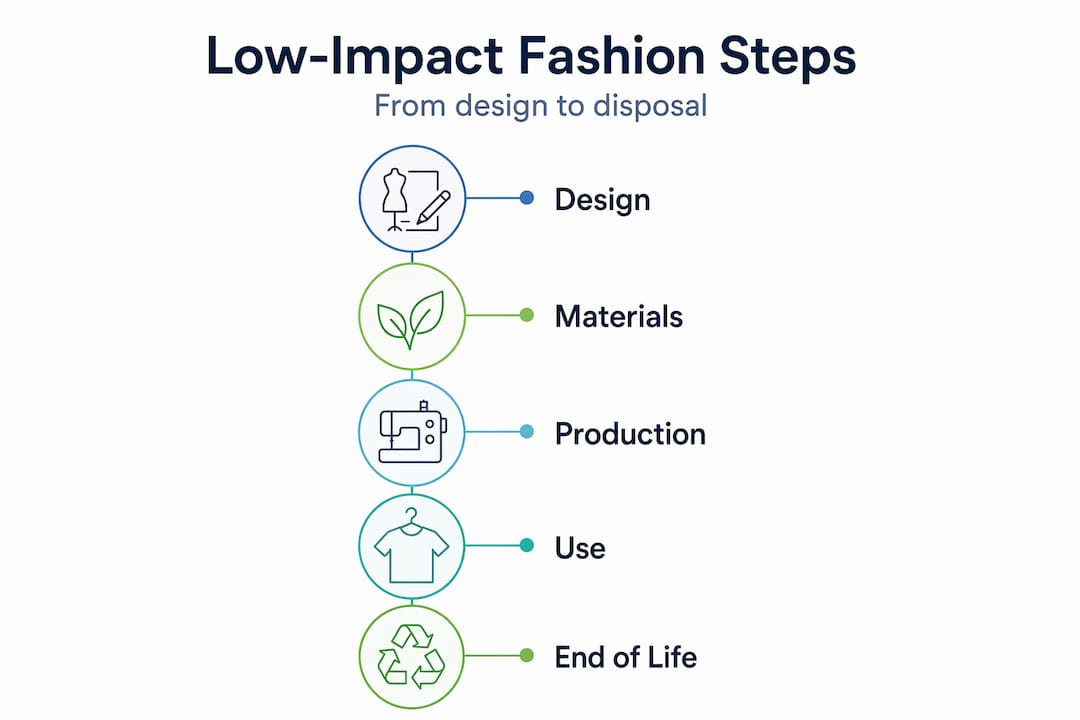
Low-impact fashion is not a style or a price point. It is a philosophy applied across the entire supply chain to reduce harm at every stage of a garment’s existence. UNEP frames this as a transition to circular and sustainable textile models that address the full garment lifecycle, covering climate change, biodiversity loss, and chemical pollution together.
The four lifecycle stages that matter are:
- Design — where decisions about materials, durability, and repairability are locked in before a single stitch is sewn
- Production — where energy, water, and chemical inputs create the largest environmental burden for most garment types
- Use — where washing frequency, energy sources, and care habits compound over years of ownership
- End-of-life — where disposal route determines whether materials re-enter circulation or contribute to landfill
“The most sustainable garment is the one already in your wardrobe. Every new purchase, however responsibly made, carries an upstream footprint that reuse simply does not.”
The scale of the problem is worth sitting with. Clothing production doubled between 2000 and 2015 while the average duration garments were worn dropped by 36%. More clothes, worn less often, disposed of faster. That pattern is what low-impact fashion is designed to interrupt. Textile waste takes decades to decompose in landfills, releasing harmful greenhouse gases throughout. Addressing overproduction and overconsumption is not optional. It sits at the heart of what makes fashion low-impact or not.
Policy and industry frameworks shaping the shift
Knowing the definition is useful. Understanding what is driving industry-wide change is even more useful, because it helps you identify which brands are genuinely responding to pressure and which are simply talking about it.
The European Union has moved further than any other regulatory body. EU ecodesign regulation now introduces mandatory durability, repairability, and recyclability standards for textile products. This is not voluntary guidance. It is law, and it forces brands selling into the EU market to rethink product design at its core.
Alongside ecodesign rules, extended producer responsibility (EPR) schemes are changing the economics of cheap, disposable clothing. The key mechanism here is eco-modulation. Under the Revised Waste Framework Directive, producer fees are linked directly to the sustainability credentials of the products they sell. Make a durable, recyclable garment and your fee is lower. Make something designed to fall apart after ten washes and you pay more. That financial lever changes boardroom conversations in ways that consumer pressure alone rarely does.
Here is a snapshot of the key policy tools currently shaping the industry:
| Policy tool | What it does | Who it affects |
|---|---|---|
| EU Ecodesign Regulation | Mandates durability, repairability, recyclability in textiles | Brands selling into EU markets |
| Extended producer responsibility | Links producer fees to sustainability criteria | All textile producers and importers |
| Eco-modulation fees | Adjusts financial burden based on product design quality | Fast fashion brands most heavily |
| Right to repair legislation | Requires brands to supply spare parts and repair services | Garment and accessories producers |
Industry shifts are following this policy direction, though slowly. Slow fashion models, circular take-back programmes, and rental or resale platforms are becoming mainstream rather than niche. Brands that design for the role of design in eco-fashion from the outset are building the kind of longevity that policy now rewards.
Materials, washing, and the use phase
Fibre choice is probably the most visible conversation in sustainable fashion, and it is genuinely important. But it is far from the whole story. LCA research consistently shows that a garment’s climate and water impacts are spread across design, production, use, and end-of-life. One detailed jeans lifecycle study found that switching to solar energy and stone washing during production delivered a 15.2% reduction in climate impact and a 10% reduction in water use. Those gains came from process changes, not fibre changes.
The comparison table below gives a realistic picture of common fibre options:
| Fibre type | Strengths | Limitations |
|---|---|---|
| Organic cotton | Lower pesticide load, biodegradable | Still water-intensive; depends on disposal conditions |
| Recycled polyester | Diverts plastic waste, lower virgin resource use | Still sheds microfibres; energy-intensive to recycle |
| Linen / hemp | Low input crops, durable, biodegradable | Limited blended-fabric recyclability |
| Cork (natural bark) | Renewable harvest, no tree felling, waterproof | Limited to accessories rather than full garments |
| Regenerative wool | Carbon-sequestering when well-managed | Animal welfare and methane concerns remain |
The use phase deserves more attention than it typically gets. Regional energy mixes and laundering habits cause significant variability in garment environmental impacts. Washing at 30°C instead of 60°C, using a full machine load, and air-drying rather than tumble-drying can halve the use-phase footprint of a garment over its lifetime.
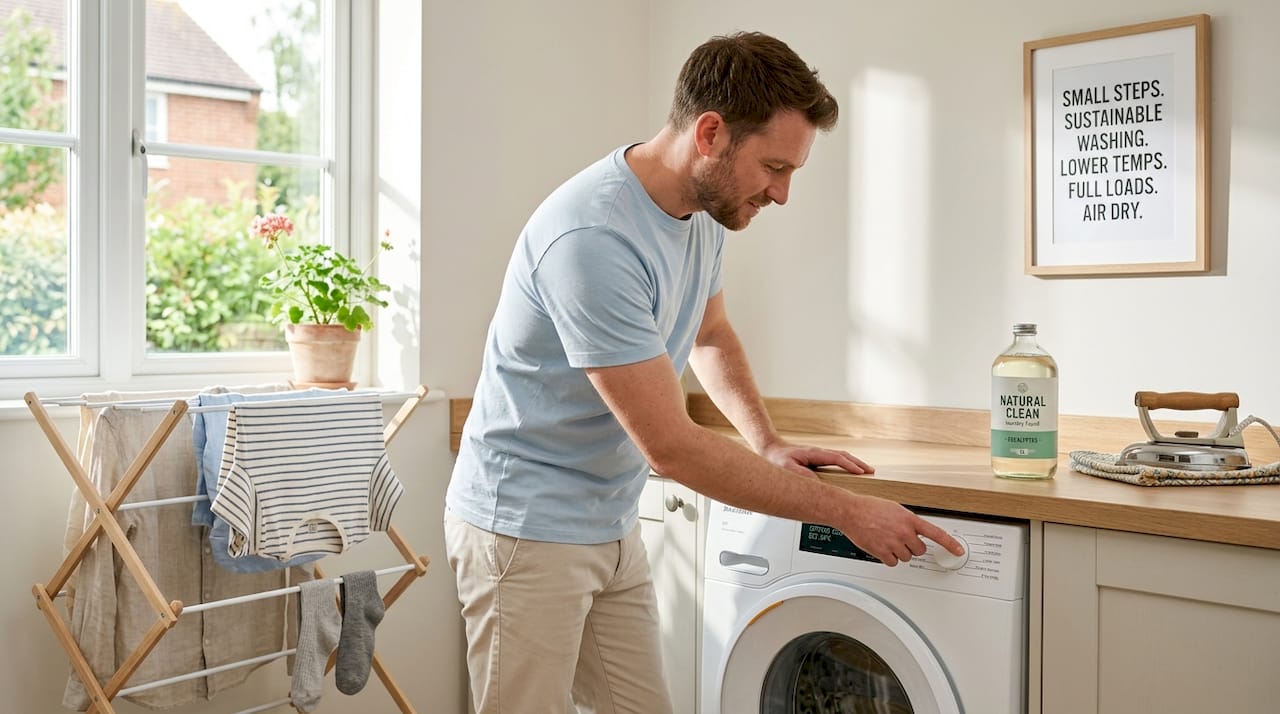
Microfibres are the use-phase problem most people overlook. Synthetic clothes release microplastics during washing, and those particles pass through most wastewater treatment systems directly into waterways. Washing bags designed to catch microfibres, shorter wash cycles, and lower spin speeds all reduce the release.
On biodegradable claims: be sceptical. Compostable claims for garments are often misleading without access to proper industrial composting infrastructure. A “biodegradable” shirt in a sealed landfill will decompose no faster than a synthetic one.
Pro Tip: Turn garments inside out before washing, use a mesh laundry bag for synthetic items, and wash at the lowest effective temperature. These three habits reduce colour fade, microfibre shedding, and energy use simultaneously.
Practical steps to embrace low-impact fashion
Understanding the theory is one thing. Changing your habits is where the actual impact happens. Here are the most effective actions you can take, ordered by environmental leverage:
-
Wear what you already own more often. The principle that extending garment life reduces the need for new production is the single most impactful thing most consumers can do. Before buying anything new, ask whether something already in your wardrobe serves the same purpose.
-
Repair before you replace. A loose button or split seam is not the end of a garment’s life. Learning basic repairs or using a local tailor extends lifespan and builds a different relationship with what you own.
-
Buy second-hand first. Pre-owned clothing bypasses new production entirely. The upstream emissions, water use, and chemical inputs are already sunk. Buying second-hand does not add to them.
-
Choose quality over volume. A well-made garment worn 200 times has a fraction of the per-wear impact of a cheap one worn 20 times before it falls apart. This is where how to choose low-impact clothing comes down to simple maths.
-
Support brands with circular business models. Look for brands that offer repair services, take-back schemes, or use recycled materials from genuinely closed-loop systems. Policy is incentivising this, but consumer demand accelerates it.
-
Follow care labels and reduce washing frequency. Many garments are washed far more often than necessary. Airing knitwear and spot-cleaning minor marks instead of full washing cycles significantly reduces energy use and extends fabric life.
Pro Tip: When shopping second-hand online, filter by natural fibres like wool, linen, and cotton. These materials age better than synthetics and are more likely to be genuinely durable pieces worth adding to your wardrobe.
Greenwashing and misleading claims
The language of sustainability has become so saturated with marketing that distinguishing genuine low-impact fashion from clever branding requires active effort. Single-attribute claims without addressing durability, repair, and end-of-life pathways are a primary greenwashing risk. A brand calling a polyester jacket “sustainable” because it uses 20% recycled content, while making no provision for the garment’s end of life, is not telling you the full story.
Watch out for these patterns:
- Vague language without verification: Words like “eco-friendly”, “green”, or “conscious” with no third-party certification or data to back them up
- Single-material focus: Highlighting one sustainable attribute while ignoring production emissions, water use, or chemical inputs
- Biodegradable without context: Improper disposal conditions render most biodegradability claims irrelevant in practice
- Recycling claims without infrastructure: Promising garment recycling while operating in regions with no viable textile recycling infrastructure
- Volume not addressed: Brands that produce enormous quantities of product while branding a small “sustainable” line are not low-impact businesses
Genuine low-impact claims will reference lifecycle data, third-party certifications such as GOTS or Bluesign, transparent supply chain information, and real end-of-life programmes. The more specific a brand is, the more likely it is to be telling the truth.
My honest take on low-impact fashion in 2026
I have spent years watching the sustainable fashion conversation evolve, and what I have found is that the biggest obstacle is not consumer ignorance. It is the industry’s relentless ability to absorb sustainability language without actually changing its model.
The overproduction problem remains largely untouched by fibre improvements. You can make the most responsibly sourced organic cotton T-shirt imaginable, but if it is manufactured in quantities that guarantee 40% of stock ends up in landfill, the lifecycle arithmetic is still a disaster. What I have learned is that the material is almost secondary to the volume question.
Where I have seen genuine progress is in circular design and policy pressure working together. The EU’s eco-modulation fees are the most promising mechanism I have encountered because they change the financial incentive structure, not just the marketing narrative. When it costs a brand real money to make a non-recyclable product, behaviour changes faster than any awareness campaign achieves.
My take on consumer choices is this: repair culture and second-hand shopping are not inferior alternatives to buying new sustainable products. They are the most impactful choices available to most people, full stop. The 7 practical ways to reduce fashion waste that get the most attention are always the purchasing decisions. The ones that actually move the needle are the non-purchasing ones.
Holistic thinking, policy, design, and daily habits working in concert, is what makes low-impact fashion real rather than aspirational. Single actions are useful. Systems thinking is what actually counts.
— Aaron
Sustainable accessories worth knowing about
If you are reconsidering your accessories alongside your clothing choices, cork is one of the most genuinely low-impact materials available. Unlike leather, cork harvest does not require felling trees. Cork oak bark regenerates after harvesting, the trees continue absorbing carbon, and the material is naturally waterproof, lightweight, and durable.
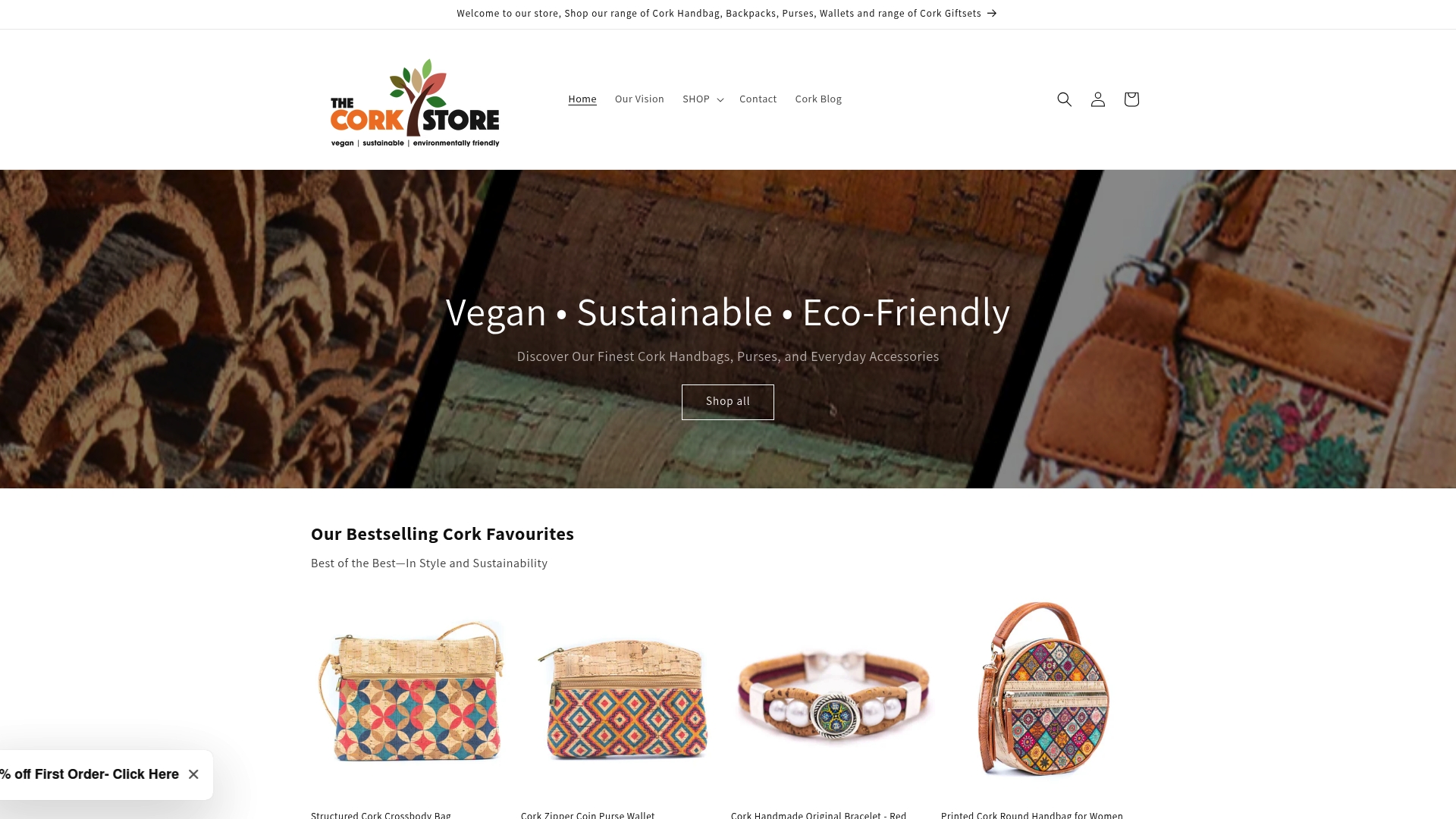
Thecorkstore offers a curated collection of vegan cork bags, wallets, purses, and backpacks built on exactly the principles this article covers. Long lifespan, natural materials, and a clear alternative to the animal agriculture that underpins conventional leather. If you are looking for a genuinely low-impact gift or a considered addition to your own wardrobe of accessories, the vegan cork collection at Thecorkstore is a strong place to start. Each piece is designed to last, not to be replaced after a season.
FAQ
What does “low-impact fashion” actually mean?
Low-impact fashion refers to clothing and accessories designed, produced, used, and disposed of in ways that minimise harm across the entire lifecycle. It addresses emissions, water use, chemical pollution, and waste rather than focusing on a single attribute like fabric type.
Is organic cotton always a low-impact choice?
Not necessarily. Organic cotton reduces pesticide inputs but remains water-intensive during production. Its end-of-life impact depends heavily on how and where it is disposed of, making it one factor among many in a low-impact assessment.
How does washing affect my clothing’s environmental impact?
Laundering habits account for a significant portion of a garment’s lifetime environmental impact. Washing at lower temperatures, air-drying, and reducing wash frequency can meaningfully reduce both energy use and microfibre pollution from synthetic fabrics.
How do I spot greenwashing in fashion brands?
Look for lifecycle data, recognised third-party certifications, and transparent supply chain disclosures. Vague terms like “eco-friendly” or “conscious collection” without supporting evidence are a reliable indicator that deeper scrutiny is warranted.
What is the single most effective thing I can do for low-impact fashion?
Wearing clothes you already own more frequently and for longer is consistently identified as the highest-impact action available to individual consumers. It reduces the need for new production more effectively than any purchasing choice.
Recommended
- Discover zero-waste fashion: sustainable style without compromise – The Cork Store
- Top ethical fashion trends 2025: a guide for eco shoppers – The Cork Store
- How to Spot Sustainable Fashion: A Step-by-Step Guide – The Cork Store
- Eco-conscious shopping: Guide to sustainable style in 2026 – The Cork Store