

Discover zero-waste fashion: sustainable style without compromise
TL;DR:
- Zero-waste fashion aims to eliminate fabric waste during production through innovative design methods like puzzle-fit patterns, reducing environmental impact from the outset. It emphasizes waste prevention over waste management, but faces challenges in scalability, design constraints, and lifecycle sustainability. Combining zero-waste techniques with circular and ethical practices is essential for genuine long-term sustainability.
Up to a quarter of all fabric used in conventional clothing production is wasted during cutting, before a single garment ever reaches a shop floor. That staggering figure challenges the assumption that fashion’s biggest problem is what consumers do with clothes after they wear them. The truth is, the damage often starts in the cutting room. Zero-waste fashion flips that script entirely, shifting the focus from end-of-life disposal to intelligent, intentional design from the very beginning. It is not simply about recycling or choosing organic cotton. It is a fundamentally different way of thinking about how clothes are made.
Table of Contents
- Zero-waste fashion explained
- How zero-waste works: from puzzle patterns to digital design
- Costs, challenges, and realistic impact in fashion
- Zero-waste, circular, and ethical fashion: what’s the difference?
- The inconvenient truth: zero-waste is powerful but not the full solution
- Explore sustainable style with The Cork Store
- Frequently asked questions
Key Takeaways
| Point | Details |
|---|---|
| Definition clarified | Zero-waste fashion aims to eliminate textile waste at every stage of production, not just recycle or repurpose materials. |
| Methods explained | Innovative pattern cutting, modular design, and digital optimisation are core zero-waste strategies. |
| Waste and cost reduction | Zero-waste techniques save up to 25% of fabric and lower manufacturing costs by 8-12%. |
| Limits and nuances | Absolute zero waste is rare due to material constraints, and scalability challenges impact mass adoption. |
| Beyond production | True sustainability needs circular thinking and responsible buying, not just zero-waste production. |
Zero-waste fashion explained
Zero-waste fashion is a design strategy. Specifically, as defined by Wikipedia, it is an approach that “generates little or no textile waste during production, especially in pattern making and cutting.” That precision matters, because the term is frequently misunderstood. Many people assume zero-waste fashion means buying second-hand, recycling old garments, or simply choosing brands that use leftover fabrics. Those things have value, but they are not what the term was coined to describe.
There are two distinct streams within the movement. Pre-consumer zero-waste focuses on eliminating waste during the manufacturing process itself, through smarter pattern design, digital optimisation, and creative construction methods. Post-consumer approaches, by contrast, work with materials that already exist, whether through second-hand clothing, upcycled textiles, or repurposed deadstock fabric. Both serve a purpose, but they operate at entirely different stages of a garment’s life.
The key distinction, and what makes zero-waste fashion genuinely radical, is its emphasis on waste prevention rather than waste management. Traditional sustainability conversations often focus on what happens after a garment is discarded. Zero-waste design asks a more demanding question: how do we ensure that waste is never generated in the first place?
“Zero-waste fashion is not about guilt-tripping consumers into buying less. It is about redesigning the system so that making more does not automatically mean wasting more.”
Understanding this distinction changes how you approach spotting sustainable fashion when you are browsing brands. It also reshapes your understanding of the advantages of sustainable fashion beyond the surface-level marketing claims you see on labels.
Here is what zero-waste fashion is not:
- Buying recycled plastic bottles woven into polyester (that addresses post-consumer plastic, not textile production waste)
- Using deadstock fabric alone (deadstock is pre-existing leftover material, not a zero-waste production method)
- Donating old clothes to charity shops (helpful, but a different category entirely)
- Choosing certified organic cotton without addressing cutting room losses
If you want a grounded overview of how sustainable fashion explained compares to zero-waste specifically, the difference in scope is significant and worth understanding before making purchasing decisions.
How zero-waste works: from puzzle patterns to digital design
With the definition established, it helps to see how zero-waste fashion is actually achieved on the production floor and in the design studio. The methods are genuinely creative, and some of them are surprisingly elegant.
Key methodologies include puzzle-fit pattern cutting, where garment pieces interlock like a jigsaw to use 100% of available fabric. Modular design uses geometric shapes that tessellate without gaps. Draping directly on a dress form allows designers to shape garments without ever cutting a pattern at all. Digital pattern optimisation uses software to arrange pieces on fabric digitally before any scissors or laser cutters are used, maximising yield. Finally, waste-inclusive design incorporates the offcuts themselves into details such as pocket linings, trimmings, or embellishments.
Each approach has its own strengths and real-world trade-offs:
| Method | Fabric utilisation | Design flexibility | Scalability |
|---|---|---|---|
| Puzzle-fit pattern cutting | Up to 100% | Moderate | Challenging at scale |
| Modular geometric design | 95-100% | Limited by shape | Moderate |
| Draping without cutting | Very high | High for bespoke | Low (labour intensive) |
| Digital pattern optimisation | 97-99% | High | Strong for medium runs |
| Waste-inclusive detailing | Variable | Creative freedom | Moderate |
It is worth noting that near-zero utilisation of 97-99% is achievable in practice, but absolute zero is extremely difficult to reach. Threads, selvedge edges, and tiny trimmings inevitably account for a residual 1-3% of waste even in the most disciplined zero-waste production process. Brands that claim absolute zero without explanation deserve scrutiny.
The role of cork in zero-waste fashion illustrates how natural materials can complement these methods well. Cork sheets can be cut with very high precision, and offcuts are often repurposed into smaller items or granulated for other uses, making waste genuinely minimal across the production chain.
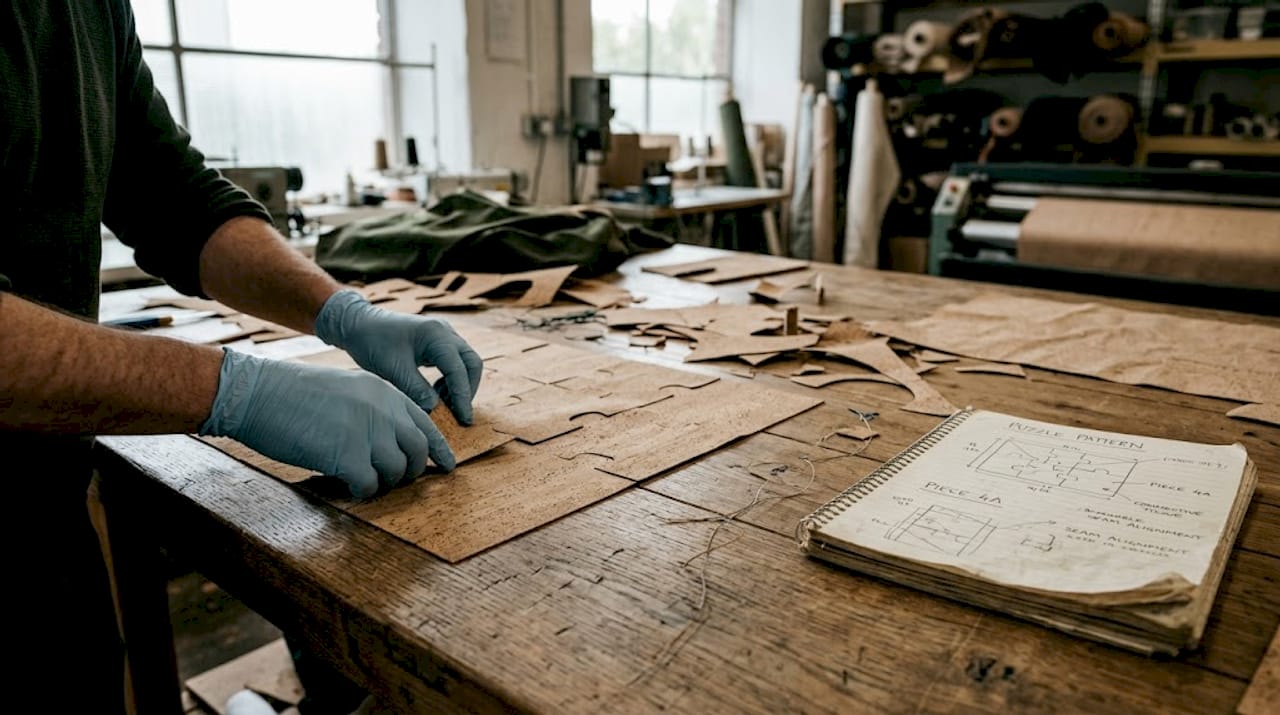
When evaluating brands claiming zero-waste credentials, look at whether they showcase their pattern making process, explain their digital design tools, or describe how they handle offcuts. Transparency about process is one of the strongest signals of genuine commitment. For deeper reading on which eco-friendly fabrics work best with these methods, natural fibres with consistent widths and minimal stretch tend to produce the most predictable results.
Pro Tip: Ask a brand directly how they handle fabric offcuts. Genuine zero-waste producers will have a clear, specific answer, whether that is composting, scrap repurposing, or material donation. Vague answers about “responsible disposal” suggest the process has not been fully thought through.
Costs, challenges, and realistic impact in fashion
These methods sound compelling, but what do the numbers actually say about their real-world impact? The evidence is encouraging, though not without caveats.
Traditional cutting wastes 15-25% of fabric, which translates to between 13 and 92 million tonnes of textile waste annually across the global industry. Zero-waste approaches can recover that entire margin, reducing fabric costs by 8-12% in the process. For a mid-sized fashion label, that is a substantial saving, and it represents an environmental gain that no amount of consumer recycling can easily replicate.
Here is a realistic look at what zero-waste production delivers compared to conventional methods:
| Factor | Traditional production | Zero-waste production |
|---|---|---|
| Fabric waste per garment | 15-25% | 1-3% (near-zero) |
| Pattern design time | Standard | Longer initially |
| Production costs | Lower upfront | 8-12% fabric savings |
| Design constraints | Minimal | Moderate to high |
| Scalability | High | Moderate |
| Carbon footprint | Higher | Lower, but not zero |
The challenges are real and should not be glossed over. Design constraints limit aesthetics and fit, particularly when working with geometric or puzzle-fit patterns. Not every silhouette translates easily into an interlocking pattern. Tailored, fitted garments with complex drape are significantly harder to produce without generating offcuts. This is why zero-waste design has found its strongest footing in accessories, modular separates, and relaxed-fit garments rather than couture tailoring.
Mass production presents an additional barrier. The design investment required to develop a zero-waste pattern is front-loaded and time-consuming. For a fast fashion brand producing hundreds of styles per season, the economics simply do not work without major operational restructuring.
There is also a critical point that most zero-waste advocates understate: the production gain is only one part of the equation. If a beautifully zero-waste-designed garment is worn twice and then discarded, the environmental benefit is largely undone. Sustainable fashion emissions analysis consistently shows that consumer behaviour and garment longevity play an enormous role in overall impact. Zero-waste production is not a substitute for wearing clothes longer, caring for them well, and disposing of them responsibly.
The most practical ways to reduce fashion waste combine production-side improvements with conscious consumer choices. Understanding both sides gives you a far more accurate picture of a brand’s genuine impact than any single sustainability claim on a hangtag.
The benefits of ethical fashion extend well beyond the environment too, encompassing fair wages, safe working conditions, and long-term industry transformation. Zero-waste is one powerful lever within a much larger machine.
- Scrutinise production claims before any other sustainability attribute.
- Check garment longevity through material quality, construction, and care instructions.
- Consider use-phase impact, including washing frequency and dry cleaning requirements.
- Plan for end-of-life before you purchase, not after.
“True sustainability is not just about how a garment is made. It is also about how many times it is worn, how it is cared for, and where it ends up. Zero-waste design handles the first part brilliantly but cannot guarantee the rest.”
Zero-waste, circular, and ethical fashion: what’s the difference?
Since zero-waste overlaps with other sustainability concepts, and the language can feel bewildering, it helps to break down each term clearly before applying them to purchasing decisions.
Zero-waste fashion focuses on eliminating production waste, specifically at the design and manufacturing stage. Circular fashion is broader. It emphasises the full lifecycle of a garment, from raw material sourcing through to end-of-life recovery, including reuse, repair, rental, and recycling. A garment can be produced with zero-waste methods and still not be circular if there is no plan for what happens to it after use. Equally, a circular model might accept some production waste if it ensures recovery at every other stage.
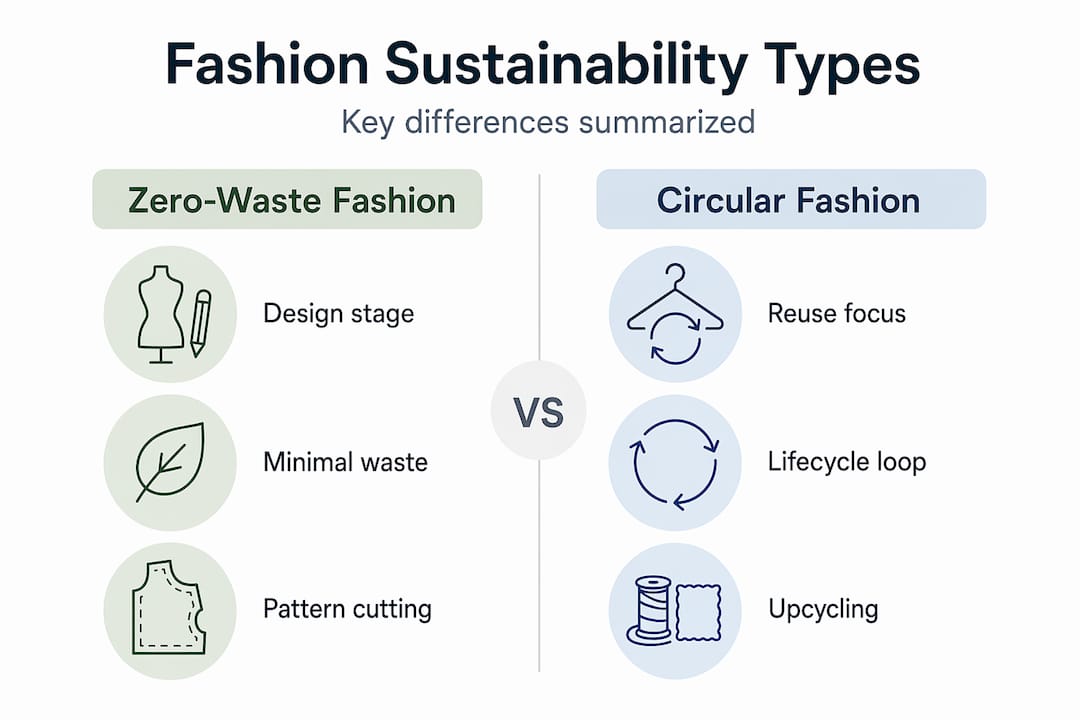
Ethical fashion focuses primarily on the human element: fair pay, safe working conditions, transparency in supply chains, and cruelty-free materials. A brand can be ethical without being zero-waste, and zero-waste without being fully ethical. They are related but distinct commitments.
Upcycling in fashion sits closest to circular fashion, using existing materials creatively rather than preventing waste at source. It is valuable, but it should not be conflated with zero-waste design methodology.
Greenwashing is where this gets complicated. Calling deadstock or single-stage optimisation “zero-waste” is a well-documented form of greenwashing. Deadstock fabric is simply unused material from a previous production run. Incorporating it into a new garment is smart and better than landfill, but it does not constitute a zero-waste production process. A genuinely zero-waste brand applies the principle holistically, across pattern design, material sourcing, production waste, and often packaging too.
Here is how to spot genuine zero-waste or circular designs when shopping:
- The brand explains how patterns are designed to eliminate waste, not just that they do
- Offcut handling is described specifically, not vaguely
- Materials are chosen with full lifecycle in mind, including natural decomposition or recyclability
- Packaging is minimal, recycled, or compostable
- The brand publishes a sustainability report or third-party audit
For practical guidance on building an eco-friendly wardrobe that incorporates these principles, starting with accessories is often the most accessible entry point. Accessories made from natural materials like cork require no fabric cutting in the traditional sense, making waste reduction far more straightforward to achieve and verify.
Understanding ethical fashion explained alongside zero-waste principles gives you the full vocabulary to ask better questions of the brands you buy from.
The inconvenient truth: zero-waste is powerful but not the full solution
Here is what most guides on this topic leave out, and it matters more than many brands would like to admit.
Zero-waste fashion is genuinely powerful as a pre-production tool. The fabric savings are measurable, the environmental gains are real, and the creative thinking it demands often produces more interesting, considered designs. We believe in it wholeheartedly as a principle.
But zero-waste production is not, on its own, a full sustainability solution without circular integration. That gap is where the fashion industry and a lot of well-meaning consumers quietly drop the ball.
The uncomfortable reality is that a beautifully crafted zero-waste garment, worn six times and then sent to landfill, generates more environmental harm over its lifetime than a conventionally cut garment worn three hundred times and donated at the end. The production gain is erased by the use-phase loss. This is not an argument against zero-waste design. It is an argument for seeing it as one essential component of a much larger system.
The brands we find most credible are those who pair zero-waste or near-zero-waste production with honest guidance about garment care, longevity, and end-of-life options. They do not use zero-waste as a closing argument. They use it as a starting point.
From our perspective at The Cork Store, the most compelling aspect of cork as a material is precisely this full-lifecycle thinking. Cork harvest is zero-waste by nature: no trees are felled, bark regrows, and offcuts are repurposed. Accessories rather than garments also sidestep the complex use-phase and care variables that make lifecycle analysis so difficult for clothing. We think that matters.
The sustainable fashion advantages that genuinely hold up to scrutiny are those supported by transparent data across the full product journey, not just a compelling story about the cutting room.
Explore sustainable style with The Cork Store
Ready to bring zero-waste values into your everyday accessories?
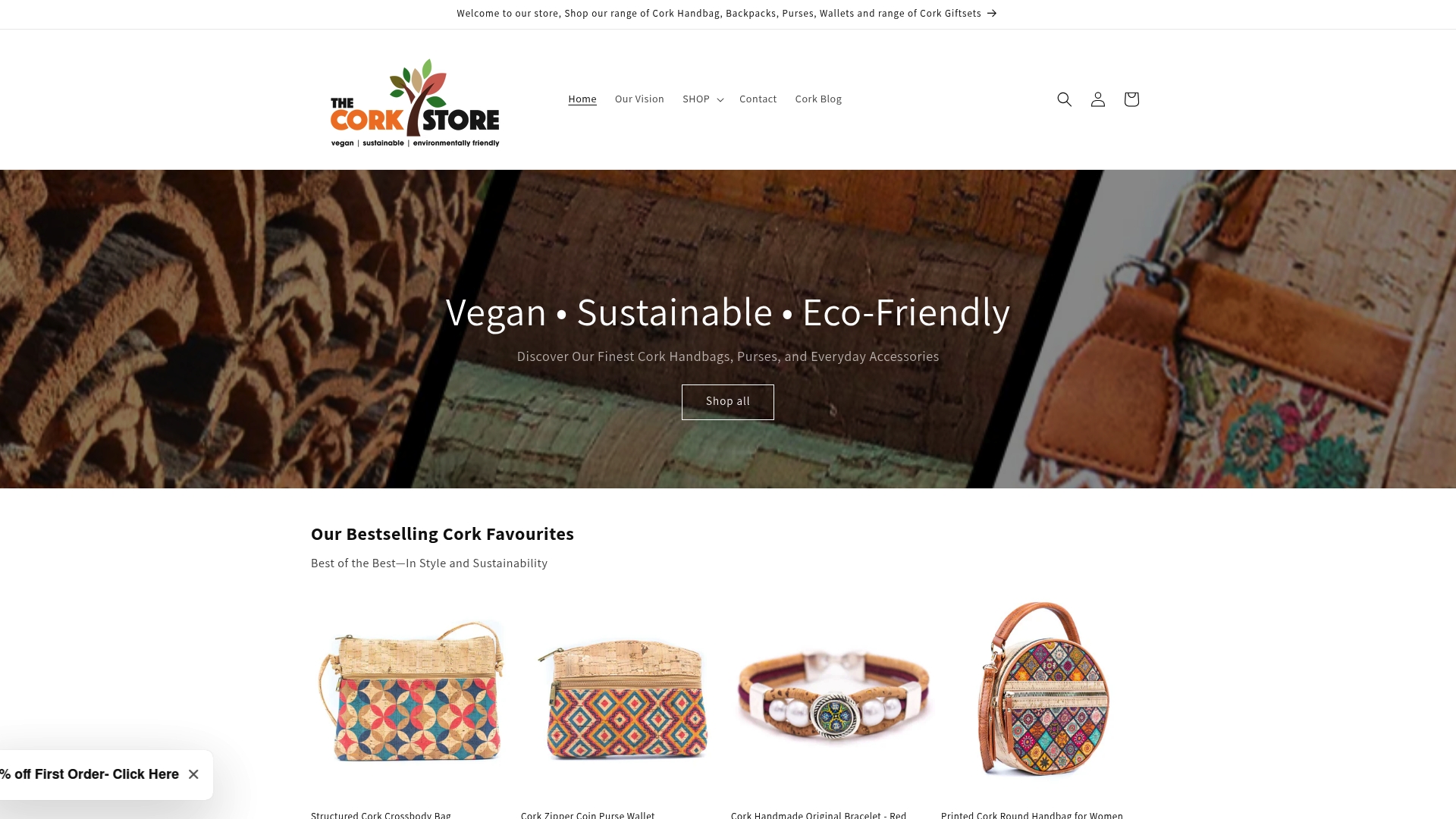
At The Cork Store, every product is crafted from natural cork, a material that embodies zero-waste principles from harvest to finished design. Cork bark is stripped without harming the tree, regrows naturally, and offcuts are repurposed rather than discarded. Our range of cork handbags, wallets, backpacks, and gift sets gives you a stylish, cruelty-free alternative to leather that genuinely stands up to scrutiny across the full product lifecycle. Whether you are new to sustainable accessories or building a considered wardrobe deliberately, exploring cork is a practical and beautiful place to start. Browse our collection and discover designs that prove sustainable style never means settling.
Frequently asked questions
How can I tell if a product is genuinely zero-waste?
Look for transparency from brands about their pattern cutting, materials, and manufacturing processes. Be cautious of designs labelled zero-waste that rely only on deadstock or single-stage optimisation, as this is widely considered greenwashing rather than a holistic approach.
Does zero-waste fashion mean using only certain materials?
No. Zero-waste focuses on reducing production waste regardless of the material used, though natural fabrics are popular choices. As Wikipedia notes, the approach prioritises waste prevention over material substitution, so the method of construction matters more than the fibre alone.
Is absolute zero waste possible in fashion?
Near-zero waste of 97-99% fabric utilisation is achievable through digital optimisation and puzzle-fit patterns, but absolute zero is extremely difficult due to unavoidable small losses from threads, selvedge edges, and trimmings.
Are there cost savings with zero-waste fashion?
Yes. Zero-waste production saves 15-25% of fabric and can reduce overall production costs by 8-12%, making it financially attractive for brands willing to invest in the upfront design work required.
How does zero-waste fashion differ from circular fashion?
Zero-waste targets eliminating production waste at the design and manufacturing stage, while circular fashion covers the full product lifecycle, including reuse, repair, and recovery after the consumer has finished with the item. Both are valuable, but they address different stages of a garment’s journey.
Recommended
- 7 Practical Ways to Reduce Fashion Waste for a Greener Closet – The Cork Store
- How to Spot Sustainable Fashion: A Step-by-Step Guide – The Cork Store
- Eco-Friendly Fashion Tips: Upgrade Your Wardrobe Sustainably – The Cork Store
- How to Build Eco-Friendly Outfits With Sustainable Style – The Cork Store