
Vegan buyers: 6 checks to spot greenwashing in cork letters
In this article, cork letters refers to cork handbags, wallets and accessories, not craft or decor items. Responsibly sourced cork is a renewable, vegan-friendly alternative to leather, though how sustainable a given piece actually is depends on where the cork came from and how it was processed. The Cork Store curates this category for shoppers who want the ethics to match the label.
TL;DR:
- Cork from the third harvest is denser and lasts longer than cork from the first or second harvest, making it better for durable accessories.
- Sustainable cork harvesting occurs every 9 to 14 years from a tree that can live 150 to 200 years, but regional management practices affect the overall environmental benefits.
- Properly sourced cork should come with clear documentation like certification or supply chain information, which is more reliable than marketing claims alone.
- Quality cork accessories are characterized by even stitching, sturdy hardware, and backing on eco-friendly materials, with reproduction cork springing back smoothly when flexed.
- Taking care of cork involves gentle cleaning and avoiding harsh solvents to maintain its water resistance and appearance over years of use.
Table of Contents
- Why cork counts as a sustainable material
- Spotting quality in a cork bag or wallet
- Keeping a cork bag looking new for years
- What to check before you buy a cork accessory
- Why I trust transparent sourcing over marketing claims
- Where to find cork bags built around these standards
- Sources
- FAQ
Why cork counts as a sustainable material
Cork comes from the outer bark of the cork oak, stripped by hand without felling the tree. A single tree can be harvested roughly every 9 to 14 years, and the same tree stays productive for about 150 to 200 years. That harvest rhythm is why cork is often held up as one of the more renewable materials available for accessories.
Cork oak landscapes also support carbon storage and biodiversity, though the scale of that benefit shifts with regional management practices. This is where marketing claims tend to outrun the evidence.
- Carbon sequestration happens in cork oak woodlands, but crediting that sequestration to any single product is complicated because the trees support several outputs at once.
- Allocation method changes the numbers: how sequestration is divided between cork stoppers, cork leather and other forest products materially affects the carbon footprint attached to each.
- Not all cork oak regions are managed the same way, so a “sustainable cork” claim on one product does not automatically transfer to another.
Cork’s environmental profile varies significantly by region and forest management, with life-cycle assessment research finding that stripping and field operations are often the biggest contributors to impact. A related discussion paper makes a similar point about carbon claims: the sequestration figure you read on a brand’s website can change substantially depending on how it was allocated across the forest’s other products. None of this makes cork a poor choice. It means provenance matters more than the word “cork” on its own.
Spotting quality in a cork bag or wallet
Not every cork product is built the same way, and the differences show up fast once a bag is in daily use.
- Check the cork grade. Reproduction cork, harvested from the tree’s third extraction onwards, is denser and more durable than cork from the first or second harvest, which tends to go into lower-grade items or granulate.
- Look past the cork itself. Cork is typically backed onto a fabric layer and paired with linings, zips and hardware, and the eco performance of the finished product depends on those pairings as much as on the cork.
- Inspect the stitching and finish. Even seams, a finish that does not flake, and hardware that can be replaced rather than binned all point to a bag built to last.
- Ask about chain of custody. Documentation such as an Environmental Product Declaration or an FSC or PEFC reference is a genuine trust signal, though its absence does not automatically mean poor practice on a smaller maker’s part.
Our guide to spotting quality cork products walks through these checks in more depth, alongside common red flags.
Pro Tip: Flex a corner of the material gently in the shop or in product photos: reproduction cork springs back smoothly, while cheaper agglomerated cork tends to crease and hold the crease.

Keeping a cork bag looking new for years
Cork is naturally water-resistant and light, but it still needs the right routine to age well.
- Wipe it down with a soft, dry or slightly damp cloth rather than soaking it, and use a mild soap only when needed.
- Avoid harsh solvents, alcohol-based cleaners or machine washing, all of which can strip the surface finish.
- Treat small scuffs by rubbing gently with a soft cloth or a fine eraser rather than reaching for polish designed for leather.
- Store bags away from direct heat and prolonged damp, both of which can dry out or encourage mildew on natural materials.
- Save professional repair for structural issues such as a torn strap or broken zip, since the cork surface itself rarely needs it.
Cork’s blend of durability and low-maintenance care is part of what makes it a practical everyday leather alternative, not just an ethical one.
What to check before you buy a cork accessory
A short checklist at the point of purchase does more to protect you from greenwashing than any amount of general reading.
- Confirm the material type: reproduction cork, first-harvest cork, or an agglomerated blend.
- Look closely at stitching, lining and hardware in the product photos, not just the cork surface.
- Check whether the retailer states where the cork was sourced and how it was processed.
- Ask if the lining is vegan and whether it is recyclable at the end of the bag’s life.
- Weigh packaging: minimal, recyclable packaging usually signals a brand that has thought past the sale.
- Read the warranty or returns policy, since a maker confident in construction quality tends to offer clearer terms.
Three questions are worth putting directly to any retailer: where the cork is from, which extraction and processing steps were used, and whether the lining is vegan and recyclable. Paying more is usually justified when it buys better construction and a realistic repair option, not just a brand name.
| What to check | Why it matters |
|---|---|
| Cork grade | Reproduction cork lasts longer than first-harvest or agglomerated cork |
| Lining and hardware | These materials affect both vegan status and total environmental impact |
| Origin and processing disclosure | Region and management practice change the sustainability picture |
| Certification or EPD | Reduces uncertainty around sourcing claims |
| Packaging and returns policy | Signals whether sustainability thinking extends past the product itself |
Further reading on why choose cork accessories covers the wider case for cork over conventional leather.
Why I trust transparent sourcing over marketing claims

The research is consistent on one point: cork itself is a genuinely renewable material, but the sustainability story of any specific bag depends on decisions made long before it reaches a shop shelf, from which harvest the cork came from to what it was glued and stitched to. That is the gap most marketing copy glosses over.
Retailers that publish clear provenance, honest material breakdowns and proper care notes give buyers a way to check the claim rather than just trust it. A curated approach to sourcing that documents where cork comes from and what it is paired with does more for a vegan shopper’s peace of mind than any single certification logo. Read the product page as carefully as you would read a label.
— Aaron
Where to find cork bags built around these standards
A curated selection of cork handbags, wallets, crossbody bags, backpacks and gift sets with product pages built around the checks covered above: material grade, construction detail and care guidance sit alongside the images, so you are not left guessing at checkout.
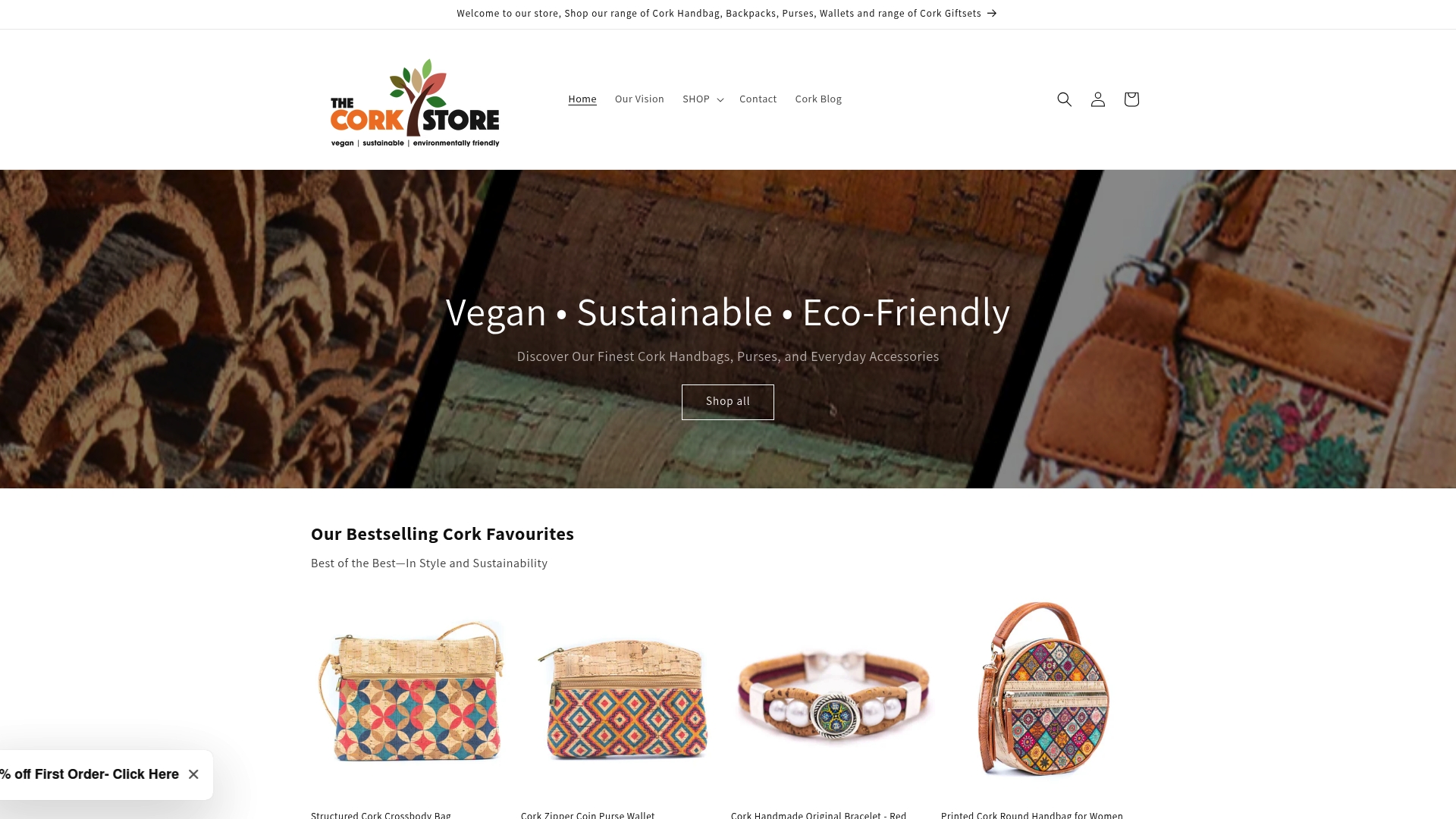
- Browse handbags, wallets and crossbody bags by category rather than searching blind.
- Compare a compact option like the Cork Zipper Coin Purse Wallet against a larger everyday piece such as the Marine Cork Wallet.
- Check the Women’s Cork Backpacks collection if you need something built for daily carry rather than just an accessory.
- Consider a cork gift set when buying for someone else who is moving towards vegan fashion.
Keep the checklist from earlier open in another tab, read the care notes on the product page, and choose the piece that matches how you will actually use it.
Sources
- Natural Cork Council: sustainability
- Life‑cycle assessment of cork production in Portuguese regions (ScienceDirect/PubMed)
- CE Delft discussion paper on cork carbon footprint
- Eco‑efficient value creation of cork products (ScienceDirect)
FAQ
Is cork a vegan material?
Yes, cork comes from tree bark rather than any animal source, making it a genuinely vegan material. Whether a finished bag is fully vegan also depends on its lining, glue and hardware, so it is worth checking those details on the product page.
How long does a cork bag typically last?
Cork bags are naturally hard-wearing when made from reproduction-grade cork and looked after with simple, gentle cleaning. Durability depends heavily on the cork grade used and the quality of the stitching and lining, which is why checking construction before buying matters as much as the material itself.
Are cork bags waterproof?
Cork has a naturally water-resistant surface thanks to its cellular structure, so it handles light rain and everyday splashes reasonably well. It is not fully waterproof, though, and prolonged soaking or harsh solvents can damage the surface finish over time.
What is the difference between reproduction cork and virgin cork?
Reproduction cork comes from the third harvest of a tree onwards and is denser and more suitable for durable goods like bags and wallets. Cork from the first or second harvest is generally lower quality and more often used for granulate or lower-grade items, as research on Portuguese cork oak woodlands notes.
Does The Cork Store make its own cork products?
A variety of cork handbags, wallets, backpacks, crossbody bags and gift sets sourced from vegan cork accessory makers are available. Product pages include material and care details so shoppers can apply the same checks covered in this guide before buying.