
Why choose handcrafted cork accessories: style meets sustainability
TL;DR:
- Cork is a sustainable, eco-friendly material that is harvested without harming trees and absorbs significant CO2. Handcrafted cork accessories support traditional craftsmanship, reduce waste, and ensure ethical supply chains. Genuine eco-friendly cork products feature natural backings and transparent sourcing, standing out from greenwashed imitations.
Many people assume that choosing eco-friendly fashion means settling for something dull, flimsy, or oddly textured. Cork accessories dismantle that assumption entirely. Made from the bark of living cork oak trees, these pieces are naturally water-resistant, lightweight, and genuinely beautiful. Cork forests annually absorb millions of tons of CO2, placing them at the heart of both climate action and the slow fashion movement. This article breaks down why handcrafted cork accessories are worth your attention, covering the material’s eco credentials, the craft behind each piece, honest comparisons with alternatives, and the nuances that separate truly sustainable cork from greenwashed imitations.
Table of Contents
- What makes cork a sustainable and ethical material?
- The art and ethics of handcrafting cork accessories
- comparing handcrafted cork to mass-produced and synthetic alternatives
- Important nuances: backing, authenticity, and eco-pitfalls
- Our take: Why true sustainability and style demand going handcrafted
- discover handcrafted cork accessories for your sustainable wardrobe
- frequently asked questions
Key Takeaways
| Point | Details |
|---|---|
| Sustainable harvesting | Cork is harvested from living trees, supporting biodiversity and absorbing significant CO2 levels. |
| Handcrafted quality | Handmade cork accessories are unique, ethically produced, and built to last. |
| Look for authentic eco details | Genuine cork accessories use natural fibre backings and transparent sourcing. |
| Better than synthetics | Compared to mass-produced and synthetic options, handcrafted cork is superior in durability and sustainability. |
What makes cork a sustainable and ethical material?
Cork stands out in sustainable fashion because harvesting it does not harm the tree. Workers strip the bark by hand every nine years, allowing the tree to regenerate naturally. This process, which supports carbon sequestration and rural economies, has been practised for centuries across Portugal and Spain without a single tree being felled. The result is a material that improves with each harvest cycle rather than depleting its source.
The environmental figures are striking. Portuguese cork forests absorb 10 to 14 million tons of CO2 each year, making them one of Europe’s most important carbon sinks. Beyond climate impact, these forests shelter rare wildlife, prevent soil erosion, and provide livelihoods for thousands of rural families. Cork oak woodlands are recognised as biodiversity hotspots, supporting species like the endangered black stork and the critically threatened Mediterranean lynx habitat.
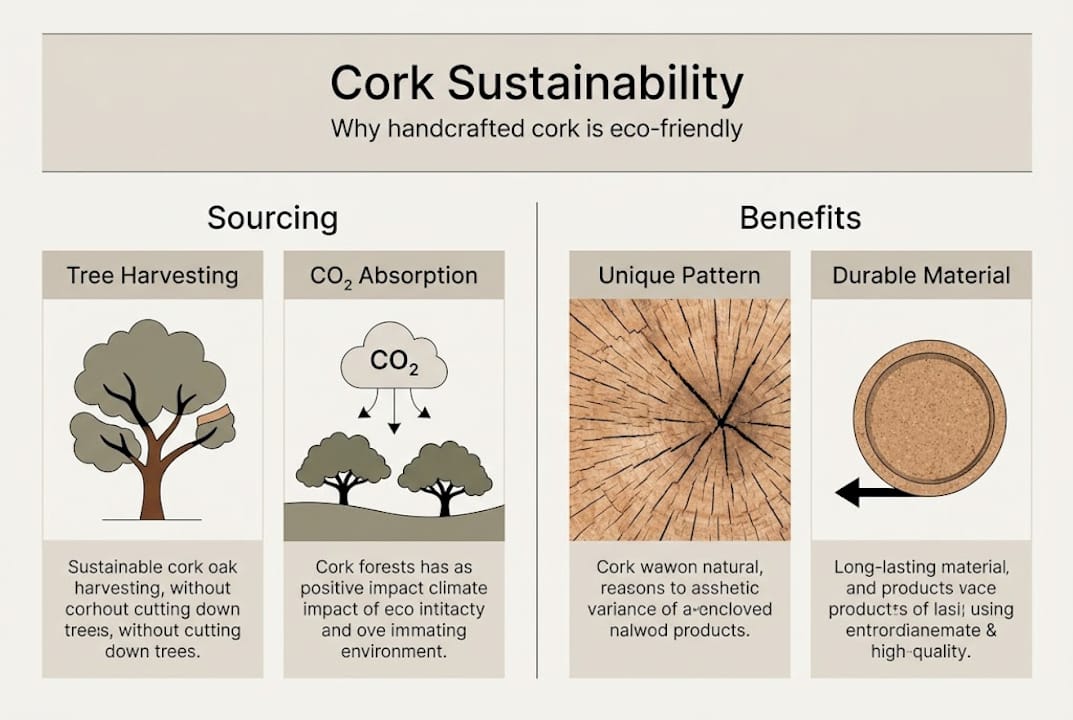
For eco-conscious shoppers, understanding the benefits of cork accessories starts with appreciating this regenerative cycle. No other mainstream accessory material offers a comparable profile.
Here is a quick comparison of how cork measures up against other common materials:
| Material | Tree or animal harm? | Carbon impact | Bio-based? | Chemical processing? | Fair labour typical? |
|—|—|—|—|—|—|
| Cork | None | Carbon negative | Yes | Low | Yes |
| Animal leather | Yes | High | Yes | High (tanning) | Variable |
| PU synthetic | None | High (plastic) | No | Very high | Variable |
| Cotton canvas | None | Medium | Yes | Medium | Variable |
The key advantages of cork as an eco material include:
- Zero tree felling during harvest
- Natural biodegradability when paired with organic backings
- Low chemical processing compared to leather tanning
- Support for traditional rural economies in southern Europe
- Long harvest cycles that encourage forest stability
“Cork oak forests are living proof that nature and human industry can work in genuine partnership rather than opposition.”
For a deeper look at how eco materials in cork align with sustainable fashion values, the environmental case is exceptionally well supported by evidence.
The art and ethics of handcrafting cork accessories
Having covered cork’s inherent sustainability, let’s explore why the way it’s shaped matters, especially when done by hand.
Handcrafting cork into wearable accessories is a multi-stage process that demands genuine skill. It begins with sorting and grading the harvested bark, then thinning and bonding it to a flexible backing, before skilled workers cut, stitch, and finish each individual piece. Because handcrafting uses manual, traditional skills, it generates minimal waste compared with machine cutting, which often discards irregular shapes that artisans would repurpose creatively.
Here is what the handcrafting journey typically involves:
- Selection of high-grade cork bark with consistent texture and thickness
- Treatment using low-impact methods to enhance flexibility and durability
- Pattern cutting by hand, reducing off-cuts and adapting to the natural grain
- Assembly and finishing, where individual pieces are sewn and inspected
- Quality check by the artisan who made the item, ensuring traceability
This approach contrasts sharply with factory mass production, where speed takes priority over care. In large-scale facilities, composite cork sheets are often machine-stamped without regard for material variation, and quality control is statistical rather than personal. The artisan producing your bag knows that piece by sight.
There is also an important ethical dimension. Small workshops producing handcrafted cork goods tend to operate with transparent supply chains and pay fair wages. You can often trace a handmade item back to the specific region and workshop. This transparency is rare in mass-market fashion and is a key reason why the handmade cork product benefits extend well beyond the material itself.
Pro tip: When buying cork accessories, ask the brand where they are made and by whom. A genuinely ethical producer will answer readily and with pride.
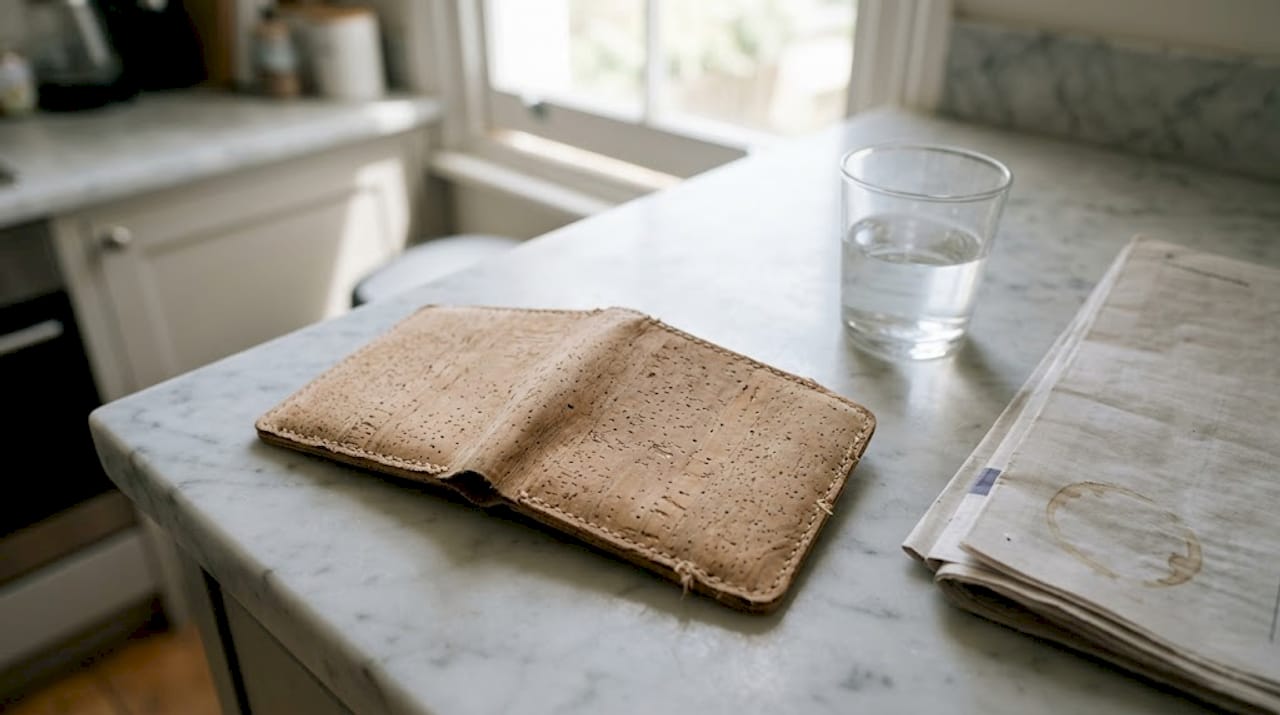
Every handcrafted cork piece is also visually unique. Natural bark has irregular grain patterns, subtle colour shifts, and occasional textures that machine-stamped sheets smooth out entirely. That slight variation in your cork wallet or handbag is not a flaw. It is a signature of authenticity.
comparing handcrafted cork to mass-produced and synthetic alternatives
To see why people choose handmade cork, a comparison is essential.
Synthetic vegan alternatives like polyurethane (PU) leather are often marketed as cruelty-free, and while they avoid animal harm, they carry a significant environmental cost. PU is plastic-derived, non-biodegradable, and typically bonded with chemical adhesives. Over time, PU alternatives crack and peel, meaning they end up in landfill far sooner than a well-maintained cork piece would. Research shows that handmade cork has lower emissions and better durability than most mass-produced or synthetic options.
Understanding what cork fabric is helps clarify why it outperforms PU technically too. Cork is made of suberin, a natural waxy substance that resists moisture, repels stains, and remains flexible without chemical softeners.
Here is how the three main options compare:
| Feature | Mass PU vegan | Mass-produced cork | handcrafted cork |
|—|—|—|—|
| Environmental impact | High (plastic) | Medium | Low |
| Animal harm | None | None | None |
| Supply chain transparency | Low | Medium | High |
| Natural ageing | Poor (cracks) | Fair | Good |
| Style uniqueness | Low | Low | High |
| Long-term durability | 2 to 4 years | 3 to 6 years | 5 to 10+ years |
Mass-produced cork sits in the middle ground. It uses the same base material but removes the human element and the careful quality control. Some mass-produced cork products use composite sheets with synthetic binders, blurring the sustainability story significantly.
Key reasons eco-shoppers are moving towards handcrafted cork:
- No plastic content in well-sourced, natural-backed items
- Lower per-use cost due to superior longevity
- Style that improves with age rather than degrading
- Full material transparency from responsible brands
“Fast fashion gives you a product. Real craftsmanship gives you an object worth keeping.”
For a complete breakdown of why cork vs leather accessories is an increasingly easy choice, the evidence consistently favours cork, and eco shoppers increasingly agree.
Important nuances: backing, authenticity, and eco-pitfalls
With clear benefits outlined, it is important to consider key nuances and avoid common eco pitfalls.
Not all cork accessories are created equal. The single most important factor beyond the cork itself is the backing material. Cork sheets are almost always laminated to a base for added structure, and that base determines whether the finished product is genuinely sustainable. The backing material affects biodegradability and compostability significantly.
Here is what to look for and avoid:
- Choose items with cotton, linen, or natural fibre backings for genuine biodegradability
- Be cautious of polyurethane or polyester-backed cork, which will not compost
- Look for full ingredient disclosure on product pages and labels
- Question vague terms like “eco composite” or “sustainable blend” without specifics
- Research whether the brand works with certified cork suppliers from regulated forests
Greenwashing is a genuine problem in the cork accessories market. Some brands use the word “cork” to capitalise on sustainability interest while actually selling PU-heavy composites with just a thin cork veneer. The cork content in such products is sometimes as low as 10 to 15 percent of the sheet’s total composition.
On the positive side, responsible harvesting actually improves ecological outcomes. Cork harvesting can increase wildlife microhabitats by opening up the forest canopy, encouraging undergrowth and supporting insect and bird populations that depend on varied terrain.
Pro tip: Before purchasing, check whether the brand lists the specific backing fibre and the country of cork origin. Portuguese cork with cotton backing is a strong indicator of a genuinely eco-friendly product.
For guidance on choosing sustainable cork wisely, the key questions to ask any brand are simple but revealing. Can they name the forest region? Can they name the backing material? If yes, you are likely dealing with an honest producer.
Our take: Why true sustainability and style demand going handcrafted
With the practicalities covered, it is worth reflecting on what really matters when you choose an accessory.
The sustainability conversation in fashion is cluttered with claims. Every other brand now uses the word “ethical” or “eco-conscious” as a marketing shortcut. What makes handcrafted cork different is that its credentials are visible, traceable, and measurable. You can see the grain of the bark. You can ask who made it. You can verify the backing fibre.
We think the deeper value of choosing handcrafted lies in what it represents beyond the object itself. Cork craftsmanship sustains slow fashion and preserves artisan traditions in a way that mass fashion simply cannot replicate. Each handmade piece connects you to a centuries-old craft, a specific forest, and a skilled worker who takes pride in their output.
We believe choosing accessories this way is not a compromise. It is an upgrade, in style, ethics, and longevity. The future of fashion belongs to pieces that can tell an honest story, and cork does exactly that. See what is possible with cork innovation for the future.
discover handcrafted cork accessories for your sustainable wardrobe
Inspired to choose consciously? Here is where to find handcrafted cork accessories that embody everything discussed above.
At The Cork Store, every product has been curated with genuine eco values in mind. From sleek wallets and spacious handbags to beautifully packaged eco-friendly cork gifts, each piece supports artisan communities and responsible cork sourcing. Whether you are treating yourself or shopping for someone who cares about the planet, you will find accessories that hold up to scrutiny on both style and sustainability.
Browsing the collection means choosing fashion that gives back. Every purchase supports forests, fair wages, and a slower, more considered approach to getting dressed.
frequently asked questions
Is cork really a sustainable choice for accessories?
Yes, cork’s regenerative harvesting and carbon sequestration credentials make it one of the most environmentally sound accessory materials available today. Trees are never cut down, and forests actively improve with each harvest cycle.
Are all cork accessories biodegradable?
Not automatically. Only cork items with natural fibre or cotton backing are truly biodegradable, as PU backings hinder compostability and prevent the product from breaking down naturally.
How does handcrafting cork differ from mass production?
skilled and ethical handcrafting results in less waste, better quality, and full supply chain transparency, whereas mass production frequently uses composite materials and machine processes that reduce both quality and accountability.
Do cork accessories last as long as leather?
Cork accessories are durable, water-resistant, and age well with simple care. Research confirms that cork fashion lasts many years and can even be repaired, making the cost-per-use genuinely competitive with premium leather.
How can I spot genuine, eco-friendly cork accessories?
Look for full disclosure of backing materials, the cork’s country of origin, and transparent sourcing. genuine brands disclose their practices and are happy to explain exactly what their products contain and where they come from.
Recommended
- Why Choose Sustainable Accessories for Ethical Style – The Cork Store
- How to Style Cork Accessories for Chic Sustainable Looks – The Cork Store
- Why Choose Cork Accessories: Sustainable Style Explained – The Cork Store
- Benefits of Cork Accessories: Sustainable Style for All – The Cork Store
- Eco-Friendly Wall Art: Sustainable Decor for Unique Homes