
Portuguese Leather Handbags: Verify ‘Made in Portugal’ or Try Cork
Portuguese leather handbags are worth buying when you want genuine small batch craftsmanship at a fairer price than equivalent Italian labels, and the best place to start is a combination of brand e-stores, specialist ateliers and vetted marketplaces rather than a single shop. If leather isn’t a requirement, vegan cork handbags from Portugal offer a sustainable route to the same regional craftsmanship.
TL;DR:
- Use brand sites or named ateliers for direct material details; treat curated marketplaces as directories, and verify each seller before purchasing.
- Before buying, check leather type, even stitching, reinforced strap attachments, solid hardware, and a named maker or visible workshop details beyond the origin label.
- Price reflects leather grade, manual edge finishing, and local production; compare repair options and warranties, since some brands cover stitching for a year or more.
- Use leather balm matched to the finish every two to three months, store bags away from sunlight, and take structural damage to a restorer.
- Cork bags are generally lighter, naturally water resistant, and need no conditioning, but they keep a consistent appearance instead of developing leather’s patina.
Table of Contents
- Where to browse and buy Portuguese leather handbags
- What to look for when choosing a Portuguese leather handbag
- Price ranges and value: what to expect to pay
- Caring for a leather handbag bought in Portugal
- Why Portugal matters: industry context and craftsmanship
- Portuguese leather handbags compared with vegan cork handbags
- Ethical and environmental impact of leather versus cork
- Typical features and styles unique to Portuguese leather handbags
- How to verify authenticity and quality before you buy
- Shopping for Portuguese leather as a buyer who values provenance
- An alternative worth considering: cork handbags from The Cork Store
- FAQ
- Sources
Where to browse and buy Portuguese leather handbags
Start with brand websites and boutique e-stores. A well-run product page shows the leather type, lining material and closeup photography of stitching and hardware rather than vague marketing copy. Leather From Portugal notes that product pages showing workshop photos and closeups of stitching convert more trust than generic claims, which is a useful filter when you’re comparing ten open browser tabs.
Specialist ateliers are worth seeking out when you want a bag made to order or in very small runs. Many Portuguese workshops sell directly through their own sites or by appointment, and they tend to be more transparent about materials and production timelines than larger brands selling through third-party retailers.
Curated marketplaces sit between the two. They aggregate smaller Portuguese labels under one roof, which saves time, but listing quality varies, so treat the marketplace as a directory rather than a guarantee of authenticity.
Physical shopping still has its place, particularly if you’re visiting Portugal. Lisbon’s Chiado and Porto’s leather quarters host both heritage brands and younger designers, and trade events throughout the year let you meet makers directly.
- Brand and boutique sites: look for named ateliers, workshop photography and material specifications on the product page.
- Ateliers and workshop shops: best for made-to-order pieces, small runs and direct maker contact.
- Curated marketplaces: useful for comparison shopping, but vet each seller individually before buying.
- In person: boutique districts, leather quarters and trade fairs let you handle the leather and ask questions directly.
What to look for when choosing a Portuguese leather handbag
The leather type tells you most of what you need to know before you even touch the bag. Full-grain leather keeps the hide’s natural surface and develops character over years of use. Corrected grain leather has had imperfections sanded out and a finish applied, which gives a more uniform look but less natural texture. Aniline leather is dyed through without a heavy surface coating, so it feels soft and shows marks more readily, while nubuck has a light, brushed nap that’s striking but more delicate.
Construction detail separates a well-made bag from a mass-produced one. Check the stitching for even spacing and no loose threads, look at how the edges are finished (painted, folded or raw), and examine the lining material, which is often cotton canvas, suede or a technical fabric in Portuguese-made bags. Hardware should feel solid rather than light, and zips and clasps should move smoothly without catching.
Provenance cues matter as much as the leather itself. A genuine “Made in Portugal” label paired with workshop photography, a maker’s statement or visible supply chain detail is far more convincing than a label alone. Leather From Portugal points out that the sector has shifted from subcontracting work for other labels towards building its own proprietary brands, and “Made in Portugal” is increasingly used as a mark of sophistication rather than just an origin stamp.
Before you commit, run a few practical checks:
- Pull gently on the strap attachment points to see whether they’re reinforced or just glued.
- Open the bag fully and check the interior organisation: pockets, a zip compartment and a sturdy base all suggest thoughtful design.
- Look for a serial number, maker’s mark or stamped logo inside the bag, which larger workshops use for traceability.
- Compare the stitching density at stress points (handles, corners) against the rest of the bag.
Pro Tip: Photograph the interior tag and stitching before you buy online, so you have a reference if you ever need to query authenticity or request a repair later.
Price ranges and value: what to expect to pay
Entry-level Portuguese leather handbags from smaller workshops typically sit at a more accessible price point than equivalent Italian pieces, reflecting lower labour costs rather than lower quality. Mid-range bags from established Portuguese brands cost more because of better leather grades and more hand finishing, while premium pieces from design-led labels command prices closer to established European luxury houses, driven by limited runs and named-designer collaborations.
What actually drives the price is rarely the logo. Leather grade is the biggest factor: full-grain leather costs more to source and work with than corrected grain. Hand finishing, meaning edges painted by hand rather than machine-sealed, adds labour time. Local manufacture in Portugal, rather than outsourced production, also adds cost but tends to correlate with better quality control.
To judge value rather than just price, look past the number on the tag.
- Workmanship: even stitching and clean edge finishing usually indicate a bag that will age well.
- Materials: full-grain or vegetable-tanned leather tends to outlast corrected grain or bonded alternatives.
- Repairability: a bag with replaceable straps or hardware will cost less to maintain over its life.
- Warranty or guarantee: a brand willing to stand behind its stitching for a year or more is signalling confidence in its own construction.
Caring for a leather handbag bought in Portugal
A leather bag rewards a small amount of routine care far more than it punishes neglect. Daily habits matter most: wipe off dust with a soft, dry cloth, keep the bag away from direct heat and prolonged damp, and condition it every few months with a leather balm suited to the finish (aniline leather needs a gentler product than corrected grain).
- Clean the surface with a soft cloth before conditioning, never while the leather is wet.
- Condition every two to three months, or more often in dry climates, using a product matched to the leather type.
- Store the bag stuffed with acid-free tissue or a soft cloth to hold its shape, inside its dust bag, away from sunlight.
- Take the bag to a local leather restorer for scuffs, loose stitching or hardware issues rather than attempting a home fix on structural damage.
- Consider a professional refurbishment once stitching starts to fray at stress points or the leather develops deep creases, usually a sign the bag has earned a proper service rather than retirement.
Pro Tip: Keep a small tin of neutral leather balm at home. A quick condition before storing the bag for a season prevents the leather from drying out and cracking.
Why Portugal matters: industry context and craftsmanship
Portugal’s leather sector has spent the last decade moving away from producing anonymously for other countries’ labels and towards building its own named brands. Leather From Portugal frames this shift directly, describing a move from subcontracting towards proprietary, higher-quality brands that use “Made in Portugal” as a signal of sophistication rather than a generic origin stamp. Industry reporting from Diário de Notícias describes this as a “rebirth” of the sector, with growing export activity and brands presenting their own identities at international trade events.
Technical centres play a quieter but important role behind this growth. Tec 4 Leather, run by CTIC, focuses on innovation, sustainability and circularity within the leather and accessories sector, giving Portuguese makers access to research and quality standards that support their provenance claims. CTCP continues to build international collaborations in footwear and leather, reinforcing Portugal’s standing in technical leather production.
None of this means every sustainability claim on a product page should be taken at face value. A certification logo or a line about “eco-friendly tanning” is worth less than a brand explaining which specific process it uses and why. Treat vague claims with scepticism and favour brands that name their tanneries, certifications or supply chain partners.
Portuguese leather handbags compared with vegan cork handbags
Both are genuinely “Made in Portugal” products, which is where the comparison gets interesting rather than simple. Leather handbags offer the patina, structure and flexibility that comes from an animal hide, developing character over years of handling. Cork handbags, made from the bark of the cork oak, offer a naturally water-resistant, lightweight surface with a distinctive textured look that doesn’t change much with age, which some buyers prefer for its consistency.
Durability differs in practice rather than on paper. Leather tends to soften and mould to use, while cork keeps its shape and resists scuffing in a different way, since the material itself is naturally water-repellent and doesn’t absorb stains the way untreated leather can. Weight is a clear point of difference too: cork handbags are generally lighter than their leather equivalents, which matters if you’re carrying one daily.

Style range is broad on both sides. Leather spans everything from soft slouchy totes to structured top-handle bags, while cork handbags, sold through specialists like The Cork Store, come in crossbody, tote and backpack styles that mimic leather silhouettes closely enough that the material difference is often the only real distinction. For a buyer who wants the regional craftsmanship story without the animal-derived material, cork is a direct substitute rather than a compromise.
Ethical and environmental impact of leather versus cork
The two materials sit on different points of the ethical and environmental spectrum, and it’s worth being specific rather than assuming one is automatically “greener.” For those interested in sustainability, elevating your style with ethically sourced jewelry offers a complementary perspective on responsible accessory choices. Leather is an animal by-product, and its environmental footprint depends heavily on tanning method, with some processes using more water and chemicals than others. Portuguese tanneries working with technical centres like CTIC have been investing in circularity and more sustainable processing, but the material itself still originates from livestock farming.
Cork is harvested from the bark of the cork oak without felling the tree, and the bark regrows over subsequent years, which makes cork a renewable material by design rather than by offset. It’s also naturally biodegradable, and Portugal supplies a substantial share of the world’s cork, giving the material a strong regional provenance story that parallels the leather narrative.
Neither claim should be taken purely on faith. A sustainability statement is only as useful as the detail behind it, so look for named certifications, specific tanning or harvesting methods, and transparency about where the raw material actually comes from. Buyers who want to verify this for themselves can read more about how Portuguese cork is verified and sourced, which covers the harvesting process in more detail than a typical product page.

Typical features and styles unique to Portuguese leather handbags
Portuguese leather handbags tend to favour clean, structured silhouettes over heavy branding, with many smaller labels deliberately keeping external logos minimal in favour of letting the leather and construction speak for themselves. Top-handle totes, structured crossbody bags and soft hobo shapes are common, often finished with contrasting stitching or hand-painted edges that mark out small-batch production.
Hardware tends to be understated rather than showy: matte metal clasps, simple magnetic closures and woven or braided leather straps appear more often than heavy branded buckles. Linings vary by workshop, but cotton twill, suede and technical fabrics are all common choices, generally disclosed on the product page of brands that prioritise transparency.
A distinctive feature of many Portuguese-made bags is the small-batch or made-to-order model, where a workshop will produce a limited run of a style or even personalise a bag to order. This isn’t unique to Portugal, but it’s a more prominent part of the market there than in larger industrial leather goods sectors, and it ties back to the “rebirth” of proprietary branding described by Diário de Notícias.
How to verify authenticity and quality before you buy
The single most useful verification step is looking past the label itself. A “Made in Portugal” tag means little on its own, but paired with workshop photography, a named maker or atelier, and visible details about the tanning or finishing process, it becomes much more credible. Leather From Portugal specifically highlights that product pages with closeup photography of stitching and hardware build more buyer trust than generic claims, and that pattern holds whether you’re buying from a brand site or a marketplace listing.
Ask the seller direct questions if the listing is thin: where is the bag actually made, what tannery supplies the leather, and is there a maker’s mark inside. A workshop confident in its own provenance will usually answer quickly and specifically.
For quality rather than origin, examine the physical bag the same way you would check any leather goods: even stitching, solid hardware, a lining that’s stitched rather than glued in place, and strap attachments that are riveted or sewn through reinforced leather rather than just stapled. These checks apply equally to a bag bought from a heritage brand or a newer Portuguese atelier.
Shopping for Portuguese leather as a buyer who values provenance
Chasing “Made in Portugal” labels taught me that the label alone tells you almost nothing. The bags that held up, both physically and in terms of honest provenance, were the ones where the seller could point to a specific workshop, a named tannery or a maker’s mark rather than a generic origin claim.
That same instinct for transparency is what led me towards cork as a material worth taking seriously, not as a lesser substitute but as its own category with its own provenance story worth verifying in exactly the same way.
— Aaron
An alternative worth considering: cork handbags from The Cork Store
If you’d rather skip animal leather altogether without giving up on Portuguese craftsmanship, there are vegan cork handbags, crossbody bags, totes and backpacks sourced from Portugal’s cork industry. Every piece we sell is made from a renewable, biodegradable material harvested without felling a single tree, which gives you a genuinely sustainable alternative rather than a synthetic stand-in for leather.
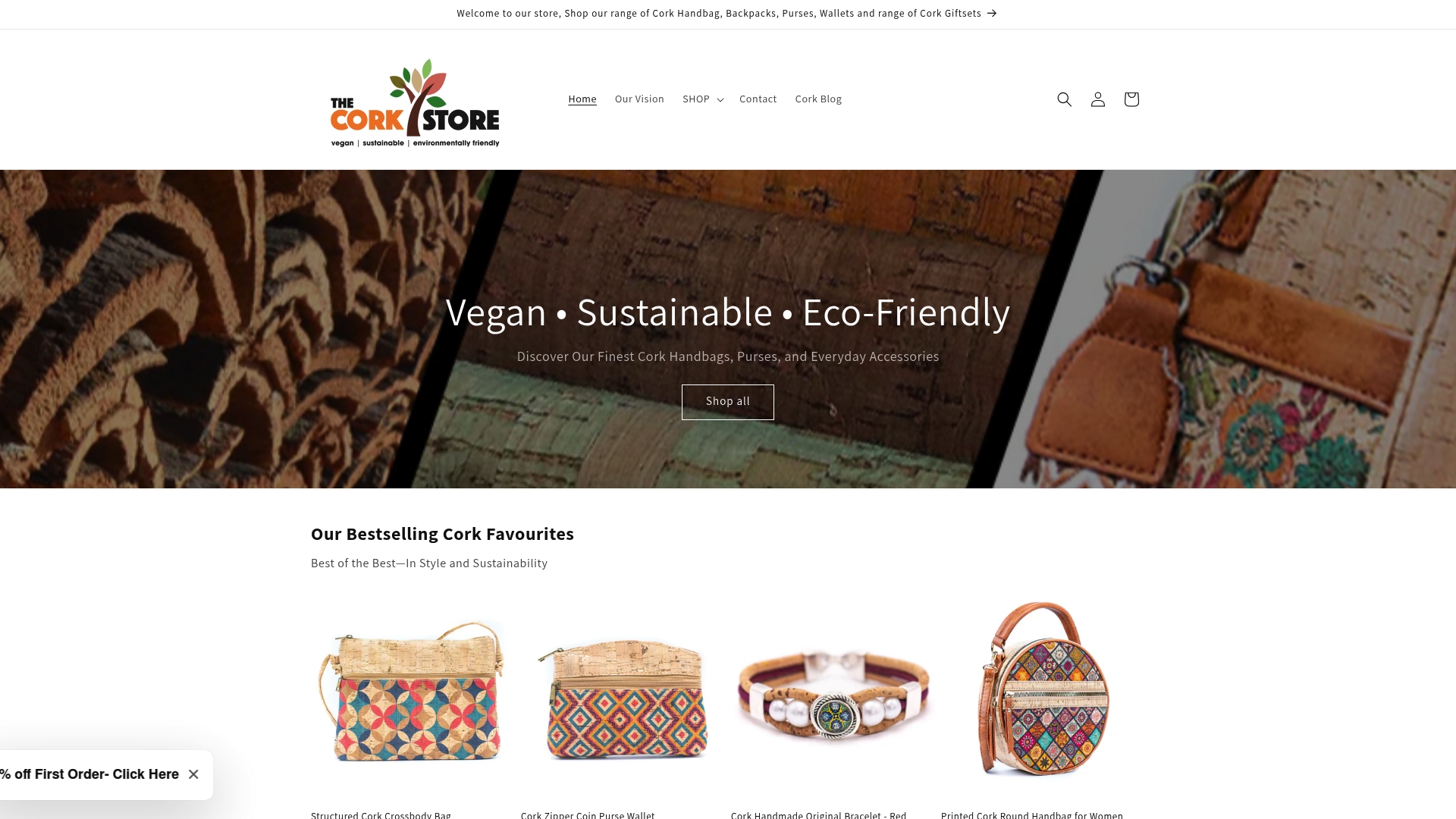
Cork handles daily wear differently to leather: it’s naturally water-resistant, doesn’t need conditioning, and stays lightweight even in larger styles like our cork backpacks and travel bags. It won’t develop the same patina as leather over time, but it also won’t need the same upkeep, which suits buyers who want a low-maintenance bag that still carries a genuine regional story.
- Browse our full range of women’s cork handbags, crossbody bags and totes to compare styles side by side.
- Smaller accessories, including wallets and coin purses, make an easy starting point if you want to try the material first.
- Our cork gift sets pair a handbag with matching accessories for a complete, ready-to-give option.
Start by browsing our cork handbag collection to see which style fits the bag you had in mind.
FAQ
Is it cheaper to buy designer bags in Portugal?
Designer bags from international luxury houses aren’t necessarily cheaper in Portugal than elsewhere in the EU, since pricing is usually set at a regional level. Smaller Portuguese-made brands, however, are often more affordable than equivalent Italian or French artisan labels because of lower local production costs.
What luxury brands are made in Portugal?
Several European luxury houses use Portuguese workshops for manufacturing, alongside a growing number of Portuguese-owned brands building their own identities, as described in industry reporting on the sector’s shift towards proprietary branding. Specific manufacturing arrangements aren’t always publicly disclosed by the luxury houses themselves.
Which country makes the best leather bags?
There’s no single country that makes the “best” leather bags, since Italy, Portugal, Spain and others each have strong regional traditions with different strengths. Portugal has built a reputation specifically around craftsmanship and value, supported by its growing proprietary leather sector.
Which brands are cheaper in Portugal?
Smaller Portuguese atelier brands and workshop labels tend to be cheaper than comparable Italian artisan brands, largely due to lower production costs rather than lower material quality. For a vegan alternative at a transparent, listed price, our cork handbag collection shows current pricing on every product page.
Sources
- Leather From Portugal
- Portugal leva a Milão uma indústria de pele e marroquinaria ‘renascida’ — Diário de Notícias
- Tec 4 Leather – CTIC
- CTCP reforça colaboração internacional com a fileira do calçado da África Oriental — CTCP