

The role of natural materials in design: a complete guide
Natural materials are the most effective tools available for creating spaces that are simultaneously sustainable, beautiful, and genuinely good for the people who inhabit them. Timber, cork, stone, clay, hemp, and straw have shaped human environments for millennia, and the reasons they keep returning to the forefront of design are not sentimental. They store carbon, regulate humidity, reduce physiological stress, and biodegrade at end of life. Synthetic alternatives can match none of those properties in combination.
The core roles natural materials play in design include:
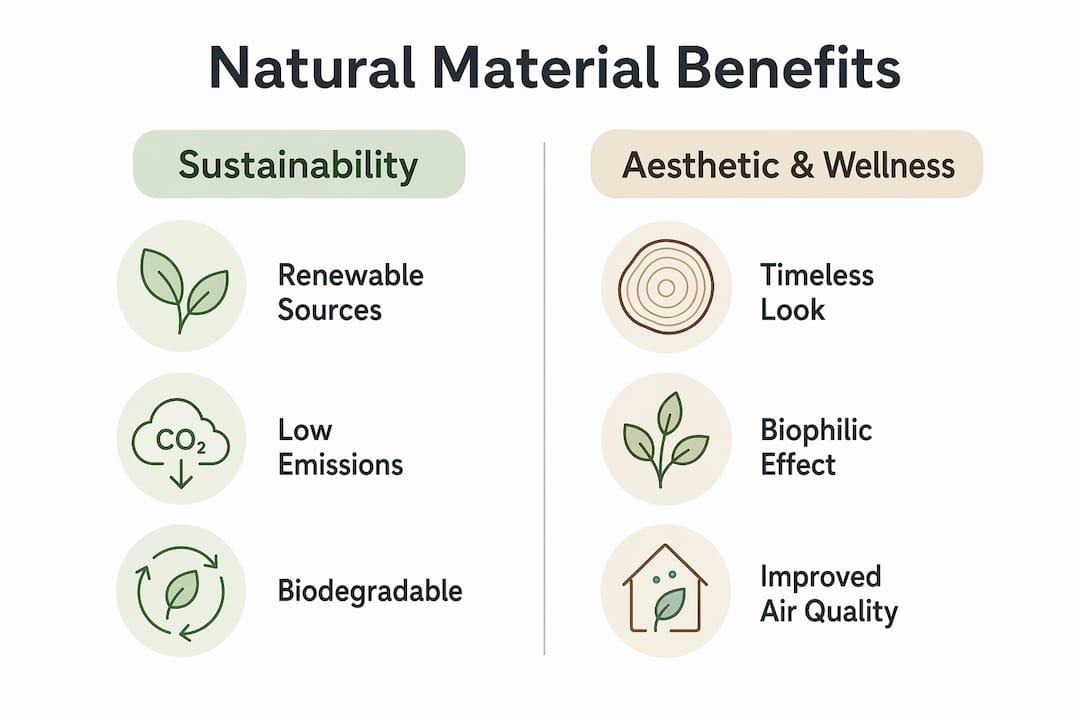
- Sustainability: Renewable sourcing, low embodied energy, and biodegradability reduce a building’s or product’s lifetime environmental impact.
- Aesthetics: Unique grain, texture, and colour variation create warmth and visual depth that manufactured materials rarely replicate.
- Health and well-being: Natural surfaces reduce stress and improve indoor air quality by avoiding the volatile organic compounds (VOCs) common in synthetic finishes.
- Thermal and acoustic performance: Materials such as hemp, cork, and clay regulate temperature and absorb sound without mechanical intervention.
- Cultural continuity: Stone, timber, and earth construction carry centuries of craft knowledge, embedding a sense of place and identity in built environments.
- Circular economy compatibility: Most natural materials can be composted, reused, or recycled, keeping resources in use rather than sending them to landfill.
Standards such as ISO 14040/44 (life cycle assessment) and EN 15804 provide the measurement frameworks that allow designers to compare these benefits quantitatively, moving the conversation from instinct to evidence.
Table of Contents
- How natural materials shape the aesthetic experience of a space
- Why natural materials are the most sustainable design choice
- How natural materials improve psychological health in homes and offices
- The versatility of natural materials across UK design styles
- Practical tips for using natural materials in UK interiors and offices
- Why natural materials will define the future of UK design
- How Thecorkstore demonstrates sustainable natural material design in the UK
- Key takeaways
How natural materials shape the aesthetic experience of a space
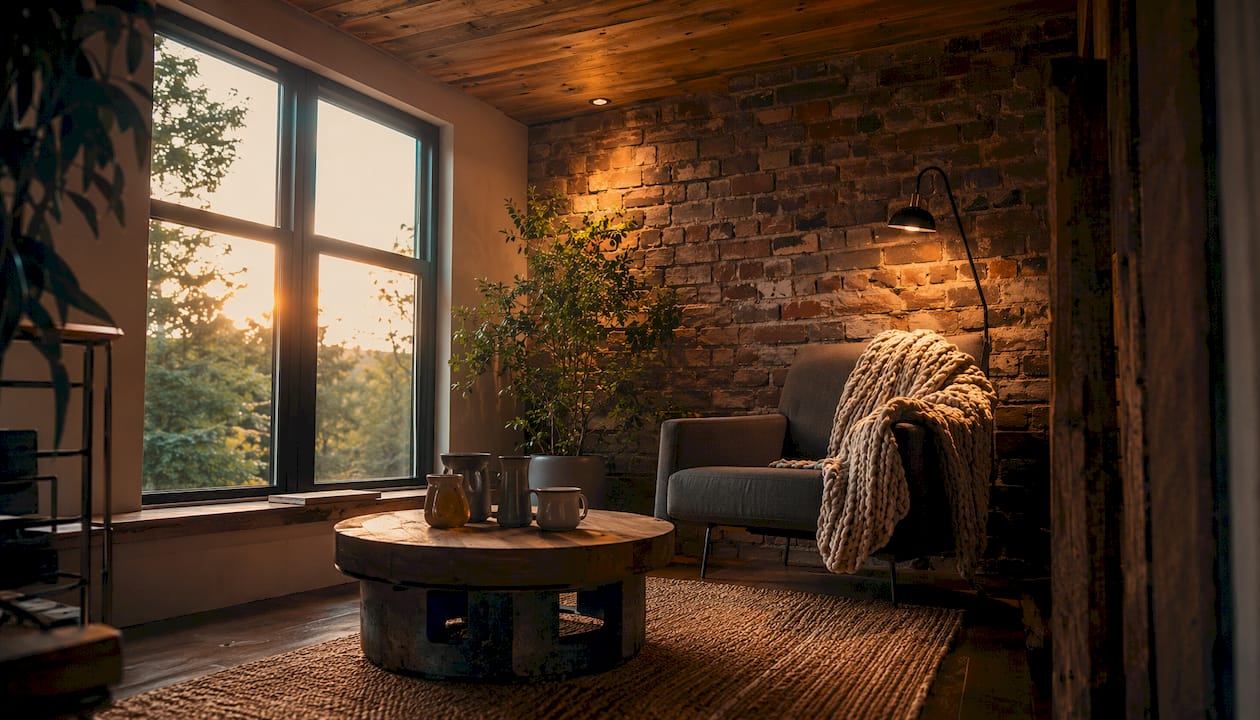
The visual and tactile qualities of natural materials are genuinely difficult to replicate. Every plank of timber carries a unique grain; every piece of stone holds a pattern formed over geological time. That irreducible individuality is precisely what gives naturally finished spaces their warmth and authenticity.
- Texture: The haptic richness of rough-sawn oak, riven slate, or woven hemp creates sensory depth that flat, uniform synthetic surfaces cannot offer.
- Colour variation: Natural pigmentation shifts with light across the day, making a room feel alive rather than static.
- Patina: Materials like timber, stone, and cork age gracefully, developing character rather than simply wearing out.
- Acoustic softness: Fibrous and porous natural surfaces absorb sound, reducing the hard echo common in spaces dominated by glass and concrete.
- Olfactory presence: Freshly worked timber and natural clay plasters carry subtle scents that contribute to a sense of comfort and groundedness.
Across design styles, natural materials adapt without losing their identity. Exposed stone reads as contemporary minimalism in a London flat and as vernacular tradition in a Cotswolds farmhouse. Raw linen and undyed wool sit as comfortably in a Scandi-influenced office as in a Victorian terrace. Research on natural materials confirms that this aesthetic versatility is not accidental: the multi-sensory properties of natural substances actively shape how occupants perceive and experience architectural space, engaging cognitive, affective, and attentive responses simultaneously.
Cultural heritage deepens the aesthetic case. When a designer specifies local limestone or reclaimed oak, they are not just choosing a material; they are connecting a space to its regional history and the craft traditions that shaped it.
Why natural materials are the most sustainable design choice
The environmental argument for natural materials has moved well beyond the anecdotal. 2025 research on bio-based building materials demonstrates that shifting to nature-based construction materials substantially reduces lifecycle greenhouse gas emissions, with bio-based options such as timber and hemp offering notable carbon storage potential that synthetic alternatives simply cannot provide.
| Material | Key sustainability property | Notable trade-off |
|---|---|---|
| Timber | Carbon storage; structural strength | Higher resource demand for large structural use |
| Hemp | Superior insulation; rapid renewability | Requires lime binder for structural applications |
| Straw | Excellent insulation; low embodied energy | Moisture management critical |
| Earth/clay | Hygrothermal regulation; zero processing waste | Poor standalone insulator in cold climates |
| Cork | Renewable; biodegradable; carbon negative at harvest | Thinner applications need bonding agents |
Carbon storage in focus: Nature-based material studies comparing timber, hemp, straw, and earth against conventional construction found that all four nature-based systems substantially reduce lifecycle emissions, with bio-based options providing measurable carbon storage benefits that conventional materials cannot match.
Interest in regenerative bio-based materials, including mycelium, algae, and cork, has risen markedly since 2017, driven by circular economy goals and net-zero carbon targets. These materials do not merely reduce harm; they actively contribute to ecological restoration when sourced responsibly.
One caveat matters here. Cradle-to-cradle sourcing is non-negotiable: improperly sourced natural materials can lose their environmental advantage through high transport and processing energy demands. Local sourcing and certified supply chains preserve the net sustainability benefit.
Clay and stone offer a particular advantage in the UK climate. Their hygrothermal performance reduces the need for mechanical heating and cooling over a building’s lifetime, which offsets higher upfront material costs across the lifecycle.
How natural materials improve psychological health in homes and offices
The well-being case for natural materials is grounded in measurable physiology, not just preference. Studies show measurable reductions in stress responses in environments with wood surfaces compared to synthetic ones, with differences detectable through biomonitoring of heart rate and cortisol levels.
Key sensory properties that drive these effects include:
- Thermal comfort: Natural materials like timber and cork feel warmer to the touch than stone or metal at the same temperature, reducing the subliminal discomfort of cold surfaces.
- Haptic engagement: Varied textures invite touch and slow the nervous system’s threat-detection response, promoting calm.
- Olfactory cues: Natural scents from timber and clay trigger associations with outdoor environments, supporting restorative mental states.
- Visual complexity: The irregular patterns of wood grain and stone satisfy the brain’s preference for fractal-like visual information, reducing cognitive fatigue.
- Acoustic absorption: Fibrous natural surfaces dampen reverberant noise, lowering the background stress load in open-plan offices.
Biophilic design employs natural materials as active agents in improving cognitive well-being, not merely as decorative choices. In office environments specifically, the presence of natural surfaces has been linked to better concentration and decision-making, with architectural research citing neuroscience studies on the neuro-behavioural effects of biometric exposure to natural design features.
Indoor air quality is a related benefit. Natural materials that avoid synthetic resins and VOC-emitting finishes keep pollutant levels lower, which matters particularly in the well-insulated, low-ventilation buildings that UK energy standards increasingly require.
The versatility of natural materials across UK design styles
Natural materials work across an unusually wide range of applications and aesthetic registers, which is one reason they remain central to both traditional and contemporary UK design.
- Floors: Timber, cork, and stone are all proven flooring materials. Cork in particular offers warmth underfoot, sound insulation, and a surface that is gentle on joints, making it well-suited to both domestic and commercial interiors. Sustainable flooring options increasingly include natural fibre carpets alongside cork and reclaimed timber.
- Walls: Clay plasters regulate humidity, suppress mould growth, and provide a tactile finish unavailable from gypsum board. Lime render suits both historic and new-build UK properties.
- Insulation: Hemp, straw, and sheep’s wool outperform many synthetic insulants on breathability and moisture management, critical in the UK’s damp climate. Clay and straw bale construction integrated with contemporary methods meets current energy codes while retaining cultural value.
- Furniture and accessories: Timber, rattan, and cork translate naturally into furniture, lighting, and accessories that carry the same sensory benefits as architectural applications.
- Textiles: Hemp and linen fabrics bring natural material benefits to soft furnishings, combining durability with low environmental impact.
Traditional natural materials such as stone, clay, and timber carry cultural and historical significance that synthetic alternatives cannot replicate, supporting long-term use and ecological compatibility with the UK’s existing building stock. The integration of vernacular knowledge with modern building techniques achieves high performance without sacrificing the craftsmanship that gives these materials their character.
Pro Tip: When mixing natural materials in a single space, limit your palette to two or three complementary textures. Timber with clay plaster and a stone floor creates coherence; adding rattan, hemp textiles, and exposed brick simultaneously risks visual noise.
Practical tips for using natural materials in UK interiors and offices
Getting the most from natural materials requires more than good intentions. The following guidance reflects both UK-specific conditions and the lifecycle considerations that determine whether a natural material actually delivers its promised benefits.
- Certify your sources: Specify timber from Forest Stewardship Council (FSC) or Programme for the Endorsement of Forest Certification (PEFC) certified sources. For hemp and straw, ask suppliers for origin documentation. Responsible sourcing is the single most important factor in preserving the environmental advantage of natural materials.
- Account for moisture: The UK’s climate demands careful detailing around natural materials. Clay plasters and lime renders need adequate drying time; timber requires acclimatisation before installation; hemp insulation must be protected from prolonged saturation.
- Balance texture deliberately: Natural materials are rich in sensory information. A room with timber floors, clay walls, and linen upholstery feels grounded; the same room with added stone, cork tiles, and exposed brick can feel overwhelming. Edit rather than accumulate.
- Consider whole-life cost: Higher upfront costs for certified natural materials are typically offset by durability and reduced maintenance. Stone floors and solid timber joinery outlast most synthetic alternatives by decades.
- Check building regulations: UK Building Regulations Part L (energy efficiency) and Part B (fire safety) apply to insulation and structural materials. Hemp, straw bale, and timber frame all have compliant specification routes, but they require careful detailing.
- Prioritise local sourcing: Welsh slate, Scottish stone, and English oak all carry lower transport footprints than imported equivalents and connect a project to its regional context.
- Maintain natural finishes correctly: Oiled timber needs periodic re-oiling; lime plaster may need patching over time. These are minor interventions compared to the full replacement cycles that synthetic finishes typically require.
Why natural materials will define the future of UK design
The trajectory is clear. Net-zero commitments, tightening building regulations, and a genuine cultural shift towards ecological responsibility are all pushing UK design towards materials that can demonstrate their environmental credentials across a full lifecycle. Natural materials are not a nostalgic retreat; they are the most technically credible response to the design challenges of the next decade.
Key principles for sustainable and emotionally resonant design using natural materials:
- View materials as active participants: Material Engagement Theory frames natural substances as co-authors of architectural meaning, not passive resources. Choosing timber or clay is a design decision with sensory, cultural, and ecological consequences.
- Prioritise lifecycle thinking: The benefits of natural materials depend on responsible sourcing, appropriate specification, and end-of-life planning. A material that biodegrades cleanly is only an advantage if it was harvested and processed without negating that benefit.
- Combine traditional craft with contemporary technology: The most effective natural material applications marry vernacular knowledge with modern performance standards, achieving compliance without sacrificing character.
- Design for longevity: Durability is a sustainability strategy. A stone floor that lasts a century is more sustainable than a synthetic alternative replaced every fifteen years.
- Embed cultural intelligence: Natural materials carry ecological knowledge accumulated over generations. Using them thoughtfully connects contemporary design to that inheritance.
- Measure what matters: ISO 14040/44 life cycle assessment and EN 15804 product declarations give designers the tools to compare natural and synthetic options on evidence rather than assumption.
The growing body of research on biophilic design, material engagement, and lifecycle performance consistently supports the same conclusion: natural materials deliver across every dimension that matters in design, from carbon to comfort.
How Thecorkstore demonstrates sustainable natural material design in the UK
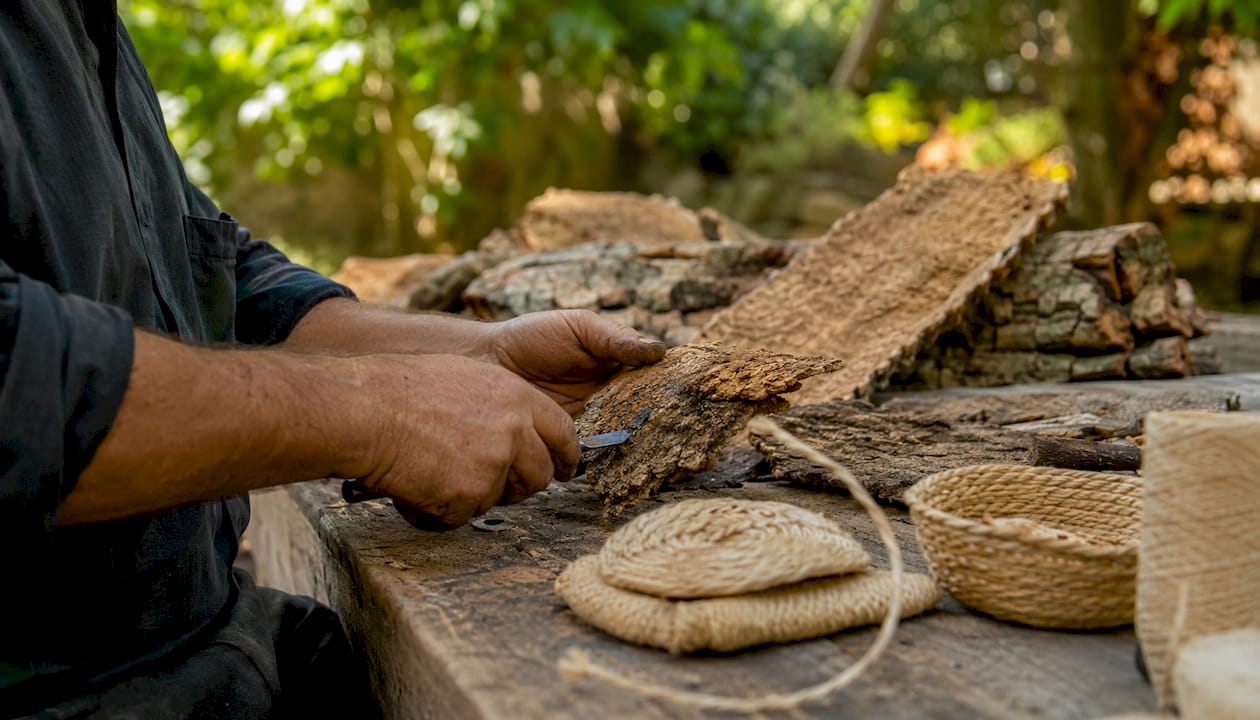
Cork is one of the most instructive natural materials available. Harvested from the bark of Quercus suber (cork oak) without felling the tree, it regenerates fully within approximately nine years, making it genuinely renewable in a way that most materials are not. It is biodegradable, carbon negative at harvest, and has been used in design and construction for centuries.
Thecorkstore applies these properties directly to the accessories market, demonstrating that the principles of sustainable natural material design extend well beyond architecture and interiors. Their range of vegan cork handbags, backpacks, wallets, and gift sets translates cork’s ecological credentials into everyday objects, replacing leather with a material that requires no animal products and leaves a fraction of the environmental footprint.
The sustainability principles Thecorkstore applies include:
- Circular economy sourcing: Cork is harvested without harming the tree, supporting forest ecosystems rather than depleting them.
- Biodegradable end of life: Unlike synthetic leather alternatives, cork products do not persist in landfill indefinitely.
- Low processing energy: Cork requires minimal industrial processing compared to conventional leather or PVC alternatives.
- Cruelty-free production: No animal products are used at any stage, aligning with both ethical and environmental design values.
- Durability by design: Cork’s natural resilience means products maintain their appearance and function over extended use, reducing replacement frequency.
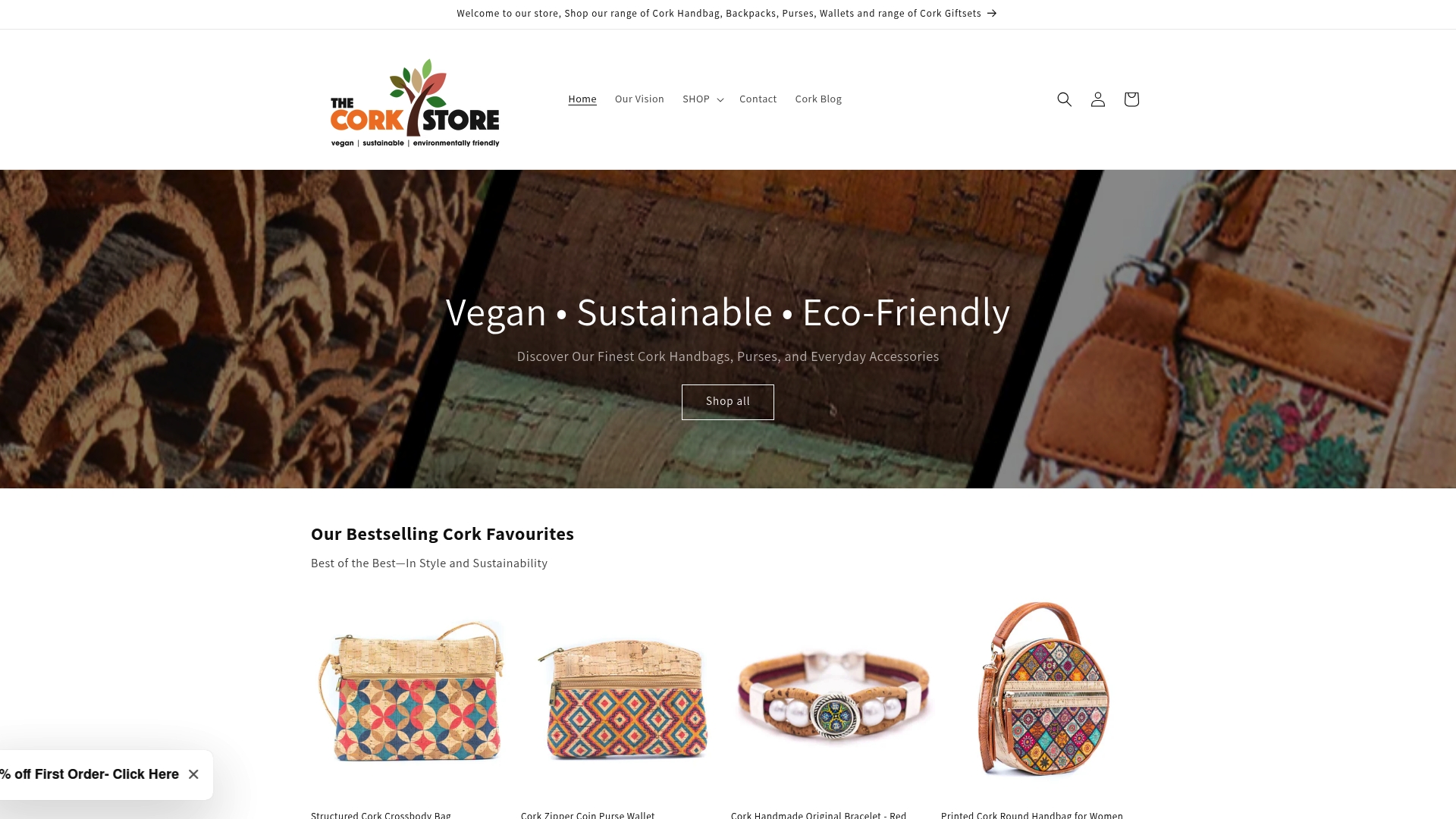
The innovation in cork accessories that Thecorkstore continues to develop reflects the same logic driving natural material adoption in architecture: the best sustainable choices are those that perform well, last long, and leave the least trace. Cork’s rising popularity in the UK market is evidence that consumers are making the same connection between material choice and environmental responsibility that designers have been making for decades.
Pro Tip: When choosing cork accessories or cork-based interior products, look for items made from natural cork rather than cork composite with synthetic binders. Natural cork retains full biodegradability and the tactile warmth that makes the material distinctive.
For readers interested in how material sourcing decisions translate from design principles to purchasing choices, Thecorkstore’s guide for ethical shoppers provides a practical framework applicable well beyond accessories.
Key takeaways
Natural materials are the most credible option for design that is simultaneously sustainable, aesthetically enduring, and genuinely supportive of human well-being.
| Point | Details |
|---|---|
| Lifecycle performance | Bio-based materials like timber and hemp substantially reduce lifecycle emissions compared to conventional alternatives. |
| Stress reduction | Natural wooden and cork surfaces produce measurable reductions in physiological stress compared to synthetic equivalents. |
| Hygrothermal regulation | Clay and stone regulate indoor humidity and temperature naturally, reducing reliance on mechanical heating and cooling. |
| Responsible sourcing | Environmental benefits depend on certified, locally sourced supply chains; improperly sourced materials can negate the advantage. |
| Cork as a model material | Cork is renewable, biodegradable, and carbon negative at harvest, making it one of the most complete sustainable material choices available. |