
Natural fibres in accessories: your eco style guide
TL;DR:
- Natural fibres vary significantly in durability and sustainability, with certifications like GOTS and NATIVA ensuring genuine eco-credentials. Many accessories contain hidden synthetics that hinder biodegradability, so all components must be considered for true compostability. Proper care extends their lifespan, making thoughtful selection and maintenance vital for a sustainable wardrobe.
Many fashion lovers are drawn to natural fibers in accessories for all the right reasons: they look beautiful, they feel tactile, and they come from the earth. But the marketing around them is noisy. Claims of “biodegradable” and “sustainable” are everywhere, yet very few brands explain what those words actually mean in practice. This guide cuts through that confusion. You will learn which fibres hold up over time, what certifications actually matter, how to spot greenwashing, and how to build a wardrobe of accessories that is genuinely better for the planet.
Table of Contents
- Key takeaways
- Common natural fibres in accessories explained
- Sustainability: what the labels actually mean
- Care, durability, and making accessories last
- Comparing fibres: a practical buying guide
- Styling with natural fibre accessories
- My honest take on natural fibres
- Explore natural fibre accessories at Thecorkstore
- FAQ
Key takeaways
| Point | Details |
|---|---|
| Not all natural fibres are equal | Durability, sustainability, and care needs vary significantly between cotton, wool, hemp, and emerging protein hybrids. |
| Certifications matter | GOTS and NATIVA labels verify traceability and genuine eco-credentials beyond surface-level marketing claims. |
| Hidden synthetics block biodegradability | Elastic cores, synthetic dyes, and metal hardware can prevent accessories from breaking down naturally. |
| Merino wool outlasts cotton dramatically | Merino withstands 20,000 bends before breaking, making it a smarter choice for long-wearing accessories. |
| Regenerative fibres go further | Fibres grown through regenerative farming restore ecosystems and capture carbon rather than simply reducing harm. |
Common natural fibres in accessories explained
When people talk about natural fibres, they usually mean a broad category that covers everything from the cotton in a scrunchie to the alpaca in a woven belt. The differences between them are worth understanding before you buy.
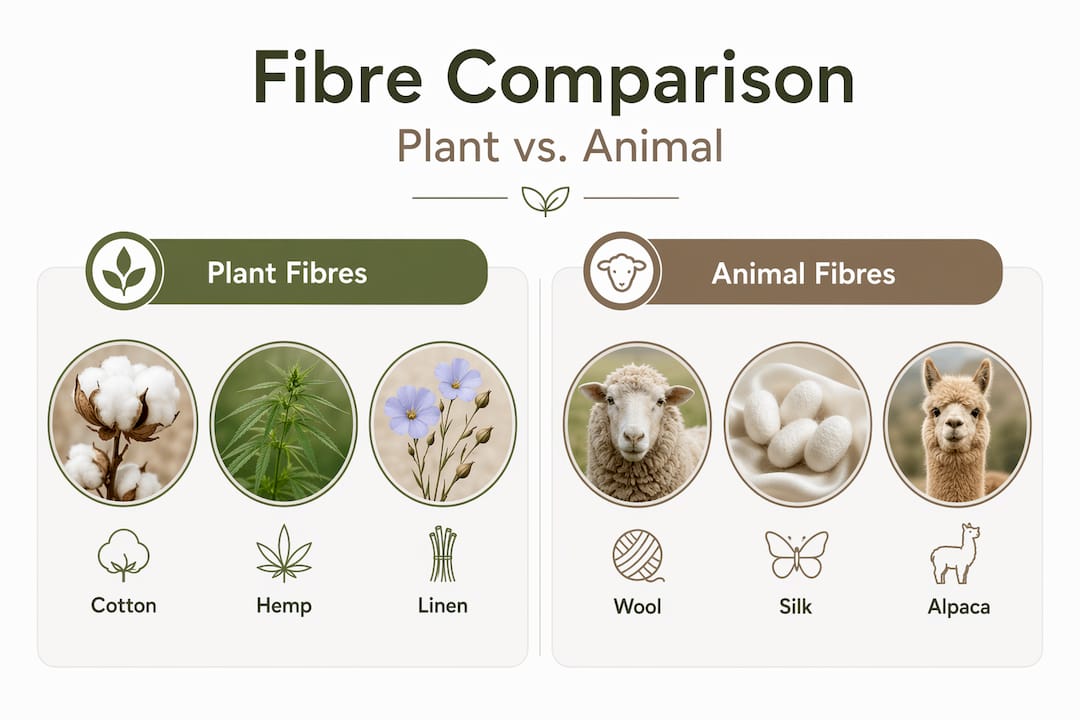
Plant-based fibres include cotton, hemp, and linen. Cotton is the most widely used, but conventional cotton farming is notoriously water-intensive. Organic and recycled cotton variants address some of that impact, though they are not a perfect solution. Hemp requires far less water and no pesticides, produces a strong, coarse fibre, and improves soil health as it grows. Linen, derived from the flax plant, is similarly low-impact and breathes beautifully, making it popular in scarves and belts.
Animal-based fibres include wool, silk, and alpaca. Merino wool deserves particular attention because its mechanical performance is exceptional. Merino withstands 20,000 bends before breaking, compared with just 8,000 bends for cotton. That means a merino wool accessory will outlast a cotton equivalent by a significant margin under the same conditions. Silk, derived from silkworm cocoons, offers a natural lustre and is a popular choice for natural fabric jewellery and hair accessories. Alpaca fibre is hypoallergenic, very soft, and remarkably warm, making it well-suited to woven accessories like bags and scarves.
Innovative protein-based fibres are the newest frontier. Researchers have developed silk-amyloid-mussel protein hybrids that dissolve in formic acid and can be reformed without any loss of tensile strength. These fibres are both fully biodegradable and recyclable, a combination that conventional fibres cannot achieve. They represent what next-generation sustainable fashion materials may look like at scale.
| Fibre | Origin | Key property | Typical use in accessories |
|---|---|---|---|
| Cotton (organic) | Plant | Soft, breathable | Scrunchies, fabric jewellery, belts |
| Hemp | Plant | Durable, low impact | Bags, cord jewellery, belts |
| Linen | Plant | Breathable, crisp | Scarves, hat bands, wraps |
| Merino wool | Animal | Highly resilient | Hat linings, watch straps, wraps |
| Silk | Animal | Lustrous, smooth | Hair ties, fabric jewellery, scarves |
| Alpaca | Animal | Soft, hypoallergenic | Woven bags, scarves, belts |
| Protein hybrid | Lab-grown | Recyclable, strong | Emerging accessory applications |
Pro Tip: If you are buying natural fabric jewellery or hair accessories, look beyond the outer material. The elastic, thread, and any internal structure may still be synthetic even if the outer layer is labelled as natural.
Sustainability: what the labels actually mean
The global biodegradable fabrics market is projected to grow to £13.65 billion by 2032, with a compound annual growth rate of 12.8%. That growth tells you how much consumer demand has shifted. It also tells you how much opportunity there is for misleading claims.
The difference between a sustainable fibre and a regenerative one is significant and frequently blurred.
- Sustainable means the fibre is produced with reduced harm: less water, fewer chemicals, lower emissions.
- Regenerative means the fibre is produced in a way that actively restores ecosystems. NATIVA certification guarantees that wool comes from farms practising rotational grazing, which enhances grassland carbon sinks and improves biodiversity. That is a fundamentally different claim.
- GOTS (Global Organic Textile Standard) certifies that a fibre is organic from field to finished product, covering social and environmental criteria throughout the supply chain.
- Recycled certifications such as the Global Recycled Standard verify post-consumer content, relevant for recycled cotton or wool blends.
One of the most persistent myths about natural fibres is that they will all biodegrade cleanly at the end of their life. The reality is more complicated. Biodegradation of accessories is often blocked by synthetic elastics, metal hardware, and chemical dyes, none of which break down naturally. A scarf made from organic linen but finished with a polyester lining and a brass clasp is not a biodegradable textile accessory in any meaningful sense.
“The biggest obstacle to biodegradable accessories is often hidden synthetic components. Designers must adopt holistic approaches to create fully compostable products.” — Vogue, on natural fibres and biodegradability
For a product to genuinely break down at end of life, every element needs consideration. Natural rubber cores, corozo nut buttons, and undyed or naturally dyed fabrics are examples of details that keep a product genuinely plastic-free. Learning how to spot sustainable materials is the single most useful skill you can develop as an eco-conscious shopper.
Care, durability, and making accessories last
The benefits of natural fibres are only realised if the accessories are properly cared for. Unlike synthetics, natural fibres respond to moisture, heat, and mechanical stress in specific ways that are worth understanding.
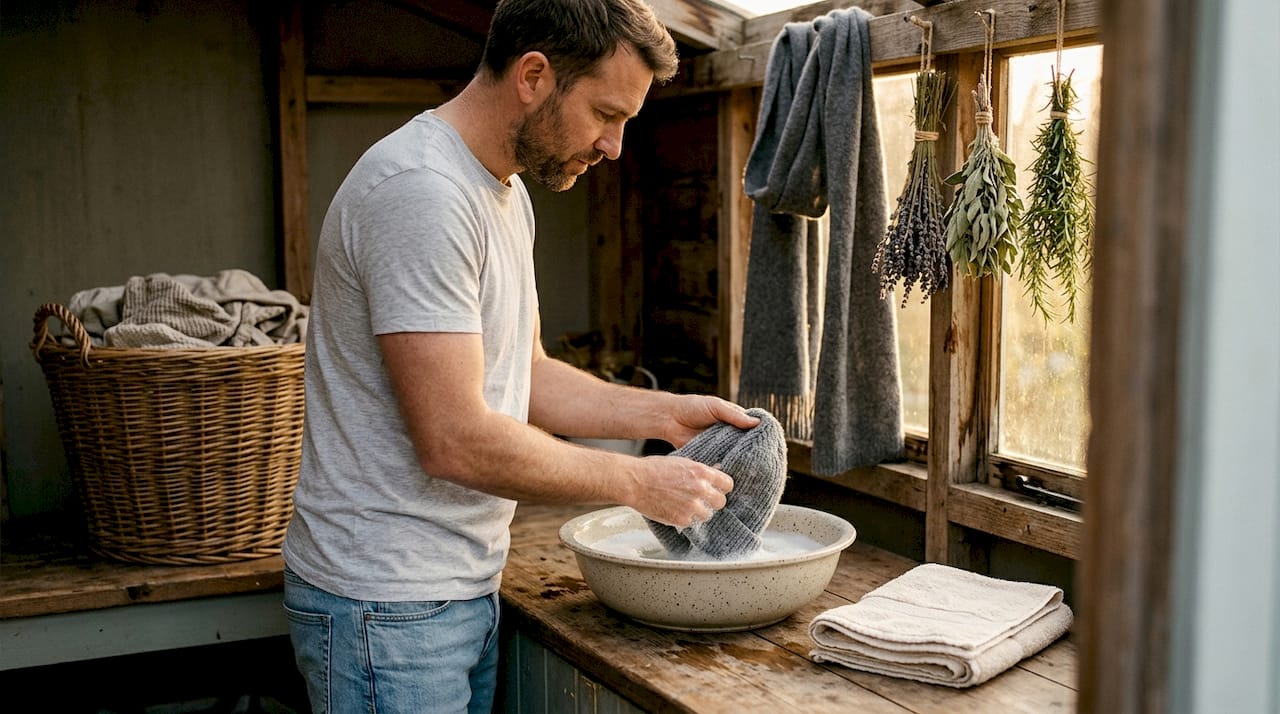
- Hand wash or use a wool cycle. Merino wool and alpaca should never go into a hot machine wash. The heat and agitation cause the fibres to felt and shrink. Use cool water and a gentle detergent designed for natural fibres.
- Lay flat to dry. Hanging a wet wool or linen accessory will stretch it under its own weight. Laying it flat on a clean towel preserves the shape.
- Store in breathable bags. Cotton or linen storage pouches protect natural fibre accessories from dust and moths without trapping moisture the way plastic bags do.
- Keep away from direct heat. Silk and wool can weaken and lose lustre under strong sunlight or near radiators. Store in a cool, dark space when not in use.
- Check for synthetic components before washing. Metal hardware, synthetic thread, and elastic inserts may react differently to water than the natural outer fibre, which can cause deformation or rust staining.
Merino wool’s elasticity makes it naturally resilient, but improper care can permanently compromise its shape. The fibre’s strength comes from its crimped structure, which flattens under repeated rough handling. Treat it gently and it will reward you with years of use.
Pro Tip: To check whether an accessory is genuinely plastic-free and potentially biodegradable, cut a small sample from an inconspicuous seam and attempt to burn it slowly. Natural fibres will smell faintly of hair or paper and leave a soft ash. Synthetic fibres melt, bead, or produce black smoke.
Comparing fibres: a practical buying guide
Choosing the right fibre for an accessory comes down to four factors: sustainability credentials, durability, aesthetic, and price. No single fibre wins on all fronts. Understanding the trade-offs lets you choose based on what matters most to you.
| Fibre | Sustainability | Durability | Aesthetic | Price point |
|---|---|---|---|---|
| Organic cotton | Good | Moderate | Casual, soft | Low to mid |
| Hemp | Excellent | High | Earthy, textured | Mid |
| Linen | Very good | Moderate to high | Crisp, elegant | Mid |
| Merino wool | Good to excellent | Very high | Refined, tactile | Mid to high |
| Silk | Moderate | Moderate | Luxurious | High |
| Protein hybrid | Excellent (emerging) | Very high | Variable | High (currently) |
A few pointers that tend to get overlooked in standard buying guides:
- Hemp and linen are among the best choices for accessories you want to last and compost at end of life, provided all other components are also natural.
- Silk has a more complicated sustainability story because conventional sericulture involves the death of silkworms. Peace silk or Ahimsa silk alternatives allow the moth to emerge naturally first, though availability is limited.
- Recycled wool blends can perform almost as well as virgin merino but with a significantly lower carbon footprint. Look for the Global Recycled Standard label to verify claims.
- Greenwashing in this category often takes the form of vague terms like “eco-friendly fibres” without naming the fibre, its origin, or any third-party certification. Specificity is a good sign; vagueness is a red flag.
The sustainability in accessory design conversation has become more nuanced as brands realise that a single certified fibre is not enough. Every element of construction matters if you want the finished piece to genuinely hold up to scrutiny.
Styling with natural fibre accessories
Knowing which fibres to buy is half the work. The other half is working out how to incorporate them into a wardrobe that feels genuinely yours, not a compromise.
Natural fibre accessories are more versatile than they used to be. Designers have moved well beyond the predictable beige-and-oat aesthetic, and you can now find:
- Silk scarves in bold botanical prints that work as hair ties, neckerchiefs, or bag accessories
- Hemp cord jewellery in refined colourways that sit comfortably alongside fine metals
- Merino wool watch straps that are a genuinely considered alternative to leather, with comparable comfort and durability (you can explore watch strap material comparisons to see how natural fibres perform head-to-head)
- Linen belts in structured silhouettes that suit both casual and smart outfits
- Woven alpaca bags that make a strong style statement while supporting traditional craft communities
When mixing natural fibre accessories with other sustainable materials, cork leather is a particularly good companion. Cork’s natural texture complements linen and hemp beautifully, and the two materials share a similar low-impact production story. Pairing a cork bag with a linen scarf or a hemp cord necklace creates a coherent sustainable look without feeling contrived.
For gifting, natural fibre accessories are an excellent choice because they feel considered and personal. A hand-dyed silk scarf, a hemp-cord bracelet made by an independent artisan, or a regenerative wool wrap all carry a story that a synthetic equivalent simply cannot.
My honest take on natural fibres
I have spent years paying attention to how people actually engage with sustainable materials once they get them home, and the pattern I keep seeing is this: people choose natural fibres for the right reasons, then get disappointed because they did not know how to look after them. A merino wool headband pills after a few washes. A linen belt loses its crispness. A silk scrunchie snags. And suddenly the whole sustainable fashion project feels harder than it should be.
What I have learned is that the disappointment is almost always a care problem, not a fibre problem. Natural fibres require different handling than synthetics, and that knowledge gap is something the industry has not done enough to address. When a brand gives you a GOTS certificate but no care instructions, that is a failure of communication.
The thing I find genuinely exciting right now is the emergence of protein-based textile innovations. The idea that a fibre can be fully recycled without strength loss across multiple cycles is a real breakthrough, not a marketing line. It shifts what biodegradable textile accessories can actually mean in practice.
My advice: prioritise certifications, ask about every component of an accessory before you buy, and treat longevity as the most sustainable choice you can make. A beautifully made hemp belt that lasts a decade beats ten cheap cotton ones every time. Regenerative fibres that restore ecosystems are even better. The gap between what exists and what is possible in this space has never felt smaller.
— Aaron
Explore natural fibre accessories at Thecorkstore
If this has shifted how you think about materials, the next step is finding accessories that put these principles into practice.
Thecorkstore curates a collection of eco-conscious accessories built on the same values discussed throughout this guide: traceability, low impact, and genuine durability. Cork, the flagship material, is harvested without cutting the tree, making it one of the most genuinely sustainable fashion materials available. It pairs beautifully with natural fibre components and is fully vegan. Browse the full accessories range to find bags, wallets, and gift sets designed for shoppers who are done making compromises between style and sustainability. The blog also covers sustainable accessory trends to help you stay informed and inspired as the market evolves.
FAQ
What are the most sustainable natural fibres for accessories?
Hemp and organic linen are among the most sustainable choices, requiring minimal water and no synthetic pesticides. For animal-based fibres, NATIVA-certified regenerative wool goes further by actively restoring ecosystems through responsible grazing practices.
Are natural fibre accessories truly biodegradable?
Not always. Biodegradability depends on every component, including thread, elastic, hardware, and dye. An accessory is only compostable when all elements are plastic-free and naturally derived.
How durable are natural fibre accessories compared to synthetics?
Durability varies widely by fibre. Merino wool, for instance, withstands 20,000 bends before breaking, outperforming cotton by a ratio of 2.5 to 1. Proper care extends the life of any natural fibre accessory considerably.
How do I verify that a natural fibre accessory is genuinely sustainable?
Look for third-party certifications such as GOTS for organic fibres or NATIVA for regenerative wool. Vague terms like “eco-friendly” without a named certification or origin story are a common sign of greenwashing.
What is natural fabric jewellery and how is it made?
Natural fabric jewellery uses fibres such as silk, hemp cord, linen, or cotton as the primary material, often combined with natural dyes and metal or wooden hardware. It is a growing segment of biodegradable textile accessories, particularly popular in handmade and artisan markets.