
The role of eco branding in building brand loyalty
TL;DR:
- Eco branding integrates environmental values into brand identity to influence consumer loyalty and behavior.
- Authentic, multi-dimensional green brand strategies significantly boost brand loyalty, performance, and market growth.
Eco branding is the strategic practice of integrating environmental values into a brand’s identity and communication to shape consumer behaviour and loyalty in sustainable markets. The industry term for this discipline is green brand strategy, though eco branding has become the working shorthand for marketers. Sustainable brands grow 2.7 times faster than non-sustainable ones, and sustainable products account for 32% of global market growth despite holding only 17% total market share. That gap signals a structural shift, not a trend. For brand strategists, the role of eco branding is no longer peripheral. It sits at the intersection of consumer psychology, financial risk management, and long-term brand equity.
How does eco branding influence consumer behaviour in sustainable markets?
Eco branding shapes consumer decisions through three distinct pathways: cognitive, affective, and behavioural. The cognitive pathway works through beliefs. When a brand communicates clear environmental credentials, consumers update their perception of the product’s value. The affective pathway operates through trust and emotional connection. The behavioural pathway is the purchase itself, but it only follows when the first two are solid.
The affective route carries the most weight. A review of 78 peer-reviewed studies confirms that trust and emotional value are the critical mediators in overcoming the attitude-behaviour gap. That gap is the well-documented phenomenon where consumers say they prefer sustainable products but do not always buy them. Closing it requires more than eco labelling. It requires verified, transparent information that builds genuine trust.
Environmental knowledge acts as a moderator throughout this process. A study of 205 environmentally conscious consumers using Structural Equation Modelling confirms that eco branding, eco-labelling, and green advertising all positively influence purchase intentions, but the effect strengthens when consumers already understand environmental issues. This means your messaging must educate as well as persuade.
- Consumers with high environmental knowledge respond more strongly to specific, verifiable claims.
- Vague language such as “eco-friendly” without qualification reduces trust among informed buyers.
- Emotional resonance, not just factual accuracy, drives the final purchase decision.
- Consistent messaging across all brand touchpoints reinforces the affective pathway.
Pro Tip: Segment your audience by environmental knowledge level. Campaigns aimed at informed consumers should lead with data and certifications. Campaigns for general audiences should lead with values and lifestyle alignment.
What are the key benefits of sustainable branding on firm performance?
Sustainable branding strategy significantly improves firm performance, with customer engagement acting as the critical mediating mechanism. Panel data from publicly listed firms between 2012 and 2023 shows this relationship is statistically significant at the 1% level. The implication is direct: sustainability investment pays, but only when it generates genuine customer engagement rather than passive awareness.
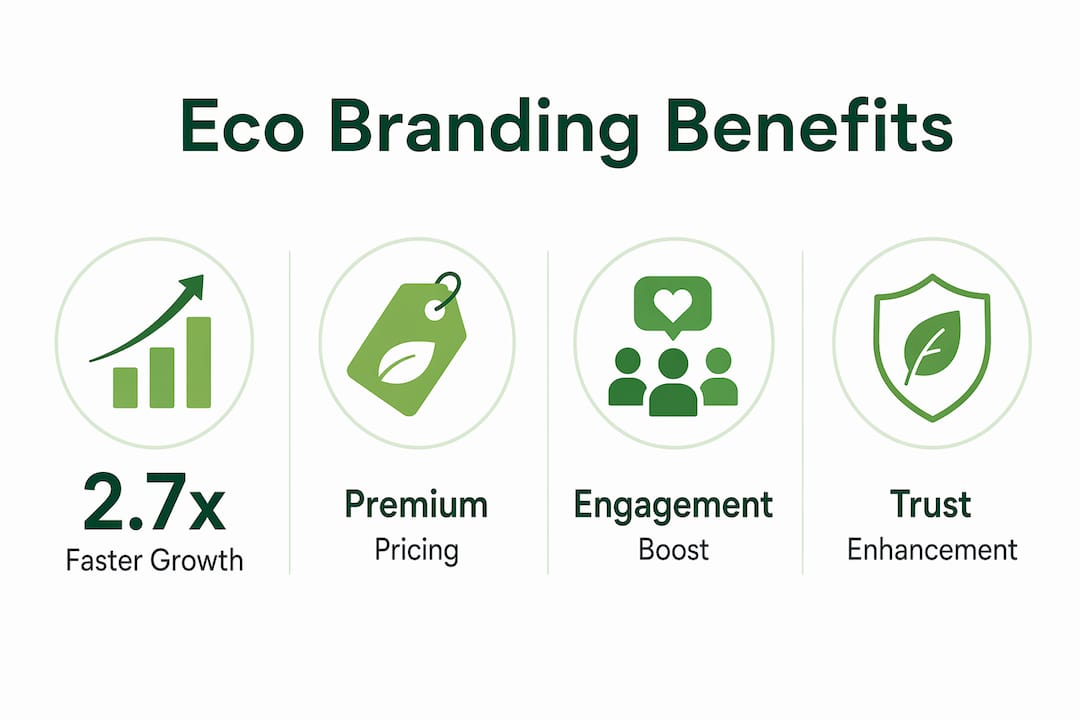
Customer engagement is the bridge between perception and profit. When consumers feel emotionally connected to a brand’s environmental mission, they buy more frequently, advocate more loudly, and tolerate price premiums. That loyalty translates into reduced customer acquisition costs and more predictable revenue. Brands that treat sustainability as a silo, separate from their core marketing capability, miss this compounding effect entirely.
Premium pricing is a concrete return on sustainability investment. Consumers who trust a brand’s environmental credentials accept higher prices because they perceive greater value. Risk mitigation is the less-discussed benefit. Brands with credible sustainability narratives face lower reputational exposure when regulatory scrutiny increases. The Council on Business & Society frames this as the “CFO lens” for sustainable branding: every sustainability initiative should be evaluated against its risk reduction and long-term return profile.
| Benefit | Mechanism | Strategic outcome |
|---|---|---|
| Improved firm performance | Customer engagement mediates sustainability perception | Higher revenue and market share |
| Premium pricing | Trust and perceived value increase willingness to pay | Stronger margins |
| Brand loyalty | Emotional connection to environmental mission | Lower churn and acquisition costs |
| Reputational shielding | Credible sustainability narrative reduces exposure | Lower regulatory and PR risk |
| Market growth access | Sustainable products growing faster than category average | Competitive positioning advantage |
Pro Tip: Present sustainability ROI to senior leadership using financial metrics: customer lifetime value, churn rate reduction, and regulatory risk exposure. This reframes eco branding as a financial asset, not a cost centre.
Why is authenticity critical in eco branding and how can brands avoid greenwashing?
Greenwashing is the practice of making environmental claims that are exaggerated, unverifiable, or misleading. It destroys brand trust faster than any competitor can. Authenticity and consistent communication in eco branding increase consumer trust and loyalty, while greenwashing triggers active consumer opposition and lasting mistrust. The damage is asymmetric: trust takes years to build and weeks to lose.
Verifiable claims are the foundation of credible eco branding. Third-party certifications, such as those from recognised environmental standards bodies, give consumers an independent reference point. Lifecycle disclosures, which explain a product’s environmental impact from raw material to disposal, demonstrate transparency that vague slogans cannot replicate. Brands that publish this information consistently, across packaging, digital channels, and retail environments, build the cohesive sustainability narrative that converts sceptical consumers.
The most effective eco branding communication shares three characteristics. First, it makes specific claims rather than general ones. “Made from 100% recycled cork harvested without felling trees” outperforms “eco-friendly materials” every time. Second, it acknowledges trade-offs honestly. Consumers trust brands that admit imperfection more than those that claim perfection. Third, it connects environmental credentials to product quality, not just ethics. Thecorkstore does this well: cork products are positioned as durable, stylish, and cruelty-free, with the environmental benefit reinforcing rather than replacing the quality argument.
- Obtain third-party certification from a recognised environmental standards body.
- Publish lifecycle data for your core product lines, even if the data is imperfect.
- Audit all marketing copy for unverifiable superlatives before publication.
- Train customer-facing teams to answer sustainability questions with specifics, not slogans.
Pro Tip: Run a “greenwash audit” on your existing campaigns. Flag any claim that cannot be backed by a published data source or third-party certification. Remove or replace those claims before a regulator or journalist does it for you.
How does green brand personality build deeper customer connection?
Green Brand Personality (GBP) is a multi-dimensional construct that extends well beyond eco-friendliness. Research using PLS-SEM with 210 green apparel consumers identifies three distinct dimensions: eco-friendly, innovative, and socially responsible. Each dimension influences emotional brand equity and loyalty differently. Brands that rely solely on the eco-friendly dimension miss the loyalty gains available through the other two.
The innovative dimension signals that a brand is solving environmental problems in new ways, not just reducing harm. This appeals strongly to younger, more educated consumer segments who want to associate with progress rather than restraint. The socially responsible dimension connects environmental commitment to community and human welfare, broadening the brand’s emotional appeal beyond environmental purists. Emphasising innovation and social responsibility alongside eco-friendliness builds deeper emotional connections than focusing on eco traits alone.
Demographic differences matter significantly in GBP effectiveness. Younger consumers respond more strongly to the innovative dimension. Older consumers often weight social responsibility more heavily. Single-dimensional green messaging, where a brand communicates only its environmental credentials, risks alienating segments that care about innovation or community impact. A multi-dimensional brand personality produces stronger loyalty outcomes across a broader demographic range.
| GBP dimension | Core appeal | Primary consumer segment |
|---|---|---|
| Eco-friendly | Harm reduction, environmental care | Environmentally conscious buyers |
| Innovative | Progress, problem-solving, modernity | Younger, educated consumers |
| Socially responsible | Community, human welfare, fairness | Broad demographic, values-driven buyers |
Thecorkstore’s product range naturally supports all three dimensions. Cork harvesting regenerates cork oak forests, which is the eco-friendly story. The material’s application to fashion accessories represents a genuinely novel use of a natural resource, which is the innovation story. Cruelty-free, vegan production connects to animal welfare and ethical supply chains, which is the social responsibility story. Brands that can articulate all three dimensions create a far richer emotional connection than those that stop at “sustainable materials.”
What practical steps can marketers take to implement eco branding effectively?
Effective eco branding requires integration, not addition. Sustainability must be embedded in brand identity from the outset, not bolted on as a campaign theme. Sustainability initiatives create economic value when embedded in marketing capability and customer engagement, not treated as a separate workstream. The brands that fail at eco branding almost always treat it as a communications exercise rather than a structural business commitment.

The CFO lens is the most underused tool in a brand strategist’s kit. Every sustainability initiative should be evaluated against two questions: what risk does this reduce, and what return does this generate? Translating eco branding into financial language makes it defensible to senior leadership and ensures resources flow to initiatives with measurable impact rather than those with the best optics.
Messaging must be tailored by product category and market geography. A claim that resonates in the UK market may require different framing in markets where environmental awareness is lower or regulatory context differs. 73% of global consumers prefer sustainable brands, but the reasons vary by region and demographic. Localising the sustainability narrative without abandoning its core integrity is a skill that separates effective eco branding from generic green marketing.
- Audit your current brand identity for sustainability integration gaps.
- Define your Green Brand Personality across all three dimensions: eco-friendly, innovative, and socially responsible.
- Obtain or plan for third-party certification on your core environmental claims.
- Build customer engagement metrics into your sustainability reporting alongside ESG data.
- Review messaging by market segment and geography to ensure resonance without dilution.
- Set a 12-month review cycle to assess both consumer perception and financial outcomes.
Patience is not optional. The panel data linking sustainable branding to firm performance spans over a decade. The compounding effect of consistent eco branding takes time to materialise in revenue and loyalty metrics. Brands that abandon sustainability messaging after one or two quarters because results are not immediate undermine the very consistency that makes eco branding work. For practical guidance on building a sustainable brand identity, the principles apply whether you are a product brand or a retailer.
Key takeaways
Eco branding builds measurable brand loyalty and firm performance when it integrates authenticity, multi-dimensional green brand personality, and financial accountability into a single, consistent strategy.
| Point | Details |
|---|---|
| Eco branding drives growth | Sustainable brands grow 2.7 times faster; embed sustainability in brand identity, not campaigns. |
| Authenticity prevents backlash | Greenwashing destroys trust; use third-party certifications and lifecycle disclosures to verify claims. |
| Multi-dimensional GBP wins | Combine eco-friendly, innovative, and socially responsible dimensions to build loyalty across demographics. |
| Customer engagement mediates ROI | Sustainability investment only improves firm performance when it generates genuine customer engagement. |
| Apply the CFO lens | Evaluate every eco branding initiative against risk reduction and long-term financial return. |
Why I think most eco branding still misses the point
After years of watching sustainability campaigns launch and quietly disappear, the pattern is clear. Most brands treat eco branding as a messaging problem when it is actually a structural one. They invest in beautiful campaign visuals and vague environmental language, then wonder why consumer trust does not follow. The research is unambiguous: the affective pathway, built on trust and emotional congruence, is what closes the attitude-behaviour gap. You cannot manufacture that with a colour palette and a tagline.
The shift I find most encouraging is the growing acceptance of the CFO lens. When sustainability stops being the marketing team’s passion project and starts being a line item with a risk-return profile, it gets taken seriously at board level. That is when the structural integration happens. That is when eco branding actually works.
The multi-dimensional Green Brand Personality framework is the most underutilised insight in this space. Brands that communicate only their eco credentials are leaving loyalty on the table. The innovation and social responsibility dimensions are not add-ons. They are the difference between a brand that consumers admire and one they genuinely connect with. For marketers looking at eco-conscious shopping behaviour, the consumer appetite for all three dimensions is already there. The gap is on the brand side, not the consumer side.
Measurement remains the hardest part. Tracking consumer perception alongside corporate ESG metrics requires two different data collection approaches and a willingness to sit with ambiguity for longer than most quarterly reporting cycles allow. The brands that commit to both, and resist the pressure to simplify sustainability into a single score, are the ones building genuine long-term advantage.
— Aaron
Thecorkstore and the case for authentic sustainable products
Eco branding only works when the product itself can carry the story. Thecorkstore builds that foundation with a range of cork accessories crafted from a material that regenerates its source forest with every harvest. Handbags, backpacks, wallets, and gift sets are produced without animal products or harmful chemicals, giving brand strategists a real-world example of how eco-friendly, innovative, and socially responsible dimensions coexist in a single product line.
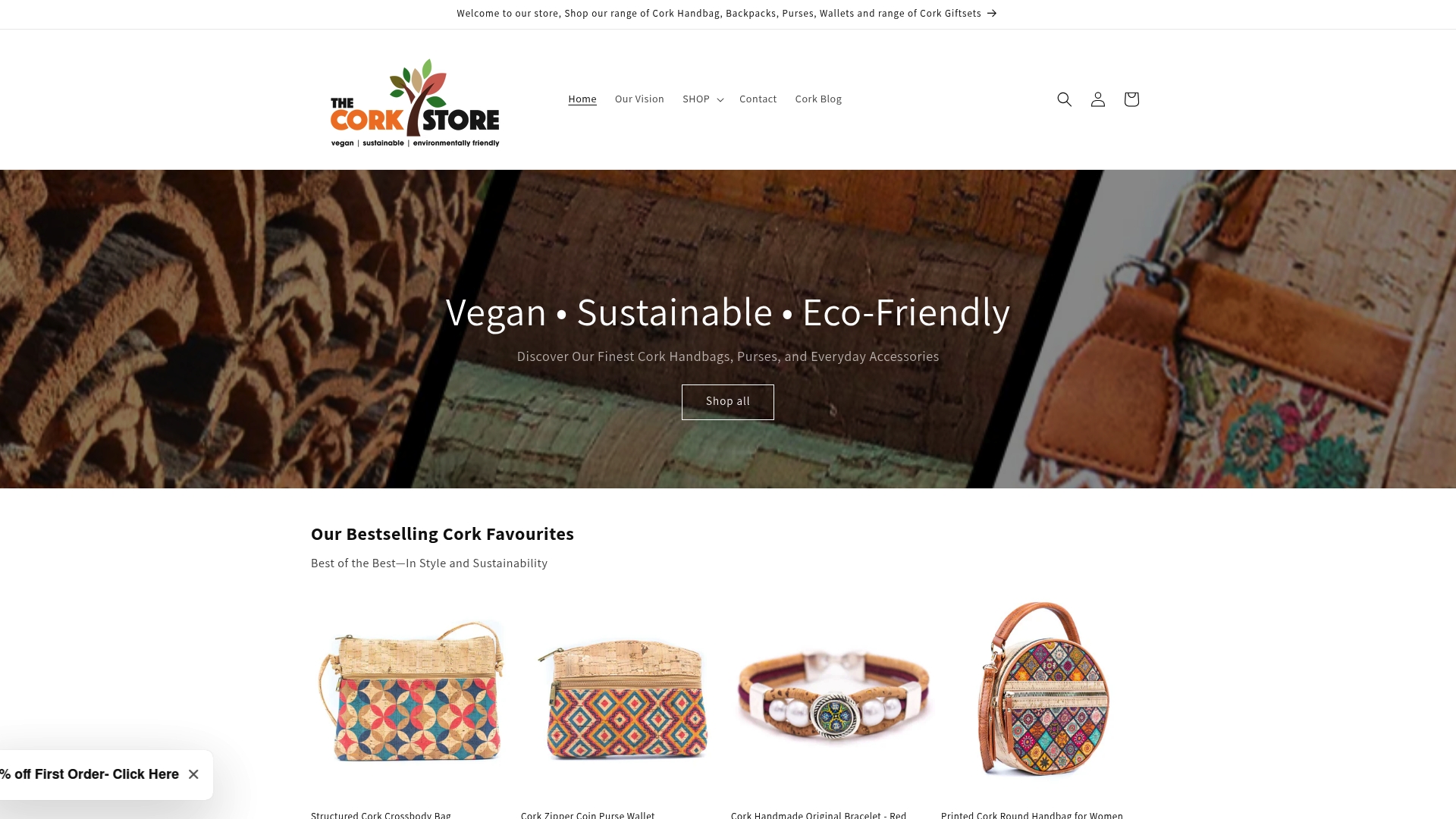
For marketers who advise clients in the sustainable goods space, or who are building their own eco brand, Thecorkstore’s product range demonstrates what credible sustainability looks like in practice. The materials are verifiable, the production is transparent, and the aesthetic holds its own against conventional leather alternatives. Explore the full collection and sustainability resources at Thecorkstore to see how authentic eco branding translates from strategy to shelf.
FAQ
What is eco branding?
Eco branding is the strategic integration of environmental values into a brand’s identity, messaging, and product offering to influence consumer behaviour and build loyalty. The recognised industry term is green brand strategy.
How does eco branding affect consumer purchase decisions?
Eco branding influences purchase decisions through cognitive, affective, and behavioural pathways, with trust and emotional value acting as the critical mediators. Environmental knowledge strengthens the effect, so educating consumers alongside persuading them improves results.
What is the attitude-behaviour gap in sustainable marketing?
The attitude-behaviour gap describes the disconnect between consumers who say they prefer sustainable products and those who actually buy them. Bridging this gap requires trust-building and lifestyle congruence, not just eco labelling.
What is Green Brand Personality and why does it matter?
Green Brand Personality (GBP) is a multi-dimensional construct covering eco-friendly, innovative, and socially responsible dimensions. Brands that develop all three dimensions build stronger emotional connections and loyalty than those focused on eco traits alone.
How can brands avoid greenwashing in their eco branding?
Brands avoid greenwashing by making specific, verifiable claims backed by third-party certification and lifecycle disclosures. Vague language and unsubstantiated superlatives trigger consumer mistrust and, increasingly, regulatory scrutiny.