

What makes a brand sustainable: a clear guide
TL;DR:
- True sustainability extends beyond visual green claims and requires comprehensive operational change across the entire value chain.
- Authentic brands integrate environmental, social, and governance criteria, providing measurable impact and transparent reporting.
Most people assume a brand becomes sustainable the moment it switches to recycled packaging or slaps a leaf on its logo. That assumption is exactly what makes greenwashing so effective. What makes a brand sustainable goes far deeper than visual identity or a single eco-friendly product line. True sustainability requires operational change across the entire value chain, measurable impact across environmental and social dimensions, and the kind of transparency that holds up under scrutiny. This guide unpacks every layer of that, so you can tell the genuine article from clever marketing.
Table of Contents
- Key takeaways
- What makes a brand sustainable: the ESG framework
- Spotting authentic sustainable brands versus greenwashing
- Product design and circular business models
- Practical steps for consumers and brands
- My honest take on sustainable branding
- Cork accessories that walk the talk
- FAQ
Key takeaways
| Point | Details |
|---|---|
| ESG covers three pillars | Environmental, social, and governance criteria together define what makes a brand genuinely sustainable. |
| Vague claims are a red flag | Labels like “eco-friendly” without specific evidence are a common greenwashing tactic to watch for. |
| Third-party certification matters | Independent certifications and published life-cycle assessments offer the strongest proof of authentic sustainability. |
| Product design drives real impact | Durability, repairability, and circular business models reduce waste far more than packaging swaps alone. |
| Transparency builds consumer trust | Brands that share setbacks alongside successes earn credibility that polished marketing narratives never can. |
What makes a brand sustainable: the ESG framework
The most useful way to understand brand sustainability is through the ESG framework: environmental, social, and governance. Sustainability is demonstrated by substance, specificity, and integration throughout the full purchase experience, not by a single campaign. Each pillar carries distinct responsibilities.
Environmental criteria address the tangible footprint a brand leaves on the planet. This includes:
- Greenhouse gas emissions across the supply chain, including Scope 3 (those produced by suppliers and logistics partners)
- Resource consumption, particularly water and energy, and whether renewable sources are used
- Waste generation and whether the brand has adopted circularity principles to keep materials in use longer
- Pollution controls and the presence or absence of hazardous substances in manufacturing
- Verified progress toward carbon neutrality, backed by measurable data rather than offset-heavy workarounds
Social criteria focus on the people inside and outside the business. Human rights due diligence in supply chains is a continuous process involving stakeholder engagement, impact assessment, effectiveness tracking, and public reporting. A sustainable brand actively monitors worker treatment, pays fair wages, and takes responsibility for conditions several tiers deep in its supply chain.
Governance criteria cover how a company is run. Board diversity, ethical leadership, and transparent decision-making all signal whether sustainability is genuinely embedded in company culture or exists only in the communications department. The GRI Sustainability Standards provide widely used disclosure frameworks that focus on material economic, environmental, and social impacts, giving brands a structured way to report credibly.
The gap between a “green brand” and a fully sustainable brand sits here. A green brand might prioritise environmental actions while ignoring labour conditions or governance accountability. A truly sustainable brand integrates all three pillars, measuring and communicating performance across each one consistently.
Spotting authentic sustainable brands versus greenwashing
Knowing why you should support sustainable brands is one thing. Knowing which brands actually deserve that support is harder. The criteria below give you a practical filter.
-
Look for specificity, not slogans. Vague labels like “eco-friendly” or “green” without accompanying evidence are a reliable warning sign. Regulatory guidance from 2026 explicitly requires brands to back environmental claims with clear evidence and to avoid broad, unqualified statements. If a brand cannot point you to data, treat the claim with scepticism.
-
Check whether qualifiers match the headline. A brand that advertises “100% sustainable packaging” in bold type but buries the caveat “for our UK range only” in fine print is not being transparent. Even accidental exaggeration of environmental claims can constitute greenwashing, making clear, consistent presentation a minimum requirement.
-
Seek third-party verification. Certifications from independent bodies carry weight because a brand cannot award them to itself. Look for recognised marks in your product category and, where possible, published life-cycle assessments that track a product’s environmental impact from raw material to disposal.
-
Read the annual report or impact disclosure. Authentic brands publish their sustainability data publicly, including areas where they are still falling short. Consumer trust depends on radical transparency: sharing successes and challenges with verifiable data rather than polished narratives. A brand that only ever publishes good news has not earned full trust.
-
Trace where the product comes from. Knowing how to identify sustainable brands means looking beyond the product itself to the materials, the factory, and the logistics chain. The Good On You rating model assesses sustainability across 100 key issues covering people, planet, and animals, which is a useful benchmark for fashion and accessories.
Pro Tip: When a brand’s sustainability page is harder to find than its promotional content, that absence is data. Authentic brands make their impact information easy to locate because transparency is part of the point.
Common greenwashing tactics to watch for include: using nature imagery with no substantive environmental policy behind it; claiming carbon neutrality through offsets without reducing actual emissions; highlighting one sustainable product while the core range remains unchanged; and recycling certifications for materials that make up a tiny fraction of the product.
Product design and circular business models
A brand’s commitment to sustainability lives most visibly in how it designs and manages products over time. This is where the key elements of sustainable brands diverge most sharply from conventional ones.
Sustainable brands increasingly adopt circular economy business models to retain product lifecycle responsibility, reduce waste, and create value in new ways. In practice, that means:
- Designing products for durability and repairability, so customers can extend the product’s life rather than replace it
- Taking back products at end of life for reuse, resale, or responsible recycling
- Offering repair services, spare parts, or refurbishment programmes as standard
- Selecting materials with known, traceable origins and low environmental impact throughout their lifecycle
- Shifting from pure product sales toward service or subscription models that incentivise the brand to build things that last
The logic here is sound. A brand that sells a product once has no financial reason to make it last. A brand that retains responsibility for that product’s entire life has every reason to make it durable, repairable, and ultimately recoverable. That shift in incentive is one of the clearest markers of genuine sustainable branding.
Understanding sustainable materials is central to this. Cork, for instance, is harvested without cutting down trees, regenerates naturally, and biodegrades at end of life. Those material properties are traceable and verifiable, which is exactly the kind of specificity that separates genuine sustainability from surface-level eco-styling.

Practical steps for consumers and brands
Whether you are a consumer trying to make better choices or a brand building its sustainability credentials, the process is similar: measure first, communicate second.
| For consumers | For brands |
|---|---|
| Ask for evidence before accepting any sustainability claim | Conduct a baseline audit of emissions, resource use, and supply chain conditions |
| Check for independent certifications in your product category | Set measurable targets with defined timelines and publish them publicly |
| Read brand impact reports, not just marketing copy | Report on progress annually using a recognised framework like GRI |
| Support brands that disclose limitations honestly | Ensure sustainability is integrated across channels and partnerships, not just in communications |
| Choose products designed to last and be repaired | Invest in product design for durability, repairability, and end-of-life recovery |
For brands, the roadmap to sustainability starts with measurement. You cannot credibly communicate what you have not yet quantified. That means mapping your supply chain, understanding where your largest impacts sit, and setting targets that are specific rather than aspirational. “Net zero by 2040” means nothing without an interim milestone and a plan to reach it.
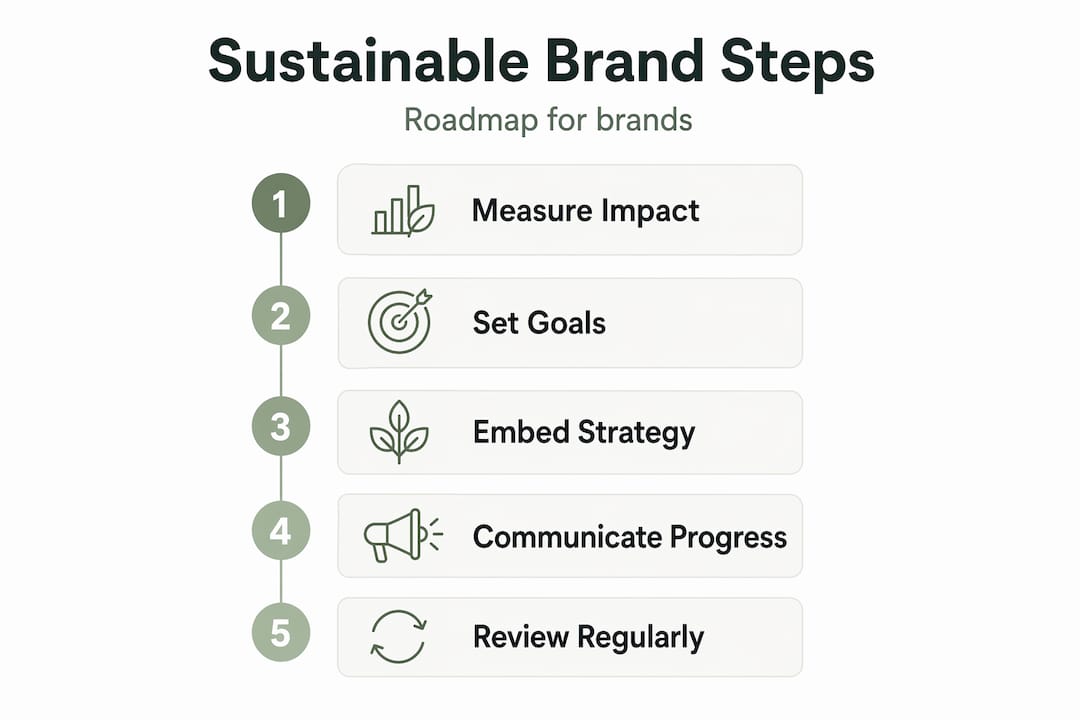
Sustainability strategy should also be embedded across channel and partnership selection. Selling through retailers or partners with poor environmental records creates a contradiction that attentive consumers will notice. Coherence across every touchpoint is what separates a brand that is genuinely building sustainability from one that is performing it.
Pro Tip: If you are unsure whether a brand’s carbon neutral claim is genuine progress or a workaround, look at whether actual emissions have fallen year on year alongside any offset activity. Offsets without reduction are a stalling tactic, not a solution. Our guide on carbon neutral fashion explains exactly how to tell the difference.
My honest take on sustainable branding
I have spent a long time looking at how brands communicate sustainability, and the pattern I keep seeing is this: most brands get the order backwards. They invest in the messaging before they have done the operational work, then scramble to substantiate claims that were made to sound good rather than to reflect reality.
The commercial risk in that approach is real. A brand caught overstating its sustainability credentials does not just lose a news cycle. It loses the segment of consumers it was most trying to attract, precisely because those consumers tend to research carefully and remember what they find. Without real operational change, sustainability messaging is perceived as hollow.
What I have found actually moves the needle is specificity. Not “we care about the planet” but “we have reduced water consumption in our manufacturing by 34% since 2022 and here is the data.” That level of detail is uncomfortable to produce because it invites scrutiny. But scrutiny is exactly what builds trust with the people most likely to become long-term customers.
The brands I find most credible are the ones that publish what is not going well alongside what is. That kind of honesty is rare, and it stands out. If you are evaluating a brand’s sustainability, look for that discomfort. A brand willing to say “we have not solved this yet” has almost certainly thought harder about sustainability than one whose every update is a success story.
— Aaron
Cork accessories that walk the talk
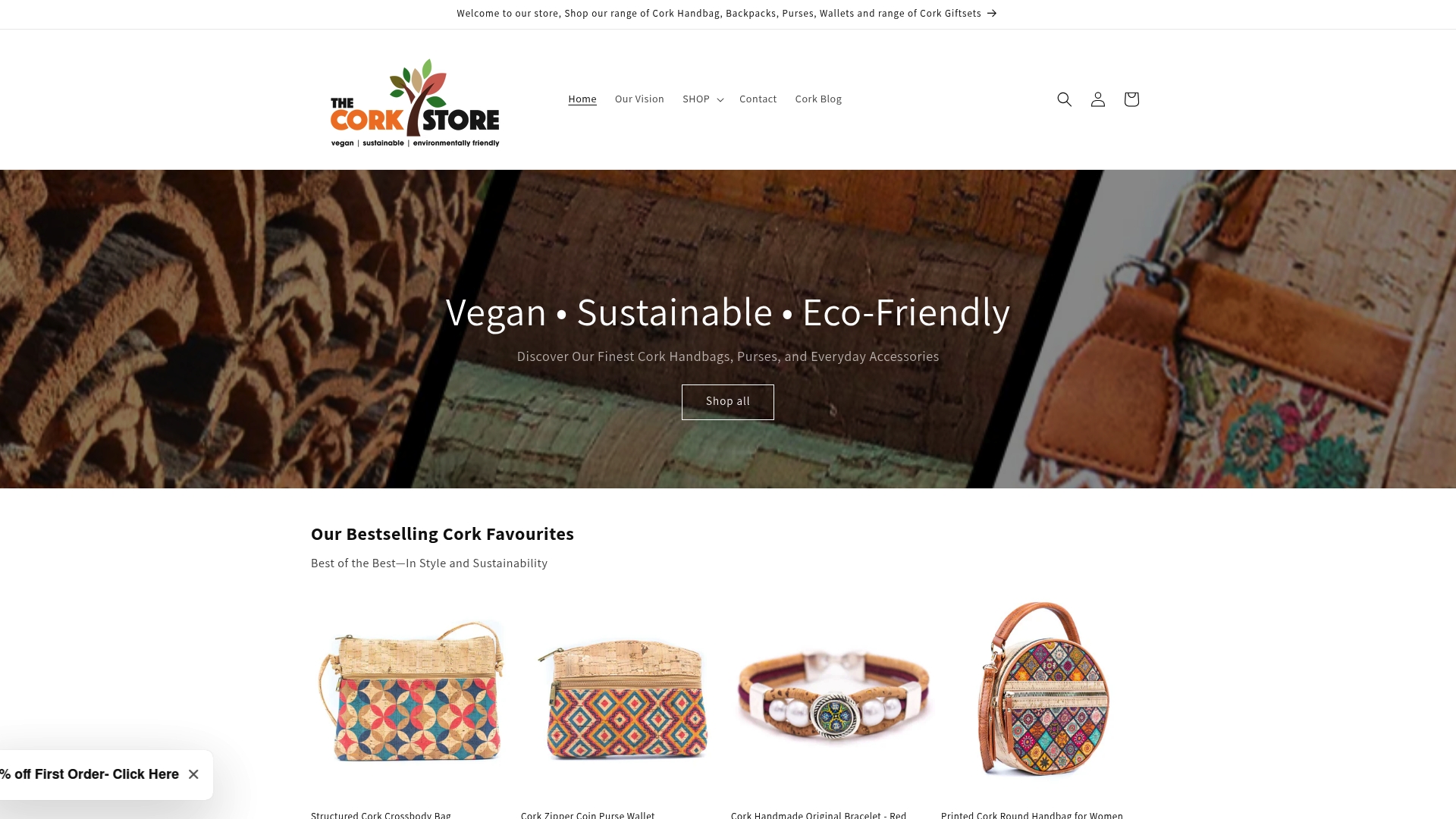
At Thecorkstore, sustainability is not a tagline retrofitted onto a product range. Cork is harvested from the bark of cork oak trees without felling them, meaning each tree continues absorbing carbon for decades after harvest. The material is natural, biodegradable, and fully traceable. Every vegan cork accessory in the range, from handbags to wallets, reflects those material properties and the sourcing transparency that genuine sustainability demands. If you have read this far and want to see what evidence-based sustainable fashion actually looks like in practice, the Thecorkstore product catalogue and blog are built around giving you exactly that information, clearly and without the spin.
FAQ
What makes a brand truly sustainable?
A brand is truly sustainable when it integrates environmental, social, and governance responsibilities into its operations with measurable outcomes, not just marketing language. Sustainability requires substance, specificity, and integration throughout the purchase experience.
How can I identify sustainable brands reliably?
Look for third-party certifications, published impact reports, and specific rather than vague environmental claims. Brands assessed across people, planet, and animal welfare criteria using a structured rubric offer the most credible picture.
Why support sustainable brands over conventional ones?
Supporting sustainable brands directs spending toward companies actively reducing environmental harm, improving labour conditions, and operating transparently. Over time, that consumer preference encourages conventional brands to change their practices too.
What is greenwashing and how do I avoid it?
Greenwashing is when a brand overstates or misrepresents its environmental credentials. Avoid it by demanding specific, evidenced claims and checking whether independent certifications or life-cycle assessments back up what a brand says.
What role does product design play in sustainable branding?
Product design is central. Brands that design for durability, repairability, and end-of-life recovery reduce waste far more meaningfully than those that only address packaging. Circular business models, where the brand retains responsibility for a product throughout its life, are one of the strongest signals of genuine sustainable practice.