
What are ethical accessories? Your guide to buying right
TL;DR:
- Accessories now account for 21% of eco-friendly fashion purchases, highlighting their role in sustainability. True ethical accessories involve fair labour, transparent sourcing, and environmentally responsible materials like cork and recycled metals, not just natural or vegan labels. Consumers should seek certifications and specific supply chain information to ensure authenticity and avoid greenwashing in the ethical accessory market.
Accessories are quietly driving a bigger share of sustainable purchasing than most people realise. Accessories now account for 21% of eco-friendly fashion purchases, making them far more central to conscious consumer choices than they are typically given credit for. Yet the phrase “ethical accessories” gets used so loosely that it can mean almost anything. Cruelty-free? Fair trade? Simply made from natural materials? Understanding what are ethical accessories in full means looking beyond the label and into materials, labour, transparency, and lasting impact on people and planet.
Table of Contents
- Key takeaways
- Defining ethical accessories
- Materials used in ethical accessories
- Craftsmanship, labour, and what truly matters
- Environmental impact and lifecycle thinking
- Practical tips for shopping ethically
- My take on ethical accessories
- Shop ethical accessories at Thecorkstore
- FAQ
Key takeaways
| Point | Details |
|---|---|
| Ethical goes beyond vegan | True ethical accessories cover fair labour, supply chain transparency, and environmental responsibility, not just material choices. |
| Materials matter enormously | Cork, recycled metals, and plant-based leathers offer genuine sustainability benefits that synthetic alternatives often cannot match. |
| Craftsmanship is a signal | Hand-stitching, natural ageing, and slight imperfections indicate authentic artisan production rather than mass-market output. |
| Certifications verify claims | Look for Fair Trade, Fairmined, B Corp, or GOTS certifications to confirm a brand’s ethical credentials are real. |
| Price reflects true cost | Fairly priced accessories signal that makers were paid properly. Unusually cheap “ethical” products are a red flag. |
Defining ethical accessories
The term “ethical accessories” covers far more ground than most people initially expect. At its core, an ethical accessory is one produced with genuine respect for people, animals, and the environment across its entire lifecycle. That means looking at where raw materials come from, who makes the product and under what conditions, and what happens to it at the end of its useful life.
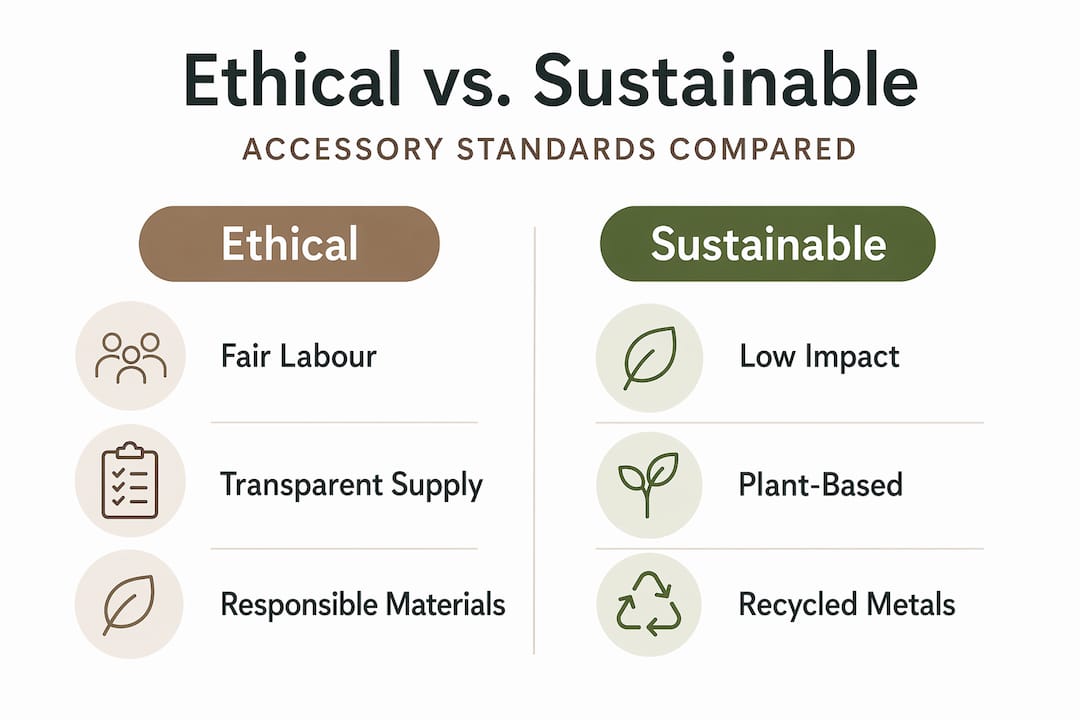
There are three overlapping but distinct terms worth separating clearly. Sustainable accessories prioritise reduced environmental impact, often through material choice or production methods. Vegan accessories avoid all animal-derived materials. Ethical accessories address the social dimension, including fair wages, safe working conditions, and transparent supply chains. A product can be vegan without being ethical. A product can use sustainable materials and still rely on exploitative labour. Genuine ethical accessories aim to tick all three boxes simultaneously.
Supply chain transparency and fair trade certifications sit at the heart of this. When a brand cannot tell you who made their product or where the materials originated, that is a problem regardless of what the marketing says. Conscious consumer accessories should come with a story you can trace.
Key principles that define a truly ethical accessory:
- Fair labour: Living wages paid to all workers throughout the supply chain, with no child labour and safe, dignified working conditions
- Transparent sourcing: Clear disclosure of where raw materials come from, including conflict-free and responsibly harvested sources
- Environmental accountability: Measurable efforts to reduce carbon footprint, water use, chemical waste, and habitat damage
- Cruelty-free production: No use of materials derived from animal exploitation, including certain leathers, exotic skins, or conventional silk
Pro Tip: When researching a brand, search for their supply chain or impact report. Genuinely ethical brands publish this information openly. If you cannot find it, that tells you something.
Materials used in ethical accessories
The materials an accessory is made from determine a large part of its environmental and ethical credentials. Choosing the wrong material can undermine even the best labour practices, while the right one can significantly lower a product’s footprint.
| Material | Environmental benefit | Limitations |
|---|---|---|
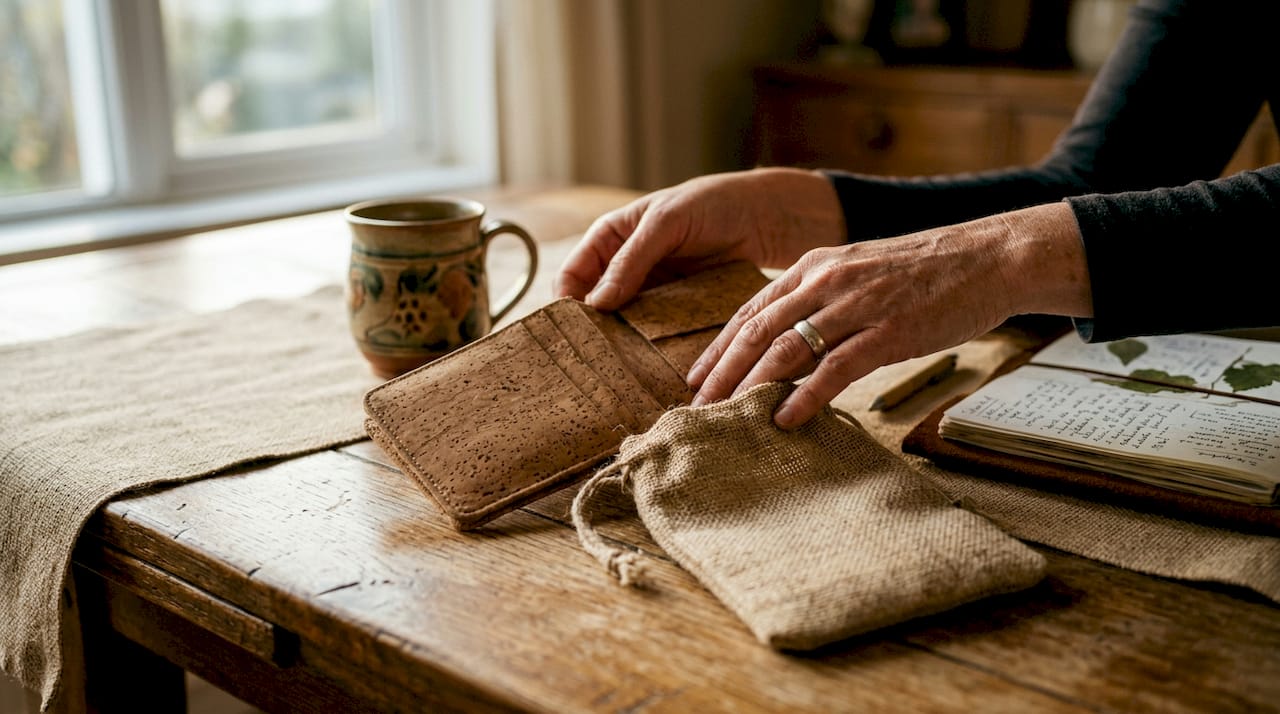
| Cork | Harvested without cutting trees, biodegradable, carbon-absorbing | Limited colour range without dyes |
| Recycled precious metals | Reduce environmental impact by up to 95% versus newly mined metals | Requires verified fair labour alongside recycling |
| Piñatex (pineapple leather) | Uses agricultural waste, no additional land needed | Requires partial polyurethane coating |
| Mycelium (mushroom leather) | Fully biodegradable, low water and energy use | Still scaling for mass production |
| Peace Silk | Allows silkworms to complete lifecycle before harvesting | Lower yield than conventional silk |
| Organic cotton | No synthetic pesticides, lower water usage with responsible practices | Still water-intensive compared to cork or recycled metals |
| PU “vegan leather” | No animal products | Petroleum-based, non-biodegradable, and often misleadingly marketed |
The distinction between PU vegan leather and genuinely plant-based alternatives is one the mainstream market consistently blurs. Polyurethane leather is still plastic, and it will end up in landfill. Ethical accessory production prioritises durable designs and renewable or upcycled materials such as pineapple leaves, mushrooms, or recycled metals precisely because these choices have a measurably different impact. Cork, for example, is harvested from the bark of living cork oak trees, which regrow over roughly nine years. The trees remain alive, continue absorbing carbon, and the forest ecosystem is preserved.
Tactile signs of authentic sustainable materials include the natural grain irregularities of cork, the slight warmth and flexibility of mycelium leather, and the softness and uneven weave of Peace Silk. Mass-produced synthetic alternatives tend to feel uniform and slightly plastic, regardless of the branding applied.
Pro Tip: Check the product description for material percentages. A bag labelled “cork fabric” may be only 30% cork bonded to a polyester backing. Ask for the full material breakdown before purchasing.
Craftsmanship, labour, and what truly matters
The human side of ethical accessories is where many brands fall short, even those with the right materials. Ethical jewelry and accessories require full supply chain transparency and fair labour practices, including no child labour and conflict-free materials. These are not optional extras. They are the minimum standard.
Look for these signs when evaluating whether a brand’s craftsmanship is genuinely artisanal:
- Hand-stitching and finishing: Authentic ethical accessories often feature visible hand-stitching with slight spacing variations. This is craftsmanship, not error.
- Natural ageing: Materials like cork, brass, and Peace Silk develop a patina with use. Mass-produced goods are engineered to look consistent and resist change.
- Slight imperfections: Authentic artisanal craft shows itself through hand-stitching, shifting hues, and uneven hammering. These are marks of honesty, not defects.
- Maker visibility: Ethical brands name and feature the artisans or cooperatives who made their products. Anonymity in production is not a design choice; it is a transparency failure.
Greenwashing remains rampant in the accessories market. Vague claims like “made responsibly” or generic references to an origin country without supply chain detail are classic red flags. True transparency involves specific information about who was paid, how much, and under what conditions.
“True ethical brands share specific details about materials, makers, and practices rather than vague marketing language, creating a trustworthy narrative.”
Certifications provide an external check on these claims. Fair Trade, Fairmined for precious metals, B Corp status, and the Responsible Jewellery Council (RJC) certification all involve independent auditing. They are not infallible, but they are substantially more reliable than a brand’s own marketing copy.
Environmental impact and lifecycle thinking
When you consider the full lifecycle of an accessory, the distance between a truly ethical product and a greenwashed one becomes very clear.
-
Raw material extraction: Responsibly sourced accessories avoid habitat destruction, excessive water use, and harmful chemical processes from the very start. Cork harvesting, for example, actually supports biodiversity in Mediterranean cork oak forests.
-
Production and processing: Ethical manufacturers minimise chemical inputs, use renewable energy where possible, and avoid harmful dyes or tanning agents. Durable, eco-conscious branding such as woven labels made from recycled materials also contributes to a lower overall footprint.
-
Product lifespan: Slow fashion and durability are core to environmentally friendly fashion. An accessory that lasts ten years has a fraction of the environmental cost of five cheaply made alternatives. Choosing timeless designs over trend-driven pieces is one of the most practical ways to reduce your fashion footprint.
-
End of life: Biodegradable and recyclable materials mean a product can return to the natural system rather than adding to landfill. Cork is compostable. Recycled metals are infinitely recyclable without degradation. PU plastic is neither.
-
Certifications as guides: Look for GOTS (Global Organic Textile Standard) for organic fibres, Fairmined for precious metals, and B Corp certification for overall business ethics. These signal that environmental responsibility has been independently verified rather than self-declared.
Choosing accessories made from recycled precious metals is one of the most significant sustainable jewelry options a buyer can select, reducing environmental impact drastically compared to newly mined equivalents. The same logic applies across material categories: always ask what the alternative to virgin extraction looks like.
Practical tips for shopping ethically
Knowing how to choose ethical accessories is one thing. Applying that knowledge at the point of purchase is another, particularly when brands are skilled at appearing ethical without the substance to back it up.
Questions worth asking any brand before you buy:
- Where was this made, and who made it?
- Can you show me your supplier list or a production audit?
- What certifications do you hold, and who verified them?
- What is this product made from, and what percentage of each material?
- What happens to this product at the end of its life?
On pricing: sustainable jewelry ranges from £15 fair trade artisan pieces to over £50,000 for luxury ethical items. The key insight is not the number itself but what it signals. A price that seems too low for the materials and labour described is almost certainly telling you something is compromised somewhere. Fair wages, audited supply chains, and quality materials all carry real costs.
Pro Tip: Cross-reference any certification a brand claims by visiting the certifying body’s website directly. Most certification schemes maintain publicly searchable brand registers.
Beyond jewellery, the same principles apply to vegan handbags, wallets, and other accessories. Explore how responsibly sourced design translates to real product differences, from material composition to the artisan behind the seam. For a broader view of what the market looks like right now, the 2026 eco-fashion trends for conscious shoppers is worth a read.
Many ethical brands combine fair labour and environmental responsibility, integrating multiple certifications to establish credibility on both fronts. Supporting those brands, even when it costs a little more upfront, is how consumers drive the market in a better direction.
My take on ethical accessories
I have spent years paying close attention to how accessories are described versus how they are actually made, and the gap is often startling. Most shoppers focus on the visual cues: the material, the colour, the label. What I have come to believe is that the most honest signal of an ethical product is one you feel rather than read.
When I pick up a cork wallet with slightly uneven stitching, or a piece of responsibly made jewelry where the metal carries the faint marks of hand-finishing, I know I am holding something real. Those “imperfections” are the fingerprints of a person who was paid fairly to do careful work. Polished uniformity, on the other hand, is often the signature of mass production dressed up in ethical language.
My hard-won lesson is this: the brands genuinely committed to ethical production are usually the ones least likely to shout about it in vague, sweeping terms. They show you the workshop. They name the artisan. They tell you the exact percentage of recycled material and why they chose it. The brands that lead with “conscious” and “sustainable” in every other sentence without providing specifics are almost always selling you a story rather than a practice.
Ethical accessories are not just a style choice. They are a commitment to demanding honesty from the people who make the things you wear every day. That is worth the extra scrutiny.
— Aaron
Shop ethical accessories at Thecorkstore
If this guide has clarified what you are actually looking for, Thecorkstore is a strong place to put that knowledge into practice. Every product in the range is crafted from natural cork, a material that is harvested without harming the tree, fully biodegradable, and entirely animal-free.
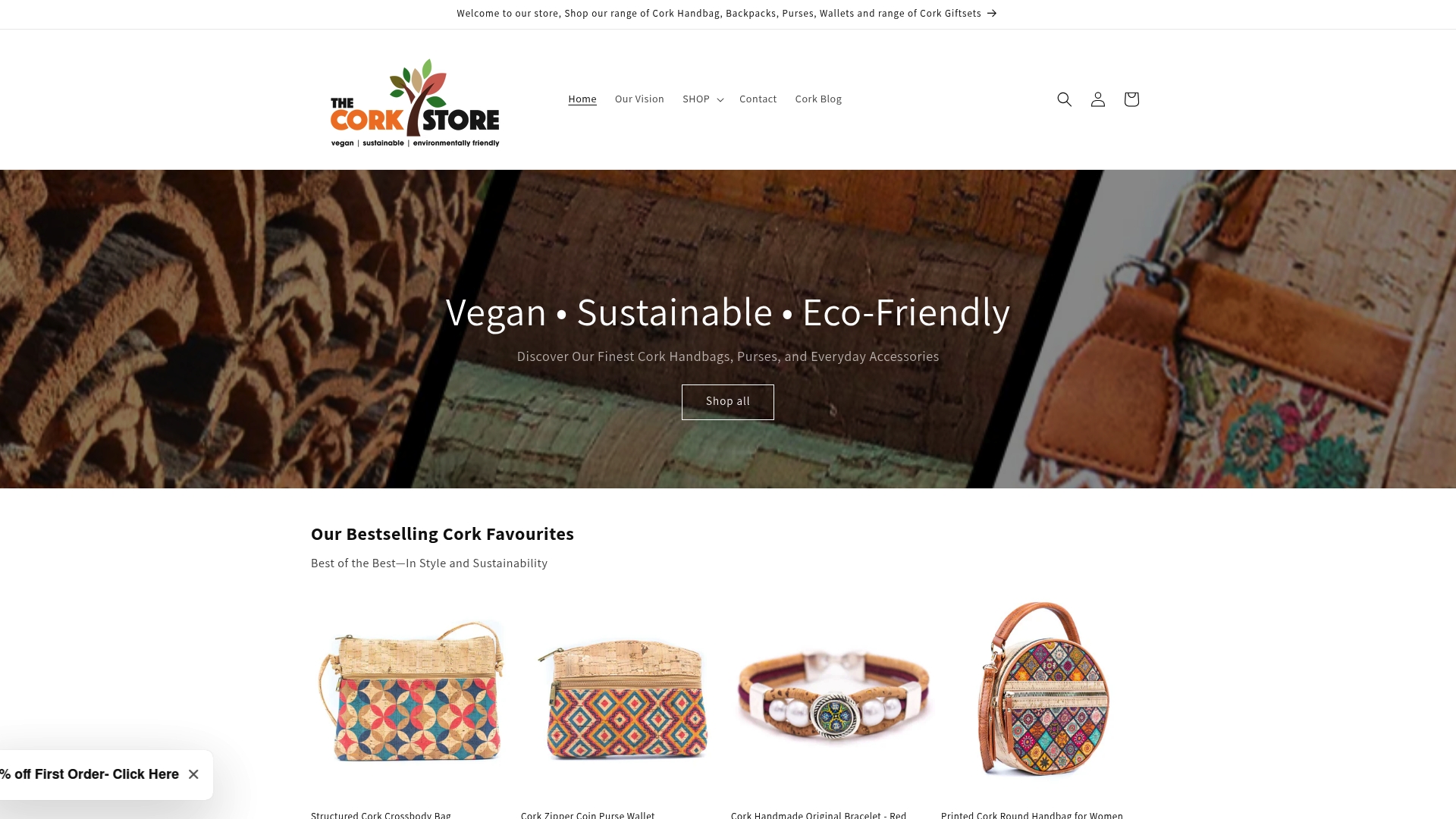
From vegan cork handbags and backpacks to wallets, purses, and gift sets, Thecorkstore offers a catalogue of accessories that genuinely tick the ethical boxes: no plastics, no animal products, transparent material sourcing, and durable construction designed to last. Cork’s natural grain means no two pieces are identical, which is exactly the kind of honest imperfection that marks real craftsmanship. Browse the full range and find accessories that match both your values and your wardrobe.
FAQ
What makes an accessory truly ethical?
An ethical accessory is one produced with fair labour, transparent supply chains, responsibly sourced materials, and a measurable effort to reduce environmental harm. Being vegan or using natural materials alone is not sufficient without verified social and labour standards.
Are vegan accessories the same as ethical accessories?
Not necessarily. Vegan accessories avoid animal-derived materials but may still rely on exploitative labour or petroleum-based synthetics like PU plastic. Ethical accessories address labour, environmental impact, and material sourcing together.
How do I spot greenwashing in accessory brands?
Look for vague language without specifics such as “responsibly made” or “eco-friendly” without certifications, supplier details, or third-party audits. Genuine ethical brands provide traceable production information.
Which certifications should I look for?
Fair Trade, Fairmined, B Corp, GOTS, and the Responsible Jewellery Council (RJC) certification are the most credible in the accessories space. Each involves independent auditing rather than self-declaration.
Is cork a genuinely ethical accessory material?
Yes. Cork is harvested from the bark of living trees without cutting them down, is fully biodegradable, supports biodiversity, and requires no animal products. It is one of the most transparently ethical materials available in fashion accessories today.