
What is a circular accessory? The sustainable fashion guide
TL;DR:
- Circular accessories are designed to stay in use by cycling materials through repair, reuse, and recycling. Cork is an ideal material because it is renewable, durable, biodegradable, and easy to repair or recycle. Consumers can support circularity by caring for, repairing, and choosing mono-material accessories with transparent end-of-life options.
A circular accessory is a product designed from the outset to stay in use, not end up in landfill. The term has nothing to do with geometric shape. It refers to the circular economy model, where materials cycle continuously through repair, reuse, upcycling, and recycling rather than following the linear “take-make-waste” path that still dominates mainstream fashion. Thecorkstore specialises in cork accessories built around exactly these principles.
Key features that define a circular accessory:
- Mono-material construction for easier repair and end-of-life processing
- Modular design so components can be replaced individually
- Repairability built into the product from day one
- Biodegradable or recyclable materials that re-enter natural or technical cycles
- Durability that extends the use phase and delays disposal
Table of Contents
- How circular economy principles reshape fashion accessories
- Why cork accessories are a natural fit for circular fashion
- How you can actively support circular accessories
- Key takeaways
- The case for circularity that most brands still miss
How circular economy principles reshape fashion accessories
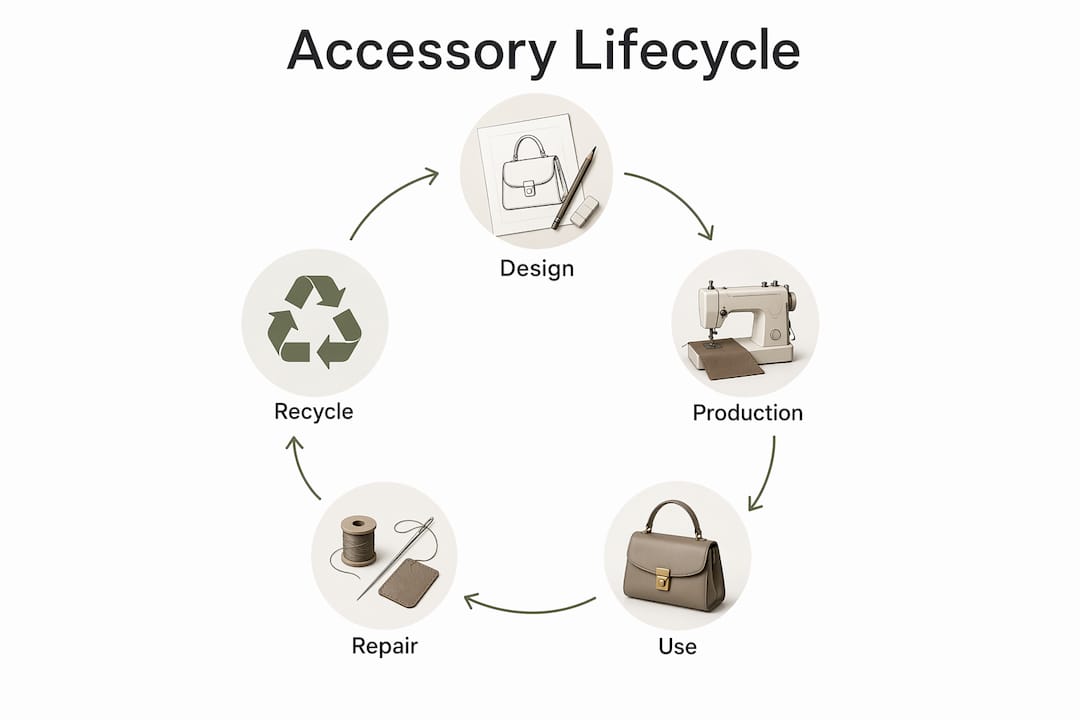
The circular economy asks a simple question that fashion has historically ignored: what happens to this product after the customer is done with it? Integrated lifecycle thinking covers every stage from material sourcing through design, production, use, and end-of-life, rather than treating each stage as someone else’s problem.
Applied to accessories, this produces three concrete shifts. First, material selection moves away from mixed composites that are impossible to separate at end of life, towards mono-material construction that can be cleanly processed. Second, design prioritises repairability and modularity so a broken strap or worn clasp does not condemn the whole product. Third, end-of-life planning, whether biological decomposition or technical recycling, is built into the brief before a single prototype is made.
Circular economy principles for accessories, in brief:
- Keep materials in use as long as possible
- Minimise virgin resource input at every stage
- Design for disassembly, not just aesthetics
- Close loops through repair, reuse, upcycling, and recycling
- Treat end-of-life as a design constraint, not an afterthought
The gap between ambition and practice remains wide. Current industry practice tends to address one stage in isolation, recycled inputs here, a take-back scheme there, without connecting them into a coherent lifecycle strategy. True circularity requires all stages to talk to each other.
Why cork accessories are a natural fit for circular fashion
Cork ticks every box a circular accessory designer would draw up. It is renewable, durable, and biodegradable, and because it is a single natural material, it avoids the composite construction that makes most fashion accessories so difficult to recycle. Harvested from the bark of cork oak trees without felling them, it regenerates naturally, making the raw material itself part of a biological cycle.
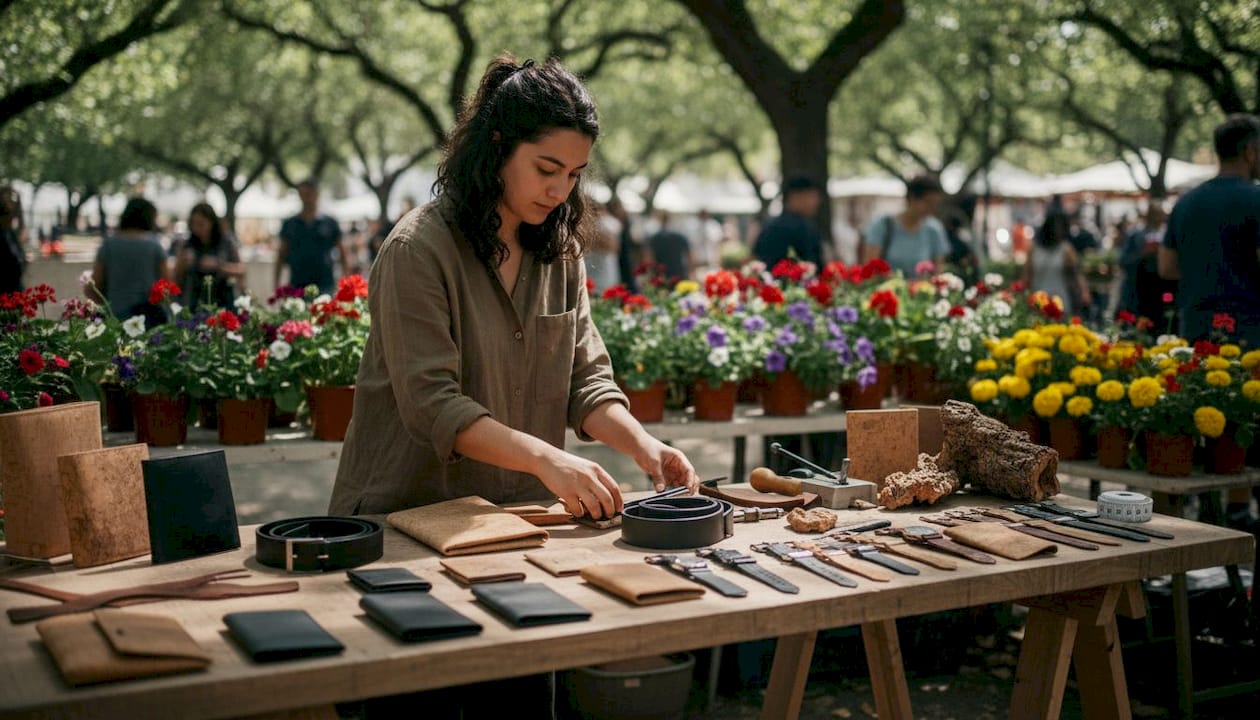
Cork accessories, from wallets and purses to handbags and backpacks, are well suited to repair and modularity. A cork surface that shows wear can be treated or replaced without discarding the whole product. That is a practical expression of circular design strategy, where end-of-life thinking shapes the product from the first sketch.
Benefits of cork accessories within a circular model:
- Renewable raw material with no tree felling required
- Mono-material nature simplifies recycling and composting
- Naturally durable, reducing replacement frequency
- Vegan and cruelty-free, aligning with ethical fashion values
- Lightweight, which lowers transport-related resource use
- Biodegradable at end of life, re-entering biological cycles
Circular accessories reduce waste by extending product lifespans and enabling material recirculation. Cork’s properties make that extension genuinely achievable rather than aspirational. Thecorkstore’s sustainable cork accessories are designed with these principles at their core, not bolted on as a marketing claim.
How you can actively support circular accessories
Choosing a circular accessory is the start, not the finish. Repairing, sharing, and reselling accessories substantially contribute to circularity in practice, and each of those actions is available to any consumer right now.
Spotting genuine circular accessories requires a little scrutiny. Look for mono-material construction, clear repairability, and transparent end-of-life guidance from the brand. Be sceptical of products that claim sustainability purely on the basis of recycled packaging or a single green material in an otherwise mixed-material product. That is greenwashing, not circularity.
Pro Tip: Designing for emotional attachment is one of the most overlooked tools in circular fashion. An accessory you genuinely love stays in your wardrobe far longer than one you merely tolerate, keeping it out of the waste stream without any additional resource input.
Consumer actions that support circular accessories:
- Repair before replacing, even minor damage
- Resell or donate accessories you no longer use
- Choose mono-material products for easier end-of-life processing
- Care for accessories properly to extend their lifespan
- Ask brands directly about repairability and end-of-life options
- Avoid fast-fashion accessories designed for short-term use
The eco-friendly accessory styling guide from Thecorkstore offers practical selection and care advice for anyone building a more circular wardrobe. For a broader perspective on why handcrafted production supports these values, handcrafted vs mass-produced is worth reading before your next purchase.
Key takeaways
A circular accessory is defined by its design for continuous material use through repair, reuse, upcycling, and recycling, not by its shape.
| Point | Details |
|---|---|
| Circularity is not about shape | The term refers to lifecycle design, not geometric form; true circularity keeps materials in continuous use. |
| Mono-material construction matters | Single-material products like cork are far easier to repair, recycle, or compost than mixed-material alternatives. |
| Consumer behaviour drives circularity | Repairing, reselling, and sharing accessories extends product life and reduces demand for new resources. |
| Emotional attachment reduces waste | Accessories you genuinely love stay in use longer, cutting waste without any extra resource input. |
| Cork exemplifies circular design | Renewable, biodegradable, and mono-material, cork accessories align naturally with circular economy principles. |
The case for circularity that most brands still miss
The fashion industry has spent years talking about sustainability while continuing to design accessories that are impossible to repair and made from materials that cannot be separated at end of life. The circular economy conversation has largely focused on clothing, leaving accessories, with their complex material combinations and short lifecycles, relatively unexamined until recently.
What strikes me about cork as a material is that it solves the circularity problem at source. Most circular fashion initiatives are retrofits: take-back schemes, recycling programmes, repair cafés. They are valuable, but they are compensating for poor design decisions made earlier. Cork accessories, by contrast, start with a material that is already renewable, already mono-material, and already biodegradable. The circular logic is baked in.
The consumer’s role is more consequential than most sustainability messaging acknowledges. Brands can design the most circular product imaginable, but if it ends up in a landfill after two years because the owner never repaired it, never resold it, and never thought about its end of life, the circularity is theoretical. Choosing well is only half the job. Using well, for longer, with intention, is the other half.
Thecorkstore’s approach reflects this. Stocking sustainable cork accessories that are genuinely designed for longevity is a meaningful position in a market full of greenwashing. The real test of any circular accessory claim is simple: can you repair it, and does the brand tell you how?