

What is climate positive fashion? a clear guide
TL;DR:
- Climate positive fashion actively removes more greenhouse gases than it emits throughout a garment’s lifecycle. It requires genuine supply chain accountability supported by verified standards like SBTi and the use of regenerative, low-impact materials such as cork, hemp, and organic cotton. Consumer choices, including buying less and prioritizing transparency, are crucial for advancing this regenerative movement.
Climate positive fashion is defined as clothing production that removes more greenhouse gases from the atmosphere than it emits across a garment’s entire lifecycle. This goes well beyond what most people understand as sustainable fashion. Where eco-friendly clothing aims to reduce harm, climate positive fashion actively reverses it. The Institute of Positive Fashion, the Science-Based Targets Initiative (SBTi), and the circular economy framework are the three pillars shaping this shift. Understanding what is climate positive fashion matters now because the fashion industry accounts for a significant share of global carbon emissions, and the difference between “less bad” and “net positive” is enormous.
What is climate positive fashion and how is it defined?
Climate positive fashion actively removes more greenhouse gases than it emits across the garment’s full lifecycle. That definition covers everything from raw material sourcing and manufacturing through to disposal, including carbon sequestration and ecosystem regeneration at every stage.
The term is sometimes used interchangeably with “climate negative,” which means the same thing. Both describe a net positive outcome for the climate. This is distinct from carbon neutrality, which simply means balancing emissions with offsets rather than genuinely reducing or reversing them. You can read more about that distinction in Thecorkstore’s breakdown of carbon neutral fashion.
The concept sits within a broader regenerative movement. Regeneration means restoring ecosystems, rebuilding soil health, and locking carbon back into the earth. It is a step beyond sustainability, which focuses on maintaining the status quo rather than improving it.
How does climate positive fashion differ from sustainable fashion?
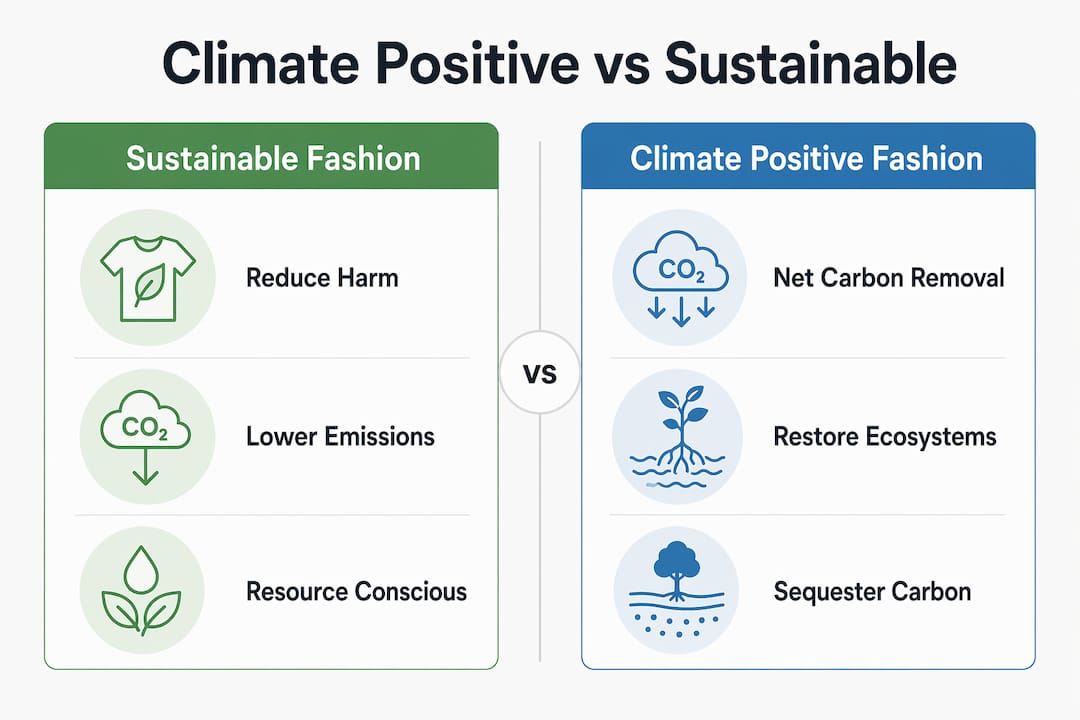
Sustainable fashion and climate positive fashion share goals but operate at different levels of ambition. Sustainable fashion focuses on minimising harm. Climate positive fashion demands active restoration.
Here is where the key distinctions lie:
- Sustainable fashion reduces water use, limits chemical runoff, and favours organic materials. It aims to cause less damage than conventional production.
- Climate neutral fashion offsets emissions to reach net zero. It does not necessarily reduce the emissions themselves.
- Climate positive fashion goes further by sequestering more carbon than the entire production process generates, often through regenerative agriculture and circular design.
- Circular fashion focuses on keeping materials in use through repair, resale, and fibre recycling. It overlaps with climate positive goals but does not guarantee a net positive carbon outcome on its own.
One critical misconception is the rebound effect. Consumers sometimes buy more clothing precisely because a brand markets itself as climate positive. That behaviour can cancel out the environmental gains entirely. Experts recommend prioritising quality over quantity and extending garment lifecycles through repair and reuse. Climate positive branding does not give anyone licence to shop more freely.
What materials and methods make fashion climate positive?
The materials a brand chooses are the single biggest lever in achieving a net positive carbon outcome. Regenerative agriculture is the foundation.
Regenerative and low-impact fibres
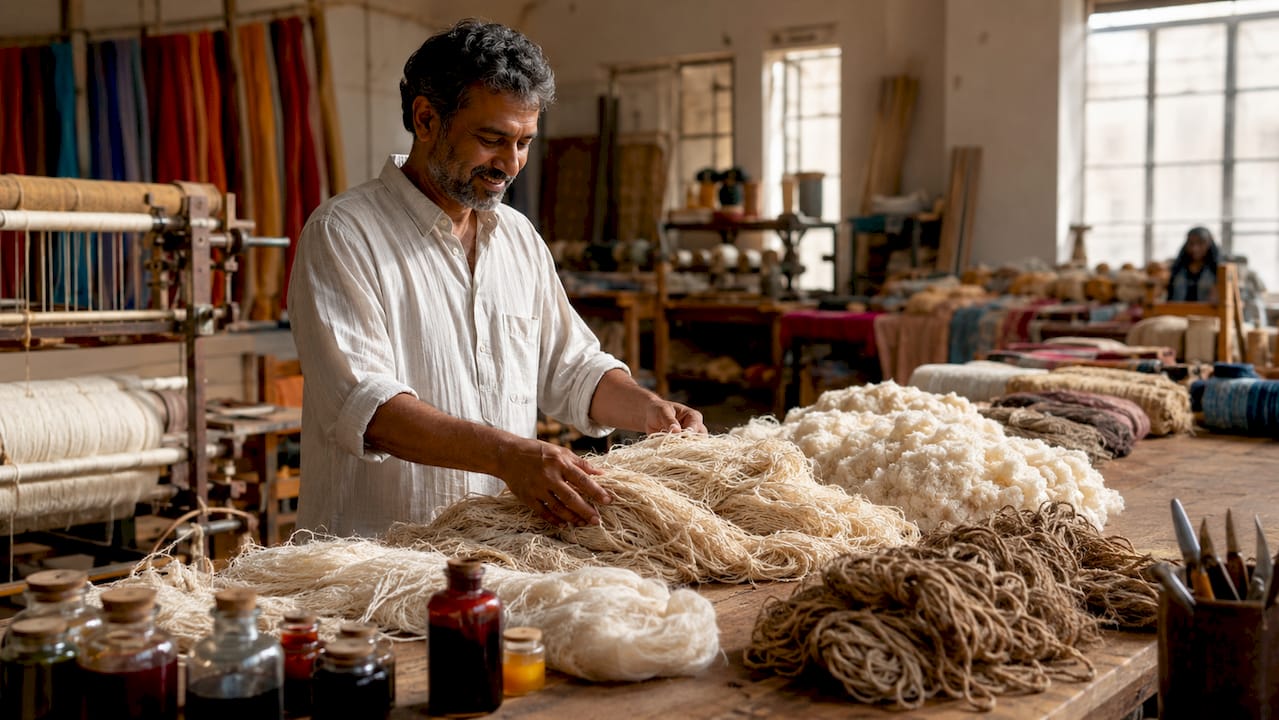
Regenerative hemp and organic cotton reduce water usage by up to 81% compared to conventional materials, while improving soil health and sequestering carbon. They are grown without synthetic pesticides, which lowers chemical runoff and supports biodiversity. Hemp in particular grows quickly, requires minimal water, and returns nutrients to the soil after harvest.
Pro Tip: When shopping for climate-conscious apparel, look for the Soil Association Organic Standard or Regenerative Organic Certified label on product pages. These third-party marks confirm that fibres were grown using practices that actively restore soil carbon.
Carbon-negative textiles and manufacturing
Carbon-negative textiles use renewable energy and bioengineering to produce fabrics that reduce the net carbon footprint throughout production and use. Brands using wind or solar power in their factories cut Scope 1 and Scope 2 emissions significantly. Fibre-to-fibre recycling, where old garments are broken down and respun into new fabric, closes the production loop and avoids the carbon cost of virgin material extraction.
Here is a comparison of common materials by environmental impact:
| Material | Water Use | Carbon Impact | Soil Health |
|---|---|---|---|
| Conventional cotton | Very high | High emissions | Degrades soil |
| Organic cotton | Moderate | Lower emissions | Neutral to positive |
| Regenerative hemp | Very low | Carbon sequestering | Actively restores |
| Recycled polyester | Low | Moderate (fossil-based) | No direct impact |
| Cork | Minimal | Carbon absorbing | Forest preserved |
Cork deserves a mention here. Cork oak trees absorb carbon throughout their lives, and harvesting the bark does not kill the tree. It is one of the few materials where the act of harvesting actively supports the ecosystem rather than depleting it.
What are the industry challenges around climate positive standards?
The biggest problem facing climate positive fashion is that the term has no standardised legal definition. Any brand can use it. That gap creates real greenwashing risk.
Climate positive is not legally defined, which means internal carbon accounting methods vary widely across brands. Without a consistent standard, a brand can claim climate positivity based on selective data or purchased offsets rather than genuine decarbonisation. Third-party verification is the only reliable safeguard.
The Science-Based Targets Initiative (SBTi) is the most credible verification body operating in this space. Brands that commit to SBTi targets agree to 42% reductions in Scope 1 and 2 emissions and 48% reductions in Scope 3 emissions by 2030, compared to 2021 levels. Scope 3 emissions cover the entire supply chain and are typically the largest and hardest category to address.
Pro Tip: Before trusting a brand’s climate positive claim, search for their SBTi commitment page or annual sustainability report. If neither exists, the claim is marketing rather than verified progress.
Offsets alone are insufficient for genuine climate positive status. Internal decarbonisation must come first, with offsets reserved only for emissions that cannot yet be eliminated. Brands that rely primarily on offset purchases are not truly climate positive.
Digital traceability systems are becoming foundational for validating these claims. Tracking an entire supply chain digitally allows brands and consumers to verify that carbon is genuinely locked in through practices like fibre-to-fibre recycling. Reformation’s published climate transition roadmap is one of the clearest examples of public accountability in action. The brand published detailed progress and openly acknowledged limitations within six months of committing to its climate positive goal.
| Brand Action | Verification Standard | Scope Covered |
|---|---|---|
| SBTi commitment | Third-party verified | Scope 1, 2, and 3 |
| Published roadmap | Self-reported with audits | Full lifecycle |
| Offset purchasing only | Unverified | Partial |
| Regenerative sourcing | Certification dependent | Raw materials |
How can consumers support climate positive fashion?
Consumer behaviour is not a footnote in climate positive fashion. It is central to whether the movement succeeds or becomes another marketing trend.
The Centre for Sustainable Fashion is clear that climate positive goals cannot replace the need for slow, conscious consumption. Buying less is always the most effective individual action. Choosing quality pieces that last five or ten years beats buying ten “sustainable” items in the same period.
Here are the most effective steps you can take:
- Buy less, choose better. Prioritise brands with verified SBTi targets over those using unverified climate positive language.
- Look for regenerative materials. Hemp, organic cotton, and cork are among the most credible options available today.
- Read transparency reports. Brands committed to genuine progress publish annual sustainability data. If a brand does not, ask why.
- Extend garment life. Repair, resale, and rental all reduce the demand for new production. Platforms supporting circular fashion models directly reduce industry emissions.
- Question certifications. Not all eco labels carry the same weight. The Soil Association, Fairtrade, and GOTS (Global Organic Textile Standard) are among the most rigorous.
- Avoid the rebound effect. Climate positive branding is not a reason to buy more. Conscious consumption remains the most powerful tool you have.
Learning how to spot sustainable fashion is a practical skill that makes these choices easier. Thecorkstore’s step-by-step guide covers exactly what to look for on product pages and brand websites.
Key takeaways
Climate positive fashion requires active carbon removal across the full garment lifecycle, not just reduced emissions or offset purchases.
| Point | Details |
|---|---|
| Definition matters | Climate positive means net carbon removal, not just reduced harm or offset balancing. |
| Verification is non-negotiable | Only SBTi-verified targets and published roadmaps confirm genuine climate positive status. |
| Materials drive impact | Regenerative hemp, organic cotton, and cork actively restore ecosystems rather than depleting them. |
| Consumer behaviour counts | Buying less and extending garment life remains as important as choosing climate positive brands. |
| Greenwashing risk is real | Without a legal definition, any brand can use the term. Third-party verification is the only safeguard. |
Why climate positive fashion is harder than it looks
I have spent years watching sustainability claims cycle through the fashion industry. “Eco-friendly,” “green,” “conscious” and now “climate positive” each arrived with genuine promise and were quickly diluted by brands chasing the marketing benefit without the substance.
What strikes me about climate positive fashion is that it demands something most brands are not yet equipped to deliver: full supply chain accountability. Scope 3 emissions, the ones generated across the entire supply chain, are usually the largest source of emissions for fashion brands and represent the most challenging category to decarbonise. Most brands have not even mapped them accurately, let alone reduced them.
The honest truth is that the industry is learning in public. Reformation’s approach of publishing its roadmap openly, including what it does not yet know, is the right model. It is uncomfortable for brands used to polished marketing, but it is the only credible path forward.
What I find most encouraging is the materials side. Cork, regenerative hemp, and bioengineered textiles are not theoretical. They exist now, they perform well, and they are commercially available. The gap is not technology. It is the will to prioritise genuine impact over convenient claims.
My advice: hold brands to the same standard you would hold any other claim. Ask for the data. Look for the third-party verification. And remember that sustainable shopping on conscious days like Black Friday still requires the same scrutiny as any other purchase.
— Aaron
Start your climate positive wardrobe with Thecorkstore
If you are ready to move from understanding to action, the place to start is with materials that genuinely deliver on their environmental promise.
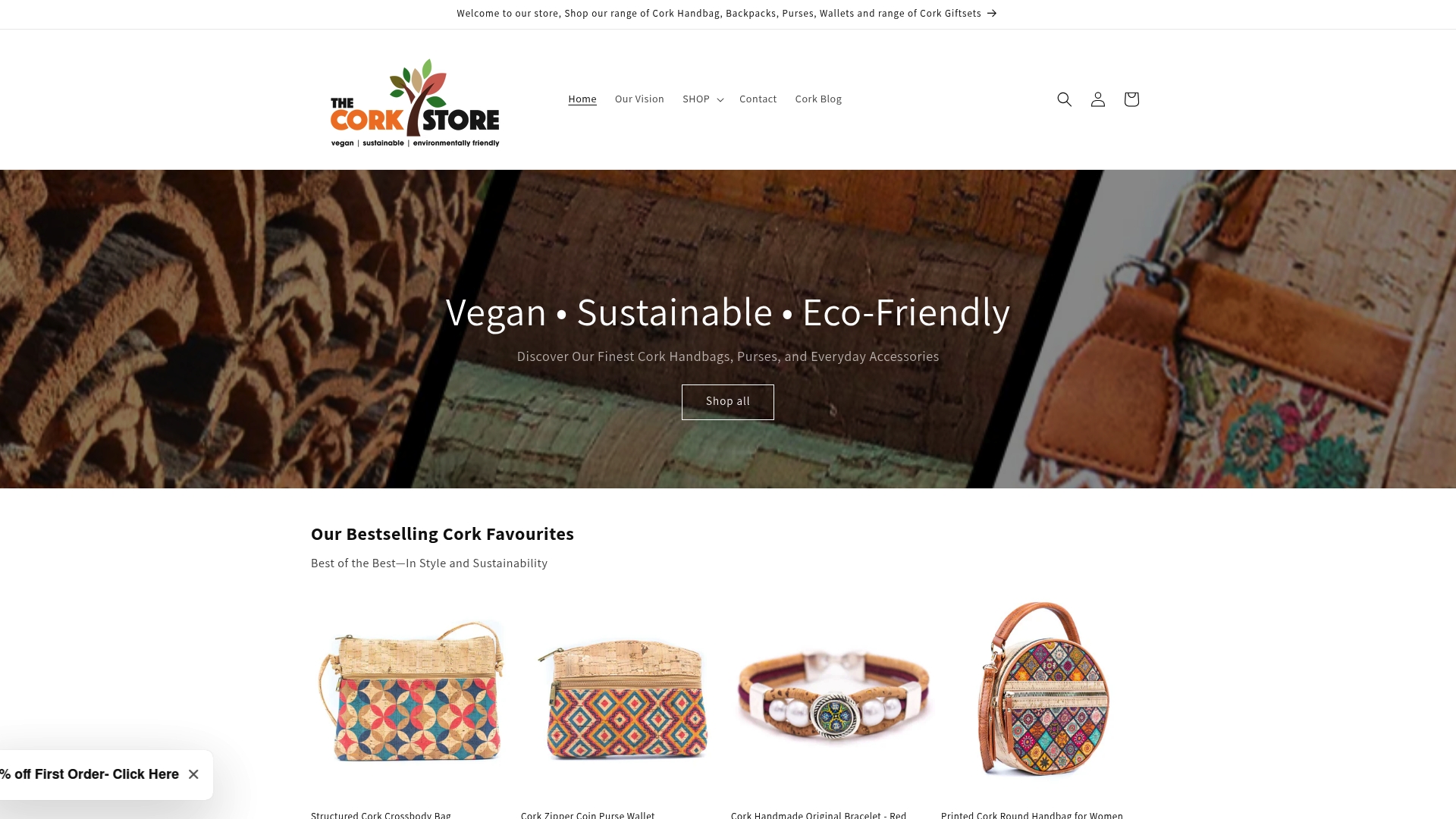
Thecorkstore specialises in vegan accessories crafted from cork, one of the few materials where harvesting actively supports the ecosystem. Cork oak forests absorb carbon continuously, and every bag, wallet, or backpack from Thecorkstore is made without leather, synthetic plastics, or harmful chemicals. The range covers everything from everyday handbags to gift sets, all designed for people who want style and substance in equal measure. Browse the full collection and see what climate-conscious accessories actually look like in practice.
FAQ
What does climate positive mean in fashion?
Climate positive fashion removes more carbon than it emits across a garment’s full lifecycle, including sourcing, manufacturing, and disposal. It goes beyond carbon neutrality by actively restoring ecosystems rather than simply offsetting emissions.
How is climate positive different from sustainable fashion?
Sustainable fashion reduces harm. Climate positive fashion reverses it by sequestering more carbon than the production process generates. Sustainable fashion is the baseline; climate positive is the next level of ambition.
How can i tell if a brand is genuinely climate positive?
Look for Science-Based Targets Initiative (SBTi) verification and a published climate transition roadmap. Brands relying solely on offset purchases or unverified self-declarations are not meeting the standard.
What materials support climate positive fashion?
Regenerative hemp, organic cotton, and cork are among the most credible options. Regenerative hemp and organic cotton reduce water usage by up to 81% compared to conventional materials and actively improve soil health.
Is climate positive fashion the same as carbon neutral fashion?
No. Carbon neutral fashion balances emissions with offsets to reach net zero. Climate positive fashion goes further by removing more carbon than it produces, making it a net benefit to the climate rather than simply a neutral outcome.