

What is zero waste fashion? A clear guide
TL;DR:
- Zero waste fashion is a design approach that prevents fabric waste during garment construction by ensuring 100% fabric utilization. It focuses on early design decisions, such as patternmaking and geometric planning, rather than recycling after production. Consumers can support genuine zero waste fashion by asking brands about their methods and fabric utilization percentages.
Zero waste fashion is frequently misunderstood as a synonym for recycling old clothes or buying second-hand. It is neither of those things. What is zero waste fashion, properly defined? It is a design philosophy that prevents textile waste from forming in the first place, specifically during the cutting and sewing stages of garment production. The fashion industry generates enormous quantities of pre-consumer fabric waste every year, and zero waste clothing offers a concrete, design-led answer. This guide explains what zero waste fashion actually means, how it works in practice, and how you can use that understanding to make sharper choices for your wardrobe.
Table of Contents
- Key takeaways
- What zero waste fashion really means
- Zero waste techniques and how they differ
- Why zero waste fashion matters
- How to spot and shop zero waste fashion
- My take on zero waste fashion
- Explore sustainable fashion at Thecorkstore
- FAQ
Key takeaways
| Point | Details |
|---|---|
| Waste begins at design | Zero waste fashion addresses fabric waste at the pattern-cutting stage, not after production ends. |
| Two distinct approaches | Patternmaking methods and reclaimed textile workflows both count, but they work very differently. |
| Real cost savings exist | Efficient fabric use can cut production material costs by 8 to 12 per cent. |
| Consumers play an active role | Asking brands specific questions about fabric utilisation separates genuine claims from marketing language. |
| Materials matter too | Sustainable materials such as cork complement zero waste design principles in eco-friendly accessories. |
What zero waste fashion really means
Most people picture someone dyeing an old T-shirt or weaving plastic bags into a tote. Zero waste fashion is something far more deliberate. Zero waste design eliminates textile waste at the cutting and sewing stages by integrating waste avoidance into early design decisions. The waste never forms because the design does not allow it to.
Think about how a conventional garment is made. A designer creates a pattern, a cutter lays those pattern pieces onto fabric, and the leftover fabric around and between those pieces goes straight to landfill or incineration. Conventional cutting wastes 15 to 25% of fabric used in garment production globally. That is roughly a quarter of every roll of cloth purchased, discarded before a single stitch is sewn.
Zero waste fashion treats that waste as a design constraint rather than an acceptable by-product. Silhouette, seam placement, and pattern geometry are all shaped around the goal of using 100 per cent of the fabric. This is not about being frugal. It is about rethinking the entire workflow.
“Zero-waste design is a mindset, methodology, and creative philosophy that rethinks fashion production workflow from linear to systems thinking.”
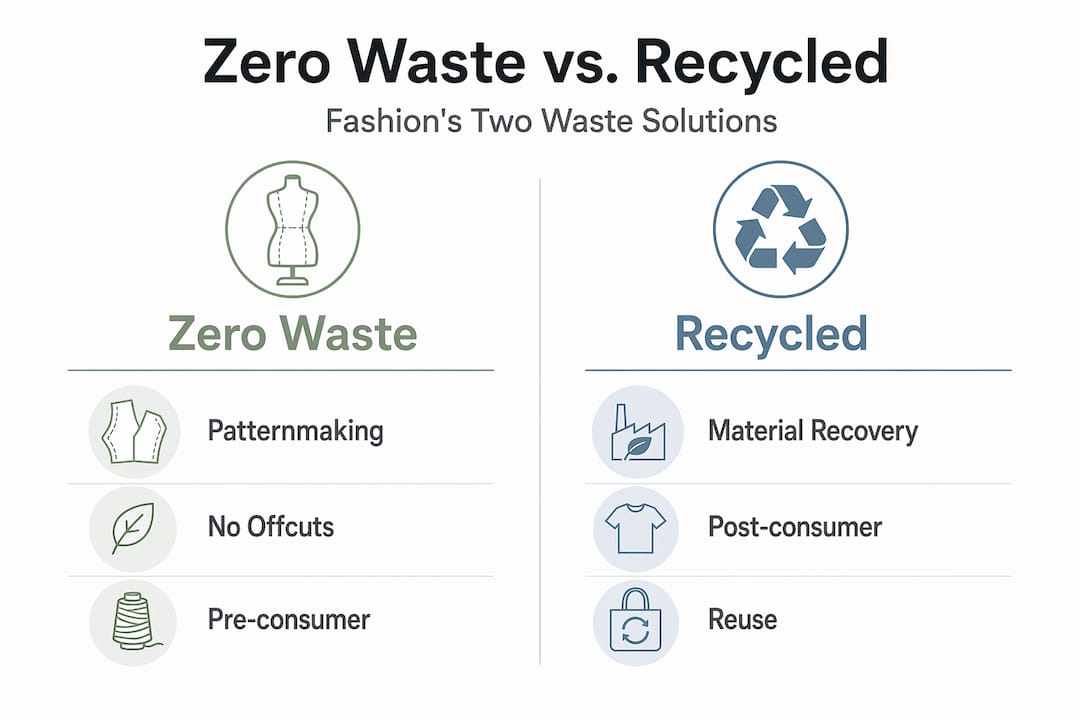
The distinction from recycling matters enormously. Post-consumer recycling does not address the pre-consumer textile waste generated during cutting. A brand can recycle end-of-life garments and still waste 20 per cent of every bolt of fabric it buys. True zero waste clothing intervenes upstream, at the design desk, before any scissors touch the cloth.
Zero waste techniques and how they differ
The role of zero waste in fashion production is not one-size-fits-all. Several distinct approaches exist, and understanding the differences helps you evaluate what brands are actually doing.
| Approach | How it works | Waste eliminated |
|---|---|---|
| Zero waste patternmaking | Pattern pieces are engineered to interlock like a puzzle across the full fabric width | Cutting offcuts eliminated |
| Geometric and modular design | Garments built from simple tessellating shapes (squares, triangles, rectangles) | Cutting and layout waste |
| Reclaimed textile workflows | Leftover scraps and surplus fabric are transformed into new garments | Post-cutting fabric waste repurposed |
| Digital pattern optimisation | AI nesting tools arrange pattern pieces for maximum fabric coverage | Both layout and sample waste |
| Waste-inclusive design | Small leftover scraps are incorporated as pockets, trims, or accessory elements | Residual offcuts absorbed into product |
Zero waste patternmaking is the most technically demanding method. Pattern pieces must interlock like a puzzle within the fabric width, requiring simultaneous work on silhouette and pattern geometry constrained by fabric dimensions. The shape of a sleeve affects the shape of a collar because both must fill the same fabric rectangle without gaps. This is why zero waste garments often have a distinctive geometry to them. The constraint creates the aesthetic.
Digital tools are changing what is achievable at scale. AI-driven pattern optimisation tools can reduce sample waste by over 60 per cent, achieving near-complete fabric utilisation of 97 to 99 per cent. This brings zero waste methods within reach for manufacturers who cannot hand-engineer every pattern from scratch.

Reclaimed textile workflows take a different path. Rather than preventing offcuts through patternmaking, these methods collect scraps from other production runs and reconstruct them into usable cloth or finished garments. Both approaches count as zero waste clothing, but they address waste at different points and require very different skills.
Pro Tip: When a brand says “zero waste,” ask whether they mean zero waste patternmaking or reclaimed materials. The two are not interchangeable, and knowing the difference tells you a great deal about how seriously they have committed to the methodology.
It is also worth acknowledging what zero waste fashion cannot fully eliminate. Thread, labels, selvage edges, and packaging remain as residual waste in almost every production setting. Absolute zero waste is an aspiration rather than a literal reality, and honest brands will say so.
Why zero waste fashion matters
The benefits of zero waste fashion extend well beyond avoiding landfill. They reach into economics, craft, creativity, and cultural change.
- Material cost savings. Zero waste pattern cutting can save 8 to 12% of production fabric costs. For manufacturers working at volume, that is a meaningful financial incentive alongside the environmental one.
- Reduced landfill burden. Less fabric wasted at source means less textile material ending up incinerated or buried. London’s textile waste is falling due in part to circular fashion and repair initiatives, but equitable access to those solutions remains uneven. Zero waste design reduces the problem at its origin.
- Preservation of artisanal skills. Reclaimed textile workflows sustain skilled artisans and traditional handweaving practices that would otherwise lose commercial relevance. The circular fashion concept, when done well, supports communities as well as ecosystems.
- Design innovation. Constraints breed creativity. Zero waste fashion constraints encourage innovative, distinct silhouette designs that emerge directly from fabric efficiency requirements. Some of the most striking garments in contemporary sustainable fashion exist precisely because the designer could not waste a centimetre.
- Consumer awareness. Buying zero waste clothing encourages buyers to think about durability, repairability, and product lifecycles rather than seasonal disposability.
These benefits of zero waste fashion do not materialise automatically. They depend on genuine commitment from both producers and consumers. A brand using the term loosely as a marketing phrase delivers none of them.
How to spot and shop zero waste fashion
Recognising authentic zero waste fashion requires a degree of critical thinking. Here is a practical process for evaluating what you find.
- Ask about the method. Does the brand use zero waste patternmaking, reclaimed materials, or digital optimisation? A credible brand will answer specifically. Vague language about “sustainability values” is not enough.
- Look for measurable claims. Fabric utilisation percentages are a concrete signal. A claim of 95 per cent or higher fabric use is meaningful. A claim of “minimal waste” with no figures attached is not.
- Check for brand transparency on production. Genuine zero waste approaches involve specific design processes that brands should be willing to describe.
- Prioritise repairability and longevity. Zero waste fashion philosophy connects directly to sustainable wardrobe building. Garments designed to be repaired, altered, and kept for years align with the same values as zero waste production.
- Support brands that combine zero waste with ethical labour. Environmental credentials without fair wages are not true sustainability. The ethical fashion techniques that preserve artisanal skills are part of the same philosophy as zero waste design.
Pro Tip: The circular fashion concept extends to accessories as well as clothing. Materials like cork are harvested without harming the tree, require no animal products, and create durable goods that last for years. Exploring cork in sustainable accessories is a natural extension of zero waste thinking into the products you carry every day.
Sustainable wardrobe choices do not require a complete overhaul. Start by identifying brands that can describe their zero waste methodology clearly, then prioritise quality and longevity when making new purchases.
My take on zero waste fashion
I have followed sustainable fashion closely for years, and the number one mistake I see people make is treating zero waste as a category label rather than a production methodology. It is tempting to buy something marketed as “zero waste” and feel satisfied. The harder, more useful question is: zero waste at which stage, and verified how?
What genuinely excites me about zero waste fashion is that the design constraint is productive. Designers who cannot afford to waste fabric often produce garments with a logic and geometry you simply do not find in conventional clothing. The waste restriction forces a kind of rigour that shows in the finished piece.
I am also sceptical of brands that lead with recycling credentials while staying silent about pre-consumer cutting waste. Recycling is valuable. But approaches focused only on post-consumer recycling do not address the 15 to 25 per cent of fabric wasted during cutting. Conflating the two lets producers off the hook for the most preventable category of waste in fashion.
My honest advice: the next time a brand uses “zero waste” in its marketing, ask one question. What percentage of your fabric do you use? If they cannot answer, you have your answer.
— Aaron
Explore sustainable fashion at Thecorkstore
If this has sparked your interest in how to achieve zero waste fashion in your own life, Thecorkstore is a good place to continue. The brand specialises in vegan cork accessories, from handbags and wallets to backpacks and gift sets, all made from a material that is harvested sustainably and creates no animal harm. Cork production is inherently low-waste, making it a natural fit for zero waste values.
Thecorkstore’s blog also covers practical guidance on reducing fashion waste and building an ethical wardrobe, so you can go deeper on any aspect of sustainable style. Whether you are looking to make one considered purchase or rethink your approach to accessories entirely, Thecorkstore offers a starting point that does not ask you to compromise on style or ethics.
FAQ
What is zero waste fashion, exactly?
Zero waste fashion is a design methodology that prevents fabric waste during garment production by engineering pattern pieces to use 100 per cent of the fabric. It is distinct from recycling or upcycling because it addresses waste before it forms, not after.
How does zero waste patternmaking work?
Pattern pieces are designed to interlock across the full fabric width like a puzzle, so no offcuts remain after cutting. This requires the designer to work on silhouette and pattern geometry simultaneously, constrained by the fabric’s dimensions.
Is zero waste fashion the same as recycled fashion?
No. Recycled fashion works with post-consumer waste, while zero waste fashion focuses on eliminating pre-consumer cutting waste during production. A brand can recycle garments and still waste 20 per cent of every bolt of fabric it buys.
What should I ask a brand to verify zero waste claims?
Ask what percentage of their fabric they use per garment and whether they practise zero waste patternmaking, reclaimed material methods, or digital optimisation. Specific, measurable answers indicate genuine commitment.
Can consumers really reduce fashion waste through their choices?
Yes. Choosing durable, repairable garments from brands with verified zero waste methods, and supporting the circular fashion concept through repair and considered purchasing, directly reduces demand for wasteful production.