
What is plant-based fashion? A clear guide
TL;DR:
- Plant-based fashion utilizes fibres from plants as a renewable alternative to animal and fossil-fuel textiles. Understanding fiber categories, certifications, and end-of-life options is essential to make eco-conscious choices and avoid greenwashing. Ultimately, durability and proper disposal infrastructure determine the true sustainability of plant-based clothing.
Plant-based fashion is clothing and accessories produced primarily from fibres and materials sourced from plants, offering a renewable alternative to animal-derived and fossil-fuel-based textiles. The term covers a broad spectrum, from ancient natural fibres like cotton and linen to newer bio-based synthetics derived from corn starch or algae. Understanding what plant based fashion actually means matters because the label is increasingly used in marketing, often with varying degrees of accuracy. This guide explains the fibres involved, how plant-based differs from vegan fashion, what biodegradability claims really mean, and how to shop without being misled.
What fibres and materials are used in plant-based clothing?
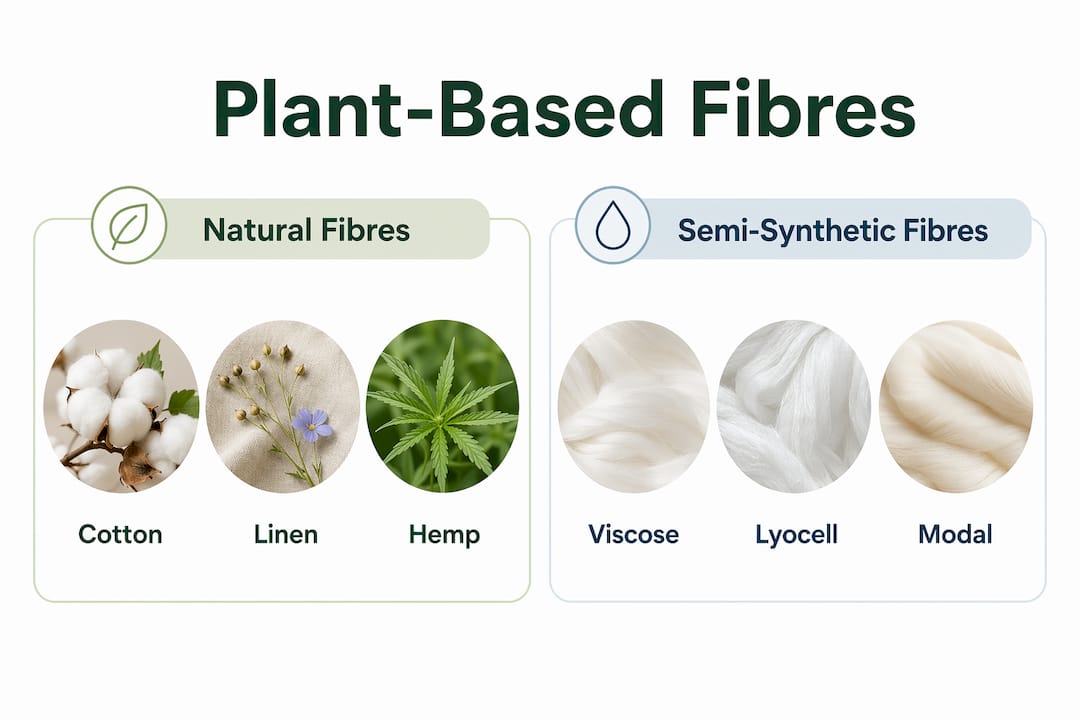
The EU Joint Research Centre defines bio-based fibres across three distinct categories: natural plant fibres, semi-synthetic cellulosic fibres, and bio-based synthetic polymers. Each category has a different production process, environmental profile, and end-of-life behaviour. Knowing which category a garment falls into tells you far more than a simple “plant-based” label ever will.
Natural plant fibres
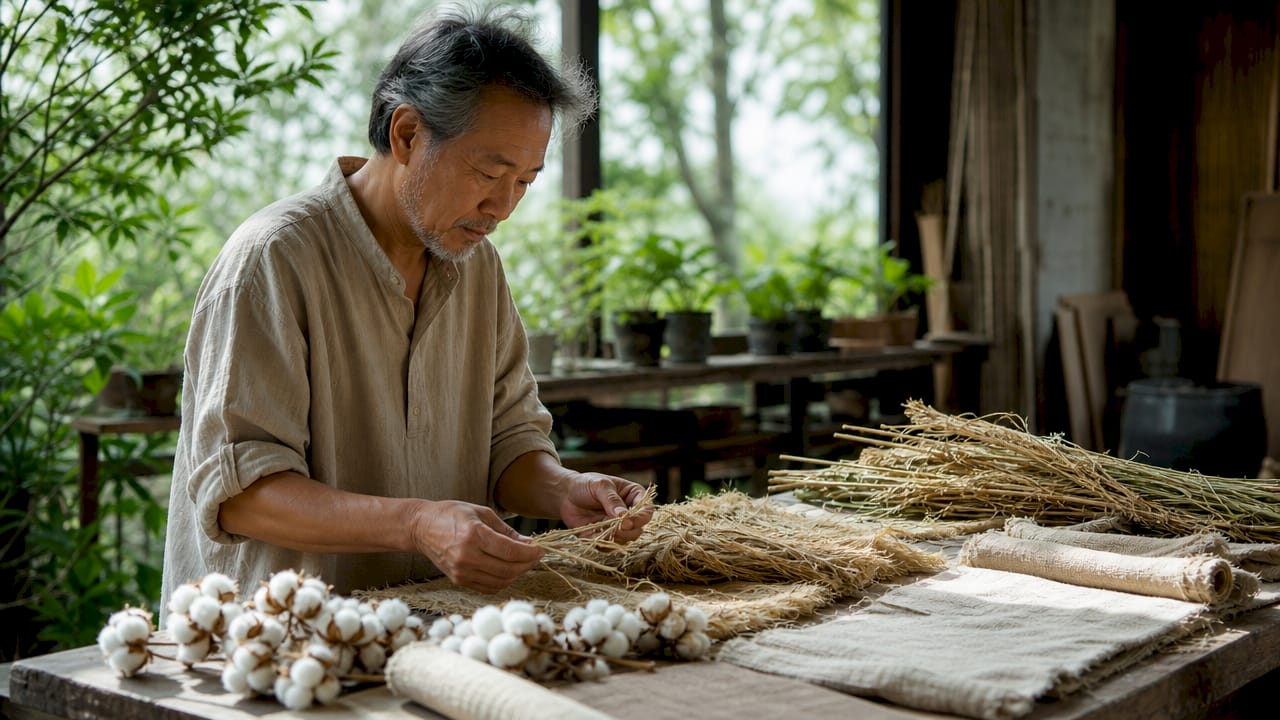
Cotton, linen, and hemp are the most widely recognised natural plant fibres. Cotton is grown from the seed hair of the Gossypium plant and accounts for the majority of global natural fibre production. Linen comes from the flax plant and requires significantly less water and pesticide input than conventional cotton. Hemp is arguably the most resource-efficient of the three, fixing nitrogen in the soil and requiring minimal irrigation. All three biodegrade in the right conditions, though processing treatments like dyeing and finishing can slow that process considerably.
Semi-synthetic cellulosic fibres
Viscose, lyocell (sold under the brand name Tencel by Lenzing AG), and modal sit in a middle category. They are derived from plant cellulose, usually wood pulp, but require chemical processing to convert that raw material into a wearable fibre. Lyocell uses a closed-loop solvent process that recovers and reuses around 99% of the chemicals involved, making it considerably cleaner than conventional viscose. These fibres feel soft and drape well, which is why they appear frequently in everyday clothing from brands like Patagonia and Eileen Fisher.
Bio-based synthetics and emerging materials
Polylactic acid (PLA), made from fermented plant sugars such as corn starch, represents the newest category. Bio-based fibres vary greatly in processing, properties, and environmental impact depending on their origin and production method. Beyond PLA, researchers and start-ups are developing fibres from algae, mycelium (fungal root networks), and agricultural waste such as pineapple leaf fibre (Piñatex, developed by Ananas Anam) and orange peel (Orange Fiber, an Italian company). These materials are not yet mainstream, but they signal where plant-based textile innovation is heading.
| Fibre type | Source | Key property | Environmental note |
|---|---|---|---|
| Cotton | Cotton plant seed hair | Soft, breathable | High water use unless organic |
| Linen | Flax plant stem | Durable, low-input | Low pesticide requirement |
| Hemp | Hemp plant stalk | Strong, soil-enriching | Minimal irrigation needed |
| Lyocell (Tencel) | Wood pulp cellulose | Soft, closed-loop process | Low chemical waste |
| PLA | Corn starch sugars | Biodegradable in industry | Requires industrial composting |
Pro Tip: When buying semi-synthetic fabrics, look specifically for lyocell certified by the EU Ecolabel or OEKO-TEX Standard 100, which confirms the chemical processing meets environmental standards.
How does plant-based fashion differ from vegan fashion?
Vegan fashion excludes all animal-derived materials, including wool, silk, leather, and down. Plant-based fashion focuses on the origin of fibres, prioritising those sourced from plants. The two concepts overlap but are not the same, and confusing them leads to poor purchasing decisions.
A garment can be vegan without being plant-based. Polyester, nylon, and acrylic are all vegan because they contain no animal products, yet they are derived from fossil fuels and shed microplastics with every wash. Conversely, a product labelled “plant-based” is not automatically free from plastic. Labels can mask plastic blends like polyurethane, which is a petroleum-derived material commonly used in faux leather products. A bag marketed as “plant-based leather” may contain only 30% plant material, with the remainder being polyurethane.
This distinction matters enormously for anyone making ethical clothing choices based on environmental impact rather than animal welfare alone. The two goals are related but require different scrutiny. Someone avoiding animal products for ethical reasons may be satisfied with a polyester garment. Someone prioritising environmental impact will want to avoid both animal fibres and fossil-fuel synthetics, making genuine plant-based options the better fit.
Greenwashing thrives in this gap between the two labels. Brands use “plant-based,” “bio-based,” and “vegan” interchangeably in marketing copy, even when the products do not fully qualify under any precise definition. The absence of a standardised legal definition for “plant-based fashion” in the UK or EU means brands face little regulatory pressure to be precise.
- A product labelled “vegan leather” may contain mostly polyurethane with a thin plant-based coating.
- “Bio-based” does not confirm biodegradability; it only confirms the feedstock origin.
- “Natural fibres” does not mean organic or low-impact; conventional cotton uses significant pesticide inputs.
- Blended fabrics (e.g. 60% linen, 40% polyester) are neither fully plant-based nor fully synthetic.
Pro Tip: Check the full fibre composition listed on the care label, not just the front-of-pack marketing. If a brand cannot or will not disclose the complete material breakdown, treat that as a transparency problem.
What are the environmental and biodegradability considerations?
Plant-based fibres often carry a lower environmental footprint than animal-derived fibres and fossil-fuel synthetics. Animal fibres and fossil synthetics carry higher greenhouse gas and methane costs than most plant-based alternatives. Wool production generates methane from sheep, and conventional leather tanning is one of the most chemically intensive processes in fashion manufacturing. Polyester production relies on crude oil and releases microplastics throughout its use life.
However, plant-based does not automatically mean low-impact. Cotton farming accounts for roughly 16% of global insecticide use despite covering only 2.5% of the world’s agricultural land. The environmental case for plant-based fashion depends heavily on how the crop is grown, how the fibre is processed, and crucially, what happens to the garment at the end of its life.
Biodegradability: what the claims actually mean
Biodegradability depends on disposal conditions; without the right industrial composting environment, textiles may degrade slowly or not at all. A PLA garment will not break down in a home compost bin or a standard landfill. It requires industrial composting facilities operating at temperatures above 58°C. These facilities exist in parts of the UK, but collection infrastructure for textiles is not yet widespread enough to make this a reliable end-of-life route for most consumers.
Compostable and biodegradable are not interchangeable terms. Compostable means a material breaks down into non-toxic components within a specific timeframe under specific conditions. Biodegradable simply means it will eventually break down, with no timeframe or condition specified. A garment described only as “biodegradable” could take decades to decompose in a landfill.
- Compostable: Breaks down within a defined period under controlled conditions (industrial or home).
- Biodegradable: Will eventually break down, but with no guaranteed timeframe or conditions.
- Home compostable: Breaks down in a standard garden compost heap, typically within 6 to 12 months.
- Industrially compostable: Requires specialist facilities; not achievable through home composting.
Compostable fashion benefits depend on infrastructure and consumer behaviour. Without proper disposal pathways, the claimed sustainability gains simply do not materialise. This is one of the most overlooked aspects of plant-based fashion marketing.
How can consumers identify authentic plant-based fashion?
Identifying genuine plant-based clothing requires moving beyond marketing language and examining the actual fibre content, certifications, and brand transparency. Verifying material composition beyond buzzwords is the most reliable way to avoid greenwashing. Here is a practical process for doing exactly that.
- Read the full fibre content label. UK law requires garments to list all fibres above 80% by weight, but blends can hide significant synthetic content. Look for the complete percentage breakdown, not just the headline fibre.
- Check for recognised certifications. The Global Organic Textile Standard (GOTS) certifies organic plant fibres from farm to finished product. OEKO-TEX Standard 100 confirms no harmful substances were used in processing. These are the two most credible third-party standards in the UK market.
- Scrutinise biodegradability claims. Any claim should specify whether the product is home compostable or industrially compostable, and under what conditions. Vague claims like “returns to nature” or “eco-friendly” without supporting detail are red flags.
- Look for supply chain transparency. Brands that publish supplier lists, material sourcing details, and third-party audit reports are demonstrably more trustworthy than those relying on general sustainability statements. Patagonia and Thought Clothing both publish detailed material transparency reports.
- Prioritise durability over material origin. Buying well-made, lasting clothing and secondhand reduces fashion’s overall footprint more than focusing solely on fibre type. A durable linen shirt worn for ten years has a far lower impact than a “compostable” garment worn twice and discarded.
- Use resources designed for this purpose. Guides like those at Thecorkstore’s sustainable materials hub and the Good On You brand directory provide verified information on material claims and brand practices.
For accessories specifically, cork is one of the most genuinely plant-based and verifiably sustainable materials available. Harvested from the bark of cork oak trees without felling them, it regenerates naturally and requires no synthetic blending to perform as a leather alternative. It is worth understanding how ethical fashion materials compare across categories before committing to a purchase.
Key takeaways
Plant-based fashion is only as sustainable as its fibre sourcing, processing methods, and end-of-life infrastructure allow.
| Point | Details |
|---|---|
| Definition clarity | Plant-based fashion uses plant-derived fibres; it is not automatically vegan or fully sustainable. |
| Fibre categories matter | Natural, semi-synthetic, and bio-based synthetic fibres each carry different environmental profiles. |
| Vegan does not mean plant-based | Vegan fashion excludes animal products but may still rely heavily on fossil-fuel synthetics. |
| Biodegradability needs conditions | Compostable claims are only meaningful if the right disposal infrastructure exists and is used. |
| Durability beats material alone | Long-lasting garments and secondhand buying reduce impact more than fibre origin alone. |
Why plant-based fashion still has a label problem
I have spent years reading care labels, cross-referencing certifications, and watching brands repackage the same polyurethane products under progressively greener names. The honest assessment is this: plant-based fashion is a genuinely promising materials direction, but the marketing around it is currently running well ahead of the reality.
The most frustrating pattern I see is brands using “plant-based” as a front-of-pack claim while burying a 40% polyurethane content in the small print. Consumers who care enough to seek out plant-based clothing deserve better than that. The EU’s incoming Green Claims Directive, expected to tighten substantiation requirements for environmental marketing, should help. But until it does, the burden falls on shoppers to read past the headline.
What gives me genuine optimism is the materials innovation happening at the edges of the industry. Piñatex, mycelium leather from Bolt Threads, and closed-loop lyocell from Lenzing AG represent real progress, not just repositioned petrochemicals. The challenge is getting these materials to scale and price points that make them accessible beyond premium fashion.
My practical advice: treat material origin as one factor among several, not the whole story. A well-made hemp jacket you wear for a decade beats a “compostable” T-shirt that ends up in general waste after six months. Buy less, buy better, and when you do buy, demand specifics from the brands you support.
— Aaron
Explore sustainable accessories from Thecorkstore
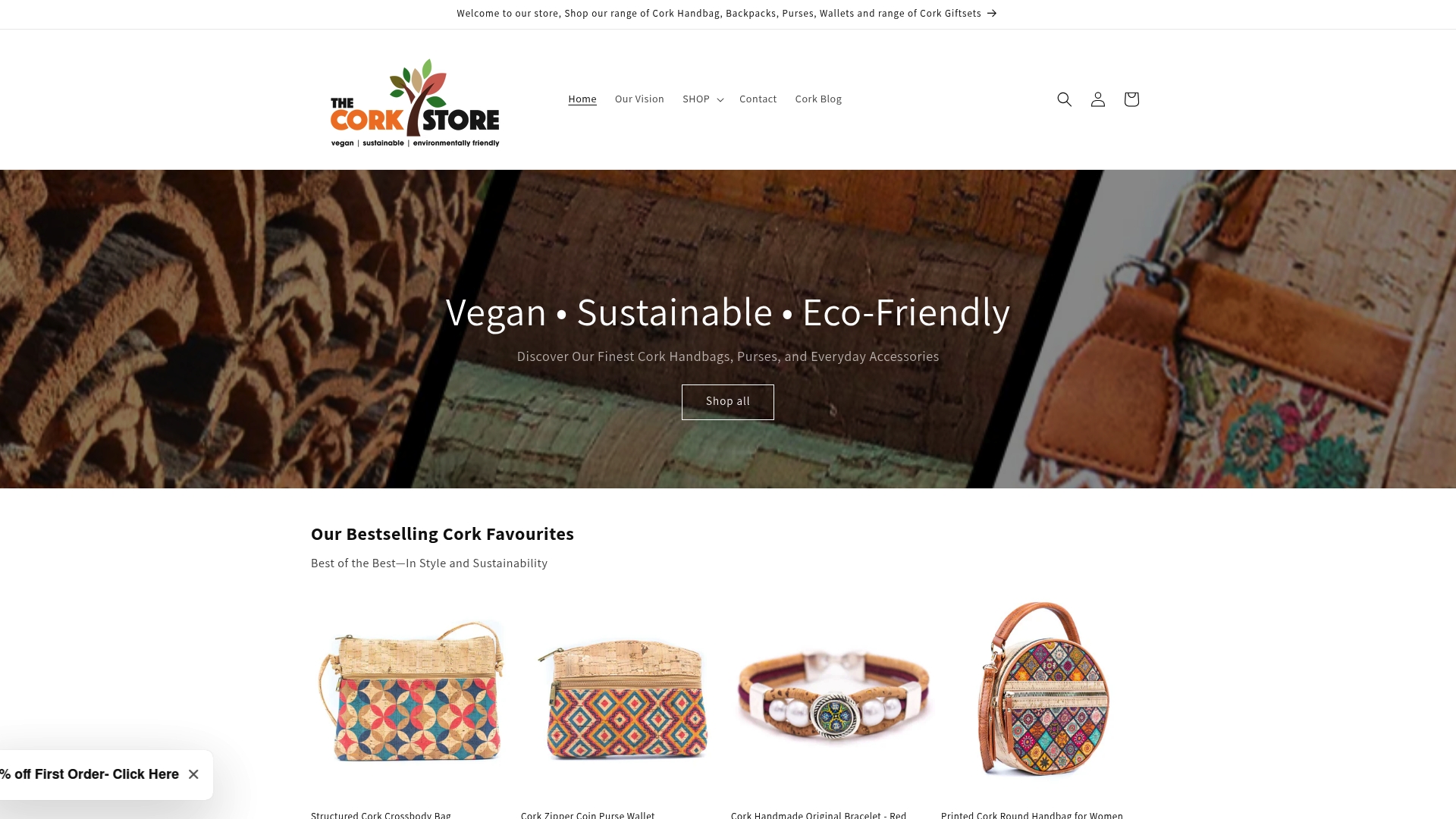
If you are building a wardrobe around genuinely plant-based and cruelty-free choices, accessories are often the hardest category to get right. Thecorkstore specialises in cork accessories, including handbags, wallets, and backpacks, crafted from a material that is harvested without harming the tree, requires no plastic blending, and is fully traceable. The women’s gift sets collection brings together some of the best cork pieces in one place, making it straightforward to give or receive something that genuinely aligns with ethical fashion values. No greenwashing, no hidden polyurethane.
FAQ
What is plant-based fashion in simple terms?
Plant-based fashion refers to clothing and accessories made primarily from fibres sourced from plants, such as cotton, linen, hemp, or cellulose-derived materials like lyocell. It aims to reduce reliance on animal-derived and fossil-fuel-based textiles.
Is plant-based fashion the same as vegan fashion?
No. Vegan fashion excludes all animal-derived materials but may still use fossil-fuel synthetics like polyester. Plant-based fashion focuses on plant-origin fibres, though some products labelled plant-based still contain plastic blends.
Are plant-based clothes biodegradable?
Not automatically. Biodegradability depends on disposal conditions and fibre type. PLA, for example, only breaks down in industrial composting facilities, not in home compost or landfill.
How do I avoid greenwashing when buying plant-based clothing?
Check the full fibre content label, look for GOTS or OEKO-TEX Standard 100 certification, and treat any biodegradability claim that does not specify conditions as unverified. Brands that publish supplier lists and material audits are more credible than those relying on general sustainability statements.
What are the most sustainable plant-based materials?
Linen and hemp consistently rank among the lowest-impact plant-based fibres due to their minimal water and pesticide requirements. Lyocell (Tencel) is the most sustainable semi-synthetic option, thanks to its closed-loop production process that recovers the majority of processing chemicals.