

Spot Real Eco Friendly Clothing: Lifecycle Checks and Cork Picks
Eco-friendly clothing is any garment made and used in a way that reduces harm across its whole life, from raw fibre through manufacturing, wear, and disposal, rather than one that just carries a green label. If you take one thing from this article, take this: prioritise evidence over adjectives, and durability and repairability over any single “green” feature.
TL;DR:
- Recycled synthetics like polyester still shed microplastics, and their fibers degrade after limited cycles, reducing their sustainability benefits.
- Third-party certifications and transparent supply chains are key indicators of genuine eco-friendly clothing, not just marketing claims or vague labels.
- Repair, resale, and take-back schemes offer more immediate environmental benefits than recycling garments, which remains limited due to fibre mixing.
- Cork is a renewable accessory material harvested without harming trees, offering a durable, water-resistant, cruelty-free alternative to traditional leather.
- Buying fewer, durable garments and prioritizing repair and secondhand options can significantly reduce fashion’s environmental footprint.
Table of Contents
- What is eco-friendly clothing, exactly? Sustainable, ethical and eco terms explained
- Why eco-friendly clothing matters: the scale of the problem
- Common eco-friendly materials and what they trade off
- How to spot genuinely eco-friendly clothing before you buy
- Repair, resale, rental and recycling: the circular practices that actually cut impact
- Greenwashing red flags to watch for
- Why cork works as a lower-impact accessory material
- Three realistic changes worth making now
- A lower-impact alternative for handbags, wallets, and backpacks
- Sources
What is eco-friendly clothing, exactly? Sustainable, ethical and eco terms explained
The words “eco-friendly”, “sustainable”, and “ethical” get thrown around as if they mean the same thing. They don’t, and knowing the difference changes what you should look for on a label.
Eco-friendly fashion focuses on environmental impact: carbon output, water use, chemical pollution, and waste. Ethical fashion is about people. It covers fair wages, safe factories, and decent working hours for the people who cut, sew, and finish your clothes. Sustainable fashion tries to do both at once, treating environmental limits and human welfare as connected problems rather than separate boxes to tick.
The most useful way to think about any garment is across its whole life, not just the moment you buy it:
- Materials: what fibre was grown, harvested, or manufactured, and how
- Production: dyeing, weaving, cutting, sewing, and the energy and chemicals involved
- Use: how long it lasts, how it’s washed, and how often it’s actually worn
- End of life: whether it can be repaired, resold, recycled, or simply ends up in landfill
No brand ticks every one of those boxes perfectly. Sustainability sits on a continuum, not a pass/fail switch, which is why a cotton T-shirt described as “organic” can still involve a dye house running on coal power, or a “vegan” bag can be made from virgin plastic. The fibre is one variable among several that determine the real footprint.
Why eco-friendly clothing matters: the scale of the problem
The numbers behind fashion’s environmental impact are large enough to explain why this conversation exists at all. The industry produces roughly 10% of global carbon dioxide emissions annually, putting clothing production in the same conversation as international aviation and shipping combined.
Fashion’s carbon footprint rivals entire transport sectors — around a tenth of global CO2 emissions comes from making and moving clothes, not just wearing them.
That figure covers more than smokestacks. It reflects several compounding problems:
- Water-intensive fibre growing and dyeing processes, often in water-stressed regions
- Chemical runoff from tanning and dyeing that pollutes rivers near manufacturing hubs
- Synthetic microfibres shedding into waterways every time a garment is washed
- Mounting textile waste as garments are worn fewer times before disposal
- Uneven labour conditions across a supply chain that often crosses several countries before a single item reaches a shop floor
The response gaining traction among researchers and industry bodies is the circular economy model: design out waste from the start, keep products and materials in active use for as long as possible, and support the natural systems the industry draws from. It’s a shift from “make, wear, bin” to a loop where garments circulate longer before anything is discarded.
Common eco-friendly materials and what they trade off
No fibre is free of compromise. The honest answer to “which material is best” depends on what you’re optimising for: water use, chemical load, durability, or end-of-life recyclability.
Organic cotton, hemp, and linen sit at the natural-fibre end. They’re biodegradable and typically grown with fewer synthetic pesticides than conventional cotton. Hemp in particular needs less irrigation than cotton in most growing regions. The trade-off: organic certification doesn’t eliminate water use, yields can vary year to year, and “cotton” on a label tells you nothing about how much of the blend is actually organic unless a percentage is disclosed.
Recycled polyester and nylon divert plastic bottles or fishing nets from landfill and cut demand for virgin petroleum. That’s a genuine win on the resource side. The downside is that recycled synthetics still shed microplastic fibres in the wash, just like virgin polyester, and most recycled polyester can only be recycled a limited number of times before the fibre degrades too far to reuse.
Cork and bio-based leathers occupy a different category entirely. Cork is stripped from the bark of cork oak trees in a process that doesn’t harm or fell the tree, letting it keep absorbing carbon for decades afterwards. Bio-based leathers made from apple waste, cactus, or mushroom mycelium avoid animal farming but often still rely on plastic-based coatings to make them durable, so “vegan” is not automatically the same as low-impact.
A few practical rules cut through most of the confusion:
- A material tag with no percentage (“contains organic cotton”) tells you almost nothing about the blend
- Processing matters as much as the raw fibre. Dye houses, finishing chemicals, and energy sources for manufacturing all shift the real footprint, something material choice alone doesn’t capture
- Check whether a brand discloses this detail, or whether “eco” is doing all the work on the label
How to spot genuinely eco-friendly clothing before you buy
Most greenwashing survives because shoppers are checking the wrong things. A short checklist on the product page or care label separates real evidence from marketing copy.
- Read the fibre content and percentages, not just the headline material name. “70% organic cotton” tells you far more than “organic cotton” alone.
- Look for third-party certification, not a brand’s own badge. Organic certification, Fairtrade, and the Responsible Wool Standard each verify a specific claim through an independent body rather than the brand marking its own homework.
- Ask whether the brand publishes any life cycle assessment or impact data. LCAs remain the most reliable way to compare a garment’s real footprint across water, carbon, and chemical use, rather than trusting a single word on a swing tag.
- Check for factory or supply-chain transparency. A brand willing to name its factories and dye houses is giving you something to verify. One that won’t is asking you to take its word for it.
- Look for repair or take-back schemes. A brand that offers to mend, resell, or reclaim its own garments has an incentive to make them last, which tells you something about build quality too.
Here’s what the certifications actually cover, in a sentence each:
- Organic certification verifies the fibre was grown without most synthetic pesticides and fertilisers
- Fairtrade verifies farmers and workers received a minimum price and fair terms
- Responsible Wool Standard verifies animal welfare and land management practices on the farms supplying the wool
None of this replaces the simplest lever available to you: buy less, choose durable styles over trend pieces, and favour anything you can actually get repaired. A perfectly certified T-shirt that falls apart in six washes has a worse footprint than a conventional one you wear for five years.
Repair, resale, rental and recycling: the circular practices that actually cut impact
Buying “better” only gets you so far if the garment still ends up in landfill after a handful of wears. Circular practices, repair, resale, rental, and brand take-back schemes, extend a garment’s working life and reduce the pressure to manufacture something new to replace it.
- Repair: a loose button or split seam is often a five-minute fix, and keeping one garment in rotation for another year beats any newly produced alternative
- Resale: secondhand platforms and consignment shops give a garment a second owner instead of a landfill slot
- Rental: useful for occasion wear you’d only use once or twice, where ownership never made sense anyway
- Take-back schemes: some brands will reclaim worn-out items for recycling or resale, closing the loop they created
Pro Tip: Keep a basic sewing kit, needle, thread, spare buttons, and a fabric patch, within reach. Most garment failures are minor and fixable in under ten minutes, but people bin the item simply because mending feels like a separate errand.
It’s worth being realistic about the limits here. Textile recycling rates remain low globally because most garments are fibre blends that current recycling technology struggles to separate. Repair and resale, not recycling, are where consumer action currently does the most good.
Greenwashing red flags to watch for
Vague, unquantified language is the biggest tell. Words like “eco”, “conscious”, or “natural” on their own describe nothing measurable, and a brand can print them on a polyester blend as easily as an organic one.
Watch for single-attribute greenwashing too: a brand highlighting one virtue while staying quiet on everything else. “Vegan” leather made from plastic-coated polyurethane isn’t automatically lower-carbon than animal leather. It just avoids animal use, which is a different claim entirely. No brand is wholly sustainable, and treating any single claim as proof of overall virtue is the mistake greenwashing relies on.
Three questions worth asking a brand directly before you buy:
- What percentage of this specific garment is the material you’re highlighting?
- Can you point me to a life cycle assessment or third-party certification for this claim?
- What happens to this item at the end of its life, does your take-back or repair scheme cover it?
If a brand can’t answer at least one of these with something concrete, treat the claim as marketing rather than evidence.
Why cork works as a lower-impact accessory material
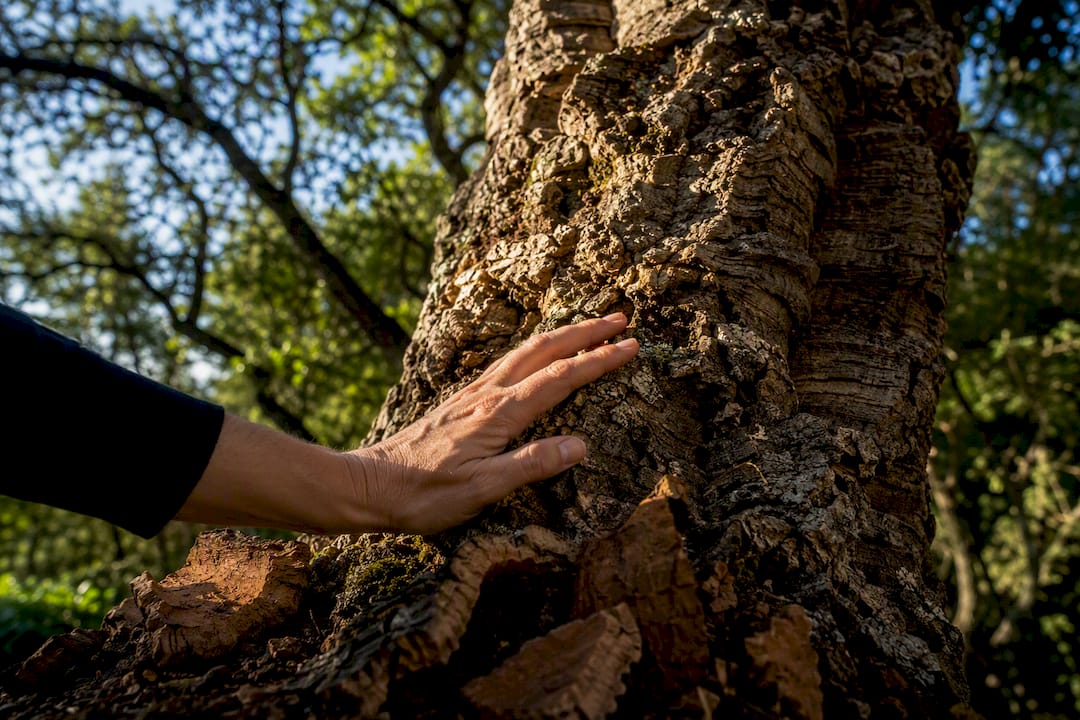
Accessories carry different trade-offs than clothing. A bag or wallet is handled daily, needs to withstand years of wear, and rarely gets replaced as often as a T-shirt, so durability matters more than fibre biodegradability alone.
Cork fits that brief well. It’s harvested from the bark of cork oak trees without felling them, so the tree keeps growing and absorbing carbon for decades after each harvest. The bark regrows and can be stripped again roughly every nine years, making it one of the more renewable natural materials used in accessories today. It’s naturally water-resistant, lightweight, and durable enough for daily use as a handbag, wallet, or backpack, and it needs comparatively little processing compared with tanned leather or coated synthetic alternatives.
- Renewable harvesting that doesn’t require cutting down the tree
- Naturally water-resistant and durable for everyday accessories
- Low chemical processing compared with tanned leather
- A cruelty-free alternative for shoppers avoiding animal leather
If you want to go deeper on spotting genuine claims versus marketing on any material, our guide on how to spot sustainable materials walks through the same checklist in more detail, and our terminology guide untangles the label language further.
Three realistic changes worth making now
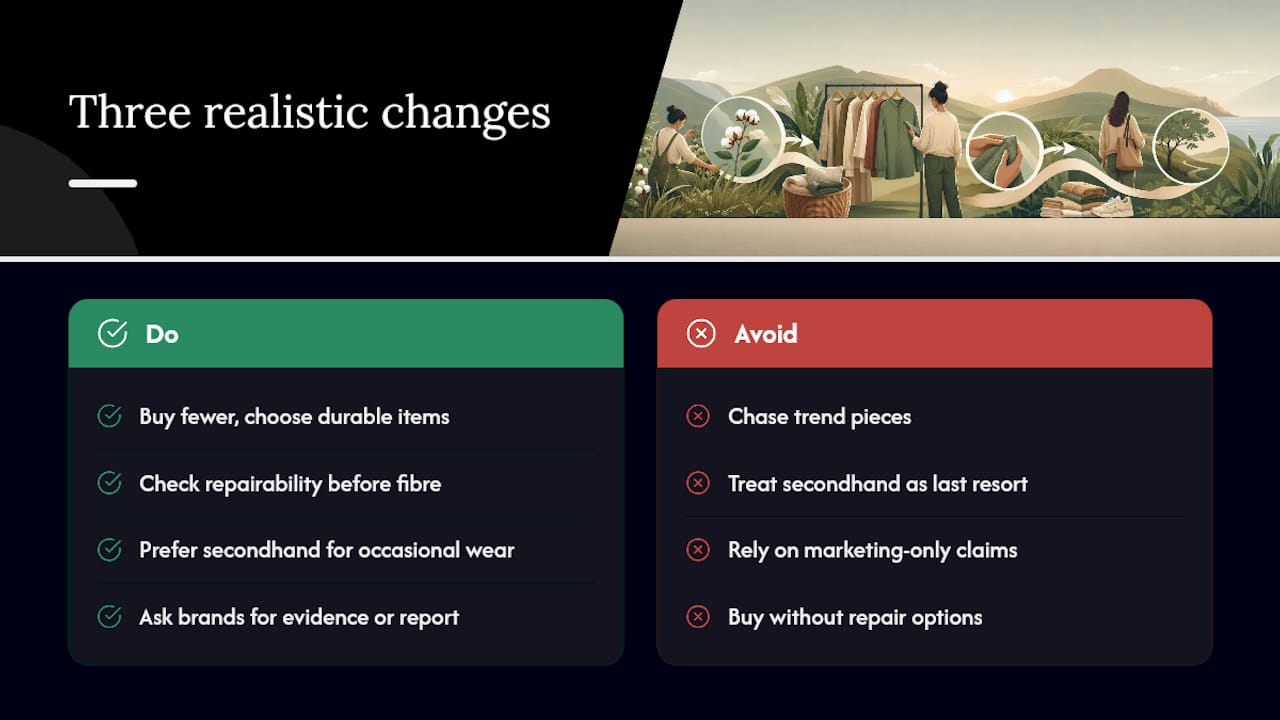
Most sustainability advice is either too vague to act on or too demanding to stick with. Three changes are worth prioritising because they’re realistic and because the evidence actually points to them mattering.
Buy fewer items, but buy ones built to last, and check whether they can be repaired before you check the fibre content. Keep a basic repair kit at home and build a smaller, more versatile wardrobe rather than chasing trend pieces. Secondhand should be your first stop for anything you’ll wear occasionally, not your last resort. When you do buy new, ask the brand for evidence, a certification, an impact report, anything beyond an adjective, and favour the ones that offer repair or take-back over the ones that only offer a marketing page.
— Aaron
A lower-impact alternative for handbags, wallets, and backpacks
If you’ve read this far weighing up leather alternatives, cork is worth a proper look rather than a footnote. Consider choosing vegan cork handbags, wallets, purses, and backpacks built for daily use, without the tanning chemicals or animal materials that come with conventional leather.
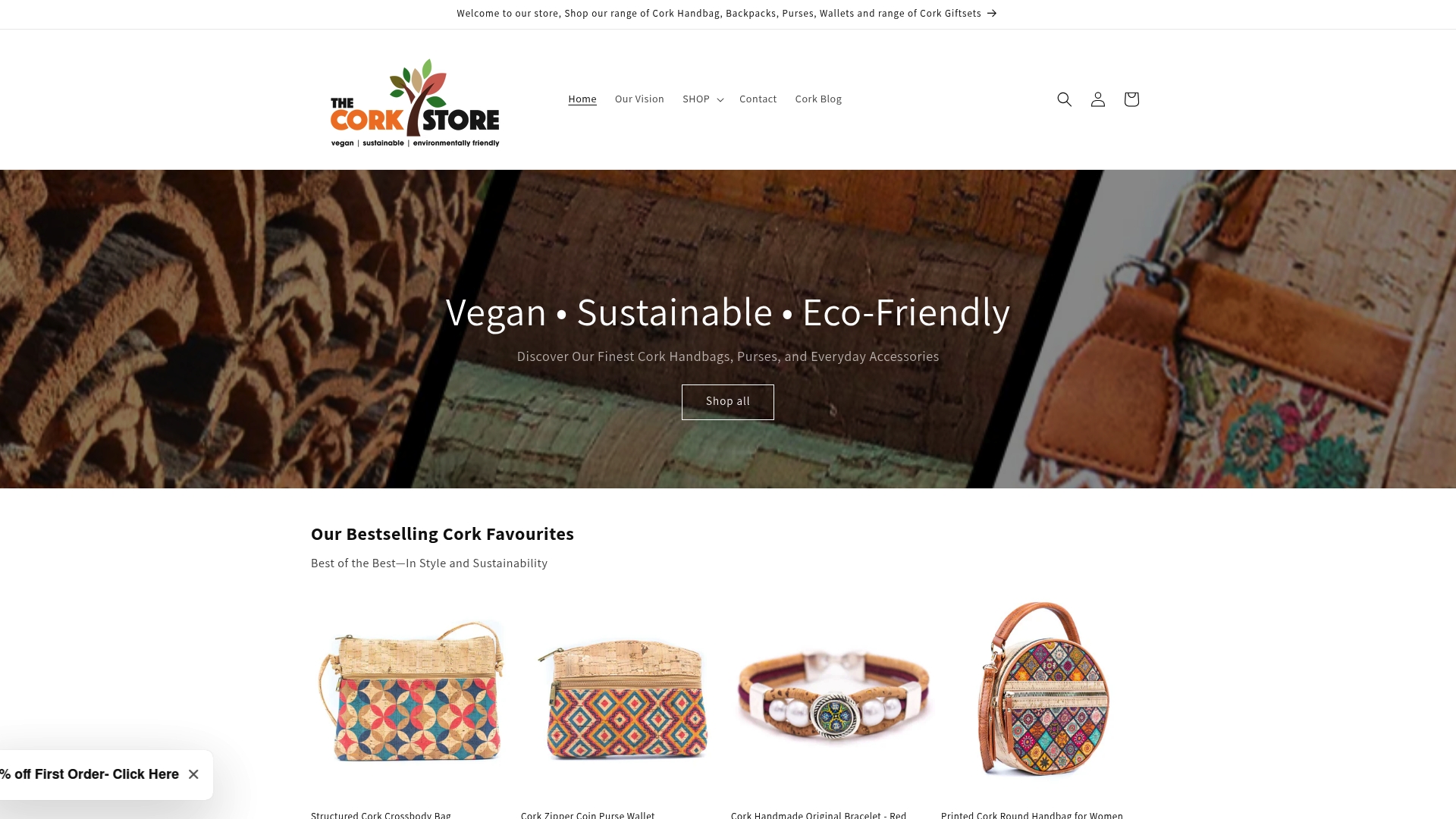
This isn’t a substitute for the clothing decisions covered above, cork accessories solve a different problem than your next T-shirt or jacket. But if a durable, cruelty-free bag or wallet is on your list, it’s one purchase where the material genuinely lines up with the priorities this article has covered: renewable sourcing, low processing, and a product built to last years rather than seasons. Browse the full collection at Thecorkstore and see which style fits what you actually carry day to day.
Sources
- What is sustainable fashion? | Good On You
- What is sustainable fashion? | Oxfam
- What is sustainable fashion? | ASU Online
- A beginner’s guide to ethical and sustainable fashion | Scientific American