
What is fair trade fashion? A clear guide
TL;DR:
- Fair trade fashion involves clothing produced under verified standards that ensure fair wages, safe conditions, and worker protections. It relies on independent audits and certification bodies to guarantee ethical practices, unlike broader ethical or sustainable labels. Consumers should demand transparency, certification verification, and recognize that fair trade prioritizes social justice and worker empowerment.
Fair trade fashion is clothing and accessories produced under verified standards that guarantee workers receive fair wages, safe working conditions, and protection from exploitation throughout the supply chain. Unlike conventional garment manufacturing, which frequently relies on poverty wages and unsafe factories, fair trade clothing places human dignity and environmental responsibility at the centre of every production decision. The term “fair trade fashion” is the widely used consumer phrase, but the recognised industry standard is ethical trade, governed by bodies such as the Fairtrade Foundation and the Fair Wear Foundation. Understanding what makes fashion fair trade is the first step to spending your money where your values are.
What is fair trade fashion and what principles define it?
Fair trade fashion is built on a set of non-negotiable operational standards that brands and their suppliers must meet, verified by independent third parties. These standards go far beyond a label on a swing tag. Fair trade mandates include transparent pricing models that give producers a premium above market rates, ensuring economic stability rather than seasonal desperation.
The core principles break down into five areas:
- Fair wages. Workers must receive pay that meets living cost requirements, exceeding legal minimums wherever possible. This is not the minimum wage floor; it is a living wage ceiling that reflects the actual cost of housing, food, and healthcare in the production region.
- Safe working conditions. Strict prohibition of child labour, forced labour, and hazardous environments is mandatory. Factories must meet fire safety, ventilation, and hours-of-work standards that many fast fashion suppliers routinely ignore.
- Environmental responsibility. Brands must reduce waste, use sustainable materials, and conserve energy across production. This includes responsible chemical use and water management, particularly relevant in dyeing and finishing processes.
- Third-party audits. Regular independent inspections provide the transparency and accountability that self-reported claims cannot. Auditing frequency and fibre certification percentages are among the clearest indicators of genuine commitment.
- Community development funds. Workers participate in collective decision-making about how a portion of the fair trade premium is spent, directing funds toward local education, healthcare, or infrastructure projects.
Pro Tip: Ask any brand you are considering to name their auditing body and the date of their last inspection. A brand committed to fair trade principles will answer without hesitation.
Ethical sourcing requires embedding fairness from the design stage through production and distribution, not bolting it on as a marketing afterthought. This process-driven model is what separates genuine fair trade clothing from brands that simply use the language without the substance.

How does fair trade differ from sustainable and ethical fashion?
These three terms are used interchangeably in marketing copy, but they describe meaningfully different things. Confusing them is how greenwashing thrives.
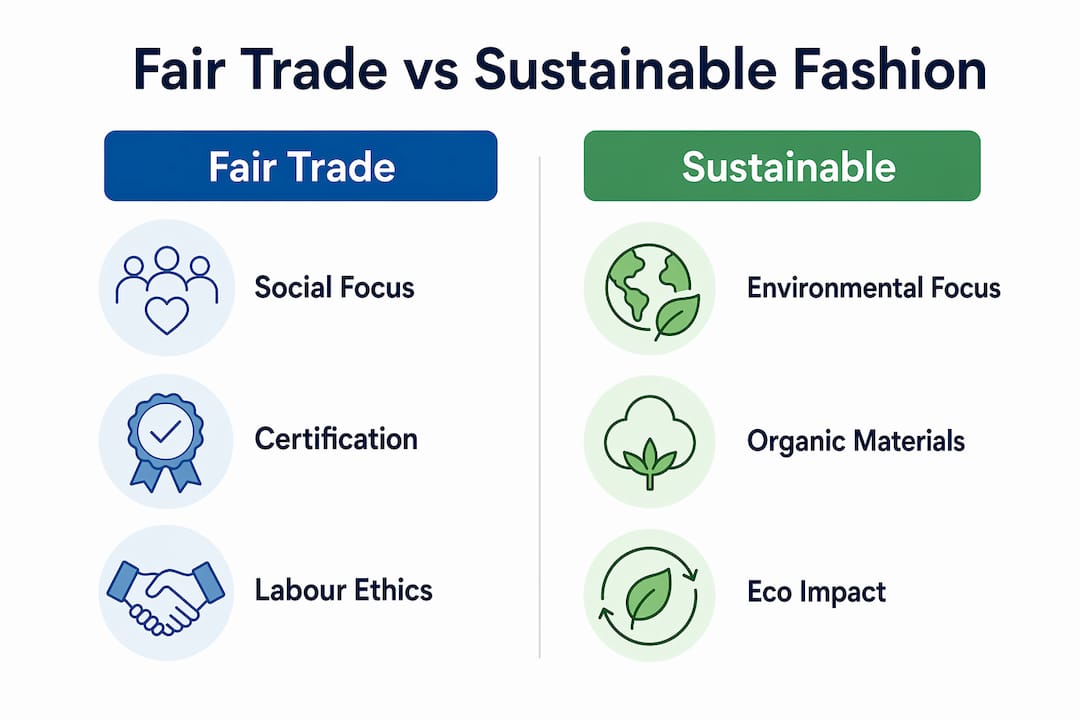
Fair trade focuses on social and labour ethics while sustainable fashion prioritises environmental impact. Ethical fashion is the broadest umbrella term, encompassing both, but it carries no mandatory certification requirement. A brand can call itself ethical based on a single recycled packaging decision. Fair trade cannot be self-declared.
| Term | Primary focus | Certification required? | Verified by third party? |
|---|---|---|---|
| Fair trade fashion | Labour rights, fair wages, worker empowerment | Yes (e.g. Fairtrade Foundation, Fair Wear Foundation) | Yes |
| Sustainable fashion | Environmental impact, materials, carbon footprint | Sometimes (e.g. GOTS, B Corp) | Sometimes |
| Ethical fashion | Broad social and environmental responsibility | No standard requirement | Rarely |
The practical implication is significant. A garment made from organic cotton can be labelled sustainable, yet the workers who harvested and stitched it may earn poverty wages. Conversely, a fair trade certified product guarantees labour standards but may not yet meet the highest environmental benchmarks. The strongest brands pursue both simultaneously, but consumers should know which standard they are actually buying into.
Pro Tip: When a brand uses the word “ethical” without linking to a specific certification or audit report, treat it as a starting point for questions, not a conclusion.
Understanding eco-friendly fashion terminology is genuinely useful here. The more precisely you can read a label or a brand’s “about” page, the harder it becomes for vague marketing to mislead you.
How to spot a genuine fair trade brand and avoid greenwashing
Greenwashing in fashion is not accidental. Brands that cannot specify who makes their clothes or provide audit details are likely concealing unsustainable practices behind vague ethical claims. The good news is that genuine fair trade brands are usually proud to share their supply chain information, because transparency is part of the model.
Here is a practical checklist for evaluating any brand claiming fair trade or ethical credentials:
- Look for named certifications. Fairtrade Certified, the Global Organic Textile Standard (GOTS), and WRAP are among the most rigorous. Each has a public database where you can verify a brand’s status independently.
- Ask about production locations. A genuine fair trade brand knows exactly where each garment is made and can name the factory. “We work with trusted partners” is not an answer.
- Check auditing frequency. Annual third-party audits are the minimum standard. Brands audited every two or three years, or only by their own internal teams, offer weaker guarantees.
- Scrutinise material claims. “Eco-friendly fabric” means nothing without specifics. Ask for the fibre certification percentage and the name of the certifying body.
- Expect higher prices and smaller runs. Fair trade products are produced in smaller batches, allowing better quality control and ethical compliance. If a brand’s prices match fast fashion, its cost structure almost certainly does too.
The broader problem of carbon neutral fashion claims follows the same pattern. Vague environmental pledges without verifiable data are a warning sign, not a reassurance. Apply the same scepticism to social claims.
Pro Tip: Search the Fairtrade Foundation’s or Fair Wear Foundation’s public directories before purchasing. Certification status is publicly listed and takes under a minute to verify.
What are the real benefits of fair trade fashion?
The benefits of fair trade fashion extend well beyond the individual garment. They ripple outward through worker communities, local economies, and the environment.
- Economic empowerment. Fair wages improve quality of life directly and fund community development projects chosen by workers themselves. Fair trade certification gives workers the means to organise, voice concerns, and allocate funds to local education and healthcare. This is structural change, not charity.
- Safer workplaces. Enforced safety standards reduce occupational injuries and illness. In regions where garment factory disasters have claimed hundreds of lives, this is not an abstract benefit.
- Environmental gains. Responsible material sourcing reduces pollution, water waste, and chemical contamination. Fair trade standards often align with organic and low-impact production methods, reducing the industry’s environmental footprint.
- Durability over disposability. Fair trade clothing is produced in smaller batches with skilled craftsmanship. The result is garments built to last, which directly counters fast fashion’s throwaway model and reduces textile waste.
- Informed consumer confidence. You know what you are buying, who made it, and under what conditions. That knowledge has genuine value in a market saturated with unverifiable claims.
“Fair trade is a crucial corrective to exploitation normalised by fast fashion. The aim is mainstream industry uptake rather than niche marketing.” Ten Thousand Villages Abbotsford
The price premium for fair trade garments reflects living wages, better materials, and ethical small-batch production. It is not a marketing markup. When you pay more for a fair trade piece, the difference goes to the person who made it, not to a brand’s profit margin.
Key takeaways
Fair trade fashion is the most verifiable form of ethical clothing production, defined by certified labour standards, transparent supply chains, and worker empowerment rather than marketing language alone.
| Point | Details |
|---|---|
| Fair trade is certifiable | Look for Fairtrade Foundation, Fair Wear Foundation, or GOTS certification, not self-declared claims. |
| Labour standards are the core | Fair wages, safe conditions, and no child or forced labour are mandatory, not optional commitments. |
| It differs from sustainable fashion | Sustainable fashion targets environmental impact; fair trade targets social and labour ethics. Both matter. |
| Greenwashing is widespread | Demand audit names, dates, and factory locations before trusting any brand’s ethical claims. |
| Higher prices reflect real costs | Small-batch, fairly paid production costs more. That premium reaches workers, not shareholders. |
Why fair trade fashion deserves more than a niche label
I have spent years reading brand sustainability reports, and the pattern is consistent. The brands that genuinely practise fair trade are almost always the ones least likely to shout about it on their homepage. They are busy running audits, paying living wages, and managing complex supply chains. The brands loudest about being “ethical” are often the ones with the least to show for it.
What frustrates me most is how the term “ethical fashion” has been diluted to the point of meaninglessness. A brand switching to recycled carrier bags while paying garment workers below subsistence wages calls itself ethical. That is not a grey area. It is a misdirection. Fair trade certification exists precisely because self-reporting does not work.
The uncomfortable truth is that fair trade as a pathway to systemic change only works if enough consumers demand it. Individual purchases matter less than the collective signal they send. When enough people ask the right questions, request audit evidence, and walk away from vague claims, brands change their sourcing models. I have seen it happen.
Perfect fairness across a global supply chain is aspirational. No brand achieves it completely. But intentionality backed by verifiable standards is the only honest starting point. If a brand cannot tell you who made your clothes, that is your answer.
For practical guidance on reading the signals correctly, Thecorkstore’s guide on spotting sustainable fashion is one of the clearest step-by-step resources available for everyday shoppers.
— Aaron
Explore ethically made accessories at Thecorkstore
If this guide has shifted how you think about what you buy, the next step is finding brands that back their values with evidence.
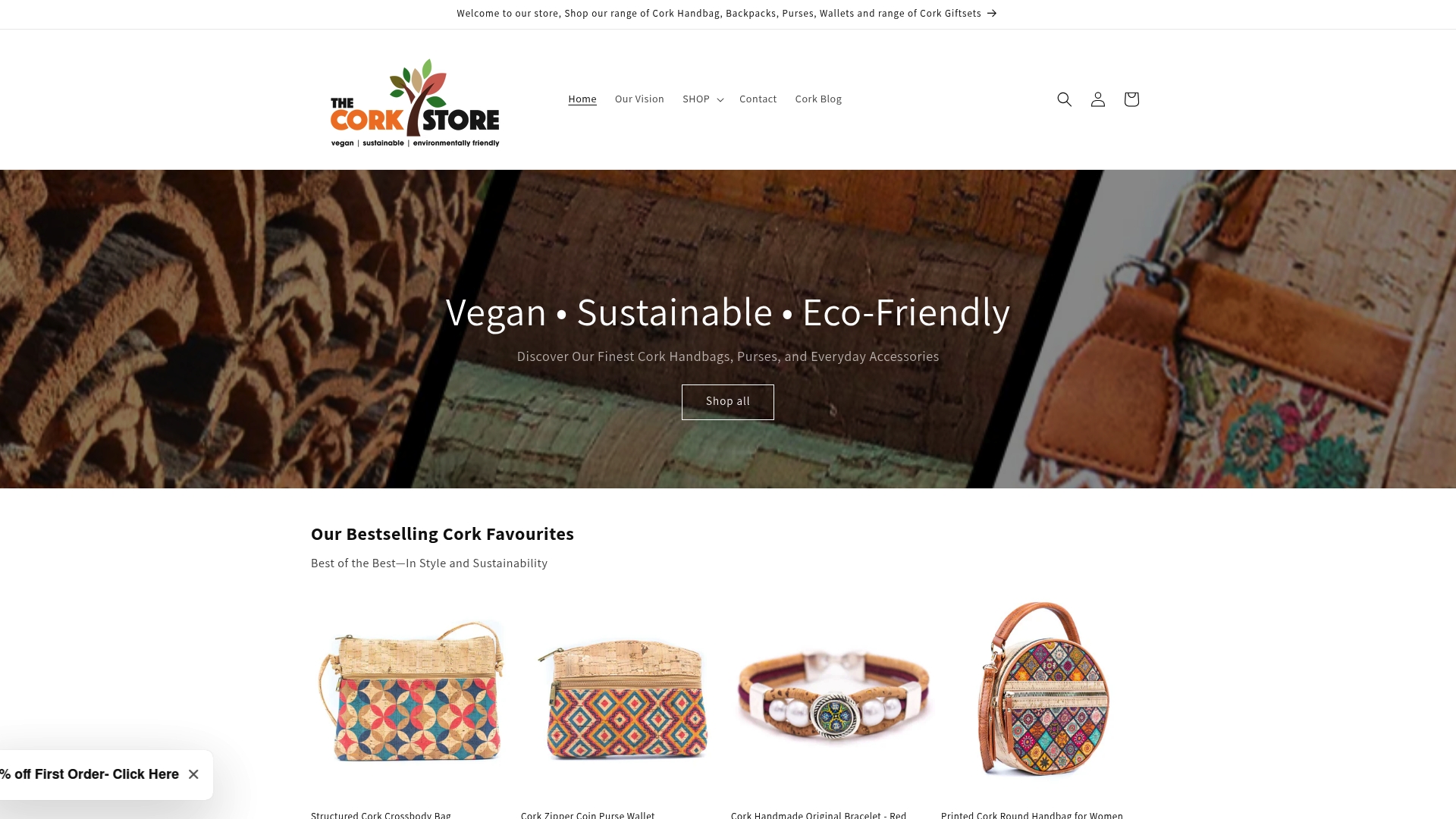
Thecorkstore offers a curated range of vegan cork accessories crafted from one of nature’s most sustainable materials. Cork harvesting requires no tree felling, no toxic chemicals, and no animal products, making it one of the few materials that genuinely meets both the environmental and ethical standards this article describes. Every product comes with full transparency on materials and sourcing. Browse the collection and find accessories that align with your values, not just your wardrobe.
FAQ
What is the simplest definition of fair trade fashion?
Fair trade fashion is clothing produced under verified standards that guarantee workers receive fair wages, safe conditions, and freedom from exploitation, with compliance confirmed by independent third-party audits rather than brand self-reporting.
How does fair trade fashion differ from ethical fashion?
Ethical fashion is a broad, uncertified term covering any socially or environmentally responsible practice, while fair trade fashion requires specific, verifiable certification from bodies such as the Fairtrade Foundation or Fair Wear Foundation.
Why does fair trade clothing cost more?
The higher price reflects living wages, skilled small-batch production, and quality materials rather than exploitation. The price premium goes to workers and community development funds, not to inflated brand margins.
Which certifications should I look for when buying fair trade clothing?
The most rigorous certifications are Fairtrade Certified, the Global Organic Textile Standard (GOTS), and Fair Wear Foundation membership. Each maintains a public directory where you can verify a brand’s current status independently.
Is sustainable fashion the same as fair trade fashion?
No. Sustainable fashion primarily addresses environmental impact, such as materials and carbon footprint, while fair trade fashion focuses on labour rights and social standards. The strongest brands pursue both, but the certifications and standards involved are distinct.