
Why choose organic materials for health and planet
TL;DR:
- Organic materials come from living organisms and biodegrade naturally, supporting health and ecosystems. They reduce indoor VOC exposure, regulate moisture, and age well, promoting sustainability. Overcoming cultural resistance and verifying claims with certifications are key to increasing their adoption.
Organic materials are defined as substances derived from living organisms, including plant fibres, cork, wool, and natural composites, that biodegrade and renew without synthetic chemical intervention. The case for choosing organic materials has never been stronger. Research shows that replacing petroleum-based composites with bio-based alternatives cuts human health impacts by over 50% through reduced exposure to volatile organic compounds (VOCs). The Royal Horticultural Society confirms that soils with less than 2% organic matter suffer severely compromised nutrient retention. From the clothes you wear to the soil beneath your garden, organic materials shape health, ecosystems, and the future of sustainable living.
Why choose organic materials for your health?
Organic materials reduce your exposure to the toxic compounds that synthetic alternatives routinely off-gas indoors. Bio-based biocomposites, for example, cut VOC-related health impacts by over 50% compared with conventional petroleum-based materials. That figure matters because most people spend the majority of their time indoors, where air quality directly affects respiratory health, sleep, and concentration.
Natural materials also regulate moisture in ways that synthetics cannot. Organic breathability prevents trapped humidity and mould growth, a particular concern in the airtight, well-insulated buildings that dominate modern construction. Mould exposure is linked to respiratory conditions, allergic reactions, and chronic fatigue. Choosing organic materials in flooring, wall finishes, and furnishings addresses this risk at the source.
Neuroarchitecture research links natural materials directly to lower stress levels and improved wellbeing. The texture, warmth, and visual variation of wood, cork, linen, and stone engage the nervous system in ways that smooth, uniform synthetics do not. This is not aesthetic preference. It is a measurable physiological response.
Pro Tip: When assessing a product’s health credentials, look for third-party certifications such as OEKO-TEX Standard 100 or FSC certification. These confirm that materials meet verified limits on harmful substances and responsible sourcing.
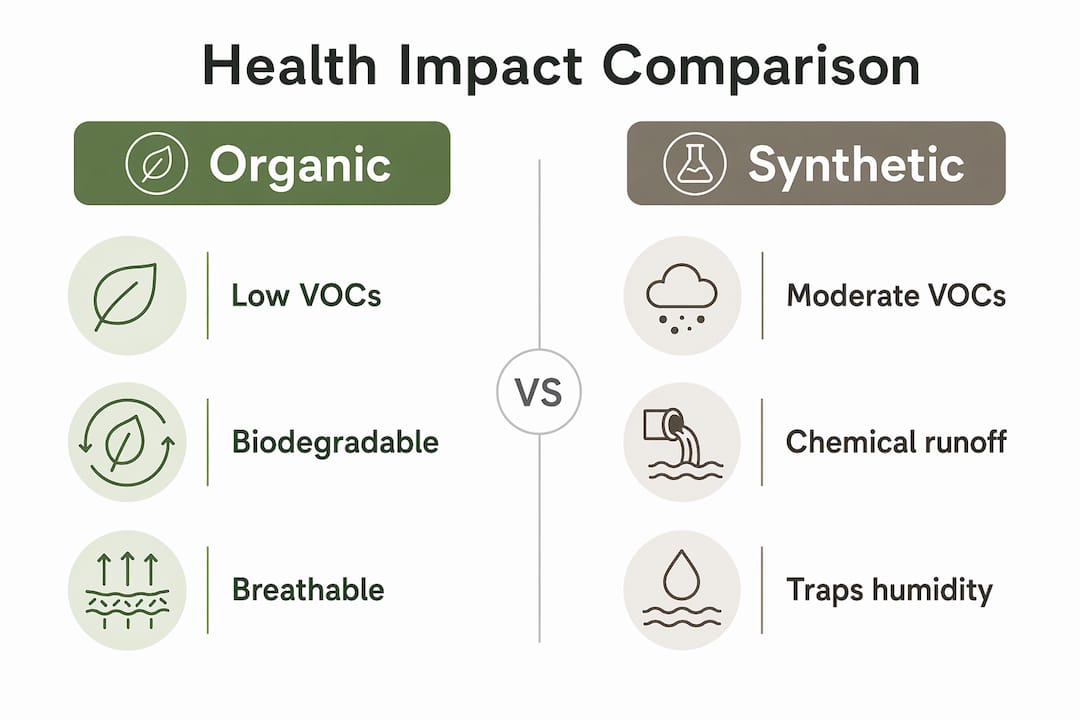
Organic vs synthetic: health impacts at a glance
| Factor | Organic materials | Synthetic materials |
|---|---|---|
| VOC emissions | Low to negligible | Moderate to high |
| Moisture regulation | Natural breathability | Traps humidity |
| Stress response | Reduces stress via sensory engagement | Neutral or negative |
| Biodegradability | Fully biodegradable | Persistent in landfill |
| Skin and respiratory contact | Gentle, hypoallergenic options | May cause irritation |
How do organic materials support soil and ecosystem health?
Soil health is the foundation of food security, and organic matter is the foundation of soil health. Natural soils contain 30–40% more organic matter than soils under active cultivation. That gap represents decades of nutrient loss, reduced water retention, and declining biodiversity caused by synthetic-input farming.

The practical difference between organic and synthetic inputs is striking. 100g of synthetic fertiliser can be replaced by approximately 1,300g of organic manure or compost to deliver equivalent nitrogen, plus long-term improvements to soil structure that synthetic fertilisers cannot replicate. Organic inputs feed soil microbes, improve drainage, and build the crumb structure that roots need to thrive.
There is, however, a point of diminishing returns. Adding organic matter beyond 5% yields limited additional benefit. The goal is balance and consistent maintenance, not over-application. This mirrors the broader principle behind organic material choices: sufficiency and renewal, not excess.
The environmental benefits of organic materials in agriculture extend well beyond individual plots:
- Biodiversity support: Organic matter feeds soil invertebrates, fungi, and bacteria that form the base of terrestrial food chains.
- Carbon sequestration: Healthy organic soils store carbon, reducing atmospheric greenhouse gas concentrations.
- Reduced chemical runoff: Organic inputs do not leach synthetic nitrates into waterways, protecting aquatic ecosystems.
- Improved water retention: Organic-rich soils absorb and hold rainfall, reducing flood risk and drought vulnerability.
- Ecosystem resilience: Diverse, microbe-rich soils recover faster from drought, disease, and climate stress.
What are the sustainability and lifecycle advantages of organic materials?
Organic materials are renewable by definition. Natural fibres regenerate annually or within a multi-year cycle and biodegrade under proper conditions. Synthetic materials, by contrast, persist in landfill for centuries and shed microplastics throughout their lifecycle. The gap in environmental impact between these two categories is not marginal. It is structural.
Cork is one of the clearest examples of organic material done right. Harvested from the bark of cork oak trees without felling them, cork regenerates fully within nine years. Products made from cork, such as the accessories available from Thecorkstore, carry that regenerative quality into everyday use. A cork wallet or bag does not just avoid harm. It actively supports a sustainable harvesting cycle.
Natural materials age with character and invite repair rather than replacement. A leather bag develops a patina. A linen shirt softens with washing. Cork accessories gain a lived-in quality that synthetic alternatives cannot replicate. This shift from disposability to durability is central to the importance of organic materials in a circular economy.
Pro Tip: When buying organic products, prioritise items designed for repair and longevity. Check whether the brand offers care guidance or replacement parts. A product built to last five years has a fraction of the environmental footprint of one replaced annually.
Understanding the range of sustainable materials available helps you make choices that align with your values across every category of purchase.
How can you overcome barriers to choosing organic materials?
The biggest obstacle to organic material adoption is cultural, not technical. The primary barrier is cultural resistance and supply chain fragmentation, not a lack of high-performing organic alternatives. People default to familiar synthetic options because they are widely available, aggressively marketed, and perceived as lower risk. Organic choices require a small but deliberate shift in habit.
The most effective approach is incremental substitution. Start with low-stakes, high-visibility items where the organic alternative is clearly superior. Furniture finishes, accessories, and everyday carry items are ideal starting points. Each successful swap builds confidence and reduces the perceived risk of making larger changes.
Spotting genuine organic and sustainable product claims requires some scrutiny. Greenwashing is common, and vague terms like “natural” or “eco-friendly” carry no legal weight without certification. Thecorkstore’s guide to spotting sustainable materials cuts through the noise with practical criteria you can apply immediately.
Follow these steps to make the switch effectively:
- Audit your current materials. Identify the synthetic products you use most frequently and assess their environmental and health impact.
- Research organic alternatives. Look for certified organic or bio-based equivalents in the same category.
- Check certifications. OEKO-TEX, GOTS (Global Organic Textile Standard), and FSC are reliable third-party markers of genuine organic credentials.
- Start with accessories and finishes. These are low-cost, low-risk entry points that deliver immediate benefits.
- Evaluate longevity. Choose products designed to last and age well rather than those optimised for low upfront cost.
- Share your choices. Talking about organic material choices normalises them in your social and professional circles, accelerating broader adoption.
Understanding why organic fabrics matter in the context of sustainable retail gives you a sharper lens for evaluating the products you buy every day.
Key takeaways
Choosing organic materials is the single most direct action you can take to improve your indoor environment, support soil health, and reduce your contribution to synthetic waste.
| Point | Details |
|---|---|
| Health impact is measurable | Bio-based materials cut VOC-related health impacts by over 50% compared with synthetic alternatives. |
| Soil health depends on organic matter | Soils below 2% organic matter lose nutrient retention; natural soils hold 30–40% more organic matter than cultivated land. |
| Organic materials outlast synthetics | Natural fibres biodegrade and renew; synthetic materials persist in landfill for centuries and shed microplastics. |
| Cultural barriers are the main obstacle | Resistance to change, not material performance, limits organic adoption; incremental substitution is the most effective strategy. |
| Certifications confirm genuine claims | OEKO-TEX, GOTS, and FSC provide verified assurance that organic product claims are backed by independent standards. |
Why I think organic materials are the foundation, not the alternative
I have spent years watching the conversation around sustainable living shift from fringe concern to mainstream priority. What strikes me most is how often people treat organic materials as a premium upgrade rather than a baseline standard. That framing is backwards.
Materials connect us to land and labour in ways that synthetic choices actively sever. When you carry a cork bag or sleep on organic linen, you are not just avoiding harm. You are participating in a supply chain that has a beginning, a middle, and an end that the earth can absorb. That is not a small thing.
The practical argument is equally strong. Organic materials that age well, repair easily, and biodegrade cleanly are simply better products over a five or ten year horizon. The upfront cost difference shrinks when you stop replacing things every two years. I find that once people make one or two genuine organic swaps, the logic becomes self-reinforcing. The quality is evident. The values alignment feels good. And the next choice becomes easier.
— Aaron
Organic cork gifts that put these values into practice
Thecorkstore brings together the benefits of organic materials in a range of accessories that are vegan, cruelty-free, and made from sustainably harvested cork.
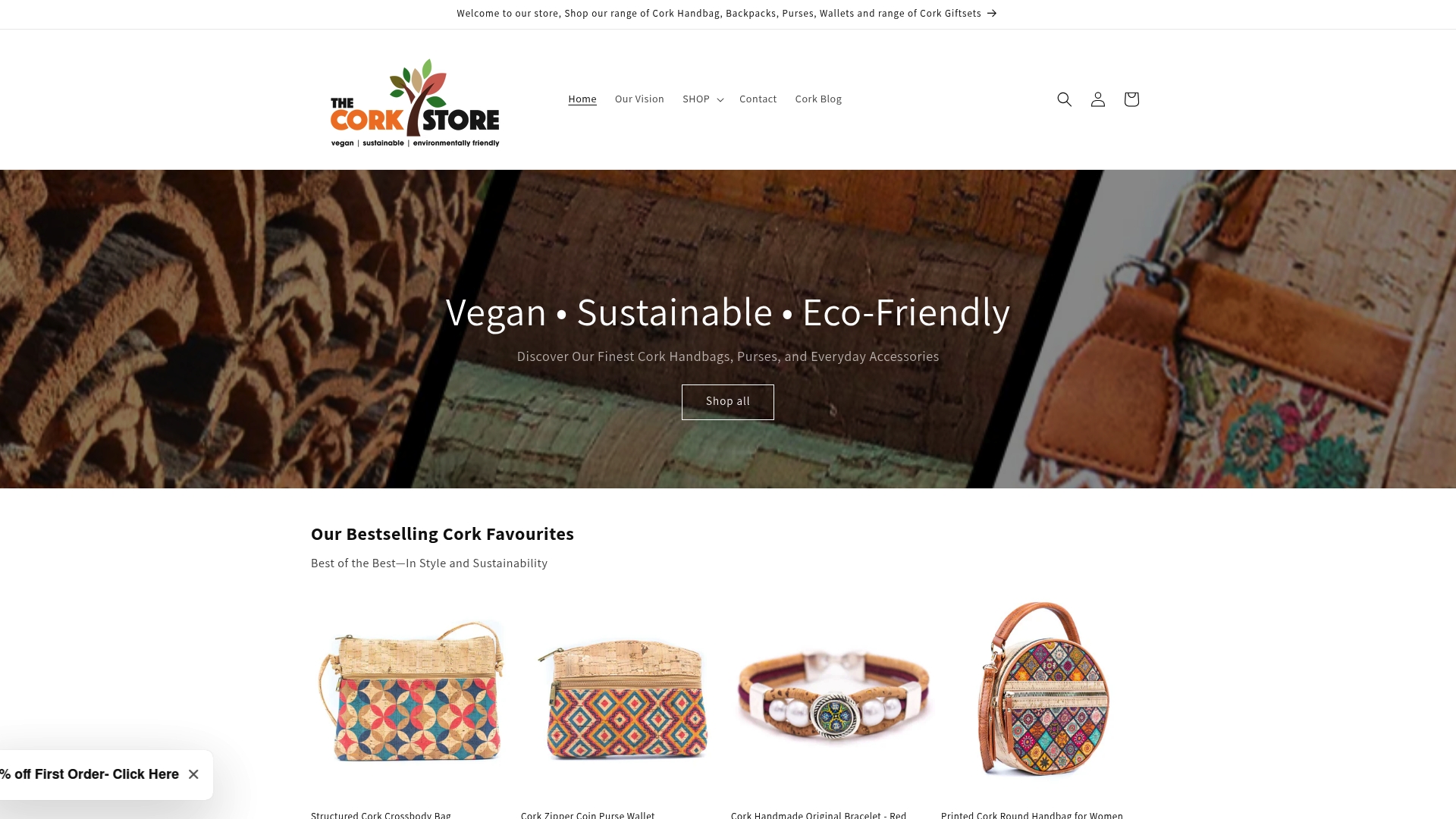
Cork is one of the few materials that is genuinely renewable, naturally breathable, and built to age well. The All-Natural Cork Wallet Gift Set is a practical example of organic material benefits made tangible: no animal products, no synthetic coatings, and a material that improves with use. For a wider selection of cork accessories and gift ideas, the eco-friendly cork gift collection covers everything from handbags to purses, all crafted with the same commitment to sustainable sourcing. Choosing organic does not require a lifestyle overhaul. Sometimes it starts with a wallet.
FAQ
What makes a material “organic”?
An organic material is derived from a living organism, such as a plant or animal, and can biodegrade naturally at the end of its life. Organic materials include cotton, wool, cork, linen, hemp, and wood.
Are organic materials always better for health?
Organic materials significantly reduce exposure to VOCs and synthetic chemicals, with bio-based alternatives cutting health impacts by over 50% compared with petroleum-based composites. Certified organic products, verified by standards such as OEKO-TEX or GOTS, offer the strongest health assurance.
How do I know if an organic product claim is genuine?
Look for third-party certifications such as GOTS, OEKO-TEX Standard 100, or FSC. Vague terms like “natural” or “eco” carry no legal weight without independent verification. Thecorkstore’s guide to eco-friendly accessories explains what to look for in practice.
Does choosing organic materials make a real environmental difference?
Organic materials support soil health, reduce chemical runoff, sequester carbon, and biodegrade without leaving microplastic residue. Natural soils hold 30–40% more organic matter than cultivated land, demonstrating the scale of what intensive synthetic use removes from ecosystems.
Is cork a good example of an organic material?
Cork is harvested from the bark of living cork oak trees without felling them, regenerates within nine years, and biodegrades fully at end of life. It is one of the most genuinely renewable organic materials available in consumer products today.