

Why Cork Is Water-Resistant: Practical Science Explained
Choosing stylish accessories that are truly sustainable can often feel like a balancing act. For eco-conscious shoppers in major cities, finding a material that offers genuine water resistance and long-lasting durability is no small task. Cork rises to this challenge with its unique cellular structure and the natural presence of suberin, a biopolymer that creates a water-repellent surface without any chemical coatings. This introduction explores why cork’s natural impermeability and renewable sourcing make it the material of choice for those who want fashion that supports both practicality and the planet.
Table of Contents
- What Makes Cork Unique as a Material
- Cork’s Cellular Structure and Natural Suberin
- Types of Cork and Water Resistance Variations
- Applications and Benefits in Fashion Accessories
- Limits, Care, and Comparing Water Resistance
Key Takeaways
| Point | Details |
|---|---|
| Unique Properties of Cork | Cork is lightweight, durable, and naturally water-resistant due to its cellular structure and the presence of suberin. |
| Sustainability Credentials | Harvested from tree bark without harming trees, cork is a renewable and biodegradable material. |
| Versatility in Applications | Cork is increasingly used in fashion accessories, providing a combination of style, functionality, and environmental consciousness. |
| Care Recommendations | Cork is water-resistant but not waterproof; it requires proper care to maintain its durability and integrity over time. |
What Makes Cork Unique as a Material
Cork stands apart from conventional materials because of its extraordinary cellular structure and natural composition. Unlike synthetic alternatives, cork develops its remarkable properties through centuries of evolution in Mediterranean cork oak forests.
At its core, cork is fundamentally different from leather, plastic, or other common materials. Its structure contains suberin, a waxy compound that creates natural impermeability and elasticity. This chemical makeup means cork resists water without requiring chemical treatments or artificial coatings.
The key characteristics that define cork include:
- Lightweight yet durable – weighs less than comparable leather or synthetic alternatives
- Naturally renewable – harvested from tree bark without felling trees
- Biodegradable – decomposes naturally without harming ecosystems
- Elasticity – bounces back to its original shape after compression
- Thermal insulation – maintains comfort in varying temperatures
- Acoustic properties – absorbs sound effectively
Cork’s cellular structure and chemical components make it remarkably versatile across fashion accessories, home goods, and industrial applications. The air pockets trapped within its dense cellular matrix create natural cushioning that leather cannot match.
What makes cork especially appealing for fashion-conscious consumers is its sustainability credentials. Cork is harvested from tree bark in a way that preserves the tree entirely, allowing the bark to regenerate every nine years. This regenerative cycle means your cork handbag or wallet comes from a genuinely renewable source.
Water resistance sets cork apart most dramatically. The impermeability comes naturally, not from chemical sprays that fade over time. When moisture contacts cork’s surface, it beads up rather than soaking in, protecting the interior contents of your bag or wallet. This happens because of cork’s tight cellular arrangement rather than any artificial barrier.
The durability comparison matters for informed purchasing. Understanding why cork outshines leather in longevity and sustainability helps you make confident decisions about your accessories. Cork maintains its structural integrity for years without cracking, peeling, or deteriorating like conventional materials.
Unlike plastic or synthetic fabrics, cork develops character with use rather than showing wear. Scratches fade naturally. Scuffs become part of the material’s patina. Your cork accessory becomes genuinely yours over time.
Cork combines water resistance, durability, and genuine sustainability in a single natural material—no compromise required.
Pro tip: When choosing a cork accessory, gently run your finger along the surface to feel the material’s texture. Natural cork varies subtly in grain patterns, confirming you’re getting authentic material rather than synthetic imitations.
Cork’s Cellular Structure and Natural Suberin
Cork’s water-resistance secret lies beneath the surface in its microscopic architecture. Imagine millions of tiny air-filled chambers stacked like a honeycomb, sealed tight against moisture. This isn’t accidental—it’s the result of how cork naturally evolved over millennia.
The foundation of cork’s remarkable properties is its cellular structure. Cork cells arrange themselves in a precise honeycomb pattern, creating a lightweight yet incredibly strong material. Each individual cell sits sealed and filled with air, which explains why cork floats and feels so light in your hands.
Within these cells sits the true hero: suberin. This natural biopolymer makes up approximately 53% of cork’s cell wall composition. Suberin is fundamentally hydrophobic, meaning it actively repels water rather than absorbing it. This is why moisture beads up on a cork surface instead of soaking through.
The water-resistant magic happens through several interconnected features:
- Sealed air chambers trap moisture on the surface rather than allowing penetration
- Suberin coating creates a natural waterproof barrier without chemicals
- Lignin reinforcement strengthens cell walls and enhances durability
- Dense cellular packing leaves no pathways for water to travel through
Cork’s distinctive cellular structure with suberin biopolymer creates multiple defensive layers against moisture. When water meets cork, it cannot penetrate the suberin barrier. Instead, it runs off or evaporates naturally.
Think of it like nature’s engineering masterclass. The honeycomb arrangement provides structural strength whilst remaining extraordinarily lightweight. The suberin acts as an invisible waterproof shield. Together, they solve a problem that synthetic materials struggle with: achieving water resistance without artificial coatings that degrade over time.
This is why your cork handbag or wallet performs beautifully in urban environments where moisture exposure is constant. Rain, spills, or humidity—none of these damage cork because its molecular structure handles them naturally.
Suberin is the biological secret that makes cork water-resistant at the cellular level, requiring zero chemical treatment to function effectively.
Understanding how cork’s material properties work helps you appreciate why cork accessories outperform alternatives for everyday use. The science explains the durability you experience.
Pro tip: If your cork accessory gets wet, simply pat it dry with a soft cloth and allow it to air dry naturally—the suberin will continue protecting the interior as evaporation occurs.
Types of Cork and Water Resistance Variations
Not all cork performs identically when exposed to moisture. The type of cork used in your accessory significantly influences how well it resists water and maintains its integrity over time.
Natural cork remains the gold standard for water resistance. It exhibits the lowest porosity amongst cork varieties, meaning fewer microscopic gaps exist for water to exploit. Natural cork stoppers display superior absorption capacity and barrier properties compared to alternatives.
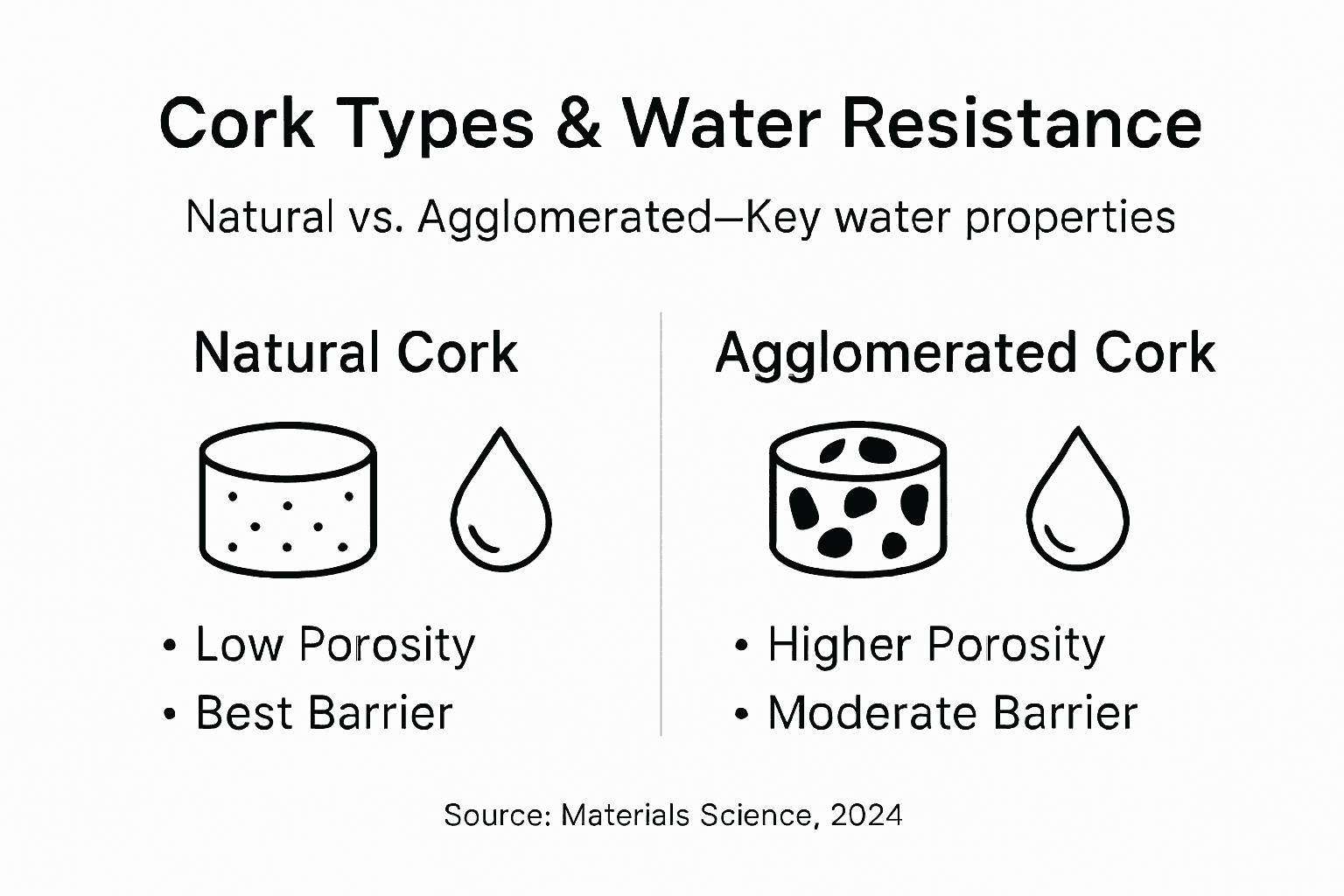
Agglomerated cork combines cork particles with adhesive binders to create a more flexible material. Whilst this increases flexibility for certain applications, it alters the water interaction properties. Agglomerated cork typically shows different porosity levels and moisture behaviour than solid natural cork.
The distinction matters for your purchasing decisions:
- Natural cork – tightest cellular structure, highest water resistance
- Agglomerated cork – more flexible, different moisture interaction patterns
- Composite cork – blends cork with other materials for specific properties
- Expanded cork – lighter weight, altered water absorption characteristics
Cork stoppers show variations in porosity and absorption behaviours that directly affect performance. These differences influence mechanical strength and moisture resistance capabilities across different cork types.
Environmental factors during cork growth also create variations. Cork harvested from irrigated cork oak forests tends to develop greater thickness and increased porosity compared to cork from rainfed areas. This affects density and water resistance properties substantially.
Rainfed cork typically produces denser, more tightly structured material with superior water-resistance performance. Irrigated cork becomes slightly more porous but offers greater flexibility. Neither is inherently inferior—they simply suit different applications.
When selecting a cork handbag or wallet, understanding these variations helps you choose the right product for your lifestyle. Urban professionals exposing accessories to frequent moisture should prioritise dense, naturally-sourced cork. Casual users benefit equally from quality agglomerated cork options that balance flexibility with water protection.
Here is a comparison of how cork types differ in both water resistance and ideal accessory use:
| Cork Type | Water Resistance Level | Flexibility & Texture | Common Accessory Uses |
|---|---|---|---|
| Natural Cork | Highest; very low porosity | Firm, smooth surface | Handbags, premium wallets |
| Agglomerated Cork | Moderate; more porous | Highly flexible, textured grain | Card holders, casual items |
| Composite Cork | Variable; depends on blend | Depends on included materials | Travel pouches, unique designs |
| Expanded Cork | Lower; light and absorbent | Soft, spongy surface | Insoles, lightweight organisers |
Cork type directly determines water resistance performance, making source and manufacturing method crucial factors in product quality.
The reason cork lasts longer in sustainable fashion relates partly to these structural variations and how different cork types age gracefully. Quality cork selection ensures your investment performs beautifully for years.
Pro tip: When examining a cork accessory before purchase, look for density consistency and uniform colour—these indicate quality natural cork processing that delivers optimal water resistance.
Applications and Benefits in Fashion Accessories
Cork has quietly revolutionised sustainable fashion, moving far beyond wine stoppers into everyday accessories that combine style with conscience. Your handbag, wallet, or backpack made from cork represents the convergence of practical science and ethical design.
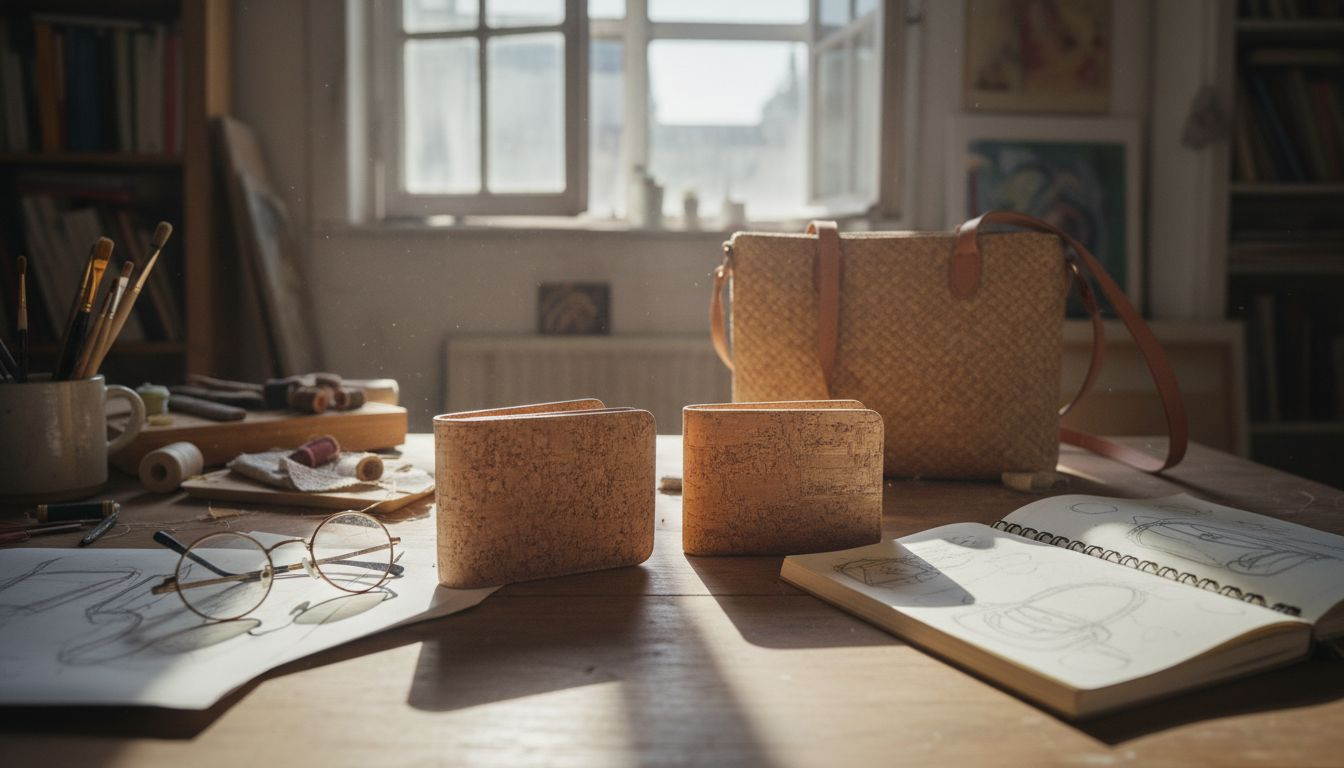
Handbags and wallets represent cork’s most visible fashion applications. The material’s lightness makes carrying bags comfortable throughout urban days. Water resistance protects your valuables from unexpected spills or rainy commutes. Natural elasticity means cork accessories adapt to your lifestyle without cracking or deteriorating.
Shoes and footwear benefit from cork’s cushioning properties and insulation capabilities. The cellular structure naturally absorbs impact, reducing fatigue during long walking days. Thermal regulation keeps feet comfortable in varying temperatures without synthetic linings.
Cork’s advantages for fashion extend beyond functionality:
- Durability – maintains structural integrity for years of daily use
- Lightweight – reduces shoulder and back strain compared to leather alternatives
- Water resistance – protects contents without chemical coatings
- Unique aesthetic – each piece develops individual character and patina
- Renewable sourcing – harvested sustainably without harming trees
- Recyclability – biodegrades naturally at end of life
Cork’s unique properties including lightness, waterproof nature, and elasticity enable designers to create innovative textile solutions beyond traditional uses. Modern cork fashion showcases evolving trends around eco-conscious materials.
The cultural shift towards sustainable accessories reflects deeper values. Urban professionals aged 25-40 increasingly prioritise ethical purchasing over conventional brands. Cork accessories signal commitment to environmental responsibility without compromising style or functionality.
When you choose a cork handbag or wallet, you’re investing in material science refined over millennia. The water resistance you experience isn’t accidental—it’s the result of cork’s natural composition and structure. Your accessory performs exceptionally because nature designed it that way.
The benefits extend beyond personal use. Cork accessories offer sustainable style that aligns with eco-conscious values without requiring sacrifice in durability or aesthetics. You gain practical benefits alongside authentic environmental impact.
Cork transforms sustainable fashion from compromise into genuine advantage—durability, beauty, and ethics combined.
Pro tip: Condition your cork accessory occasionally with a natural plant-based oil like coconut oil applied to a soft cloth. This enhances water resistance and deepens the material’s natural colour whilst maintaining breathability.
Limits, Care, and Comparing Water Resistance
Cork is water-resistant, not waterproof. Understanding this distinction matters when selecting and maintaining your accessories. The difference determines how you care for your handbag or wallet and what conditions they can genuinely withstand.
Water-resistant means moisture beads up on the surface and runs off naturally. Waterproof would mean zero water penetration under any circumstance. Cork achieves the former through its cellular structure and suberin content, but prolonged or aggressive moisture exposure can eventually lead to absorption.
The practical reality? Your cork accessory handles daily moisture exposure beautifully—rain, spills, humidity. However, submerging it for extended periods or leaving it saturated creates problems. Cork can absorb moisture over prolonged exposure, leading to swelling and potential degradation, which compromises its structure and appearance.
Common scenarios and how cork responds:
- Rainy commute – moisture beads up, no damage occurs
- Coffee spill – quick blotting prevents absorption
- Days-long saturation – swelling and weakening risk emerges
- Constant wetness – structural degradation accelerates
- UV exposure – colour fades gradually over years
Proper care extends your cork accessory’s lifespan significantly. Pat spilled liquids dry immediately with a soft cloth rather than allowing moisture to soak in. Avoid storing cork in damp environments or leaving it wet for hours.
Environmental factors affect cork’s durability beyond just water. Long-term atmospheric exposure causes colour changes and surface chemistry shifts through UV radiation and weathering effects. Despite this, cork maintains structural integrity remarkably well, showing only minor cellular changes.
Comparing cork to alternative materials reveals strengths and realistic limits. Synthetic leather requires chemical finishes that degrade faster than cork’s natural properties. Genuine leather demands constant conditioning and offers no inherent water resistance. Cork sits between them—genuine protection without artificial coatings, though not absolute waterproofing.
This summary contrasts cork accessories with leather and synthetic alternatives for everyday use:
| Material | Water Response | Durability Over Time | Sustainability Impact |
|---|---|---|---|
| Cork | Water beads naturally | Ages with character; resists cracking | Harvested renewably; biodegradable |
| Leather | Absorbs water easily | Prone to cracking if untreated | Animal-based; regular conditioning needed |
| Synthetic (Plastic) | Can be waterproofed | Coatings peel, cracks develop | Non-renewable, not biodegradable |
Manufactured cork products vary in quality based on binders and core materials used. Agglomerated cork with poor binders shows inferior water resistance compared to natural cork. This is why selecting quality products from reputable sources matters for reliable performance.
Your cork accessory will show patina and develop character with use. Fading and subtle weathering represent normal ageing rather than failure. This authentic evolution distinguishes cork from artificial alternatives that crack or peel.
Cork resists water beautifully but isn’t waterproof—respecting this reality ensures years of reliable performance.
Pro tip: After exposure to moisture, stand your cork accessory upright in indirect sunlight to air dry naturally. Never use direct heat like radiators or hairdryers, which can damage the cellular structure and cause excessive shrinkage.
Discover the Natural Water Resistance of Cork in Stylish Accessories
Understanding why cork is naturally water-resistant helps you appreciate its unmatched performance in everyday use. The article explains cork’s unique cellular structure and presence of suberin that naturally repel moisture without chemical treatment. If you seek durable, eco-friendly accessories that endure rain and spills while ageing beautifully, cork offers a genuine solution. Avoid compromising between style and sustainability.
Explore our collection of Stylish Cork Bags – Eco-Friendly & Sustainable to find handbags and backpacks that combine natural water resistance with lightweight comfort. For practical daily carry, our Eco-Friendly Women’s Cork Purses & Wallets | Stylish & Sustainable offer the perfect blend of durability and elegance.
Experience the benefits of cork firsthand by shopping now at The Cork Store. Invest in accessories crafted from this remarkable material and enjoy water resistance, long-lasting durability, and a style that evolves uniquely with you. Shop today to make a conscious choice for fashion that respects nature and your lifestyle.
Frequently Asked Questions
What makes cork naturally water-resistant?
Cork’s water resistance comes from its unique cellular structure, which features millions of tiny air-filled chambers sealed with suberin, a natural biopolymer that actively repels water.
Can all types of cork provide the same level of water resistance?
No, not all cork types are equally resistant to water. Natural cork offers the highest water resistance due to its dense cellular structure, while agglomerated cork has different moisture interaction properties.
How should I care for my cork accessories to maintain their water resistance?
To care for cork accessories, avoid prolonged exposure to moisture, pat dry any spills immediately, and allow them to air dry naturally. Ensure they are kept in a dry environment to prevent degradation.
Is cork completely waterproof?
Cork is water-resistant but not waterproof. While it can handle everyday moisture effectively, prolonged saturation or immersion in water may lead to absorption and potential damage.